According to Professor Mostow, this poem in general causes a lot of headaches for commentators and translators over generations because of the confusing relation between certain lines. I love it because it shows a prime example of using “pillow words” or makura-kotoba in Japanese waka poetry, which are special, stock phrases. They also don’t really translate into English. However for those familiar with waka poetry, they evoke powerful imagery and many waka poems in antiquity use them. In this poem, the pillow word is the phrase shirotae 白妙, which evokes the images of pristine, white mulberry cloth (or paper).
More on the poem’s backstory, Mount Kagu and the author can be found here.
I hope you all get a chance to enjoy the summer a bit, even in trying times.
Typically, when people think of poetry in Japan, they think of haiku (俳句), but there is another, more venerable style of poetry that I enjoy even more: waka (和歌) poetry. Waka poetry has been a part of Japanese culture, especially the aristocracy of the Heian Period, but can be dated as far back as the earliest Japanese literature.
What makes waka differ from haiku? Haiku are expressed in 5-7-5 syllables, but Waka are expressed as 5-7-5-7-7, so there are two additional lines, with the middle 5-syllable verse often used as a “pivot”. In modern times, Waka poetry is also sometimes called tanka poetry, but in Japanese language waka is more commonly used.
A karuta card featuring poet Onakatomi no Yoshinobu Ason (大中臣能宣朝臣), courtesy of Wikipedia.
The most famous poetry anthology in Japanese culture is a collection of 100 poems by 100 poets from the Nara and Heian Periods (roughly 7th through 12th centuries) called the Hyakunin Isshu (百人一首), compiled by Fujiwara no Teika (1162–1241, 藤原定家), whose name can be alternatively read as Fujiawara no Sadaie. Because of the prevalence of such anthologies at the time, this particular collection is more specifically called the Ogura Hyakunin Isshu (小倉百人一首) named after the district in Kyoto where Teika lived and compiled the poetry.
Early-medieval Japan saw many waka poetry anthologies come and go, many of them officially promulgated by the reigning emperor, but also private compilations, but the Ogura Hyakunin Isshu remains by far the most popular today due to the quality of the arrangement, and breadth of poetry. Teika was a talented poet and calligrapher in his day, and it shows. For example this is one of my favorite poems in the anthology, composed by Sugawara no Michizane (845 – 903), whom I’ve writtenabout elsewhere:
Japanese
Romanization
Translation
このたびは
Kono tabi wa
This time around
幣もとりあへず
Nusa motori aezu
I couldn’t even bring the sacred streamers
手向山
Tamuke yama
—Offering Hill—
紅葉のにしき
Momiji no nishiki
but if this brocade of leaves
神のまにまに
Kami no mani mani
is to the gods’ liking….
Poem number 24 of the Hyakunin Isshu, translated by Joshua Mostow
The Hyakunin Isshu covers a wide variety of subjects, love, grief, old age, young love, etc. Even now in 21st century Western culture, there is much resonance with people in the 10th century who experienced various hardships, or feelings of joy. Some of the poems were composed due to real events, such as the one above, others are fictionalized examples of a mood, often composed as part of a poetry contest among the literati of the time. Years ago, I wrote a blog compiling the poems using translations by Professor Joshua Mostow (with his permissions, thank you!) and even now I still refer back to it from time to time.
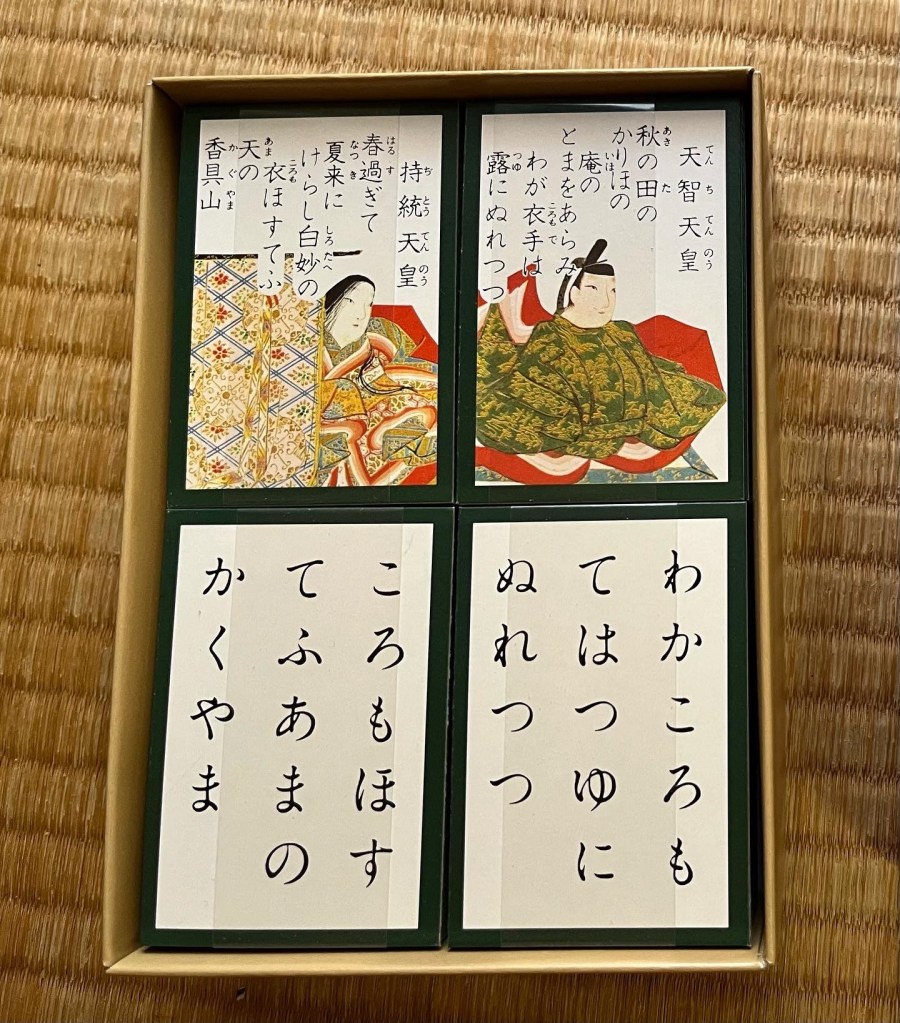
But the popularity of the Hyakunin Isshu isn’t limited to poetry, during the late-medieval period, it was also converted into a card game. Indeed, the Japanese term for karuta (カルタ, derived from Portuguese carta) is often synonymous with the Hyakunin Isshu game. The basic gist of the game is that two people face off, with cards containing the second half of each poetic verse laid out in front of them, half facing one player, the other half facing the opponent. A third person reads a select poem in its entirely, and the two players race to find which card matches, and then swat it off the board and thus take the card. Sometimes, to re-balance things, the winning player also moves a card from their side to their opponent’s. At the end, the person with no cards left on their side wins. I wrote more about how to play Karuta in this article.
A set of karuta cards I purchased in December 2023…
A famous anima / manga named Chiyahaburu tells the story of a group of high-schools who learn to compete in the world of karuta. As a game and after-school activity, it is popular, but also has a bit of a refined air to it. I have tried to play this game with my family, but none of us have memorized the poems enough to be really good at it. There is a much simpler game you game that you can play with the karuta cards and easy enough for a 7 year old to play too.
The karuta game can be quite competitive too. Here’s a video from a competition in 2020 (note the face masks). After the reader (the man in the middle) recites a “warm-up” verse, around 2:18, you can see the lady on the left successfully swatting away the correct card before her opponent. Also, some of the poems recited are not actually among the laid out cards, just to throw people off. Not all 100 cards are laid out as you can see, only a subset. So, you not only have to know all the poems, but quickly recognize them among the pile, if they are even there.
Waka poetry in general still appears from time to time in modern Japanese culture, arguably more than haiku in my opinion, though both are popular. For Western audiences, I found waka somewhat underappreciated, but I hope readers will find something they enjoy as the world of waka poetry is long, vast and beautiful.
P.S. Some of the official, imperial anthologies such as the Kokin Wakashu and Shin Kokin Wakashu are also quite good, but they’re somewhat longer and have less resources in English, though I am happy to own a translation of these too.
P.P.S. Karuta cards are available for purchase online from various retailers. The box set we have was my wife’s when she was a little girl (still includes the old cassette tape for reading out the poems 😉)
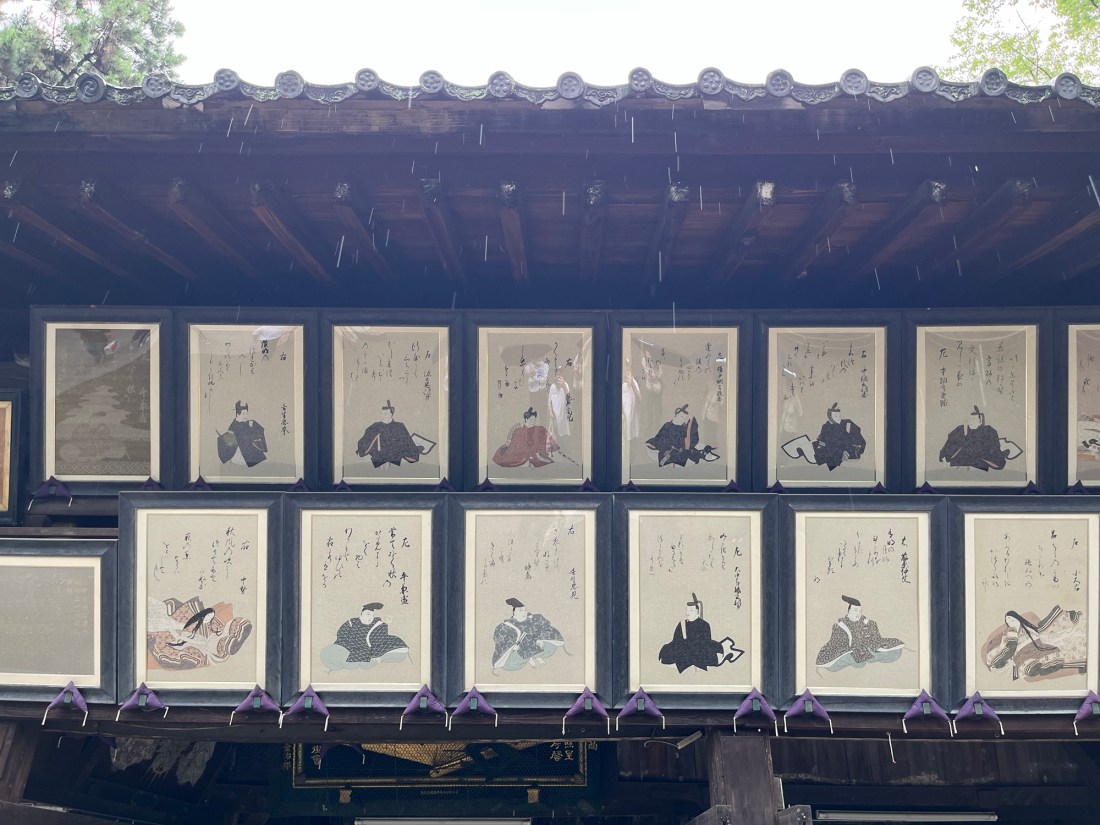
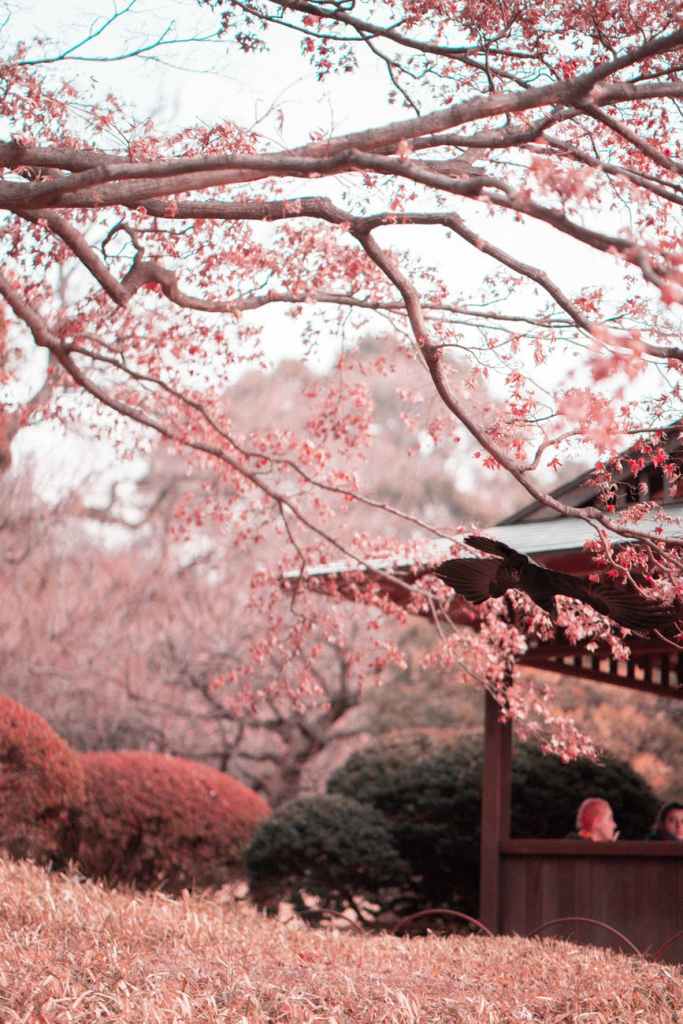
P.P.P.S. Featured photo is from Kitano Tenmangu Shrine, which we visited in summer of 2023.
The Thundercloud plum trees in our yard finally blossomed, starting with the pink one:
…. followed by the white one next:
These pictures aren’t great, as I took them on top of a ladder with my arm stretched as high as I could while holding a mobile phone. But, I am happy with the results.
As readers may recall, plum trees are among my favorite, and once again I am reminded of this old poem by the famous scholar Sugawara no Michizane (菅原 道真 845 – 903) when he was in exile:
When most people think of Japan, they think of cherry blossoms, specifically sakura (桜) cherry blossoms. However, while cherry blossoms usually appear sometime between March to May depending on climate, variety, etc, another famous flowering tree blooms slightly eariler: umé (梅) or plum blossoms.
Japanese plum trees are not the same as Westerns trees and some would say the fruit is closer to an apricot than a plum as we know it. In any case, ume trees have been a part of Japanese culture for a long time, and celebrated since antiquity.
For example, the famous scholar later deified into the God of Learning, Sugawara no Michizane (菅原 道真 845 – 903), was a big fan of plum trees. When he was exiled to Dazaifu due to political intrigue, he composed a famous poem about his plum back home in his yard:
Japanese
Romanization
Translation
東風吹かば
Kochi fukaba
When the east wind blows,
にほひをこせよ
Nioi okose yo
let it send your fragrance,
梅の花
Ume no hana
oh plum blossoms.
主なしとて
Aruji nashi tote
Although your master is gone,
春を忘るな
Haru o wasuru na
do not forget the spring.
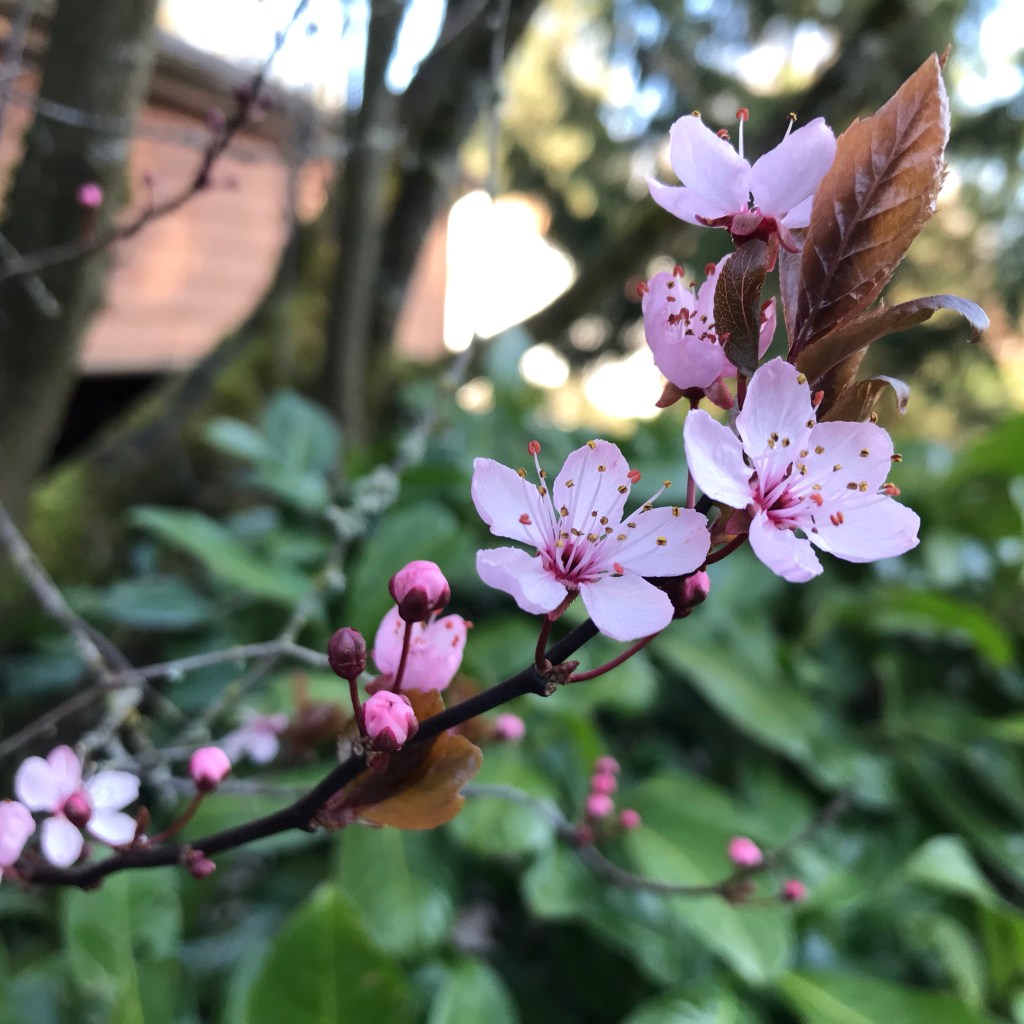
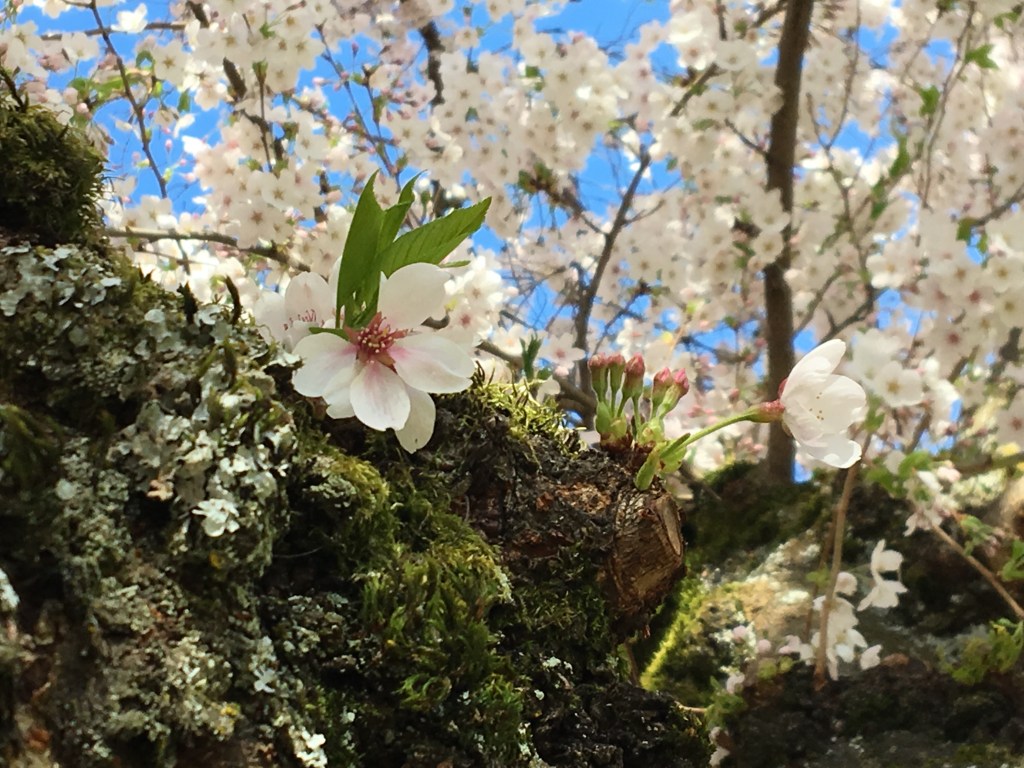
Plum blossoms differ in appearance than sakura cherry blossoms in a few ways: plum blossoms tend to be whiter in color, though shades of pink do exist. While they both have 5 petals, the plum blossoms have rounded edges, while the cherry blossoms are notched and a bit pointier:
Plum blossom, courtesy of WikipediaCherry blossoms, taken by me in 2016 at the University of Washington
I have two different types of plum trees in my yard: a pair of Thundercloud Plum trees (one white and one a deep pink) and an Italian Plum tree.
The current Italian Plum tree is actually the second generation. The previous tree had grown in our yard for years, and bore lots of fruit every September, but during a famously bad snow storm in 2019 here in the PNW, it grew heavy and fell over. Amazingly, one of the seeds must’ve taken root before than as we have new tree growing not far from it.
I once had 3 Thundercloud Plum trees but one fell over into a neighbor’s yard after a prolonged rain storm, plus it had become too overgrown (my fault) and top-heavy. I have learned since that Thundercloud Plum trees grow fast and need to be trimmed about every 2-3 years otherwise they make a huge mess and run the risk of falling over.
The least worst photo I’ve taken of my Thundercloud Plum tree (the white one)
There have been times where I’d like to cut down the Thundercloud Plum trees because of the maintenance (plus the mess of rotting, fermented plums in fall), but when they bloom for that one week in late February, I feel like Sugawara no Michizane admiring the tree and looking forward to Spring.
It is mid-January, deep in “small cold and big cold”, but already signs of life are returning to the yard, and the world around us. Inspired, I found this old Japanese waka poem (originally posted in my other blog) composed by a female poet named kunaikyō (宮内卿), also called wakakusa no kunaikyō (若草の宮内卿). This poem, number 76 in the Japanese Imperial anthology named the Shin Kokin Wakashū, has young grass (wakakusa, 若草) as the topic.
From the 14th century Japanese text, “Essays in Idleness” (tsurezuregusa 徒然草) composed by Buddhist monk Kenkō:
The moment during the ceremony of abdication of the throne when the Sword, Jewels, and Mirror [the Imperial regalia, which still exist, btw] are offered to the new emperor is heartbreaking in the extreme. When the newly retired emperor abdicated in the spring [of 1318] he wrote this poem, I understand:
Translation by Professor Donald Keene
Original Japanese
Romanization
Translation by Donald Keene
殿守の
tonomori no
Even menials
とものみやつこ
tomo no miyakko
Of the palace staff treat me
よそにして
yoso ni shite
As a stranger now;
はらはぬ庭に
harawanu niwa ni
In my unswept garden lie
花ぞ散りしく
hana zo chirishiku
The scattered cherry blossoms.
Then Kenkō writes in the same passage:
What a lonely feeling the poem seems to convey — people are too distracted by all the festivities of the new reign for anyone to wait on the retired emperor. This is precisely the kind of occasion when a man’s true feelings are apt to be revealed.
From the 14th century Japanese text, “Essays in Idleness” (tsurezuregusa 徒然草), composed by Buddhist monk Kenkō:
26) When I recall the months and years I spent as the intimate of someone whose affections have now faded like cherry blossoms scattering even before a wind blew, I still remember every word of hers that once so moved me; and when I realize that she, as happens in such cases, is steadily slipping away from the world, I feel a sadness greater even than that of separation from the dead. That is why, I am sure, a man once grieved that white thread should be dyed in different colors, and why another lamented that roads inevitably fork.
Translation by Professor Donald Keene
From here, Kenkō quotes a poem that was “among the hundred verses presented to the Retired Emperor Horikawa”:
Original Japanese
Romanization
Translation by Donald Keene
昔見し
mukashi mishi
The fence around her house,
妹が垣根は
imo ga kakine wa
The woman I loved long ago,
荒れにけり
arenikeri
Is ravaged and fallen;
つばなまじりの
tsubana majiri no
Only violets remain
菫のみして
sumire no mi shite
Mingled with the spring weeds.
(According to Keene, this poem came from an anthology called the Horikawa In Ontoki Hyakushu Waka, compiled from 1099 to 1103)
Finally, Kenkō ends the passage with:
What a lonely picture — the poem must describe something that really occurred.
Speaking of the moon, October in Japanese Buddhism, specifically the Jodo Shu sect of Buddhism is an important time called jūya-e (十夜会), meaning “Ten Nights observance”. It is also sometimes known as:
jūya hōyō (十夜法要, “ten night Buddhist sermon”)
jūyakō (十夜講 “ten night lecture”)
jūya nenbutsu (十夜念仏, “ten night nembutsu“), or more formally
jūnichi jūya hōyō (十日十夜法要, “ten day and ten night Buddhist sermon”)
Jūya-e isn’t a holiday as such, but it is traditionally a time of renewed practice and study of the Buddhist teachings, particularly the Pure Land Buddhist teachings. In the old calendar, it began on the fifth night of the 10th month and extended to the fifteenth day of the month. In the modern calendar this means that Juya-e starts on October 5th to 14th. Jodo Shu followers might dedicate themselves to more chanting of the nembutsu for 10 nights, often in a group setting, among other things. Often special services are held at the local temple, though not necessarily for all ten days.
The tradition behind Jūya-e lies with a 15th century samurai noble named Taira no Sadakuni (平貞国) who having become disillusioned by this world shut himself in the temple of Shinnyodō (真如堂), more properly a Tendai Buddhist temple known as Shinshō Gokurakuji (真正極楽寺), for ten nights and days of intensive Buddhist practice.
Why ten? The basis for this lies in a passage from one of the three core sutras of the Pure Land tradition, the Sutra on the Buddha of Immeasurable Life, a.k.a. the Larger Sutra, the Sutra of Immeasurable Life, etc.:
“In this world, you should extensively plant roots of virtue, be benevolent, give generously, abstain from breaking the precepts, be patient and diligent, teach people with sincerity and wisdom, do virtuous deeds, and practice good. If you strictly observe the precepts of abstinence with upright thought and mindfulness even for a day and a night, the merit acquired will surpass that of practicing good in the land of Amitayus for a hundred years. The reason is that in that Buddha-land of effortless spontaneity all the inhabitants do good without committing even a hair’s breadth of evil. If in this world you do good for ten days and nights, the merit acquired will surpass that of practicing good in the Buddha-land of other quarters for a thousand years. The reason is that in the Buddha-land of other quarters many practice good and very few commit evil. They are lands where everything is naturally provided as a result of one’s merit and virtue, and so no evil is done. But in this world much evil is committed, and few are provided for naturally; people must work hard to get what they want. Since they intend to deceive each other, their minds are troubled, their bodies exhausted, and they drink bitterness and eat hardship. In this way, they are preoccupied with their toil no have time for rest.
The idea is that in the Pure Land of Amitabha Buddha, people naturally commit good deeds and have peaceful minds due to the wholesomeness of the environment. Conversely, trying to stay good in this world with all its hassles and troubles is a lot harder, and so the merit attained is far greater. Even a little bit here really counts for something.
Speaking of Jūya-e in literature, I also found this haiku by Kobayashi Issa:
Japanese
Romanization
Rough translation
もろもろの
Moro moro no
All kinds of
愚者も月見る
Gusha mo tsuki miru
Foolish people see the moon and realize
十夜かな
Jūya kana
“Hey, it’s the Ten Nights observance!”
Poem source: Zenkōji temple with my rough, rough translation
The moon was a common metaphor in medieval Japanes Buddhism for the light of wisdom and compassion of Amitabha Buddha, as evinced by a much earlier poem by the founder of the Jodo Shu sect of Buddhism, Honen in the 12th century:
Japanese
Romanization
Rough translation
月影の
Tsuki kage no
Though there is no corner
いたらぬ里は
Itaranu sato wa
Of the world where the moon’s light
なけれども
Nakeredomo
Does not shine,
眺むる人の
Nagamuru hito no
Only those who gaze up at it
心にぞすむ
Kokoro ni zosumu
Appreciate its light
Yet again, my rough translation
If you’re wondering what to do during Jūya-e season, and not part of a Buddhist community, try stretching your Buddhist practice for 10 days, something above and beyond your usual Buddhist practice. However, also make sure the practice is sustainable too. Finding that balance is tricky, especially if you’re not part of a temple community, but with a bit of effort, one can find that sweet spot and have a fruitful and joyous season.
Summer in 2020 came and went probably like no summer in recent memory. Ignoring the painful facts for a moment that there’s a global pandemic, politics are pretty bat-shit crazy, and the economic woes, and my stress level was through the roof, it was a quiet and low-key summer. Hunkering down for the summer had a few silver linings, in that I got to see my kids a lot more, and some long-neglected things around the home got fixed. The kids had little “summer reading challenges” I gave them and I had personalprojectsof my own that I mostly got done.
Lately, I’ve been thinking about a certain poem from the ancient Japanese poetry anthology, the Hyakunin Isshu, which I have a whole blog devoted to. The poem, number 98, out of 100 reads:
This poem refers to a frequent ritual in Japanese Shinto religion called misogi (みそぎ or 禊) which is a kind of purification ritual through immersion in a river, waterfall or the sea. Shinto differs from Buddhism, among other ways, by its heavier emphasis on purification as contact with death, or trauma or other negative forces can weigh on a person and bring misfortune not to mention the mental burden. So, since antiquity, water immersion as a form of ritual purification was a way to “reset” the balance and avoid potential misfortune later.
Further, the 1st day of the 8th month in the old Japanese calendar (early September in modern times) is traditionally marked by a special ceremony called hassaku (八朔) where the first rice harvests of the season is dedicated to the gods in gratitude. Sometimes this is in the form of mochi rice cakes instead. It is still practiced even today by some.
Anyhow, looking forward to getting kids back into school (sort of), but also going to kind of miss the weirdest, yet quietest summer I can remember in my life.
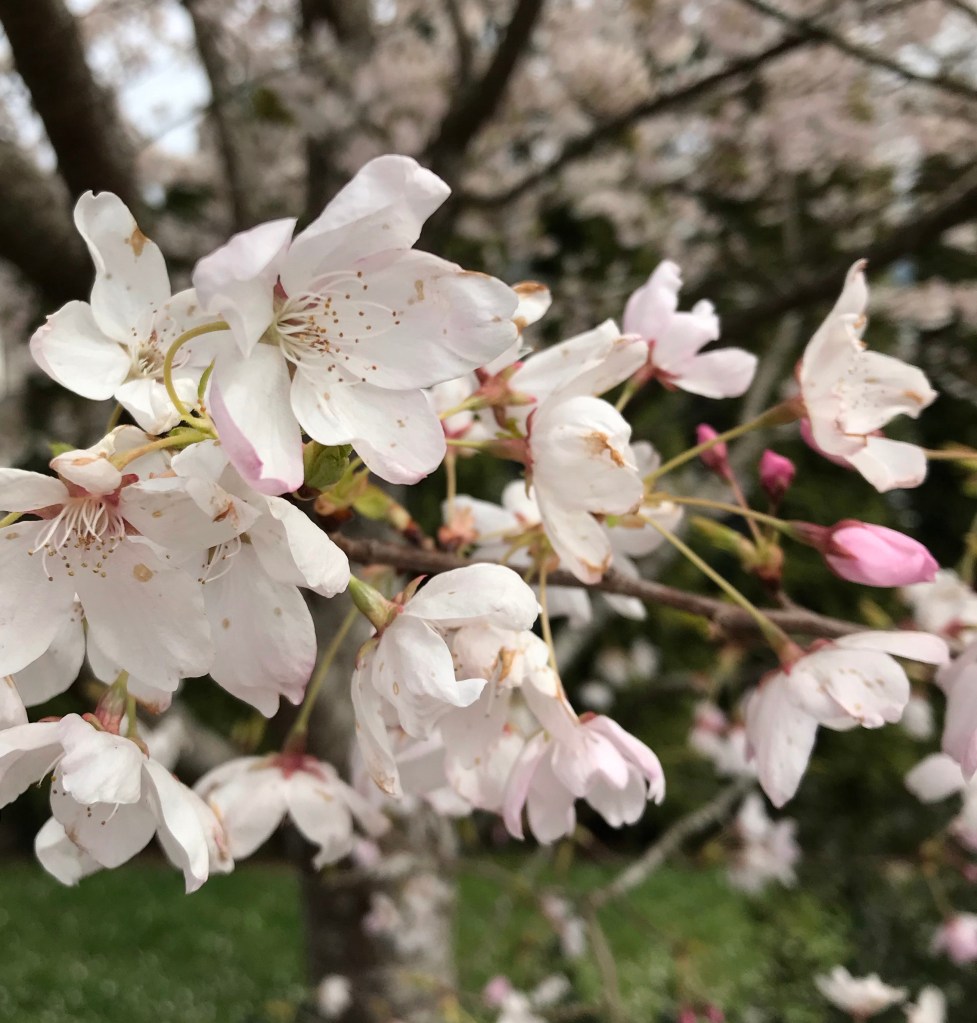
While stuck at home in lockdown, my family and I have been trying to take daily walks around neighborhood, and yesterday I caught sight of these cherry blossoms! 🌸
Taken near a neighbor’s household, while under lockdown.
Around this time of year, I always go back and read poems from a famous 12th century poetry anthology from Japan called the Hyakunin Isshu (百人一首, “100 poems by 100 poets”). I even made a blog devoted to it some years back. For Spring, Poem 33 is usually my favorite, but today I would like to share poem 61:
いにしへの奈良の都の八重桜今日九重に匂ひぬるかな Inishie no Nara no miyako no Yae-zakura kyo kokonoe ni nioi nuru kana
The eight-petalled cherries from the Nara capital of the ancient past today nine layers thick have bloomed within your court!
Translation by Professor Mostow in Pictures of the Heart: The Hyakunin Isshu in Word and Image
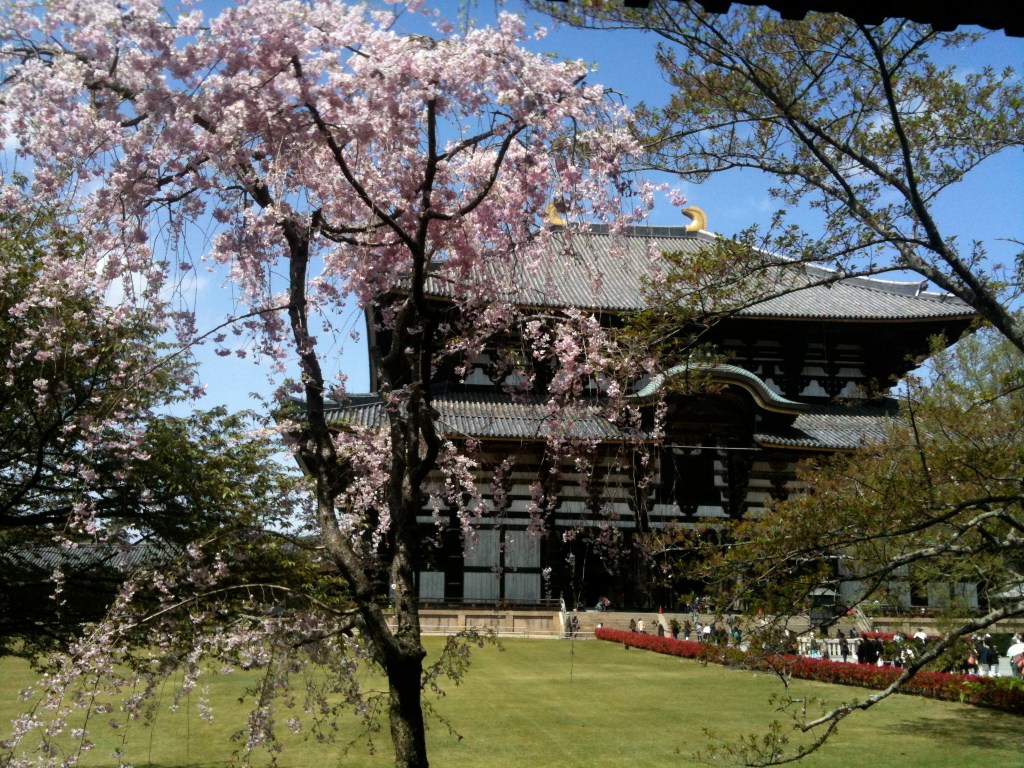
Usually, we go visit the cherry blossoms at the University of Washington at this time of year, but I have been to Japan once (in the old capitol of Nara, no less!) to see the cherry blossoms there in 2010.1 This is a photo of the famous Todaiji temple:
Even if you are stuck at home, may you get to enjoy the Spring with some blossoms, fresh air and some good poetry!
1 Including a visit to the see the well-known February Hall. Todaiji is always a great visit.








 Gleanings in Buddha-Fields


You must be logged in to post a comment.