Season three of Star Trek has one of my most favorite, albeit silliest episodes in the entire series: The Savage Curtain. The episode starts off with a bang: Abraham Lincoln (played by Lee Bergere) floating in space on his trademark chair.
From there, the Enterprise crew and in particular Kirk and Spock are confronted by some of “histories worst villains” as well as an encounter with Spock’s idol, Surak (played by Barry Atwater), father of Vulcan philosophy.
Surak of Vulcan, founder of Vulcan Logic, in the Star Trek episode the “Savage Curtain” (season 3, episode 22)
The rock aliens who force the “good” historical figures to combat the “evil” historical figures want to compare and contrast their philosophical ideas against one another to see which is better.
Kahless the Unforgettable (played by Bob Herron) and Colonel Greene (played by Phillip Pine)
The premise might seem a bit silly, but it is a fascinating contrast of ideas:1
Surak – a pacifist, non-violent approach
Lincoln – fight if necessary, and “on their level”.
Col. Greene – power is all matters
Kahless – victory by any means
Kirk – do what it takes to save his crew
Spock – honor his commitments to Starfleet, and fight with Kirk, even if is compromises his personal morals
Although Surak loses his life in the combat, he has some really great quotes in this episode that I think are worth sharing:2
The face of war has never changed. Surely it is more logical to heal than to kill.
Surak of Vulcan, “The Savage Curtain” (s3ep23), stardate 5906.5
and also:
I am pleased to see that we have differences. May we together become greater than the sum of both of us.
Surak of Vulcan, “The Savage Curtain” (s3ep22), stardate 5906.4
Lincoln’s performance throughout the episode is great as he embodies the great American president as we want him to be: gentle, but tough when needed. One can’t help but compare this to Bill and Ted’s Excellent Adventure, even if they are completely different movies, because Abraham Lincoln is such a beloved figure.
At the very end of the episode, there is a subtle dialogue worth sharing:
KIRK: They seemed so real. And to me, especially Mister Lincoln. I feel I actually met Lincoln.
SPOCK: Yes, and Surak. Perhaps in a sense they were real, Captain. Since they were created out of our own thoughts, how could they be anything but what we expected them to be?
In fact, I think there’s something very Buddhist about this. The inhabitants of the planet didn’t necessarily create historically accurate versions of Lincoln, Surak, etc, but what we wanted them to be in our minds. In a sense, we create our own gods and idols through our hopes and aspirations (for good or for ill). This isn’t always bad, but it does show how unwittingly we bend the world around us to fit our beliefs and views.
Anyhow, The Savage Curtain is such a fun, surreal episode, and a fascinating contrast of ideas and people in history, and how they interact. These ideas and philosophies are timeless in many ways, and crop up over and over again in history, but by pitting a bunch of historical figures in space against once another, it takes on a whole new dimension of weird, silly, fun.
Also:
Courtesy of “Swear Trek”
P.S. Many reviews point out that The Savage Curtain borrows elements from older, venerable episodes, and thus judge it an inferior episode. I can’t disagree that it borrows a lot of elements, but I like to think it is a capstone to several previous “moral tale” episodes. The action sequences aren’t quite as good, but I don’t think that was the point. It was battle of ideas, not sticks.
P.P.S. I bet you could take all 8 characters, including Kirk and Spock, in the battle and somehow arrange them into a classic D&D alignment chart. The rock aliens of Excalbia would probably be true-neutral.
1 I wish “Zorra” (Carol Daniels) and “Genghis Khan” (Nathan Jung) had dialogue, as it would have been interesting to have more contrasting goals and aspirations.
A rich man thinks all other people are rich, and an intelligent man thinks all other people are similarly gifted. Both are always terribly shocked when they discover the truth of the world.
“I, Strahd” by P.N.Elrod
Another book I have been reading lately for Halloween is the novel I, Strahd, which is a fictional autobiography of the villain of the “Barovia” fantasy-gothic horror setting: Strahd von Zarovich. As an autobiography, Strahd talks about his origins and justifies why he’s such a monster, literally and figuratively. It was one of the most popular novels of the Ravenloft series that was published in the 1990’s to promote this venerable Dungeons and Dragons setting, and is a kind of “bible” for fans of the setting due to broad number of characters, helpful backstories, and compelling story.1
But I digress.
People naturally assume their values and beliefs are pristine because that’s all they ever know, and that others will naturally agree to them. They are then shocked to discover that other functional adults subscribe to very different beliefs. Their own world is briefly shattered or they feel threatened, and conclude that such adults are just stupid, insane or evil. What follows usually isn’t good.
Even when people claim they are open to discussion or free-thinkers, I am reminded of Dave Barry’s famous quote:
People who want to share their religious views with you almost never want you to share yours with them.
Of course this applies to me as well. But on the other hand, I have to remind myself that I am not the center of the Universe. Whether I am actually right or not is irrelevant; I have to accept that not everyone comes to the same conclusions that I do, and I have no right to judge them for their views:
Gandalf: “Do not be too eager to deal out death in judgment. Even the very wise can not see all ends. My heart tells me that Gollum has some part to play yet, for good or ill before this is over.”
Hatred is never appeased by hatred in this world. By non-hatred alone is hatred appeased. This is a law eternal.
Translation by Ven. Acharya Buddharakkhita
It doesn’t mean you have to be best friends with other people, but you have to accept the sheer variety of people, ideas and beliefs no matter how stupid they seem.
Spock: Madness has no purpose. Or reason. But it may have a goal.
Star Trek, “The Alternative Factor”, stardate 3088.7
You don’t have to give them oxygen either. Some ideas are better left dead. It’s about tolerance of people, not tolerance of bad ideas. Ideas are, like all phenomena, contingent and impermanent (Buddhism par excellence).
As soon as you begin to harbor ill-will toward others who are different, you will quickly spiral into a dark path of your own doing.
Namu Amida Butsu
P.S. I have a huge backlog of drafted posts lately, so you may see a few more this week. I hope you enjoy.
1 It is a terrific read, but I admit I still like Vampire in the Mists featuring his rival, the elf-vampire Jander Sunstar, even more. Strahd is definitely *not* the hero in that tale. Heart of Midnight was also an excellent read and a close third for me. To be honest, all the novels I’ve read int he series so far, even the less compelling ones, are still good reads.
One of my personal tradition every Halloween season is to read Roger Zelazny’s book A Night In the Lonesome October, one chapter per day. The book, like all of Roger Zelazny’s writings, is a terrific book and I always find something new every time I read through it.
I felt like sharing this quote with readers:
We made our way cross-country through the colors of autumn browns, reds, yellows and the ground was damp, though not spongy. I inhaled the odors of forest and earth. Smoke curled from a single chimney in the distance, and I thought about the Elder Gods and wondered at how they might change things if the way were opened for their return. The world could be a good place or a nasty place without supernatural intervention; we had worked out our own ways of doing things, defined our own goods and evils. Some gods were great for individual ideals to be aimed at, rather than actual ends to be sought, here and now. As for the Elders, I could see no profit in intercourse with those who transcend utterly. I like to keep all such things in abstract, Platonic realms and not have to concern myself with physical presences…. I breathed the smells of woodsmoke, loam, and rotting windfall apples, still morning-rimed, perhaps, in orchard’s shade, and saw a high, calling flock V-ing its way to the south. I heard a mole, burrowing beneath my feet….
Even though I am a pretty devout (read: religious) Buddhist, I like this quotation a lot. It’s something I’ve felt for a long time: that religion works best when gods are kept at a distance, rather than an oppressive reality that must be feared and interpreted and re-interpreted over again. What’s front and center matters most. The world exists, it’s our job to learn how to live in it.
Further, I suspect everyone has a tendency to build God in their own image, hence the diversity of interpretations and approaches, but it’s all in our minds. The Buddha-Dharma is nice because it just works like the Laws of Physics or Gravity. Gravity doesn’t care whether you believe in it or not, it just works. In the same way, the Buddha-Dharma doesn’t demand fealty, respect or praise. Its teachings and goodwill are free for all. We do our best to work things out, and put the teachings into practice. How we interpret it isn’t so important. It’s just there.
Just like Fall weather, Halloween and nature.
Namu Amida Butsu
P.S. More on the virtues of knowing nothing, and just being humble.
I’ve talked a lotrecently about the Jodo Shinshu sect (sometimes called “Shin Buddhism” in some circles) of Japanese Buddhism and its founder Shinran, a former Tendai-Buddhist monk of the 13th century.
Shinran was one of a multitude of disciples of Honen. Honen was crucial in propagating Pure Land Buddhist teachings to the wider Japanese populace through simple recitation of the nembutsu over elaborate death-bed practices. For his part, Honen was building on older teachings from such illustrious monks as Genshin in Japan (also Tendai), and Shandao in China.
Needless to say, Honen’s hugely popular egalitarian movement really rubbed the Buddhist establishment, which had close ties with the Imperial government (especially with the Fujiwara), the wrong way. Although several complaints by powerful temples such as Kofukuji of the Hosso (Yogacara) sect and Enryakuji of the Tendai sect were rejected, Emperor Gotoba1 finally purged the movement after some alleged shenanigans between a couple disciples and some of his ladies in waiting. This is known in history as the Jogen Persecution (jōgen no hōnan, 承元の法難) of 1207.2
I say this because not only were the offending disciples executed, Honen and many of his followers were banished to the provinces, including Shinran, and were stripped of their monastic certification. The latter point is important to this post and worth exploring.
Way back in the day in ancient India, during the time of Shakyamuni (5th c. BCE), people who wished to follow the Buddha full time would renounce worldly life and become monks (bhikkhu) or nuns (bhikkuni). This was voluntary, and people could choose to give it up and return to lay life, assuming of course they weren’t kicked out for committing some offense. Since antiquity, Indian religious culture respected sages, ascetics, and monastics, such sages, ascetics and monks lived by begging for alms and were generally supported by the community. Since they were supposed to devote themselves full time to religious pursuits, it was assumed that the community would handle their day to day needs.
Fast-forward centuries later to Imperial China, where Confucianism was already entrenched in the government. Confucian bureaucrats generally had a suspicious view of Buddhist monks because they did not work, and didn’t contribute toward rearing families, or other such obligations to society. This clash of cultures played out over centuries, and there was even a dramatic purge during the Tang Dynasty in 845 where many monasteries were destroyed. Centuries later, they gradually reconciled, but it was a very bumpy ride.
This tension between Confucian bureaucracy and Buddhists played out in Japan too. Buddhism was eagerly adopted by the early Imperial court in Japan, but it was a tightly regulated extension of the State, intended to help avert calamities, and bring prosperity to the nations. Monks were frequently called on to recite sutra passages, or chant mantras to help ailing members of the aristocracy, or prevent natural disasters. Of course, many people were sincere followers too, but ordinations, regulations and such were all managed by the central government. It was, first and foremost, another organ of the State.
Why do I mention this?
Because when Shinran and other followers of Honen were stripped of monastic certification, they were no longer recognized as monks by the authorities. Sure they might have training, but no official status.
However, Shinran had been a trainee on Mount Hiei, center of the Tendai sect, since he was a small boy. He knew no other life. And yet now he was technically not a monk anymore in the eyes of the law. And yet, he wasn’t really a lay person either.
This led to a fascinating declaration by Shinran who changed his name to Gutoku Shinran (愚禿釋親鸞, “foolish, stubble-headed disciple of Shakyamuni [Buddha], Shinran”) and declaring himself hisō hizoku (非僧非俗) which means “neither priest, nor layman”. This set the trend that became the Jodo Shinshu movement thereafter.
Rather than relying on monastic institutions or monastic structure, Jodo Shinshu followers self-organized into dōjō (道場)3 which were often just people’s houses. Such members would gather periodically, pay dues, discuss issues at the time, shared letters from Shinran, recited the nembutsu together and so on. It was probably the first truly lay-centered Buddhist movement of this size and scale in Japan, possibly in history.
Lay movements are not new to Buddhism, but usually are often centered around a famous teacher (a monk) or a temple. Or, they tended to dissipate after a few generations. The Jodo Shinshu movement had neither monastic teachers, nor temples. They self-organized, trained their own priests, which included both men and women, and these men and women lived as other people did: they married, had families, worked, etc. Shinran for his part also married and had kids. He had no reason at this point not to since he was legally not a monk any more.
It wasn’t always smooth sailing, and Shinran (and later Rennyo) had to frequently deal with bad teachers, who let the power go to their heads, or taught unorthodox ideas purporting that they came from Shinran. Further, in the time of warlord Oda Nobunaga, and later the Zen monk Tetsugen, mob-violence by Jodo Shinshu followers was a genuine threat.
Nevertheless, the fact that such a self-organized lay-focused Buddhist community existed and thrived across medieval Japan is very noteworthy. It’s openness to women priests was revolutionary for the time, as was its lack of monastic standards for priests. It was run by laypeople for laypeople.
Even while I criticize some aspects of Shinran’s thought, I can’t help but deny that the “neither priest nor layman” concept, even if it was lamenting his own fate, ended up being a brilliant innovation and ahead of his time. Lay-Buddhist movements are very common now across Asia and the West, but these are often very modern innovations. Jodo Shinshu was basically doing it centuries earlier, before it was cool. It met the needs of people in a way that “ivory tower” monastic institutions could not, and solved the issue of accessibility of Buddhist teachings in a robust, sustainable way.
Not surprisingly, Jodo Shinshu is overwhelmingly the largest sect in Japan.
P.S. Shinran wasn’t the only one to really propagate Pure Land teachings in the provinces. Another major disciple of Honen, Bencho, was exiled to the island of Kyushu and established a lineage there which is now the main branch (a.k.a. Chinzei-branch) of the Jodo Shu sect we know today. Another disciple, Shoku, developed a second branch called Seizan-branch Jodo Shu. Shinran’s teachings and organization differed enough from Honen’s that later generations treated it as a separated sect entirely. Hence, “Jodo Shinshu”, not “Jodo Shu”. This might feel like splitting hairs, but if you’re a history nerd, now you know.
1 Emperor Gotoba was also the author of poem 99 in the Hyakunin Isshu, and was definitely a larger-than-life figure… for better or for worse.
2 There is also another persecution in 1227 called the Karoku Persecution (karoku no hōnan, 嘉禄の法難). In the latter case, Honen had already passed away, but after followers who remained in Kyoto built a mausoleum for their beloved teacher, the warrior monks of Enryaku-ji temple raided the mausoleum, destroyed it, and killed some disciples. These were tough times.
3 the modern “dojo” as a martial-arts institution gradually derived from this.
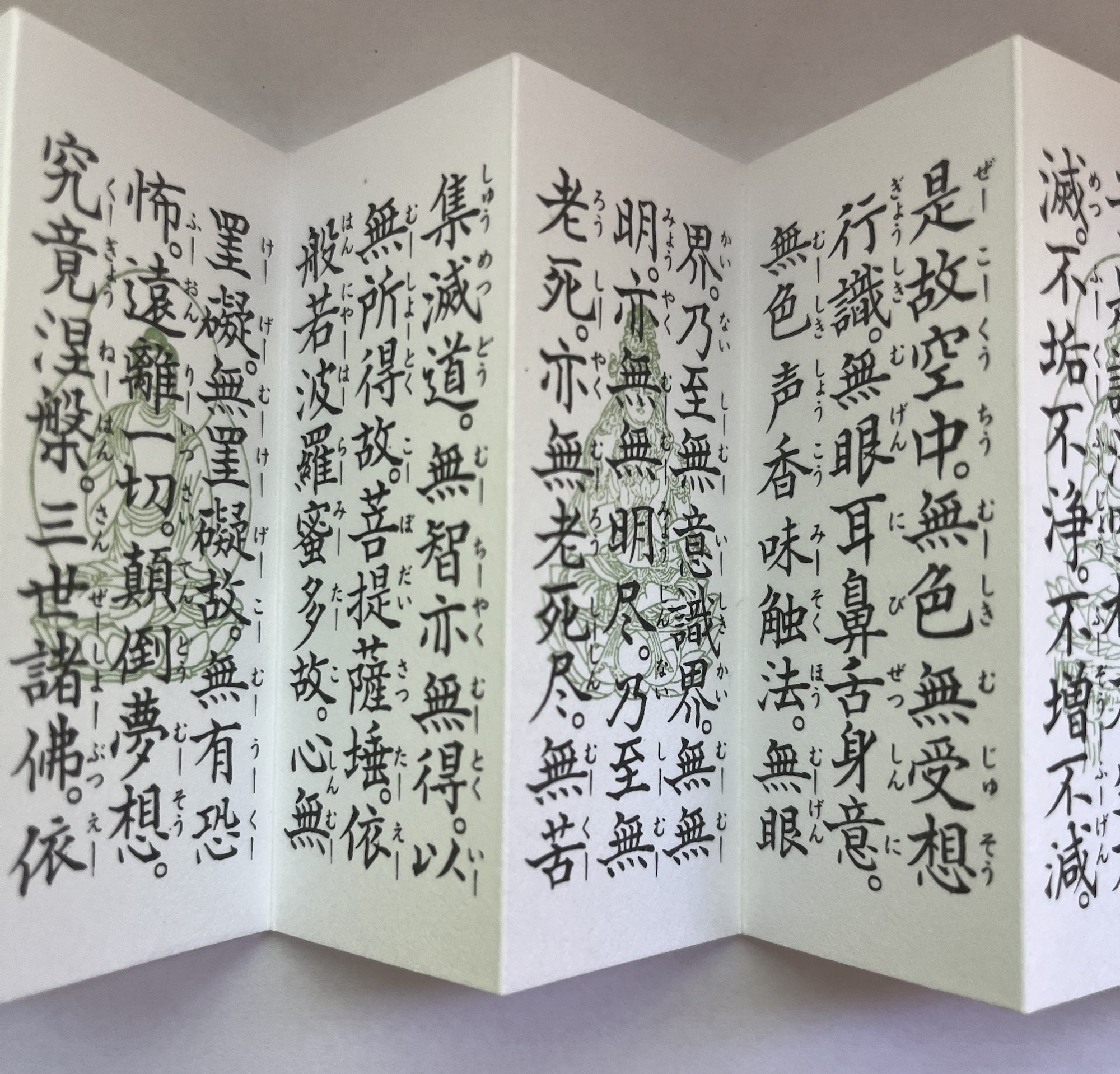
When visiting famous Buddhist temples (o-tera, お寺) in Japan, it’s very common to see sutra books, or kyōten, (経典), sold in the gift shop. These are small booklets that contain popular Buddhist sutras of the Mahayana tradition, and are used for home services. Over the years, I’ve collected more sutra books than I care to admit, but I really liked the one I picked up from Kofukuji temple in Nara last year:
This is a boxed copy of the Heart Sutra, called the Hannya Shingyō (般若心経), with a blue brocade cover. Inside, you can see the Heart Sutra as it is usually printed: original Chinese characters with Japanese pronunciation guides. It is read from right to left, vertically:
However, if you look carefully, you will also see Buddhist deities embossed on the pages too:
They also appear on the backs of the pages too:
It took me a moment, but I finally recognized these as the Thirteen Buddhas and Bodhisattvas venerated in the Shingon-Buddhist tradition.1
I have read that many of the old Nara-Buddhist sects were gradually subsumed by Shingon Buddhism and adopted many of its practices. This includes sects such as the Kegon sect (Todaiji temple) and Hosso sect (Kofukuji temple) among others. So, this makes sense. You can learn more about Shingon Buddhism here.
Anyhow, of all the sutra books I own, I have to admit that this is my favorite one, and use it regularly for morning services (see old post).
P.S. If you’re ever curious what the Heart Sutra sounds like in Chinese (at least modern Chinese), this link has a nice example.
1 These Buddhas and Bodhisattvas are venerated in other sects in varying degrees, of course, but not as a set of thirteen like Shingon. Shingon even includes them in its ritual services.
I had an idea recently while flipping through my book on the journeys of the Buddhist monk Xuan-zang (pronounced like “Shwan-tsong”). Xuan-zang was the famous Buddhist monk who walked to India in order to bring back more information and texts in order to help develop Buddhism in his native China. In my old post, I covered some of the trials and tribulations of this amazing journey, and even made a fun song. However, looking back the post felt incomplete. I realized that many of these places that Xuan-zang traversed are obscure and forgotten now despite their central importance to Buddhist history, and the journey was so long that it’s too much to really explore in a single post.
So, this is the start of a series of posts meant to help retrace Xuan-zang’s journey, explore places of significance and how they tied into larger history. I don’t have a schedule yet (these posts take a while to write), but I am working on the next few drafts already.
Today’s post is the prologue episode, covering China at this time, and why Xuan-zang left.
Quick note: because this episode in particular uses a lot of Chinese names, for the sake of accuracy and modern readers, I am using the pinyin-style accent marks where relevant, and also using Simplified Chinese characters. I also put in lots of hyphens to help with pronunciation.
The Tang Dynasty
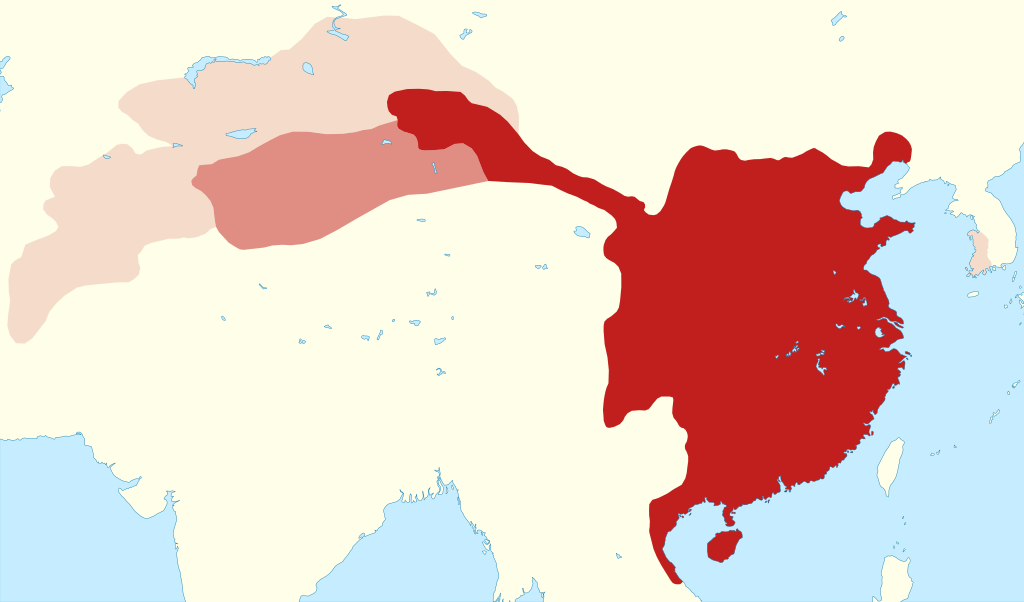
Great Tang at its largest extent in 661, map courtesy of Kanguole, CC BY-SA 4.0, via Wikimedia Commons
Chinese history, until the Republican era (1912 onward) had seen a series of kingships followed by imperial dynasties. Although, we usually call the country “China”, the name used by Chinese people in antiquity, and by their neighbors, was often taken from the current ruling dynasty.
Dynasties came and went. Some were fairly short-lived such as the Sui, others were incredibly powerful and long-lasting such as the Ming. Some were constantly fighting for their existence, such as the Song, others were fractured into a series of “mini-dynasties” that only exerted control over a region and were unable to unify China.
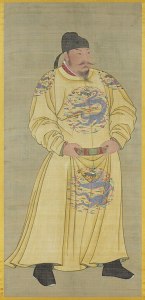
A portrait of Emperor Tai-zong, painted centuries later in the Ming Dynasty. National Palace Museum, Public domain, via Wikimedia Commons
Xuan-zang lived during the last days of the Suí Dynasty, and the early days of the Táng Dynasty (唐). “Great Tang” (大唐) as it called itself, lasted from 618 – 907, and was one of the high points of Chinese civilization. The empire expanded very far to the west, along the Silk Road (more on that in future posts) and actively imported all kinds of art, people, ideas, religions and material culture from Central Asia. Compared to earlier dynasties, Great Tang was much more cosmopolitan and less insular.
Xuan-zang lived primarily during the reign of the second Tang emperor Tài-zōng (太宗), who was an incredibly powerful, dynamic ruler. Chinese history still reveres him as of the greatest rulers. Tai-zong aided his father, the first emperor, in overthrowing the previous dynasty. Further, he was a powerful, expansionist ruler with a strong sense of administration, which helped provide stable foundations for Great Tang.
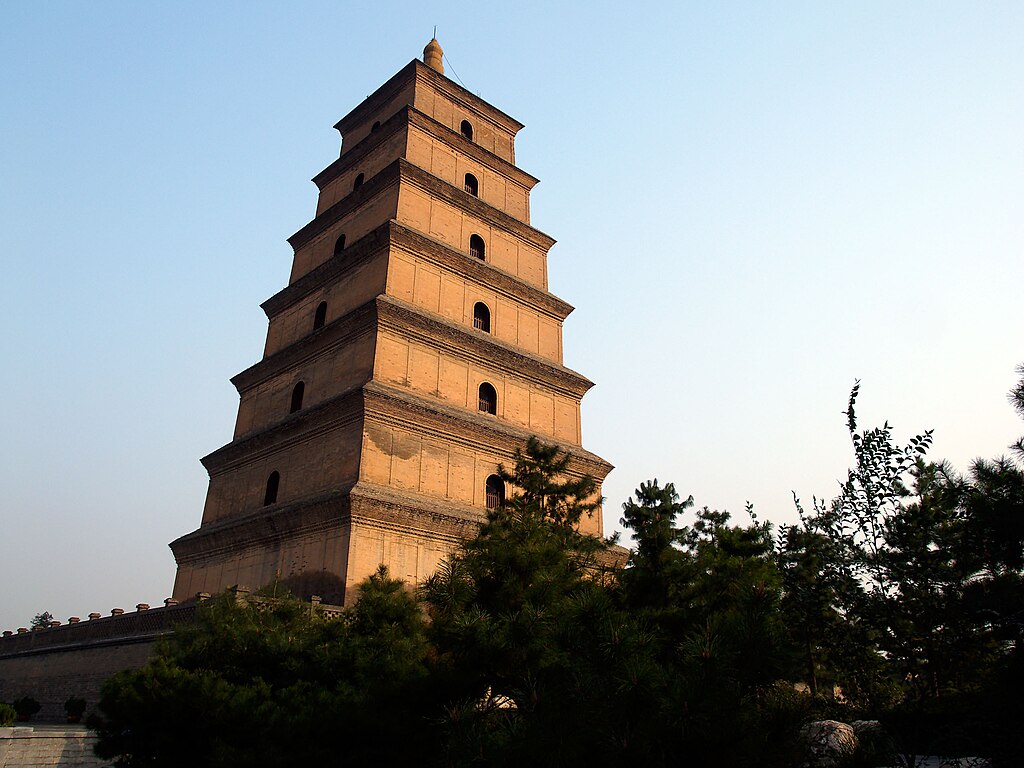
The capital of Great Tang was the city of Cháng-ān (长安) in the western part of China. The city was a massive, cosmopolitan center of administration, commerce and culture. Chang-an at its height grew to 30 square miles, which was massive compared to Rome which occupied only 5.2 square miles. The population by 742 was recorded as 2,000,000 residents and of these 5,000 foreigners.
Chang-an was easily one of the world’s greatest cities at the time, and it had a great influence on its neighbors as well: the layout for the capital of Japan, Kyoto, was intended to resemble Chang-an, and great Buddhist masters such as Saicho’s rival, Kukai, studied there extensively. It was here that many Buddhist texts that came from the Silk Road were translated here as well.
As the easternmost point of the Silk Road, it was here that many journeys began or ended…
Buddhism in Great Tang
The Tang Dynasty is often regarded as one of the high points of Chinese civilization, but also for Buddhism. Buddhism had emerged in China centuries earlier but its spread was slow at first. The native Confucian community particular resented the foreign Buddhist teachings as un-filial, unproductive (since monks did not work fields), and a drain on national resources.
In spite of the criticisms, it spread nonetheless. Wave and wave of teachings, newly translated texts, and schools of thought were imported from the Silk Road, allowing Buddhism to gradually take root, articulate its teachings better over successive generations, and develop natively Chinese schools of thought such as Tiān-tāi, Huá-yán, and Pure Land alongside imported schools of thought from India such as Fǎ-xiàng (Yogacara) and Sān-lùn (Madhyamika). By the time of the Tang Dynasty, massive temple complexes had arisen around Chang-an and other major cities.
This was a rare time when there was still a connection between Buddhist India and China, allowing a free flow of information. Later, when Buddhism fell in India, and the Silk Road was no longer safe to travel due to warfare, China was cut off.
Emperor Tai-zong himself had a distant relationship with Buddhism in his early reign. He kept it at arm’s length and strictly regulated. Further, travel in and out of China was tightly restricted, so that while there was commerce and trade, one could only do so with official permissions. More on this shortly.
Enter Xuan-Zang
Xuan-zang was the second son of his family. His older brother had ordained as a Buddhist monk, and Xuan-zang decided to follow in his footsteps at a young age. During the collapse of the Sui Dynasty, both brothers came to Chang-an where it was safe, and undertook further Buddhist studies. Since Xuan-zang proved to be a promising student, he was soon given access to advanced Buddhist texts and eventually ordained as a full monk in 622.
As to why Xuan-zang decided to journey all the way back to India, he is quoted as stating the following:
The purpose of my journey is not to obtain personal offerings. It is because I regretted, in my country, the Buddhist doctrine was imperfect and the scriptures were incomplete. Having many doubts, I wish to go and find out the truth, and so I decided to travel to the West at the risk of my life in order to seek for the teachings of which I have not yet heard, so that the Dew of the Mahayana sutras would have not only been sprinkled at Kapilavastu, but the sublime truth may also be known in the eastern country.
During his studies, Xuan-zang had noticed copyist errors, corruptions of texts, missing texts and other textual issues that prevented a thorough understanding. Thus, he resolved to journey to India, much like a monk named Fa-xian (法显) had done centuries earlier. He was particularly interested in the writings of Vasubandhu and his half-brother Asanga , who were crucial to the development of Mahayana Buddhism as we know it. Xuan-zang and some like-minded monks petitioned the Emperor Tai-zong to be allowed to journey to India, but never received an answer. He made his preparations, possibly learning some Tokharian language (commonly spoken along the Silk Road at that time) from the foreign quarters at Chang-an, then went west.
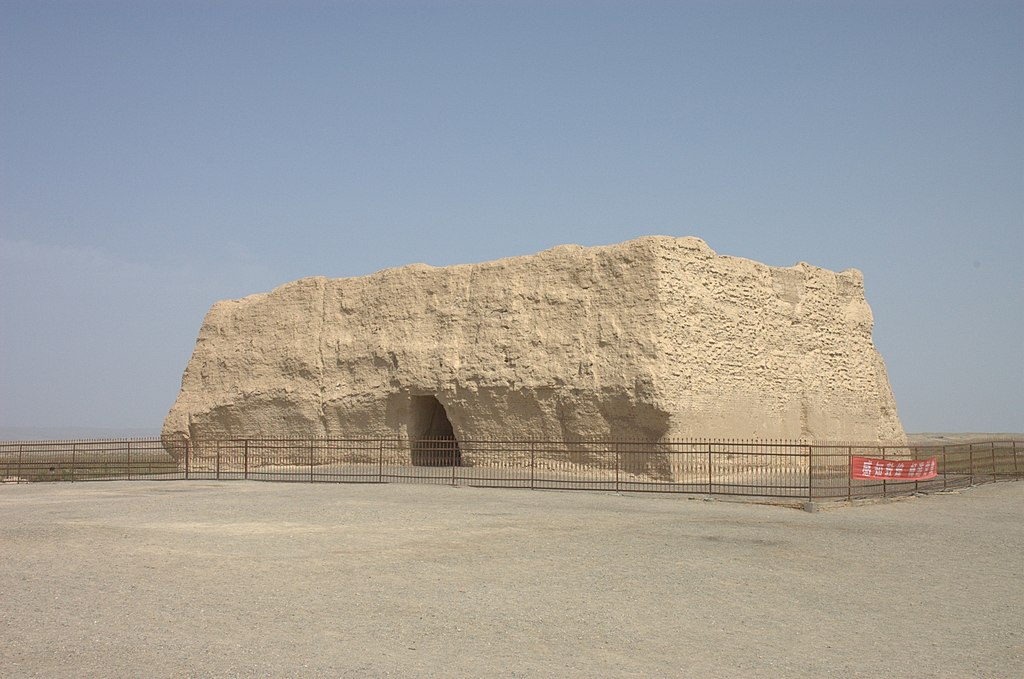
Ruins from the Yumen Pass, photo courtesy of 张骐, CC BY-SA 3.0, via Wikimedia Commons
By the time Xuan-zang reached the Yumen Pass (Yùmén Guān 玉门关) at the western end of Great Tang, he had attracted some unwanted scrutiny by authorities, and wasn’t permitted to leave. By this point, his companions had lost their nerve, but Xuan-zang was determined to continue. With some help from a sympathizer, Xuan-zang defied imperial orders and snuck around the Yumen Pass to leave China. He was now a criminal, and he was alone with a vast desert ahead of him.
Recently, I discovered that one of my coworkers, who is an immigrant to this country, had survived the Yugoslav wars of the 1990s. I am trying to protect their identity a bit, but they described life as a teenager being besieged in their home city for months in 1992 without running water, or reliable food supply. After the war was over, they came to the US with a mere $50, a college degree, and no idea what to do next. Thankfully, my coworker was able to get on their feet, establish their career here, and now have a growing family.
However, what’s interesting is that if my coworker had never confided their past, I would never have guessed. By all appearances they were just another career adult. I’ve had a coworker who grew up in Palestinian refugee camps in the Middle East, but again, it’s not obvious in a professional work setting and they only confided in me much later in our friendship.
It underscores how many people around you, who by all accounts seem like normal, functional adults, may be carrying terrible traumas in their lives. It is not always wars, natural disasters, and ethnic conflicts either; it can also be personal, domestic traumas, emotional scarring that fades with time, but never fully disappears. It is said that 1 out of 4 women in the US, possibly more, have been abused and that means that out of all the women I work with, correspond with, or hang out with, one out of four, maybe even one out of three of them may be carrying out terrible scars from their past.
And of course, it’s not limited to women, either. It’s not hard to scratch the surface and find men who have also suffered terrible traumas, abuse, etc., and carry this with them for the rest of their lives. I remember my best friend in grade school suffering terrible, physical abuse from his father. He grew into a pretty unhappy teen and eventually the family moved away. I didn’t comprehend any of this until too late, and lost touch with him before we could talk about it together. I’ve always regretted that.
Being an adult is hard enough as it is, but also carrying around terrible traumas makes it even harder because you can never fully erase them. You can move on, find happiness, and still grow as a human being, but the scar will always be there.
My coworker who survived the Yugoslav wars, for their part, told us that they decided not to focus on the past and instead focus on the here and now: kids, career, helping others in the same field, and so on. They joke among other survivors that they still get a bit twitchy sometimes due to their traumatic past. Yet at the same time, they don’t want to be weighed down by it either. They want to move on and look toward the future.
In learning to understand others, I think it’s important to consider painful past they may have had. It doesn’t always excuse the behavior, but it does provide some perspective.
June 4th is the yearly memorial service in Japan’s Tendai sect of Buddhism called Sangé-é (山家会) for its founder, Saichō (最澄, 767 – 822). I am writing this post a bit late this year, but I wanted to explore the life of Saicho a little bit and why he matters.
Saicho as depicted in a Heian-Period painting.
If you look at the history of Japanese Buddhism, Saicho doesn’t elicit much historical attention and discussion, even compared to contemporary rivals at the time like Kūkai, founder of Shingon-sect Buddhism. Yet, the sect he founded in Japan was overwhelmingly the largest and most influential for centuries (probably too much so), until it finally faded into the background in the late medieval period. This is why you rarely see mention of Saicho or Tendai these days: it’s far smaller now than it was in the past.
Also, to confuse matters further, Saicho is only the founder of the Japanese branch of Tendai. It was the Buddhist monk Zhi-yi (智顗, 538 – 597), who originally started the Tian-tai (天台) sect in China in the 7th century and it remains a very influential sect across many areas of mainland-Buddhist Asia (Korea, Vietnam, etc). Tian-tai in Japan (pronounced as Tendai) reveres Zhiyi as well.
Anyhow, Saicho was a monk at a time when Buddhism had already been established in Japan, primarily around the old capitol of Nara, yet was limited to a very tightly regulated number of schools and monks per school. Besides the Yogacara (Hossō) and Huayan (Kegon) schools, the rest are very obscure today. These schools had all been imported from Tang-Dynasty China, and represent “branch” schools to the mother temples there. The existing schools at that time were obligated to perform rituals on behalf of the Emperor to prevent calamities, cure diseases, bring prosperity to the nation and other political needs. In turn, the government allocated new acolyte monks every year, and allowed them to continue. However, beyond that, Buddhism had very little reach in the rest of Japanese society. This is very different than the bottom-up approach in China.
Saicho was ordained as an official monk, but soon left and retreated to Mount Hiei where he underwent ascetic practices, rather than stay in the urban temple complexes. In time, he attracted other like-minded disciples, and a small, informal monastic community developed there on the mountain. Further, he carved an image of the Medicine Buddha, and later lit an oil lamp in reverence to the Buddha, praying that the light would never be extinguished. This lamp, the Fumetsu no Hōtō (不滅の法灯) was the subject of a previous post. By this point, the foundations of the temple of Enryakuji were laid.
Later, by a lucky coincidence, the capitol of Japan was moved away from Nara to Kyoto (back then Heian-kyō) in 795. Since Mount Hiei happened to be to the northeast of Kyoto, and since the northeast was considered an inauspicious direction in classic Chinese geomancy, the presence of a Buddhist temple there (namely Enryakuji) helped protect the new capital from negative influences. The Emperor, for his part, saw this new Buddhist sect has a counterbalance to the old guard sects in Nara. Thus, Saicho’s star quickly rose.
The Eastern Pagoda (Buddhist stupa), of Enryakuji Temple, 663highland, CC BY-SA 3.0, via Wikimedia Commons
Now with sponsorship from the new Imperial court, Saicho was dispatched to sail back to China in 804, gather more resources and help bring Buddhism to a wider audience. On the same diplomatic mission, another promising young monk named Kūkai was also dispatched. More on him later. Of the four ships that sailed out to sea, only 2 survived a storm at sea (Saicho and Kukai were each aboard one of the surviving ships).
Saicho’s had mixed success in China. He did not speak Chinese (he could only read it), but was able to get official permission from the Chinese government to travel to Mount Tiantai. There he stayed for 135 days. Saicho later received limited training in esoteric Buddhism, which was all the rage in Tang-Dynasty China (and Japan at this time). It wasn’t until the second generation of Tendai monks who went to China (Ennin for example) that esoteric training really developed in the Tendai sect in Japan. Saicho also copied many sutras and texts in order to provide fresh copies back in Japan (printing did not come until much later, despite flourishing in China).
Guoqing Temple (guó qīng sì, 国清寺) on Mount Tiantai, head of the Tiantai Order. Photo by Joshtinho, courtesy of Wikimedia Commons.
Nonetheless, when Saicho returned to Japan 8 months later, he was feted for his accomplishments. He got to work using his newfound training, and his collection of sutras brought back from China to petition the Emperor to start a new sect derived from the Chinese Tiantai Buddhism he trained under. Saicho’s vision was slightly different than Tiantai Buddhism, particularly because he envisioned a purely “Mahayana” sect, not just a sect with Mahayana Buddhism on top of earlier Buddhist tradition. This meant different ordination platforms, different training, etc. It was a big controversy at the time, and the powerful Yogacara (Hossō in Japanese) school based in Nara really gave him grief over it.2
In Dr Paul Groner’s book on Saicho, he explains Saicho’s vision further:
In his works directed against Tokuitsu and the Hossō [Yogacara] School, Saichō argued that all people had the Buddha-nature [capacity for Enlightenment] and could attain Buddhahood. Receiving the Fan wang [Bodhisattva precepts] ordination and adhering to the precepts were religious practices open to anyone. Anyone could receive a Fan wang ordination and anyone who had been correctly ordained could in turn confer the Fan wang precepts on others….
Saichō envisaged a system in which Tendai monks would be trained for twelve years on Mount Hiei and then go to live in the princes in order to perform good works, to preach, and to confer Fan wang ordinations.
Page 179
Further, Saicho really took the idea of unifying different Buddhist practices and traditions into an “umbrella tradition” to a new level. It wasn’t enough that the Lotus Sutra was the highest teaching (per Tiantai tradition), he wanted to really absorb other practices and traditions toward that end, and diffuse them across the country in a religious community that blurred the traditional lines between monks and laity.
Saicho’s zeal, his rising status in the new Imperial court at Kyoto, and his fresh training gave him a lot of leeway, and the Emperor granted his request. Thus, Tendai Buddhism (the Japanese branch of Tiantai) was born. It has a deep connection with the mother sect in China, but Saicho also added some innovations to it as well.
Saicho’s star was soon eclipsed after the other monk from the same diplomatic mission, Kūkai, who returned some time later and brought an extensive training program in esoteric Buddhism (something Saicho had only a partial training of). Because esoteric Buddhism was all the rage (until the Purge of 845), Kukai’s training and religious material he imported outshone Saicho. Kukai and Saicho tried to maintain a cordial relationship, but Saicho wasn’t willing to train under Kukai, and Kukai kept poaching disciples of Saicho’s so the two groups became somewhat acrimonious over time.
Saicho proved throughout his life that he was dedicated to the Lotus Sutra and the Buddhist path. He was a sincere ascetic in his youth, rather than a “career monk” like many others of his time, and held himself to high standards. The fact that attracted like-minded people around him, shows that he “walked the talk” too. In China, he underwent many trainings, copied many sutras, and didn’t stop learning and improving. It should be noted that Kukai and Saicho were both pioneers for journeying to China to bring back more Buddhist teachings, rather than past schools that relied on foreign monks to make the journey to remote Japan.
If Saicho had any virtue, it was zeal.
If Saicho had any fault, it was that he was perhaps stubborn.
Personally, I like Saicho, flaws and all. Like, I would have loved to sit with him on those early days on Mount Hiei, swap practice tips, get his advice, etc. I really like his enthusiasm and positivity. Much like Honen centuries later, Saicho was bold and motivated by sincere conviction. The Tendai sect morphed into something that I don’t think he anticipated but personally I blame politics more than the founder.
But anyway, this is all just my opinion.
As for me, I did an extra long home service for Saicho this week in his honor.
1 Devout Buddhists in early Japanese history, such as Prince Shotoku, were devotees of the Lotus Sutra as well, but I don’t think there was any effort in those days to elevate it to the highest teachings, let alone make a new sect out of it. It was just there as part of the larger tradition.
2 Acrimony between Tendai and Hosso schools of Buddhism continued for centuries, starting with Saicho’s disagreements with one Tokuitsu of Hossō. Both sects frequently faced off during official Buddhist debates at the Imperial court as well.
For today, we are looking at the Chapter Twenty. This chapter features a bodhisattva named Sadāparibhūta, who in Chinese was named 常不輕菩薩 (cháng bù qīng púsà), which in turn became jōfukyōbosatsu in Japanese. In English, we translate this as the Never-Disparaging Bodhisattva.
The story of Chapter Twenty is that Never-Disparaging Bodhisattva previously lived as a simple, unlettered monk during a past aeon where the Buddhist monastic community was arrogant and domineering. Nonetheless, this humble monk always bowed to other monks, nuns and laity stating that they would one day become Buddhas themselves.
As an uneducated monk making such bold statements, the other monks and nuns found him presumptuousness (I would have appreciated the compliment, personally), and assaulted him. Rather than fighting back, he would retreat and then bow toward them from a distance, still acknowledging their inherent Buddha-nature (e.g. they had the capacity to become Buddhas someday).
This continued on for years, yet the monk never got angry and continued venerating those around him. When he was finally on his deathbed though…
…he heard up in the sky fully twenty thousand, ten thousand, a million verses of the Lotus Sutra….and he was able to accept and uphold them all. Immediately he gained the kind of purity of vision and purity of the faculties of the ear, nose, tongue, body and mind….Having gained this purity of the six faculties, his life span was increased by two hundred ten million nayutas of years, and he went about widely preaching the Lotus Sutra for people.
Translation by Dr Burton Watson
The monks, nuns, and laity were astounded by the transformation reformed their ways, becoming sincere disciples. The chapter then ends in a lengthy series of “plot twists” where such and such person in that past aeon was now a disciple in Shakyamuni’s retinue, while Shakyamuni himself was originally Bodhisattva Never-Disparaging.
I say this a bit tongue-in-cheek because the narrative style of the Lotus Sutra can feel a bit forced at times to modern audiences. However, the underlying message is really profound and something I think about regularly, especially when someone really annoys me.
Chapter Twenty is all about forbearance.
This isn’t a new teaching within Buddhism. You can find many similar teachings on forbearance in older texts such as Pali Canon (example here), the Dhammapada, and also one of the SixPerfections. From the very beginning, Buddhism elevated forbearance as a crucial teaching. It is central to the concept of goodwill in Buddhism.
3. “He abused me, he struck me, he overpowered me, he robbed me.” Those who harbor such thoughts do not still their hatred.
4. “He abused me, he struck me, he overpowered me, he robbed me.” Those who do not harbor such thoughts still their hatred.
The Dhammapada, translation by Ven. Acharya Buddharakkhita
What makes the Lotus Sutra approach interesting is the use of simile and archetypal characters. Nonetheless, even in a later text like the Lotus Sutra, the message remains the same: a disciple must always practice forebearance and avoid ill-will towards others if they intend to attain a state of peace.
This is harder than it sounds, believe me.
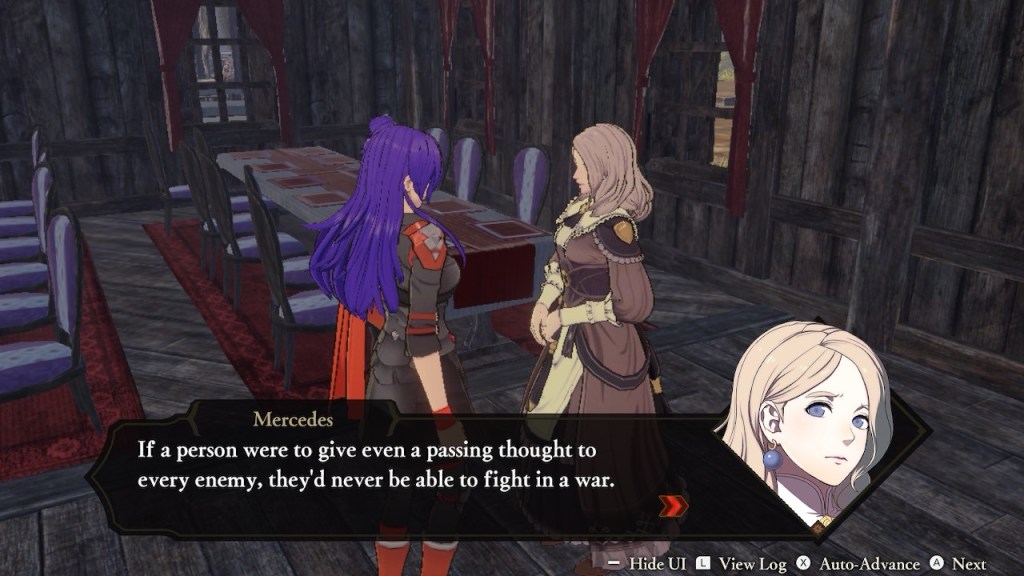
A scene from Fire Emblem: Three Hopes… Mercedes is a great character
Not too long ago, I was yelled at by a neighbor for something me (and my dog) didn’t do. It was frustrating. I tried to explain, but they didn’t listen and cursed and yelled at me. I was pretty angry, but I managed to hold my tongue and just walk away. Even now, weeks later, I am still a bit raw about it, and every time I walk past that house (which is almost daily, unfortunately), I still am a little bitter about it.
But then I have to remind myself the opening words of the Dhammapada, or the example of the Bodhisattva Never-Disparaging. Because ill-will is one of the Five Hindrances, it must be counteracted with goodwill (or at least wisdom to see why ill-will is self-destructive).
Further, because the Never-Disparaging Bodhisattva was able to practice the Buddhist path to fruition, there’s a second, related teaching that the Lotus Sutra emphasizes.
The start of the chapter talks about how those who uphold the Lotus Sutra purify their senses, and the Bodhisattva Never-Disparaging has his senses purified before his death. This “Lotus Sutra” isn’t the historical Lotus Sutra as a text, it is the deep, fundamental teaching of Buddhism that the text represents. The Bodhisattava’s unwavering conduct in the face of adversity led to his awakening to (i.e. he “heard” the teachings of) the Lotus Sutra and his senses were purified. He saw world with clarity and purity, and was this capable of teachings others.
Further, the other disciples picked up on his change. It’s not clear how or why, but there was just something “different” about him, and this metaphorical (not literal) aura was something that others around him picked up on.
You can find similar teachings in Yogacara school of Buddhism, even when it’s phrased differently. In Yogacara Buddhism, they talk about the mental feedback loop or “seeds” of the mind planting and replanting themselves through our thoughts, choices and habits. Like a pair of jeans, these seeds also give off a “scent” or “perfume” in Yogacara terms. If you wear a pair of jeans to a bar, it smells like tobacco and alcohol. If you wear a pair of jeans at a bbq, it will smell like bbq. If you wear a pair of jeans to a Buddhist temple, it will smell like incense. In the same way, one’s environment and conduct does “perfume” a person, and if one chooses the wholesome, noble path, people will eventually pick up on it. But it does require patience (shall we say _forbearance_ 😉).
Forbearance, like the other Six Perfections, is a very long-term virtue to perfect, with many setbacks, but as the Lotus Sutra shows, if carried to fruition, it is a great benefit to oneself, but also those around you.
P.S. The featured image is from Fire Emblem: Three Hopes, the successor to Three Houses. I have been enjoying this game too. The character here, Mercedes, is one of the nicest and most positive characters of the game. Also shout-out to Dorothy Elias-Fahn for her excellent voice-acting.
I have been avidly playing the game Fire Emblem: Three Houses since fall of last year. Yes, the game is that good. But also the game makes you think about things too, including religion.
One of my favorite characters in the game, is the leader of the Golden Deer House, Claude von Riegan (also mentioned here and here), voiced in English by Joe Zieja. Claude’s background is unusual for the game’s cast, and he keeps his identity close to his vest, but needless to say he’s had a very worldly upbringing, and sees things different than the other students who mostly grew up in Fódlan. He is just as ambitious as Edelgard, but prefers to meet his goals in a more hands-off, less forceful way.1
Unlike most of his fellow students, who grew up within the Church of Seiros, Claude tends to be pretty cynical about Fódlan’s only religious organization, and regularly questions it (this is also important to certain elements of the plot, but that’s beside the point).
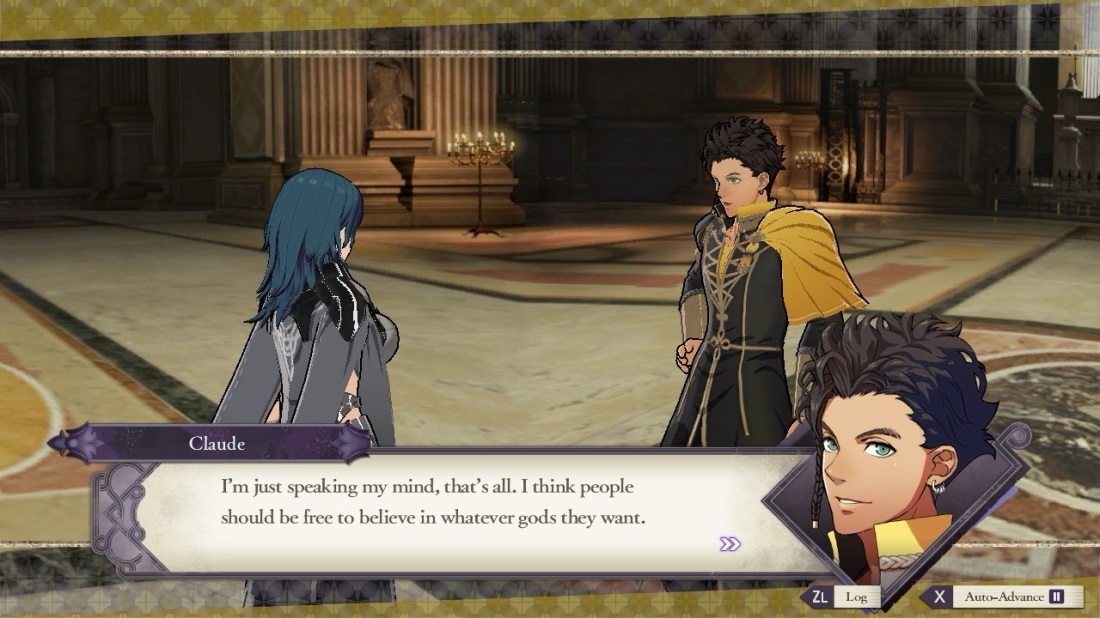
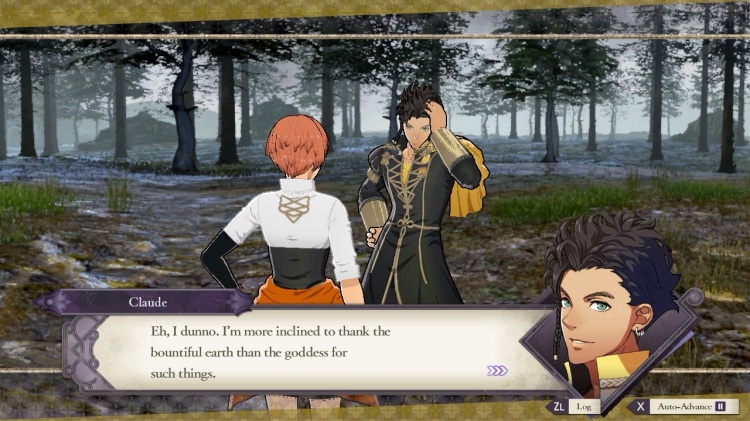
Anyhow, I wanted to share something he said that I think is worth considering (possibly out of order, I lost track of which is which):
Even though I tend to be an ardent Buddhist, I think what Claude is saying here is a healthy to look at the world and its religions. If you consider religions past and present, there have been countless gods and goddesses, rituals, liturgical languages, and so on. Even in in the same religions, practices and views diverge over time. This may offend purists, but it’s impossible to avoid, let alone manage.
Further, Buddhism has never been a particularly evangelical religion. It’s not in a race to win converts (minus a few cults), for a variety of reasons. First, this is in keeping with the Buddhist notion of metta (“goodwill”) that as long as other people have a belief system that helps them, not hinders or makes them feel bad, then that is fine. Second, the danger of imposing one’s beliefs on others is that it’s almost always fueled by ego and one’s own delusion anyway. A person’s religious beliefs, even Buddhist ones, are almost always a reflection of one’s own mind, and have to be taken with a grain of salt. Third, the Buddha clearly wanted people to take refuge in the Dharma of their own volition, and not by coercion. Even the Five Precepts are phrased as “I undertake” not as a command. Similarly with the practice of the nembutsu in Pure Land Buddhism. There’s nothing in the Buddhist canon that tells people to recite, or not recite it. It’s up to each individual to work with the tools offered in the Buddhist toolkit and apply them as best as they can. Like Claude says above, if you find a support system that works, great. This is no less true within Buddhism and its many traditions as well.
It’s generally better, and healthier for one’s own mental state, to let others be who they are, believe what they will, as long as its helpful, not harmful. The tighter one grasps, the more exhaustion and grief they inflict upon themselves, and others.
There are almost as many as variations on religious beliefs as there are people, so like the analogy of the Blind Men and the Elephant, each person is trying to feel their way through life using what resources, background and knowledge they have. Even within Buddhism, each person has their own “spin” on what the Buddha was, or what his teachings were.
It’s imperfect, but we all have to start from somewhere.
P.S. If you own a Switch, try Fire Emblem: Three Houses. 😋
1 Bit of a tangent, but of the three lords in Three Houses, I feel that Dmitri plays the role of the “conservative”, trying to restore his kingdom and the Church the way it was. Claude is the “liberal” trying to open things up and hoping it will change Fódlan, while Edelgard is the “revolutionary” who wants to change things directly (i.e. through force).









 Gleanings in Buddha-Fields
.jpg)


You must be logged in to post a comment.