“Between you and me, the words, like mortar, separating, holding together those pieces of the structure ourselves.
To say them, to cast their shadows on the page, is the act of binding mutual passions, is cognizance, yourself/myself, of our sameness under skin; it rears possible cathedrals indicating infinity with steeply-high styli.
For when tomorrow comes it is today, and if it is not the drop that is eternity glistening at the pen’s point, then the ink of our voices surrounds like an always night, and mortar marks the limit of our cells.”
Roger Zelazny, Creatures of Light and Darkness (1969)
“I hope that your Engels and your Lenins never replace the religion that I hate, or the superstitions I have battened upon. You Babakov, have more blood on your hands than I have ever drunk. In destroying the gods of light you are also destroying the Dark Ones. We shall be avenged!”
Roger Zelazny, “On the Road to Splenoba”
I found this quote recently in an old, obscure Roger Zelazny short story titled On the Road to Splenoba, in which a vampire comes into contact with a Communist official with a surprise ending. No spoilers, sorry.
Anyhow, I just thought this quote was really neat because it speaks to the way the modern world has kind of destroyed the worldview where higher powers manage everything. We can’t attribute the motions of the planets, or the weather to deities the way we used to, because we know “under the hood” how these things work. People are no longer at the mercy of diseases thanks to medical technology.1 Of course, with the benefit of science, we also have a much better picture of the origins of the Earth, life, etc.
However, as the quote alludes to, it also feels like a bit of the magic of the world is gone too.
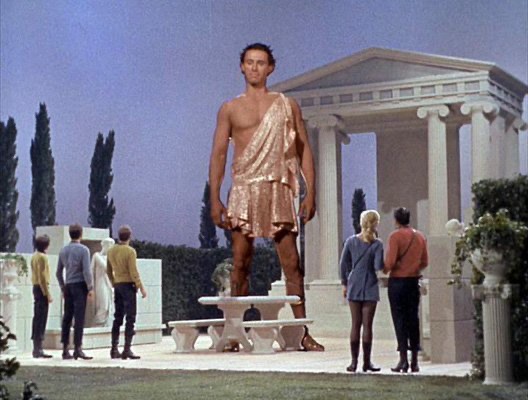
This reminds me of the Star Trek episode “Who Mourns for Adonais?“, when the Enterprise encounters the ancient Greek deity, Apollo, on a remote planet, and ultimately kill him in order to escape his grasp.
The “god” Apollo, played by Michael Forest.
The ending is melancholy:
KIRK: Would it have hurt us, I wonder, just to have gathered a few laurel leaves?
Star Trek, “Who Mourns for Adonais?” (s2ep2), stardate: 3468.1
The human race had outgrown Apollo, and gone on to accomplish many great things, yet it also cost something in the process. Maybe this is like growing up, trading a child’s imagination and wonderment for an adult’s self-mastery and freedom to choose one’s life…
1 Skepticism toward medical science is a modern issue though… 🙄. I doubt few who lived in the era of measles would object to taking a vaccine, but people have the luxury of choice now, even if those choices are reckless ones.
The moral, therefore, of my sermon on this small mount is this— even a mirror will not show you yourself, if you do not wish to see.
Roger Zelazny, Lord of Light
Self-reflection is one of the most important aspects of the Buddhist religion, and a critical component of emotional intelligence. And yet, self-reflection is surprisingly difficult to do. Peering into oneself, seeing the ugly sides of our personality, and not running away from it is a difficult thing to do.
But it can also be an illuminating experience if you are willing to face your darker self, and wind it backwards and figure out why it is there, why you feel or think the way you do.
As much as we like to think we are responsible, good people, the reality is is that our “shadow self” (to paraphrase Jung) is there, and it makes a mockery of many things we do. It doesn’t mean we are bad people or fake, just that we have to acknowledge that we are still motivated by basic needs, and that these are irrational and selfish. Hairless apes, in other words. 😉
Life’s incessant ceremonies leap everlasting, humans spring eternal on hope’s breast, and frying pans without fires are often far between…
Roger Zelazny, Sign of the Unicorn
This quote from the Chronicles of Amber series, a hugely underrated fantasy series these days, sums up many aspects of life nicely. Life is, in many ways, one damn thing after another, with only brief respites in between.
Of course, this is what the Buddha warned in the first of the Noble Truths. He described life is being marked with dukkha. It doesn’t mean we are always writhing in agony, it’s just that life is marked with dukkha, and it rears its head from time to time.
But what is dukkha?
The analogy frequently used back then was the example of a potter’s wheel:
A potter’s wheel that runs smoothly and easily was described using the term sukkha. But dukkha is more like a potter’s wheel that wobbles, grinds when it turns, and requires effort to keep it spinning. Similarly, life feels like a grind sometimes.
Of course, someone may point out that’s the point of life:
MCCOY: Well, that’s the second time man’s been thrown out of paradise.
KIRK: No, no, Bones. This time we walked out on our own. Maybe we weren’t meant for paradise. Maybe we were meant to fight our way through. Struggle, claw our way up, scratch for every inch of the way. Maybe we can’t stroll to the music of the lute. We must march to the sound of drums.
Star Trek, “This Side of Paradise” (s1ep25), Stardate 3417.3
The Buddha didn’t necessarily say life is “evil” or “awful”, but pointing out the obvious: there is no rest, no lasting refuge. Also, even though sometimes life really does feel awful, life still goes on.
It is this need for a lasting refuge, a way beyond the great Cosmic Rat Race, that leads people to the Dharma.
Namu Shakumuni Butsu
P.S. apparently I’ve written another post with the same title two years ago. 😏
I used to be an avid Dune reader in my younger years, and posted quotes from it all the time in earlier iterations of the blog. Anyhow, I found this quote from the third book:
The universe is just there; that’s the only way a Fedaykin can view it and remain the master of his senses. The universe neither threatens nor promises. It holds things beyond our sway: the fall of a meteor, the eruption of a spiceblow, growing old and dying. These are the realities of this universe and they must be faced regardless of how you feel about them. You cannot fend off such realities with words. They will come at you in their own wordless way and then, then you will understand what is meant by “life and death.” Understanding this, you will be filled with joy.
Muad’Dib to his Fedaykin, from Frank Herbert’s “Children of Dune”
I have probably said this a few times recently, but like it or not wearenotthecenter of the Universe, no matter how much we like to think we are. The universe will carry on without or without us, and sometimes it’s capable of really wondrous moments, and sometimes it will unleash some really shitty realities on us. And there’s only so much we can do to control that. Like a raft navigating treacherous waters, we have to carefully row and pay attention to the currents.
In spite of all this, though, it doesn’t mean we have to sit and be passive either.
Speaking of old science-fiction quotes…I am an avid Roger Zelazny reader, and Isle of the Dead is among my favorite books ever. I always like this quote because of its cosmic feel, but also its unintentional Buddhist message which resembles Saicho’s famous quote about “lighting one corner of the world”:
“Earth-son, I greet you by the twenty-seven Names that still remain, praying the while that you have cast more jewels into the darkness and given them to glow with the colors of life.”
My pure land is not destroyed, yet the multitude see it as consumed in fire, with anxiety, fear and other sufferings filling it everywhere….But those who practice meritorious ways, who are gentle, peaceful, honest and upright, all of them will see me here in person, preaching the Law [a.k.a. The Dharma]
Thus, even in the midst of crisis, or madness, or despair the light of the Dharma still shines even when it seems obfuscated. It is always there for those willing to look, and for those willing to cast a few jewels into the darkness.
Finishing the last chapters of Roger Zelazny’s A Night in the Lonesome October, I wanted to post this quote:
Greymalk: “Damned if I know, Snuff. Does anybody really care about a hungry cat, except for a few friends?”
Snuff: “Maybe that’s all anybody ever has, no matter how the big show is run.”
Recently, someone at work told me a story. They took some time off and returned to their native home of Bosnia, and visited family and friends that they hadn’t seen in years. Every morning, they sat and enjoyed Turkish-style coffee with friends and family and just talked. When they came back to work, they told the rest of us that sometimes the best therapy is to just sit and talk with loved ones over coffee. Of course, this doesn’t cure everything, but even just getting into a routine of talking with loved ones face to face on a regular basis can do much to help one’s wellbeing.
My wife, kids and I try to sit for dinner every night when possible. My oldest is just about ready to leave for college, so this time will not last much longer, and we rarely ever talk about anything serious, but it’s nice to just share whatever interesting thing happened that day. Once our oldest leaves the nest, things will certainly change around the house.1
In any case, even in the most turbulent times, amidst all the chaos, sometimes all you can do is just foster relationships with the people around you. Just simply being around trusted people is a good start.
1 In the office too, those times when I could sit and chat with trusted co-workers were kind of nice even if corporate office life kind of sucked. Being laid off during the early Pandemic, and then working at a new place has cut me off from that experience because I still work from home (too many people hired during Pandemic, not enough office space). Working from home has its benefits too, but the isolation comes at a cost.
One of my personal tradition every Halloween season is to read Roger Zelazny’s book A Night In the Lonesome October, one chapter per day. The book, like all of Roger Zelazny’s writings, is a terrific book and I always find something new every time I read through it.
I felt like sharing this quote with readers:
We made our way cross-country through the colors of autumn browns, reds, yellows and the ground was damp, though not spongy. I inhaled the odors of forest and earth. Smoke curled from a single chimney in the distance, and I thought about the Elder Gods and wondered at how they might change things if the way were opened for their return. The world could be a good place or a nasty place without supernatural intervention; we had worked out our own ways of doing things, defined our own goods and evils. Some gods were great for individual ideals to be aimed at, rather than actual ends to be sought, here and now. As for the Elders, I could see no profit in intercourse with those who transcend utterly. I like to keep all such things in abstract, Platonic realms and not have to concern myself with physical presences…. I breathed the smells of woodsmoke, loam, and rotting windfall apples, still morning-rimed, perhaps, in orchard’s shade, and saw a high, calling flock V-ing its way to the south. I heard a mole, burrowing beneath my feet….
Even though I am a pretty devout (read: religious) Buddhist, I like this quotation a lot. It’s something I’ve felt for a long time: that religion works best when gods are kept at a distance, rather than an oppressive reality that must be feared and interpreted and re-interpreted over again. What’s front and center matters most. The world exists, it’s our job to learn how to live in it.
Further, I suspect everyone has a tendency to build God in their own image, hence the diversity of interpretations and approaches, but it’s all in our minds. The Buddha-Dharma is nice because it just works like the Laws of Physics or Gravity. Gravity doesn’t care whether you believe in it or not, it just works. In the same way, the Buddha-Dharma doesn’t demand fealty, respect or praise. Its teachings and goodwill are free for all. We do our best to work things out, and put the teachings into practice. How we interpret it isn’t so important. It’s just there.
Just like Fall weather, Halloween and nature.
Namu Amida Butsu
P.S. More on the virtues of knowing nothing, and just being humble.
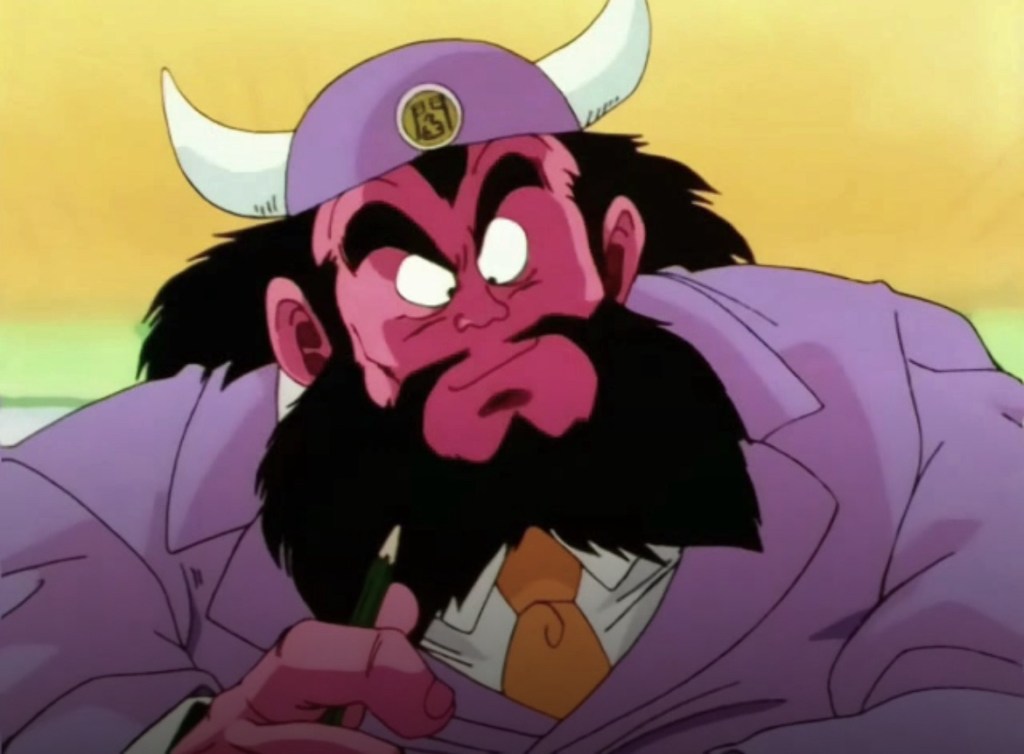
Dragon Ball is a fun series because it blends a lot of Japanese-Chinese mythology, especially the early series, into a futuristic storyline. Goku is obviously based off of the famous legend of the Monkey King, Sun Wukong (Son Goku in Japanese). Another great example is the character Enma.
In Dragon Ball, Enma (sometimes spelled “Yemma” in English) presides the realm of spirits and behaves like a modern bureaucrat. In spite of the suit and tie, this Enma is definitely based on the original figure in Japanese mythology, named Enma Daiō (閻魔大王, “Great King Enma”).
The original Enma is a fascinating example of a “fusion” mythology, not a native Japanese one. Enma is originally based on the Hindu god Yama, lord of the dead.2 However, in China he was transformed into a Confucian-style bureaucrat and shoe-horned into Buddhist cosmology as a judge of the dead. Enma, along with other judges, determine the dead’s next destined rebirth within Buddhist cosmology. During certain Chinese funerary practices and festivals, you can see his visage on “ghost money” used to help the dearly departed coast through the trial process and ensure a smooth, lenient transition to their next life.
This Enma, a bureaucrat / judge of the dead, was how it was imported to Japanese culture in antiquity. He is even featured in classics such as the Tales of the Heike. When the warlord Taira no Kiyomori is dying from a terrible fever, he has a vision of Enma and his demonic attendants awaiting him. I’ve also heard of an old tradition where parents in Japan would scold their kids saying Enma would pull their tongue out if they told a lie. I have never heard this first-hand though, so I wonder if anyone ever says it anymore.
Anyhow, Dragon Ball’s spin on Enma, Goku and others is a fun look at Chinese-Japanese mythology, for a modern era.
RIP Toriyama Akira 🙏🏼
P.S. this post was also inspired after watching the Star Trek: Voyager episode “Barge of the Dead”. It’s a fun look at the Klingon afterlife.
1 growing up in the 1980’s my obsession at the time was Akira, which I still enjoy from time to time. 😄
2 if you ever pick up the book Lord of Light by Roger Zelazny, a wonderful blend of Hindu mythology and ultra-futuristic science-fiction with a lot of sass thrown in, the Yama depicted in that novel is quite an interesting character.
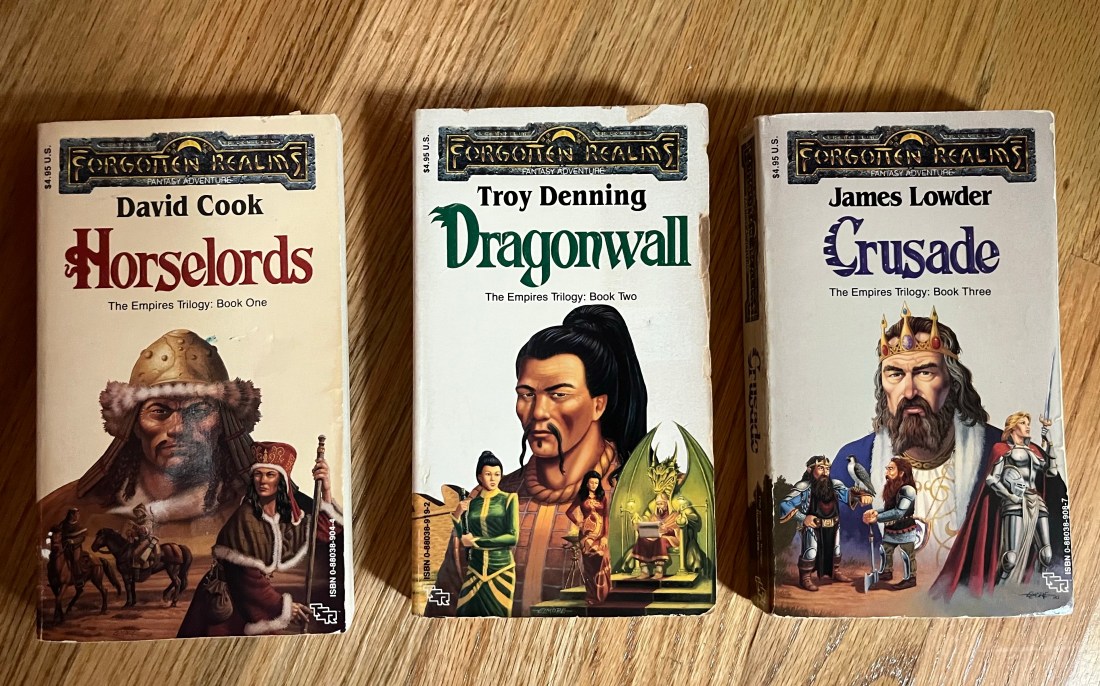
This post started with a surprise find at my local Half Price Books store. I often peruse the old fantasy paperback section, looking for Roger Zelazny novels that I haven’t picked up yet (see Spring Cleaning post), when I stumbled upon this old novel:
I suddenly remembered reading Horselords way back in the 1990’s in college, and although I didn’t remember the story much, I felt like re-reading it. It turned out to be a surprisingly good book. The story had surprisingly little to do with any Dungeons and Dragons lore apart from an odd mention here and there of magic, but instead was essentially a re-telling of the Mongol invasions of China, through a fantasy, fictional tribe called the Tuigan, headed by one Yamun Kahan. The book hints at some lore regarding the great Shou Empire, while the store is largely seen through the eyes of a foreign monk named Koja who is gradually brought into the inner-circle of Yamun Kahan. The story includes a lot of elements of the “noble savage” and “fish out of water” tropes, but overall it was a solid story as Koja gradually becomes more and more Tuigan in spite of himself. Even as his homeland is invaded by the Tuigan, Koja is a semi-willing participant in the invasion.
Having enjoyed the book, I decided to get the next two. I had never read them back in the day, not even sure if I knew they existed, but now, 30 years later, it was time to finish the series.
The second book, Dragonwall, was written by a different author, and was in many ways a different story entirely. The main character is a minor general named Batu Min Ho, who has Tuigan ancestry of his own, but was raised in Shou Lung. Through his tactical skill, he gradually rises through the ranks, earning the jealousy of some of the mandarins above him, culminating in a power struggle, and plenty of treachery that leaves his wife and children killed by the end.
Dragonwall overwhelmingly paints the Shou (fantasy Chinese) people of the Forgotten Realms in a negative light, as treacherous, back-biting, and decadent, which isn’t too surprising where court politics would be concerned but there’s little else to balance this contrast with the rest of Shou culture. This was probably meant to contrast the more brutal, yet honorable Tuigan culture, yet all the characters come off as one-dimensional and cartoonishly evil, especially the female antagonist. It plays into a lot of old, tired stereotypes about Chinese people.
Further, Batu Min Ho, having been discriminated and betrayed by the Shou, loses everything, goes rogue, literally using the Japanese term ronin (🤦🏻♂️)1 to describe himself, and joins Yamun Kahan’s horde.
The book ends with a lengthy divergence when the Tuigan under command of Batu Min Ho invade the fantasy realm of Thay briefly, which probably would’ve been interesting as a third story, rather than the end of this one.
In any case, this is where the third novel, Crusade, picks up, but once again, this book is written from the perspective of someone who is not Tuigan. This time the book is written through the perspective of the kingdom of Cormyr, a staple of the Forgotten Realms setting. This book, out of all three, has the most familiar fantasy setting since it is in a “Western” culture, so the author probably was on steadier ground and was able to afford fleshing out the characters more.
For me, Crusade, was a “slow burn” story: very slow start introducing an entirely new cast of characters with no interaction with the Tuigan. However, by the time of the climactic battle at the end, the book did an effective job of bringing everything together, including Batu Min Ho from the second book.
In spite of the rocky transition between settings across the series, shifting perspectives, and new characters each time, the final book did a rather admirable job wrapping up all the loose ends. The first book begins with a character named Koja and the third book essentially ends with him again. Coming full-circle was a nice conclusion.
The Empires Trilogy seems to have suffered from the same challenges that plagued the Star Wars sequels: No over-arching structure, and too many different “hands in the pot”, plus the stereotypical Asian characters, especially female characters, did not age well.
However, even with all the complaints, I still am glad to have finally finished the series. It was a bold attempt to make a semi-historical re-enactment of the Mongol invasions but through the lens of the Dungeons and Dragons Forgotten Realms setting. In spite of my complaints, I enjoyed the series and proudly keep it on my shelf now.
1 Western fascination of the lone warrior ronin is understandable, especially thanks to Kurosawa films, but it makes no sense for a Chinese character to use such a term, especially since it was not used for centuries later in the Edo period (17th century) when the story takes place in 12th century China.
Confucius said, The gentleman has three things to be aware of. When he is young and his energies are not fully controlled, he bewares of sexual attraction. When he is mature and his energies are at their height, he bewares of aggressiveness. When he is old and his energies have waned, he bewares of avariciousness.
The Analects of Confucius, 16:7, translation by Burton Watson
Although I don’t talk about the Analects of Confucius very often, this is a quote that I stumbled upon many years ago and often dwell on.
As I look back, I can definitely see the progression in my own life: I was a hopeless romantic in my teens and 20’s,1 bull-headed and arrogant in my 30’s while building up my career, and now as I approach my mid-40’s, I can see the greed and acquisitiveness cropping up now. My life is more stable than it was in my 20’s, and I have a bad habit of buying nostalgic things, or books I don’t need. In other words, a tendency or hoard now that I am able to do so.
After my grandfather passed away a few years ago, we had to sift through all his accumulated stuff, and it was a lot. He was not a hoarder by nature, and was comparatively organized, but it was still a lot of stuff. Similarly, my wife’s parents have accumulated some items as well.
My wife and I have both discussed that as we get older we do not want to be a burden on our kids, and that includes keeping things simple at home, so they don’t have a ton to throw out later. Easier said than done, but it’s an important thing to remember as you get older. People do naturally tend to hoard in their later years. Confucius knew it as far back as 5th century BCE, and the same pattern of human behavior is true even now in the 21st century.
The den in our home has piled up a lot of things, and this weekend I finally looked around and found tons and tons of books I didn’t need, including some D&D books I just never used (and now don’t want), really old reference books that I might have used only once yet are taking up a lot of space, and a huge collection of old Roger Zelazny novels that I had been collecting:
In many cases, I had redundant copies, with different cover art, or they were just books I didn’t want anymore, such as the latter books in the Amber series,2 or the collaboration novels that don’t interest me.3
In any case, I spent most of a day sorting books and managed to pare down my book collection by one-third, and now have 4 stacks of books sitting on the floor waiting to be sold to Half Price Books, or tossed out for good. In some cases, I can simply recycle old books where possible by removing the covers and recycling the pages. Further, I found a bunch of old journals I kept when learning Greek and Sanskrit, and while it’s fun to see the progress, they’re also taking up space.
Further, I have a bunch of DVDs, KPop CDs,4 and games I hardly ever use, probably further paring things down. I don’t need to throw them all out, but it’s not hard to separate what I actually use and want to keep (e.g. Lord of the Rings trilogy on DVD because streaming sucks) vs. things I never watch such as Star Wars sequel movies.
It really is amazing how much I have accumulated in the last 15 years.
To be honest, it’s been a great feeling to clean all this out. When I see my bookshelf looking trim and well-organized with room to spare, less schwag from random toys and figures I had accumulated, it makes me feel lighter. I may remove even more to make room, but we’ll see.
This is hardly the level of cleaning that someone like Marie Kondo might have suggested, but it is worthwhile to clean out the house from time to time, while also guarding against future impulsive purchases. Taking a half-second to think before you do something impulsive can probably save you future headaches. I have started to do this more and more in recent months, reminding myself that I am pretty happy overall with what I have, even I am still paying for years of impulsive clutter.
As I wrote in my book, much of what we carry around is as much as mental burden as it is a physical one, so sometimes it’s perfectly fine to just put it down and leave it.
For example, I even threw out some really, really old sentimental items because they were just not needed anymore. I realized that nostalgia is all well and good in small doses, but you can’t cling to everything in your past, and once you’re dead, it won’t mean anything to whomever has to clean up that stuff anyway.
Leonard Nimoy was right:
Of course, I have a hunch that I’ll be having this conversation again in 5 years, but we’ll see. 😉
1 My mother told me that I was a hopeless romantic since I was probably 5 years old, but I definitely remember being girl-crazy in high school and college. I am pretty happy that I was able to find that special lady in my life a while back, though. 🥰
2 The first five books of the Amber series are awesome and I re-read them from time to time, but the last five aren’t worth re-reading. The convoluted plot and new generation of characters really turned me off.
3 Roger Zelazny collaborated with another of authors at the time, and some of those books definitely reflect the other author more than Zelazny. Frankly, some of them just aren’t very good. I do like Coils though.
4 I was hugely into KPop about 10-15 years ago, during the days of SNSD, 2NE1 and so on, but frankly most of it isn’t really worth holding on anymore. Plus, there are the smaller groups that just never really made it, and whose CD’s it’s time to let go of.
You must be logged in to post a comment.