
SPOCK: There are many who are uncomfortable with what we have created. It is almost a biological rebellion. A profound revulsion against the planned communities, the programming, the sterilised, artfully balanced atmospheres. They hunger for an Eden where spring comes.
Star Trek, “The Way to Eden” (s3e20), Stardate 5832.3
世の中よ道こそなけれ思ひ入る山の奥にも鹿ぞ鳴くなる。
Within this world there is, indeed, no path! Even deep in this mountains I have entered, heart set, I seem to hear the deer cry!
Poem 83 of the Hyakunin Isshu, translation by Joshua Mostow
Recently, I came back from a camping trip, the last for our family before my daughter goes off to college. It was both good and bad. We stayed at Moran State Park on Orcas Island, Washington. I had been to Orcas Island a number of times over the years, but I had never really stayed there for personal reasons, so it was nice to explore at leisure for a change.

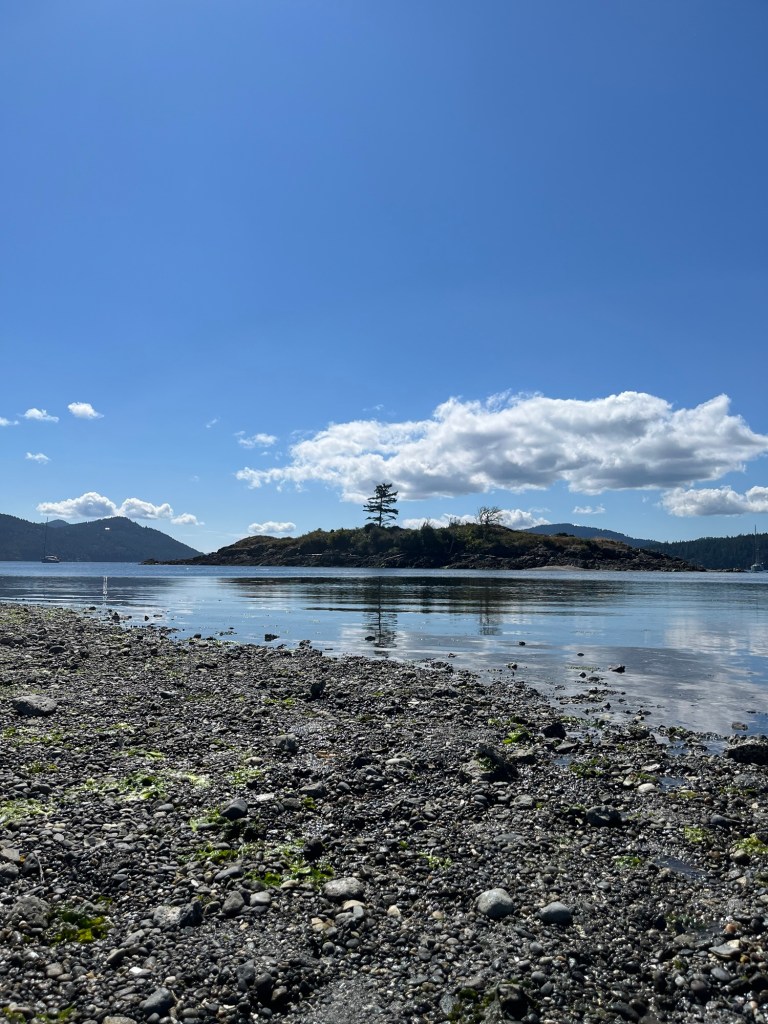

I posted the Star Trek quote above, not just because it sounds cool, but it does explore a side of us all: yearning for the simple country life. We all feel that revulsion toward modern life, and want to escape, yet even just after a couple days of camping in the woods, the smell of body-odor, noise from neighboring campers,1 and lack of food variety, Internet access, and electricity made us really eager to go back home. Even with modern amenities like gas stoves, freezer coolers and ready-made food (including instant ramen), it quickly gets old.
It wasn’t just me either. There was a lone woman camping just next to us. She brought her dog, and a stack of books to read, and seemed like an experienced camper, but it was clear that she wasn’t finding the solace she sought, and spent most of her time away from campsite to (presumably) find a quieter spot.
The fabled Eden sounds nice, but such a bucolic past probably never existed. Pre-modern life was in reality hard, exhausting, and safety was not always guaranteed.
Yet, modern life has its own challenges and dangers too. We might not die from dysentery anymore, but we often suffer obesity, isolation, and constant anxiety. We might not starve like our ancestors did, but we also eat some egregiously bad food thanks to mass-production and chemicals (including microplastics). Similarly, our fellow Man has replaced natural predators as the threat to our lives.
I don’t want to downplay the benefits of modern life, though.
The average2 lifespan of a human being in the 21st century is significantly longer than before. My little incident a couple years ago likely would have killed me before modern medicine. Dying in one’s forties was not uncommon in the pre-modern era. But the dangers of modern life are still there but now more subtle, yet catch up to us eventually.
In short, life is a struggle, no matter how long we live. Getting to old age without suffering any major health issues is something to be grateful for, but even more important is how you choose to live your life up to that point. As the Zen aphorism goes: every day is (sort of) a good day, so enjoy the moment, and try to live with some element of dignity and free of regrets.
Namu Shakamuni Butsu
1 There was a very rude family camped next to us. The mom kept yelling and swearing at her two toddler children, who in turn were constantly crying and talking back … at 4am in the morning. Ironically, the lady had a “Live Laugh Love” bumper sticker on her car.
2 The keyword here is “average”. A person in pre-modern times some people did live to their 80’s or 90’s, but the odds were against them. A single scratch leading to an infection, or a crippling injury, or a genetic precondition that we can treat now would often kill a younger person. So, if you did manage to live to a ripe old age, it was indeed a cause for celebration.



 Gleanings in Buddha-Fields
You must be logged in to post a comment.