Buddhist Sanskrit Basics

Hello Dear Readers,

This is another reference post. I noticed that one of my most popular posts is the entry on a Buddhist chant called the Mantra of Light, and there’s multiple ways to read and recite it depending on what language you choose. Anyhow, it made me realize that there’s a big knowledge gap about Sanskrit in a specifically Buddhist context. There’s plenty of Sanskrit language resources out there, but they’re focused on Hinduism, and Hindu-related literature. Even the writing system used in language textbooks, Devanagari, tends to assume certain things.

Sanskrit is a language that’s used in a variety of contexts, and religious traditions, including Buddhism, especially Mahayana Buddhism.

As a language, it is way too big to cover in this blog, and I am just a novice, but I wanted to provide some real, fundamental basics of how Sanskrit works, with an emphasis on Buddhism.

What is Sanskrit?

Sanskrit is a very old language still widely used in some contexts. It is related to Greek and Latin, among other things, but mostly as a distant cousin. The Arya people who come into northwest India spoke it natively, and then as they took over north India, they imposed their language on people there.

Just as Latin eventually morphed into languages like Spanish, French, and Italian (among others), or influenced languages such as English, German or Russian, Sanskrit followed a similar trajectory. Languages descended from Sanskrit are called Prakrits. Prakrits were the colloquial forms of Sanskrit, each with regional differences, while Sanskrit remained the “high” language, increasingly relegated to things like religious ceremonies or literature.

Why Sanskrit and Buddhism?

The historical Buddha, Shakyamuni, did not use Sanskrit when teaching his disciples. His native language was probably Magadhi (still spoken today), but he often used Pāli when speaking to others since it was so widely known. Both Magadhi and Pāli are prakrits, descended from Sanskrit.

Since Pāli was such a popular language, it was how most early Buddhist sermons were memorized and passed down to future generations. Some Buddhist traditions, especially Theravada Buddhism, preserve these sermons using Pāli.

However, as Buddhism spread northward along the Silk Road, it was recorded in yet more prakrits such as Gandhari (Pakistan area), and such, not Pāli. By this point, there were Buddhist texts preserved in all sorts of local prakrits, not necessarily Pāli, and it probably became unmanageable.

The early Mahayana Buddhists started converting texts and teachings to Sanskrit instead. While Sanskrit wasn’t a common, spoken language, it was something that everyone more or less knew, just as medieval writers in Europe all knew at least some Latin. Thus as the layers of literature built up over time, and especially outside the core areas of India, it made more and more sense to just use Sanskrit for everything. Their Sanskrit wasn’t always “pure” Sanskrit, but it was good enough.

The featured image above is of the temple of Sensoji, better known as Asakusa Temple, in Tokyo, Japan. The central altar has the Sanskrit letter “sa” for satyam (truth) prominently displayed using Siddham script. Thus, even in a place like Japan, Sanskrit is still being used.

What Writing System Does Sanskrit Use?

This is a surprisingly hard question to answer. Unlike some languages, like Greek or Chinese, it had no fixed writing system. Every knew at least some Sanskrit, but everyone wrote it down in their own way. The Pillars of Ashoka used the Brahmi script to convey Buddhist teachings to the masses, while Buddhist texts on the Silk Road were often recorded in Karoshthi, and Buddhist mantras were recorded in Siddham.

So, what writing system should Sanskrit be written in? Whatever conveys it best to the reader.

For the purposes of this blog article, we’ll stick with the Roman Alphabet, with extended diacritics. For Buddhists, there is no benefit to using modern Devanagari, since early Buddhists didn’t even use it, and it’s just an extra layer to learn. Just don’t bother. The Roman Alphabet is sufficient for Western audiences.

Sanskrit Alphabet

The Sanskrit alphabet (regardless of what script you use) is broader than English because each sound has its own letter (sometimes two), and thanks to the grammarian Pāṇini, it’s all carefully organized in a sensible system.

Many of these sounds exist in English, but do not have their own letter to distinguish them; we just pronounce them automatically. Some sounds definitely do not exist in English and require extra care.

 voicelessvoiced
openhaā
velarkkhggh
palatalścchjjhñyiīeai
retroflexṭhḍhr
dentalstthddhnl
labialpphbbhmvuūoau
consonantsvowels
Source: https://en.wikipedia.org/wiki/Sanskrit_grammar, but modified for simplicity

We can’t cover all these letters in detail here, especially pronunciation. There are some excellent pronunciation guides like the video series below. While it’s a Hare Krishna channel, not a Buddhist one, the explanations are excellent and clear.

A notes worth calling out here though:

  • – this is like a “breathy” h-sound that shows up at the end of certain words.
  • – although it looks like an “m”, it sounds more like an “ng” sound as in running. In the Buddhist tradition of praising the three treasures, the phrase Buddhaṃ Sarana Gacchāmi, it is pronounced like “boo-dang” not “boo-dam”.
  • Sanskrit distinguishes between letters like k and kh, g and gh, d and dh and so on. These are separate letters in Sanskrit. Letters with an “h” are pronounced with a puff of air. Think of the English word redhead. That’s a fairly close analogy to “dh”. Similarly, egghead, for “gh”, dickhead for “kh” and so on. Not very civilized, but it works. 😆. Thus, Buddha, can be broken down to letters bu-d-dh-a, where “dh” sounds like redhead.
    • Side note: the ph in Sanskrit is not an “f” sound. This confused me a lot when I looked at works like “phalam” (fruit). It’s a breathier “p” sound.
  • ś and are both like the English sound “sh”. A common example in Buddhism is the word Śastra, which is a kind of important treatise. This is pronounced like “shastra”, not “sastra”. I am not 100% sure how ś and differ, but for practical purposes they’re more or less the same.
  • ñ – Just like Spanish in words like El Niño.
  • The letters , ṭh, , ḍh and (the ones with a dot beneath them) are extra difficult to pronounce for English speakers since we don’t really have “retroflex” sounds (sounds where the tongue touches the roof of the mouth). Thankfully these don’t come up too often in Buddhist Sanskrit.
  • r – a nice rolled “r” sound like in Spanish, Latin, etc, not the American “r” sound.
  • v – This one is confusing, but the “v” is actually pronounced like a “w” sound. The aforementioned “Bodhisattva” is correctly pronounced like “Bodhisattwa”.

This not a complete summary, but will hopefully address some pitfalls. Let’s look at vowels too.

Vowels in Sanskrit are fairly straightforward, but with a few caveats worth noting:

  • Sanskrit vowels are distinguished by “short” and “long” sounds. As with the consonants, each one has its own letter to distinguish it, unlike English “o” which can be pronounced multiple ways. The video series I linked above shows vowel pronunciations as well. Just remembere that long and short vowels might look similar in the Roman alphabet, but they are distinct letters.
  • a is the default sound that’s used when there is no other vowel explicitly used. It sounds like “uh” as in “duh” not as in “father”; that’s the letter ā instead.
  • Sanskrit has a vowel that doesn’t really exist in English. Imagine the English word “rip”, remove the ending “p” and roll the “r”. That’s . Even the Sanskirt word for Sanskrit, saṃskṛta, uses instead of an i. Usually in English people transliterate this as “ri” instead of “ṛ”, but be aware that this is its own vowel. Also note that r is a consonant, and is a vowel. They are not the same.
  • The au sound is like English “ow”, not “aw”. Imagine hitting your head on the door-frame. That’s “au”.
  • The ai sound like the same as “yipe!”. Imagine touching a hot pan. That’s the “ai!” sound.

A Note on Pronunciation

The reality is is that, like Latin, there are few, if any native speakers today. Many people in India, and even abroad, learn Sanskrit (and for good reason), but each person colors their Sanskrit pronunciation with their own native language. That’s ok. It’s normal. So, nobody today pronounces it perfectly.

That said, even knowing a few basics rules, like the ones I highlighted above, will go a long way to really appreciating how beautiful Sanskrit is, and when reciting Buddhist mantras or prayers, it really brings them to life. Give it a try!

But also don’t worry: the Sanskrit Police will not arrest you if you make a mistake.

Sandhi Rules

Every language has at least some rules where sounds blend together or change sightly to make things smoother. Some languages have more rules than others. Sanskrit has a lot. These are called “Sandhi” rules (the grammatical term “sandhi” even comes from Sanskrit). While Sandhi rules for Sanskrit are a huge pain to learn, they are super important for making sense of Sanskrit, including Buddhist Sanskrit. Why? Let’s look at an example below.

The nembutsu, which I have discussed many many times in this blog, is sometimes written in Sanskrit as:

namo’mitābhabuddhāya

This phrase is long, and actually comprises of three words blended together, using Sandhi rules to further smooth things out.

  1. namaḥ – praise, especially reverent praise toward another
  2. amitābhaAmitabha Buddha
  3. buddhāya – Buddha, but with a dative-case ending: to the Buddha. We’ll get to conjugation soon.

Glomming words together like this is common in Sanskrit, and the Sandhi rules help “glue” them together. Of particular note is the final aḥ in the first word, followed by a vowel. According to Sandhi rules (very handy chart here), aḥ + vowel sound changes to o. So, namaḥ + amitābha becomes namo‘mitābha. The apostrophe is a visual tool to help with readability.

For Avalokiteśvara, the famous bodhisattva, if we were to praise them, the same Sandhi rule would apply: namo‘valokiteśvara.

On the other hand, if we were to praise Śariputra, the Buddha’s important monastic disciple, then according to Sandhi rules aḥ + ś would not actually change and simply be namaḥ śariputra written as two words.

Similarly, if a bunch of Buddhas (buddhāḥ) were going somewhere (gacchanti), the Sandhi rules would simply drop the : buddhā gacchanti

Anyhow, these are pretty basic examples, but Sandhi rules get complicated, and memorizing the entire Sandhi chart isn’t necessary for most people. The important thing to understand is that when two words abut one another, the final sound of the first word, and initial sound of the second often blend together to make pronunciation smoother. Further, Sanskrit often strings multiple words together in written form.

Conjugation

If you ever dealt with noun declensions in classic languages like Latin and Greek, guess what? Sanskrit has them too. Since they are distant cousins, this isn’t really all that surprising.

Modern languages have comparatively fewer conjugations because over the centuries languages become smoother and more streamlined. Modern Indian languages based off Sanskrit such as Hindi, Gujarati, and Bengali are relatively simple to learn, while Romance languages like Spanish, French and Italian are streamlined versions of Latin. In the same way, modern Greek is a simpler, more streamlined version of classic Koine Greek, which itself was a simpler, more standardized form of ancient dialects such as Homeric Greek.

Older Indo-European languages often had complicated conjugation and inflection systems, and since Sanskrit is among the oldest, it’s inflection system is quite complex.

Like every language, Sanskrit has to describe who does what to whom, and with what. Languages like English usually use prepositions like “to”, “from”, “with”, etc. Japanese and Korean uses particles. Sanskrit, Latin, and Greek use inflected endings. For example, let’s look at the word Buddha:

  • buddhaḥ , usually just written as buddha – this is the nominative form (e.g. “the Buddha”).
  • buddham, this is the accusative form (e.g. a verb does something to the Buddha)
  • buddhāya – this is the dative form meaning “to” or “for” someone. Or for indirect objects. (e.g. we give a direct object to the Buddha)
  • buddheṇa, this is the instrumental form (e.g. “with the Buddha”)
  • buddhe, this is the locative form (e.g. “on the Buddha”)
  • buddhāt, this is the ablative form (e.g. “away from the Buddha”)

And so on. You can convey a lot with inflection in just one word, but the drawback is that the rules are complicated to learn.

Further, Sanskrit divides nouns into the following declensions:

  • Masculine nouns with “a” endings – Buddhaḥ, bodhisattva, nṛpaḥ (king), etc.
  • Neuter nouns with “a” endings, satyam (truth), vanam (forest), śāstram (a Buddhist treatise)
  • Feminine nouns with “ā” endings – adityā (sun)
  • Feminine nouns with “ī” endings – bhikṣunī (a buddhist nun), nadī (river)
  • Masculine, neuter, and feminine “u” endings – bhikṣhu (a buddhist monk), Vasubandhu (the famous monk), dhenu (cow)
  • Masculine, neuter, and feminine “i” endings – Bodhi (wisdom), agniḥ (fire)
  • Nouns with “ṛ” endings – pitṛ (father), mātṛ (mother)

In short, it’s a lot. There are 12 different categories of noun declensions (Latin had 5, iirc, or slightly more if you count things like masculine first declension, etc).

Note that “grammatical gender” is not always the same as the actual gender of an object. It’s just how nouns are organized. The word for sun is “feminine”, but moon is “masculine”. There’s usually no logic to which gender a word fits, it is just what category it happens to fit.

Conclusion

Knowing Sanskrit is not required to be a devout Buddhist. Buddhism doesn’t really rely on the notion of a “holy language”, so Sanskrit is just as good as Pāli, which is just as good as Classical Chinese (a frequently underrated language), which is just as good as Korean, Japanese, English, French, Ukrainian, etc.

But Mahayana Buddhism does owe much to Sanskrit due to how the tradition grew and then consolidated along the Silk Road before coming to China. Thus, knowing even a little bit of Sanskrit is a really nice way to connect with the past, and appreciate what we’ve inherited thus far.

This page is pretty unpolished, and probably has a few errors, but I hope you find it useful.

Namo’mitābhabuddhāya

Edit: Somehow my blog app kept re-posting an old draft, making publishing difficult. This should all be cleaned up now, and other typos have been corrected as well.

P.S. Counting down to Bodhi Day

Tendai for Dummies

Hi all,

Recently, I posted a train of thought, trying to reconcile some challenges in staying true to the Buddhist path while also making it simple and accessible too, plus reflecting on my own failings from time to time. I didn’t have much of a solution, just some ideas.

A photo in the old quarter of Kyoto city, near Kiyomizudera Temple. This pagoda (a Buddhist stupa) was reputedly built by the pious Prince Shotoku.

Anyhow, soon afterwards, it kind of hit me that much of what I suggested or valued was pretty consistent with my limited experiences with Tendai-sect Buddhism. In fact, one could easily argue that any Buddhist sect has grappled with this same challenge, and found novel ways to keep Buddhism fresh and accessible.

I have been off-and-on a follower of Tendai Buddhism for a few years now, particularly because it tends to be really broad and open to various practices and such. It’s perfectly to fine to venerate Amida Buddha, and recite the Heart Sutra, meditate zazen, and/or recite the Mantra of Light. This flexibility is a bit different from other sects in Japanese Buddhism which tend to specialize in one thing: nembutsu for Pure Land, zazen for Zen, etc.

The price for that openness and flexibility, is that it also tends to be more complicated, I have noticed. Tendai in Japanese tends to have a lot of technical jargon, and theories. These are fascinating on an intellectual level, but sometimes, as a working parent with barely enough sleep, you just need a more straightforward approach.

While reading my sole book in Japanese on Tendai Buddhism, I did find a nice quote on how to apply the Tendai concept of “Morning Daimoku, Evening Nembutsu” (previously discussed here) in daily practice though. Here is the quote with a rough translation:

天台宗は四宗融合を掲げる「一乗仏教」好きなお経をとなえてかまいません。毎日、仏壇の前でお経をとなえ、自らの罪を悔い改め、仏さまや先祖に感謝し、皆の幸せを願うのは天台宗のおつとめです。

Since Tendai touts the notion of “Four Schools Unified”1 (also known as One Vehicle Buddhism), you may recite whatever sutra you like. Each day, facing your Buddhist altar, reciting a sutra, repenting one’s own faults,2 expressing gratitude toward the Buddha and/or ancestors, wishing happiness to all, this is the daily practice of Tendai.

Much like the Shushogi in Soto Zen, composed in the late 19th century, this emphasizes for lay-followers a combination of daily cultivation (otsutomé, おつとめ) coupled with self-reflection. If you choose to specifically recite the basic Tendai daily liturgy, it takes about 5 minutes or so. Even if not, daily, long-term, sustainable practice is the recommended approach.

Anyhow, just something I wanted to share. 🙂

P.S. featured photo is a Buddhist stupa (pagoda) we saw in Kyoto in July 2023 near Kiyomizudera. If I recall correctly, this pagoda is attributed to the semi-legendary Prince Shotoku.

1 四宗融合 (shishū-yūgō) – the four schools meaning Zen, Pure Land, Esoteric Buddhism and Precepts, if I recall correctly.

2 Namely, how does one’s actions compare with the Buddhist precepts regarding conduct?

The Thirteen Buddhas and Bodhisattvas

I saw this Twitter recently:

The hanging scroll in the Twitter image shows the so-called Thirteen Buddhas and Bodhisattvas, or jūsan-butsu (十三仏), of Japanese Buddhism. This is a collection of Buddhas and Bodhisattvas in the Mahayana tradition that often appear in things like funeral ceremonies, esoteric rites, and other things. Each one has an associated mantra (inherited from esoteric-Buddhist traditions, even in non-esoteric sects), and an associated memorial day.

This is an example I found in a Rinzai-Zen Buddhist service book. Rinzai Zen isn’t an esoteric sect, but does historically borrow certain liturgies and practices, hence you can find things like this.

You can find some details here, but I also listed them out in the table below:

DeityJapanese NameMemorial Day Since FuneralJapanese Mantra1Pronunciation
AchalaFudō-myō-ō27th day after funeralノウマク サンマンダ バサラダン センダンマカロシャダ ソハタヤ ウンタラタ カンマンNōmaku sanmanda bazaradan sendan makaroshada sowataya un tarata kan ma
Shakyamuni Buddha3Shaka Nyorai14th day afterノウマク サンマンダ ボダナン バクNōmaku sanmanda bodanan baku
Manjushri BodhisattvaMonju Bosatsu21st day afterオン アラハシャノウOn arahashanō
Samantabhadra BodhisattvaFūgen Bosatsu28th day afterオン サンマヤ サトバンOn sanmaya satoban
Ksitigarbha BodhsiattvaJizō Bosatsu35th day afterオン カカカビ サンマエイ ソワカOn kakakabi sanmaei sowaka
Maitreya BodhisattvaMiroku Bosatsu42nd day afterオン マイタレイヤ ソワカOn maitareiya sowaka
The Medicine BuddhaYakushi Nyorai49th day afterオン コロコロ センダリ マトウギ ソワカOn korokoro sendari matōgi sowaka
Avalokitesvara BodhisattvaKan’non Bosatsu100th day afterオン アロリキャ ソワカOn arorikya sowaka
Mahasthamaprapta BodhisattavSeishi Bosatsu1st year afterオン サンザンサク ソワカOn sanzansaku sowaka
Amitabha BuddhaAmida Nyorai3rd year afterオン アミリタ テイセイ カラウンOn amirita teisei kara un
Akshobhya BuddhaAshuku Nyorai7th year afterオン アキシュビャ ウンOn akishubya un
Vairocana BuddhaDainichi Nyorai13th year afterオン アビラウンケン バザラ ダトバンOn abiraunken bazara datoban
Akashagarbha BodhisattvaKōkūzō Bosatsu33rd year afterノウボウ アキャシャ キャラバヤ オン アリキャ マリボリ ソワカNōbō akyasha kyarabaya on arikya maribori sokawa

This is knowledge that most Japanese-Buddhists would not pay attention to, unless they are particular devoted to esoteric practices,4 or have some ecclesiastical training. Further depending on which Buddhist sect we’re talking about, you might see them often, or rarely at all. But this list is almost universal in Japanese Buddhism, and it’s fascinating to see it come up now and then, even in social media.

P.S. I’ve spoken about Taima-dera temple (the Twitter feed above) in a previous post. These days, like many old temples in the Nara area, has been folded into the Shingon esoteric sect.

P.P.S. Mantras are usually not meant to be translated. There are English translations, but it kind of defeats the purpose of mantras in the esoteric tradition. The journey is more important.

1 These are usually written in katakana script since they’re technically foreign-imported words from Sanskrit.

2 If you see ō, it means that the word is pronounced like English “oh”, but two-beats long. Japanese distinguishes between “o” (one beat) and “ō” (two beats). Same pronunciation, different length.

3 That is, the historical Buddha and founder of the religion. ‘Nuff said.

4 Usually this means devotees of either Shingon or Tendai sects. Also, some of the mantras above are pronounced slightly differently depending on whether it’s the Shingon or Tendai lineage. This is an area I don’t know very well, so if you need further details, please consult other sources.

Understanding Japanese Kanji

The kanji poster hanging in my son’s room since he was a little boy, product by Kumon.

The Japanese writing system is … complicated.

Japanese as a language isn’t particularly difficult, no more or less than other languages, but its writing system demands considerable time and investment to really get comfortable with. Written Japanese comprises of a mix of a few different things:

  • Hiragana syllabary1 – This is the default way of writing Japanese, and what most people, including kids in Japan, learn first. Note that hiragana characters are “syllables” not letters. One sound equals one hiragana character.
  • Katakana syllabary1 – The katakana is a 1:1 analogue to hiragana. In other words, every hiragana character has a corresponding character in katakana, but katakana looks more “blockey”, less flowing, than hiragana. It is most often used with foreign words, Buddhist mantras, or just for impact (e.g. sound-effect words in manga).
  • Chinese characters – Also known as kanji.

A typical sentence might look like: 今日ズボンった。Everything in blue is kanji, everything in red is katakana, while everything else is hiragana. I’ve spoken about the hiragana syllabary (part 1, 2 and 3) already, and katakana is similar enough that it does not require a separate article. So, today we’re just covering the use of Chinese characters or kanji.

Historically, China’s neighbors, such as Korea, Japan and Vietnam spoke languages that are both very different than Chinese, yet they wanted to import Chinese technology and culture. When they imported the Chinese writing system, however, it wasn’t an simple fit. Native words sound very different than Chinese, and sounds in Chinese language don’t always exist in the native language. Thus, Chinese characters’ sounds change when they’re imported.

Returning to Japanese language, the word for Japan in Chinese characters is 日本. In modern, Mandarin Chinese this is pronounced as rì běn, but in Japanese it’s pronounced as either nippon or nihon.2 This YouTube video helps illustrate the process:

You can see how the process of importing Chinese characters into Japanese was very organic. The result is that there are often many ways to read a Japanese kanji character, depending on whether it’s read in a native Japanese way, in a Sinified (Chinese) way.

The native way, or kun-yomi, is most often used for standalone words (not compound words), people’s names, place names, and verbs. For example, the kanji is read as yama in the native way. When talking about a mountain, or in someone’s name such as Sugiyama, you would most likely see this native pronunciation.

However, the Sinified reading of this kanji is san or zan . This is the on-yomi reading, which you might see in a compound word like 登山 (tozan) for mountain climbing. It’s the same kanji character, but now it’s read as “zan” instead of native “yama”.

If you look at my son’s kanji poster above, you can see for each kanji there is a mix of kun-yomi readings and on-yomi readings. Some kanji (夕) have maybe only one reading. Some (下) have seven or more! It all depends on how it was imported into Japanese, and how it’s applied in the language over the centuries.

So, inevitably the Japanese language student asks: how am I going to learn all this kanji?!

Short answer is: you don’t.

Beyond maybe the first 100 kanji, the amount of time and effort to memorize the kanji rapidly becomes untenable, and you get diminishing returns. How many kanji have an on-yomi of shō ? A lot, too many to remember which is which. Also, the further along you go, the more obscure and specific kanji get, so the returns worsen over time. They’re important, but show up in increasingly specific contexts.

Further, using mnemonics or pictures to learn the kanji is only useful when the kanji actually looks like something, which is mostly the basic kanji only. The aforementioned 夕 does look like a moon at evening, so mnemonics work. But what about 優?3

Don’t get me started on the Heisig method. It’s a useful way for learning how to break down Kanji into discrete bits, but beyond that it doesn’t provide much value for the amount of work required.

No, the only way to learn kanji is to not learn them individually.

Instead, focus on building your vocabulary, and learn the kanji as they come up. I talked about this a while back as the “convergence method” but there’s no magic here. As you learn more vocabulary words, certain kanji come up often, and you’ll learn to anticipate their readings in future words. Sometimes you get it wrong, and that’s OK, other times you nail it perfectly.

But there is one other feature of Japanese you should leverage often: furigana.

Furigana is a reading aid often used for younger readers, and for language students by putting reading hints just above the kanji characters. For example lets look at the sentence above now using furigana: 今日きょうズボンった。

This is much easier to read. It still flows nicely in Japanese, but now we have the pronunciation hints (written in hiragana) right above each kanji.

If you find yourself embarrassed for relying on furigana, don’t be. This is how grade-school kids in Japan learn to read. This is how my kids (bi-racial Japanese-American) here in the US learned to read Japanese. In time, after seeing the same word 50 times, the reader doesn’t even need the furigana anymore, and can read without it, but it helps smooth the transition. When I was learning to ride a bike as a kid, I relied on training wheels, but as my confidence grew, I could ride without using them. The training wheels were still there, but I was riding more and more steady, so I hardly noticed when my dad took them off.

So, the key to reading Japanese well, including kanji, is to read native media that uses furigana. Many manga for younger audiences (including my favorite Splatoon manga), use furigana for all kanji characters and it makes the process of reading, plus looking up unfamiliar words, much easier. Even adult media uses furigana to help with more advanced, obscure words.

The point of all this is that learning kanji isn’t a slog of memorizing hundreds or thousands of characters, it’s more about learning to read vocabulary, preferably using native media. The latter approach is way more fun, and actually provides value in the long-run versus memorizing a bunch of kanji in isolation, then forgetting everything.

Chinese characters are great, and convey a lot of things that alphabetic systems can’t, but they are also pretty complicated and require considerably more ramp-up time.

P.S. if you use WordPress, this is how you add furigana to your Japanese text.

1 These are syllabary, not alphabets, because each character represents a full syllable, not a single consonant or vowel.

2 Side note, 日本 was used in other countries, like Korea and Vietnam, and their pronunciation differed too. Korean language pronounces it as Ilbon, while in Vietnam it’s Nhật Bản.

3 Confusingly enough, same pronunciation as 夕, by the way.

Towards a Modern Buddhism, Sort Of

In my limited spare time, I often follow the amazing Youtube series: Extra History, which covers a lot of unspoken, or lesser-known aspects of world history in the form of short mini-series. One mini-series covers the history of Indonesia through the maritime empire of Majapahit. The last video covers the conversion of Indonesian culture from Hinduism/Buddhism to Islam:

One of the points raised was that Islam was a much more portable religion since it only required books (namely the holy Qur’an), and Arabic religious-cultural practices. In contrast, Buddhism has typically required elaborate monasteries and temples. This is not always the case however, as Buddhism arrived in China as a merchant’s religion as well, and gradually “percolated up” through Chinese society (quoting Charles B Jones in this excellent book, which I’ll cover in another post soon) but it suffered greatly when Buddhism was persecuted around 845, destroying many of the great monastic centers of learning that had sprung up over the centuries.

Setting aside the virtues of one religion versus another (which is definitely not my point here), it shows how religion is healthiest when it is portable, flexible, and adds value to the society at large, rather than stifling it. I would term this “heavy religion” versus “lightweight religion”.

One can easily look at any religion and finds examples where religious institutions meshed with politics, or became bloated with doctrine, dogma and philosophy after an initial period of innovation. One can easily find examples where religion catered to the well-educated elite, and became aloof to the problems of people on the ground.

This is the problem I think that faces Buddhism in the West.

Buddhism began as an ascetics religion, since this was very commonplace at the time in India (5th c. BCE), hence it prioritized the monastic community, and the monastic community has in turn provided an important element of stability and continuity across the ages. But also, that was a particular time, place and culture. Even when Buddhism circulated in Chinese culture, they ran into cultural clashes with the native Confucian literati that found the monk’s begging for alms, and living celibate in monasteries (instead of fulfilling filial duties to parents) grating and disgraceful. This forced Chinese Buddhist communities to adapt and disregard some practices from India while defending against Confucian criticism.

Similarly, the import of Asian Buddhism to the West has hit plenty of culture clashes, too many to list here. Some of this comes in the form of shady teachers, who abuse the teacher-disciple relationship, monastic communities that demand excessive alms and funding, or cults that can’t “make it” back home, but find fertile ground in the West preying upon naïve people. Finally, speaking from personal experience, many Buddhist converts in the West can behave elitist, even when well-intentioned, thus conflating bad stereotypes about “liberal, elitist culture”.

People have tried to solve this culture clash in a number of ways, either reinventing Buddhism to fit a “hip, new Western society” (groan…), or double-down on traditional Buddhist culture, either becoming insular or making well-meaning, but flawed attempts to translate traditional culture to a different culture. Or, they’re just shady guru cults.

None of these approaches are wrong, by the way (except the cults), but it underscores challenges for religions in crossing one culture to another.

But put yourself in the shoes of a working-class person in small town in rural America, with a demanding, minimum-wage job trying to support their kids. Expecting such a person to master the subtleties of Tibetan culture, or to learn Sanskrit mantras, or to find a reliable Zen meditation teacher is asking a lot. Some people make it work, most simply can’t.

It’s not their fault either; these Buddhist practices are all luxuries that the vast majority of society can’t realistically invest time in. Most people spend most of their time just making ends meet. It was true in medieval Asian society as much as it is today. While people in Silicon Valley can afford comfy desk jobs and trips to the next door coffee shop in between meetings, the people working in that coffee shop have to work annoying day jobs serving their coffee, and take a long commute home with 2-3 buses. And don’t forget the unseen people cleaning up the tech office overnight, scrubbing toilets, etc.

The point is is that all of these people are important to society, and if religious teachings aren’t relevant, useful, and meaningful to all of them, it will never spread beyond niche communities.

This is the problem that Buddhism faces, I think. I don’t have a good solution for this either. In Asia, similar problems have been dealt through lay-oriented Buddhist communities, both modern and medieval, gradually developed over decades or even generations, where monastic institutions are minimal or non-existent, and practices are straightforward and portable, yet steeped in deeper meaning in line with mainstream Mahayana Buddhism. Such communities have yet to fully take root in the West, and until they do, Buddhism will remain a tiny niche in the West and doomed to wither on the vine.

Happy Birthday, Honen!

Today, April 7th in the Japanese-Buddhist calendar, is a holiday called Shūso Gōtan-e (宗祖降誕会) which celebrates the birthday of a monk named Honen (法然, April 7, 1133 – February 29, 1212). Ostensibly, Honen was a monk of the Tendai sect in Japan, but went on to be a founder of the Jodo-Shu or “Pure Land” Buddhist sect, as well as many other spin-offs. You can read more about his biography here.

Portrait of Honen by Shinkai (忍海), courtesy of Wikimedia Commons.

Honen didn’t invent Pure Land Buddhist as a practice and tradition. We can see earlier examples such as Genshin who were already practicing it avidly, and indeed, Pure Land Buddhism had been popular for centuries, especially when the social order was breaking down in the 12th century.

However, what Honen did and why he’s still revered today is his efforts to make the Pure Land practices as utterly accessible as possible through recitation of the nembutsu. Where many career monks were concerned with politics, or were seemingly aloof with the plight of people outside the Heian-period aristocracy, Honen really went out of his way to help others, and teach them a simple, straight-forward Buddhist practice, without discriminating by social class or gender.

Honen’s encounter with the woman of the night has always been one of my favorite stories about him, and underscores his easy-going manner, and his commitment to helping anyway he could. Even after his exile from the capitol, he maintained his monastic vows, and taught the Pure Land even to his dying breath.

Admittedly, I do have some quibbles about Honen’s approach to Pure Land Buddhism, and James L Ford’s book on Jokei, a critic of Honen, rightly points out how Honen cherry-picked teachings from earlier Pure Land masters to suit his own viewpoint. However, one thing is certain: Honen was very sincere in his efforts even if one might questions his methods. He did not get delusions of grandeur the way some contemporaries did, and he did not retreat to monasteries in pursuit of the truth. He was out among the masses all the time, teaching fellow monks, nuns, and lay people everything he knew.

So, happy birthday Honen! Thank you for teaching this American, 800 years later, about the nembutsu, and helping me get started on the Buddhist path when I needed it most.

P.S. another contemporary critic of Honen, Myōe, tried to do something similar by promoting the Mantra of Light, but for whatever reason it never quite caught on. Similarly, Nichiren promoted the odaimoku a couple generations later.

All of these monks, Jokei, Myoe, Honen and Nichiren were all talented teachers and sincerely sought to help others, but for whatever reason, perhaps because Honen was the first, or something dynamic in his teachings, achieved an impact on Japanese Buddhism not seen since.

The Amitabha Root Dharani

The Amida Nyorai Konpon Dharani (阿弥陀如来根本陀羅尼) or “Amitabha Root Dharani” is a dharani used in some Japanese Buddhist sects, typically only on the Segaki ritual used to feed the hungry ghosts in Buddhism, or possibly funerals and other similar services. It is typically only found in esoteric rituals in Shingon and Tendai Buddhism, but can be found in Jodo Shu and Zen as well. The dharani is typically of very, very limited use, and not part of normal liturgy.

This page is intended to post the dharani for reference purposes only. Esoteric practices such as mantras and dharani should only be used as recommended by one’s teacher, under a guided training program. I found reference material on this dharani to be almost non-existent in English, hence my decision to post it here.

This page will provide both the Sino-Japanese reading follow by the Sanskrit reading. There are multiple versions of the dharani in Japanese, so pronunciation may vary slightly between them, so for this reason the Sanskrit is provided as well. No translation will be provided as this is part of the esoteric training one should undergo when learning the dharani. Any translation you see online of this, or any mantra/dharani, should be treated as suspect.

Can’t read the characters?

If you’re having trouble reading the Kanji characters, you might have one or two problems with your computer:

  • Your computer may not have Asian fonts installed. In Windows you have to enable UTF8 and East Asian fonts under the Control Panel. Modern Mac computers are fully compatible already.
  • Your browser may be assuming the wrong character set. If you use a relatively modern browser and use UTF8 as character set, you should be able to read fine. IE, Firefox and Safari all read this fine as far as I can tell.

Even if not, then you can still use the romanized characters, and the (terrible) English translation.

Disclaimer and Legal Info

I hereby release this into the public domain. Please use it as you see fit, but if you attribute it to this site, greatly appreciated. Also, please bear in mind this is an amateur work, and should not be taken too seriously.

Dedication

I dedicate this effort to all sentient beings everywhere. May all beings be well, and may they all attain perfect peace.

Namu Amida Butsu

The Amitabha Root Dharani

Japanese Kana

ノウボウ アラタンノウ タラヤ-ヤ-ノウマク アリヤ-ミタバ-ヤ- タタギャ タヤ-アラカテイ サンミャクサンボダヤ-タニャタ オン アミリテイ アミリトドバンベイ アミリタサンバンベイアミリタギャラベイ アミリタシッデイ アミリタテイゼイ アミリタビキランテイアミリタビキランタ ギャミネイ アミリタギャギャノウ キチキャレイアミリタドンドビソバレイ サラバアラタ サダネイサラバキャラマキレイシャ キャシャヨウキャレイソワカ

Japanese Romanization

nōbō aratannō tarayāyānōmaku ariyāmitabāyā tatagyatayāarakatei sanmyakusanbodayātanyata on amiritei amiritodobanbei amiritasanbanbeiamiritagyarabei amiritashiddei amiritateizei amiritabikiranteiamirita bikiranta gyaminei amirita gyagyasō kichikyareiamirita dondobi sobarei sarabārata sadaneisaraba kyarama kireisha kyashayō kyarei sowaka

Original Sanskrit

Namo ratna-trayāyanamaḥ āryāmitābhāya tathāgatāyārhatesamyak-saṃbuddhāya.Tadyathā oṃ amṛte amṛtodbhave amṛta-saṃbhaveamṛta-garbhe amṛta-siddhe amṛta-teje amṛta-vikrānteamṛta-vikrānta-gāmine amṛta-gagana kīrtikareamṛta-dundubhi-svare sarvārtha sādhanesarva-karma-kleśa-kṣayaṃ-kare svāhā!

Additional Links

All in Japanese, and used for reference.

Example Chant in a Japanese Buddhist Service

An example of this can be seen on Youtube:

P.S. This is an old post from my former blog that I thought I had lost, but recently recovered. Reposting here with better blog formatting. Otherwise, I haven’t changed the contents.

Funerary and Memorial Practices in Japan

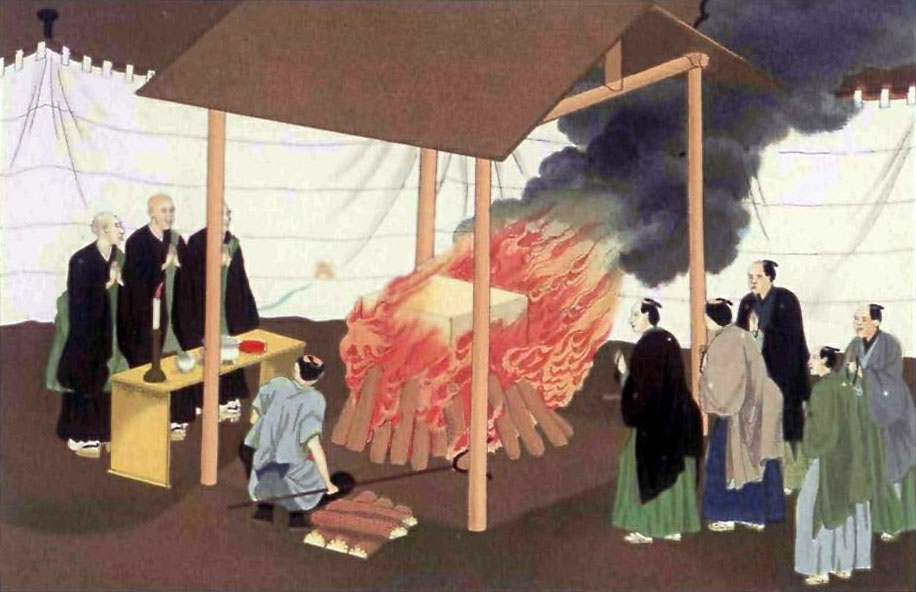
Since my mother in law passed away recently, and my wife is back in the US, I’ve had a crash-course on memorial practices in Japanese culture, and wanted to share in case others run into this too. Much of these practices are rooted in a fascinating combination of native Japanese religion, blended with Indian-Buddhist practices and with Chinese-Confucian customs. It’s noticeably different and more structured than what Americans might be familiar with, but let’s take a closer look.

Buddhism, Not Shinto

One thing to clarify first, is that even though Japan has essentially two religions, Shinto and Buddhism, they tend to operate in different social spheres, and people are not required to profess faith in one other the other, so people freely operate between them.

In any case, Shinto places great importance on ritual purity, and death is a traumatic, impure experience. Shinto tends to focus a lot more on this-worldly relationships with the kami, so it doesn’t say much about the afterlife.

By contrast, Buddhism doesn’t emphasize ritual purity, and does have a much more detailed understanding of the afterlife. Hence, regardless of one’s personal beliefs, funerals are almost always conducted with a Buddhist temple. In Buddhist funerary practices, bodies are typically cremated, not buried, and the grieving family will help transfer the bones of the deceased into the urn in a special ceremony. Also, unlike in the West, white is the color of death and funerals, not back. You can see this in folklore regarding ghosts and such.

Parishes

Since premodern times, families in Japan have frequently registered with a local Buddhist parish or danka (檀家) for a particular Buddhist sect. Thus, even if one is not actively involved in a particular Buddhist community, the default Buddhist parish the family belongs to normally handles the funeral affairs.

This tends to give Buddhism a reputation in Japan as a “funeral religion”, but has a lot more to do with politics and history than religion itself. That’s a story for another day.

Proper Dress for Funeral

Funerals in Japan are very formal affairs, including dress code. If you ever attend a funeral there, it is proper to wear conservative, business formal attire (e.g. suit) in black, with matching black shoes. This is in contrast, for example, with my grandpa’s funeral six years ago, when half the family just wore jeans. 🤦🏼‍♂️

A Buddhist rosary is often carried as well, even if one is normally a practicing Buddhist. For those who don’t normally practice Buddhism, a simple “funeral” rosary can be easily obtained.

Funerary Gifts

An example envelope for okōden. Normally the names of the recipient family and giver would also be written too.

One practice that surprised me a bit after my mother-in-law passed away was the practice of okōden (お香典) which is money, wrapped in a special black-and-white envelope, given to the grieving family. In some cases, the monetary gift can be quite large, and is (as far as I can tell) meant to help defray funeral expenses and just support the family. It’s similar in spirit to how families in America would often “bake a casserole” for the grieving family.

In keeping with Japanese customs, the recipient will sometime later give a gift in return (okaeshi お返し) that costs roughly half what original gift was.

Purification After Funeral

It is a common practice in Japan to toss a pinch of salt over one’s shoulder after a funeral. Salt is thought to function in the same way that holy water might in the West: purification against evil spirits. This may be another practice adopted from Chinese culture, wherein it is thought that evil spirits follow tragedy or those who loss in their lives.

Posthumous Names

Another practice that has carried on since medieval times in Japan is the bestowing of a posthumous Buddhist name. Each sect has a different naming convention, but these are always bestowed to the deceased (and is written on their funerary tablet) to signify their connection to the Buddhist community and so on. These names originally were probably ordination names, allowing the deceased’s spirit to “take tonsure” as a Buddhist monk or nun. I am unclear how widely this is believed now, but in any case, it is almost universal to receive some kind of posthumous Buddhist name as part of the funeral process.

Home Veneration

A common practice, likely inherited from Chinese-Confucian reverence for one’s ancestors, is to enshrine a picture or funerary tablet to the deceased in one’s home altar. In our altar here at home, we have a small picture of my mother-in-law there below and to the left of the central Buddha statue. I remember visiting my wife’s extended family in Japan, and seeing a similar arrangement for her uncle who had died some years back due to leukemia.

No Celebration of New Year

For the first New Year following a loss in teh family, the grieving family is not supposed to take part in New Year’s celebrations. I believe this is also tied to Confucian practices. Consider this quote from the Analects:

[3:26] The Master [Confucius] said: “Men of high office who are narrow-minded; propriety without respect and funerals without grief: how can I bear to look at such things?!”

Translation by Charles Muller

and:

[1:11] The Master said: “When your father is alive, observe his will. When your father is dead observe his former actions. If, for three years you do not change from the ways of your father, you can be called a ‘real son’ (xiao; 孝).”

Translation by Charles Muller

Funerals must show proper grief if they are to properly venerate one’s ancestors, and so a number of strict practices continue to this day within the first year of mourning:

  • New Year’s cards (nengajo) are not sent out that year.
  • Families in mourning do not go to shrines or temples on New Year’s day (e.g. hatsumōdé)
  • Families in mourning do not setup New Year’s altars (kagami-mochi), nor is New Year’s food (osechi-ryōri) consumed.

Although Confucian texts imply that three years of mourning for one’s parents is proper, in practice, this is usually done for one year as far as I can tell.

Periodic Mourning

Another feature possibly adopted from Chinese culture is the set calendar of mourning that is undertaken throughout the year. These are called meinichi (命日) or kinichi (忌日) among other things, and start from every 7th day from the funeral date, up to the 49th day, and then follow a set, yearly calendar:

Day or YearJapanese NameAssociated Buddha
or Bodhisattva
7th day after funeral初七日 (shonanoka)Fudō-myō-ō
14th day after funeral二七日 (futananoka)Shakyamuni Buddha
21st day三七日 (minanoka)Manjushri Bodhisattva
28th day四七日 (yonanoka)Samantabhadra Bodhisattva
35th day五七日 (itsunanoka)Kshitigarbha Bodhisattva
42nd day六七日 (munanoka)Maitreya Bodhisattva
49th day四十九日 (shijūkunichi)The Medicine Buddha
100th day百日忌 (hyakkaki) or
more commonly 百箇日/百ヶ日 (hyakkanichi)
Kannon Bodhisattva
1st year after funeral一周忌 or 壱周忌
(both read as isshūki)
Mahasthamaprapta Bodhisattva
3rd year after funeral三回忌 (sankaiki)Amitabha Buddha
7th year七回忌 (shichikaiki)Akshobhya Buddha
13th year十三回忌 (jūsankaiki)Vairocana Buddha
17th year十七回忌 (jūshichikaiki)
25th year二十五回忌 (nijūgokaiki)
33rd year三十三回忌 (sanjūsankaiki)Akashagarbha Bodhisattva
50th year五十回忌 (gojūkaiki)

In practice, people in Japan usually only observe the first 7th day memorial, the 49th day memorial, and yearly memorials. Funerals are expensive and it’s not always practical to observe them all.

In addition to the formal memorials above, a common practice at home for the first year is tsukimeinichi (月命日), or monthly observances. These are done at home, on the same day of the month as the original funeral, and may be as simple as lighting some incense in the home altar and a short prayer. After the first year, the memorials at home also move to a yearly cadence (just like death anniversaries in other cultures).

One other note is that for these periodic memorials, certain Buddhas and Bodhisattvas are often associated with key dates. This is emphasized, or de-emphasized depending on the Buddhist sect, but these Thirteen Buddhas and Bodhisattvas are listed above where appropriate. Esoteric traditions such as Shingon and Tendai, also associate mantras with each Buddha or Bodhisattva, but that’s a topic for another day, and it’s not something your average Japanese person would know. Usually the priest keeps track of such things, or they are listed in one’s sutra book if needed.

Conclusion

This is by no means an exhaustive look at Japanese funerary practices, and there are likely mistakes or omissions here, but I hope this post sheds some light on the deep well of tradition that Japan draws upon, and how it relates both to Indian-Buddhism, and Chinese-Confucianism.

Samadhi, Schamadhi

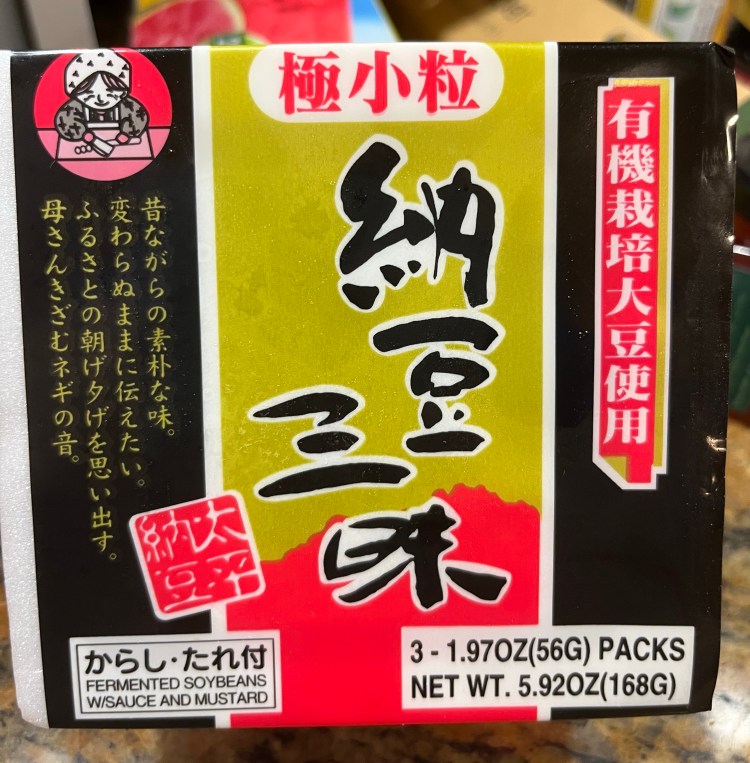
My family knows I love to eat rice and natto, or fermented soy beans, in the morning. Often with Korean kimchi. It’s a breakfast habit I started about 10-15 years ago, and never looked back. Thanks to the crunch of the pandemic, and inflation, shipments from Japan have become a trickle, and so our local Asian market will sometimes have no natto in stock, other times it will have a huge stock that quickly disappears. My wife found this new brand recently after the latest shipment came in, and the name of the product gave me a good chuckle.

The name of this product is nattō zanmai (納豆三昧), with “zanmai” being a Japanese transliteration of the Chinese-Buddhist term from the Sanskrit word samādhi. The word samadhi is something used in Indian religion in general, but refers to a state of intense concentration through meditation. It appears in a wide variety of contexts, but for now we’ll focus on the Buddhist ones. It helps to think of samādhi as being “in the zone”, but in a deeper, meditative sense.

Usually when people think of meditation, they think of the classic mindfulness meditation (a.k.a. vipassana meditation) and sometimes when one meditates here, they get into a deep, absorbed state. However, meditation is a broad subject in Buddhism, and with other kinds, including walking meditation, mantra-chanting, visualization of the Buddha, etc. In each such practice, some kind of samadhi is possible too. Even in the context of Pure Land Buddhism, chanting the nembutsu (the name of Amitabha Buddha) is said to bring about something called nembutsu samadhi if done as a long-term, dedicated practice. Honen was said to have seen the Pure Land around him during this intense state of recitation. Similarly, the intense practices of the Tendai sect were said to bring about powerful samadhi experiences as well if carried to fruition.

However, while all that is interesting for Buddhist-nerds like me, it is not the context being used for the brand of natto. The term “zanmai”, which still retains it Buddhist context, can also mean in a regular day to day context something that you’re just really into. You might even say “absorbed” by. 😎 Day to day Japanese has a lot of old Buddhist terms that have changed meaning over time and reflect cultural attitude even as their religion meaning is obscured. The term aisatsu (挨拶) refers generically to the formalities people use to greet one another, but originally derived from a Zen-Buddhist term for when a teacher would quiz his student on their grasp of Zen. Even the common phrase ganbaru (頑張る, “hang in there”) originally derived from a Zen context as well.

Of course, we do this in English too: many Christian-religious terms have gradually taken on a more pop-culture meaning as well. I have heard from an old Palestinian co-worker that this happens with Islamic terms in Arabic as well. It is a natural cultural phenomenon.

All this is to say that while natto over warm rice does not lead to meditate absorption, it is really darn good, and if like me, you eat it almost every day, you might say you’ve been pretty absorbed by it.

I’ll see myself out.

P.S. If you do like natto, this is a great brand. Definitely pick it up if you can.

The Mantra of Light as a Buddhist Practice

Mantras are a strange beast within Buddhism. The tradition of mantras predates Buddhism and goes all the way back to the early “Vedic religion”, that is the ancient devotional practices around the Vedas (precursors to Hinduism as we know it), and they continue to occupy an awkward spot.

The Mantra of Light as shown in a Rinzai-Zen service book.

“Recitation” in Buddhism usually comes in the form of reciting sutras, which makes sense, because the tradition of passing down the teachings from teacher to student has existed from the beginning. Mantras do not fit this role since they are essentially obscure (not to mention mispronounced) Sanskrit phrases, with esoteric meanings. The esoteric traditions such as Vajrayana in Tibet, Shingon and Taimitsu (Tendai school) traditions in Japan all embrace them as a central practice,1 but in other non-esoteric traditions mantras are relegated to a backup “support” role, protecting the Buddhist disciple.

For example, here’s a certain mantra as found in a Rinzai Zen liturgy book I own. This is the famous Mantra of Light (kōmyō shingon, 光明真言), which reads in various languages like so:

LanguageText
Sanskritoṃ amogha vairocana mahāmudrā maṇi padma jvāla pravarttaya hūṃ
Chinese唵 阿謨伽 尾盧左曩 摩訶母捺囉 麽抳 鉢納麽 入嚩攞 鉢囉韈哆野 吽
Chinese romanizationǍn ā mó jiā wěi lú zuǒ nǎng mó hē mǔ nà luō me nǐ bō nà me rù mó luó bō luō wà duō yě hōng
Japanese:2オン アボキャ ベイロシャノウ マカボダラ マニ ハンドマ ジンバラ ハラバリタヤ ウン
Japanese romanizationOn abokya beiroshano makabodara mani handoma jinbara harabaritaya un

Here’s an example of how it’s chanted in Japan (notice the Siddham letters, too):

What makes the Mantra of Light somewhat unusual within the world of mantras and esoteric traditions in Buddhism is how widely it’s been adopted. You will find it in many Buddhist traditions, even ones that are otherwise not interested in esoteric practices.

In fact, for a time in the late Heian Period of Japan, the Mantra of Light was propped up as a rival practice to the nembutsu in the Pure Land tradition particularly by a monk named Myoe (明恵, 1173 – 1232).

At that time, there was an existing funerary practice of scattering sand blessed by the Mantra of Light on the deceased, but Myoe tried to popularize it further by playing up its benefits in helping one to be reborn in the Pure Land of Amitabha Buddha. This interpretation is largely Myoe’s, however.

It never quite worked as Myoe hoped, and the popularity of the nembutsu prevailed, but even today it’s common for Buddhist practitioners to chant both. I do this in my home service for example. I happen to like the Tendai-sect approach of “umbrella Buddhism” where meditation practices, Pure Land practices and esoteric practices are given roughly equal weight, with the Lotus Sutra as a kind of capstone.

Thus, reciting the nembutsu (pure land Buddhism) and the Mantra of Light (esoteric Buddhism) are both perfectly fine.3 For me at least, I chant the nembutsu for the benefit of others, and the Mantra of Light to reinforce my commitment to being a help to others (and be less of a dickhead). That may not be the correct approach, but it’s a start.

Speaking of which what does the Mantra of Light actually mean? Like all mantras, they’re infused with meaning in esoteric traditions, so a simple translation doesn’t tell the whole story. Furthermore, in esoteric traditions, mantras are supposed to be recited while visualizing a specific image and holding your hands in a specific “mudra”. This combination is thought to jar something deep inside, not at an intellectual level, but on an experiential level. Thus, the meaning of the mantra is something shared between teacher and student. So, I don’t have a good answer for this. If you really want to know, consult a trusted teacher in good-standing!

But it’s not necessary to know the exact meaning either. The act of recitation is more important, or so I have been told. So, if you chose to recite the nembutsu, Mantra of Light, both, neither, that’s fine. Buddhism has a large toolbox, so try what works, and enjoy!

1 Interestingly enough, the Japanese word “shingon” as in the Shingon school, literally just means “mantra”.

2 Mantras are usually written in Japanese using katakana, given that they’re technically foreign words, but for ease of readibility, hiragana is also used.

3 Meditation has always been my Achilles Heel, but I still meditate from time to time.