Family

Ying Nan: You are a product of all who came before you. The legacy of your family, the good and the bad, it is all a part of who you are.

Shang-chi (2021)

My kids and I have been watching the Marvel MCU movies for years. My firstborn is particularly a Marvel fan since she was a little girl. Some of the movies are better than others (my personal favorite is Thor: Ragnarok),1 but we both really like the movie Shang-Chi and the Legend of the Ten Rings.

When my wife (who is Japanese) and I first dated, there was an immediate clash of cultures. I was a generic American white kid who grew up in an impoverished broken home with lots of issues, my wife grew up in a working-class Japanese family that was not overly traditional, but still very Japanese compared to American standards. The fact we were dating in the first place was a bit awkward for her and her parents, whereas I hardly ever talked to my own parents.

The good news is that over time, we learned to understand one another, and that means that I too learned to appreciate her viewpoint sometimes. For example, family.

Even when she disagreed with her parents, she still respected them, and understood her family obligations. This was something frankly new to me because I openly rebelled against my parents, told my dad off, and hardly paid them any heed. I gradually did reconcile with my parents to some degree as I got older (and a bit wiser), to a level where we can get along, but more importantly I learned to accept that I am who I am due to my family. Like the quote above says, you can’t deny your own heritage, both the good and the bad, and that it does shape who you are.

But also, through my wife and through parenting myself, I learned that I do owe some level of gratitude to my parents for what they did. I chose not to be like my parents in how I raise my kids, but even that is something I learned from them.2 Thus, the lesson I learned from my wife is that I also have to be humble, and respectful to my parents enough to acknowledge what they’ve done for me, even if I disagree with them. This is a very Confucian outlook, but I can see the value in this.3

It rubs against my American sense of individualism, but I’ve found it a valuable lesson over the years, and something I think we can all learn from.

P.S. Xu Wenwu, the father in Shang-chi, is a great example of a plausible chaotic-evil person in Dungeons and Dragons: he craves absolute power and yet is also capable of being in love, being a father, etc. Yet, he inevitably bends everything toward evil or ruin, including his lawful-good wife, Ying Li. Tony Leung Chiu-wai‘s performance was excellent.

1 The Thor movies do a really nice job of weaving science fiction with magic and myth, much like Roger Zelazny did in his books generations ago (Lord of Light, the Amber Series, Creatures of Light and Darkness, etc.). Put simply, I like weird, transcendent stuff more than the “grounded” story lines like Captain America or Black Widow.

2 In Japanese there is a four-character phrase for this: hanmen kyōshi (反面教師) meaning to learn from a bad example (i.e. what not to do).

3 This importance in family isn’t even limited to Confucian-influenced cultures. You can find it in many unrelated world cultures where family is emphasized, and respect towards one’s ancestors. For whatever reason, it is not emphasized in Western culture, and maybe to our detriment I think.

Power

Another Roman history nerd moment, if you will indulge me….

By 45 BCE, Gaius Julius Caesar (aka Julius Caesar) had defeated his rival Gnaeus Pompeius Magnus (aka Pompey the Great) in a lengthy civil war and returned to Rome.

From here, Julius Caesar kept pushing the limits of power, with no one pushing back, inching closer and closer to a king. Special thanks to Historia Civilis for these fun, awesome history videos:

His power grab was crass and violated centuries of tradition and laws, yet the Senate was packed with loyalists who just went along with it for personal gain, while opposition was uncoordinated and ineffective (special nod to Tribune of the Plebs, Pontius Aquila, though).

Even after Caesar’s demise, nothing really got better.

Instead, the facade of government was no longer there and lacked any real legitimacy, so men just grabbed power.

In time the Second Triumvirate (aka “rule by three men”) formed under:

Through a combination of purges, rivals were eliminated until eventually the Triumvirate turned on one another with only Octavian left standing.

Contrary to popular belief, the Roman Senate and other functions of state continued to exist. The res publica that is Rome never stopped being the res publica until 1453 CE with the Fall of Constantinople. Octavian didn’t even declare himself Emperor. He adopted the title princeps (“first among many”) as the leader of the Senate.

However, real power rested with Octavian and his descendants, the Julio-Claudian dynasty, and the Senate just kept getting weaker and weaker over the generations until by the time of the Eastern Romans (aka the Byzantines), it was pretty much ceremonial: honorific titles to confer on allied and friends. Even the title princeps kept going until Diocletian in the third century dropped the act and just called himself Emperor.

Speaking of the Eastern Romans, the line of Emperors continuing all the way to Konstatinos (“Constatine”) XI Palailogos in 1453 had its ups and downs. During a time of succession crisis, someone would once again fill the power vacuum and rule with blatant power, rather than legitimate rule. Emperor Konstatinos VII Porphyrogenitus in the 10th century had legitimacy, but he practically did nothing because his father-in-law Romanos Lekapenos held real power, and just propped his son-in-law up for legitimacy. Centuries later, when Constantinople was on the brink, Ioannes (“John VI”) Kantakouzenos in the late 13th launched a civil, and hired tons of Turkish mercenaries to fight for him. Needless say these, these Ottoman Turks didn’t leave, and, the Eastern Romans lasted only another 100 years.

This, by the way, is not limited to Western political history. In fact, centuries before the Roman Republic, if you look the famous Spring and Autumn Period in Chinese history, you see many examples of this too. Local nobility gradually morphed into warlords as the central Zhou (pronounced “Joe”) Dynasty lost its central grip on power. Kǒngzǐ (aka “Confucius”), living generations later when the system has practically collapsed, laments how local warlords perform religious rites that used to be accorded to the Emperor, and not someone of their station. These were gross power grabs, and Confucius criticized their lack of propriety and respect for the traditions and rites of the times.

Why do I mention all this?

It seems there is a pattern in history and politics than when governments are weak, someone with ambition fills the vacuum and just pushes things over. Such strongmen rule with power, not laws. As Frank Herbert wrote in the Dune series:

“All governments suffer a recurring problem: Power attracts pathological personalities. It is not that power corrupts but that it is magnetic to the corruptible.”

Frank Herbert, Chapterhouse: Dune

Going all the way back to Pompey the Great, there is a famous quote attributed to him by Plutarch which in Greek said:1

‘οὐ παύσεσθε,’ εἶπεν, ‘ἡμῖν ὑπεζωσμένοις ξίφη νόμους ἀναγινώσκοντες;’
“…at which Pompey said: “Cease quoting laws to us that have swords girt about us!””

Source for English here

This quote has been on my mind a lot lately, and is what spurred this lengthy diatribe, I suppose.

Laws and rules are only effective when people respect them. When people stop respecting them, they cease to be effective. In such times, political principles and theory hardly matter anymore. Power becomes the only true constant.

And of course, as we all know, power is a fickle thing, and easily lost.

Withdrawing

Kang a Klingon warrior leaning on a sword, point down, against an Enterprise console, staring bravely in the distance.

Kang: “Only a fool fights in a burning house.”

Star Trek, “Day of the Dove” (s3ep11), stardate unknown 

Ever since … recent events, I’ve been thinking about this quote a lot.

This also reminded of a passage from the Analects of Confucius:

[8:13] The Master said: “Be of unwavering good faith and love learning. Be steadfast unto death in pursuit of the good Way.1 Do not enter a state which is in peril, nor reside in one which people have rebelled. When the Way prevails in the world, show yourself. When it does not, then hide. When the Way prevails in your own state, to be poor and obscure is a disgrace. But when the Way does not prevail in your own state, to be rich and honored is a disgrace.”

Translation by Dr Charles Muller

The Analects is a compilation of Confucius’s (a.k.a. “the Master”, or “Master Kong”, etc) teachings by his disciples, completed around the 1st or 2nd century BCE. This particular passage does a nice job of summarizes Confucius’s general teachings: at all times a “gentleman” (jūn zǐ, 君子) should always stick to their principles regardless of the conditions of the world.

There are times where one openly expresses their views and strives to do what’s right, where one can share their talents for public good. But there are also times when one should bide their time, avoid getting entangled, and focus inward. Whatever is necessary to maintain one’s integrity at all times. Better to be broke but maintain integrity, than to compromise personal values for the sake of gain.

In Confucius’s time the central state of the Zhou Dynasty kingship was breaking down, and the different nobles governing each fiefdom were either breaking away and declaring themselves kings, or being overthrown by their own ministers who would in turn assert authority. It was a cutthroat time in Chinese history, and Confucius wanted no part in it.

One cannot help but find parallels even today.

P.S. Featured photo is of Kang the Klingon from the Stat Trek episode “Day of the Dove”, played by the brilliant Michael Ansara.

1 When Confucius speaks of the “Way” (daò, 道) he is using a common Chinese religious term for things like righteousness, justice, stability, and so on. The Taoist usage of the term is similar, and draws from the same “cultural well” even if nuances differ.

Remembering the Dead

“Mercedes” is one of the nicest, sweetest characters in the game Fire Emblem: Three Houses (and Three Hopes)

It’s been about 18 months since my mother-in-law passed away, and my wife still pays her respects regularly. We have her picture setup with some flowers and incense, and per custom my wife will burn incense in the morning. The kids, who miss their “baba”, offer incense sometimes too.

We also started enshrining an old photo of my maternal grandmother, who passed away 33 years ago, and burning incense for her too. Obviously, this is not an American custom, but I felt that it was a good one to adopt. I briefly touched on honoring one’s ancestors in a past post about day to day Tendai Buddhist practice, and remembering this I decided to take up the practice.

My grandmother was pretty ahead of her time. She was a computer nerd in the 80’s, and would dabble a lot with old Tandy Color Computers, dial up on local BBS’es, and hung around Star Trek forums online. And, she would share all this with me as a kid. I have a lot of fond memories of staying overnight at her house on weekends.

Thanks to her, I developed a love of computers, and that love of computers helped me build a career from which I can raise a family now. Just as we owe my mother-in-law for her many ways of supporting us in our early marriage, my grandmother also helped us by inspiring me to learn some good technical skills.

The reason why I posted this though was to not just reflect on the past.

Through Buddhist custom, we’ve been honoring past ancestors, and expressing gratitude, but also it’s important not to get stuck in the past either. Conduct here and now matter too. The quote above from Fire Emblem: Three Hopes (the sequel to Three Houses), really expresses this point nicely:

Living in the present is the best we can do. We owe it to those who can’t come back.

Fire Emblem: Three Hopes

My wife strives to be a good mom the way her mother was, and I try to be a good dad, including working an honest career. We both look forward to being the “nice grandma and grandpa” for our grandkids someday. 😊

Of course, this isn’t just limited to raising a family. A person can also just “pay it forward” in helping others. Just as our parents (warts and all) sacrificed much to raise us, we can selflessly help others around us, or help future generations by making the world a little bit of a better place. But, even more simply, taking time to enjoy one’s life, the breath one takes, their continued good health and so on, these too can honor our loved ones who aren’t around anymore.

Namu Amida Butsu

Enjoying This Moment

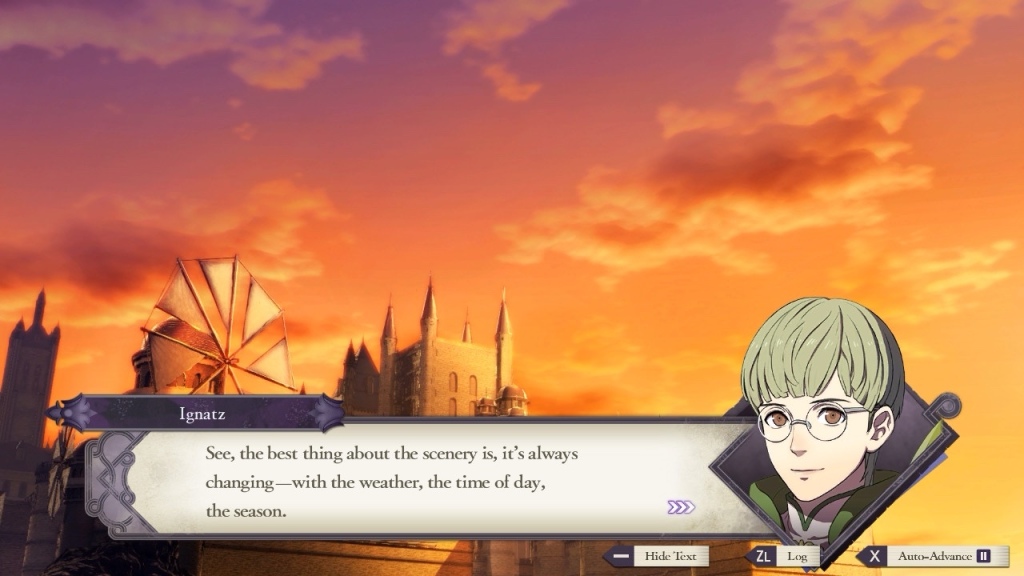
This was a neat dialogue between two of the characters in Fire Emblem: Three Houses that I wanted to post here.1 It’s very Buddhist in my opinion.

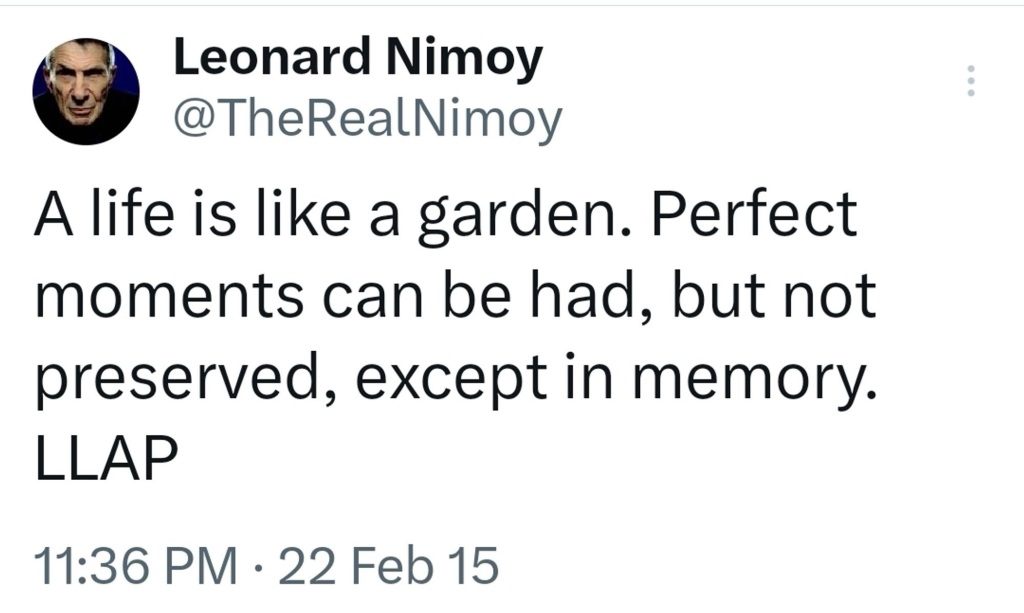
Or as Leonard Nimoy said before his passing…

I am one of those people who likes to take lots of photos of scenery on my phone, but I admit whenever I do this, the photos just aren’t the same as the original experience. I never could fully explain this to myself until I saw the dialogue above.

It reminds me of a famous quote from the Analects of Confucius:

[9:17]  子在川上曰。逝者如斯夫 不舍晝夜。
The Master [Confucius], standing by a river, said,
“It goes on like this, never ceasing day or night!”

Translation by A. Charles Muller

Anyhow, that’s all I wanted to post. Enjoy! 🙏🏼

1 I haven’t talked about it as much lately, but I’ve been playing FE3H pretty much non-stop since last August, and am on my fifth play-through. I can confidently say this is one of my favorite all-time games.

Enma: King of the Dead

My son is at the age where is he is obsessed with Dragon Ball,1 so we watch some of the episodes together on Crunchyroll.

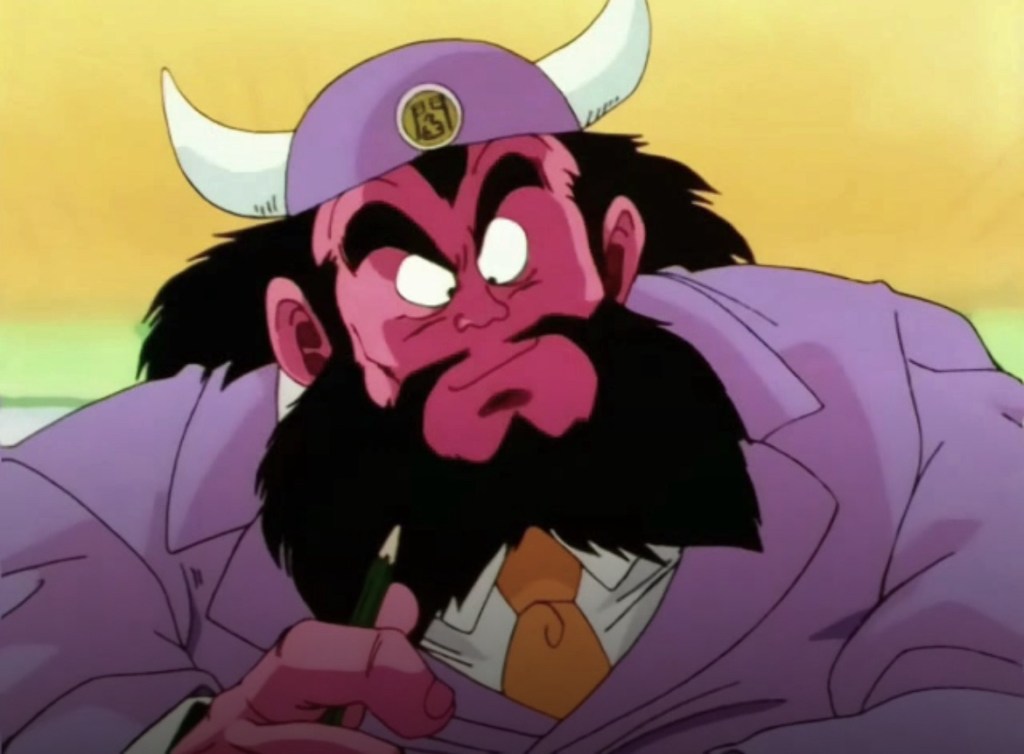
Source: https://dragonball.fandom.com/wiki/King_Yemma?file=KingYemmaNV01

Dragon Ball is a fun series because it blends a lot of Japanese-Chinese mythology, especially the early series, into a futuristic storyline. Goku is obviously based off of the famous legend of the Monkey King, Sun Wukong (Son Goku in Japanese). Another great example is the character Enma.

In Dragon Ball, Enma (sometimes spelled “Yemma” in English) presides the realm of spirits and behaves like a modern bureaucrat. In spite of the suit and tie, this Enma is definitely based on the original figure in Japanese mythology, named Enma Daiō (閻魔大王, “Great King Enma”).

The original Enma is a fascinating example of a “fusion” mythology, not a native Japanese one. Enma is originally based on the Hindu god Yama, lord of the dead.2 However, in China he was transformed into a Confucian-style bureaucrat and shoe-horned into Buddhist cosmology as a judge of the dead. Enma, along with other judges, determine the dead’s next destined rebirth within Buddhist cosmology. During certain Chinese funerary practices and festivals, you can see his visage on “ghost money” used to help the dearly departed coast through the trial process and ensure a smooth, lenient transition to their next life.

This Enma, a bureaucrat / judge of the dead, was how it was imported to Japanese culture in antiquity. He is even featured in classics such as the Tales of the Heike. When the warlord Taira no Kiyomori is dying from a terrible fever, he has a vision of Enma and his demonic attendants awaiting him. I’ve also heard of an old tradition where parents in Japan would scold their kids saying Enma would pull their tongue out if they told a lie. I have never heard this first-hand though, so I wonder if anyone ever says it anymore.

Anyhow, Dragon Ball’s spin on Enma, Goku and others is a fun look at Chinese-Japanese mythology, for a modern era.

RIP Toriyama Akira 🙏🏼

P.S. this post was also inspired after watching the Star Trek: Voyager episode “Barge of the Dead”. It’s a fun look at the Klingon afterlife.

1 growing up in the 1980’s my obsession at the time was Akira, which I still enjoy from time to time. 😄

2 if you ever pick up the book Lord of Light by Roger Zelazny, a wonderful blend of Hindu mythology and ultra-futuristic science-fiction with a lot of sass thrown in, the Yama depicted in that novel is quite an interesting character.

A New Dawn

I’ve been thinking about this conversation, shown above, from the game Fire Emblem: Three Houses. The game was made in 2019, just before the Pandemic, and other nonsense that went on in 2020 onward. How prophetic that statement was. Then again, I suppose this is something every generation has to live through in some ways. Sooner or later, things change, we lose something in the process and never get it back.

Wise words indeed…

It reminds me of a quote from the Analects of Confucius:

[9:17] The Master [Confucius], standing by a river, said, “It goes on like this, never ceasing day or night!”

Translation by A. Charles Muller

or Gandalf in the Fellowship of the Ring:

“Well, what can I tell you? Life in the wide world goes on much as it has these past age, full of its own comings and goings…”

J.R.R. Tolkien

Seen from another way though, this also means that new things come as well. Sometimes this can be scary, sometimes this can be a positive thing.

I suppose it’s all a matter of perspective.

The Joseon Dynasty of Korea: death by factions

If political gridlock, government shutdowns due to budget fights, and rabid factionalism get you down, consider the case of the Joseon Dynasty of Korea (1392–1894). The Joseon Dynasty, also known as Joseon-guk in Korean (朝鮮國, 조선국) was the last and longest of royal dynasties of Korea. At 502 years long, it is also among the longest dynasties in world history.

After the rise of Buddhism in East Asia, Confucian teachings took a backseat for a time, until it re-emerged centuries later under a doctrine called Neo-Confucianism. Neo-Confucianism is a fascinating subject all by itself, but it’s a hard one to describe to Western audiences. It’s enough to know that it was an effort to reinforce early Confucian ethics with more philosophy and metaphysics, while avoiding mysticism.

This is important because Neo-Confucianism became the official state doctrine early the foundation the Joseon Dynasty, just as it had become Ming-Dynasty China and Tokugawa-era Japan. Schools of Confucian scholars would staff the elaborate bureaucracies used by each sovereign, and provide advice on policies, or criticism if the sovereign’s conduct was deemed inappropriate or immoral. As the beacon of a rational and orderly society, the sovereign was held to a very high standard, but also (in theory) commanded unwavering loyalty from his subjects. Because orderly and rational societies were valued by Confucian thinking, there was heavy emphasis on ritual, etc. Everyone had their place, and everyone was expected to carry out their moral obligations, putting the needs of society over their own profit.

On paper, this was how it all worked.

In reality, the Confucian bureaucracy (the yangban) of Korea grew very powerful, and different schools of Confucian thought began to compete with one another for dominance in the Joseon bureaucracy. Over generations, these rivalries grew very cutthroat, and worse they splintered into sub-factions, and sub-sub-factions, all vying with one another. Further, sons of bureaucrats had the wealth and resources necessary to ensure they’d pass the civil service exams and become bureaucrats themselves. The Iron Law of Oligarchy comes to mind.

Source: https://xkcd.com/1095

This might seem kind of silly at first glance, since it obviously contradicted basic Confucian ethics.

However, this all began when bureaucrats in the court would debate how to address policy issues at the time, or question certain political appointments. Inevitably reform and conservative wings developed with different views of how to address such issues, and the leading figures of each wing would try to then pack the bureaucracy with their own men.

Is this starting to sound familiar?

The back and forth by factions, starting with the Easterners (dong-in, 동인 or 東人) and Westerners (seo-in, 서인 or 西人) began over subtle ideological disagreements. Then, each of these factions broke up into different factions. The Westerns faction alone broke up into the Noron (노론, 老論) and Soron (소론, 少論) depending on whether you supported Confucian scholar Song Si-yeol‘s reformist policies (the Noron) or not (the Soron). The Easterner faction similarly split up into Buk-in (“northerners”, 북인, 北人) and Nam-in (“southerners”, 남인, 南人) factions.

The king’s response to each of these factions varied by sovereign. In some cases, a king would support one faction over another. But if that faction got too powerful or out of line, the losing faction could sometimes convince the king to purge them from the bureaucracy. Sometimes the purges became extremely violent, with many faction members executed such as the one in 1589.

Inevitably, once a faction was crushed or purged, another would take its place in the court and consoldiate power, requiring yet another purge. By 1545 there had already been four blood purges.

Portrait of King Yeongjo of Joseon, source

By the time of King Yeongjo (1694 – 1776, 영종, 英宗) the fighting between factions and the bloody purges had gotten so out of hand, that Yeongjo survived an assassination attempt in his youth.

Yeongjo tried to take the high-ground in the conflict, implementing a policy of Tangpyeong (탕평, 蕩平) or “great harmony”. Yeongjo tried to stay above the fray and remained somewhat successful. Barely. By the reign of the next king, his grandson Jeongjo, the bureaucrats were at it again and King Jeongjo fought off a coup by the Noron faction.

In spite of the coup, the Noron dominates the court after Jeongjo’s later (and mysterious) death until they were ousted for good, but by this time the functions of government were locked in by certain powerful families and from the 1800’s onward the Joseon became isolationist and dysfunctional at a time when Western and Japanese powers grew in strength and aggression. The reforms of 1895 were simply too little too late to save the Dynasty and Korea was annexed by Iapan in 1905.

Much like the Eastern Roman Empire (i.e. the Byzantines), the Joseon Dynasty survived and thrived at times when there was a powerful ruler who could push for reforms, and keep interests in check. But there were always sharks circling the water, and as soon as they smelled weakness there would be bloody infighting and this would reset the clock on any meaningful reforms. Paralyzed by internal strife, other more dynamic, external powers eventually pulled ahead and defeated them.

Portrait of Kim Yuk (1570 – 1658), source.

It also should be noted that were plenty of good, sincere Confucian scholars who made a genuine effort at good governance, such as Kim Yuk, but in the end, powerful men always felt they could do it better when they sensed an opportunity.

P.S. astute readers may have noticed that I keep posting the names using both Hangeul script and Chinese characters (Hanja). Until the modern era, both were used together in a kind of mixed fashion, especially when a person wanted to avoid ambiguity (the Chinese characters are more distinct). Compared to neighbors like Japan or China, Chinese characters were used comparatively less (Hangeul was usually sufficient and simpler), but remain an important part of the language and culture.