What separates countries and empires from civilizations is not size or wealth, or military power. It is their cultural significance, their contribution to Humanity.
Cultures might conquer others, but also ascend above raw power and economic exploitation, and contribute to science, art, philosophy, literature, and so on. Such contributions leave a lasting mark on Humankind for the better, not worse.
Conquering other nations, exploiting other people’s resources, and such contributes nothing useful. No one will remember you when you are gone someday, except maybe historians.
Instead, if a nation is going to be remembered, it will be remembered for leaving violence behind, and embracing reason and goodwill. By lifting people up, not trampling them By elevating science and reason, not superstition and religion. This is true for empires long ago, but also for police-states now.
At least that’s my opinion… 🖖🏼
1 Quoted from both Star Trek IV: The Voyage Home, and the Star Trek: Enterprise episode “The Forge” (s4:ep7)
SPOCK: [being a Vulcan] means to adopt a philosophy, a way of life, which is logical and beneficial.
Star Trek, “Journey to Babel” (s2ep10), Stardate 3842.3
Recently, while I was doing some soul-searching, I found this very helpful article online by Dr. Jacqueline Stone. The article is an overview of how different Japanese-Buddhist monks of the Kamakura Period (12th-14th century), the same monks who founded important Buddhist sects we see today, addressed the concept of Dharma Decline. The site requires registration, but it’s free and easy. The article is worth a read if you are curious about the topic.
In any case, I found this great quote in Dr Stone’s article:
“The Zen sect regards the precepts as being of first priority,” he [Eisai] wrote. And, “By means of the precepts, meditation and wisdom are brought forth.”
Eisai (栄西, 1141 – 1215) also known as Myōan Eisai (明菴栄西) is the original founder of the Rinzai Zen-sect in Japan (more on its convoluted history here), and isn’t someone I really talk about much, but he was one of the founders of this “new” Kamakura-era Buddhism.
Anyhow, this quote really struck me.
In my limited experience, I rarely heard the importance of precepts from Western Zen sources, or that they are the basis for other Zen practice. That’s not to say it’s not there, but it often seemed to get lost in the message of Zen mysticism.
Bluntly speaking, precepts aren’t sexy like mindfulness, koan riddles, or meditation.
And yet, Eisai is taking a more traditional, conservative standpoint and reiterating that one should not put the cart before the horse. This is not limited to Eisai, by the way: the 19th century Soto-Zen text for lay-followers, the Shushogi, stressed the importance of the precepts, reflection on one’s actions, and practicing kindness, patience and generosity whenever possible.
But if you’re familiar with Zen, this might seem odd. Isn’t Zen all about meditation, being in the moment and so on?
Consider the Marvel movie Ant-Man (2015). In the movie the villain, a bald tech-CEO who bears more than a passing resemblance to a certain CEO and founder,1 brags to a coworker about some deep thoughts he had during “morning meditation”. This is not far from the mark: many ambitious people use meditation and mindfulness as a way to get what they want, not what it’s intended for. If a person can’t regulate their day to day conduct towards others, meditation will not avail them.
Put another way: a rotten person might meditate, but a person who follows the precepts is probably not a rotten person.2
Further, this focus on the precepts fosters mindfulness because one is monitoring their own actions, etc. It has concrete impact on one’s sense of self-worth, one’s relationships with others, and leads to greater peace of mind, even when not meditating. So, there’s a clear benefit, both short-term and also long-term to taking up the precepts first, and then letting other disciplines and practices extend from it.
Finally, upholding the precepts is something any Buddhist can do, regardless of background or circumstances. It is very accessible, beneficial (just like Spock says), and opens many doors to Buddhist practice.
Namu Shakamuni Butsu
P.S. I’ll cover this issue of precepts in more detail later, but TL;DR both Rinzai and Soto Zen both encourage people to take up the Ten Bodhisattva Precepts specifically.
I’ve been sitting on this post for a while, trying to grapple with recent attacks on diversity and inclusion.
In the Star Trek episode, The Savage Curtain, Surak of Vulcan upon meeting humans for the first time (Kirk and Abe Lincoln) says a line that’s easily overlooked, but I think is also very beautiful:
I am pleased to see that we have differences. May we together become greater than the sum of both of us.
Surak of Vulcan, “The Savage Curtain” (s3ep22), stardate 5906.4
The Vulcan philosophy in Star Trek is based upon a recognition of diversity: IDIC, or “Infinite Diversity in Infinite Combinations”. That is to say, each of us exists as combination of such elements and thus take on a greater significance together than separate:
KIRK: We’ve each learned to be delighted with what we are. The Vulcans learned that centuries before we did. SPOCK: It is basic to the Vulcan philosophy, sir. The combination of a number of things to make existence worthwhile.
Star Trek, “The Savage Curtain” (s3ep22), stardate 5906.4
This is of course at the heart of Buddhist doctrine as well. Because all phenomena arise from various causes and conditions, given the right causes and conditions, anything is possible. And, given the scale of the universe, one can safely assume that practically everything exists, has existed, or will exist.
My head hurts just thinking about the implications.
Thus, I think, it is very helpful to consider and accept just how varied and weird existence is, and appreciate its sheer diversity. This isn’t just some political slogan: diversity, change, and infinity are the very nature of existence whether people want to accept that or not. Might as well embrace it, and save yourself the undue stress.
Season three of Star Trek has one of my most favorite, albeit silliest episodes in the entire series: The Savage Curtain. The episode starts off with a bang: Abraham Lincoln (played by Lee Bergere) floating in space on his trademark chair.
From there, the Enterprise crew and in particular Kirk and Spock are confronted by some of “histories worst villains” as well as an encounter with Spock’s idol, Surak (played by Barry Atwater), father of Vulcan philosophy.
Surak of Vulcan, founder of Vulcan Logic, in the Star Trek episode the “Savage Curtain” (season 3, episode 22)
The rock aliens who force the “good” historical figures to combat the “evil” historical figures want to compare and contrast their philosophical ideas against one another to see which is better.
Kahless the Unforgettable (played by Bob Herron) and Colonel Greene (played by Phillip Pine)
The premise might seem a bit silly, but it is a fascinating contrast of ideas:1
Surak – a pacifist, non-violent approach
Lincoln – fight if necessary, and “on their level”.
Col. Greene – power is all matters
Kahless – victory by any means
Kirk – do what it takes to save his crew
Spock – honor his commitments to Starfleet, and fight with Kirk, even if is compromises his personal morals
Although Surak loses his life in the combat, he has some really great quotes in this episode that I think are worth sharing:2
The face of war has never changed. Surely it is more logical to heal than to kill.
Surak of Vulcan, “The Savage Curtain” (s3ep23), stardate 5906.5
and also:
I am pleased to see that we have differences. May we together become greater than the sum of both of us.
Surak of Vulcan, “The Savage Curtain” (s3ep22), stardate 5906.4
Lincoln’s performance throughout the episode is great as he embodies the great American president as we want him to be: gentle, but tough when needed. One can’t help but compare this to Bill and Ted’s Excellent Adventure, even if they are completely different movies, because Abraham Lincoln is such a beloved figure.
At the very end of the episode, there is a subtle dialogue worth sharing:
KIRK: They seemed so real. And to me, especially Mister Lincoln. I feel I actually met Lincoln.
SPOCK: Yes, and Surak. Perhaps in a sense they were real, Captain. Since they were created out of our own thoughts, how could they be anything but what we expected them to be?
In fact, I think there’s something very Buddhist about this. The inhabitants of the planet didn’t necessarily create historically accurate versions of Lincoln, Surak, etc, but what we wanted them to be in our minds. In a sense, we create our own gods and idols through our hopes and aspirations (for good or for ill). This isn’t always bad, but it does show how unwittingly we bend the world around us to fit our beliefs and views.
Anyhow, The Savage Curtain is such a fun, surreal episode, and a fascinating contrast of ideas and people in history, and how they interact. These ideas and philosophies are timeless in many ways, and crop up over and over again in history, but by pitting a bunch of historical figures in space against once another, it takes on a whole new dimension of weird, silly, fun.
Also:
Courtesy of “Swear Trek”
P.S. Many reviews point out that The Savage Curtain borrows elements from older, venerable episodes, and thus judge it an inferior episode. I can’t disagree that it borrows a lot of elements, but I like to think it is a capstone to several previous “moral tale” episodes. The action sequences aren’t quite as good, but I don’t think that was the point. It was battle of ideas, not sticks.
P.P.S. I bet you could take all 8 characters, including Kirk and Spock, in the battle and somehow arrange them into a classic D&D alignment chart. The rock aliens of Excalbia would probably be true-neutral.
1 I wish “Zorra” (Carol Daniels) and “Genghis Khan” (Nathan Jung) had dialogue, as it would have been interesting to have more contrasting goals and aspirations.
SPOCK: Insults are effective only where emotion is present.
Star Trek, “Who Mourns for Adonais?” (s2ep2), stardate 3468.1
SPOCK: Where there’s no emotion, there’s no motive for violence.
Star Trek, “Dagger of the Mind” (s1ep9), stardate 2715.1
I wrote about the Buddhist virtue of forbearance before, but I had an important reminder recently why this matters so much in Buddhist practice.
Our natural tendency is to hold a grudge when someone slights us, or when we have been wronged. This is normal human pattern of behavior. But, like self-doubt, this is a form of conceit, putting ourselves and our ego before others.
In the Dhammapada, a collection of sayings attributed to the Buddha and one of the very earliest Buddhist texts still preserved, the Buddha has much to say regarding the subject. For example:
133. Speak not harshly to anyone, for those thus spoken to might retort. Indeed, angry speech hurts, and retaliation may overtake you.
134. If, like a broken gong, you silence yourself, you have approached Nibbana [a.k.a. Nirvana, final Unbiding], for vindictiveness is no longer in you.
The Dhammapada, translation by Acharya Buddharakkhita
The Buddha was uncompromising on this: no vengeance, lest you bring even further misery upon yourself.
Indeed, the Buddha taught by freeing oneself of ill-will and other negative emotions, one is liberated:
197. Happy indeed we live, friendly amidst the hostile. Amidst hostile men we dwell free from hatred.
198. Happy indeed we live, friendly amidst the afflicted (by craving). Amidst afflicted men we dwell free from affliction.
199. Happy indeed we live, free from avarice amidst the avaricious. Amidst the avaricious men we dwell free from avarice.
200. Happy indeed we live, we who possess nothing. Feeders on joy we shall be, like the Radiant Gods.
The Dhammapada, translation by Acharya Buddharakkhita
Of course, this is easier said than done.
As with self-doubt or any negative emotion, stop and think like a Vulcan: assess the situation including your own feelings. Is this productive? Is it harmful? Is it based on conceit?
Spock in season 3 episode 21, the “Cloud Minders”, played by Leonard Nimoy
Many times, we are prone to act or lash out, but if we take a moment to assess our feelings, and the situation, we are more capable of handling it rationally. In so doing, we avoid further misery for ourselves and others.
When the ego is bruised, it demands attention and resolution. But that is short-sighted, and rarely fixes anything.
SEPTIMUS: Our way is peace.
Star Trek, the Son Worshiper, “Bread and Circuses” (s2ep25), stardate 4040.7.
A commitment toward peace and well-being towards others feels counter-intuitive at times, but peace toward others inevitably leads toward peace for oneself.
Something that’s been on my mind lately is this quote from the original Star Trek series:
Dr. McCoy: Spock, I’ve found that evil usually triumphs – unless good is very, very careful.
Star Trek, “The Omega Glory” (1968)
These days, pretty much the entirety of the 2020’s in particular, it really feels like good has to extra vigilant, doesn’t it? Like wherever one turns, evil seems to always get the upper hand.
Different episode (“Bread and Circuses”), but same energy. RIP DeForrest Kelley …
This isn’t even just a statement of politics. We are definitely living through some pretty difficult times, and it brings out the worst in others.
Consider this iconic quote from the Buddhist text, the Dhammapada:
183. To avoid all evil, to cultivate good, and to cleanse one’s mind — this is the teaching of the Buddhas.
Trans. Acharya Buddharakkhita
The statement is pretty vague, but to me it feels like there’s an order and logic to this statement.
Avoiding all evil begins with things like the Five Precepts and is probably the first step as a Buddhist. It doesn’t solve everything, but it’s a good starting point. You’re stemming the worst instincts at least.
Next, one cultivates good through Buddhist practice such as dedication of merit, the four bodhisattva vows, and just good old-fashioned metta. The idea being that cultivating wholesome states of mind gradually sinks in and reinforces itself. Presumably.
Finally, cleansing the mind. This is where practices like meditation, mindfulness and such really come in handy. Having a good heart is not enough: one needs to balance it with wisdom and clarity.
In another episode of Star Trek, titled “The Savage Curtain” (the one with Space Lincoln), the founder of Vulcan philosophy Surak heedlessly goes alone to try and negotiate peace. His stubbornness costs him his life. Lincoln also tries to save him but gets killed as well.
“Space Lincoln” was awesome.
This theme repeats across multiple episodes: striving to do good not enough, one needs to vigilant. On the other hand, being passive and intellectual doesn’t accomplish much good either.
So, you need both.
Even in these difficult times, it’s helpful to maintain goodwill towards all beings (even the really awful jerks who might not deserve it), have realistic expectations, meet evil with good, but also meet ignorance with wisdom including your own.
As a big fan of the original Star Trek series (hereafter TOS), I recently picked up a trove of old Star Trek novels and have been reading them one by one.
I had heard about Yesterday’s Son from fellow TOS fans and started with this one first. The novel is based on the penultimate episode of TOS: All Our Yesterday’s, and continues the story further implying that during Spock’s brief tryst with Zarabeth resulted in a son, quarter Vulcan, quarter Human and half…Sarpeidon-ese?
Anyhow, the story involves Spock using time-travel to reunite with his son, bring him back to Spock’s time, and helping him integrate to life in the Federation. Further, Spock and his son develop a difficult, strained relationship over their differing backgrounds. Meanwhile, the Romulans are (as always) up to no good, and have their sites on the Guardian of Time from the season 1 episode City on the Edge of Forever. The end is a dramatic conflict with the Romulans, and a nice heroic moment for Spock’s son.
As a novel, it was a fun read with good pacing. I felt the novel deftly balanced key references to TOS without being a blatant fan-service, yet at the same time also provided innovations that didn’t go too far off the rails of Trek canon. In other words, it stayed faithful to Trek lore while also expanding it in a sensible way.
I really enjoyed this book, and would definitely recommend for classic Trek fans.
Self doubt is something we may all face from time to time. For me, it hits hard when I have made a mistake, and it’s hard to shut off the negative thought process once it starts up.
The origins of this self-doubt are not that important, though. I have my theories, but it doesn’t really matter. What matters is what self-doubt does: it creates false assumptions, and cripples decision-making. One might say, it’s all in the mind.
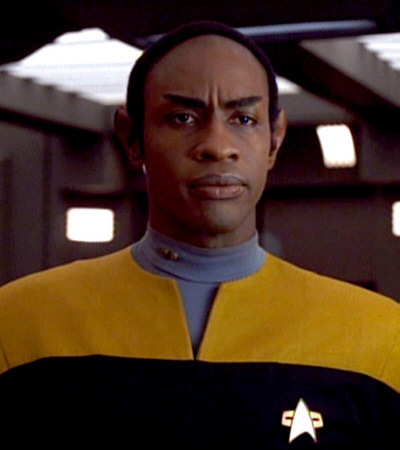
Tuvok, as portrayed by Tim Russ.
During a recent rewatch of the Star Trek: Voyager,1 I really enjoyed Tim Russ’s character Tuvok, the Vulcan security officer. Tim Russ is a great actor, and I appreciate his portrayal of Tuvok, and especially Tuvok’s level-headed approach to situations. In the same way, Spock as played by Leonard Nimoy did the same thing in the original Star Trek series.
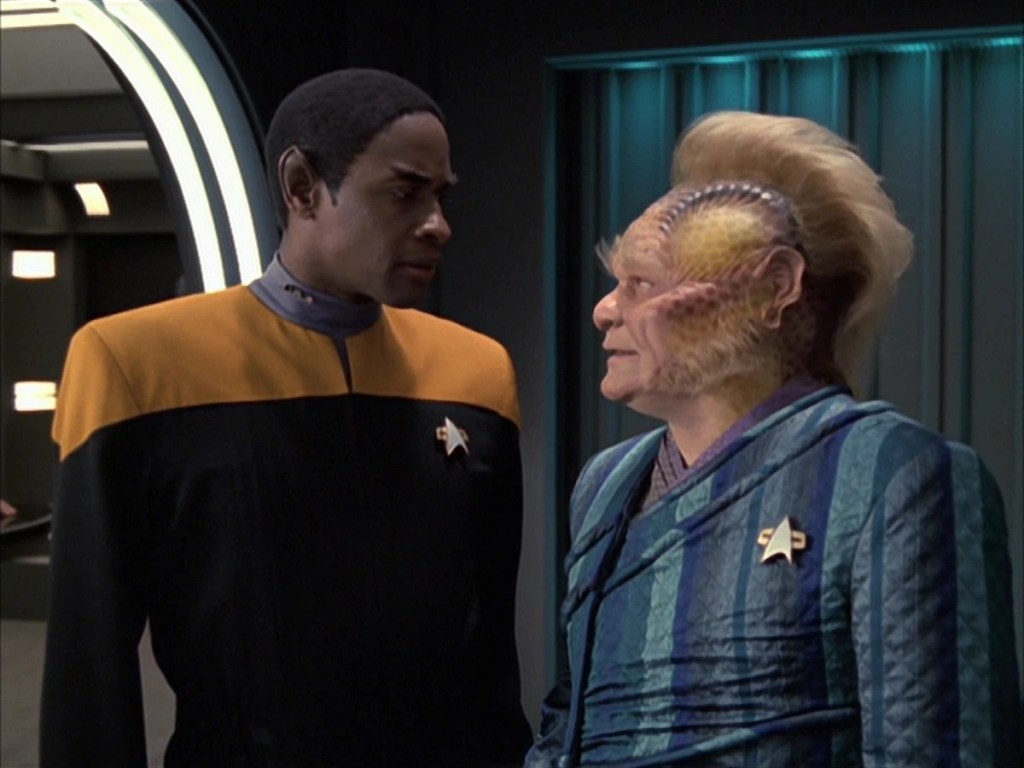
When Tuvok is faced with a difficult situation, and the rest of the crew (esp. Neelix) panics, he tends to remain calm, and analytical. He assesses the situation rationally.
Tuvok and Neelix (played by Ethan Phillips).
I think that’s the secret to overcoming self-doubt. Self-doubt, believe it or not, is rooted in a kind of conceit, or self-centeredness, even when it’s a negative form of conceit. Trying to counteract with self-love or self-affirmation just replaces one form of conceit with another. It’s not necessarily wrong, but kind of defeats the point.
In the same way, when I feel myself slipping into another death-spiral of self-doubt, lately I try to take a deep breath and do what Tuvok (or Spock) would do: calmly assess the situation and be rational. I am not the center of the Universe. The whole world is not judging me. If I’ve made a mistake, I need to analyze it, and correct it. If I am not at my best, I need to step back and reassess.
We can see a similar sentiment in an early sutra in Buddhism.
The Buddha “What do you think, Rāhula? What is a mirror for?”
Rāhula: “For reflection, sir.”
“In the same way, Rāhula, bodily actions, verbal actions, & mental actions are to be done with repeated reflection.
The trick is to be aware first and foremost that I am slipping into self-doubt again. This kind of mindfulness is the underpinning of Buddhism, and we can all learn to be a little self-aware. It never hurts to stop and “check in on yourself” from time to time, even during good moments. Further, the Buddhist practice of repentance is a time-honored for reflecting on your own actions in a scientific, analytical way, rather than flogging yourself.
P.P.S. As much as I love Leonard Nimoy as Spock, I am glad to see the Vulcan cast expanding over time: Tim Russ as Tuvok, Ethan Peck as Spock in Strange New World, Jolene Blalock as T’pol and so on.
1Voyager was on when I was a college student so I watched from time to time, but I never loved the show the way I did Next Generation. Plus, the show has a number of inside references that are important, but if you only watched occasionally, you missed them. Rewatching again was great, though season 2 in particular was weak. Season 3 onward was amazing.
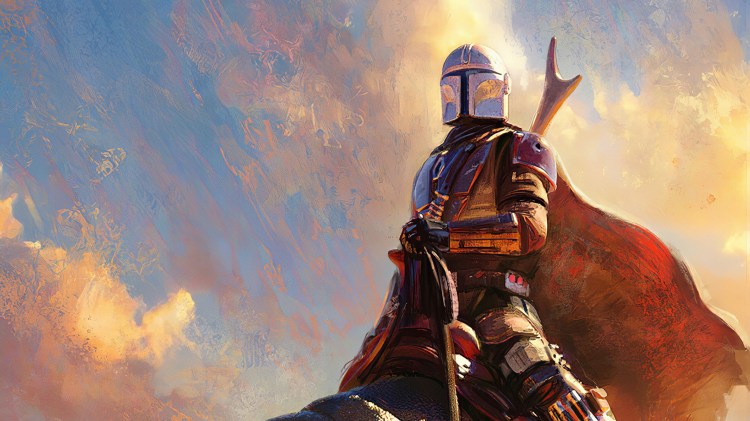
I have been a big fan of the Disney series, The Mandalorian, and have been re-watching the series in anticipation of season 3.
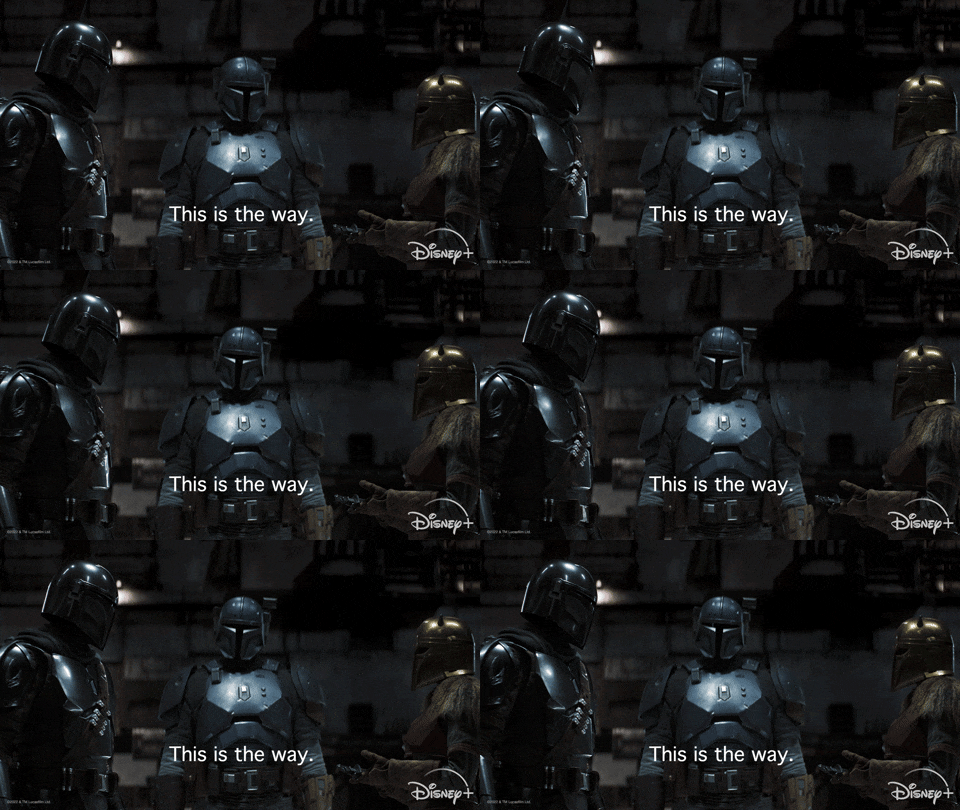
One of the aspects of the show I love is the Mandalorian code. As an orphan, adopted by an offshoot religious cult called the Children of the Watch, the main character Din Djarin is raised under a strict warrior’s code.
Mandalorians cannot remove their helmet in front of other beings, and as Din Djarin comments “weapons are part of my religion”. It is a strict, inflexible religion in many ways, but the Mandalorians believe it is also their source of survival. Even after as the season progresses, and Din Djarin’s character evolves, he still strives to keep this code as much as possible.
This idea of sticking to a moral code is very interesting to me.
Personally, I am not interested in being a warrior, and as a middle-aged dad working an office job, it probably isn’t realistic anyway. In any case, I have been a committed Buddhist for almost 20 years, and I suppose in a way that’s become my code. Things such as the Five Precepts, the Bodhisattva Precepts, and a commitment to help all beings, these are important to me.
I think it’s important to have some kind of moral code in one’s life. It’s important to be able to commit to something beyond oneself, and live a life beyond simple indulgence. The flip side of course is that one has to uphold that code too, even when one doesn’t feel like doing it.
But that tension between the realities of one’s life, one’s code and one’s nature is how a person grows. 😄
P.S. If you look at the progression of Mr Spock as a character too, you can see how he gradually changes from a staunchly Vulcan, driven by logic, to something more well-rounded in the movie series, and later in Star Trek: The Next Generation.
Recently, my wife was talking with an extended relative she hadn’t talked to in a while. This relative also lives overseas, albeit in a different English-speaking country, and when we last spoke a year ago, she had been talking about mundane things like taking the kids out for picnics, etc.
This time around, the same relative was spouting incoherent ramblings about weather-control machines, forest fires caused by human agents, and all sorts of things she had found on Youtube and on the Internet. Since the last time we spoke with her, she had gone down some kind of rabbit hole of conspiracy theories, and it had changed her for the worse.
The number one reason why I hate conspiracy theories, and all they represent, is that they are inherently irrational, narcissistic, and antithetical to the Buddha-Dharma.
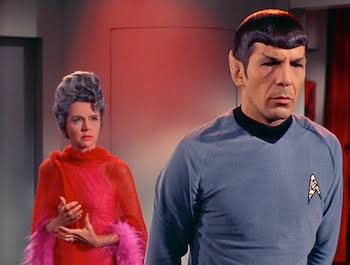
In the original Star Trek series, in the episode Journey to Babel (2×10), Spock speaks with his mother and says the following (emphasis added):
It [being a Vulcan] means to adopt a philosophy, a way of life, which is logical and beneficial. We cannot disregard that philosophy merely for personal gain, no matter how important that gain might be.
To me, this is the essence of the Buddhist way of life: a way of life that is meant to be logical, rational, and of benefit to all sentient beings. Consider such liturgy as the Four Bodhisattva Vows:
Sentient beings are innumerable, and yet I vow to save them all. My mental defilements (lit. bonnō) are innumerable, I vow to extinguish them all. The gates of the dharma are without measure, I vow to master them all. The path to Buddhahood is peerless, I vow to fulfill it.
Similarly, in the famous liturgy, the Heart Sutra, there is the following verse (emphasis added):
Because there is no attainment, bodhisattvas rely on Prajñāpāramitā [the perfection, or culmination, of wisdom], and their minds have no obstructions. Since there are no obstructions, they have no fears.
translation by Lapis Lazuli texts
Wisdom leads to freedom from fear. This is not wisdom as in the sense of knowing more than other people, which is just empty narcissism, but rather seeing outside your self-centered viewpoint.
Take for example a famous Buddhist story about the monk and the snake. It is said that a long time ago there was a monk in India who, one night, had to step out into the woods to use the restroom. As a monk, he has no possessions, and thus has to walk out into the dark by himself. Since India has many poisonous snakes, this can be a risky business. In any case, as the monk was carefully treading through the grass, he steps on a snake and faints in terror. The following morning, he wakes up, and realizes that the “snake” he stepped on, was in fact an old piece of rope.
This is how the mind works, and why its important not to blindly rely on your own logic and viewpoint too much. People can be certain that X is true, and yet the facts say otherwise. The greater one’s faith, the more they cut themselves off from reality. The more rational approach is to look at the data, look at facts, make observations, and then make informed decisions, not what one feels or one is sure is the truth.
A ‘position,’ Vaccha, is something that a Tathagata [the Buddha] has done away with. What a Tathagata sees is this: ‘Such is form, such its origination, such its disappearance; such is feeling, such its origination, such its disappearance; such is perception…such are fabrications…such is consciousness, such its origination, such its disappearance.’ [e.g. the Twelvefold of Causation]
Aggi-Vacchagotta Sutta (MN 72), translated from the Pali by Ven. Thanissaro Bhikkhu
Or as Mr. Spock would say:
Insufficient facts always invites danger
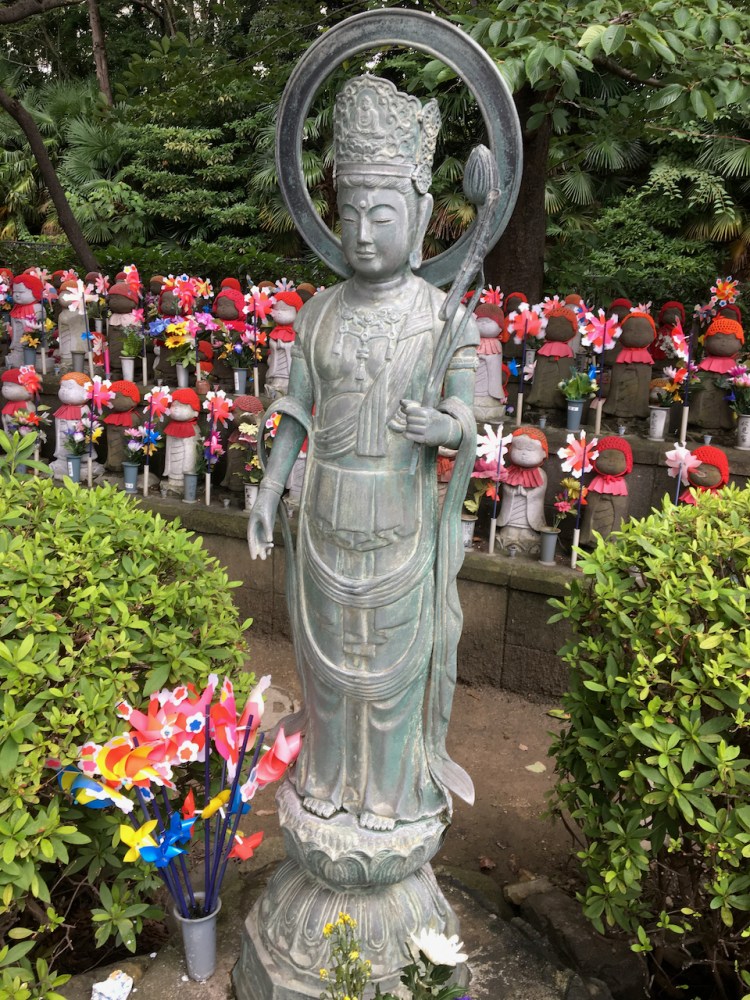
Thus, the Buddhist path is one that relies on rational thinking, not narcissistic beliefs. However, it is not limited to just rational thinking, and that’s why Mr Spock’s quote about “rational and beneficial” is so important. Consider the following Buddhist statue that I photographed in Japan in 2019 at Zojoji Temple (one of my favorites):
Here, the bodhisattva Kannon, is holding a lotus flower in one hand, while the other hand is down with two finger-tips touching. Buddhists statuary is replete with meanings and non-verbal symbols. The lotus symbolizes wisdom, and the potential for all beings to awaken, just as a lotus blooms from mud. The fingertips touching is another mudra meaning the “turning of the Wheel of the Dharma”, meaning to teach others and keep Buddhism going. The latter action, teaching the Dharma, helps sentient beings achieve awakening (i.e. the lotus), freedom from fear and wellbeing.
Hence, Kannon’s image here is a balance of both rational wisdom and compassion for all beings. Compassion not tempered by wisdom is irrational and can sometimes do more harm than good, while wisdom not compelled by concern for others is just dry scholasticism.
All of this is encapsulated in the 16th chapter of the Lotus Sutra where the Buddha says in verse:
My pure land is not destroyed, yet the multitude see it as consumed in fire, with anxiety, fear and other sufferings filling it everywhere. […] But those who practice meritorious ways, who are gentle, peaceful, honest and upright, all of them will see me here in person, preaching the Law [the Dharma].
translation by Burton Watson
Part of the freedom from fear that comes from wisdom is the ability to see past the ups and downs of life, and see the bigger picture, to live a life that is gentle and peaceful towards others, and to maintain an upright life out of compassion for oneself.
None of this is easy, and requires years and years of practice, emotional growth, introspection, and willingness to take one’s own beliefs with a small grain of salt. It is a path that is not limited to Buddhists either, and there are plenty of Buddhists who don’t follow this path. What matters is not one’s affiliation to a religious org, but one’s willingness to live a life rooted in rationality and benefit for others. None of this can be accomplished by living in the paranoia and hostility, misinformation and sense of superiority that it brings from “not being a sheep” that comes with immersion in conspiracy theories
If you find yourself lost, scared, and confused with all the things going on in the world, take a moment and breathe. Turn off social media, go outside. Ground yourself in the world around you. If it helps, maybe recite the Heart Sutra a couple times (it is short enough you can chant it in about 1-minute) or the nembutsu. The life you live now, warts and all, is sustained by the goodwill of others around you, even if you don’t know who they are. Take a moment, and consider this, and maybe give something back to the world.



 Gleanings in Buddha-Fields
You must be logged in to post a comment.