Juneteenth and What It Means For All Of Us

In Charles B Jones’s overview of the Pure Land Buddhist tradition, he talks about a sect called the Yuzu Nembutsu sect (which I explored here), but in particular, he delves into the Buddhist concept of interdepedence, which the sect relies upon:1

Suppose you lay a row of ten coins on a table, and then move the tenth coin in front of the first, shifting the rest over one position. You probably assume that changing the order does not affet what they are in any way. However, from the Huayan point of view, they are not independent of one another; the first is coin one of ten, the second is two of ten, the third is three of ten, and so on. Their relationship with the other coins in the row is part of their identity and figure into the way we conceptualize them. When you take the last coin and move it to the first position, it changes from ten of ten to one of ten. At the same time, since the relation of the other coins to the one you moved has changed, they are no longer the same coins as before either, even though you did not move them.

Charles B Jones, “Pure Land: History, Tradition, and Practice“, page 120

It’s not enough to simply exist, things exist in relation to one another, and what affects one thing affects others. Taken in total, this is the Buddhist-Sanskrit concept of shunyata.

So, what does this have to do with Juneteenth?

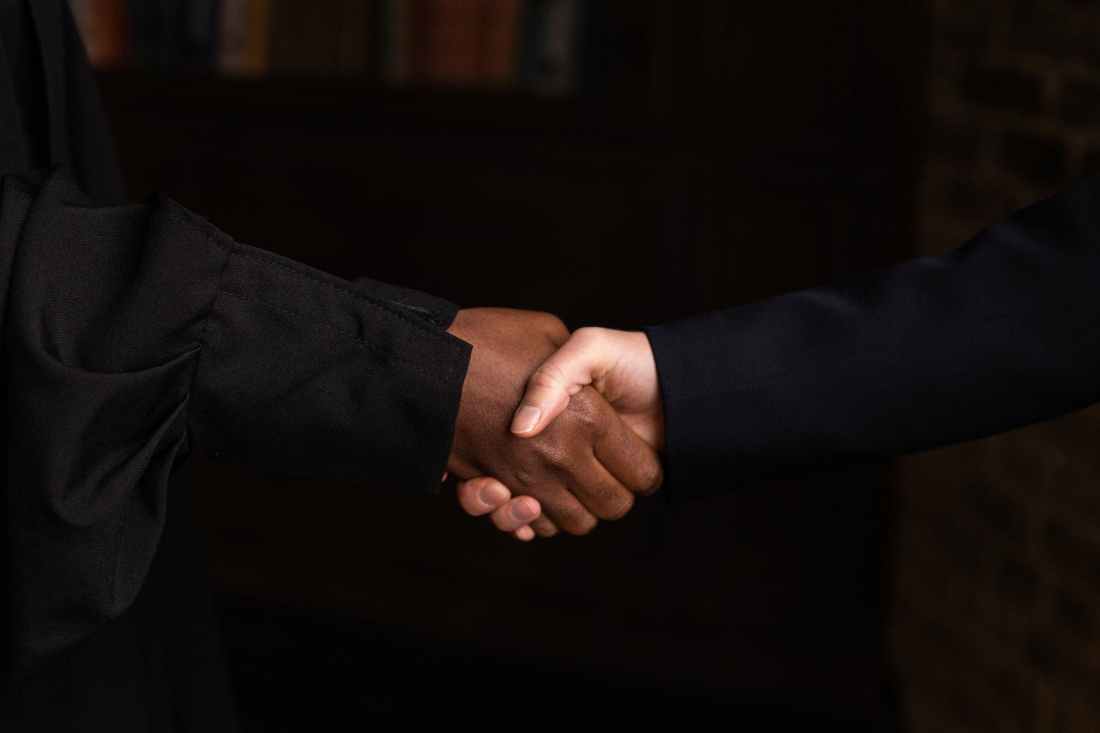
The enslavement of Africans, generation after generation didn’t just traumatize and dehumanize black Americans, it dragged all of society down with it. Everyone was adversely impacted by it in one way or another, even those who profited from it. American society was poorer for it, directly contradicting its own high ideals of human rights, and forcing some to use mental gymnastics to justify such a barbaric enterprise, even resorting to organized violence to deflect their own festering guilt and paranoia. This spilled over into such conflicts as the infamous Bleeding Kansas, and then again later in the Civil War, to say nothing of the tragic deaths of countless Black Americans.

Thus, while Juneteenth wasn’t a holiday that I grew up with as a white kid of the 80’s and 90’s, I am glad to see we celebrate it now. Or rather, I am glad we have more awareness now and the holiday has the widespread acceptance it deserves. The emancipation of Black Americans wasn’t the end of discrimination, especially since the Jim Crow laws persisted even as late as the 1960’s, but as soon as slavery ended, America as a whole was that much better for it.

When we see the entire struggle for freedom and equal rights through the lens of Buddhism, it’s not just a problem for Black Americans, it poisons the well for us all. Where one suffers, we all suffer in some way. Where one person is treated with goodwill and dignity, we all benefit. When one black man in this country is unfairly persecuted by the law, or killed by police violence, it wounds us all. Where Americans of different backgrounds come together in a spirit of community, family and so on, we all benefit.

The struggle of Black America, as is struggle of Native Americans, LBGTQ people and so on is everyone’s struggle too. The little things we do on a daily basis to listen to these struggles,2 or to be an ally for others, or even just be kind on a person-by-person basis do affect others, including those we never see. This is a fundamental Buddhist truth, whether we see it or not.

Let us each leave this world a little better than the one we entered.

Namu Amida Butsu

1 The example above was originally composed by Fa-zang (法藏; 643–712), a proponent of the Chinese Huayan school centered around shunyata.

2 Sometimes this can be as simple as letting other people speak about their experiences, and not sucking all the oxygen out of the room with your own thoughts and opinions.

Life, Death, Life

Note: I started writing this post way back in December, but have been mulling over it for quite a while. The fact that I post this on the day before Nirvana Day (the death of the Buddha) is serendipity. 😏

The day of my mother-in-law’s 100th day memorial was a very somber day for us all in Japan. My wife had gone back to Japan shortly after her mother passed away, but the kids and I had not, so this was our first real chance to say goodbye. Per Japanese funerary customs, we dressed in somber blacks and dress suits (first time in many years for me), and we carried her ashes from her home to the nearby Buddhist temple where the memorial occurred.

It was a surreal morning: the weather was sunny and pleasant. Overhead, the sky was blue, and winter birds were singing in the trees, while we were quiet and carrying the ashes of our beloved relative, lost in thought. The contrast between life and death was impossible to ignore.

It made me realize that both life and death are all around us. They exist like two sides of the same coin.

Even in the original series, Star Trek, Mr Spock acknowledges this:

Season 2, episode 14, “Wolf in the Fold

Roger Zelazny in his novella, Creatures of Light and Darkness (1969), also explores the idea that the absolute, most fundamental powers in the Universe are life and death. The usurpers, Anubis (of the House of the Dead) and Osiris (of the House of Life) vie with one another, but also keep the Universe in balance:

Anubis: “Osiris and I are bookkeepers: We credit and we debit. We raise waves, or cause waves to sink back again into the ocean. Can life be counted upon to limit itself? No. It is the mindless striving of two to become infinity. Can death be counted upon to limit itself? Never. It is the equally mindless effort of zero to encompass infinity.…”

Creatures of Light and Darkness, by Roger Zelazny

Buddhism looks at this truth, and extends it one step further by pointing that life does not end with death, and the two blend together so much, and are so closely tied to one another that there really isn’t “death” as separate from “life”. Just one big fluid mess. Consider this verse from the Heart Sutra:

“Listen Sariputra, all phenomena bear the mark of Emptiness; their true nature is the nature of no Birth no Death, no Being no Non-being, no Defilement no Purity, no Increasing no Decreasing….”

Translation by Ven. Thich Nhat Hanh

If we see that life and death are two sides of the same coin, and that one cannot exist without the other, where do we draw the line? That’s the point of this verse, I think. That’s emptiness (shunyatā in Sanskrit) in Buddhism: all things exist in a provisional, contingent way that depends on other things. No separate thing called “life”, nor a separate thing called “death”. It just goes on and on…

In the Analects of Confucius, there is a famous quote that expresses this same sentiment:

子在川上曰。
逝者如斯夫
不舍晝夜。
[9:17] The Master, standing by a river, said, “It goes on like this, never ceasing day or night!”

Analects of Confucius, 9:17, translation by A. Charles Muller

In the same way, life and death dance around one another ad nauseum. In the Buddhist viewpoint, people are reborn again and again without end. Not one life or two, but countless, countless lives stretching back to some distant, unknowable eon, just as we are doomed to repeat this dance of birth, struggles of growing up, struggles of old age, illness and death over and over again into the future. A cosmic “rat race” without end.

In the immediate term, it’s a reminder that we cannot avoid death. We cannot live without it either. All existence is marked by death, and all existence must face it sooner or later.

During my mother-in-law’s memorial service, per tradition of the Jodo Shinshu sect, the famous Letter on White Ashes composed by Rennyo to a follower in the 15th century, was read aloud:

Who in this world today can maintain a human form for even a hundred years? There is no knowing whether I will die first or others, whether death will occur today or tomorrow. We depart one after another more quickly than the dewdrops on the roots or the tips of the blades of grasses. So it is said. Hence, we may have radiant faces in the morning, but by evening we may turn into white ashes.

Translated by Rev. Hisao Inagaki

Thus, only now matters. Enjoy the air you breathe, the life you live (even when work is miserable) and the health you have. Do not squander it.

Namu Amida Butsu