Despite the premature feeling that lockdown was nearing an end, it isn’t, and at this rate we’re probably going to be dealing with this through the rest of 2020. That said, it hasn’t entirely been unproductive either.
After any major, life-altering social upheaval (wars,1 pandemics, etc), I figure that people go through a series of phases: shock, fatalism (enjoy today, we may die tomorrow), acceptance, depression and finally adjustment. At least our family went through all these at some point. In time, we’ve adjusted to new routines with school, with work, and with being home together all the time, and started taking on some long-term projects that were neglected (sometimes for years).
This is not a novel idea, either. I see friends and neighbors taking up gardening, home repair, painting or other such projects. The specific project isn’t even that important, but having something personal you can work towards and make the most of your time locked down can really help. The alternative, of course, is worse.
Last month, I wrote down a list of projects that I wanted to finish by end of August, in no particular order, which included:
Finishing a couple of books. These were books that I actually wanted to read, as opposed to the pile of books I bought and only half-heartedly want to read.
Finishing a certain, little writing project of mine (more on that in a future post).
Finishing one of my Japanese language textbooks, which is already 2/3 done anyway.
Finishing season one of Star Trek: Discovery.
This was meant to be a list of easy, stress-free projects to complete by August, but I also expected to not get all of them done, so I made a note to myself that I would not be disappointed if I fail to finish them. I figure, any progress is better than no progress at all. But I have completed a couple items so far, and I am happy to see the list getting smaller.
Meanwhile, the house and yard are getting some badly needed maintenance. We’ve even co-opted the kids a little to help.
All this is to say that lockdown sucks, it’s super disruptive, but we’re all learning to adapt and make the most of the time we’ve got.
1 I don’t say that to be flippant either. My grandparents, and my wife’s parents (as children) both lived through WWII, albeit on different sides. Social upheaval can take years to get out of, and even then you can never quite go back to where you were before. You can only move forward. Then again, when you think about it, every generation has some crazy life-disrupting events anyway, so I guess it was our turn?
My teenage daughter and I share a lot of hobbies like Marvel comics, Dungeons and Dragons, Star Wars and such, but she tends to draw the line at Star Trek, especially the original series.
Not too long ago, I busted out my old Klingon Dictionary (yup, that Klingon Dictionary) and gave her a bit of an introduction to the Klingon language, including my bad pronunciations of Shakespeare:
General Chang’s pronunciation of the original Klingon is so much better
The Klingon language holds a certain fascination for me, even though I’ve never really done much to study it beyond some real basics. Compared to other language I like to study such as Japanese, it isn’t very useful. But on the other hand, it embodies a lot of nostalgia for me.
My fascination with Star Trek began in my early teens when The Next Generation was still on air, and the original cast were still making movies (Star Trek VI was a lot of fun to watch in the theater), and the rivalry between the Federation and the Klingon Empire was a big part of that. They were the fascinating other, and as a kid growing up in the tail end of the Cold War, I am sure that had something to do with it too. On the other hand, Star Trek: TNG did a lot to make them more three-dimensional figures and not just cheap villains (i.e. “space Soviets”) like they were in the original series
Anyhow, I remember being 13 and buying a copy of The Klingon Dictionary at the local bookstore. I was so excited to have it, and spent the following weekend reading it over, even though the linguistic terms made no sense to me. When I brought it to school, though, I got teased mercilessly, and I never brought it again. It remained dormant at home for many years, forgotten.
Finally a couple years back, I cracked open the Klingon Dictionary (along the way I somehow also picked up Klingon For The Galactic Traveler as well) and I could still remember some parts of the book, and pages. It was like being 13 all over again, fascinated by the world of Star Trek and Klingons.
My daughter grew up under different times and circumstances, so I can see why Klingon culture, language and Star Trek in general1 would obviously have no appeal to her, but I imagine someday she’ll be looking back on things she enjoyed when she was 13 with the same sense of nostalgia, and baffle her own kids. 😋
Qap’la!
1 To be fair, the original series and even TNG to a point were pretty sexist. It’s a shame given the positive, idealistic future that Star Trek normally embodies. Still, I wonder if she’ll ever like newer series like Star Trek: Discovery which I think is a pretty good.
Information overload, especially during lockdown, is a real thing. The political turmoils, updates on Coronavirus and general dickheadery can really wear a person out.
I don’t use too much social-media,1 but I do rely on Twitter primarily (plus Discord for D&D and other gaming), but even through that one social-media service, I got a bad case of burn out recently, so I just logged out and deleted the app. I don’t intend to close my account, but the daily, often hourly rants about COVID-19, what the president has done wrong this time, or crazy conspiracies floating around weren’t doing much to help my mental well-being, plus the exhaustion of retweeting stuff or posting my own rants which in hindsight, weren’t really worth it.
It’s been nice. I quickly got out of the habit of reaching for my phone to check Twitter in about 2-3 days (I now check about weekly) and don’t miss it as much as I thought I would.
That said, I still check the news pretty often and that is still a source of stress, but it’s much easier to close a news website than it is to close Twitter since I can just skim a headline and move on.
Sometimes it feels like I am just putting my head in the sand, rather than facing issues that are going on, but on the other hand, I have little control over most of those issues anyway, so how much good does it do to fret over them either? Instead, I want to focus on things I can control around me, such as how I interact with the family, people in my community, etc. This includes wearing face masks every single time, voting in the election when the time comes, being an ally to those around me who need it, and making small efforts to keep the air and water clean. Light one corner of the world, as they say.
In a more general sense, don’t act like a dickhead. You’d be surprised how many people forget this one. 😅 It’s not about being “woke” it’s about caring for others.
P.S. Black Lives really do Matter. ❤️
1 Deleted my Facebook account years ago, never looked back.
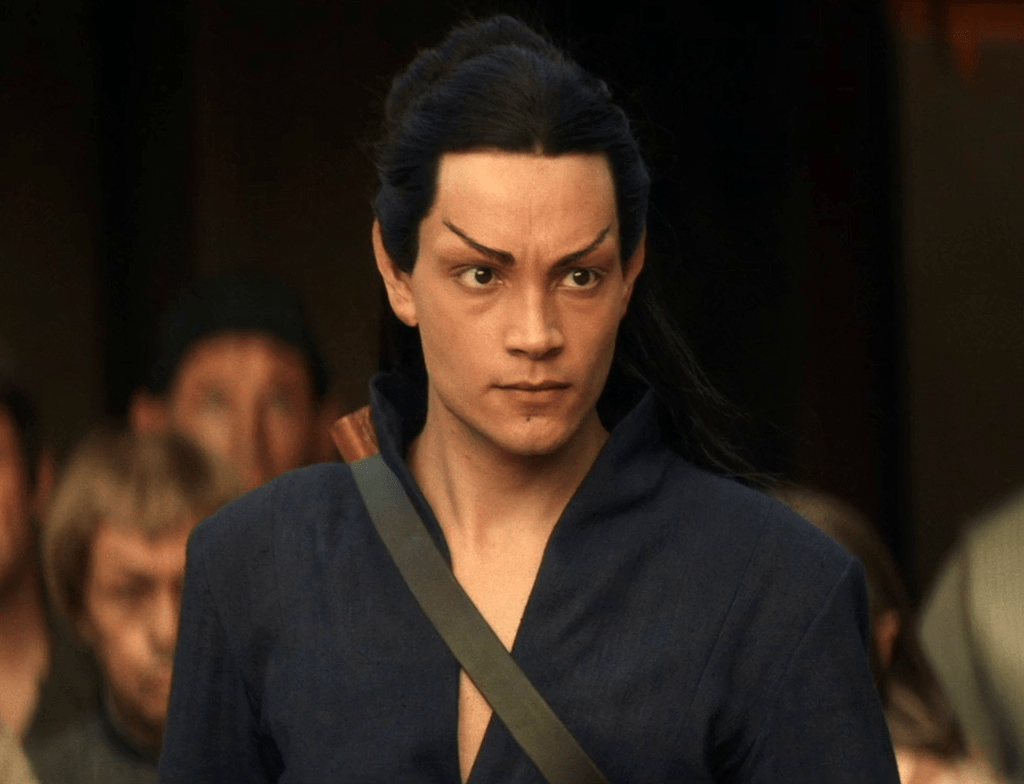
One of my favorite things about playing Dungeons and Dragons is the freedom to experiment with all kinds of character concepts, and lately I’ve been pondering over a character based on Elnor from the latest Star Trek series, Picard:
Arguably the coolest Romulan around… 😎
Elnor, played by Evan Evagora, is a Romulan warrior who becomes Picard’s bodyguard and a foil to the Tal Shiar. I felt he was a great character in the series. After completing season one, I got to thinking: would it be possible to make such a character in D&D? The closest fit I could think of was:
A fighter, samurai sub-class (from Xanathar’s Guide to Everything). Elnor just looks and acts like a Romulan version of a samurai, and that subclass in D&D is mechanically very good.
An elf, which seems to be the closest visually to a Romulan. I quickly settled on a Wood Elf as the best choice because Elnor doesn’t use any “magic”, but is awfully nimble with good intuition. Elves in general make solid warriors in D&D even if their stats prioritize Dexterity-based builds.
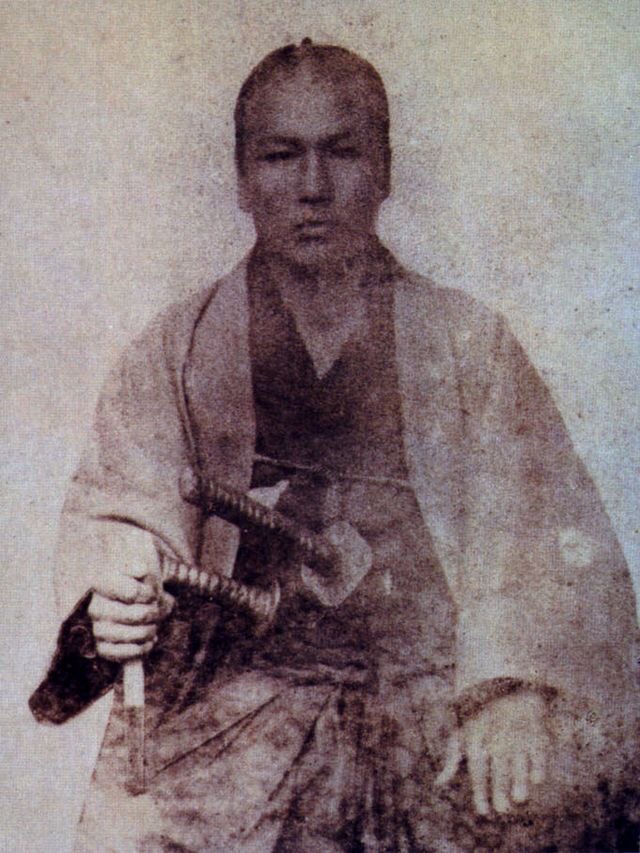
Since I wanted my character to be a samurai, and a reasonably historical one at that, it is only fair he uses a katana-like weapon if at all possible. Archery (kyūdō in Japanese) would be a plus too.
These constraints I put on myself made for some interesting contradictions. Elves in D&D lean strongly toward Dexterity-based characters, which in turn favor light weapons or archery-based attacks.
Further, the primary weapon of a samurai is a katana, which is a larger sword frequently used with two hands, but still usable with one hand only:
According to the Dungeon Master’s Guide, under alternate campaign setting of Wuxia (pg. 41), there is a conversion chart of traditional D&D weapons to East Asian equivalents, and a katana is considered mechanically equivalent to a D&D long sword. This makes sense: a long sword has the “versatile” feature and thus can be used for both one-handed and two-handed attacks, just like a katana. However, a long-sword is a melee weapon, which means Strength, not Dexterity matters.
One other thing I considered is that samurai in the late-medieval Edo Period were required by Shogunate law to have two swords:
Thus, my elf-samurai character would need two swords, not one, if I wanted to be historically accurate. Typically, the second sword was either a smaller wakizashi or kodachi. Easy enough: fighters in D&D start with two martial weapons so I can just add a scimitar (which the DMG equates to a wakizashi), or a short sword which is equivalent to a kodachi in my opinion. For my character idea, I went with the kodachi.
But the biggest problem with this build concept was that if I wanted to use a long sword effectively, the character would have to rely on Strength, not Dexterity, which is harder to build for an elf.
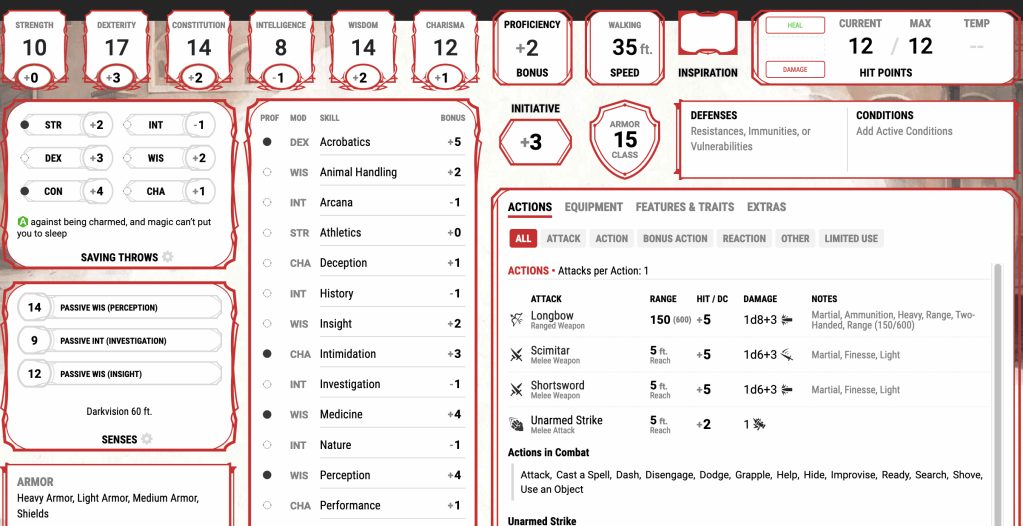
So on D&D Beyond, I made two experimental characters:
The first is a strength-based elf samurai:
The other is a dexterity-based elf samurai:
Both of these builds have issues. The strength-based elf-samurai build is probably closer to a historically accurate samurai, but as Elves get bonuses to dexterity, not strength, his stats would be somewhat spread out.
On the other hand, if I did a more typical D&D build of a dexterity-based elf samurai, it would be mechanically stronger since I could devote my resources to one stat only, but the best weapon I could hope to use effectively would be either a scimitar (somewhat weaker, plus one-handed only) or a rapier (slightly better, but even less historically accurate).
So it basically came down to either a character that is more historically accurate (flavor) or more mechanically effective (combat).
I went back and forth on this for weeks. I would lean one way, or another, but after consulting with some fellow gamers online, I settled on the strength-based build. The deciding factors were:
Fighters of all kinds get so many stat bonuses as they grow, that I can shore up both strength and dexterity as I see fit. This means relying less on feats,1 and just making Strength (and maybe Dexterity, too) as high as possible. That would also allow this character to still be solid at archery too if need be.
Second, why play a character that’s mechanically good if it’s not fun? The more historically accurate, strength-based build just seemed more fun to me. Plus, under Adventurer’s League rules, you can rebuild a character as many times as you like before they reach the 5th level (a.k.a. tier 2).
Image courtesy of Cinder (@cinder_val on Twitter), via commission
Character concepts in D&D are fun. I’ve had a few others that I’ve mulled over in the past (such as my nature cleric who was ultimately rebuilt as a Drow female just for cooler backstory), but this one was particularly hard due to the contradiction between rules and historicity. I probably could’ve made my life easier if I had just picked a human samurai, but that would also have been less of a challenge. 😏
Update: I have been having fun with this character quite a bit, especially after I got a hold of some Gauntlets of Ogre Strength, which frees up my build resources to focus on other things than Strength. Further, I took the feat Elven Accuracy at fourth level. Elven Accuracy pairs very nicely with the samurai’s Fighting Spirit feature, and lets Heian Amakiiro shoot his longbow very accurately. Thus, so far Heian has been capable of handling melee combat effectively, but also as an archer. At sixth level I took Sharpshooter as a feat as an extra boost to his archery skills. From here, I can
Update #2: I made minor edits to this blog post for readability, and clarify on kodachi vs. wakizashi weapons. Further, this post, and the character Heian ended up being the inspiration for my Japanese–themed D&D adventures that I’ve been posting on DMS Guild. It wasn’t enough to have a mechanically functional character. I realized that I wanted to give him a decent backstory, and I wasn’t satisfied with the old Wa/Kozakura settings, so I just fleshed out my own version.
1 As feats go, the ones that seem most compelling for this character would be Great Weapon Master (obviously) and maybe Medium Armor Master. Also, Tough might be an option too, just for the hit points or maybe even Athlete just to round things out.
2 Originally I was being lazy and just named him “Melnor” (Elnor with an extra “M” at the beginning) until my daughter teased me for naming all my elf characters basically the same. Constructive criticism is always helpful. 😝 “Heian” make sense given my interest in the Heian Period of Japanese culture, and, surprisingly, listed in the Player’s Handbook under the table for male elf name suggestions. The rest kinda wrote itself.
The last couple weeks in lockdown (with at least 4 more ahead) have been interesting. After the initial panic, we’ve gradually settled into a routine where keep our kids “in school” during weekdays, take walks a lot in the neighborhood, only visit the grocery store as needed, and generally learn to keep ourselves entertained otherwise.
Being stuck at home a lot does tend to shift priorities. A lot of my personal projects have kind fallen further and further behind, because they just don’t really feel that important anymore.
I have caught up on a few books, movies, old episodes of Star Trek: the Next Generation,1 updated the blog (obviously 😏), and been playing Adventurer’s League online with the same community I played with before.2 Things like language study, Buddhist practice, Magic the Gathering and some writing projects have all died on the vine, leaving me with those things which I guess I valued enough to keep up.
All of this takes a backseat to my wife and kids though. Since I don’t work in the office anymore, I can enjoy dinners with them more consistently, and the (mostly) daily walks around the neighborhoods in the warm, spring weather and finally got some things done around the house. This is not to trivialize the danger of the novel Coronavirus, but it’s nice to be able to turn lemons into lemonade sometimes. 😊
In any case, as we’ve settled into a pretty good routine, it’s interesting how trivial some things seem now compared to life before COVID-19, and how others have bubbled to the surface.
It’s fair to say that those of who survive this (and one should never be too confident about one’s own mortality) are going to party like it’s 1999 when this has passed, but at the time, it is going to change our lives. It already has.
1 If you are a Star Trek TNG fan, I highly, highly recommend the new Star Trek: Picard series as well. Season one was terrific. Going back to watch Star Trek: Discovery as well.
2 Happy to see a couple of my more neglected characters in Adventurer’s League finally get some “flight time” and development. Also, it turns out that Eldritch Knights and Land Druids are pretty fun to play. Maybe I’ll post about that soon.
With all the talk lately about the US and Iran, I thought about this quote from a Buddhist text called the Dhammapada. The Buddha, said in the Dhammapada, verses 129-132:
All tremble at violence; all fear death. Putting oneself in the place of another, one should not kill nor cause another to kill.
All tremble at violence; life is dear to all. Putting oneself in the place of another, one should not kill nor cause another to kill.
One who, while himself seeking happiness, oppresses with violence other beings who also desire happiness, will not attain happiness hereafter
One who, while himself seeking happiness, does not oppress with violence other beings who also desire happiness, will find happiness hereafter.
Translation by Acharya Buddharakkhita
Or as Star Trek so eloquently put it:
Death. Destruction. Disease. Horror. That’s what war is all about. That’s what makes it a thing to be avoided.
Kirk, “A Taste of Armageddon” (s1ep23), stardate 3193.0
and:
If some day we are defeated, well, war has its fortunes, good and bad.
Commander Kor, “Errand of Mercy” (s1ep26), stardate 3201.7
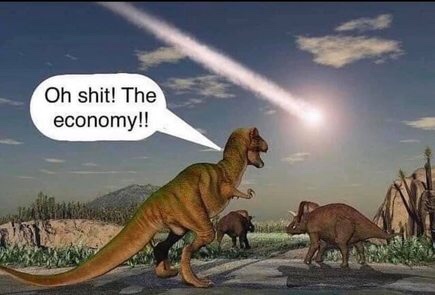
Indeed, the only good WAR is this one:
Goodwill towards others is the cornerstone of Buddhism, and something we can all foster in the world starting with ourselves.
Namo Tassa Bhagavato Arahato Sammasambuddhasa (“Praise to the Blessed One, the Noble One, the fully Awakened One.”)
Edit: since this post was written in 2020, there has been more war since then, both in eastern Europe, and in the Middle East. Once again, I quote Star Trek:
The face of war has never changed. Surely it is more logical to heal than to kill.
Surak of Vulcan, “The Savage Curtain” (s3ep22), stardate 5906.5
Surak of Vulcan, founder of Vulcan Logic, portrayed by Barry Atwater in the Star Trek episode the “Savage Curtain” (season 3, episode 22)
One of the more fascinating, and deeper facets of Buddhism, particularly Mahayana Buddhism, is the notion of interdependency. Buddhism teaches that all things, both concrete and abstract, rise from (and are sustained by) external causes and conditions. But it’s not a single transaction: they depend on those conditions for continued existence. For example, a tree seedling arises from sun, soil, rain (and seed from another tree) and grows into a mighty tree, always sustained by those elements. By looking at a sheet of paper, Ven. Thich Nhat Hanh writes in The Heart of Understanding, you can see the whole world in it.
There’s a famous verse from the 30th chapter of the Flower Garland Sutra as well that really romanticizes this notion:
In all the ten directions everywhere, throughout the sea of lands, Every hair-tip encompasses oceans of past, present and future. So, too, there is a sea of Buddhas, a sea of Buddha lands; Pervading them all, I cultivate for oceans of endless time.
and:
On the tip of an extremely fine hair Appear jeweled lands of past, present and future: Lands on hair-tips as numerous as dust motes in all lands of the ten directions,
The idea is that even something as grand and splendid as one of the pure lands of the Buddhas (a.k.a. “buddha-fields”) is interdependent with a single hair tip. Of course the same can be said in reverse too.
But all this isn’t just a philosophical exercise. Buddhism, first and foremost, is about praxis: doing stuff.
The implication of all this what one says, thinks and does affects others. Directly and indirectly. When we think or do something wholesome, the world is that much better for it. Similarly, when we act or think something rotten, the world degrades a bit.
Thus, Mahayana Buddhism has the image of a bodhisattva striving lifetime after lifetime to help others, perfect oneself, gradually awaken the mind, etc. In so doing, they achieve their vows and become a Buddha.
But why? Why go through all that?
The answer lies in the diversity itself. Consider the words of the famous Metta Sutra:
May all beings be at ease. Whatever living beings there may be; Whether they are weak or strong, omitting none, The great or the mighty, medium, short or small, The seen and the unseen, Those living near and far away, Those born and to-be-born — May all beings be at ease!
This spirit of goodwill (metta), is at once an appreciation of the diversity of all things, and also a desire for them to be well. Sometimes, this means leaving them alone, sometimes meaning giving a helping hand, and sometimes this just means holding a good thought.
May all beings be well, or as Spock might say: may they live long and prosper. 🖖
P.S. Mr Spock from Star Trek is a bodhisattva to me. 😙 Also, the title of this post is a Vulcan slogan.








 Gleanings in Buddha-Fields
You must be logged in to post a comment.