When you buy books in Japan, you are often asked if you would like a book cover. If so, the staff will kindly fold some brown wrapping paper for your books, with just the proper fit. Because people often read on crowded trains where there is little privacy, it is a handy way to keep your reading habits private. It is also a nice way to prevent your book from being scuffed in a backpack or purse.1
Similarly, you find many nice premade book covers in Japanese stores, or online. But I think making your own is the best way to do it. If done correctly, it is guaranteed to fit the book properly, and you can personalize it with whatever paper or design you choose.
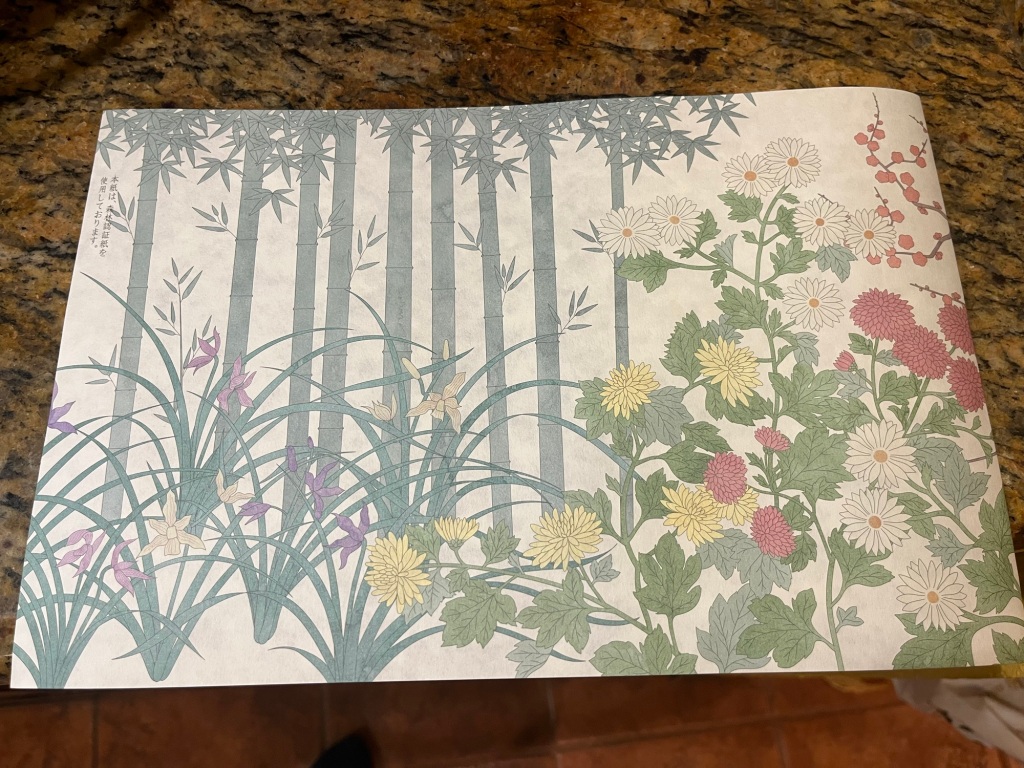
Recently, I purchased some Japanese book covers from a local antique store, but I was disappointed to find some of them didn’t fit any of my books. Coincidentally, I received some nice wrapping paper, so I decided to put it to good use.
Following these handy instructions, I was able to make a book cover out of it:
The instructions, essentially, require fitting the book to a corner of the paper or fabric, and leave a margin of 5cm on each side. When folding the paper, it’s important to make it flush with the top and bottom of the book. After that, it should fit like a glove.
My book cover above required a couple tries to get it right. I didn’t properly measure the first time, and it was a bit too small. So I had to fold a second time, this time reading the instructions more carefully, and got a satisfying fit. I’ve really enjoyed this book cover once it was complete. Once you learn the technique, I realized that it’s easy enough to make one using any sturdy, foldable paper, or soft fabric. Plus, if you are artistically inclined, you can probably make book-covers that are suitable for the books you are covering. I wish I had that talent. 😅
Anyhow, enjoy!
1 I have an old, used Star Trek novel whose corner broke off recently, so I can safely say that protecting books, especially legacy used books, is important.
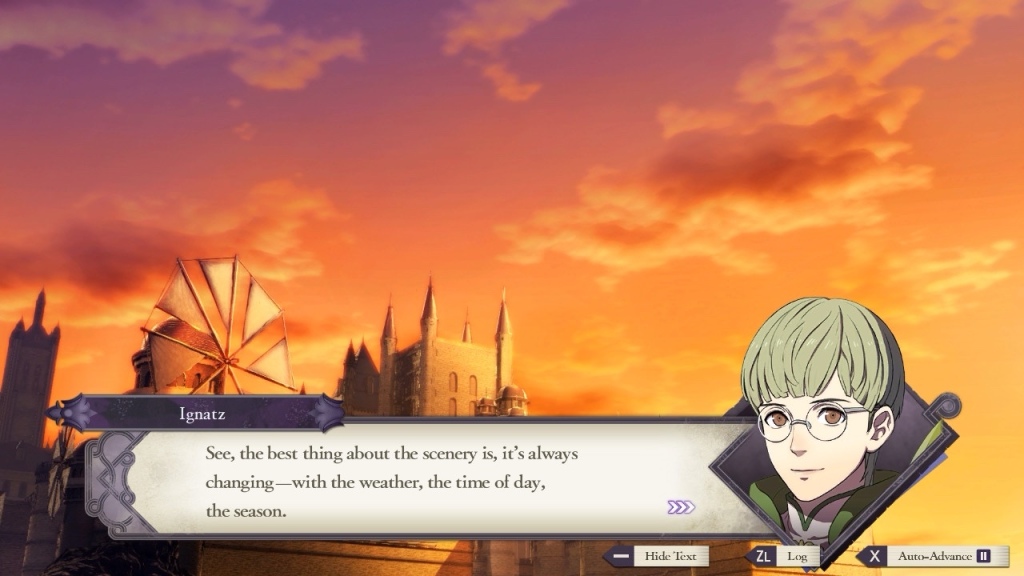
This was a neat dialogue between two of the characters in Fire Emblem: Three Houses that I wanted to post here.1 It’s very Buddhist in my opinion.
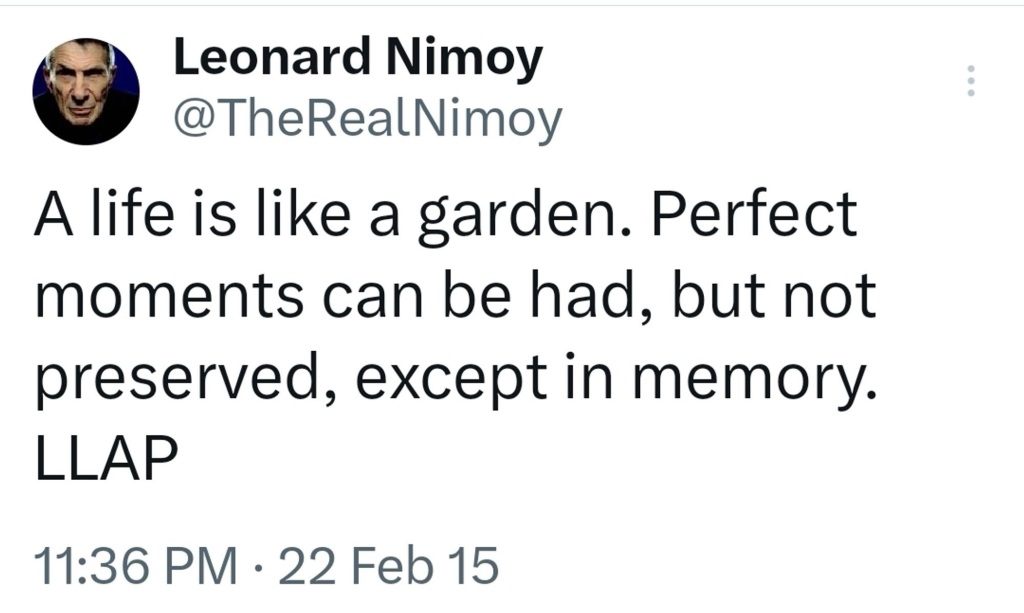
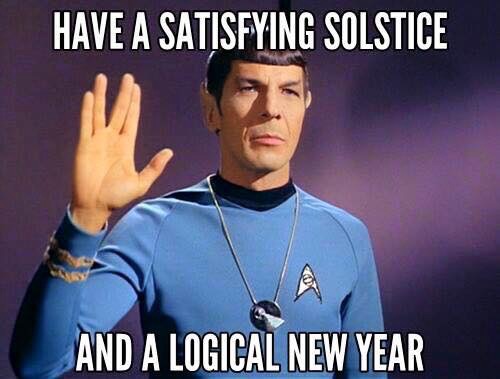
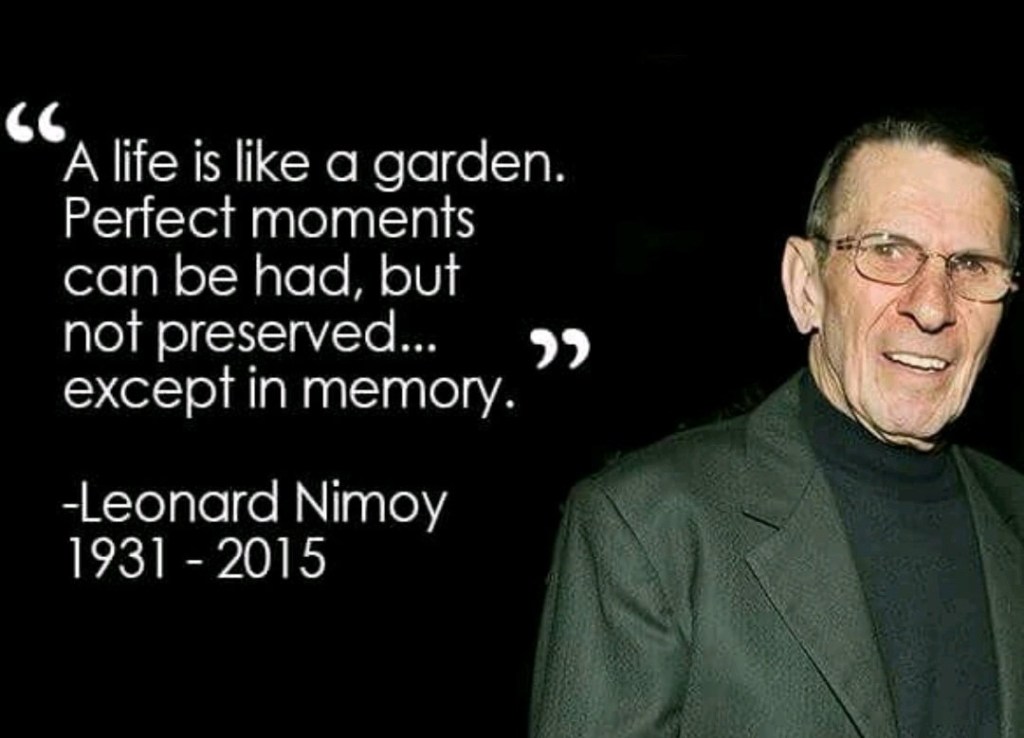
Or as Leonard Nimoy said before his passing…
I am one of those people who likes to take lots of photos of scenery on my phone, but I admit whenever I do this, the photos just aren’t the same as the original experience. I never could fully explain this to myself until I saw the dialogue above.
1 I haven’t talked about it as much lately, but I’ve been playing FE3H pretty much non-stop since last August, and am on my fifth play-through. I can confidently say this is one of my favorite all-time games.
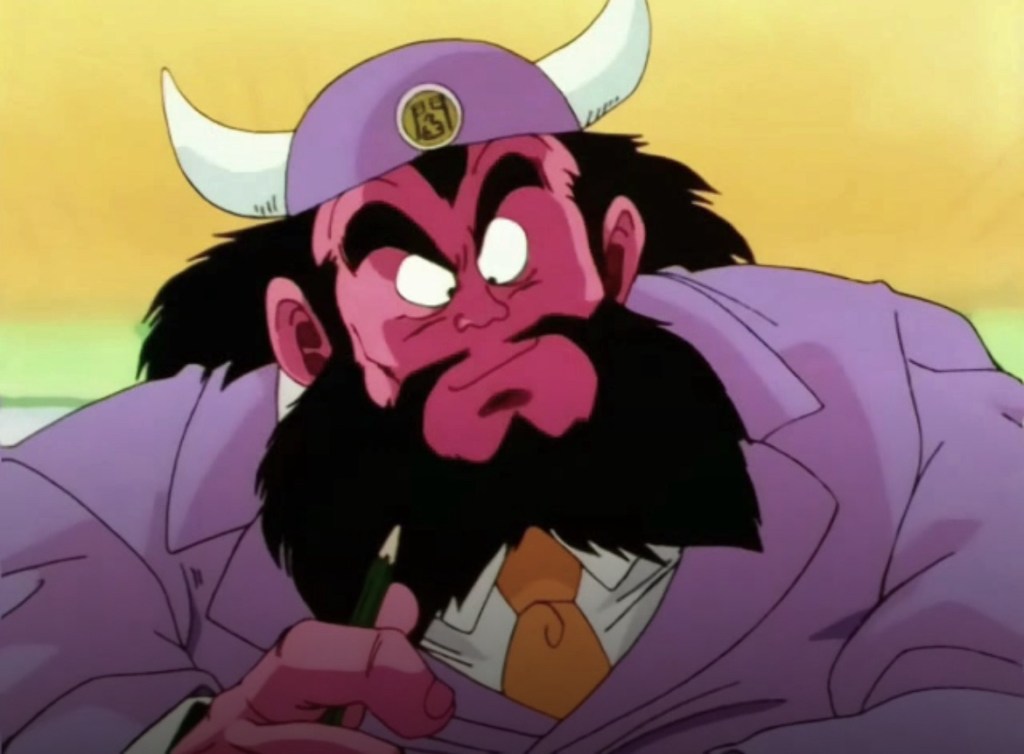
Dragon Ball is a fun series because it blends a lot of Japanese-Chinese mythology, especially the early series, into a futuristic storyline. Goku is obviously based off of the famous legend of the Monkey King, Sun Wukong (Son Goku in Japanese). Another great example is the character Enma.
In Dragon Ball, Enma (sometimes spelled “Yemma” in English) presides the realm of spirits and behaves like a modern bureaucrat. In spite of the suit and tie, this Enma is definitely based on the original figure in Japanese mythology, named Enma Daiō (閻魔大王, “Great King Enma”).
The original Enma is a fascinating example of a “fusion” mythology, not a native Japanese one. Enma is originally based on the Hindu god Yama, lord of the dead.2 However, in China he was transformed into a Confucian-style bureaucrat and shoe-horned into Buddhist cosmology as a judge of the dead. Enma, along with other judges, determine the dead’s next destined rebirth within Buddhist cosmology. During certain Chinese funerary practices and festivals, you can see his visage on “ghost money” used to help the dearly departed coast through the trial process and ensure a smooth, lenient transition to their next life.
This Enma, a bureaucrat / judge of the dead, was how it was imported to Japanese culture in antiquity. He is even featured in classics such as the Tales of the Heike. When the warlord Taira no Kiyomori is dying from a terrible fever, he has a vision of Enma and his demonic attendants awaiting him. I’ve also heard of an old tradition where parents in Japan would scold their kids saying Enma would pull their tongue out if they told a lie. I have never heard this first-hand though, so I wonder if anyone ever says it anymore.
Anyhow, Dragon Ball’s spin on Enma, Goku and others is a fun look at Chinese-Japanese mythology, for a modern era.
RIP Toriyama Akira 🙏🏼
P.S. this post was also inspired after watching the Star Trek: Voyager episode “Barge of the Dead”. It’s a fun look at the Klingon afterlife.
1 growing up in the 1980’s my obsession at the time was Akira, which I still enjoy from time to time. 😄
2 if you ever pick up the book Lord of Light by Roger Zelazny, a wonderful blend of Hindu mythology and ultra-futuristic science-fiction with a lot of sass thrown in, the Yama depicted in that novel is quite an interesting character.
As a kid, I was always fascinated by Astronomy, and I remember often watching the stars at night, when I would visit my dad’s house on the weekends. Back then, I didn’t really understand astronomy well, but I learned what I could about constellations, I visited the planetarium at the Pacific Science Center, and of course I became a big fan of classic Star Trek through my uncle. In college, I even majored in Astronomy for a time until I realized that Physics wasn’t my forté.
Space and the universe have always fascinated me, and for a long time, I’ve felt that in light of space, science, etc, Buddhism has been particularly suited for this worldview.
The Buddha-Dharma functions in a lot of ways like the laws of physics or other natural laws. It’s less something to believe in, and something more to understand or at least acknowledge. It can fit into any time or place.
The various Buddhas and Bodhisattvas, primarily found in the Mahayana tradition, might seem superstitious, but embody important Buddhist truths and can be just as weird and cosmic as anything the universe has to offer. Further, belief is such beings is neither required nor expected. It is up to each person to adopt what they want. They are quite literally a form of expedient means.
Finally, when you look at the sheer vastness of space, it’s hard not feel small. But that is alright too. Buddhism thinks big, but also because everything is interconnected in some way, it assures that the choices we make, wholesome or unwholesome, do affect all other things. We can light one corner of the world (and universe) through our actions and our thoughts.
P.P.S. I’ve often wondered if the Buddhas and Bodhisattvas really do exist, would they be humanoids like us, or would they be strange aliens like in Star Trek? Would Amida Buddha’s original from be a green alien with four arms? 😋
Self doubt is something we may all face from time to time. For me, it hits hard when I have made a mistake, and it’s hard to shut off the negative thought process once it starts up.
The origins of this self-doubt are not that important, though. I have my theories, but it doesn’t really matter. What matters is what self-doubt does: it creates false assumptions, and cripples decision-making. One might say, it’s all in the mind.
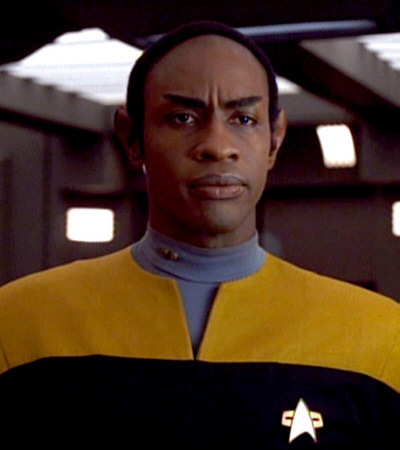
Tuvok, as portrayed by Tim Russ.
During a recent rewatch of the Star Trek: Voyager,1 I really enjoyed Tim Russ’s character Tuvok, the Vulcan security officer. Tim Russ is a great actor, and I appreciate his portrayal of Tuvok, and especially Tuvok’s level-headed approach to situations. In the same way, Spock as played by Leonard Nimoy did the same thing in the original Star Trek series.
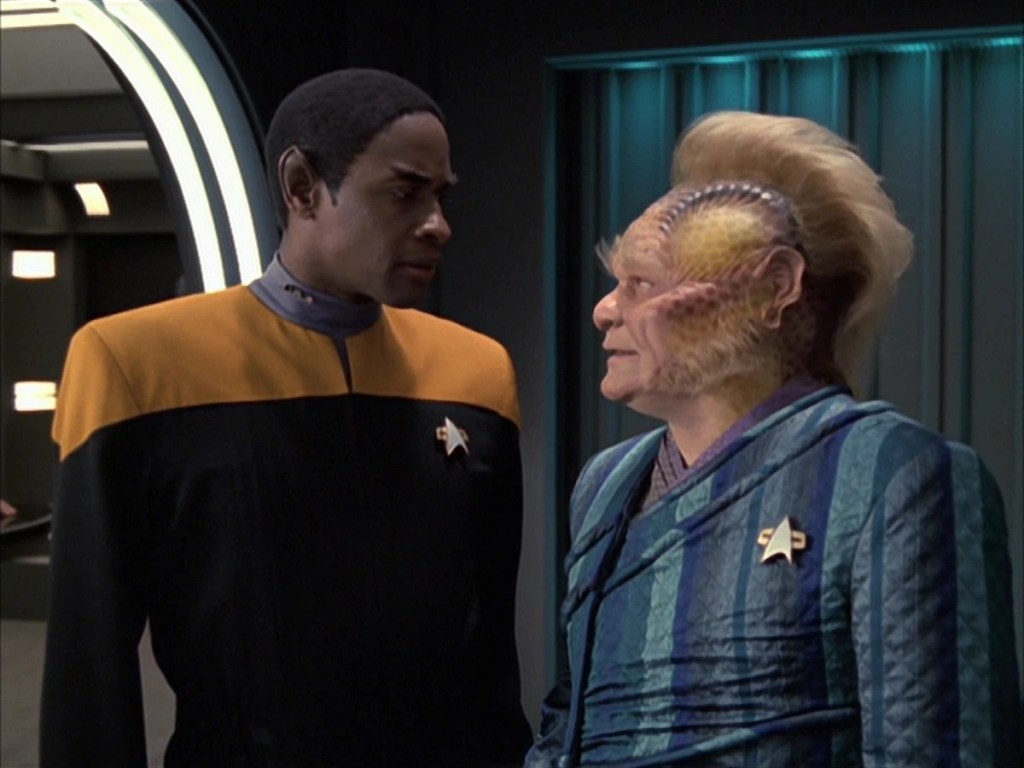
When Tuvok is faced with a difficult situation, and the rest of the crew (esp. Neelix) panics, he tends to remain calm, and analytical. He assesses the situation rationally.
Tuvok and Neelix (played by Ethan Phillips).
I think that’s the secret to overcoming self-doubt. Self-doubt, believe it or not, is rooted in a kind of conceit, or self-centeredness, even when it’s a negative form of conceit. Trying to counteract with self-love or self-affirmation just replaces one form of conceit with another. It’s not necessarily wrong, but kind of defeats the point.
In the same way, when I feel myself slipping into another death-spiral of self-doubt, lately I try to take a deep breath and do what Tuvok (or Spock) would do: calmly assess the situation and be rational. I am not the center of the Universe. The whole world is not judging me. If I’ve made a mistake, I need to analyze it, and correct it. If I am not at my best, I need to step back and reassess.
We can see a similar sentiment in an early sutra in Buddhism.
The Buddha “What do you think, Rāhula? What is a mirror for?”
Rāhula: “For reflection, sir.”
“In the same way, Rāhula, bodily actions, verbal actions, & mental actions are to be done with repeated reflection.
The trick is to be aware first and foremost that I am slipping into self-doubt again. This kind of mindfulness is the underpinning of Buddhism, and we can all learn to be a little self-aware. It never hurts to stop and “check in on yourself” from time to time, even during good moments. Further, the Buddhist practice of repentance is a time-honored for reflecting on your own actions in a scientific, analytical way, rather than flogging yourself.
P.P.S. As much as I love Leonard Nimoy as Spock, I am glad to see the Vulcan cast expanding over time: Tim Russ as Tuvok, Ethan Peck as Spock in Strange New World, Jolene Blalock as T’pol and so on.
1Voyager was on when I was a college student so I watched from time to time, but I never loved the show the way I did Next Generation. Plus, the show has a number of inside references that are important, but if you only watched occasionally, you missed them. Rewatching again was great, though season 2 in particular was weak. Season 3 onward was amazing.
Hello dear readers, and happy new year, or as they say in Japan akemashite omedetou gozaimasu!
My family and I took time off for Winter Break and are probably more exhausted now than when the break began.
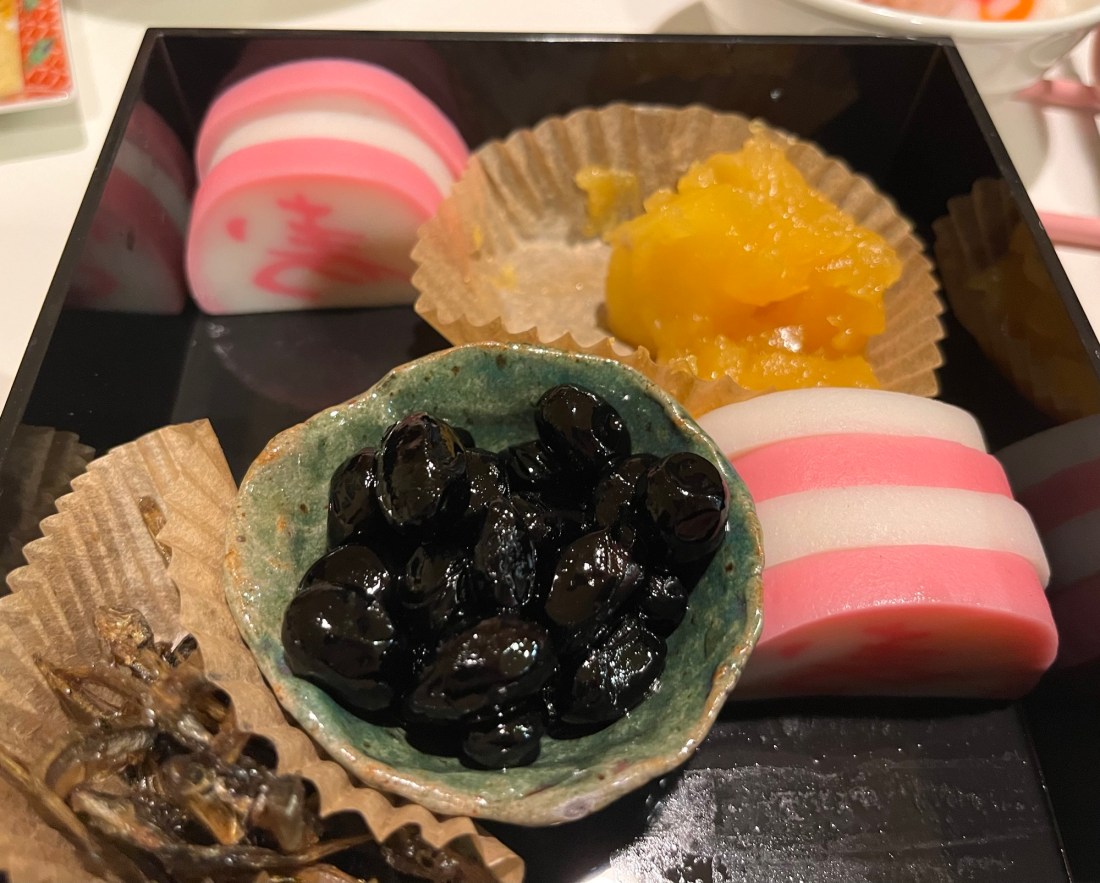
After enjoying New Year’s Eve with friends, we woke up this morning to eat Osechi (お節), which are traditional foods eaten in Japan for New Year for good luck. This is just one of many traditions found in Japanese New Year, also called oshougatsu (お正月).
I won’t list each one, but you can read here. These are foods thought to have auspicious meanings, and include things like shrimp, black beans, candied fish, chestnuts and so on. I like some more than others, but I try to have a bite of at least one of each. I like the pink and white kamaboko in particular. This year, we bought a brand that has the Chinese character 寿 (kotobuki) in it, meaning “felicitations” and such. The featured photo shows the Chinese character in reverse.
Also, in the photo above, our little ceremonial dishes feature the Seven Luck Gods too, and in the ozouni soup shown the naruto fish cakes feature Mount Fuji in front of a sunrise.
Later today, I will probably play some Karuta and then head for the local Japanese Buddhist temple for the first visit of the year, hatsumoude, and post on that soon.
Happy 2024 to everyone!
P.S. For us Star Trek fans, another thing to may be look forward to this year:
Soon after I wrote this post, I was reminded of a certain Zen aphorism in Japanese: 日日是好日 which is read as nichi nichi kore kō nichi.
This usually translates as “every day is a good day”, or “each day is a good day” or other such things. It is originally attributed to a Chinese Zen monk named Yunmen Wenyan from the 9th and 10th centuries.
At first glance, this seems like a positive affirmation of life. This is the sort of thing you might see from life-coaches, self-help gurus, posters, daily affirmations, songs, and so on. Live, laugh, love and all that.
But that kind of attitude and outlook is only useful for financially stable, healthy, affluent people living in stable countries. It’s pretty useless for people who live in difficult circumstances, working thankless, dead-end jobs, dying from pneumonia, or suffering from abuse. If you’re a child in Syria who has lost their parents during the recent earthquakes, the “live, laugh, love” phrase rings pretty hollow.
A while back, I wrote about similar issues with Seneca’s philosophical teachings. The Stoic teachings which Seneca espoused basically amounted to “suck it up” and “don’t be sad”, which is fine when you’re a Roman senator, but not too useful for the Roman slave working the fields.
In fact, for most people in the world, most days are varying degrees of shitty.
Life is a slog; First Noble Truth of Buddhism right there.
So, is there any value or meaning to Yunmen Wenyan’s famous phrase? I think so.
This is strictly my own interpretation, so please take with it a grain of salt. This morning, I had to step outside in the early morning and I beheld the sunrise. It is cold, it is early March, it is still dark outside, yet I saw the sun rising, and birds flying past it. I was glad to see it, to be breathing and savoring that moment.
Life is bittersweet. It is full of pain, loss, frustrations, and unfulfilled needs. It doesn’t necessarily get better, but it does carry on. Each moment of breath is still worth it. If you can share it with others, so much the better. But even if not, each moment is still worth something.
This is, I believe, what Yunmen Wenyan might have been saying to us, even when it gets lost in translation.
Note: I started writing this post way back in December, but have been mulling over it for quite a while. The fact that I post this on the day before Nirvana Day (the death of the Buddha) is serendipity. 😏
The day of my mother-in-law’s 100th day memorial was a very somber day for us all in Japan. My wife had gone back to Japan shortly after her mother passed away, but the kids and I had not, so this was our first real chance to say goodbye. Per Japanese funerary customs, we dressed in somber blacks and dress suits (first time in many years for me), and we carried her ashes from her home to the nearby Buddhist temple where the memorial occurred.
It was a surreal morning: the weather was sunny and pleasant. Overhead, the sky was blue, and winter birds were singing in the trees, while we were quiet and carrying the ashes of our beloved relative, lost in thought. The contrast between life and death was impossible to ignore.
It made me realize that both life and death are all around us. They exist like two sides of the same coin.
Even in the original series, Star Trek, Mr Spock acknowledges this:
Roger Zelazny in his novella, Creatures of Light and Darkness (1969), also explores the idea that the absolute, most fundamental powers in the Universe are life and death. The usurpers, Anubis (of the House of the Dead) and Osiris (of the House of Life) vie with one another, but also keep the Universe in balance:
Anubis: “Osiris and I are bookkeepers: We credit and we debit. We raise waves, or cause waves to sink back again into the ocean. Can life be counted upon to limit itself? No. It is the mindless striving of two to become infinity. Can death be counted upon to limit itself? Never. It is the equally mindless effort of zero to encompass infinity.…”
Creatures of Light and Darkness, by Roger Zelazny
Buddhism looks at this truth, and extends it one step further by pointing that life does not end with death, and the two blend together so much, and are so closely tied to one another that there really isn’t “death” as separate from “life”. Just one big fluid mess. Consider this verse from the Heart Sutra:
“Listen Sariputra, all phenomena bear the mark of Emptiness; their true nature is the nature of no Birth no Death, no Being no Non-being, no Defilement no Purity, no Increasing no Decreasing….”
If we see that life and death are two sides of the same coin, and that one cannot exist without the other, where do we draw the line? That’s the point of this verse, I think. That’s emptiness (shunyatā in Sanskrit) in Buddhism: all things exist in a provisional, contingent way that depends on other things. No separate thing called “life”, nor a separate thing called “death”. It just goes on and on…
In the Analects of Confucius, there is a famous quote that expresses this same sentiment:
子在川上曰。 逝者如斯夫 不舍晝夜。 [9:17] The Master, standing by a river, said, “It goes on like this, never ceasing day or night!”
Analects of Confucius, 9:17, translation by A. Charles Muller
In the same way, life and death dance around one another ad nauseum. In the Buddhist viewpoint, people are reborn again and again without end. Not one life or two, but countless, countless lives stretching back to some distant, unknowable eon, just as we are doomed to repeat this dance of birth, struggles of growing up, struggles of old age, illness and death over and over again into the future. A cosmic “rat race” without end.
In the immediate term, it’s a reminder that we cannot avoid death. We cannot live without it either. All existence is marked by death, and all existence must face it sooner or later.
During my mother-in-law’s memorial service, per tradition of the Jodo Shinshu sect, the famous Letter on White Ashes composed by Rennyo to a follower in the 15th century, was read aloud:
Who in this world today can maintain a human form for even a hundred years? There is no knowing whether I will die first or others, whether death will occur today or tomorrow. We depart one after another more quickly than the dewdrops on the roots or the tips of the blades of grasses. So it is said. Hence, we may have radiant faces in the morning, but by evening we may turn into white ashes.









 Gleanings in Buddha-Fields

You must be logged in to post a comment.