Buddhist Priorities in a Modern Era

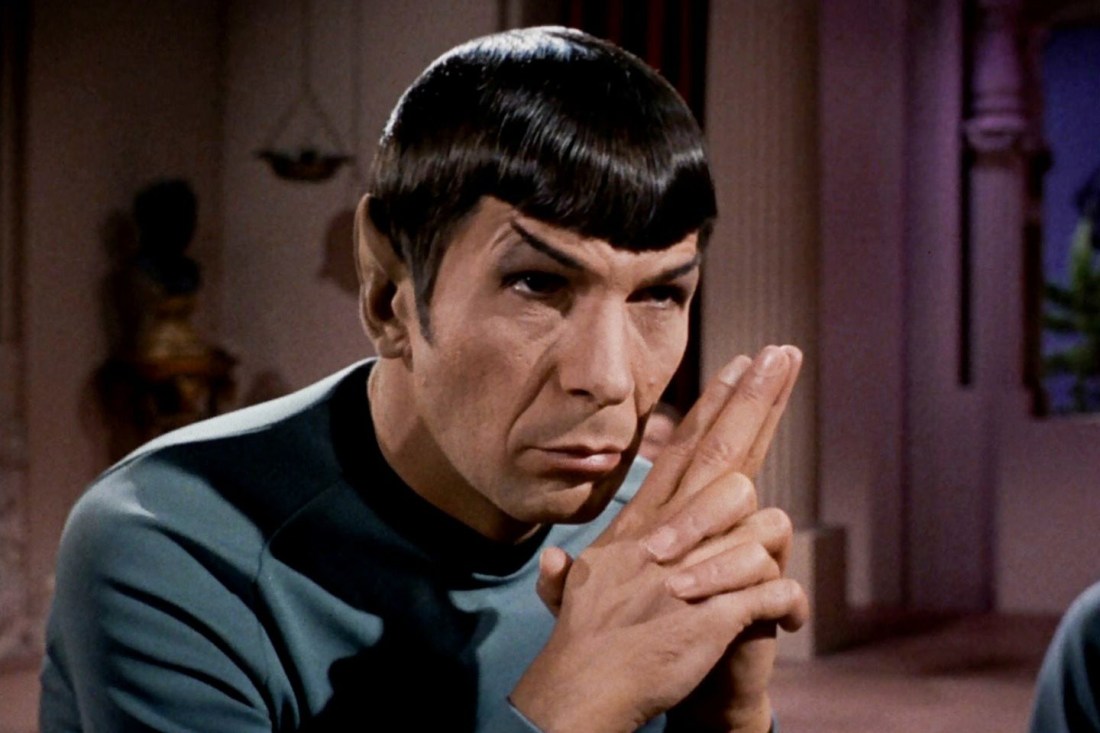
SPOCK: [being a Vulcan] means to adopt a philosophy, a way of life, which is logical and beneficial.

Star Trek, “Journey to Babel” (s2ep10), Stardate 3842.3

Recently, while I was doing some soul-searching, I found this very helpful article online by Dr. Jacqueline Stone. The article is an overview of how different Japanese-Buddhist monks of the Kamakura Period (12th-14th century), the same monks who founded important Buddhist sects we see today, addressed the concept of Dharma Decline. The site requires registration, but it’s free and easy. The article is worth a read if you are curious about the topic.

In any case, I found this great quote in Dr Stone’s article:

“The Zen sect regards the precepts as being of first priority,” he [Eisai] wrote. And, “By means of the precepts, meditation and wisdom are brought forth.”

Eisai (栄西, 1141 – 1215) also known as Myōan Eisai (明菴栄西) is the original founder of the Rinzai Zen-sect in Japan (more on its convoluted history here), and isn’t someone I really talk about much, but he was one of the founders of this “new” Kamakura-era Buddhism.

Anyhow, this quote really struck me.

In my limited experience, I rarely heard the importance of precepts from Western Zen sources, or that they are the basis for other Zen practice. That’s not to say it’s not there, but it often seemed to get lost in the message of Zen mysticism.

Bluntly speaking, precepts aren’t sexy like mindfulness, koan riddles, or meditation.

And yet, Eisai is taking a more traditional, conservative standpoint and reiterating that one should not put the cart before the horse. This is not limited to Eisai, by the way: the 19th century Soto-Zen text for lay-followers, the Shushogi, stressed the importance of the precepts, reflection on one’s actions, and practicing kindness, patience and generosity whenever possible.

But if you’re familiar with Zen, this might seem odd. Isn’t Zen all about meditation, being in the moment and so on?

Consider the Marvel movie Ant-Man (2015). In the movie the villain, a bald tech-CEO who bears more than a passing resemblance to a certain CEO and founder,1 brags to a coworker about some deep thoughts he had during “morning meditation”. This is not far from the mark: many ambitious people use meditation and mindfulness as a way to get what they want, not what it’s intended for. If a person can’t regulate their day to day conduct towards others, meditation will not avail them.

Put another way: a rotten person might meditate, but a person who follows the precepts is probably not a rotten person.2

Further, this focus on the precepts fosters mindfulness because one is monitoring their own actions, etc. It has concrete impact on one’s sense of self-worth, one’s relationships with others, and leads to greater peace of mind, even when not meditating. So, there’s a clear benefit, both short-term and also long-term to taking up the precepts first, and then letting other disciplines and practices extend from it.

Finally, upholding the precepts is something any Buddhist can do, regardless of background or circumstances. It is very accessible, beneficial (just like Spock says), and opens many doors to Buddhist practice.

Namu Shakamuni Butsu

P.S. I’ll cover this issue of precepts in more detail later, but TL;DR both Rinzai and Soto Zen both encourage people to take up the Ten Bodhisattva Precepts specifically.

1 Played by the excellent Corey Stoll.

2 Put another way: watch your temper, and don’t be a dick.
Full Circle

SPOCK: There’s no further need to observe me, Doctor. As you can see, I’ve returned to the present in every sense. 

Star Trek, “All Our Yesteryears” (s3ep23), Stardate 5943.7

I spent this past week volunteering as a chaperone for my son’s school camping trip, which was chaotic and busy, but also bought me some much-needed quiet time to read and reflect on some things. Exhausting, but nice.

Lately, while reviewing some old Buddhist material, I realized that I had conflicting thoughts about my own Buddhist path. I have spent much of my past 20 years as a Buddhist following the Pure Land path, especially Jodo-Shu/Jodo-Shinshu sect Buddhism, and this is reflected in many posts here, including recent posts like this one. This has been really formative to my understanding of Buddhist religion and teachings.

And yet, the reason why I left my old community nearly 10 years ago was that I felt there was more to Buddhism than just passively allowing the power of Amida Buddha to lead me (i.e. tariki 他力 in Japanese-Buddhist parlance). I wanted to pursue other facets, more active practices, and so on. This is reflected in my exploration of Buddhism in general, including recent posts like this one. But even then, I never could quite pin down what I should do for Buddhist practice, or what to prioritize. I had a general sense of things, but struggled to articulate what I think I should do.

So, for some time now, I have been plagued with self-doubt, and feeling conflicted about how best to be a “good Buddhist”. I was worried that I had lost my way. I read a few sources from different Buddhist traditions in my spare time, but it only made me feel more confused.

So, I decided to get back to basics. Using my spare time at camp, I started writing down what I genuinely believed in, and not what a particular tradition dictated to me. I didn’t have a lot of time, so I would just jot down notes on my phone, a sentence here or there. Over a few days, I had a list of items, and they had certain recurring themes. I was relieved to see that I came to the same conclusions as before, but now with a greater sense of conviction. What a relief.

I felt a bit like Captain Kirk in the season one Star Trek episode “This Side of Paradise” (s1ep24), after he has been affected by the mind-control spores. He is just about to leave the ship for good, but at the last minute, he comes to his senses and realizes that what he really valued was the ship, and his role as captain. It was as if he came out of a fever dream. This is how it felt for me.

But also with this new sense of conviction, I will probably be changing tack a little bit on the blog. Nothing dramatic, but I feel that it’s time to close the book on certain topics, and focus on other things that I want to explore more. Time will tell, but that’s what I want to do for some upcoming blog posts.

Thanks for reading!

Namu Shakamuni Butsu

P.S. Photos from camp.

P.P.S. Bonus episode this week. I felt like posting sooner than later. Enjoy!

Keeping a Level Head

McCoy: Illogical? Did you get a look at that Juliet? That’s a pretty exciting creature. Of course your, uh, personal chemistry would prevent you from seeing that. Did it ever occur to you that he might like the girl?

Spock: It occurred. I dismissed it.

McCoy: You would.

Star Trek, “The Conscience of the King” (s1ep12), Stardate 2817.6

This quote is very Buddhist to me. Spock is aware of fine-looking ladies (including his ex, T’Pring), but isn’t ruffled by them.1 This self-mastery, regardless of whether you’re a man or woman, old or young, rich or poor, is very much what the Buddha taught:

25. By effort and heedfulness, discipline and self-mastery, let the wise one make for himself an island which no flood can overwhelm.

The Dhammapada, translation by Acharya Buddharakkhita

The Buddha (a.k.a. Shakyamuni) greatly stressed the importance of a disciplined mind. Elsewhere in the Dhammapada, the Buddha warned that the mind was the source of all happiness or unhappiness, and that much of our problems were self-inflicted. A disciplined mind, by contrast, reins in the chaotic nature of the mind, and avoids these self-inflicted issues. Enlightenment was an inevitable outcome of such practice, but it also had more immediate benefits as well to oneself and those around you.

Take myself. I love food. I have been overweight for many years, and get lectured by my doctor about it yearly. They are right of course, but I have poor willpower and often can’t resist snacking. Even after my medical emergency last year, when I lost a lot weight, I gained it back (and then some) within half a year. As I get older, the threat of medical problems stemming from these poor eating habits only grows.

So, these days, I have to keep myself from eating too many snacks. I have years of health-neglect to make up for, and so I often spend my days constantly hungry as I try to claw back my weight to a more reasonable level. It’s not easy. I have to stop during dinner and remind myself that I’ve eaten enough, I have to limit my snacks to a couple chips, and not the whole bag. I have to remind myself that I don’t have to eat junk food today, because there’s always another opportunity down the road. And so on.

I say all this to make a point: our mundane minds are easily ruffled by things good (hot girls and food) as well as bad (annoying people, existential threats to the Republic, etc). It’s not about blocking them out, or spacing out somehow. It’s about acknowledging these things, and then being level-headed about it.

This is waaaaayyyyyy easier said than done, but any effort toward this end is an investment well spent.

Namu Shakamuni Butsu

P.S. More posts on the subject.

1 well … usually. Space flowers are another matter.

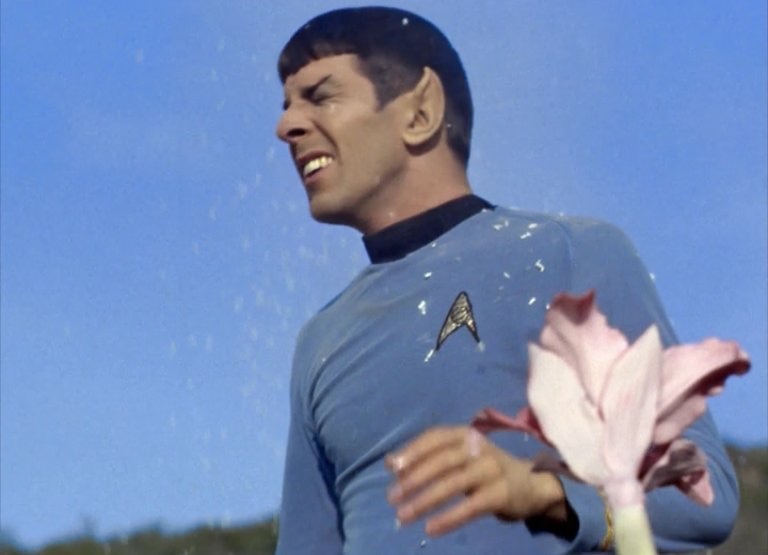
Spock being sprayed by the mind-controlling pollen of a space flower in This Side of Paradise (s1ep24), stardate 3417.3

Rhetoric and Reality

Violence in reality is quite different from theory.

Spock, “The Cloud Minders” (s3ep21), stardate 5818.4

The fantastic history podcast, Grey History, had an episode covering a dark period of the French Revolution: the September Massacres of 1792. When I listened to this episode recently, I was struck by how barbaric and senseless the violence was. The people of Paris were gripped with paranoia and fear over the arrival of the Prussian army, and whipped themselves up into a frenzy which then unleashed itself on prisoners of Paris who were all assumed to be part of a counter-revolutionary conspiracy. The eyewitness accounts of the event were horrifying.

What led up to the September Massacres was, from my limited understanding, a kind of death-spiral of paranoia and factional fighting among the Revolutionaries. This paranoia had some basis, in that there were some French counter-revolutionaries, but most of it was just imagined conspiracies of “fifth column” elements in society that got more and more outrageous and dire. As different factions accused one another more and more of conspiracy with the counter-revolution the violent rhetoric ratcheted up until someone decided to take matters in their own hands….

Rhetoric is one thing but once the first blow lands, or the weapon is drawn, a point of no return is crossed and many will needlessly die.

“Trouble can be purchased cheaply, though the refund may be more than you can bear.”

Roger Zelazny, Creatures of Light and Darkness

You speak of courage.  Obviously you do not know the difference between courage and foolhardiness.  Always it is the brave ones who die, the soldiers.

Kor, the Klingon Commander, “Errand of Mercy”, (s1ep26), stardate 3201.7

In short, small comments can have lasting consequences. That’s why the Buddha taught that right speech should be timely, true, and worthwhile. If not, best to simply keep quiet.

Further, studies have shown that non-violent demonstrations are statistically more effective in bringing about social change.

So, while social justice is a worthy goal, the means of achieving it, and how one expresses dissastisfaction can have lasting effects.

Namu Shakamuni Butsu

Uniquely You

McCoy: “…In this galaxy, there’s a mathematical probability of three million Earth-type planets. And in all of the universe, three million million galaxies like this. And in all of that, and perhaps more, only one of each of us. Don’t destroy the one named Kirk.”

Star Trek, “Balance of Terror” (s1ep14), Stardate 1709.2

This excellent quote by Star Trek reminds me of a famous Jodo Shinshu-sect Buddhist poem called either “Sonno-mama” or “Just As You Are”, which I posted here many moons ago.

Of course, we can quibble with the mathematics of what Dr McCoy said. (spoiler: the Universe is way bigger than what writers in the 1960’s thought…), but the implication is the same.

So take a moment to admire your life, this moment, and your place in the universe. 🙏

Have a good weekend!

Namu Amida Butsu

The Healing Power of Nature

In the past, I talked about the four-character phrases, or yojijukugo, popular in Japanese culture. Recently, I learned about a new phrase that I hadn’t heard before: kachō-fūgetsu (花鳥風月). This phrase describes the beauty of nature, literally the Kanji characters for “flower”, “bird”, “wind” and “moon”.

The meaning here is various aspects of nature, but also in a positive healing sense.

Spock: Indeed, gentlemen. May I point out that I had an opportunity to observe your counterparts here quite closely. They were brutal, savage, unprincipled, uncivilized, treacherous; in every way, splendid examples of homo sapiens, the very flower of humanity. I found them quite refreshing. [he returns to the science station]

Kirk: I’m not sure, but I think we’ve just been insulted.

McCoy: I’m sure.

Star Trek, “Mirror Mirror” (s2ep4), stardate unknown

For all our veneer of civilization and advancement, we are still deep down biological creatures. We come from nature, and we need nature. Nature heals us and sustains us.

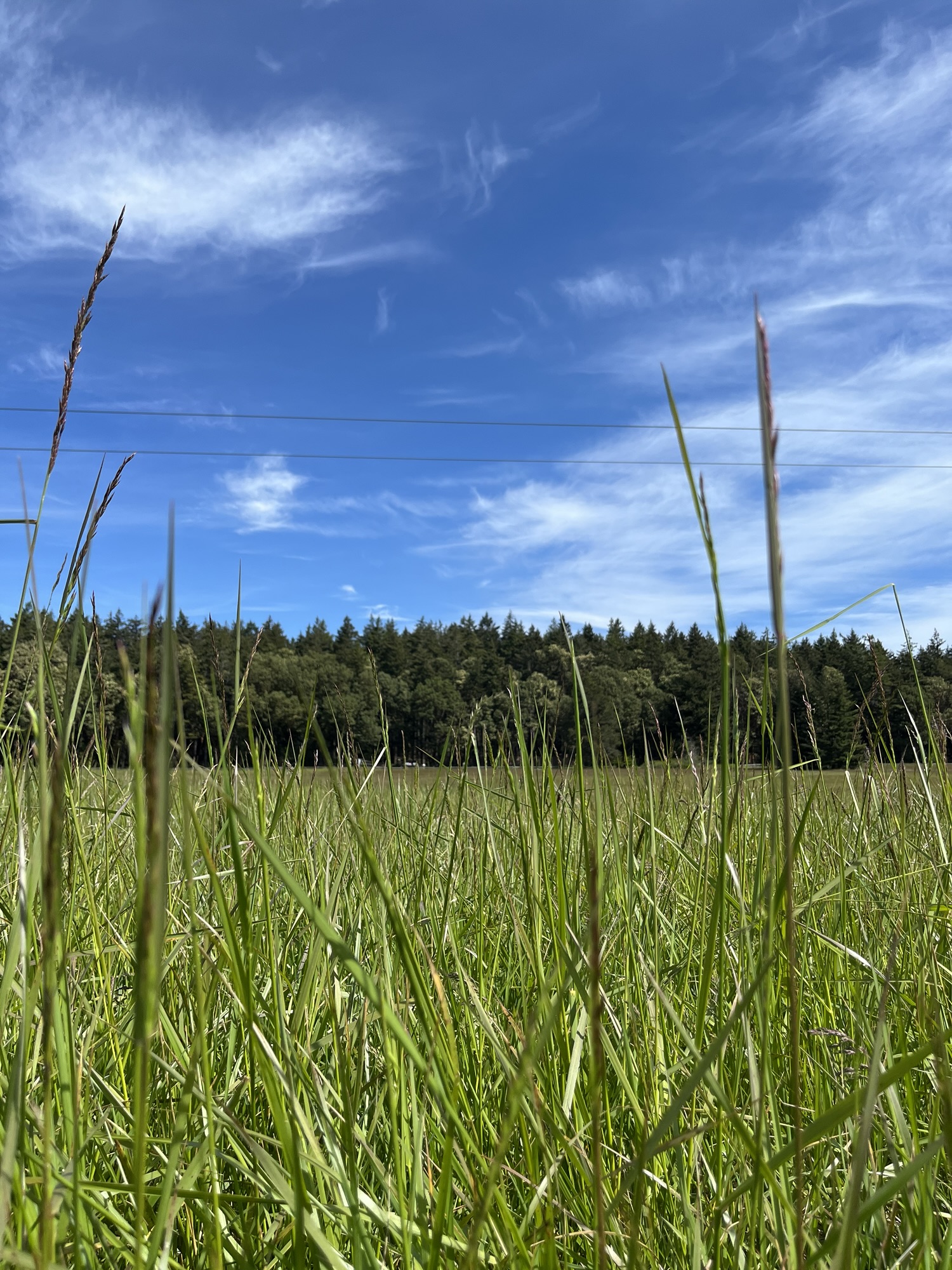
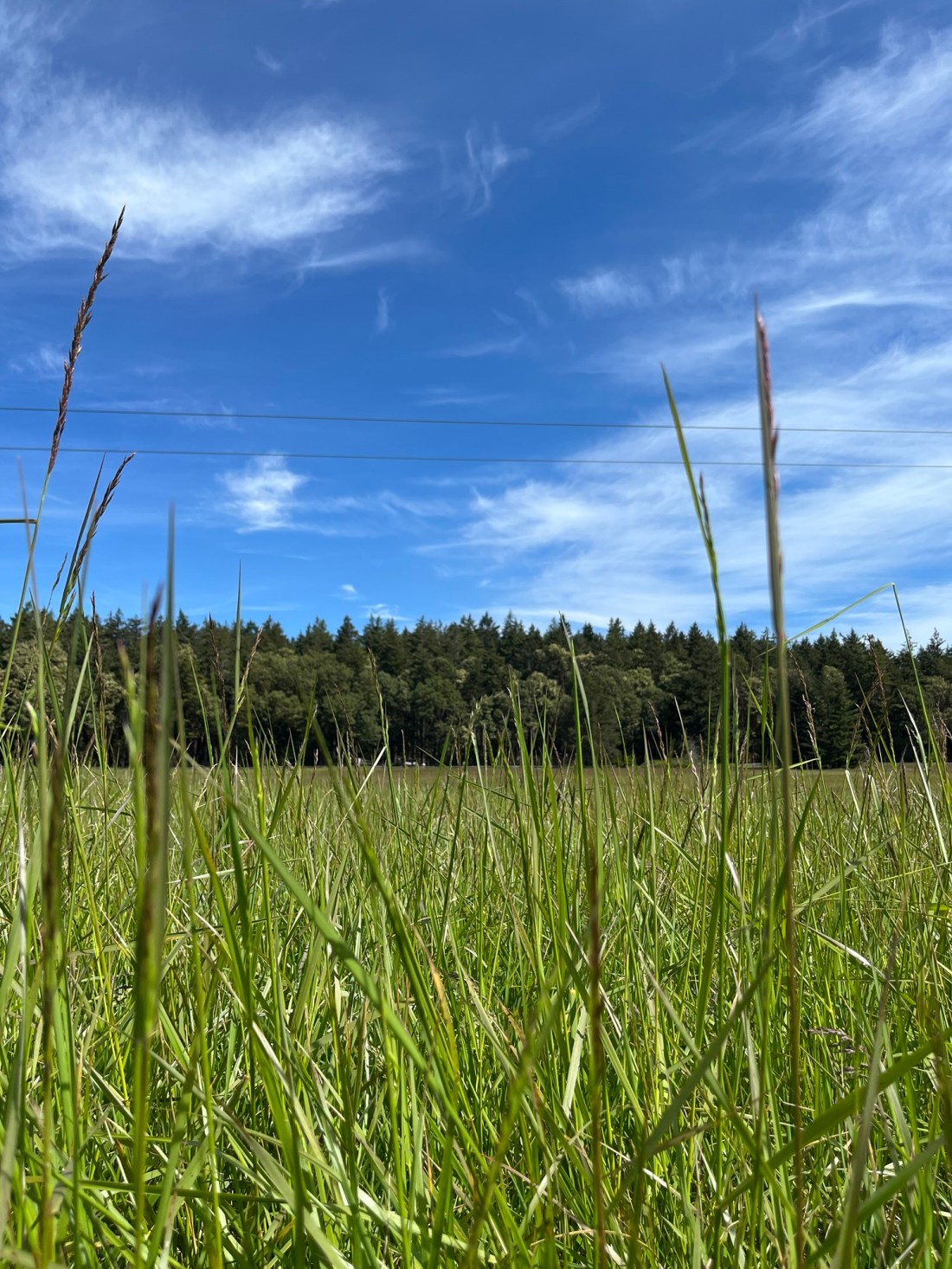
A small patch of grass in my yard, taken in April of 2025.

These days, it’s not hard to feel stressed by all the things that are going on, but I also found solace knowing that nature continues on regardless of what humans do or become. That doesn’t mean the future of humanity will necessarily be positive or negative, but it does remind me that life goes on nonetheless.

It also underscores how important protecting nature is.

P.S. More tips here for protecting the environment.

Stardate Order: a fun way to watch Star Trek

I have talked about Saturday Night Trek on this blog, and recently the community completed another watch-through of the series. It was at this point we debated what order to watch the episodes again: broadcast order or production order.

Then someone showed us this page listing the series in Stardate order. The “Stardate” is a fictional calendar system that Star Trek uses to track calendar events. Coincidentally, as original series shows were produced they were often (though not always) given an incremental Stardate. So, Stardate order is another way of tracking when certain episodes were produced, but as the website shows, there are exceptions. Some episodes list no Stardate, others are seemingly contradictory with other episodes. So, it’s a rough, chronological timeline, but I think it’s a noble effort.

So, why bother watching in Stardate order?

Based on the experiences so far, we have found that the episodes thus far make more logical sense when watched in this order. Changes in casting, costumes, or certain continuity aspects suddenly seem a lot smoother and less jarring this way. This also causes some fun surprises like watching The Squire of Gothos (s1ep17) and Balance of Terror (s1ep14) sooner than broadcast order.

Gary Lockwood and Sally Kellerman as psychic beings with rapidly increasing god-like powers from the episode Where No Man Has Gone Before (s1ep3).

It also reveals some interesting patterns that may not show up in broadcast order. For example, if followed by Stardate order, a handful really early Star Trek episodes feature crew members or psychic beings who run amok: Where No Man Has Gone Before (s1ep3), The Enemy Within (s1ep5), and Charlie X (s1ep2). It also has odd surprises, such as Elaan of Troyius (s3ep13) right in the middle of season 2, while All Our Yesterdays (s3ep23, the penultimate episode) is shown last. That episode is a much better series sendoff than the final broadcast episode Turnabout Intruder (s3ep24).

Of course, Star Trek is Star Trek. However you watch is right for you. But I will say that so far our Saturday Night Trek crew has found that Stardate order is surprisingly enjoyable, and a fresh new way to enjoy our beloved series.

P.S. This is a bonus post this week. 😉

The Death of Gods

“I hope that your Engels and your Lenins never replace the religion that I hate, or the superstitions I have battened upon. You Babakov, have more blood on your hands than I have ever drunk. In destroying the gods of light you are also destroying the Dark Ones. We shall be avenged!”

Roger Zelazny, “On the Road to Splenoba”

I found this quote recently in an old, obscure Roger Zelazny short story titled On the Road to Splenoba, in which a vampire comes into contact with a Communist official with a surprise ending. No spoilers, sorry.

Anyhow, I just thought this quote was really neat because it speaks to the way the modern world has kind of destroyed the worldview where higher powers manage everything. We can’t attribute the motions of the planets, or the weather to deities the way we used to, because we know “under the hood” how these things work. People are no longer at the mercy of diseases thanks to medical technology.1 Of course, with the benefit of science, we also have a much better picture of the origins of the Earth, life, etc.

However, as the quote alludes to, it also feels like a bit of the magic of the world is gone too.

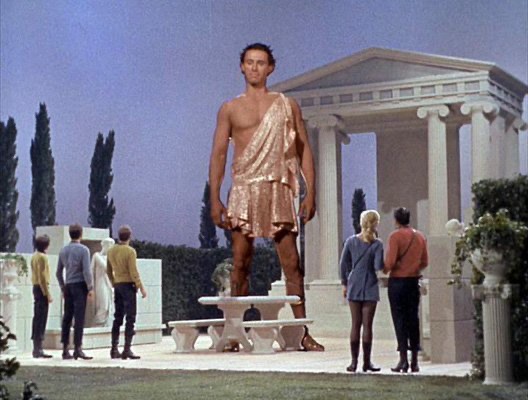
This reminds me of the Star Trek episode “Who Mourns for Adonais?“, when the Enterprise encounters the ancient Greek deity, Apollo, on a remote planet, and ultimately kill him in order to escape his grasp.

The “god” Apollo, played by Michael Forest.

The ending is melancholy:

KIRK: Would it have hurt us, I wonder, just to have gathered a few laurel leaves?

Star Trek, “Who Mourns for Adonais?” (s2ep2), stardate: 3468.1

The human race had outgrown Apollo, and gone on to accomplish many great things, yet it also cost something in the process. Maybe this is like growing up, trading a child’s imagination and wonderment for an adult’s self-mastery and freedom to choose one’s life…

1 Skepticism toward medical science is a modern issue though… 🙄. I doubt few who lived in the era of measles would object to taking a vaccine, but people have the luxury of choice now, even if those choices are reckless ones.

The Beauty of Diversity

A picture of Surak of Vulcan, his right hand in the Vulcan Salute.

Positing infinity, the rest is easy.

Roger Zelazny, Creatures of Light and Darkness

I’ve been sitting on this post for a while, trying to grapple with recent attacks on diversity and inclusion.

In the Star Trek episode, The Savage Curtain, Surak of Vulcan upon meeting humans for the first time (Kirk and Abe Lincoln) says a line that’s easily overlooked, but I think is also very beautiful:

I am pleased to see that we have differences.  May we together become greater than the sum of both of us.

Surak of Vulcan, “The Savage Curtain” (s3ep22), stardate 5906.4

The Vulcan philosophy in Star Trek is based upon a recognition of diversity: IDIC, or “Infinite Diversity in Infinite Combinations”. That is to say, each of us exists as combination of such elements and thus take on a greater significance together than separate:

KIRK: We’ve each learned to be delighted with what we are. The Vulcans learned that centuries before we did.
SPOCK: It is basic to the Vulcan philosophy, sir. The combination of a number of things to make existence worthwhile.

Star Trek, “The Savage Curtain” (s3ep22), stardate 5906.4

This is of course at the heart of Buddhist doctrine as well. Because all phenomena arise from various causes and conditions, given the right causes and conditions, anything is possible. And, given the scale of the universe, one can safely assume that practically everything exists, has existed, or will exist.

My head hurts just thinking about the implications.

Thus, I think, it is very helpful to consider and accept just how varied and weird existence is, and appreciate its sheer diversity. This isn’t just some political slogan: diversity, change, and infinity are the very nature of existence whether people want to accept that or not. Might as well embrace it, and save yourself the undue stress.

Namu Amida Butsu

What Does It Mean To Be Human?

DROXINE: But what else can they [the Troglytes] understand, Mister Spock?
SPOCK: All the little things you and I understand and expect from life, such as equality, kindness, justice.

Star Trek, “The Cloud Minders” (s3ep21), Stardate: 5818.4

This is another one of those deep thoughts I’ve been having lately. Discrimination and bias once again rear their ugly heads in our society, and it’s really disheartening. It’s as if we’ve made so little progress after all these generations, struggles, achievements and so on.

It also makes me wonder something: how much of this discrimination is taught, and how much of it is ingrained? In other words: nuture (taught) versus nature (ingrained). Are some people just born inherently more xenophobic, or does the environment cultivate a more heightened sense of identity at the expense of others? Are we still just mostly hairless apes, fighting over more sophisticated tribal forms, or does our human nature give us the power of reason to override this?

Anyhow, the reason why I posted the Star Trek quote above is that I think what Spock says is true: discrimination and xenophobia are self-centered, and the opposite of goodwill. If a person has empathy and puts themselves in the shoes of another, it’s a lot hard to discriminate against them.

An illustration of the Buddha, dressed in ochre robes and a halo around his head, placing his hand gently on the head of an elephant that has bowed down before him.
An illustration of the Buddha, Shakyamuni, placing his hand gently on the head of an elephant that had been riled up by his cousin Devadatta, to trample the Buddha out of spite.

In the venerable Buddhist text, the Karaniya Metta Sutta (Sn 1.8 of the Pali Canon), the Buddha says simply (emphasis added):

Whatever living beings there may be;
Whether they are weak or strong, omitting none,
The great or the mighty, medium, short or small,
The seen and the unseen,
Those living near and far away,
Those born and to-be-born — May all beings be at ease!

Translation by The Amaravati Sangha

The Buddha didn’t equivocate: goodwill towards others must be equitable, and toward all.

Still, this is, admittedly, easier said than done: developing such a level of goodwill takes work, introspection, and such. For some, their sense of goodwill and empathy towards others is somehow stunted, or in some cases completely absent. If it were easy, why don’t we all just be kind towards others?

I think this is where our biological nature gets in the way sometimes. As hairless apes, our basic instinct is to still fight and defend, even if the specific causes of conflict are different than our ancient ancestors. The way our blood gets boiling when we’re competing with someone, or someone makes us mad is no accident. That’s evolution. But, at least through introspection and mindfulness, we can catch these feelings as they arise and make intelligent decisions. Breaking out of our own self-centered viewpoint is what it’s all about, and is one thing that separates us from other animal lifeforms.

Namu Shakamuni Butsu