Soto Zen Yearly Liturgical Calendar

Hello,

Recently, I alluded to joining a local Soto Zen group and deepening my practice there. I am happy to report that after several weeks, I finally decided to formally join the community as a member. Thus, I guess I am now a student of Soto Zen.1 It is kind of exciting to be part of a Buddhist community again after years of isolation, but also a bit of an adjustment since I’ve been doing things a different way for a very, very long time.

As part of this I wanted to get familiar with the yearly liturgy of the Soto Zen tradition. To my surprise, the local community seemed to not follow this yearly calendar, but I guess it’s up to each follower, and each community to apply this calendar as much possible.2
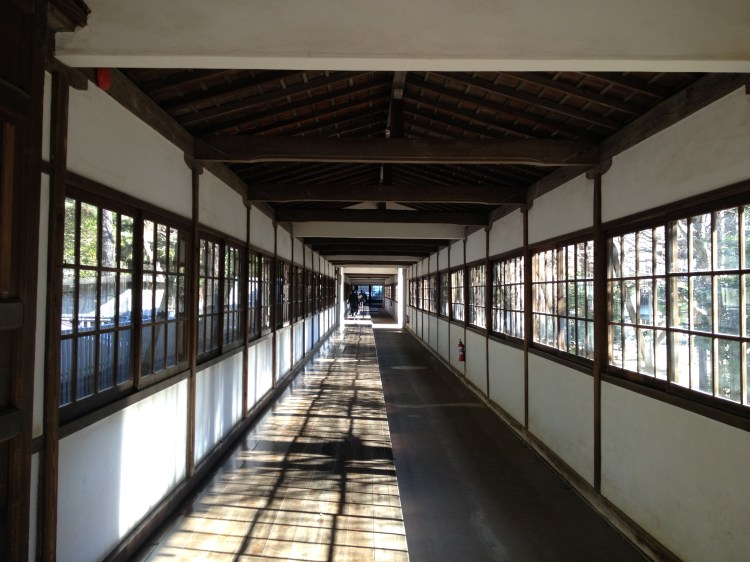
This was taken near the famous Chujakumon (中雀門) Gate at Sojiji Temple, looking westward. Photo from 2012.

Anyhow, I think it’s helpful to get familiar with the calendar of events not just to have a foundation in one’s life and practice, but also to stay connected with the much larger community. So, for that reason I’m posting the yearly event calendar here for readers. Many of these holidays line up with other Buddhist traditions in Japan, and I’ve already talked about them in other blog posts, while a few are exclusive to Soto Zen only.

DateJapaneseEvent
January 3rd転読大般若
Tendoku Dai-hannya
Reading of the Great Perfection of Wisdom Sutra
February 15th涅槃会
Nehan-e
The Death of the Historical Buddha, Shakyamuni
Late March彼岸会
Higan-e
Spring Equinox
April 8th花まつり
Hanamatsuri
The Birth of the Historical Buddha, Shakyamuni
Late July / Late August盂蘭盆会
Urabon-e
Obon Season
Late September彼岸会
Higan-e
Fall Equinox
September 29th両祖忌
Ryoso-ki
Memorial for both founders of Soto Zen: Dogen and Keizan
October 5th達磨忌
Daruma-ki
Memorial for Bodhidharma, the Indian monk who brought the Zen tradition to China.
December 8th成道会
Jodo-e
The Enlightenment of the Historical Buddha, Shakyamuni
December 31st除夜
Joya
End of the year temple bell ringing
Source: https://www.sotozen-net.or.jp/ceremony/annual

Let’s talk about some of these events below.

Reading of the Great Perfection of Wisdom Sutra

The Great Perfection of Wisdom Sutra requires some explanation. The Sutra is not one Buddhist text, but a collection of sutras that appeared in India starting in the 1st century CE. Each of these “great perfection of wisdom” sutras (a.k.a. prajña-paramita in Sanskrit) basically teaches the same message, but each version was composed in varying sizes: 8,000 verses, 15,000 verses, 25,000 verses, etc. The trend happens in reverse too: some versions get shorter and shorter until you get to the famous Diamond Sutra and Heart Sutra. Due to their slimmer size and easier recitation, these two sutras have retained more popularity over time.

Nevertheless, regardless of which version we’re talking about, the Great Perfection of Wisdom Sutra is a powerful foundation for Mahayana Buddhist traditions everywhere, including the Zen tradition. Thus, many traditions have some kind of “sutra reading” ceremony.

Because the Perfection of Wisdom Sutra is so large, it’s impractical to read/recite the entire sutra in a single session, so the ceremony usually involves Buddhist monks opening each fascicle and fanning through the pages to symbolize reading it. It’s a very formal ceremony. You can see an example of this below, though I am unclear which Buddhist sect this is:

If you want to the ceremony itself, skip to 11:30 or later, until about 16:00

English-language copies of the Great Perfection of Wisdom Sutra are very hard to find, by the way. I consider myself very lucky to find a copy of the 8,000-verse sutra at Powell’s City of Books some years back (that bookstore is amazing by the way):

Most Zen communities in the West can’t be expected to have such a copy. In any case, since the Heart Sutra is a summation of the Great Perfection of Wisdom Sutra anyway, it makes sense for most Zen practitioners to simply recite the Heart Sutra as appropriate. In the Youtube video above, the monks even recite the Heart Sutra at one point too.

Dual Founders Memorial

Soto Zen is somewhat unusual in Japan for having two founders, not one. The sect-founder-practice dynamic is something unique to Japanese Buddhism,3 usually each recognized Buddhist sect in Japan has one founder, not two.

Normally, when Westerners think of Soto Zen in Japan, they think of Dogen as the founder since he was the one who traveled to Song-Dynasty China, studied Caodong-sect Zen teachings, and brought those back to Japan.4 The challenge is that during this time, Soto Zen was a strictly monastic institution that had minimal appeal to the wider Japanese society.

Keizan, who came a few generations later, reformed Soto Zen as an institution that had more broad appeal. It was still centered around the monastic institution, but also included more community connections to the warrior samurai class and the peasantry as well. Soto Zen flourished in a way that other Zen sects in Japan simply never did. For this reason, Keizan is considered the second founder.

Thus, during formal ceremonies, a Soto Zen text, the ryōsokisho (両祖忌疏) is read aloud, which describes the virtuous life of both founders through the use of Chinese-style poetry.

Bodhidharma Memorial

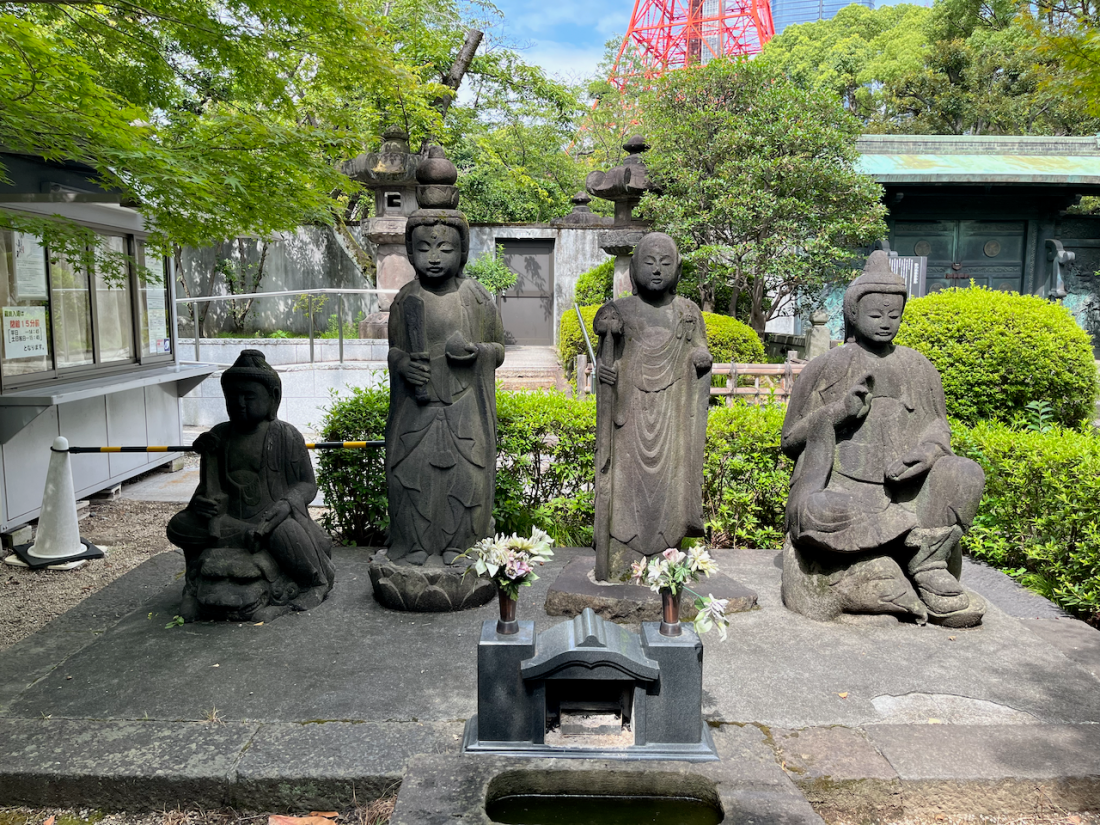
Bodhidharma, unusually depicted standing. Taken at Sojiji Temple in 2012.

Within the world of Zen, Bodhidharma is a guy who needs no introduction. This semi-legendary monk from India supposedly came to China in the 4th century, and helped establish the lineage there, and subsequently all such lineages through East Asia.

The historicity of Bodhidharma though is pretty suspect, and some historians contend that he was made up in order to refute criticism that Zen had no prior connection to Buddhism in India. I don’t know which is true.

Regardless of whether Bodhidharma was real or not, he is the embodiment of Buddhism (particularly Zen) passing the torch from the community in India to the community in China and beyond.

End Of Year Temple Bell Ringing

The “joya” tradition is found across all Buddhist sects in Japan, and is a way of ringing in the new year. I took part in it once myself at a local Jodo Shu temple thanks to my father-in-laws connections.

The temple bell, or bonshō (梵鐘), is run 108 times, to signify the 108 forms of mental delusions (kleshas in Sanskrit, bonnō in Japanese) that all sentient beings carry with them. Things like anger, jealousy, covetousness, envy, ill-will, etc. In other words, the stupid petty shit we all do.

When I participated ages ago, this particular temple lined 108 volunteers up, and one by one we proceeded to the temple bell and rang it. As the temple bell is very large, and the striker is a large wooden log suspended by rope, this wasn’t easy, but it was cool.

Obviously, many communities in the West don’t have huge temple bells, and only tiny ones at home at their home altar. Still, one can relive the experience using a small bell, such as one found on your Buddhist altar, and ringing it 108 times (Buddhist rosaries can help keep count, by the way; that’s literally what they’re for), or some division of 108 if that’s not easy: 54, 27, etc.

Conclusion

The liturgical calendar of Soto Zen, as promulgated by the home temples in Japan, includes a lot of holidays that are practiced by the wider Mahayana Buddhist tradition anyway, plus a few novelties found only in Japan, or even just in Soto Zen itself.

Outside of Japan, how one incorporates this into one’s own community, or just in one’s personal life is entirely up to them. Personally, I like having some structure, including a set calendar like this to keep me from getting too idle, but also as a way to tie in to the larger Buddhist community as a whole. However, other people may differ.

Good luck and happy practicing!

Namu Amida Butsu

1 I should clarify that I haven’t stopped reciting the nembutsu and such, I just feel I moved onto the next phase of my Buddhist practice.

2 I have noticed over the years that communities here in the West are more or less connected to the home temple overseas. Some strive to stay in lock-step, some go the opposite route. I have mixed feelings on the subject.

3 TL;DR – The Edo Period government decided to divide-and-conquer previously militarized Buddhist establishments into distinct sects, where each one required to define their founder, their particular practice, and key sutras they base their teachings around. This led to the parochial style Buddhist institutions that still exist today, but also bucked the trend in continental East Asia where Buddhist sects tended to synthesize into a single “super-Buddhist” tradition.

4 Fun fact: the “Soto” is just the Japanese-style reading of Cao-dong: 曹洞. For a look at how Japan imported Chinese characters, and why they sound so different, you can watch this Youtube video. I have personal quibbles about some details, but it’s otherwise a great historical overview.

Inattention

Photo by Gleb Dolskiy on Pexels.com

A while back, I talked about a famous poetess from 11th century Japan named Lady Izumi, one of several famous ladies of the court at that time, but for some reason the one I find most fascinating.1 Lady Izumi was a prolific poet, and I have been reading samples of her poetry compiled in The Ink Dark Moon by Jane Hirshfield and Mariko Aratani. I found this poem the other day and wanted to share. The headline of the poem was that Lady Izumi was on retreat while on retreat at a mountain temple in autumn…

Original JapaneseRomanizationEnglish translation*
心にはKokoro niwaAlthough I try
ひとつみのりをHitotsu minori woto hold the single thought
思へどもOmoe domoof Buddha’s teaching in my heart,
蟲のこゑこゑMushi wa koegoeI cannot help but hear
聞ゆなるかなKikoyu naru kanathe many crickets’ voices calling as well.
* Translations by Jane Hirshfield and Mariko Aratani

I think this speaks to the classic frustration many Buddhists (among others) have: the willingness to undertake a practice, and the reality of not being able to stay focused. If it were easy, we’d probably all be doing it.

Lately, in an effort to reconnect to the local Buddhist community, and due to recent experiences in Victoria, BC, I decided to join a local Soto Zen group for remote meditation sessions. It’s been great actually: I have something in the week to look forward to besides more work meetings, and it provides a nice spiritual anchor in my life again. However, I noticed that while meditating for 25 minutes at a time, my mind rarely stays focused for long. Sometimes I can discipline myself for a few minutes, counting my breaths, etc. However, most of the time my mind is just wandering around for most of the session.

When I was younger and first encountered the nembutsu, I used to dedicate myself to reciting the nembutsu 1080 times (using my rosary to help count). Usually this takes about 15-20 depending on the speed of recitation. I (surprisingly) continued this practice for months. However, I also noticed a pattern: my mind would quickly grow bored from reciting, then anxious to hurry up and finish, and then relief when I got near the end. My mind would wander, just as it does with meditation.

So, the experience that Lady Izumi has is not unique to her, and even now, a thousand years later, I can empathize with her.

Further, I don’t think there’s an easy solution here: it’s something that every one has to work out for themselves.

Namu Amida Butsu

1 Speaking of fascinating, you might like to read my review of the Diary of Lady Murasaki, her contemporary on my other blog. Lady Murasaki evidentially didn’t think too highly of Lady Izumi.

Soto Zen Home Liturgy

When people think of Zen, they think of meditation, and sand gardens. And with good reason. Zen uses the Buddhist teachings as a guide, but seeks to experience first-hand what Shakyamuni Buddha experienced.

However, that’s not to say that there isn’t a devotional side to Zen either. As a peerless teacher, Shakyamuni Buddha pointed the way, “turned the wheel of the Dharma” as they say, and so he is an inspiration to Buddhists everywhere. This is true for other Buddhist deities as well. Whether such deities actually exist or not is less important than you might think.1 Further, when you look at lay-oriented texts such as the Shushogi, it’s clear that Soto Zen evolved over time to accommodate people of all backgrounds, including those that don’t realistically have the time to devote themselves to meditation retreats, etc.

For this post, I reviewed a few Japanese-language sources on how to do home liturgy, or otsutomé (お勤め), for the Soto Zen tradition. I found that the Soto-sect of Japanese Zen has particularly good resources, both in English, and especially in Japanese, for home practice, and provides flexible approach to home devotional practices. We’ll talk about that more shortly.

Edit: This post has been rewritten and cleaned up in June 2025 now that I have access to more information, and a better understanding of how Soto Zen liturgy works.

According to Soto-Zen sources above, the home liturgy goes like so:

  1. Ring the bell (if you have one) three times gently if you have one at your home altar.
  2. Put your hands together in gassho
  3. Recite the liturgy at an even pace
  4. Ring the bell three more times
  5. Put your hands together again in gassho

A Quick Note on Shortening the Liturgy

What follows below is an example taken from Japanese sources. However, the same sources also state that you can add or remove as many of these you want. 

Recently I found a great video by a Soto Zen priest (Japanese-language only, sorry), where he stated that if a practitioner simply recited the Heart Sutra each day, that would be great. But if even that was difficult, one can also simply recite na mu sha ka mu ni butsu three times (南無釈迦牟尼仏, “Praise to Shakyamuni Buddha”) before an altar image. The most important thing, the priest stated, is daily and sustainable practice. You can always adjust, add, or trim later.

Another option if you are short on time, is to just recite the Three Treasures, which is a nearly universal practice in Buddhism:

JapanesePronunciationMeaningb
南無帰依仏Namu ki-e butsuI go to the Buddha
[teacher] for refuge
南無帰依法Namu ki-e hoI go to the Dharma
[the teaching] for refuge
南無帰依僧Namu ki-e soI go to the Sangha
[the community] for refuge
a The ṃ (an m with a dot underneath) is pronounced more like “ng” than “m”. So, “Buddhaṃ” in this context sounds more like “Buddhang”. The regular “a” without an accent mark sounds “uh” as in “duh”, and ā is more like “ah” as in “father”.

Also, there seems to be an alternate, more stylized form of the Three Treasures found in Soto Zen liturgy called the ryakusanbō (略三宝), for which this a rough translation:

JapanesePronunciationMeaning
十方三世一切仏Ji Ho San Shi I Shi Fu[Praise to] the Buddhas of the
Ten Directions,1 and the Three Realms!2
諸尊菩薩摩訶薩Shi Son Bu Sa Mo Ko Sa[Praise to] past teachers, bodhisattvas,
and all who follow the Buddhist path!
摩訶般若波羅蜜Mo Ko Ha Ja Ho Ro Mi[Praise to] the Dharma, whose
wisdom leads to awakening!
1 Ten Directions – the cosmos as a whole. In other words, all Buddhas everywhere.
2 Three Realms – the realms of desire, form and formlessness. This is another fancy way of saying Samsara (existence) as a whole.

Now onto the example liturgy…

Example Soto Zen Liturgy

What follows is the example provided by the sutra book I got from Sojiji temple years ago, and the online version which only differs very slightly. This difference mainly is how some liturgies are written in Sino-Japanese (Chinese with Japanese pronunciation) or with more native, liturgical Japanese. To help readers choose, I will try to post both where pertinent. Also, where possible, I tried to provide Youtube links where I could find them.

Kaikyogé: Opening of the Sutra Verses

Sino-JapaneseNative Japanese
Mu jo jin jin mi myo hoMu jo jin jin mi myo ho wa
Hyaku sen man go nan so guHyaku sen man go ni mo ai ou koto katashi
Ga kon ken mon toku ju jiWare ima ken mon shi ju ji suru ko wo etari
Gan ge nyo rai shin jitsu giNegawaku wa nyo rai shin jitsu no gi wo gesen

Translation: The supreme and profound teachings (Dharma) of the Buddha is truly rare to encounter, but now we are able to hear and receive it. It is our hope that the teachings become clear to us.

Sangémon: Renunciation of One’s Past Transgressions

See this post for more details and translation…

Sino-JapaneseNative Japanese
Ga shaku sho zo sho aku gon/a
Kai yu mu shi ton jin chi
Ju shin go i shi sho sho
Issai ga kon kai san ge

Sankiraimon: Verses Praising the Three Refuges

Youtube link, Sino-Japanese version.

Sino-JapaneseNative Japanese
Ji ki é butsu to gan shu jo Mizukara hotoké ni kié shi tatematsuru, masa ni negawaku wa shu jo to tomo ni
Tai ge dai do hotsu mu jo iDai do wo taige shite, mu jo i wo okosan
Ji ki é ho to gan shu jo Mizukara ho ni kié shi tatematsuru, masa ni negawaku wa shu jo to tomo ni
Jin nyu kyo zo chi é nyo kaiFukaku kyo zo ni irete, chié umi no gotoku naran.
Ji ki é so to gan shu jo Mizukara so ni kié shi tatematsuru, masa ni negawaku wa shu jo to tomo ni
To ri dai shu is-sai mu géDai shu wo to ri shite, issai mu gé naran.

Shiguseigan: The Four Bodhisattva Vows

See this post for more details and translation. Youtube link here.

Sino-JapaneseNative Japanese
Shu jo mu hen sei gan don/a
Bon no mu hen sei gan dan
Ho mon mu ryo sei gan chi
Mu jo bo dai sei gan sho

Sutra Chanting

Note: both my book and the website state that any sutra in the Buddhist canon (or excerpt of a sutra) is OK to recite. However, the most common choices are:

For Japanese Buddhism, simply reciting the sutra without any other liturgy is a perfectly acceptable home practice, by the way. So, your home service could just be this part.

Fueko: The Dedication of Good Merit Towards Others

See this post for more details. This liturgy is somewhat unusual in that every sutra book I see consistently prints it as a mix of both native Japanese followed by Sino-Japanese (highlighted in bold). So I am posting as-is. Youtube link here.

Dedication of Merit, full version
Negawaku wa kono kudoku wo motte, amaneku issai ni oyoboshi,
Warera to shu jo to, mina tomo ni butsu do wo jozen koto wo
Ji ho san shi i shi fu
Shi son bu sa mo ko sa
Mo ko ho ja ho ro mi

Cadence

The sources state that doing the same liturgy in the morning when you wake up, and also before you go to bed is the ideal cadence. It is also customary to wash one’s face a bit before the liturgy as a respectful gesture, but this is optional too.

However, for people who are busy, it is perfectly fine to do morning or evening, not both. The sources also state that if one is truly busy, simply doing gassho in front of the altar is fine too.

Good luck and happy chanting!

1 As a Star Trek nerd, I like to imagine even Mr Spock as a Bodhisattva. 😉

This was a fun little book I received on Christmas. Definitely recommend.

2 Українською:

Я шукаю Притулку у Будді.
Я шукаю Притулку в Дхармі.
Я шукаю Притулок у Сангхе.

На русском:

Я ищу Прибежища в Будде.
Я ищу Прибежища в Дхарме.
Я ищу Прибежища в Сангхе.

The Ten Bodhisattva Precepts of Buddhism

Demon: “So why do you consider my presence a pollution, a disease? Is it because there is that within you which is like unto myself? …If so, I mock you in your weakness, Binder.”

Sam: “It is because I am a man who occasionally aspires to things beyond the belly and the phallus.”

Roger Zelazny, Lord of Light (1967)

Recently, I wrote a post about the Five Precepts of Buddhism, which are a nearly universal code of conduct that lay disciples can choose to undertake both as a benefit for themselves (dignity, mental well-being) and towards others. In addition to the Five Precepts, the Mayahana branch of Buddhism1 gradually developed a second set of precept rules called the Ten Bodhisattva Precepts.

The history of the Ten Bodhisattva Precepts is a bit convoluted,2 but the primary source is a Buddhist text called the Brahma Net Sutra, specifically the Mahayana-Buddhist version. The sutra lists 10 major precepts, and 42 minor precepts a bodhisattva is meant to undertake as part of their training, but most focus only on the 10 major precepts.

The ten major precepts are (translating from this source):

  1. Do not take life.
  2. Do not steal. 
  3. Do not commit adultery or sexual abuse. 
  4. Do not lie. 
  5. Do not sell (or consume) liquor. 
  6. Do not bring up the faults of others. 
  7. Do not boast of oneself or disparage others. 
  8. Do not begrudge material and spiritual possessions. 
  9. Do not harbor ill-will. 
  10. Do not disparage the Three Treasures [the Buddha, the Dharma, and the Sangha].

Monastic followers, that is monks and nuns, in the Mahayana tradition often take up these Bodhisattva Precepts on top of the more traditional monastic rules. Japan is an exception, where monastics only take up the Bodhisattva Precepts these days. However lay people often undertake these precepts too.

These precepts are called the endonkai (円頓戒, “complete, perfect precepts”) in the Tendai tradition, and jūrokujōkai (十六条戒, “sixteen [bodhisattva] precepts”) in Soto Zen tradition, include six more “preamble” precepts:

  1. I take refuge in the Buddha
  2. I take refuge in the Dharma
  3. I take refuge in the Sangha
  4. I vow to abstain from all evil
  5. I vow to strive to do good
  6. I vow to devote myself toward other living beings
  7. (the 10 bodhisattva precepts listed above then follow…)

This makes for 16 precepts total.

Lay followers typically take the original Five Precepts mentioned above, but may opt to undertake the Bodhisattva Precepts as a kind of “extra credit”, especially since they overlap quite a bit. Unlike the Five Precepts where one openly declares their vows to a monk, nun or a Buddhist statue (if alone), the Bodhisattva Precepts don’t always require a formal ceremony as such. It varies by tradition. Many traditions in Japan have a ceremony called jukai (受戒) where a lay followers undertakes these 10 (or 16) precepts and thus declares themselves an official follower of that tradition.

Even if you are not part of such a tradition, you are welcome to undertake them anyway preferably before a Buddhist image or altar, but it’s not strictly necessary. If you uphold them, great. If not, the Five Precepts alone are still a worthy undertaking.

In summary, the Bodhisattva Precepts are a way to extend one’s daily practice of Buddhism by not just avoiding more gross deeds, but also gradually polishing the mind by avoiding greed, ill-will and conceit and thereby removing the source of further suffering for yourself and others.

Namu Amida Butsu
Namu Kanzeon Bosatsu

P.S. Happy Bodhi Day 2021!

1 The Mayahana Branch encompasses pretty much all of Buddhism you see in places like China, Korea, Japan, Vietnam, Tibet and so on. The other branch, Theravada, is found more in Southeast Asia: Thailand, Cambodia, Sri Lanka and so on.

2 In earlier Buddhism, the Buddha encouraged lay followers to not only take up the Five Precepts, but also practice something called the Ten Good Deeds. It’s likely, in my opinion, that these more nebulous Ten Good Deeds were eventually codified into the 10 major precepts of the Brahma Net Sutra above, and thus became the Bodhisattva Precepts.

The Four Bases of Community

While recently reading a certain Japanese-language introduction on the Soto school of Zen (the same book where I learned about the Shushōgi), I came across another teaching I wanted to share called the Four Bases of Community, also called the Four Grounds for Fellowship, and so on. This term is called shishōbō (四摂法) in Japanese Zen, but the term goes much further back, all the way to the Pāli Canon as cattāri saṅgahavatthūni,1 where it is the subject of a sutra called the Sangaha Sutta (AN 4.32).

But what are the Four Bases/Grounds for/of Community/Fellowship (of the Ring)?

The Soto Zen book lists them as (with my rough translations):

  • 布施 (fuse) – offerings, generosity
  • 愛護 (aigo) – kind words
  • 利行 (rigyō) – empathy
  • 同事 (dōji) – cooperation

A number of helpful articles in Japanese and English all point to the same thing: even small efforts toward kind words, empathy or generosity toward others have a knock-on effect that leads to both to own’s one happiness, but also happiness of others who are not directly involved. Six degrees of separation and all that.

Given how people are agitated and tense in the current climate, it may be a good opportunity to put the Four Grounds of Fellowship into practice as they may have effects that one can’t expect.

1 Sometimes seems to be abbreviated to saṅgaha-vatthu for you Pali nerds out there.

The Shushogi: the forgotten Zen text

A photo of my sutra book from Sōjijj temple, featuring the first fasicle of the Shushogi

Lately, I have been inspired to study certain aspects of the Soto school of Zen. In particular, I was reading in Japanese a nice explanation of the Shushōgi (修証義, “Meaning of Practice and Verification”).

The Shushōgi is a primer on Zen compiled for lay followers in 1890 by Ouchi Seiran (大内 青巒, 1845-1918) as part of a committee to bring Soto Zen teachings to a wider audience as a response to Christian proselytizing at the time. The Shushōgi is a popular text for Soto Zen followers in Japan, and appears prominently in Japanese sutra chanting books, yet it has never really caught on in the Western Zen community.1 Interestingly, the Shushogi has undergone a bit of a revival in Japanese-Zen circles in recent generations.

The Shushōgi is a relatively short text that attempts to distill the teachings of Soto Zen’s founder Dōgen (1200 – 1253), using excerpts from his voluminous Shobogenzo, into a smaller format that is accessible for lay followers.

This is significant if you have ever tried to read Dogen’s writings, which are profound, but also in true Zen fashion, really cryptic.

Full translations of the Shushogi can be found here, here and here. A Japanese-romaji version for chanting can be found here.

The text has five sections, with links to subsequent commentary I wrote:

  1. General introduction to Buddhism (i.e. why practice?) – chapter one
  2. The importance of reflection and repentance (Japanese: sangé 懺悔) – chapter two
  3. Taking the precepts, and maintaining wholesome conduct – chapter three
  4. The Aspiration for Enlightenment and Helping Others – chapter four
  5. Practice and Gratitude – chapter five

Western Zen audience may be shocked to see that very little of the Shushōgi mentions meditation at all. One Zen priest even humorously points out in a great article that the Shushōgi was the result of some pretty creative editing, to say nothing about its content. How can this be treated as an authentic Zen text?

Having looked at it from a couple angles, not to mention my non-Zen background in Buddhism, I think the Shushōgi is actually an underrated text.

First, one of the things often overlooked in Western Buddhism is the Mahayana-Buddhist foundation that most schools are built upon. Here, I am not just talking about Zen, but most of the Buddhism people encounter here: Pure Land, Zen, Tibetan, Nichiren, etc. Each of these has a common foundation in Mahayana Buddhism, and Mahayana Buddhism does bring with it certain teachings that quietly permeate various schools: reflect and repentance, aspiration for Enlightenment, the desire to rescue all beings, etc. In cultures where Buddhism has existed for a long, long time, these are kind of a given, so the Shushōgi would fit in perfectly fine among Buddhist followers there. Western Buddhism, being relatively new and still developing, still suffers from a relatively incomplete picture of the whole Mahayana tradition and often thus does not see the forest for the trees.2 Schools like Zen, Pure Land and Nichiren all have their respective traditions, founders and practices, but do so within the background of the larger, common tradition.

Second, I think the writers of the Shushōgi were trying to cast as wide a net as possible, so they downplayed aspects of Zen that are intimidating to some (myself included), while promoting basic Buddhist practices that are accessible to all. If people do awaken the aspiration for Enlightenment, even briefly, or try to uphold the Ten Good Deeds (which is a very fundamental teaching in early Buddhism, btw), this puts them on a much more solid footing along the Buddhist path than they were before, and will probably lead them onward to more and more advanced teachings and practices, including zazen meditation (implied in the 5th section), anyway. It demands little, but inspires people to start somewhere in their Buddhist path. Basically it says “get off the dang couch!”

For people who are already “into Zen”, all this may seem unnecessary because the motivation and intention are already there, but for the rest of us, it is kind of a breath of fresh air compared to oppressive atmosphere Zen centers can sometimes have.3

Speaking as someone who is a working parent and lousy meditation-practitioner, the Shushogi is a gentle and welcoming approach to Zen that is at one familiar, and at the same time inspiring. If you’ve been turned off by Zen or meditation in the past, take a step back and read the Shushogi. It’s an odd-duck in the tradition of Zen, yet at the same time, I can see why Zen followers in Japan have so often embraced it.

1 Indeed, in the official English-language Japanese Soto Zen home page for liturgy, it appears near the bottom under “Other Texts”. Yet, in the Japanese-language official liturgy books, it’s given a more prominent place.

2 This also tends to lead to what one researcher described as “Protestant Buddhism”.

3 To say nothing of the one-upmanship that sometimes goes on. Don’t get me wrong, I’ve had some positive experiences at Zen centers in the West, but I often see the same over-eager characters over and over trying to somehow prove themselves. It tends to make Zen communities uptight, and intimidating, compared to other Buddhist communities I’ve been a part of, especially Asian-American Buddhist communities where the atmosphere is usually pretty laid back.