Life, Death, Life

Note: I started writing this post way back in December, but have been mulling over it for quite a while. The fact that I post this on the day before Nirvana Day (the death of the Buddha) is serendipity. 😏

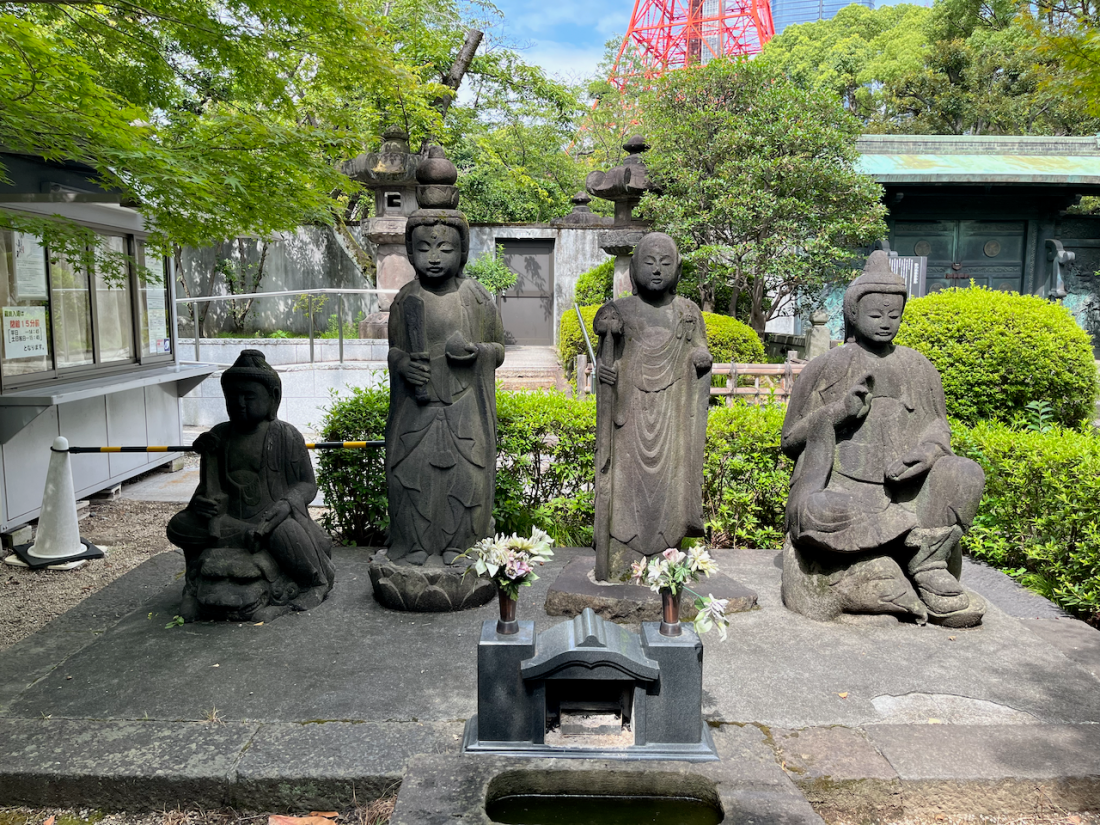
The day of my mother-in-law’s 100th day memorial was a very somber day for us all in Japan. My wife had gone back to Japan shortly after her mother passed away, but the kids and I had not, so this was our first real chance to say goodbye. Per Japanese funerary customs, we dressed in somber blacks and dress suits (first time in many years for me), and we carried her ashes from her home to the nearby Buddhist temple where the memorial occurred.

It was a surreal morning: the weather was sunny and pleasant. Overhead, the sky was blue, and winter birds were singing in the trees, while we were quiet and carrying the ashes of our beloved relative, lost in thought. The contrast between life and death was impossible to ignore.

It made me realize that both life and death are all around us. They exist like two sides of the same coin.

Even in the original series, Star Trek, Mr Spock acknowledges this:

Season 2, episode 14, “Wolf in the Fold

Roger Zelazny in his novella, Creatures of Light and Darkness (1969), also explores the idea that the absolute, most fundamental powers in the Universe are life and death. The usurpers, Anubis (of the House of the Dead) and Osiris (of the House of Life) vie with one another, but also keep the Universe in balance:

Anubis: “Osiris and I are bookkeepers: We credit and we debit. We raise waves, or cause waves to sink back again into the ocean. Can life be counted upon to limit itself? No. It is the mindless striving of two to become infinity. Can death be counted upon to limit itself? Never. It is the equally mindless effort of zero to encompass infinity.…”

Creatures of Light and Darkness, by Roger Zelazny

Buddhism looks at this truth, and extends it one step further by pointing that life does not end with death, and the two blend together so much, and are so closely tied to one another that there really isn’t “death” as separate from “life”. Just one big fluid mess. Consider this verse from the Heart Sutra:

“Listen Sariputra, all phenomena bear the mark of Emptiness; their true nature is the nature of no Birth no Death, no Being no Non-being, no Defilement no Purity, no Increasing no Decreasing….”

Translation by Ven. Thich Nhat Hanh

If we see that life and death are two sides of the same coin, and that one cannot exist without the other, where do we draw the line? That’s the point of this verse, I think. That’s emptiness (shunyatā in Sanskrit) in Buddhism: all things exist in a provisional, contingent way that depends on other things. No separate thing called “life”, nor a separate thing called “death”. It just goes on and on…

In the Analects of Confucius, there is a famous quote that expresses this same sentiment:

子在川上曰。
逝者如斯夫
不舍晝夜。
[9:17] The Master, standing by a river, said, “It goes on like this, never ceasing day or night!”

Analects of Confucius, 9:17, translation by A. Charles Muller

In the same way, life and death dance around one another ad nauseum. In the Buddhist viewpoint, people are reborn again and again without end. Not one life or two, but countless, countless lives stretching back to some distant, unknowable eon, just as we are doomed to repeat this dance of birth, struggles of growing up, struggles of old age, illness and death over and over again into the future. A cosmic “rat race” without end.

In the immediate term, it’s a reminder that we cannot avoid death. We cannot live without it either. All existence is marked by death, and all existence must face it sooner or later.

During my mother-in-law’s memorial service, per tradition of the Jodo Shinshu sect, the famous Letter on White Ashes composed by Rennyo to a follower in the 15th century, was read aloud:

Who in this world today can maintain a human form for even a hundred years? There is no knowing whether I will die first or others, whether death will occur today or tomorrow. We depart one after another more quickly than the dewdrops on the roots or the tips of the blades of grasses. So it is said. Hence, we may have radiant faces in the morning, but by evening we may turn into white ashes.

Translated by Rev. Hisao Inagaki

Thus, only now matters. Enjoy the air you breathe, the life you live (even when work is miserable) and the health you have. Do not squander it.

Namu Amida Butsu

What Separates Humans from Animals

Side note: the 2021 Dune movie was awesome

Time and again, I keep thinking back to that famous scene from the original Dune novel by Frank Herbert and the gom jabbar test.

“A duke’s son must know all about poisons,” she said, “…Here’s a new one for you: the gom jabbar. It kills only animals.”

Pride overcame Paul’s fear. “You dare suggest that a duke’s son is an animal?” he demanded.

“Let us say I suggest that you may be human,” she said.

Frank Herbert’s Dune

Frank Herbert envisioned a future of humanity based on extremely intelligent, evolved people (e.g. Mentats, the Bene Gesserit, etc) who still wrestled with primal instincts even 20,000 years in the future. Given the glacial pace of human evolution that’s not so surprising.

But even on a day to day level here in the 21st, this struggle continues between our instinct as Homo sapiens and our lives as “human beings”. In the 13th century Japanese text, the Essays in Idleness, Kenkō laments this point:

The testament to our birth in the human realm should be a strong urge to escape from this world. Surely there can be nothing to distinguish us from the beasts, if we simply devote ourselves to greed and never turn our hearts toward the Buddhist Truth.

Translation by Meredith McKinney

Indeed, many people are content to live by needs and primal instinct alone. They may as well be just another animal species living in the wild. The problem isn’t that we have such instincts, nor are they a source of shame, but what makes us human vs. just another animal is our ability to be aware of them, to keep them in check when appropriate and so on.

Demon: “So why do you consider my presence a pollution, a disease? Is it because there is that within you which is like unto myself? …If so, I mock you in your weakness, Binder.”

Sam: “It is because I am a man who occasionally aspires to things beyond the belly and the phallus.”

Roger Zelazny’s Lord of Light

It’s important, I think, not to loathe that side of oneself, because it is natural, but it’s important to have the bigger picture, and be able to see when our instincts as human beings are self-destructive, or ultimately unable to provide any lasting contentment, and thus aspire for something higher. This is much easier said than done, but even the sincere aspiration is a step in the right direction.

JLPT: Listening, the Big Headache

Listening in general is one of the most arduous skills to learn for a foreign language. After I started studying Ukrainian for fun, I soon found out how little I could actually follow in actual conversation. It has been pretty demoralizing.1

On the other hand, I have been studying Japanese for since the late 2000’s, and married into the culture, so I do have some conversational skills, but for level N1 of the JLPT exam that’s still not quite enough.

Case in point: in the months leading up to the 2022 exam, I have started using mock exams and other study guides, but to my horror I have so far been getting about 40% – 45% correct on the listening sections which is just barely a passing score. So while I may have a shot at passing the JLPT, it’s far from certain.

There’s no rational way to cram listening skills either: you either grasp the conversation, or you don’t. And the only way to improve your grasp of Japanese conversation is to get used to it through constant, constant exposure.

It’s like stretching a muscle. You can’t force it or rush it, you have to ease into it over time. Stretching a little at a time, until looking back you can stretch it much more than you used to.

Another way to look at is is from a classic Roger Zelazny story, Doorways in the Sand.2 At one point, the main character Fred, is listening to two aliens having a conversation about him in their native language:

At some earlier time I had slowly realized that the thing that would most have surprised them probably surprised me more. This was the discovery that, when I gave it a piece of my divided attention, I could understand what they were saying.

A difficult phenomenon to describe, but I’ll try: If I listened to their words, they swam away from me, as elusive as individual fish in a school of thousands. If I simply regarded the waters, however, I could follow the changing outline, the drift, pick out the splashes and sparklings. Similarly, I could tell what they were saying. Why this should be, I had no idea.

Language is weird, but I definitely have the same experience when listening to Japanese language podcasts: if I focus my mental energy on trying to discern one sentence, I lose track of the rest of the conversation. So, it’s more about getting used to the conversation as a whole, and as any music student will probably tell you, it takes time to tune your ear.

1 I haven’t stopped learning Ukrainian, but it has forced me to re-evaluate my methods a little.

2 Out of all his books, this one is definitely in my top 5 favorites.

A Life Well-Lived

Recently, I found this great quote from the famous 14th century Japanese-Buddhist text, the Essays in Idleness, which I’ve written about before.

7) If man were never to fade away like the dews of Adashino, never to vanish like the smoke over Toribeyama, but lingered on forever in the world, how things would lose their power to move us! The most precious thing in life is its uncertainty. Consider living creatures—none lives so long as man. The May fly waits not for the evening, the summer cicada knows neither spring nor autumn. What a wonderfully unhurried feeling it is to live even a single year in perfect serenity! If that is not enough for you, you might live a thousand years and still feel it was but a single night’s dream. We cannot live forever in this world; why should we wait for ugliness to overtake us? The longer man lives, the more shame he endures. To die, at the latest, before one reaches forty, is the least unattractive. Once a man passes that age, he desires (with no sense of shame over his appearance) to mingle in the company of others. In his sunset years he dotes on his grandchildren, and prays for long life so that he may see them prosper. His preoccupation with worldly desires grows ever deeper, and gradually he loses all sensitivity to the beauty of things, a lamentable state of affairs.

Translation by Donald Keene

It reminds me of science-fiction novel, Isle of the Dead by Roger Zelazny. In that novel, the main character, Francis Sandow, was born in the early 20th century, and has lived over 1,000 years through a combination of luck, technology and cleverness and is now one of the richest men in the galaxy. Because of his long-life though, he’s more and more paranoid about dying, and because of his wealth, he’s more and more paranoid about people trying to get him:

There’s me and maybe a few Sequoia trees that came onto the scene in the twentieth century and have managed to make it up until now, the thirty-second. Lacking the passivity of the plant kingdom, I learned after a time that the longer one exists the more strongly one becomes infected with a sense of mortality.

It’s one of my favorite classic scifi novels of all time because of its look into mortality, etc.

Anyhow, something to think about.

The Ten Bodhisattva Precepts of Buddhism

Demon: “So why do you consider my presence a pollution, a disease? Is it because there is that within you which is like unto myself? …If so, I mock you in your weakness, Binder.”

Sam: “It is because I am a man who occasionally aspires to things beyond the belly and the phallus.”

Roger Zelazny, Lord of Light (1967)

Recently, I wrote a post about the Five Precepts of Buddhism, which are a nearly universal code of conduct that lay disciples can choose to undertake both as a benefit for themselves (dignity, mental well-being) and towards others. In addition to the Five Precepts, the Mayahana branch of Buddhism1 gradually developed a second set of precept rules called the Ten Bodhisattva Precepts.

The history of the Ten Bodhisattva Precepts is a bit convoluted,2 but the primary source is a Buddhist text called the Brahma Net Sutra, specifically the Mahayana-Buddhist version. The sutra lists 10 major precepts, and 42 minor precepts a bodhisattva is meant to undertake as part of their training, but most focus only on the 10 major precepts.

The ten major precepts are (translating from this source):

  1. Do not take life.
  2. Do not steal. 
  3. Do not commit adultery or sexual abuse. 
  4. Do not lie. 
  5. Do not sell (or consume) liquor. 
  6. Do not bring up the faults of others. 
  7. Do not boast of oneself or disparage others. 
  8. Do not begrudge material and spiritual possessions. 
  9. Do not harbor ill-will. 
  10. Do not disparage the Three Treasures [the Buddha, the Dharma, and the Sangha].

Monastic followers, that is monks and nuns, in the Mahayana tradition often take up these Bodhisattva Precepts on top of the more traditional monastic rules. Japan is an exception, where monastics only take up the Bodhisattva Precepts these days. However lay people often undertake these precepts too.

These precepts are called the endonkai (円頓戒, “complete, perfect precepts”) in the Tendai tradition, and jūrokujōkai (十六条戒, “sixteen [bodhisattva] precepts”) in Soto Zen tradition, include six more “preamble” precepts:

  1. I take refuge in the Buddha
  2. I take refuge in the Dharma
  3. I take refuge in the Sangha
  4. I vow to abstain from all evil
  5. I vow to strive to do good
  6. I vow to devote myself toward other living beings
  7. (the 10 bodhisattva precepts listed above then follow…)

This makes for 16 precepts total.

Lay followers typically take the original Five Precepts mentioned above, but may opt to undertake the Bodhisattva Precepts as a kind of “extra credit”, especially since they overlap quite a bit. Unlike the Five Precepts where one openly declares their vows to a monk, nun or a Buddhist statue (if alone), the Bodhisattva Precepts don’t always require a formal ceremony as such. It varies by tradition. Many traditions in Japan have a ceremony called jukai (受戒) where a lay followers undertakes these 10 (or 16) precepts and thus declares themselves an official follower of that tradition.

Even if you are not part of such a tradition, you are welcome to undertake them anyway preferably before a Buddhist image or altar, but it’s not strictly necessary. If you uphold them, great. If not, the Five Precepts alone are still a worthy undertaking.

In summary, the Bodhisattva Precepts are a way to extend one’s daily practice of Buddhism by not just avoiding more gross deeds, but also gradually polishing the mind by avoiding greed, ill-will and conceit and thereby removing the source of further suffering for yourself and others.

Namu Amida Butsu
Namu Kanzeon Bosatsu

P.S. Happy Bodhi Day 2021!

1 The Mayahana Branch encompasses pretty much all of Buddhism you see in places like China, Korea, Japan, Vietnam, Tibet and so on. The other branch, Theravada, is found more in Southeast Asia: Thailand, Cambodia, Sri Lanka and so on.

2 In earlier Buddhism, the Buddha encouraged lay followers to not only take up the Five Precepts, but also practice something called the Ten Good Deeds. It’s likely, in my opinion, that these more nebulous Ten Good Deeds were eventually codified into the 10 major precepts of the Brahma Net Sutra above, and thus became the Bodhisattva Precepts.

What To Do With Your Twilight Years

Phoenix, AZ taken in 2015?

Lately, after reading an article about the infamous Villages retirement community in Florida, I’ve been pondering this ancient Greek epitaph:

“Drink. Play. Your life is mortal and time on earth is but short. Death itself is everlasting once a man has died.”

πῖνε, παῖζε· θνητὸς ὁ βίος, ὀλίγος οὑπὶ γῇ χρόνος·
ὁ θάνατος δ’ ἀθάνατός ἐστιν, ἂν ἅπαξ τις ἀποθάνῃ. #Epitaph

Originally tweeted by sententiae antiquae (@sentantiq) on August 23, 2021.

I am not an old man yet. However, I am that point in my life where I am looking ahead and I have decided that rather than just indulging myself in my twilight years, I would focus on doing some good in the world instead. This quote from Roger Zelanzny’s novel Isle of the Dead is particularly inspiring to me:

Earth-son, I greet you by the twenty-seven Names that still remain, praying the while that you have cast more jewels into the darkness and given them to glow with the colors of life.

As Saicho, the Buddhist monk, famously said: ichigū wo terasu (一隅を照らす, “light one corner of the world”). Our thoughts and actions do matter towards others. A self-indulgent existence helps no one, and provides no value to the world, but on the other hand, a life devoted to others provides incalculable value for generations.

For my part, I would like to continue casting little jewels into the void as long as I can still raise an arm.

Namu Amida Butsu

Hello, Is It Me You’re Looking For?

Vision would totally get it.

I recently finished the series WandaVision (I am always super slow to catch up on popular shows), and in the big climactic battle between Vision and his other self,1 Vision brings up a famous paradox called the Ship of Theseus which Plutarch, one of my personal favorite people from that era, describes as:

The ship wherein Theseus and the youth of Athens returned from Crete had thirty oars, and was preserved by the Athenians down even to the time of Demetrius Phalereus, for they took away the old planks as they decayed, putting in new and stronger timber in their places, insomuch that this ship became a standing example among the philosophers, for the logical question of things that grow; one side holding that the ship remained the same, and the other contending that it was not the same.

Translated by John Dryden from Plutarch’s “Theseus” written in 75 CE

This issue of the ship and whether it’s the same ship any more or not has been puzzling Western philosophers for many centuries. As an armchair philosopher and nerd, I just learned about this and the paradox (as well as WandaVision) really blew my mind.

However, what really blew my mind is kind of conundrum wasn’t limited to ancient Greek philosophy. Long ago in India, a famous Buddhist treatise, the Dà Zhìdù Lùn (大智度論), was composed in Sanskrit (that version is now lost) and translated into Chinese by the venerable Kumarajiva.2 This paradox from the Dà Zhìdù Lùn is also found here in an essay by Jing Huang and Jonardon Ganeri.

Paraphrasing the story here, a traveler encounters two demons on the road, one of which is carrying a corpse. The other demon grabs the traveler and begins by pulling his arm off. The second demon removes the matching arm from the corpse and somehow attaches it to the man. From there, the demons replace each part of the traveler’s body with the matching part from the corpse until none of the original body is left. The man is distraught because he doesn’t know who he is anymore. As the story continues, he encounters a group of Buddhist monks who then explore the implications (for the benefit of the reader).

Modern versions of this story can be found in science fiction, too. In the novel, Creatures of Light and Darkness by Roger Zelazny, the character Wakim is taking apart and replaced with mechanical parts, and later put back into human form, by Anubis who opines:

“Men may begin and end in many ways,” says Anubis. “Some may start as machines and gain their humanity slowly. Others may end as machines, losing humanity by pieces as they live. That which is lost may always be regained. That which is gained may always be lost.”

“I have made you a machine, Wakim. Now I shall make you a man. Who is to say how you started, where you started? Were I to wipe your memories up to this moment and then re-embody you, you would recollect that you had begun as metal.”

All this is to say, where does one’s true identity begin and end? How much of it is dictated by outside, and how much of it are you born with? Is there anything you can truly call your own?

Further, as Huang and Ganeri cite the famous Buddhist philosopher Nagarjuna (150 CE – 250 CE) who explored this kind of issue at great length:

Nāgārjuna is known in particular for his fondness of dilemmas. He was so fond of them, indeed, that he excelled in converting them into tetralemmas (catuṣkoṭi). To any question, he said, there are four possible answers: yes, no, both, and neither. The unique twist, and what defines [the Buddhist philosophy of] Madhyamaka as a philosophical system, is to then affirm that none of the possible answers is viable; each one can be shown to end up entailing some absurd or impalatable consequence, which is called a prasaṅga

Is This Me? A Story about Personal Identity from the MahāPrajñāpāramitopadeśa / Dà zhìdù lùn
Jing Huang and Jonardon Ganeri, British Journal for the History of Philosophy 2021

The paradox of the Ship of Theseus isn’t limited to ships; the Buddhists felt this issue comprises all phenomena including you and me.

If you think about it, your body has been constantly changing and growing since your conception as an embryo. Cells divide, die, get replaced, etc. On a physical level, the rotting timbers of your body have been replaced countless times over and over and will continue to do so until your dead, in which case your body continues to change as it decomposes into other things, and so on. Is it this still the same body you had from birth? Nagarjuna would say that answers like “yes”, “no”, “maybe”, “both”, “neither”, “42” and so on are all absurd and don’t quite hit the mark

But what about your mind? You retain memories from the past (assuming you can still remember them), but even here Buddhism would argue that none of it is the original mind state, but a constant state of fluidity shifting from one thought to another, with nothing static. Even your memory may not be as reliable as you think it is, colored over time by your thoughts and recollection until it no longer resembles the original in any objective sense.

For me, this really made me realize that I am not defined by my past, the good and the bad. I am not the same person I was 30 years ago, or 30 days ago. For better or worse, that person is gone. There is only me, here and now.

Looking at my life up until now, maybe all we are is just a constant state of flux, becoming and persevering? But, as Nagarjuna might say, that’s not quite it either.

I guess only the Buddhas and Bodhisattvas truly understand:

The true entity of all phenomena can only be understood and shared between Buddhas. This reality consists of the appearance, nature, entity, power, influence, inherent cause, relation, latent effect, manifest effect, and their consistency from beginning to end.”

The Lotus Sutra, chapter 2, Burton Watson translation

As for me, I’m-a-going back to playing Breath of the Wild.

P.S. This post is dedicated to Lionel Ritchie.

1 I think this Twitter post explains the finale nicely:

2 The whole mass-translation effort that took place in China during the Tang-Dynasty (7th – 11th centuries) was nothing to sneeze at either. Sanskrit and Chinese have almost nothing in common, and the religious-technical vocabulary that monks brought from India and the Silk Road had to be translated not just verbatim, but in way that could properly convey the meaning to Chinese audiences. Some really talented and dedicated monks, Indian, Chinese and Central Asian really worked hard on this over successive generations to bring us the literature we benefit from today.

Japanese Christmas Wrap-Up

Hi folks,

The week between Christmas and New Years is always a whirlwind of events as we prepare for Japanese New Year (oshōgatsu お正月), kids birthdays and other things. I didn’t get to this as soon as I would like, but I finally had time to post photos from Christmas.

We did not participate in a family gatherings due to COVID so we stayed at home, played Animal Crossing. For Xmas gifts, I got a compilation of Roger Zelazny stories which I was happy about. I surprised the family with Pringles sour cream and onion cans in their stockings (family joke).

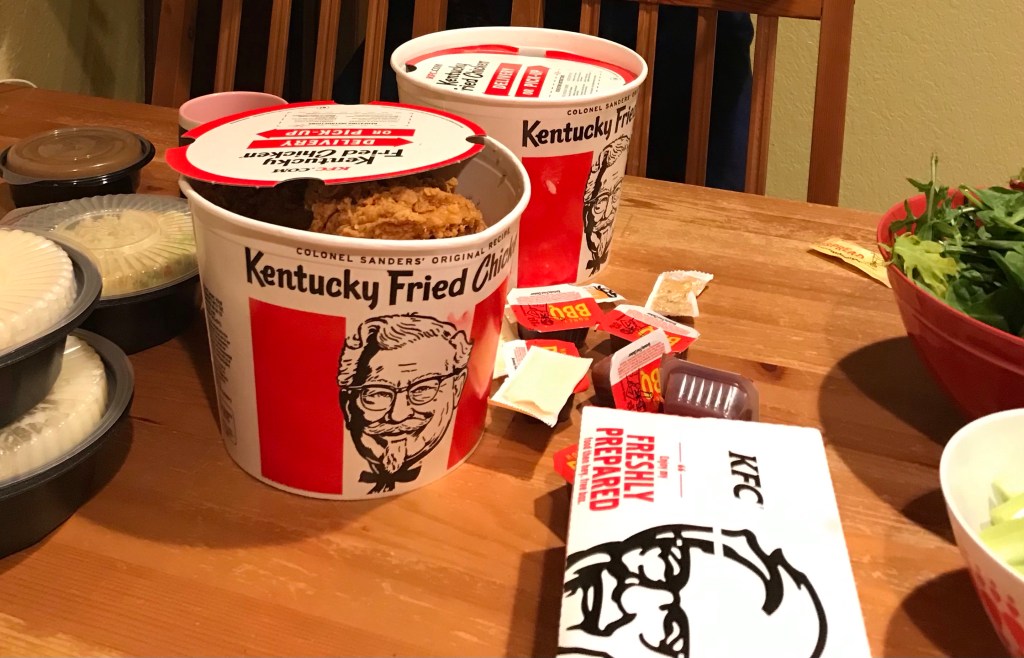
Speaking of food, we also enjoyed Japanese-style Christmas food which includes Kentucky Fried Chicken (which, amazingly was open on the 25th):

The relationship between Japan, Christmas and KFC goes back to a clever marketing campaign some decades ago and has taken root since. Since in years past we celebrated with my family, we didn’t really do KFC so this year we got to finally do things “our way”. 😉

The Colonel and I go way back. I took this photo at a local KFC in Japan in summer 2019.

Since I haven’t actually eaten KFC in many years, I wasn’t sure what to order and got a big family pack. It was way more than we needed but it was super good. Those 11 herbs and spices are nothing to sneeze at.

Also, my teenage daughter has been taking up pastry cooking since COVID lockdown first started and made us a Christmas cake, complete with marshmallows:

Christmas cakes are another feature in Japanese culture that isn’t really found in the US. My theory is that it’s based on European, not American tradition, as Buche de Noel are popular there too. I don’t know about readers, but my family never had any kind of Christmas cake, so I was surprised when I saw how popular they were in Japan.

It was a pretty low-key Christmas, but it was nice to celebrate it according to my wife’s culture for a change, rather than always hanging out with the extended family.

P.S. in years past, after getting tired of eating Christmas food we’d usually find a Chinese or Indian restaurant that was open that night to satisfy our cravings. We have the same habit after Thanksgiving too.

Of Elder Gods and Men

We made our way cross-country through the colors of autumn– browns, reds, yellows– and the ground was damp, though not spongy. I inhaled the odors of forest and earth. Smoke curled from a single chimney in the distance, and I thought the Elder Gods and wondered at how they might change things if the way were opened for their return. The world could be a good place or a nasty place without supernatural intervention; we had worked out our own ways of doing things, defined our own goods and evils. Some gods were great for individual ideals to be aimed at, rather than actual ends to be sought, here and now. As for the Elders, I could see no profit in intercourse with those who transcend utterly. I like to keep all such things in abstract. Platonic realms and not have to concern myself with physical presences…

Snuff the dog in Roger Zelazny’s “A Night in the Lonesome October”

The Joys of Asceticism

Taraka, King of Demons: “So why do you consider my presence a pollution, a disease? Is it because there is that within you which is like unto myself? …If so, I mock you in your weakness, Binder.”

Sam: “It is because I am a man who occasionally aspires to things beyond the belly and the phallus.”

“Lord of Light”, by Roger Zelazny

For the Jūya-e season, I have been undertaking a little ascetic Buddhist practice nightly for the past few days. I didn’t want to go into this willy-nilly, so I spent an evening mapping out what it would look like, what was reasonable and what was overkill (or lax), wrote it down in a little journal, and then committed to it for next ten nights.

The details of that 10 day practice are not important, but it is a kind of Buddhist “home retreat” for myself, and it has been challenging, but also very pleasant.

Photo by Wouter de Jong on Pexels.com

Asceticism, whether it be full-time as a practicing monk or nun, or as a lay person “in retreat”, is less about punishing yourself and more about taking your life back and aspiring for something more noble. It’s a chance to reset your life and your priorities and such as well as strengthen the mind. Further, it doesn’t have to be some expensive retreat at a resort with some Tibetan Lama that you paid thousands of dollars for. I often think about this quote by a 12th century monk, and chief disciple of Honen, named Benchō (弁長, 1162 – 1238) also known Shōkō (聖光).

人ごとに閑居の所をば、高野・粉河と申あへども、我身にはあか月のねざめのとこにしかずとぞおもふ
People maintain that the best place for a life of retirement is the Kokawa Temple or Mount Koya. But as for me, there is nothing to compare with the bed from which I rise every morning.

Japanese source

Kokawadera (粉河寺, a famous Tendai Buddhist temple) and Koyasan (高野山, a famous Shingon Buddhist temple) were both major monastic centers, and still are, but what Benchō is saying that where you practice Buddhism here is now is the best place. No need for fancy retreats, just carve out a space and a routine where you are now.

As someone who has tried and failed from time to time at various “Buddhist endeavors” I’ve also learned a few tips along the way:

  1. If you want to engage in a Buddhist practice or retreat, write it out first.
  2. Make this practice/retreat something that’s sustainable and reasonable, but also “stretches” you a little bit. You can always revise it later if it’s too easy.
  3. If you commit to something, commit (refer back to #1 above). There’s no worse feeling than giving up halfway, even if you really want to. Also, remember that the mind is naturally fickle so sooner or later, you’ll get bored or want to quit.1 This is normal, but it doesn’t have to define you either.
  4. Later, when you are finished, think about what worked and what didn’t. It’ll save you headaches later.

Good luck and happy …. monking?

1 In Japanese, they call this mikka bōzu or “3-day monk”. Let’s face it, it’s hard keeping anything up any endeavor for 3 days. 😅