Liberals and Conservatives: Ancient Japanese Style

Long, long ago, I wrote about the struggles in the Late Roman Republic between its version of progressives versus conservatives. The Roman Republic did not have political parties as we would know them, but the factions and disagreements on how to solve changing political issues did exist in its Senate, much as happens in the modern world.

But that’s not something limited to ancient Rome.

In the late 6th century CE Japan was still limited to a small kingdom called Yamato (大和) which had conquered most of its rival kingdoms. At this time, the ruler of Yamato was still little more than a “chieftain” of the largest territory called an ō-kimi (大君) meaning “big king”, not even emperor (tennō, 天皇) as they are called now. Further, the authority of the king depended on powerful clans who had strong influence on the government.

For example, during Emperor Yōmei’s short and problematic reign there rose a power struggle between two opposing factions, the Soga (蘇我) clan, and the Mononobe (物部), and during the interregnum after he died. One one side of the struggle was a reform faaction that wanted to modernize the government based on the based on Sui-Dynasty Chinese government models, away from the older, clan-based kingship. This faction included:

If the Soga were a progressive, reform faction wanting to modernize the country using the latest imported culture from China, the Mononobe were the exact opposite. The Mononobe Clan was a conservative, traditional clan that distrusted the new imported Chinese culture, and especially the foreign-imported religion of Buddhism. They supported the more native Shinto traditions, and were on the more xenophobic side of the political spectrum. Their current head, Mononobe no Moriya, actively skirmished with Soga no Umako during Yomei’s reign.

According to a historical text from the time, the Nihon Shoki (also discussed here and here), these conflicts came to a head in the year 587 after Emperor died, and a successor had to be chosen. In Japanese this is called the Teibi Conflict (teibi no ran, 丁未の乱) of 587. The Soga Clan and Prince Shotoku supported one successor, the Mononobe, the other. During the battle for succession, Mononobe no Moriya attacked Buddhist temples, and burned some of the images (often imported from the Korean kingdom of Baekje).

Finally, the battle came to a head at Mount Shigi (shigisan, 信貴山) in July of 587. The Soga lost multiple engagements at first and retreated. Then, according to tradition, Prince Shotoku, who was related to the Imperial family, fashioned a sacred branch of sumac, prayed to the Four Heavenly Kings (四天王) of Buddhism,1 promising to build a temple if they could help him trounce the Mononobe.

The subsequent battle was a complete rout for the Mononobe clan, and their leader Moriya was shot with an arrow. The rest was history: Shitenno-ji Temple, one of the oldest in Japan.

Under the reign of Empress Suiko, one of the few, powerful female monarchs in Japanese history,2 Japan further prospered under the triad of Suiko, Soga no Umako and Prince Shotoku, her advisors. Prince Shotoku in particular was said to have introduced:

  • Japan’s first ever Buddhist-influenced constitution: the Seventeen-article Constitution (jūshichijō kenpō, 十七条憲法 ). It’s not a modern, legal document, but it was meant to provide a spiritual framework for governing the country.3
  • Reorganized the bureaucracy into a meritocratic system based on the Chinese model, the Twelve Level Cap and Rank System (kan’i jūnikai, 冠位十二階).
  • The first use of the title “Emperor” (tennō, 天皇), when Prince Shotoku addressed the Emperor of China from the “Emperor” of Japan. This was a bit of a diplomatic coup by placing Japan as a co-equal to Imperial China.

What I always find interesting about this period of Japanese history was the overtly progressive nature and forward-thinking of the government at the time, not to mention a powerful female sovereign, and how it triumphed over conservative, xenophobic thinking. Of course, by today’s standards, it doesn’t seem that progressive, and some of these reforms eventually petered out,4 or were abandoned for various reasons, but some aspects persisted up until modern times. It is also the subject of various manga over the years.

But also, what I really like about this period is that the old order wasn’t totally destroyed either. The two sides eventually just learned to co-exist for many generations (e.g. the Nara and Heian periods of Japanese history). It wasn’t a smooth transition, but the forces of history marched on nonetheless.

P.S. Fun fact, one of the supporters of the conservative Mononobe faction was a small clan called the Nakatomi. Later, the Nakatomi would become the Fujiwara, and would eventually dominate political life in Japan. History is weird.

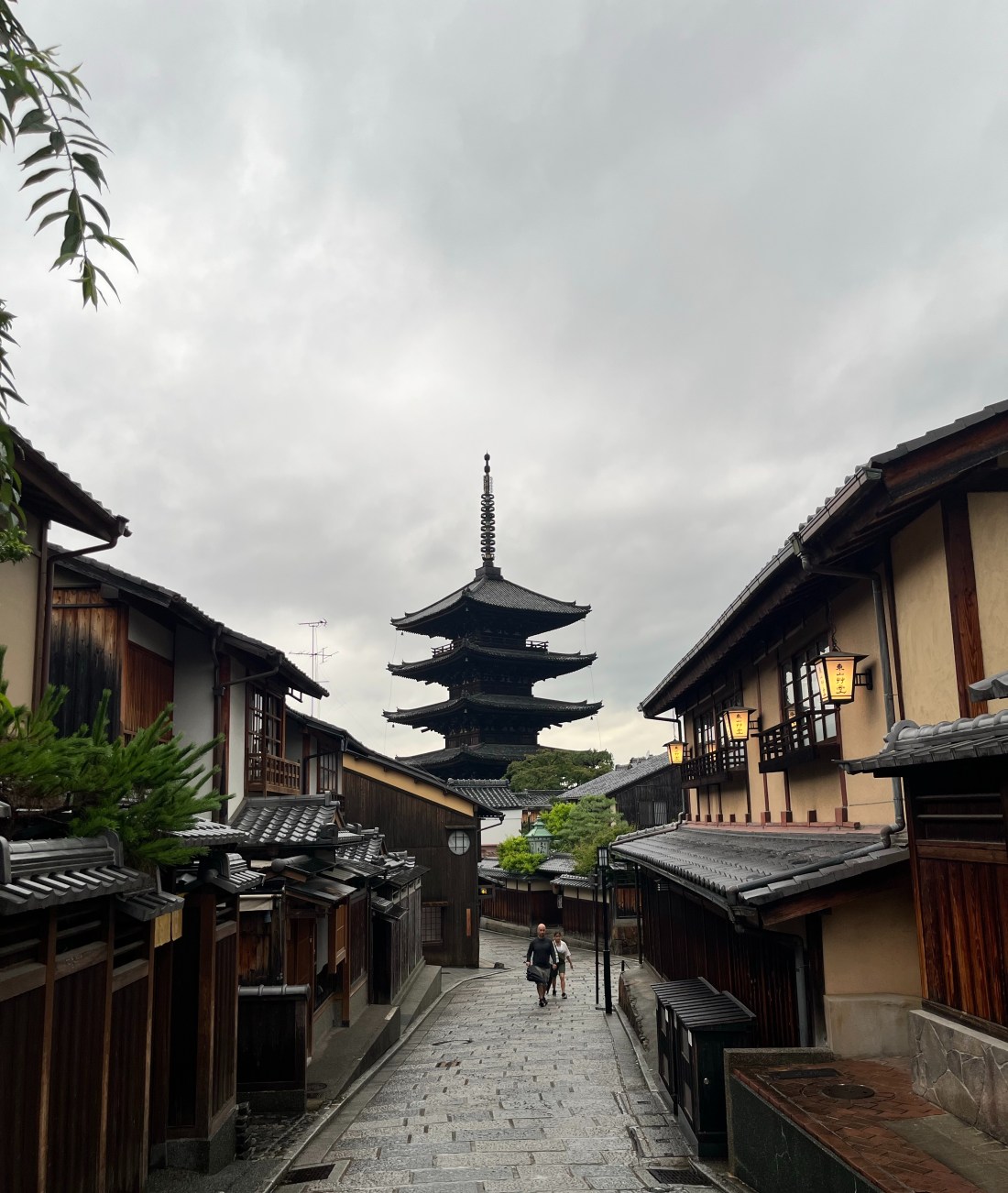
P.P.S. Featured photo is one of many pagodas (Buddhist stupa) promulgated by Shotoku, this one in Kyoto.

1 In Sanskrit, these were the Caturmahārājakayikas or Caturmahārāja. For example, if you visit Todaiji, you see some of the Four Guardian Kings around the giant statue of the Buddha, plus many other, older temples. I liked their adaptation in Roger Zelazny’s “Lord of Light” as well.

2 There were other Empresses who reigned as well, some powerful, but many remained as temporary regents until someone else could assume the throne.

3 The modern constitution of Japan adopted in 1947, at the instigation of US Occupation Forces, is ironically significantly more progressive and modern than the US Constitution. To be fair, they were written almost 200 years apart, but the Japanese Constitution explicitly grants suffrage to women and abolishes slavery. Even now, with its amendments, the US Constitution grants neither. In college, I met the lady (a US army secretary at the time) who helped write the clause on women’s suffrage. She was a very fascinating person, though she’s probably passed away by now.

4 Many generations later, this was still largely true: powerful clans ruled many parts of Japan outside the capital, gradually evolving into a feudal system over the centuries, until the Meiji Restoration of 1868,

The Founding of Japan, Sort Of

A little while ago, when talking about Japanese mythology, I alluded to the belief in the divine origins of the Japanese imperial family through their reputed ancestor Amaterasu Ōmikami (Amaterasu for short), kami of the sun. This lineage and how they came to rule Japan is recorded in two very old historical texts: the Kojiki and the Nihon Shoki.

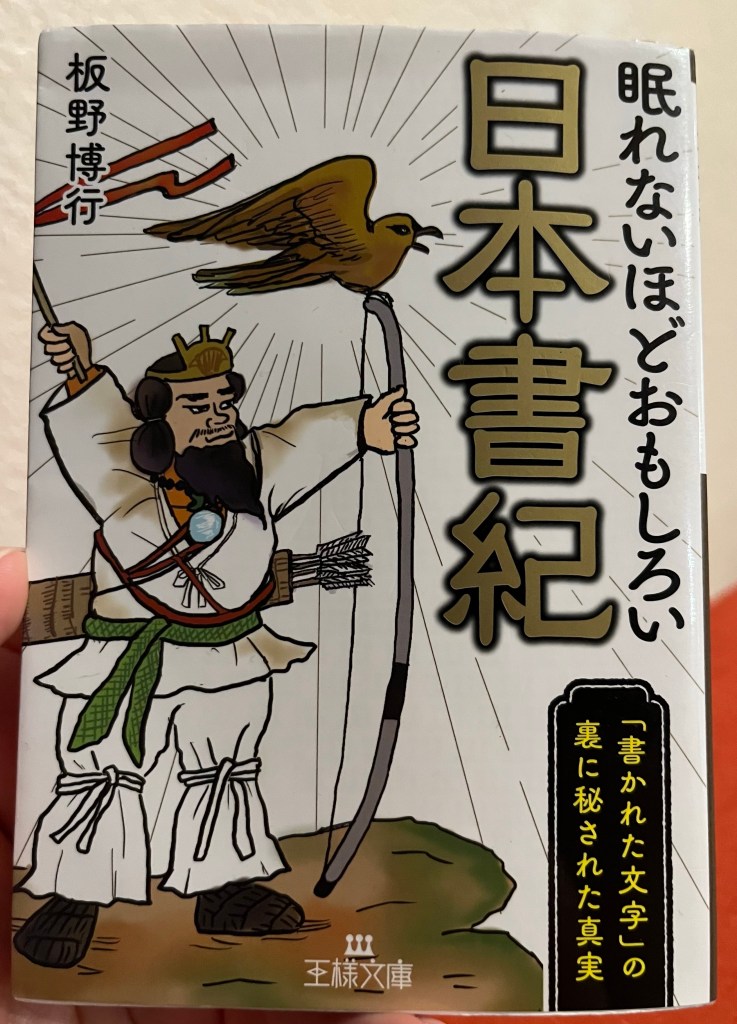
Since I have been reading a fun book in Japanese about the Nihon Shoki, we will focus on that one. Just know that the origin story in Kojiki is mostly the same.

An illustration of Emperor Jimmu with the Golden Kite (bird) from a 1920’s book. Photo by English: Tsukioka Yoshitoshi (1839–1892), Publisher: Funatsu Chûjirô. 日本語: 月岡 芳年(日本人、1839–1892), Public domain, via Wikimedia Commons

The Nihon Shoki begins as a series of myths about the creation of Japan, followed by stories of different generations of kami, culminating in Amaterasu’s grandson, Ninigi-no-Mikoto who descends to earth. Next, Ninigi had a great-grandson, named Kamu-yamato Iware-biko no Sumeramikoto (神日本磐余彦天皇),1 and in time “Iware-biko” became the first emperor of Japan, the legendary Emperor Jimmu (jimmu tennō, 神武天皇).2 We’ll explore later why this is more myth than history, but for now, let’s continue the story as recorded.

In his youth, the future emperor grew up in what later became the province of Hyuga in southern Japan, also called Himuka (日向) in olden times. By the age of 45, he had married, had children, and took care of his brothers. Then one day, he proclaimed to his family that due to his divine lineage, it is his destiny to rule the lands to the east (central Japan) which are rich and verdant, and to establish his capital there.

From here, Iware-biko sets out with his kin to the island of Honshu, the main island of Japan, and begins the invasion of the “Yamato” region, starting at the bay of Naniwa (later Osaka). It is here they come into conflict with the a local chieftain named Naga-sune-hiko. Sadly, Iware-biko’s older brother was killed, and the newcomers were forced to retreat. Iware-biko then reasoned that by fighting eastward, facing the rising sun, they lost the battle. Thus, he decides to sail south around the Kii Peninsula, and then attack from the east (i.e. westward). Upon reaching the region Kumano, they encountered a huge crow named the Yatagarasu (八咫烏) where “ata” 咫 means a hand-span from the thumb to the middle finger, about 18cm. So, the crow was 8 hand-spans long. The Yatagarasu was dispatched by the kami Amaterasu to help her descendant as a guide.

Once again, Iware-biko and his clan battled Nage-sune-hiko long and hard. Then, a golden-colored kite (as in bird), called the kinshi (金鵄), mounted on Iware-biko’s bow (hence the depiction above), and its blazing glare blinded their enemies. They were defeated at last.

From here, Iware-biko pacified the region, and assumed the throne as the first Emperor, Jimmu, and proclaimed that his line would “last 10,000 generations” (lit. mansei ikkei, 万世一系). Further, according to the Nihon Shoki, the first Emperor then proclaimed the phrase hakkō ichi-u (八紘一宇), or more elaborately “all under Heaven [lit. the eight corners of the world] under one roof”. The idea was basically one of universal brotherhood.

Allegedly, this unification of Japan, and its founding by Emperor Jimmu, all happened in the year 660 BCE.

Fast forward to the year 1940, as in 1940 CE.

This period was the height of Japanese militarism in the modern era, and the Youtube show Extra History has a brilliant miniseries on it:

I highly recommend viewing the miniseries if you are curious, but it helps explain a lot.

Anyhow, by 1940, this trend of nationalist fervor reached a crescendo, and it was coincidentally 2,600 years since the mythical founding of Japan. When the Greater East Asia Co-Prosperity Sphere was promulgated in 1940 by the Prime Minister at the time,3 Prince Konoe Fumimaro, he repeated an ancient phrase said to have been spoken by Emperror Jimmu: hakkō ichi-u (八紘一宇, “Eight corners of the world under one roof”). However, in Fumimaro’s modern interpretation, Asia would be united in a union of brotherhood, with Japan at the center (i.e. under one Japanese roof). This was repeated during war times as a rallying slogan as well, and questioning the historicity of the Nihon Shoki at that time was illegal.

There’s a small problem with the original historical narrative about Emperor Jimmu, though: it’s unlikely he ever existed, and it’s very doubtful that Japan was founded in 660 BC.

There is basically no archeological evidence that the early “Yamato” kingdom existed in Japan during this time. In fact, the earliest emperor that has any reliable archeological evidence is Sujin the 10th emperor, who is thought to have died around 30 BCE, 600 years later. Sovereigns weren’t even called “emperors” (tennō, 天皇) at the time, but “great kings” (dai-ō, 大王) instead. The term Emperor was reputedly used by Prince Shotoku centuries later.

So, why 660 BCE, and why the mythical lineage that probably didn’t exist?

Because the Nihon Shoki was not written for Japanese audiences. It was written for Chinese audiences in order to introduce Japan and its history. The Kojiki, conversely, was written for domestic audiences. Many of the early dates and lineages don’t line up properly, have insufficient historical evidence, or have imperial reigns that are unnaturally long. Yet as a narrative it seamlessly transitions between a divine kami ancestor and the current reigning family, and helped provide legitimacy in the eyes of the much larger and more powerful China. Even the date 660 BCE, 1260 years before the Nihon Shoki was completed, fit seamlessly with the Taoist 60-year calendar cycle to imply an auspicious beginning.

People did live in Japan back then, but we know from archaeological evidence that these were mostly hunter-gatherers, and rulers might be local chieftains at best.

What the Nihon Shoki does tell us though, through its legendary stories, heroes and such, is that pre-historical Japan was a place of many tribes, communities and confederations, and that over time the “Yamato” group came to increasingly dominate or incorporate them. For example, the ancestral kami, Ninigi, had a son in the Nihon Shoki named Yamasachi-hiko whose name includes “mountain”. Yamasachi-hiko married Toyotama-hime, who was a daughter of a sea deity. The fusion of mountains and sea ancestries is not lost on scholars.

Further, my book explaining the Nihon Shoki shows how some myths include subtle allusions to rival confederations who were defeated (or absorbed) by the early Yamato rulers. One noteworthy rival were the people of Izumo, for example. So, the Nihon Shoki can tell us a lot of interesting things about how Japan was founded, but not necessarily in the way we expect.

1 Many early figures in Japanese mythology had extremely long, grandiose names, by the way. My book on the Nihon Shoki likes to give amusing nicknames for ease of reading.

2 Thus, Emperor Jimmu was five generations removed from Amaterasu. The Nihon Shoki coveres stories and myths of each generation in between, but they are too numerous to list here. Needless to say, once Ninigi-no-Mikoto descends to the earth, things got wild.

3 Ostensibly to kick European Colonialism out of Asia, but it mostly ended up replacing European colonialism with Japanese colonialism. Not surprisingly, after WWII, many South East Asian countries fought for independence when the Europeans tried to reassert control. Enough was enough.

Saicho: Founder of Tendai in Japan

June 4th is the yearly memorial service in Japan’s Tendai sect of Buddhism called Sangé-é (山家会) for its founder, Saichō (最澄, 767 – 822). I am writing this post a bit late this year, but I wanted to explore the life of Saicho a little bit and why he matters.

Saicho as depicted in a Heian-Period painting.

If you look at the history of Japanese Buddhism, Saicho doesn’t elicit much historical attention and discussion, even compared to contemporary rivals at the time like Kūkai, founder of Shingon-sect Buddhism. Yet, the sect he founded in Japan was overwhelmingly the largest and most influential for centuries (probably too much so), until it finally faded into the background in the late medieval period. This is why you rarely see mention of Saicho or Tendai these days: it’s far smaller now than it was in the past.

Also, to confuse matters further, Saicho is only the founder of the Japanese branch of Tendai. It was the Buddhist monk Zhi-yi (智顗, 538 – 597), who originally started the Tian-tai (天台) sect in China in the 7th century and it remains a very influential sect across many areas of mainland-Buddhist Asia (Korea, Vietnam, etc). Tian-tai in Japan (pronounced as Tendai) reveres Zhiyi as well.

Anyhow, Saicho was a monk at a time when Buddhism had already been established in Japan, primarily around the old capitol of Nara, yet was limited to a very tightly regulated number of schools and monks per school. Besides the Yogacara (Hossō) and Huayan (Kegon) schools, the rest are very obscure today. These schools had all been imported from Tang-Dynasty China, and represent “branch” schools to the mother temples there. The existing schools at that time were obligated to perform rituals on behalf of the Emperor to prevent calamities, cure diseases, bring prosperity to the nation and other political needs. In turn, the government allocated new acolyte monks every year, and allowed them to continue. However, beyond that, Buddhism had very little reach in the rest of Japanese society. This is very different than the bottom-up approach in China.

Mount Hiei today, photo courtesy of Wikimedia Commons.

Saicho was ordained as an official monk, but soon left and retreated to Mount Hiei where he underwent ascetic practices, rather than stay in the urban temple complexes. In time, he attracted other like-minded disciples, and a small, informal monastic community developed there on the mountain. Further, he carved an image of the Medicine Buddha, and later lit an oil lamp in reverence to the Buddha, praying that the light would never be extinguished. This lamp, the Fumetsu no Hōtō (不滅の法灯) was the subject of a previous post. By this point, the foundations of the temple of Enryakuji were laid.

Later, by a lucky coincidence, the capitol of Japan was moved away from Nara to Kyoto (back then Heian-kyō) in 795. Since Mount Hiei happened to be to the northeast of Kyoto, and since the northeast was considered an inauspicious direction in classic Chinese geomancy, the presence of a Buddhist temple there (namely Enryakuji) helped protect the new capital from negative influences. The Emperor, for his part, saw this new Buddhist sect has a counterbalance to the old guard sects in Nara. Thus, Saicho’s star quickly rose.

The Eastern Pagoda (Buddhist stupa), of Enryakuji Temple, 663highland, CC BY-SA 3.0, via Wikimedia Commons

Now with sponsorship from the new Imperial court, Saicho was dispatched to sail back to China in 804, gather more resources and help bring Buddhism to a wider audience. On the same diplomatic mission, another promising young monk named Kūkai was also dispatched. More on him later. Of the four ships that sailed out to sea, only 2 survived a storm at sea (Saicho and Kukai were each aboard one of the surviving ships).

Saicho’s had mixed success in China. He did not speak Chinese (he could only read it), but was able to get official permission from the Chinese government to travel to Mount Tiantai. There he stayed for 135 days. Saicho later received limited training in esoteric Buddhism, which was all the rage in Tang-Dynasty China (and Japan at this time). It wasn’t until the second generation of Tendai monks who went to China (Ennin for example) that esoteric training really developed in the Tendai sect in Japan. Saicho also copied many sutras and texts in order to provide fresh copies back in Japan (printing did not come until much later, despite flourishing in China).

Guoqing Temple (guó qīng sì, 国清寺) on Mount Tiantai, head of the Tiantai Order. Photo by Joshtinho, courtesy of Wikimedia Commons.

Nonetheless, when Saicho returned to Japan 8 months later, he was feted for his accomplishments. He got to work using his newfound training, and his collection of sutras brought back from China to petition the Emperor to start a new sect derived from the Chinese Tiantai Buddhism he trained under. Saicho’s vision was slightly different than Tiantai Buddhism, particularly because he envisioned a purely “Mahayana” sect, not just a sect with Mahayana Buddhism on top of earlier Buddhist tradition. This meant different ordination platforms, different training, etc. It was a big controversy at the time, and the powerful Yogacara (Hossō in Japanese) school based in Nara really gave him grief over it.2

In Dr Paul Groner’s book on Saicho, he explains Saicho’s vision further:

In his works directed against Tokuitsu and the Hossō [Yogacara] School, Saichō argued that all people had the Buddha-nature [capacity for Enlightenment] and could attain Buddhahood. Receiving the Fan wang [Bodhisattva precepts] ordination and adhering to the precepts were religious practices open to anyone. Anyone could receive a Fan wang ordination and anyone who had been correctly ordained could in turn confer the Fan wang precepts on others….

Saichō envisaged a system in which Tendai monks would be trained for twelve years on Mount Hiei and then go to live in the princes in order to perform good works, to preach, and to confer Fan wang ordinations.

Page 179

Further, Saicho really took the idea of unifying different Buddhist practices and traditions into an “umbrella tradition” to a new level. It wasn’t enough that the Lotus Sutra was the highest teaching (per Tiantai tradition), he wanted to really absorb other practices and traditions toward that end, and diffuse them across the country in a religious community that blurred the traditional lines between monks and laity.

Saicho’s zeal, his rising status in the new Imperial court at Kyoto, and his fresh training gave him a lot of leeway, and the Emperor granted his request. Thus, Tendai Buddhism (the Japanese branch of Tiantai) was born. It has a deep connection with the mother sect in China, but Saicho also added some innovations to it as well.

Saicho’s star was soon eclipsed after the other monk from the same diplomatic mission, Kūkai, who returned some time later and brought an extensive training program in esoteric Buddhism (something Saicho had only a partial training of). Because esoteric Buddhism was all the rage (until the Purge of 845), Kukai’s training and religious material he imported outshone Saicho. Kukai and Saicho tried to maintain a cordial relationship, but Saicho wasn’t willing to train under Kukai, and Kukai kept poaching disciples of Saicho’s so the two groups became somewhat acrimonious over time.

Saicho proved throughout his life that he was dedicated to the Lotus Sutra and the Buddhist path. He was a sincere ascetic in his youth, rather than a “career monk” like many others of his time, and held himself to high standards. The fact that attracted like-minded people around him, shows that he “walked the talk” too. In China, he underwent many trainings, copied many sutras, and didn’t stop learning and improving. It should be noted that Kukai and Saicho were both pioneers for journeying to China to bring back more Buddhist teachings, rather than past schools that relied on foreign monks to make the journey to remote Japan.

If Saicho had any virtue, it was zeal.

If Saicho had any fault, it was that he was perhaps stubborn.

Personally, I like Saicho, flaws and all. Like, I would have loved to sit with him on those early days on Mount Hiei, swap practice tips, get his advice, etc. I really like his enthusiasm and positivity. Much like Honen centuries later, Saicho was bold and motivated by sincere conviction. The Tendai sect morphed into something that I don’t think he anticipated but personally I blame politics more than the founder.

But anyway, this is all just my opinion.

As for me, I did an extra long home service for Saicho this week in his honor.

1 Devout Buddhists in early Japanese history, such as Prince Shotoku, were devotees of the Lotus Sutra as well, but I don’t think there was any effort in those days to elevate it to the highest teachings, let alone make a new sect out of it. It was just there as part of the larger tradition.

2 Acrimony between Tendai and Hosso schools of Buddhism continued for centuries, starting with Saicho’s disagreements with one Tokuitsu of Hossō. Both sects frequently faced off during official Buddhist debates at the Imperial court as well.

Hatsumodé: the First Visit of the New Year

Of the many traditions in Japanese New Year (Jan 1st through 3rd, unlike Chinese New Year) is the first temple or shrine visit: hatsumōdé (初詣).

Japan essentially has two religions that have co-existed for many centuries: Shinto and Buddhism. Although they are very different on paper, on the ground, customs and traditions have blended as a result of this (mostly) peaceful coexistence and this includes New Year’s traditions.

People will try to go to their preferred Shinto shrine (jinja 神社) or Buddhist temple (otera お寺) within the first 3 days of the New Year, but most often on January 1st. You can visit any shrine or temple, there’s no pressure to “commit” to one or the other in Japanese culture. At times, we’ve visited Meiji Shrine in Tokyo, Kawasaki Daishi in Kawasaki city (a Shingon-sect Buddhist temple), Asakusa Temple in Tokyo, and Tsurugaoka-Hachimangu Shrine in Kamakura. The featured photo above is from Hatsumode at Asakusa Temple in 2009. We’ve also visited more local temples back home.1

Temples and shrines, especially famous ones, during this time are jammed packed with people trying to start off the new year with a blessing and maybe a few omamori charms too. Old charms are often disposed of at this time too. Here’s an old photo from a past Hatsumode visit to Kawasaki Daishi in 2012:

This photo may not seem like much, but Kawasaki Daishi’s pagoda is visible way in the background, and the road leading up to the shrine is packed with people. It took maybe an hour to get through the procession to the temple itself.

For this year, 2024, we are at home, so I visited a small Shingon-sect Buddhist temple in the area. Shingon temples are pretty hard to find in the US, but somehow we have two temples in the area, and one of them offers a nice Hatsumode service. I don’t normally follow Shingon-sect Buddhism,2 but as I mentioned above, there’s no sense of commitment or obligation within Japanese religions: you can visit whatever service, and if you choose to follow more closely that’s up to you.

In our particular Hatsumode service, the priest led a series of Shingon-specific rituals to help cleanse any bad karma for the year, reciting the Heart Sutra (prominent in Shingon), and then a brief sermon based on the 60-year zodiac cycle. This year is apparently the year of kino-é-tatsu (甲辰), or wood-yang-dragon, which implies a lot of upheaval. After the last few years, that’s the sort of news I was not hoping to hear. 😒 Then again, shit happens.

I picked up a couple omamori charms for my daughter: a charm for success in studies since she is applying to college next year, and a charm for Yakudoshi since she is of the correct age (unlucky for her). I have learned the hard way not to laugh off Yakudoshi years. 

Anyhow, like many Christians in the West during Christmas, Hatsumode might be the only time of the year when most Japanese visit a temple or shrine, but it’s an important time to reconnect and a break away from the usual bustle. I always enjoy this time, even with the crowds, freezing cold, and the hope that the next year will be better than the old one.

P.S. The history between Buddhism and Shinto in Japan is a great case study of two religions co-existing peacefully since they usually just operate at different levels. Shinto’s focus on there life now (and one’s connection to the kami) has little in common with Buddhism’s emphasis on the cycle of rebirth, and the eventual progress toward Buddhahood (e.g. Enlightenment). Chinese culture has a similar balance between Buddhism, and more native religions like Taoism. It’s only in Western religions that approach things with an “all or nothing” attitude that conflict tends to arise, but even then in traditional Christian cultures, native pagan beliefs tended to find a balance with Christian religion. They were not necessarily mutually exclusive, except on paper. Food for thought.

1 We used to visit Japan in the Winter so we could spend New Year’s in Japan with my wife’s family, but as our daughter grew up, and started going to school, we shifted the visits to Summer to avoid affecting attendance. We haven’t been back to Japan in Winter for almost a decade until 2022 and that was due in part to a funeral.

2 I am not against Shingon either, but I’ve found it difficult to commit to since it is an esoteric-only Buddhist sect, and I tend to be kind of an eclectic. It’s also why I frequently struggle with Zen and even Jodo Shu/Shinshu. Hence, my default “preferred sect” is Tendai due to its umbrella-approach to Buddhist practice. Still, due to available resources in my area, Shingon’s always been something I’ve considered.

Making Sense of Early Japanese Mythology

My son is in grade school and loves world mythology, especially Greek and Norse mythology (I did too at his age 🥰). But we’ve also been introducing him to Japanese mythology since it’s part of his heritage.

The trouble is is that Japanese mythology feels “scattered” and, due to cultural differences, hard to translate into English without a lot of explanation. Further, some of it just isn’t very kid-friendly.

This post is meant to help make sense of Japanese mythology. I learned a lot about it after finding this book in Japanese about the Nihon Shoki (日本書紀), a legendary record of Japan’s foundation:

The Nihon Shoki is one of two records composed in the early 8th century about Japan’s history and origins. The other record is the Koijiki (古事記). Both were promulgated by Emperor Tenji, and both cover overlapping yet differing mythologies, so why are there two records?

The book above explains that the intended audiences were different.

The Nihon Shoki is a longer, more polished record of Japan’s foundation intended to impress Imperial China. It seamlessly transitions from mythology to the origins of the Japanese Imperial Family, legitimizing it in the eyes of their rivals in China, and even covers the life of Prince Shotoku. The Kojiki, by contrast, is shorter and includes more salacious details of some myths, and intended for domestic audiences only.

Even between the two records, some myths differ slightly, as we’ll see shortly.

In any case, much of what we know today about Japanese mythology derives from the Nihon Shoki and Kojiki, just as Greek mythology largely derives from only three sources: the Iliad and Odyssey attributed to Homer, and the Theogony by Hesiod.

The Founding Gods

The two gods credited with the founding of Japan are husband and wife Izanagi and Izanami. According to myth, they descended from the heaven realm, called Takama no Hara (高天原) and saw the primordial chaos of the world below. The Kojiki mentions 3 realms, by the way:

  • Takama no Hara (高天原) – the heaven realm
  • Ashihara no Nakatsukuni (葦原中国) – the earthly realm (e.g. Japan)
  • Yomi no Kuni (黄泉国) – the realm of the dead

According to my book above, the Nihon Shoki never mentions the second two, only the heaven realm. Also, if you’ve been playing Zelda: Tears of the Kingdom, you might notice some similarities….

Anyhow, Izanagi and Izanami stood over the primordial waters on a heavenly bridge called the Ama no Uki Hashi (天浮橋), dipped a spear or pike (literally hoko 矛 in Japanese, a kind of Chinese spear) into the water, and the salty water dripping from the spear tip encrusted and fell from the tip, forming the first island.

In the Nihon Shoki, they then fell in love with one another and wanted to have kids, but didn’t know how (being very new at this), and got advice from a Wagtail bird (lit. sekirei セキレイ in Japanese). Once they figured out how … the process works, they started giving birth to the “eight islands” of Japan (the Nihon Shoki and Kojiki differ slightly on what these islands are), as well as having many children, including some well-known kami :

  • Amaterasu Ōmikami (天照大神) – goddess (kami) of the sun, she was given dominion over the heavens. Her grandson, Ninigi-no-mikoto, is the progenitor of the Imperial family in Japan, according to the Nihon Shoki.
  • Susano-o-mikoto (須佐之男命) – god (kami) of storms, he was given dominion over the oceans. His son, Ōkuninushi, is a frequent figure in Japanese mythology especially relating to the founding of Japan.
  • Tsukuyomi-no-mikoto (月読命) – god or goddess (kami) of the moon, given dominion over the underworld. Their gender is unclear from the mythology.

However, in the Kojiki version, Izanami died when giving birth to the god of fire, and traveled to the underworld, leading to the myth shown below in the Youtube video.

The Nihon Shoki does not mention this myth, and simply states that they went on to create more gods and goddesses. In this Kojiki version, after Izanagi escaped the underworld, he purified himself under a waterfall, and from the droplets sprang more gods. In the Kojiki version, the three kami listed above were born from the water purifying Izanagi.

Sibling Rivalry

The rivalry between older sister Amaterasu Ōmikami (hereafter “Amaterasu”) and younger brother Susano-o-mikoto (hereafter “Susano-o”) drives a lot of the mythology found in the two records. Amaterasu did not like to lose, and Susano-o had a foul temper, so they often clashed.

In one story, they had a dare to see who had a pure heart (and who didn’t) by giving birth to more gods. In their minds, whoever gave birth to female goddesses had ulterior motives, while whomever gave birth to male gods did not.1 They sealed the agreement by exchanging items: Amaterasu gave her brother her jewels, and Susano-o exchanged his sword. Amaterasu gave birth to three female goddesses, and Susano-o gave birth to five male gods.

The Kojiki and Nihon Shoki differ on what happened next. In the Nihon Shoki, Susano-o cheered at first, but then Amaterasu pointed out that the male gods were born from her jewelry, thus she had the pure heart. In the Kojiki, Susano-o instead points out that the three goddesses were born from his sword, and being such sweet and kind goddesses, he obviously had the pure heart. Thus, depending on the source, different gods declared victory.

Side note: of the five male gods born, one of them, Ame-no-oshihomimi, is the reputed ancestor to the Imperial family. Of the female goddesses, they are still venerated a series of shrines in Fukuoka Prefecture (official homepage here).

In the Nihon Shoki version, Amaterasu won, but Susano-o had a huge tantrum and caused a ruckus, destroying many things, etc. Amaterasu was furious and hid herself in a cave, plunging the world into darkness. This famous myth is often depicted in Japanese artwork. The featured image above (source Wikipedia) depicts the efforts by the other kami to entice Amaterasu to leave her cave and thereby restore light to the world, including a risque dance by kami Ame-no-Uzume-no-Mikoto.

Descent to Earth

Fast-forwarding a bit for brevity, Susano-o, having been previously driven out of the heavens due to his behavior, undertakes some adventures, and rescues a maiden named Kushi-nada-himé from a massive serpent named Yamata-no-Orochi. From the serpents body came the mythical sword Kusanagi, one of the three sacred treasures (神器 jingi) of Japan by the way. The other two, the bronze mirror and jewel, were used in the aforementioned myth to draw Amaterasu out of her cave.

Susano-o and the maiden married, and their son, Ōkuninushi-no-kami (大国主神), who committed many great deeds that helped build and pacify Japan:

Interestingly, Ōkuninushi mostly only appears in the Kojiki.

Later, according to the Nihon Shoki, a kami named Takemikazuchi-no-kami (武甕槌神) was dispatched to inherit the country of Japan from Ōkuninushi who had been entrusted with its care. Interestingly, Takemikazuchi-no-kami is the patron god of the Fujiwara clan (originally the Nakatomi), and guess who helped compile the Nihon Shoki? Fujiwara no Fuhito.

Takemikazuchi demonstrated his power by sitting on a sword, point up, without losing his balance. Yes, that is as painful as that sounds. Needless to say Ōkuninushi was impressed. Ōkuninushi’s son, Takeminakata-no-kami (建御名方神) did not take this well and challenged Takemikazuchi-no-kami to a contest of strength, supposedly the first Sumo match ever, but Ōkuninushi’s son lost and fled elsewhere. Thus, Takemikazuchi-no-kami prevailed and inherited the country.

Later, Amaterasu’s grandson Ninigi2 descended from the heavens to the earthly realm with a retinue touching down at Mount Takachiho on the island of Kyushu.3 There are many versions of this myth. Sometimes Ninigi descends alone, in other versions he descends with various other kami who go on to found their own earthly clans. In some myths, he is obstructed by other kami, and in others he is bearing the aforementioned Three Sacred Treasures. In one myth, upon touching down, Ninigi jams a mythical spear, Ama-no-sakahoko (天の逆鉾) into the peak of the mountain, of which a replica exists today.

In any case, this is where the myths begin to transition to semi-legendary, semi-historical narrative, which is a tale for another day. It’s been fun to read about Japanese mythology in a more cohesive narrative, with humor and historical context thrown in, but I also read Japanese pretty slow, so it may take a little while to get to the next section.

Anyhow, I hope you enjoyed!

P.S. Thank you for your patience as I haven’t had much time to right articles lately. Outside of work and parenting, I have been working a lot on the other blog, plus enjoying Fire Emblem: Three Houses in what little spare time I have. I have more articles queued up and should hopefully get back on a regular cadence soon.

1 I wish I was making this up, but I am not. This kind of ritual to determine one’s heart was called Ukei (誓約) in Japanese, though in modern Japanese 誓約 is read as seiyaku and refers to oaths, vows or pledges in general.

2 More formally known as Amatsu-hikohikoho-no-ninigi-no-mikoto (天津彦彦火瓊瓊杵尊).

3 It’s interesting to note that many of the early myths, and older, more obscure kami in Shinto religion have some connection the island of Kyushu in particular, which is closest to mainland Asia.

The Pious Prince Shotoku

This pagoda (Buddhist stupa) we saw in Kyoto near Kiyomizudera is among others attributed to Prince Shotoku.

The 6th century Prince Shotoku (Shōtoku Taishi, 聖徳太子) holds a revered place in Japanese culture not unlike Constantine the Great, Emperor Ashoka, or Good King Wenceslas. Even today, kids in Japan learn about Prince Shotoku through comic books, art and even the two-thousand yen bill. Even my son, who’s grown up in both Japanese and American culture has learned about the famous prince who was so smart that he could listen to ten conversations at once and recall each individually.

On a historical note, several famous Buddhist temples and pagoda (Buddhist stupa) are attributed to Prince Shotoku, including Horyuji. Further, he reorganized the Yamato court in a Confucian-style bureaucracy and is said to have composed an early Buddhist constitution.

But who was Prince Shotoku?

Prince Shotoku was part of a powerful triad at the time, consisting of Empress Suiko, a rare example of a powerful empress in Japanese history, Prince Shotoku as regent and advisor, and Soga no Umako, head of the powerful and reformist Soga Clan with strong connections to Korean and Chinese communities.

Japan at this time was emerging from geographic isolation and increasingly establishing cultural contacts with the Korean Peninsula, and with Tang-Dynasty China. This led to a power struggle between more conservative, nativist clans such as the Mononobé and Nakatomi, and reformist groups such as the Soga. The triad above were definitely reformist, and clashed with the conservative faction eventually leading to war.

According to the Nihon Shoki, on the eve of battle, Prince Shotoku prayed to the Four Heavenly Kings (a group of Buddhist guardian deities) for success. Upon crushing the Mononobe and their allies, Prince Shotoku built and dedicated the temple of Shitennnoji to the victory. The rest, as they say, is history.

Let’s talk about some of the things attributed to Prince Shotoku…

Buddhist Constitution

In 604, Prince Shotoku supposedly promulgated a seventeen article constitution based on Buddhist and Confucian principles: the jūshichijō kenpō (十七条憲法). Unlike a modern constitution, it was not legally binding, but more of a vague statement of governance, and was later replaced by the Ritsuryo System in the 8th century.

Translations of the 17 Article Constitution are hard to find, but you can see examples of it here and here.

Japan’s New Name

Names for Japan in early, early history varied and inconsistent. Chinese officials called it the land of Wa (倭), and Japan often called itself Wakoku (倭国) or Yamato (大和). However, the modern Japanese name for Japan, Nihon (日本) is attributed to a letter that Prince Shotoku wrote introducing his sovereign to the Sui Dynasty in China:

“From the sovereign of the land of the rising sun (hi izuru tokoro) to the sovereign of the land of the setting sun.”

The “land of the rising sun” evolved into Nihon (日本, lit. “where the sun comes from”).

Further, by putting the Emperor of Japan on equal footing as the Emperor of China, Prince Shotoku was not so subtly rejecting the Chinese-centric world view.

The Cap and Rank System

Prince Shotoku is also credited with establishing the first meritocracy in Japan in 603, inspired by Chinese Confucianism called the Kan’i Jūnikai (冠位十二階, “Twelve Cap and Rank System). The idea was to get out of hereditary government appointments, and promote ministers based on skill and talent, using a series of colored caps to correspond with rank (instead of lineage).

Promulgation of Buddhism

A copy of the Lotus Sutra said to be composed by Prince Shotoku. 日本語: 尾上八郎English: Hachiro Onoue, Public domain, via Wikimedia Commons

Prince Shotoku was said to be a great promoter of the Buddhist faith in Japan. We talked about the conflict with the nativist Mononobé clan earlier, who held to the Shinto faith, but after Shotoku’s victory, he continued to build temples such as Horyu-ji and stupas (like the one shown above), copy sutras, and so on.

Further, later generations of Buddhist teachers in Japan revered Prince Shotoku almost as a cult figure, often conflated with Bodhisattva Kannon. Even today, if you go to many Jodo Shinshu Buddhist temples, you will often see a scroll of Prince Shotoku to the side of the central altar due to the founder Shinran’s devotion to Shotoku.

Historicity

The historicity of Prince Shotoku is interesting though. While a historical figure named Prince Umayado (厩戸皇子) is thought to have really existed, and is thought to be the origin of Prince Shotoku, many of the stories and accomplishments attributed to him may have come from other sources.

Early Japan at this time was importing much mainland culture through the Korean kingdoms of Baekje and Silla, as well as China, and this often meant that immigrant families migrated to serve the early Japanese court. The Hata clan, for example, came from Silla.

The book Shotoku shows how certain subtle aspects of the Shotoku myth stories reflect cultural sources from Silla, via immigrant groups such as the Hata clan. This is through specific imagery used, coupled with archeological evidence from known sites in early Japan where immigrant groups habited, and their influence on local Shinto shrine practices.

For example, a famous story in the Nihon Shoki about Prince Shotoku and the Beggar of Kataoka reads as follows, with [my additions] and (additions from original author):

21st year, 12th month, 1st day.

The crown prince [Shotoku] made a journey to Kataoka. At that time there was a starving man who was lying at the side of the road. He asked for (the beggar’s) name, but he said nothing. The crown prince seeing this, gave him food and drink. He then took off his cloak, and covered the beggar with it, saying “lie there in peace.” He then made a song.

12th month, second day.

The crown prince sent a messenger to see the starving man. The messenger returned and said “The serving man is already dead.” The crown prince was greatly saddened by this and he therefore had them bury the man at that spot in a tomb that was firmly shut. Several days later [trimmed for brevity] he sent (another) messenger to look (at the tomb). The messenger returned and said “When I arrived at the tomb, (the earth) was firm and had not moved. (Yet) when I opened it and looked inside the corpse had already disappeared. There was only the clothing folded above the casket.”

At this the crown prince once again sent the messenger back to retrieve the clothing. He then wore it as he always had done. The people then all marveled at this and said “It is true that a sage knows a sage!”…

Shotoku, by Michael I Como, page 102

The story is hard for Western audiences, and even modern Japanese ones, to understand without additional context. Elements such as the dead resurrecting were motifs used by an immigrant community called the Wani clan from the Korean peninsula in their origin stories, and the notion of a “sage prince” was an idea imported from Chinese-Buddhist culture.

The book takes a very detailed an exhaustive look at the legends and stories of the time, but this example shows how the legend of Prince Shotoku was gradually constructed from obscure cultural trends and symbolism popular in antiquity, and conflated over generations. In later versions, for example, the beggar is the Indian monk Bodhidharma.

Tendai for Dummies

Hi all,

Recently, I posted a train of thought, trying to reconcile some challenges in staying true to the Buddhist path while also making it simple and accessible too, plus reflecting on my own failings from time to time. I didn’t have much of a solution, just some ideas.

A photo in the old quarter of Kyoto city, near Kiyomizudera Temple. This pagoda (a Buddhist stupa) was reputedly built by the pious Prince Shotoku.

Anyhow, soon afterwards, it kind of hit me that much of what I suggested or valued was pretty consistent with my limited experiences with Tendai-sect Buddhism. In fact, one could easily argue that any Buddhist sect has grappled with this same challenge, and found novel ways to keep Buddhism fresh and accessible.

I have been off-and-on a follower of Tendai Buddhism for a few years now, particularly because it tends to be really broad and open to various practices and such. It’s perfectly to fine to venerate Amida Buddha, and recite the Heart Sutra, meditate zazen, and/or recite the Mantra of Light. This flexibility is a bit different from other sects in Japanese Buddhism which tend to specialize in one thing: nembutsu for Pure Land, zazen for Zen, etc.

The price for that openness and flexibility, is that it also tends to be more complicated, I have noticed. Tendai in Japanese tends to have a lot of technical jargon, and theories. These are fascinating on an intellectual level, but sometimes, as a working parent with barely enough sleep, you just need a more straightforward approach.

While reading my sole book in Japanese on Tendai Buddhism, I did find a nice quote on how to apply the Tendai concept of “Morning Daimoku, Evening Nembutsu” (previously discussed here) in daily practice though. Here is the quote with a rough translation:

天台宗は四宗融合を掲げる「一乗仏教」好きなお経をとなえてかまいません。毎日、仏壇の前でお経をとなえ、自らの罪を悔い改め、仏さまや先祖に感謝し、皆の幸せを願うのは天台宗のおつとめです。

Since Tendai touts the notion of “Four Schools Unified”1 (also known as One Vehicle Buddhism), you may recite whatever sutra you like. Each day, facing your Buddhist altar, reciting a sutra, repenting one’s own faults,2 expressing gratitude toward the Buddha and/or ancestors, wishing happiness to all, this is the daily practice of Tendai.

Much like the Shushogi in Soto Zen, composed in the late 19th century, this emphasizes for lay-followers a combination of daily cultivation (otsutomé, おつとめ) coupled with self-reflection. If you choose to specifically recite the basic Tendai daily liturgy, it takes about 5 minutes or so. Even if not, daily, long-term, sustainable practice is the recommended approach.

Anyhow, just something I wanted to share. 🙂

P.S. featured photo is a Buddhist stupa (pagoda) we saw in Kyoto in July 2023 near Kiyomizudera. If I recall correctly, this pagoda is attributed to the semi-legendary Prince Shotoku.

1 四宗融合 (shishū-yūgō) – the four schools meaning Zen, Pure Land, Esoteric Buddhism and Precepts, if I recall correctly.

2 Namely, how does one’s actions compare with the Buddhist precepts regarding conduct?

The Hidden Treasure of Horyuji

Much of our recent trip to the cities of Kyoto and Nara was planned ahead of time, however, we did have a couple unplanned visits we did that both worked out very well. One of them was the ancient Buddhist temple Horyuji. Horyuji is ancient, even by the standards of Buddhist temples in Japan. It was founded in 607, at a time when the early Japanese Imperial court was first establishing relations with China, and the Korean peninsula.

This is important because Horyuji shows a lot of elements imported from “Kudara” (百済), which was the Japanese word for the Korean kingdom of Baekje,1 and the wider Korean peninsula as a whole. This was a time when the Korean peninsula was not one country, but three major kingdoms, all ethnically Korean, along with several minor fiefdoms, each fighting for survival. Baekje was a particularly rich and developed country with close contacts with Tang-dynasty China, and also with the fledgling Japanese “Yamato” court. It was through Baekje that Buddhism first came to Japan, along with a lot of cultural and technical know-how from the continent. Japan, for its part, often sent military aid and such to help defend Baekje from its rivals.

In any case, Horyuji as a very old temple represents a snapshot in time when Chinese and Korean influences were very strong. The architecture, statues and such all show a combination of local, and imported influences. Further, because the temple was one of several founded by the semi-legendary Prince Shotoku, the temple is a testament to his forward-thinking efforts to reform Japan, in contrast to the reactionary Mononobé Clan whom he defeated in battle.

However, travel warning: Horyuji is kind of out of the way from modern Nara. We had just finished our trip to Todaiji, and with some time to spare, my wife remember a haiku she had learned in school that featured Horyuji. However, it turns out that Horyuji was in a pretty isolated area outside of modern Nara, so getting there from downtown took a 30 minute taxi ride at a cost of ¥7000. We decided to go late in the afternoon, and the taxi driver was noticeably concerned about us heading there so late in the day, but was our only chance to go, so we risked it.2

Horyuji contains several treasure houses, and a museum, with countless artifacts from early Japanese-Buddhist history. Unfortunately, like many temples in Japan cameras are often not allowed, however, the website has many excellent photographs, so I highly recommend perusing the English website.

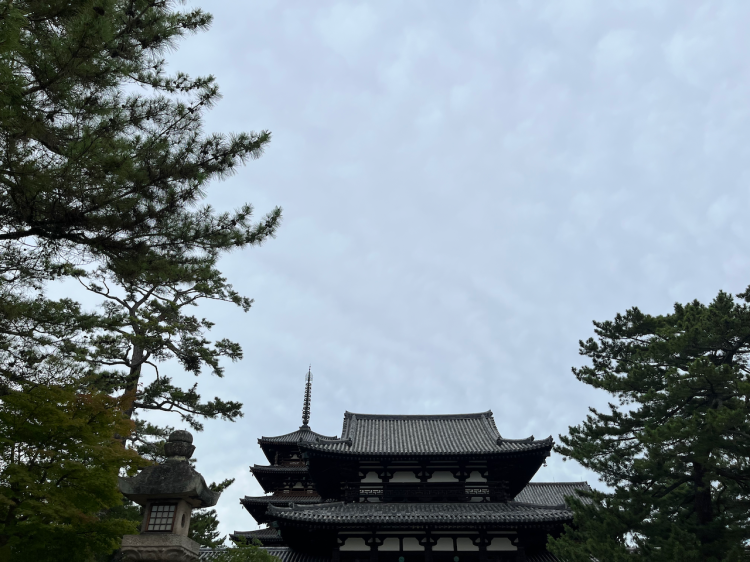
The temple complex of Horyuji was considerably larger than I first expected:

Steps leading up to the front gate…
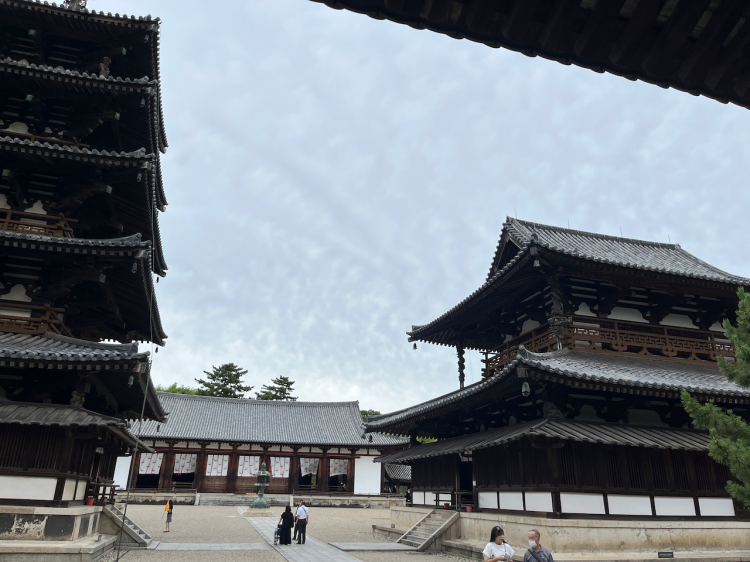
Temple courtyard

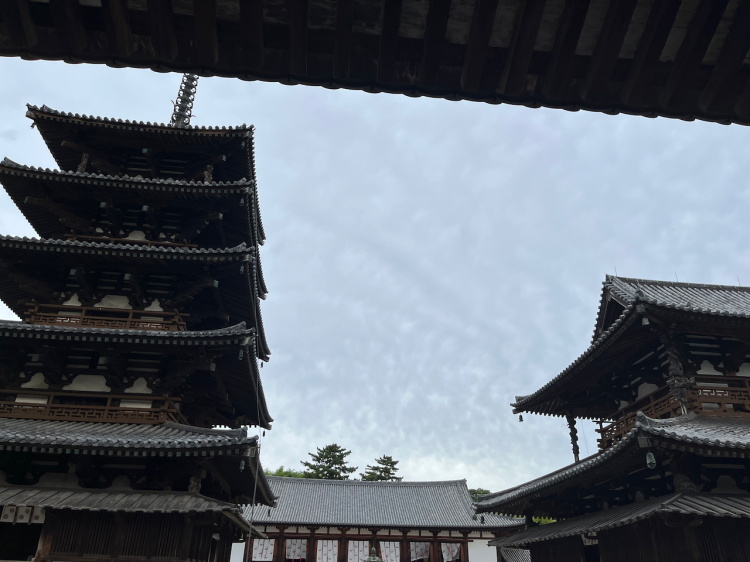
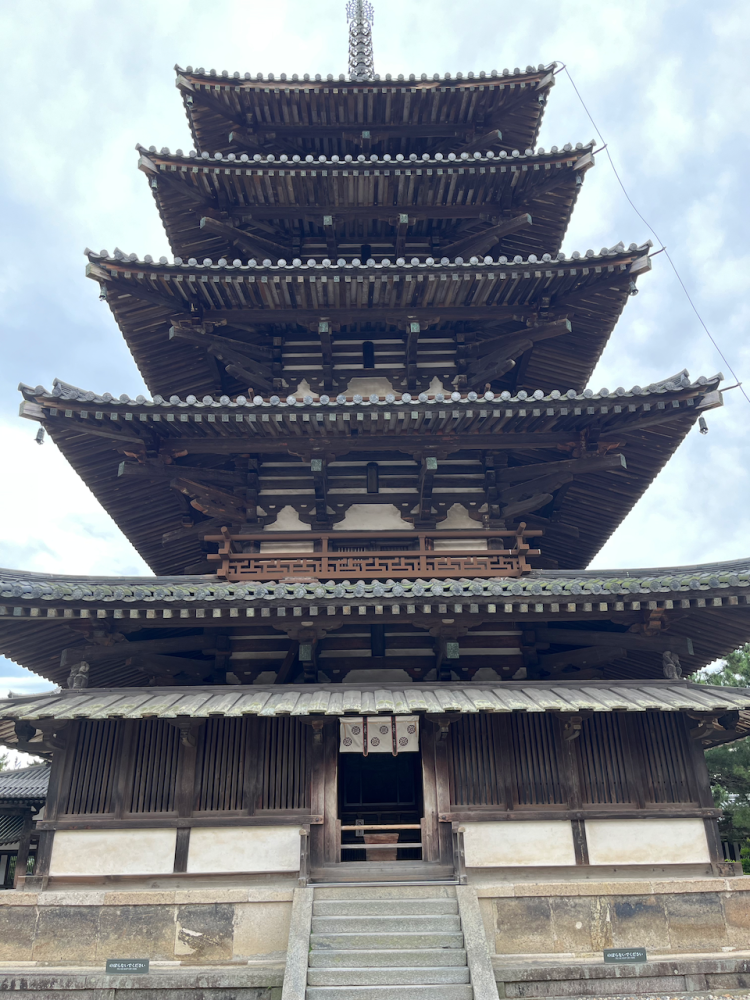
Because it was so hot, and so late on a weekday, there were very few people there, primarily a school field trip (in the photo above, you can see the teacher carrying an orange flag). To the left you can see a tall pagoda, which in Japanese is called a go-ju-no-tō (五重塔, lit. “five-storied tower”):3

The pagoda above (English description here) is said to be one of the oldest still standing, and buried underneath may be some ashes or bones of the historical Buddha, Shakyamuni, himself.

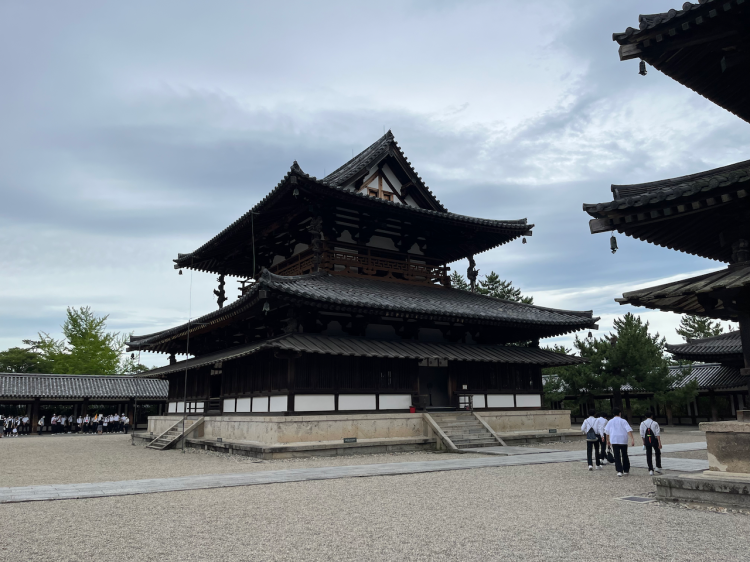
To the right, the Golden Hall (kondō, 金堂):

As the English description explains, this is one of the oldest, extant wooden buildings in Japan. Seeing the “triad” or “trinity” of Shakyamuni Buddha (photos here) enshrined there was amazing. I had often seen photos of it as an example of artwork of the period, but I honestly never imagined I’d see it face to face. I was definitely in awe.

Speaking of which, when people normally think of a trinity, they either think of The Matrix, or of the Holy Trinity in the Christian religion. However, Mahayana Buddhism often paired a particular Buddha with a pair of attendant Bodhisattvas into trinities of its own. Horyuji was unusual in having several such works of art, where most temples might have only one.

For example, in the photos above, you can see a building with white curtains over the entrance. That was the great lecture hall (daikōdō, 大講堂), where a trinity of the Medicine Buddha (photo here) and his two attendant Bodhisattvas was enshrined. I paid obeisance there to help with my gout, which was quite painful that day. I also took home special paper talisman (ofuda) the temple provided against Covid19.

Another statue that really stood out to me was the famous “Kudara Kannon”, a statue of the Bodhisattva Kannon either made in Baekje in the 6th century, or made by artisans imported from Baekje. You can see a photo of it here (scroll down a bit), but it was much taller than I expected. The Kudara Kannon was quite tall and slender, looking down over us, yet serenely beautiful too. It looked fragile, and yet had endured for countless centuries.

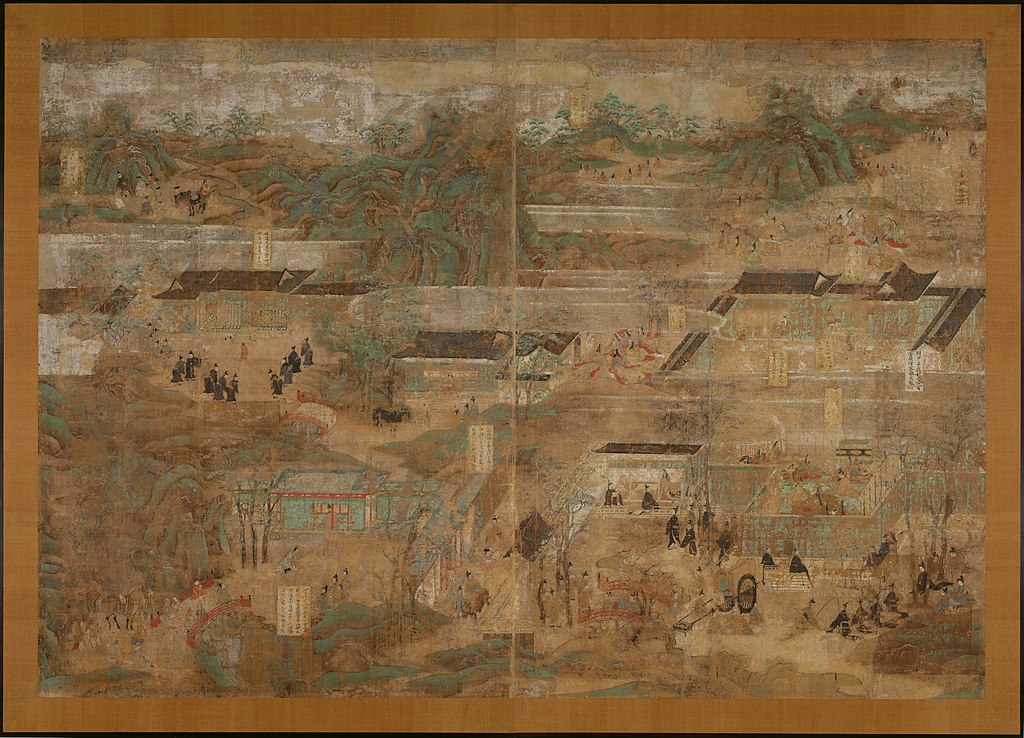
In the museum, I also saw an illustrated history of Prince Shotoku, the patron of Horyuji (and of Japanese Buddhism in general) from the 12th century:

Tokyo National Museum, Public domain, via Wikimedia Commons

Someday I will write more about Prince Shotoku, because as a religious figure he is well-known in Japan, but not outside the country. He’s a fascinating figure, but also the his origin story is pretty fascinating too, and shows further fusion of Korean immigrant culture in Japan.

Anyhow, I really wish I could have done more justice to this visit, but the temple website in English is excellent, and the experience was very fascinating as an amateur historian, and Buddhist-nerd.

1 Baekje ultimately fell to Silla, unfortunately. There are plenty of excellent K-Dramas about this historical period in time, by the way. There are plenty of excellent K-Dramas in general, I would argue.

2 Because we were in the middle of nowhere after the temple closed, and no taxis around, getting back to our hotel required some help from locals, who showed us some local buses to use, plus a few transfers. In short: be mindful of the time, and how you get back to Nara if you go to Horyuji. That said, it was definitely worth the visit.

3 The term “pagoda” is something many Westerners are vaguely familiar with, but are unaware of the significance. Many Buddhist temples in antiquity (and sometimes even modern ones), keep a Buddhist “storehouse” of relics, sutras, etc. This is based on the ancient Indian stupa, where relics of Shakyamuni Buddha and his followers were housed, and served as pilgrimage spots. The term pagoda is possibly based on Chinese language, but definitely shows misunderstanding by early European visitors.