Inequality

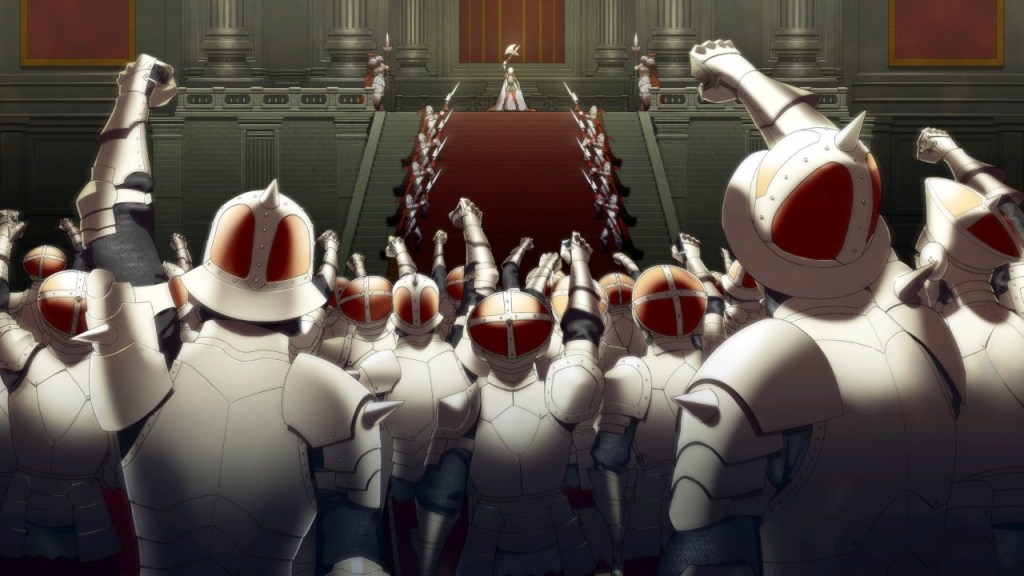
Spock sitting in an orange room, facing right, his fingers steepled as he meditates on a problem.

This troubled planet is a place of the most violent contrasts. Those who receive the rewards are totally separated from those who shoulder the burdens. It is not a wise leadership….

Star Trek: The Original Series, “The Cloud Minders” (s3ep21)

The classic Star Trek episode, “The Cloud Minders”, is a fun episode late in the third season that explores a society that is separated into two social classes: the intellectual class living in the clouds and a working-class that lives below in the mines.
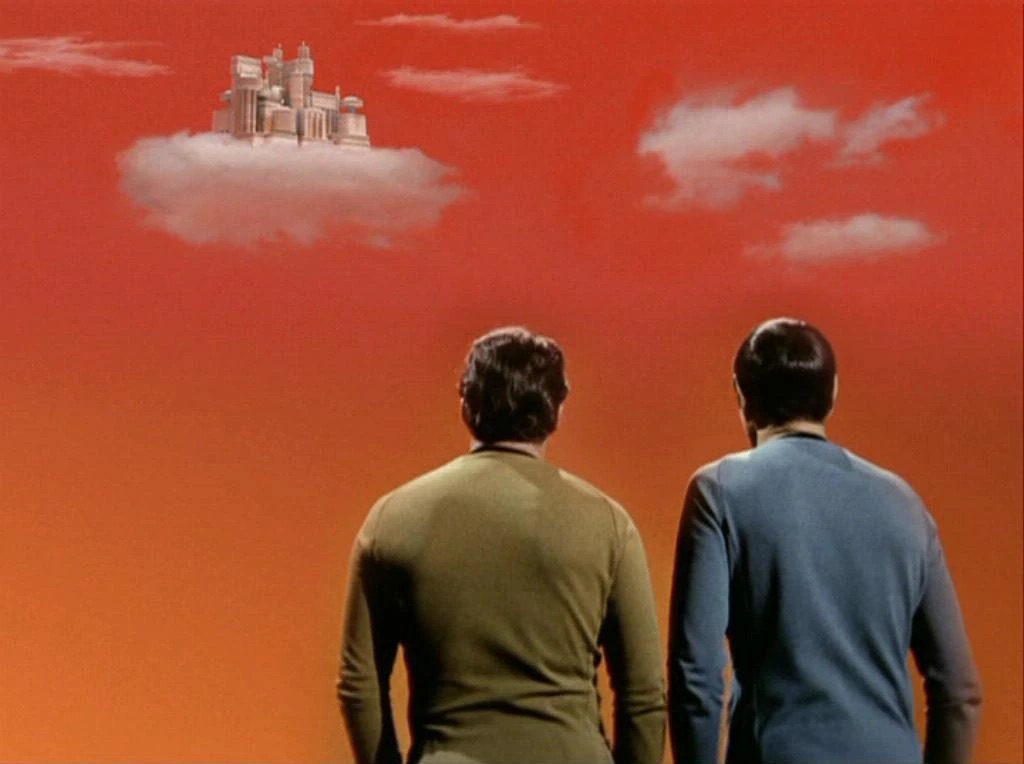
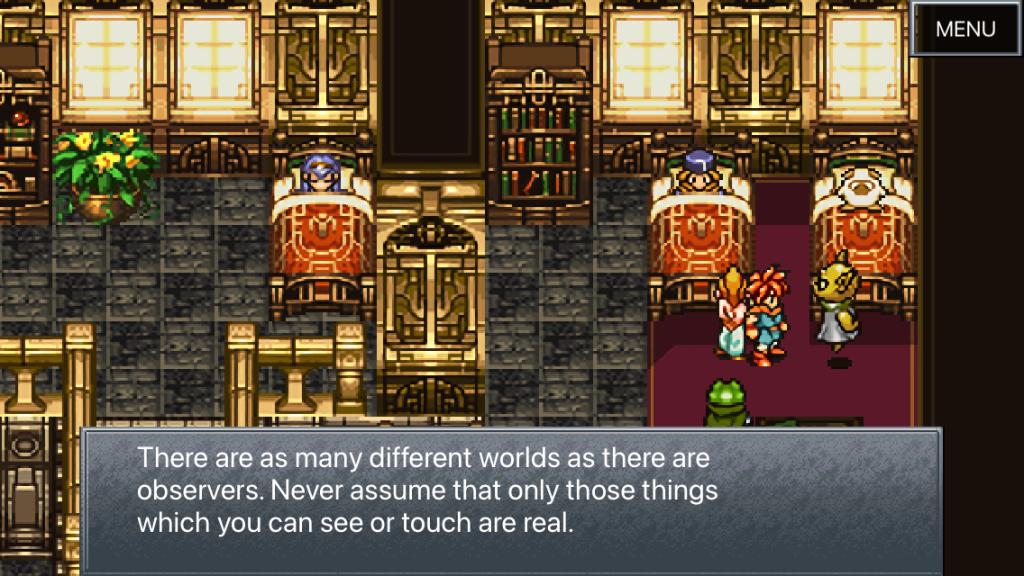
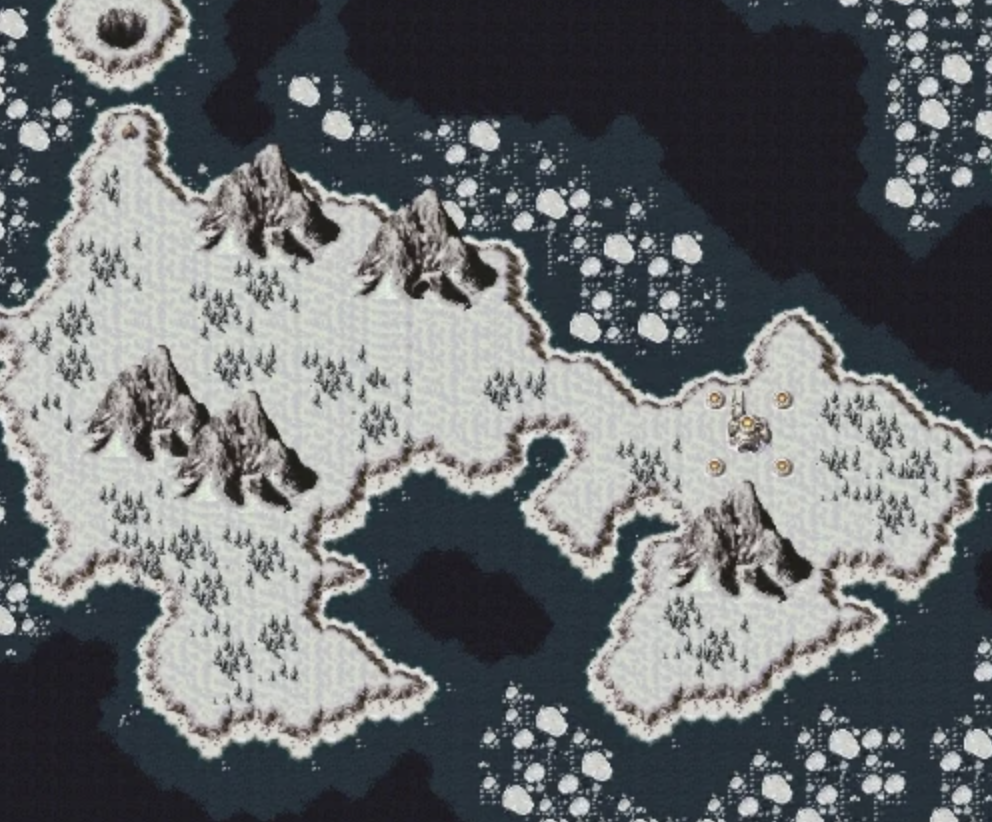
Years later, in the Japanese game Chrono Trigger, a similar theme was explored with a society that lived around 12,000 BC that had an elite intellectual class living in the clouds, and a worker class that lived in the icy wastes below.

It’s fascinating, if not somewhat disturbing to see real-life examples of this too. As much as I admire the Heian Period of Japanese culture, it’s not hard to see parallels: an elite literati that sits around and writes poetry all day, and a much larger illiterate peasant class that toils in the fields for their benefit. The inequality is disturbing.

Indeed, this pattern repeats over and over again in human history, regardless of time or place. There is even a political theory toward this end call the Iron Law of Oligarchy. Are we not also living under some form of oligarchy even today?

Further, the more that people “in the clouds” become cut off, the harder it is to develop empathy for those who toil, and easier to just blame them for their own predicament. This is the very antipathy of metta in Buddhism, the goodwill towards all beings, big or small, smart or foolish.

In some ways, the early Mahayana-Buddhist texts such as the Lotus Sutra or Three Pure Land Sutras1 were pretty revolutionary texts. The famous 12th chapter of the Lotus Sutra, and its story of the Dragon Princess deserves a look. In this story, the daughter of the Dragon King under the sea is introduced as a being of great wisdom despite only being 8 years old. The Buddha’s disciple Shariputra, representing the conservative faction of the Buddhist community scoffs at this:

At that time Shariputra said to the dragon girl, “You suppose that in this short time you have been able to attain the unsurpassed way. But this is difficult to believe. Why? Because a woman’s body is soiled and defiled, not a vessel for the Law [the Buddha-Dharma]. How could you attain the unsurpassed bodhi [awakening]? The road to Buddhahood is long and far-reaching. Only after one has spent immeasurable kalpas [eons] pursuing austerities, accumulating deeds, practicing all kinds of paramitas [self-perfections], can one finally achieve success. Moreover, a woman is subject to the five obstacles….”

Translation by Burton Watson: https://nichiren.info/buddhism/lotussutra/text/chap12.html

The Dragon King’s daughter rebuffs Shariputra’s criticism and wows them all:

At that time the members of the assembly all saw the dragon girl in the space of an instant change into a man and carry out all the practices of a bodhisattva, immediately proceeding to the Spotless World of the south, taking a seat on a jeweled lotus, and attaining impartial and correct enlightenment. With the thirty-two features and the eighty characteristics [signs of a Buddha], he expounded the wonderful Law for all living beings everywhere in the ten directions.

Translation by Burton Watson: https://nichiren.info/buddhism/lotussutra/text/chap12.html

The intended message here may seem a little strange to modern audiences. This was written for a patriarchal society in antiquity, but it’s clear the Lotus Sutra taught all beings, regardless of gender, age, or even human vs. non-human status, are equally capable of Buddhahood (full enlightenment) if given the chance. When they are not, society is stifled and suffers.

In the same way, when society maintains inequality for the sake of a few, or for the sake of tradition, it degrades society by robbing it of vitality and well-being for all.

Namo Amida Buddha

1 More on the Pure Land Buddhist path and its egalitarian approach.

Injustice

In a couple recent posts, I touched upon the misdeeds of one 12th century warlord named Minamoto no Yoritomo in the excellent Japanese historical drama, the Thirteen Lords of the Shogun. Huge credit to Japanese actor Oizumi Yo (大泉洋) for his brilliant performance by the way.

There’s one particularly heart-breaking scene halfway thorugh the drama series: Yoritomo bullies his retainer, Hojo no Yoshitoki, to carry out a series of bloody purges (partly as a test of loyalty). Yoshitoki hesitates, seekingly ready to stand up to Yoritomo at last, but in the end he backs down. Later in the episode after the purges have taken place, Yoshitoki is at home holding his infant baby, but quietly cries to himself. He says to his child, “please forgive your dad” as the episode ends. 😭

While some of this is dramatic fiction, Yoritomo really was a ruthless man, just one of many in history who exerts power and does whatever is necessary to keep it. They exploit others and toss them aside when they are done. Such men are so hopelessly self-absorbed that they pull everyone in orbit down with them, and even then it’s not enough. Like a bucket with a big hole at the bottom, the more they try to fill it and appease their ego, the more they need to fill it again.

For you science types you can also compare them to a singularity (e.g. a black hole): something that has collapsed in on itself and now pulls everything in destroying them in the process.

Sagittarius A*, the black hole at the center of our galaxy.

For simplicity, we’ll call these people “super assholes”. It’s a pseudo-Buddhist term. 😉

Even in modern times, such powerful assholes still exist. They merely changed jobs. Some run major corporations, some rule dictatorships, others are just obnoxious politicians, lawyers, priests, media influencers and so on. Yet in spite of their obvious misdeeds and harm to others, they seem invulnerable, able to evade justice through wealth, power and just being enough of an asshole.

Worse, even if you manage to take down one asshole, another one inevitably arises.


All governments suffer a recurring problem: Power attracts pathological personalities. It is not that power corrupts but that it is magnetic to the corruptible.

Frank Herbert, Chapterhouse: Dune (Dune #6)

That said, all is not hopeless.

When I think about this issue, I sometimes consider a passage from the Earth Store Bodhisattva Sutra, chapter five:

The power of karma is extremely great. It rivals Mount Sumeru in its heights. It surpasses the great oceans in its depths. It obstructs the path leading to sagehood. For that reason, beings should never think that minor bad deeds are unimportant or assume that they do not count as offenses. After death, there will be retributions to undergo that reflect all those details.

Translation by City of Ten Thousand Buddhas

This is, admittedly, a pretty small comfort to the countless people whose lives have been destroyed, literally and figuratively, by such powerful men. Sure, they may self-destruct someday, and face some kind of karmic retribution in the future, but what about the people who are suffering or dead now?

Make no mistake, though, time does go on, awful people wither and die, and their legacies are forgotten. Remember the ancient Assyrian king, Ashurbanipal? His was a reign of terror. But soon after he died, the dreaded Assyrian Empire fell and its legacy is now just dust. Small comfort to people at the time, but still.

Screenshot from the game Fire Emblem: Three Houses.

If you compare these “super assholes” to black holes in space, I find the best thing to do is steer clear of their orbit. If you’re far away, you can still escape with minimal effort, but get too close and you may get sucked in further no matter what you do, just like Hojo no Yoshitoki. Sometimes it’s better to just lay low and let things pass.

Sometimes, though, it feels unavoidable, and that becomes the true test of one’s character.

Namu Amida Butsu

P.S. I coincidentally wrote most of this before a certain asshole was convicted (you know who). I fear he will somehow escape justice though, but he will be dead in time anyway.

Update: I was right afterall.

Statement on the Gaza War

I’ve been sitting on this post for almost two three months, debating whether I should post it or not. I try to avoid politics, not always perfectly, but I feel it’s important to speak out even if it’s far too late to make a difference.

The conflict in Gaza has been carrying on since October of 2023, and at first I was ambivalent. This is an area of the world I just don’t understand very well. But over time I have been increasingly concerned about the plight of the Gaza Palestinians, and the situation is just getting worse and worse.

Whatever justification Israel had at the outset, the response has been overwhelming and disproportionate. Whatever mandate Israel had at the time, it has long since lost sight of it.

Politics notwithstanding, Palestinians are people too. I have known a number of Palestinians in my lifetime and I am happy to have called them friends. I think about them

What finally pushed me to speak up was this article from the BBC, followed by this article. Regardless of what makes sense on a strategic or political level, it doesn’t justify such mass destruction, mass starvation, and mass civilian casualties. At the same time, I don’t want to detract from the Israeli hostages and lost lives that started this conflict, because they too are people and they deserve happiness and well-being. But this can’t come at the expense of so many Palestinians. One life isn’t worth countless others.

I know these things are much more complicated than one blogger can really hope to understand or explain, but I wanted to speak out in support of the Palestinians. That’s all I have to say.

P.S. Disabling comments on this post given the volatility of this topic.

P.P.S. Feature photo is Gaza City in 2007, courtesy of Wikipedia.

Tolerance

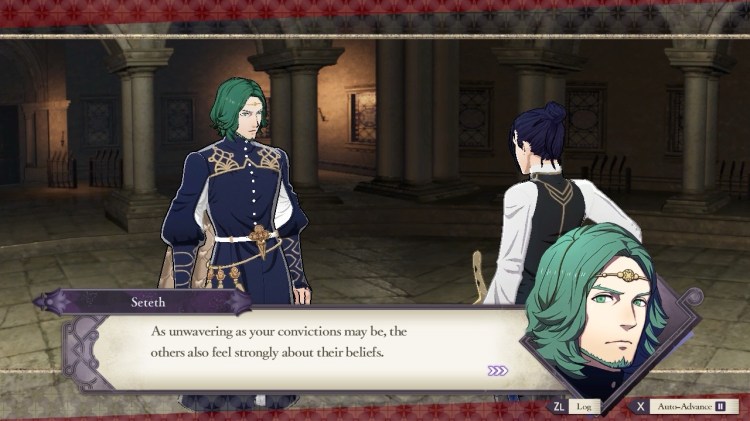
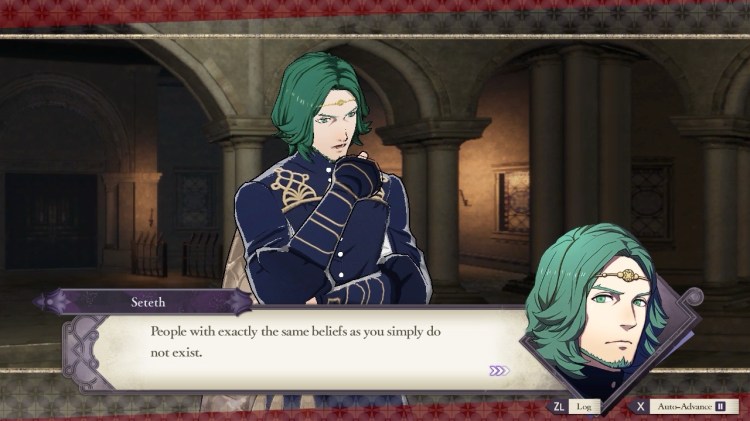
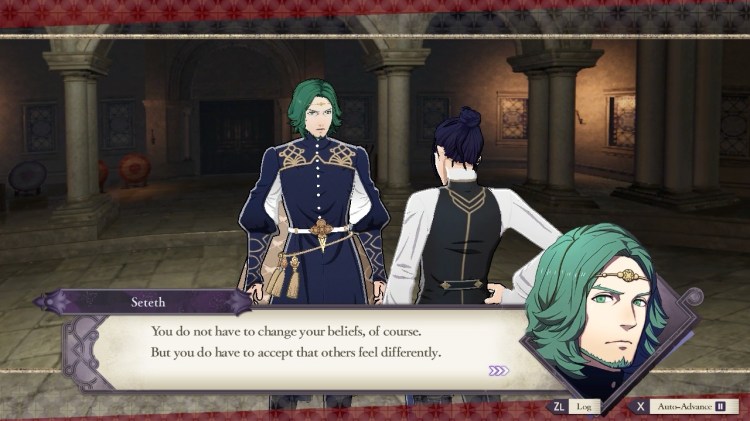
I thought this was a neat dialogue between two of the characters in the game Fire Emblem: Three Houses. The older Seteth (green hair) is offering some advice to the young and prickly Felix:

This might seem self-evident, but because we only see the world through our own viewpoint, our own thoughts and experiences, it’s easy to forget that other people have other viewpoints and other experiences, and come to their own conclusions, right or wrong.

Different game, but I hope the sentiment makes sense. 😆 It’s also why Buddhism emphasizes unconditional goodwill so much.

Namu Amida Butsu

The Demise of Lady Edelgard

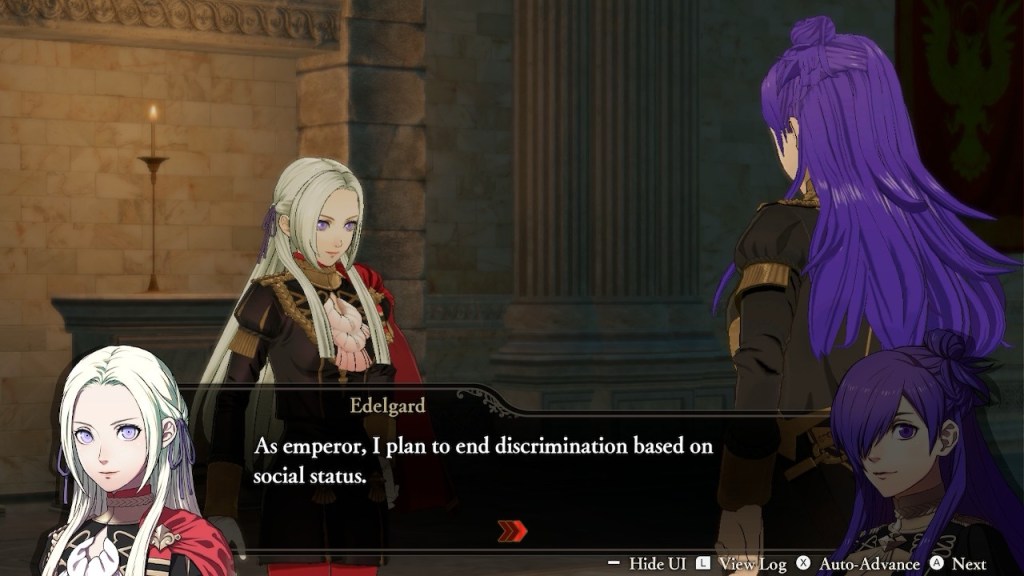
I finished my second play-through of Fire Emblem: Three Houses this weekend, the Verdant Wind route. My first play-through was through the Crimson Flower route (e.g. the Black Eagles) and it was a beautiful story, but seeing Edelgard from another perspective, and especially her demise, really hit me hard.

Seeing the many sides of Lady Edelgard truly made me appreciate her the way I might appreciate a figure from a Greek tragedy.

Warning: further spoilers ahead.

Of the three lords in Fire Emblem: Three Houses, Edelgard was the most ambitious, but also incredibly charming. Even her most trusted retainer, Hubert, had a love/hate relationship with her: deeply devoted but also afraid of her power, and her willingness to make morally questionable choices. Most routes through the game don’t really delve into why she is like this until you get to the Crimson Flower route.

There, over time, you learn of her manipulation by powerful relatives (and their dark allies), or her suffering by their experiments,1 and also the loss of her siblings. In the end, she decides to take control of her fate, and the fate of all of Fódlan, in her hands.

The game designers wisely avoided making her a Mary Sue type character. Instead, she makes some very tough and cruel decisions when necessary.

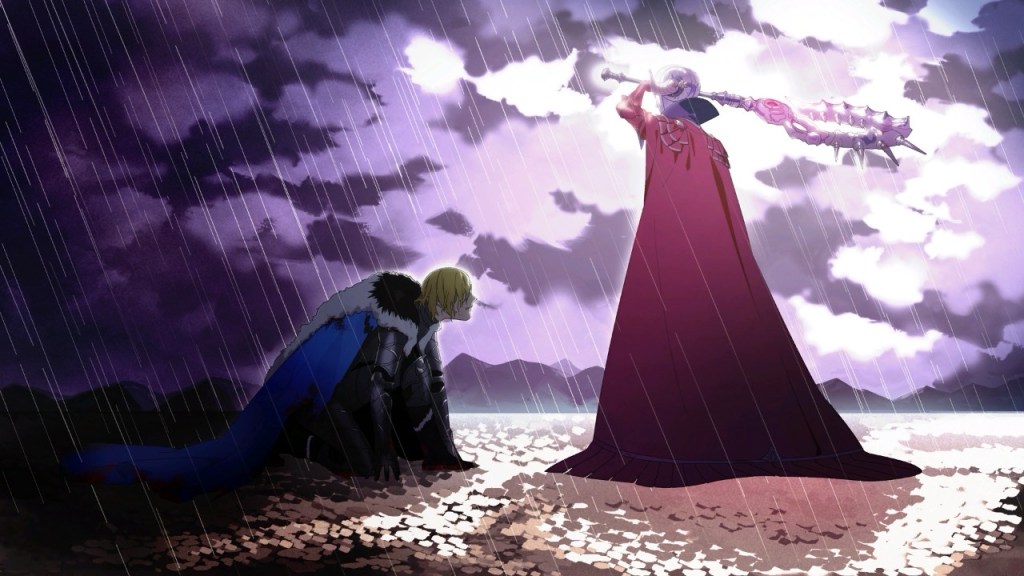
Further, there’s no denying that through her leadership, she unleashes terrible destruction and death to achieve her aims. She knows that her path will be a dark and bloody one, and decides to walk it anyway, believing that the ends justify the means.

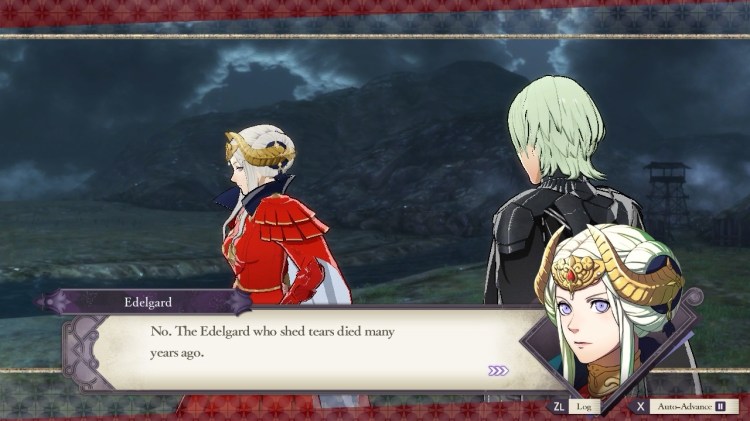
“No. The Edelgard who shed tears died years ago.”

And yet, despite her tough exterior, she also never completely loses her humanity.

She is devoted to her fellow students, and to Byleth, and devoted to a future where the old aristocracy and the Church are overthrown and everyone can be equal. In spite of her cold exterior, when Byleth falls in the Crimson Flower route, she sheds many tears.

She even grieves for Dmitri, even if she tries to hide it.

Edelgard was the ardent revolutionary of the game,2 and whether you liked her or not, she drove the story, and she commanded genuine admiration and respect from her peers, and from players like myself. It is sad that in most game routes she suffers a tragic ending one way or another, when all she wanted to do was prevent others from suffering the same fate that she did. Her choice in methods of course is where people might disagree (and do), but in the end she was still a human being, not a two-dimensional villain, and her humanity, flaws and all, is what makes her such a compelling character.

If that doesn’t feel like a Greek tragedy, I don’t know what is.

P.S. Amazing voice acting by Tara Platt, by the way. She really brought Edelgard to life.

P.P.S. I still have two more routes to go.

1 In the Verdant Wind route, Lysithea implies that Edelgard suffered much as she did through those experiments. That explains their similar hair color, and it makes me wonder if Edelgard similarly suffers from a shorter lifespan, though this is never explored.

2 Arguably, Claude is also a revolutionary, but he also had the luxury of being able to wash his hands of the messier aspects whenever he wanted to. That said, Claude is the “bro” that everyone needs in their life, and I really liked his story route ending too, especially since in my play-through he ended up marrying Leonie which was a pleasant surprise.

The Joseon Dynasty of Korea: death by factions

If political gridlock, government shutdowns due to budget fights, and rabid factionalism get you down, consider the case of the Joseon Dynasty of Korea (1392–1894). The Joseon Dynasty, also known as Joseon-guk in Korean (朝鮮國, 조선국) was the last and longest of royal dynasties of Korea. At 502 years long, it is also among the longest dynasties in world history.

After the rise of Buddhism in East Asia, Confucian teachings took a backseat for a time, until it re-emerged centuries later under a doctrine called Neo-Confucianism. Neo-Confucianism is a fascinating subject all by itself, but it’s a hard one to describe to Western audiences. It’s enough to know that it was an effort to reinforce early Confucian ethics with more philosophy and metaphysics, while avoiding mysticism.

This is important because Neo-Confucianism became the official state doctrine early the foundation the Joseon Dynasty, just as it had become Ming-Dynasty China and Tokugawa-era Japan. Schools of Confucian scholars would staff the elaborate bureaucracies used by each sovereign, and provide advice on policies, or criticism if the sovereign’s conduct was deemed inappropriate or immoral. As the beacon of a rational and orderly society, the sovereign was held to a very high standard, but also (in theory) commanded unwavering loyalty from his subjects. Because orderly and rational societies were valued by Confucian thinking, there was heavy emphasis on ritual, etc. Everyone had their place, and everyone was expected to carry out their moral obligations, putting the needs of society over their own profit.

On paper, this was how it all worked.

In reality, the Confucian bureaucracy (the yangban) of Korea grew very powerful, and different schools of Confucian thought began to compete with one another for dominance in the Joseon bureaucracy. Over generations, these rivalries grew very cutthroat, and worse they splintered into sub-factions, and sub-sub-factions, all vying with one another. Further, sons of bureaucrats had the wealth and resources necessary to ensure they’d pass the civil service exams and become bureaucrats themselves. The Iron Law of Oligarchy comes to mind.

Source: https://xkcd.com/1095

This might seem kind of silly at first glance, since it obviously contradicted basic Confucian ethics.

However, this all began when bureaucrats in the court would debate how to address policy issues at the time, or question certain political appointments. Inevitably reform and conservative wings developed with different views of how to address such issues, and the leading figures of each wing would try to then pack the bureaucracy with their own men.

Is this starting to sound familiar?

The back and forth by factions, starting with the Easterners (dong-in, 동인 or 東人) and Westerners (seo-in, 서인 or 西人) began over subtle ideological disagreements. Then, each of these factions broke up into different factions. The Westerns faction alone broke up into the Noron (노론, 老論) and Soron (소론, 少論) depending on whether you supported Confucian scholar Song Si-yeol‘s reformist policies (the Noron) or not (the Soron). The Easterner faction similarly split up into Buk-in (“northerners”, 북인, 北人) and Nam-in (“southerners”, 남인, 南人) factions.

The king’s response to each of these factions varied by sovereign. In some cases, a king would support one faction over another. But if that faction got too powerful or out of line, the losing faction could sometimes convince the king to purge them from the bureaucracy. Sometimes the purges became extremely violent, with many faction members executed such as the one in 1589.

Inevitably, once a faction was crushed or purged, another would take its place in the court and consoldiate power, requiring yet another purge. By 1545 there had already been four blood purges.

Portrait of King Yeongjo of Joseon, source

By the time of King Yeongjo (1694 – 1776, 영종, 英宗) the fighting between factions and the bloody purges had gotten so out of hand, that Yeongjo survived an assassination attempt in his youth.

Yeongjo tried to take the high-ground in the conflict, implementing a policy of Tangpyeong (탕평, 蕩平) or “great harmony”. Yeongjo tried to stay above the fray and remained somewhat successful. Barely. By the reign of the next king, his grandson Jeongjo, the bureaucrats were at it again and King Jeongjo fought off a coup by the Noron faction.

In spite of the coup, the Noron dominates the court after Jeongjo’s later (and mysterious) death until they were ousted for good, but by this time the functions of government were locked in by certain powerful families and from the 1800’s onward the Joseon became isolationist and dysfunctional at a time when Western and Japanese powers grew in strength and aggression. The reforms of 1895 were simply too little too late to save the Dynasty and Korea was annexed by Iapan in 1905.

Much like the Eastern Roman Empire (i.e. the Byzantines), the Joseon Dynasty survived and thrived at times when there was a powerful ruler who could push for reforms, and keep interests in check. But there were always sharks circling the water, and as soon as they smelled weakness there would be bloody infighting and this would reset the clock on any meaningful reforms. Paralyzed by internal strife, other more dynamic, external powers eventually pulled ahead and defeated them.

Portrait of Kim Yuk (1570 – 1658), source.

It also should be noted that were plenty of good, sincere Confucian scholars who made a genuine effort at good governance, such as Kim Yuk, but in the end, powerful men always felt they could do it better when they sensed an opportunity.

P.S. astute readers may have noticed that I keep posting the names using both Hangeul script and Chinese characters (Hanja). Until the modern era, both were used together in a kind of mixed fashion, especially when a person wanted to avoid ambiguity (the Chinese characters are more distinct). Compared to neighbors like Japan or China, Chinese characters were used comparatively less (Hangeul was usually sufficient and simpler), but remain an important part of the language and culture.

Juneteenth and What It Means For All Of Us

In Charles B Jones’s overview of the Pure Land Buddhist tradition, he talks about a sect called the Yuzu Nembutsu sect (which I explored here), but in particular, he delves into the Buddhist concept of interdepedence, which the sect relies upon:1

Suppose you lay a row of ten coins on a table, and then move the tenth coin in front of the first, shifting the rest over one position. You probably assume that changing the order does not affet what they are in any way. However, from the Huayan point of view, they are not independent of one another; the first is coin one of ten, the second is two of ten, the third is three of ten, and so on. Their relationship with the other coins in the row is part of their identity and figure into the way we conceptualize them. When you take the last coin and move it to the first position, it changes from ten of ten to one of ten. At the same time, since the relation of the other coins to the one you moved has changed, they are no longer the same coins as before either, even though you did not move them.

Charles B Jones, “Pure Land: History, Tradition, and Practice“, page 120

It’s not enough to simply exist, things exist in relation to one another, and what affects one thing affects others. Taken in total, this is the Buddhist-Sanskrit concept of shunyata.

So, what does this have to do with Juneteenth?

The enslavement of Africans, generation after generation didn’t just traumatize and dehumanize black Americans, it dragged all of society down with it. Everyone was adversely impacted by it in one way or another, even those who profited from it. American society was poorer for it, directly contradicting its own high ideals of human rights, and forcing some to use mental gymnastics to justify such a barbaric enterprise, even resorting to organized violence to deflect their own festering guilt and paranoia. This spilled over into such conflicts as the infamous Bleeding Kansas, and then again later in the Civil War, to say nothing of the tragic deaths of countless Black Americans.

Thus, while Juneteenth wasn’t a holiday that I grew up with as a white kid of the 80’s and 90’s, I am glad to see we celebrate it now. Or rather, I am glad we have more awareness now and the holiday has the widespread acceptance it deserves. The emancipation of Black Americans wasn’t the end of discrimination, especially since the Jim Crow laws persisted even as late as the 1960’s, but as soon as slavery ended, America as a whole was that much better for it.

When we see the entire struggle for freedom and equal rights through the lens of Buddhism, it’s not just a problem for Black Americans, it poisons the well for us all. Where one suffers, we all suffer in some way. Where one person is treated with goodwill and dignity, we all benefit. When one black man in this country is unfairly persecuted by the law, or killed by police violence, it wounds us all. Where Americans of different backgrounds come together in a spirit of community, family and so on, we all benefit.

The struggle of Black America, as is struggle of Native Americans, LBGTQ people and so on is everyone’s struggle too. The little things we do on a daily basis to listen to these struggles,2 or to be an ally for others, or even just be kind on a person-by-person basis do affect others, including those we never see. This is a fundamental Buddhist truth, whether we see it or not.

Let us each leave this world a little better than the one we entered.

Namu Amida Butsu

1 The example above was originally composed by Fa-zang (法藏; 643–712), a proponent of the Chinese Huayan school centered around shunyata.

2 Sometimes this can be as simple as letting other people speak about their experiences, and not sucking all the oxygen out of the room with your own thoughts and opinions.

Of Famine and Excess

Recently, I was re-reading an old book in my personal library about the life of the Shogun Ashikaga Yoshimasa (also mentioned here). The Ashikaga Shogunate, that is the military government in Japan from 14th to 16th centuries,1 started out fairly strong, but quickly ran into a series of succession crises and bad governance that culminated in a very disastrous Onin War. The Onin War was a 10-year urban battle in the heart of Kyoto over a succession crisis that basically flattened the city and caused unimaginable death and starvation there and in the provinces.

In Donald Keene’s book, he talks about the utterly ridiculous income disparity between the typical peasant and the aristocrats in Kyoto, as if they lived in two different worlds. Even as the war was raging, Shogun Ashikaga Yoshimasa’s exorbitant taxes to pay for this vanity projects further exacerbated this.

One chronicler at the time, a Zen priest residing in Kyoto named Unsen Taikyoku (雲泉大極, 1421 – ??), recounts in his personal diary:2

When the sun went down I set out for home, and as I was passing Rokujo I saw an old woman with a child in her arms. She called the child’s name repeatedly, then began to wail. I looked and saw that the child was already dead. The mother, still wailing, collapsed on the ground. People standing nearby asked her where she came from. She said, “I’ve come all the way from Kawachi. We’ve had a terrible drought for three years, and the rice plants didn’t so much as sprout. The district officials are cruel and greedy. They demand a lot of money in taxes and show no mercy. If you don’t pay, they kill you. That’s why I had to run away to another province. I was hoping to earn food by begging. But I couldn’t get anything to give my baby. I’m starving and I’m worn out, heart and soul. I can’t take any more.”

When she had finished speaking, she again choked with great sobs. I took from my wallet what spare money I had and gave it to her, saying, “Take this money and hire a man to bury the child. I’m going back to my cell where, with help from the Three Treasures [the Buddha, the Dharma and the Sangha] and the Five Commandments, I shall choose a Buddhist name for the child and offer prayers for his salvation.” The child’s mother was greatly comforted.

While I was still humbly mulling over her sad story, I encountered a group of noblemen out to admire the blossoms. They were escorted by several thousand mounted men, and servants and followers swarmed around them. These gentlemen acted as if they were so superior that nobody could compare with them. Some sneered at the people in the streets; others swore at the menials in the path of their horses; others laughingly stole blossoms; others, drunkenly singing, drew their swords; others still, having vomited food and drink and being unable to walk, lay on the roadside. There were many such sights, and whoever saw them was appalled. Anyone who happened to run into these people was terrified and ran away, intimidated by their high rank.

Yoshimasa and the Silver Pavilion: The Creation of the Soul of Japan, pages 51-52, translation by Donald Keene

It’s not hard to imagine such things happening in a place like Los Angeles, Silicon Valley, London, Paris and so on. It’s not a question of a particular political faction, it’s a tendency of any society to gradually concentrate wealth over time to a smaller and smaller group, further exacerbating the income disparity. Marx spoke of this in the context of capitalism…

But even as far back as the last days of the Roman Republic, we could see a similar pattern (jump to about 19:30 or so):

In any case, unless this trend is addressed in a sustainable way, it never portends anything good.

1 The Ashikaga military government is unrelated to the earlier Kamakura shogunate which I spoke about elsewhere. Since Japan had a succession of military-samurai governments after the Imperial aristocracy was sidelined, and you can think of them like Chinese imperial dynasties in a historical sense.

2 Criticizing such things openly would have incurred the wrath of the Shogunate of course.

Roman Politics in a Nutshell

Lately, I’ve been watching some fascinating videos by Historia Civilis on Youtube (Patreon page here) about politics in the days of the Roman Republic and the transition to an empire. This video is an overview of how the Roman consulship worked:

The fact that Rome had two leaders, or consuls, and a Senate is pretty fascinating to me.  It’s interesting to see how politics then really don’t differ all that much from now.

Anyhow, great video series, so please take a look and show the author some appreciation!  🙂

Politics and Hysteria

flipping-table-meme-anime-panel-of-man-and-woman-arguing-with-woman-flipping-the-table-table-flip-guy-meme-generator

This was a sobering article I found in the Atlantic:

In particular, this quote really disturbed me:

This matters because political disdain has begun to distort our perception of reality. Democrats now think Republicans are richer, older, crueler, and more unreasonable than they are in real life, according to multiple studies, including one by Douglas Ahler and Gaurav Sood published in The Journal of Politics in April. Republicans, meanwhile, think Democrats are more godless, gay, and radical than they actually are. The more righteous we get, the more mistakes we make.

As is the case anywhere else in the world, demonization eventually bends toward violence. Already, nearly 20 percent of Democrats and Republicans say that many members of the other side “lack the traits to be considered fully human,” according to a 2017 survey by the political scientists Nathan Kalmoe and Lilliana Mason. Even more chilling: About 15 percent of Republicans and 20 percent of Democrats agree that the country would be “better off if large numbers of opposing partisans in the public today ‘just died.’”

The Buddha, Shakyamuni, had a few things to say about this subject.  In the Metta Sutta is the famous quotation:

May all be well and secure, May all beings be happy!

And in the Aggi-Vacchagotta Sutta he talks about how he does not cling to self-centered views:

“A ‘position,’ Vaccha, is something that a Tathagata has done away with. What a Tathagata sees is this: ‘Such is form, such its origination, such its disappearance; such is feeling, such its origination, such its disappearance; such is perception…such are fabrications…such is consciousness, such its origination, such its disappearance.’ Because of this, I say, a Tathagata — with the ending, fading away, cessation, renunciation, & relinquishment of all construings, all excogitations, all I-making & mine-making & obsessions with conceit — is, through lack of clinging/sustenance, released.”

What the Buddha is saying is that it’s really all just inside our head.  The more we build up these things in our mind, the more we cut ourselves off from reality.  This is the opposite of liberation.

In other words: CTFD.