What’s Done Is Done

ゆく河の流れは絶えずして、しかももとの水にあらず
Yuku kawa no nagare wa taezu shite, shikamo moto no mizu ni arazu.

“The river flows without end, but it is never the same waters.”

Hojoki, 12th c. Japan

I’ve been sitting on this post for a little while, trying to decide how best to put things into words. I don’t like delving into contemporary issues, or politics. But it’s hard to ignore the many problems going on right now.

In particular, I keep thinking about the above quote, and the related Ship of Theseus for us Westerners. Even in peaceful times, it’s hard not to look back and see how things have changed, and won’t go back to the way things were before. Even more so in dramatic times.

But this year, I feel we’ve definitely crossed some kind of threshold, not just in a nostalgic sense.

Portrait of Sulla on a denarius minted in 54 BC, photo by Classical Numismatic Group, Inc. http://www.cngcoins.com, CC BY-SA 2.5, via Wikimedia Commons

Even after the Roman general Sulla retired in 78 BCE as dictator, the Roman Republic didn’t carry on as it did before. Instead, rapid decline continued as other men such as Cicero, Pompey, Caesar, and Augustus seized on the precedent to push their own vision of rulership. If one powerful man can break precedent, then what’s to stop others from doing the same?

Of course, this decline of the Republic1 had other precedents too. Bit by bit, across generations, things changed and the effects weren’t always clear until too late. Sulla opposed the populist, reformist Gracchi brothers, and the Gracchi Brothers in turn were opposed to increased centralization of land-wealth, which in turn had been caused by Rome’s increasing power and influence across the Italian Peninsula, etc, etc. Where one issue begins and another ends is hard to fathom. Instead, bit by bit, like the wooden planks on the Ship of Theseus, small changes gradually add up until something is no longer recognizable.

If we look at other societies, such as the fall of Heian Period aristocracy in 12th century Japan, it is the same thing: small changes built up, followed by a dramatic shift in power, and then the aristocracy was then permanently diminished in power, replaced by military governments. Once the threshold was crossed, it was never the same, and that’s why the author of the Hojoki wrote what he did.

“How did you go bankrupt?” 
“Two ways. Gradually, then suddenly.”

Ernest Hemingway, The Sun Also Rises

Thus, here I sit, an armchair philosopher watching everything I took for granted in my youth change around me, often abruptly, until it’s no longer recognizable. I don’t know how things will resolve, though somehow they will. Yet, countless changes that will only make sense in hindsight have led to this moment in history that I am forced to live in, and I have to accept that in a sense it’s already over.

1 Technically speaking, the Republic (a.k.a. res publica in Latin, or politeia in Greek) never ended until 1453 with the fall of Constantinople. The way that modern historians define a republic is different than how Romans thought of it. The imperial era from Augustus onward was still seen as the res publica/politeia, it just gradually changed and evolved … like the Ship of Theseus … from one system of administration or another. But Romans never really viewed a “break” between the senatorial style of government and the later imperial one as a change in historical period.

Truth and Truthier

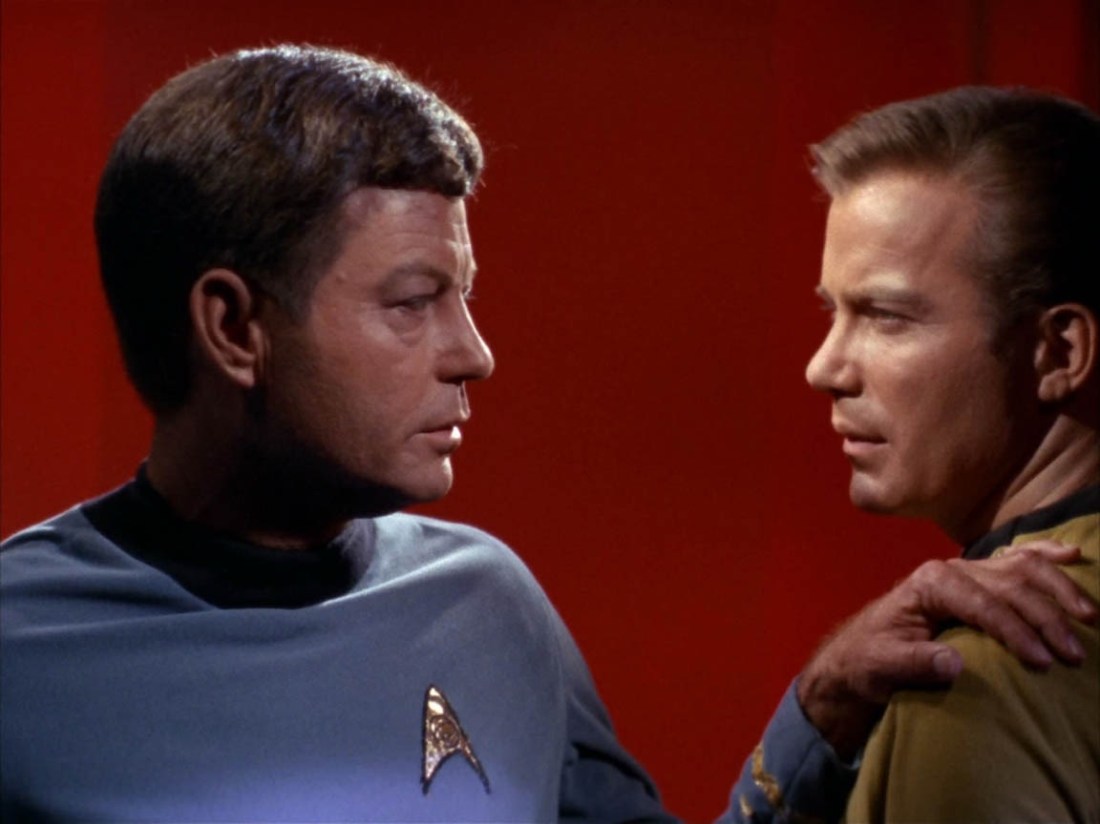
Spock: Evil does seek to maintain power by suppressing the truth.
McCoy: Or by misleading the innocent.

Star Trek, “And The Children Shall Lead” (s3ep4), stardate 5029.5.

The season three episode of Star Trek, “And The Children Shall Lead” is widely considered a bottom-tier episode. It had a lot of problems, including its casting. Even as a classic Star Trek fan, I kind of despise this episode.

The evil entity “Gorgan”, played by infamous laywer Melvin Mouron Belli who had no prior acting experience. It was season three Trek at its worst.

But the premise of the episode did make a really important point: given the right persuasion, people (including children), can be made to do all kinds of terrible things. It just comes down to what someone asserts is “true” and if their argument is convincing enough. There’s plenty of examples in history, so I won’t belabor the point.

Or, like that old Simpsons gag:

Of course, ignorance as to what is actually true is the basis for our suffering, according to Buddhism. As thinking human beings, we have to piece together our understanding of the world as best we can, and hopefully we have good mentors along the way, but even a good mentor is not perfect. Simply put, subtle misperceptsions and misunderstandings can provide a foundation for a mountain of bad assumptions, stupid conduct, needless suffering. Thus, in Buddhism, this fundamental misunderstanding of things is one of the Three Poisons of the mind: the other two being anger and craving. But even anger and craving derive from misunderstanding too.

This is not something that can be fixed with some clever logic, or vaguely “zen-like” words. It’s a deeply seeded part of ourselves, something we cannot normally perceive in our daily lives, and even when you suppress it with willpower, it will surface again when you least expect it.

The Buddha described the awakening experience as “uprooting”:

….he [the renunciant monk] should develop the perception of inconstancy so as to uproot the conceit, ‘I am.’

Translation by Thanissaro Bhikkhu in the Meghiya Sutta of the Pali Canon (Ud 4:1 Meghiya)

Such a tree of ignorance isn’t cut down, leaving a stump; it is uprooted entirely.

Spock: “Humans do have an amazing capacity for believing what they choose and excluding that which is painful.”

Star Trek, “And The Children Shall Lead” (s3ep4), stardate 5029.5

But how can mundane people, who have yet to fully awaken, discern the truth?

The Buddha taught the Dharma. The Dharma is like a principle of existence (think: laws of physics), and it is something one can objectively measure their thoughts and actions against. In the words of the Buddha:

“Therefore, did we say, Kalamas, what was said thus, ‘Come Kalamas. Do not go upon what has been acquired by repeated hearing; nor upon tradition; nor upon rumor; nor upon what is in a scripture; nor upon surmise; nor upon an axiom; nor upon specious reasoning; nor upon a bias towards a notion that has been pondered over; nor upon another’s seeming ability; nor upon the consideration, “The monk is our teacher.”

Translation by Soma Thera of the Kalama Sutta of the Pali Canon (AN 3.65)

Intuition, logic, reasoning, or trust in a teacher or tradition is insufficient, because our own fundamental ignorance warps our understanding of such things. Instead, the Buddha encourages us to use simple benchmarks:

“What do you think, Kalamas? Does absence of greed [or hate, or delusion] appear in a man for his benefit or harm?” —

“For his benefit, venerable sir.” —

“Kalamas, being not given to greed [or hate, or delusion], and being not overwhelmed and not vanquished mentally by greed [or hate, or delusion], this man does not take life, does not steal, does not commit adultery, and does not tell lies; he prompts another too, to do likewise. Will that be long for his benefit and happiness?” —

“Yes, venerable sir.”

Translation by Soma Thera of the Kalama Sutta of the Pali Canon (AN 3.65)

Here, the Buddha is using the Five Precepts as a simple benchmark. Teachings and actions that lead to adherence of the Five Precepts (not taking life, stealing, adultery, etc) are proper teachings; choices that lead to breaking the Five Precepts are thus improper teachings. The monastic precepts are larger and have more rules, as are the Bodhisattva Precepts, but the essence is the same: a lifestyle that is honest, clean, and does not harm others in body, speech or mind.

The need for an objective benchmark such as the Dharma, is how we can know that words and teachings by others are for good or for ill. Evil can incite others to hate, or to lie and steal, but these clearly violate the benchmark that is the Five Precepts, and thus no matter what they say, we know they are false, conducive to harm, not good.

Namu Shakamuni Butsu

Full Circle

SPOCK: There’s no further need to observe me, Doctor. As you can see, I’ve returned to the present in every sense. 

Star Trek, “All Our Yesteryears” (s3ep23), Stardate 5943.7

I spent this past week volunteering as a chaperone for my son’s school camping trip, which was chaotic and busy, but also bought me some much-needed quiet time to read and reflect on some things. Exhausting, but nice.

Lately, while reviewing some old Buddhist material, I realized that I had conflicting thoughts about my own Buddhist path. I have spent much of my past 20 years as a Buddhist following the Pure Land path, especially Jodo-Shu/Jodo-Shinshu sect Buddhism, and this is reflected in many posts here, including recent posts like this one. This has been really formative to my understanding of Buddhist religion and teachings.

And yet, the reason why I left my old community nearly 10 years ago was that I felt there was more to Buddhism than just passively allowing the power of Amida Buddha to lead me (i.e. tariki 他力 in Japanese-Buddhist parlance). I wanted to pursue other facets, more active practices, and so on. This is reflected in my exploration of Buddhism in general, including recent posts like this one. But even then, I never could quite pin down what I should do for Buddhist practice, or what to prioritize. I had a general sense of things, but struggled to articulate what I think I should do.

So, for some time now, I have been plagued with self-doubt, and feeling conflicted about how best to be a “good Buddhist”. I was worried that I had lost my way. I read a few sources from different Buddhist traditions in my spare time, but it only made me feel more confused.

So, I decided to get back to basics. Using my spare time at camp, I started writing down what I genuinely believed in, and not what a particular tradition dictated to me. I didn’t have a lot of time, so I would just jot down notes on my phone, a sentence here or there. Over a few days, I had a list of items, and they had certain recurring themes. I was relieved to see that I came to the same conclusions as before, but now with a greater sense of conviction. What a relief.

I felt a bit like Captain Kirk in the season one Star Trek episode “This Side of Paradise” (s1ep24), after he has been affected by the mind-control spores. He is just about to leave the ship for good, but at the last minute, he comes to his senses and realizes that what he really valued was the ship, and his role as captain. It was as if he came out of a fever dream. This is how it felt for me.

But also with this new sense of conviction, I will probably be changing tack a little bit on the blog. Nothing dramatic, but I feel that it’s time to close the book on certain topics, and focus on other things that I want to explore more. Time will tell, but that’s what I want to do for some upcoming blog posts.

Thanks for reading!

Namu Shakamuni Butsu

P.S. Photos from camp.

P.P.S. Bonus episode this week. I felt like posting sooner than later. Enjoy!

Uniquely You

McCoy: “…In this galaxy, there’s a mathematical probability of three million Earth-type planets. And in all of the universe, three million million galaxies like this. And in all of that, and perhaps more, only one of each of us. Don’t destroy the one named Kirk.”

Star Trek, “Balance of Terror” (s1ep14), Stardate 1709.2

This excellent quote by Star Trek reminds me of a famous Jodo Shinshu-sect Buddhist poem called either “Sonno-mama” or “Just As You Are”, which I posted here many moons ago.

Of course, we can quibble with the mathematics of what Dr McCoy said. (spoiler: the Universe is way bigger than what writers in the 1960’s thought…), but the implication is the same.

So take a moment to admire your life, this moment, and your place in the universe. 🙏

Have a good weekend!

Namu Amida Butsu

The Healing Power of Nature

In the past, I talked about the four-character phrases, or yojijukugo, popular in Japanese culture. Recently, I learned about a new phrase that I hadn’t heard before: kachō-fūgetsu (花鳥風月). This phrase describes the beauty of nature, literally the Kanji characters for “flower”, “bird”, “wind” and “moon”.

The meaning here is various aspects of nature, but also in a positive healing sense.

Spock: Indeed, gentlemen. May I point out that I had an opportunity to observe your counterparts here quite closely. They were brutal, savage, unprincipled, uncivilized, treacherous; in every way, splendid examples of homo sapiens, the very flower of humanity. I found them quite refreshing. [he returns to the science station]

Kirk: I’m not sure, but I think we’ve just been insulted.

McCoy: I’m sure.

Star Trek, “Mirror Mirror” (s2ep4), stardate unknown

For all our veneer of civilization and advancement, we are still deep down biological creatures. We come from nature, and we need nature. Nature heals us and sustains us.

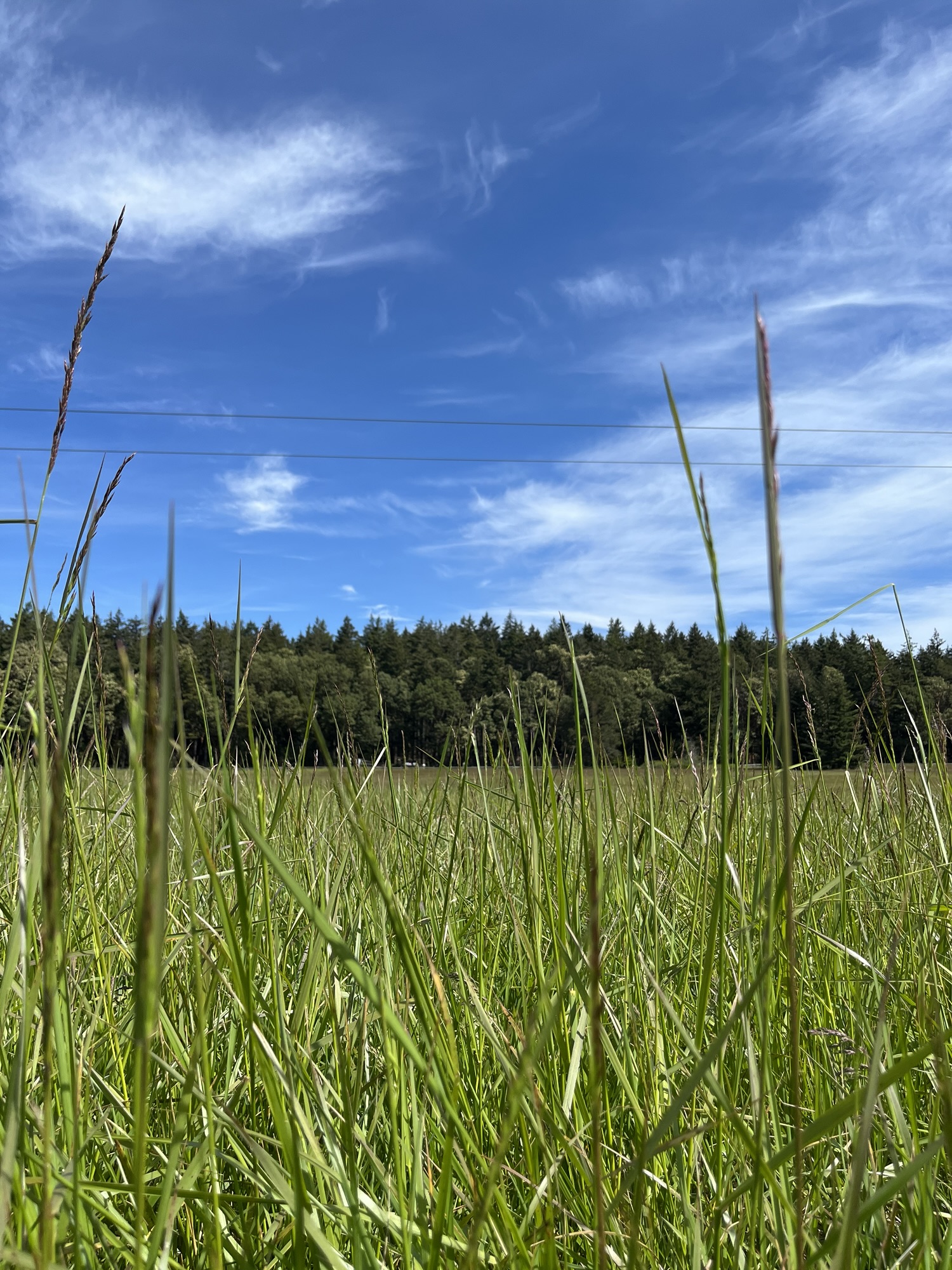
A small patch of grass in my yard, taken in April of 2025.

These days, it’s not hard to feel stressed by all the things that are going on, but I also found solace knowing that nature continues on regardless of what humans do or become. That doesn’t mean the future of humanity will necessarily be positive or negative, but it does remind me that life goes on nonetheless.

It also underscores how important protecting nature is.

P.S. More tips here for protecting the environment.

The Death of Gods

“I hope that your Engels and your Lenins never replace the religion that I hate, or the superstitions I have battened upon. You Babakov, have more blood on your hands than I have ever drunk. In destroying the gods of light you are also destroying the Dark Ones. We shall be avenged!”

Roger Zelazny, “On the Road to Splenoba”

I found this quote recently in an old, obscure Roger Zelazny short story titled On the Road to Splenoba, in which a vampire comes into contact with a Communist official with a surprise ending. No spoilers, sorry.

Anyhow, I just thought this quote was really neat because it speaks to the way the modern world has kind of destroyed the worldview where higher powers manage everything. We can’t attribute the motions of the planets, or the weather to deities the way we used to, because we know “under the hood” how these things work. People are no longer at the mercy of diseases thanks to medical technology.1 Of course, with the benefit of science, we also have a much better picture of the origins of the Earth, life, etc.

However, as the quote alludes to, it also feels like a bit of the magic of the world is gone too.

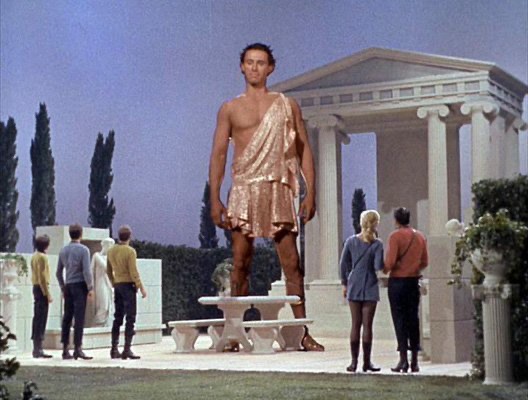
This reminds me of the Star Trek episode “Who Mourns for Adonais?“, when the Enterprise encounters the ancient Greek deity, Apollo, on a remote planet, and ultimately kill him in order to escape his grasp.

The “god” Apollo, played by Michael Forest.

The ending is melancholy:

KIRK: Would it have hurt us, I wonder, just to have gathered a few laurel leaves?

Star Trek, “Who Mourns for Adonais?” (s2ep2), stardate: 3468.1

The human race had outgrown Apollo, and gone on to accomplish many great things, yet it also cost something in the process. Maybe this is like growing up, trading a child’s imagination and wonderment for an adult’s self-mastery and freedom to choose one’s life…

1 Skepticism toward medical science is a modern issue though… 🙄. I doubt few who lived in the era of measles would object to taking a vaccine, but people have the luxury of choice now, even if those choices are reckless ones.

Madness

SPOCK: Jim, madness has no purpose or reason, but it may have a goal. 

Star Trek, “Alternative Factor” (s1ep25), Stardate: 3087.6

I was going to write something based on this excellent quote, but then the good folks at Extra History published this fascinating and hilarious video about Goodwin Wharton (1653 – 1704), and his autobiography describing his secret life as the King of the Faeries, unbeknownst to the rest of the world:

There is also a great blog post from 2015 that goes into more details.

It’s kind of baffling that someone like this could be a (more or less) functional individual yet also be completely consumed by their own fantasy, and so totally divorced from reality. Goodwin Wharton had goals, per Spock’s comment, though. However, Wharton was totally devoid of both reason and purpose. He was just quietly living out his fantasy life as “King of Faeries”.

It kind of makes one wonder how many more such people exist in a world like this. Would we even recognize them?

Thinking further on this, could any one of us be living in such fantasies? Could I, the writer of this blog, be similarly devoid of reality? I assume “no” of course, but then again, how would I even know? Are my personal goals just further extension of my own madness?

Looking at it form a Buddhist standpoint, our understanding of the world around us is obscured by ignorance, or misconceptions, which become the foundation of how we interact with the world. In a loose sense, this can be a form of madness, but most of us are functional adults with varying degrees of emotional maturity.

Further, we do have the capacity to ask ourselves, “is this the right thing to do?” or “does this even make sense?”. I think that ability to analyze ourselves is what helps counterbalance ignorance and madness. Further, the Dharma, that which is taught by the Buddhas, is meant to act as a kind of benchmark for one’s actions. It doesn’t what you think is right, if it aligns with the principles of the Dharma, than it is considered skillful, wise, and conducive to liberation and well-being. The Buddha doesn’t decide this, it is just how things work.

Conversely, those who never bother to analyze themselves, though, can go through life in a single trajectory and not realize their mistake. Just like Goodwin Wharton…

P.S. I felt like posting a bonus episode today since it is Spring Ohigan week. Please enjoy the weather and have a great weekend! 😊

Big Changes, Little Changes

A beach scene with a rocky shore, and waves lapping up to teh shore. In the distance is a cloudy sunset.

Q: The redoubtable Commander Riker, whom I noticed before. You seem to find this all very amusing.
RIKER: I might, if we weren’t on our way to help some suffering and dying humans who–
Q: Your species is always suffering and dying.

Star Trek: The Next Generation, “Hide and Q” (s1ep10), Stardate: 41590.5

Something a little embarrassing I want to confess: sometimes, when I am uneasy or stressed, I go back and read some of my own posts. I don’t do this because of vanity (hopefully) or conceit, but I like to remind myself of certain things I might forget amidst daily turmoil. I suppose I write some of these blog posts as for myself to sort out what’s bothering me, as I do for the dear readers who follow the blog.1

One of my favorite posts of all time is this one. After visiting the Royal British Columbia Museum in 2022, and watching the excellent documentary about the different geologic ages of Antarctica, I walked away deeply impressed. These experiences help give a larger perspective about the world around us, and show how change is a constant of the universe whether we see it or not.

Change happens on the micro-level in our daily lives: one day to the next, we get older, our hobbies change, things at work happen, hairstyles change, etc. When I look at old photos of me and the kids, I am amazed at how much skinner I was, and no grey hear. 🤣

The world around us changes too: political, economically, and so on. The neighborhood you live in will look different 10 years from now, or looking back it’s probably changed in the past 10 years. Thinking about my life as a college kid in the early 2000’s, the Dot-com Era, it’s amazing how much has changed in a mere 20 years. Some things got better, some things got worse.

But if we step back even further, we can see with the benefit of hindsight slow-moving, multi-generational historical changes. From following the excellent History of Byzantium podcast, it’s amazing how much changes in the Eastern Roman (a.k.a. Byzantine) empire across generations. During the time of emperor Justinian the Great, chariot races were still hugely important in Byzantium, the empire had tenuous toeholds in North Africa and Spain, and many people still actively spoke Latin. By the time of emperor Manuel Komnenos, the Eastern Roman empire was far smaller, Greek language had long since replaced Latin, and the single universal church had long since split between Roman Catholic and Orthodox faiths. Between the 6th and 12th centuries, many changes happened, but because they stretch across many generations, it’s not possible for someone living within the city of Byzantium to fully grasp the scale of the changes. It was still the same Eastern Roman empire, and would continue for another 200+ years, but it had changed and evolved as external circumstances changed.

But let’s step even further back. An Egyptian peasant working the fields, or helping to build the Great Pyramid of Khufu, would be utterly stunned at the world today. Such a world would feel totally alien to him or her. It’s not just the level of technology we enjoy today, or the quality of our medicine, but also the way we view the world. Things that seem like common sense to such a peasant would feel strange or silly to us. Things that we inherently believe as 21st century adults would feel strange or bizarre to that peasant. We can’t really pin down when or how such things changed, but it’s series of gradual changes, each one piling on top of the rest.

And yet we can step even further back. If we look at the human race, it is new to the planet Earth. People can deny this using specious reasoning, but science doesn’t care what people believe or don’t believe. The natural world just works the way it does. We humans are just here, living on the Earth, but the Earth does not belong to us. We are its stewards. If not us, perhaps the Apes or Squids will be its stewards. 😏

Which I think brings me to my point: of all the craziness and turmoil going, I think there are two things to take away from all this:

  • We may lament how things have taken for the worse, but in a dispassionate sense, this is just more change unfolding due to causes and conditions that until now we may not have ever noticed. It doesn’t necessarily mean they are good changes, or harmless, but change is change. Also, by extension, the way things are now won’t always be this way in the future. Change is still happening, even if we can’t see it.
  • Of all the things to concern ourselves with most, in my humble opinion, the Environment (with a big “E”) is the most important. If we want to benefit Mankind, the Earth, and all life on it in ways that we’ll never see in our lifetime, if we want to get the most “bang for our buck”, then anything we can do to help the Environment works towards that end. Small changes and efforts now will ripple across generations we will never see, and help shape the Earth, hopefully in a positive way.

At times like this, I truly believe my old minister Rev. Don Castro of Seattle Buddhist Church was onto something when he described Buddhism, including Pure Land Buddhism, as an eco-religion. Amida Buddha, the Buddha of Infinite Light, embodies many things:

  1. As an embodiment of the Dharma, Amida sheds light on the continuous nature of all things: impermanent, fluid, changing.
  2. Also as an embodiment of the Dharma, Amida doesn’t require praise or devotion. The Dharma is just there, whether people notice it or not, whether they believe it or not. But as a Buddha, Amida tirelessly works to help all beings, to awaken them, to provide peace of mind.
  3. Also as an embodiment of the Dharma, Amida embodies how all things relate to one another. The small things that we do day to day to help improve, or degrade, life around us affect others even if they are far removed.
  4. Finally, Amida Buddha as the Dharma teaches rational, not selfish, thinking and non-fear. In a sense, WWTD: What Would Tuvok do?

All this is to say, I suppose, even amidst crazy times, do not fear. Take inspiration from the Buddha, make rational, wholesome choices, yet never assume things will stay a certain way forever. Do not be complacent, nor take things for granted.

Namu Amida Butsu

P.S. featured photo taken at Richmond Beach in Shoreline, WA earlier this year.

1 This blog is small-time, but it’s a labor of love, and I genuinely appreciate each and every reader.

Misery

Suffering is endemic to this world, whether it be a stripper hustling just to make $20, refugees who lose their homes, or soldiers fighting to defend their homeland, or children who are simply neglected and unloved.

If you stop to think about all this suffering, pain and misery, it’s completely overwhelming, heartbreaking.

Even if you had all the money in the world, and give it away, it provides only temporary relief. If you held all the power in the world, you could only affect so much change. Worse, you might fall into hubris.

From the game Fire Emblem: Three Houses

I think this is why the Buddha-Dharma is so helpful.

Photo courtesy of the Yomiuri Shimbun newspaper. This is the fumetsu no hōtō (不滅の法灯), the “Unextinguished Lamp of the Dharma” at Mount Hiei.

A candle flame doesn’t seem like much, but in a very dark place, that candle flame really stands out.

The majestic light of the Buddha Amitāyus is the most exalted….If, sentient beings encounter his light, their three defilements are removed; they feel tenderness, joy and pleasure; and good thoughts arise. If sentient beings in the three realms of suffering see his light, they will all be relieved and freed from affliction. At the end of their lives, they all reach emancipation.

The Immeasurable Life Sutra, translation by Rev. Hisao Inagaki

I often think about the old stories of Honen, the 12th century monk who spread the Pure Land teachings in Japan. It was a time of rampant disease, warfare, and income inequality. Honen couldn’t fix any of these things but he taught a simple message to any who would listen. If nothing else, it gave hope and a sense of direction in a directionless world.

A multilingual sign posted at the front of Chion-in Temple in Kyoto, Japan. Reads in English: "This is the road of respectful affability toward Chionin temple. It is the road to encounter Master Honen. It is also the route to obtain the way of Buddhism. For the old, the weak, women, and children are lead to brightness, peaceful, and the meaning of life by collecting wisdom from the Buddha. To free tiresome beings, to let them gain dignity, and to accept the true happiness ingenuously. This is, Buddhism."
A multilingual sign posted at the front of Chion-in Temple in Kyoto, Japan.1

Sometimes, small, sincere gestures of kindness can be the best help of all.

Namu Amida Butsu

P.S. an older post on the same subject.

P.P.S. Two days and I am already violating my own blog schedule. 🤦🏼‍♂️ This was an impromptu post I wrote after yesterday’s political disaster.

1 the sign above reads in Japanese:

親しみ慕われる知恩院への道。それは法然さまに出会う道。そして、お念仏のみ教えをいただく道。仏さまの智慧をいただいて、老若男女すべての人が、明るく正しく仲よく生きることに通じる道。人生の疲れを癒し、生きる尊さ、喜びを素直にいただくことができる道。それがこの道。智慧の道。

In English I would roughly translate this as:

This is a path toward closeness with Chion-in Temple. That is to say the path for encountering Master Honen. It is also a path for receiving the teachings of the nembutsu. One receives the compassion of the Buddha, regardless of age or gender, a path that leads to a bright, upright, affable life. A path that heals weariness, reveres life, leads to sincere joy; this is that path. A path of Compassion.

In Ukrainian via Google Translate:

Дорога до улюбленого храму Чіон-ін. Це шлях до зустрічі з Хонен-самою. І шлях до отримання вчення Нембуцу. Шлях, який веде до людей різного віку, чоловіків і жінок, які живуть яскраво, праведно та гармонійно завдяки мудрості Будди. Шлях, який дозволяє зцілити втому життя та насолоджуватися гідністю та радістю життя. Ось цей шлях. Шлях мудрості.

In Arabic via Google Translate:

الطريق إلى معبد تشيون إن المحبوب. هذا هو الطريق لمقابلة هونين-ساما. والطريق لتلقي تعاليم نيمبوتسو. طريق يؤدي إلى الناس من جميع الأعمار، رجالًا ونساءً، للعيش بشكل مشرق وصالح ومتناغم من خلال حكمة بوذا. طريق يسمح لك بالشفاء من تعب الحياة والاستمتاع بكرامة الحياة ومتعتها. هذا هو هذا الطريق. طريق الحكمة.

In Spanish via Google Translate:

El camino hacia el querido templo Chion-in. Ese es el camino para encontrar a Honen-sama. Y el camino para recibir las enseñanzas del Nembutsu. Un camino que lleva a personas de todas las edades, hombres y mujeres, a vivir de manera brillante, recta y armoniosa a través de la sabiduría de Buda. Un camino que permite sanar el cansancio de la vida y disfrutar de la dignidad y la alegría de vivir. Ese es este camino. El camino de la sabiduría.

Small Things Make a Difference

With all the turmoil going on lately, I figured it would be a good idea to re-post some helpful tips from the NOAA to help keep the planet healthy. You can also access them here, or the original source here.

A while ago I talked about Eco-Buddhism and the Buddha Amida. Amida Buddha, like any “cosmic” Buddha (a.k.a. Vairocana, or whichever) is often seen not just as another character in the Buddhist pantheon, but the embodiment of existence. Such a Buddha embodies the Dharma (the principle of existence), and the Dharma embodies reality. Seen in this light, Amida Buddha and his rays of light that shine across the Universe reinforce the idea of all things being interconnected. It’s not that “all is One”, in a New Age sense. It’s that what one thinks or does or says affects others even if we never meet them. Similarly, what they do affects us.

This is true in an ecological sense too. The tips provided by NOAA above are small steps, but each one helps others in ways you might not expect. Even one plastic bottle recycled helps keep it out of the landfill for the next 500 years, or the tree you plant now may help generations later. Choosing to not use plastic straws, plastic shopping bags, or adopting public transportation one day a week, shutting off lights in the house, picking up one bit of trash, and so on all benefit others and ultimately ourselves. Imagine if 10 people do this, 100, 1000, and so on.

Even if we cannot rely on government policy to help us keep the Earth healthy, we can do plenty ourselves by making positive choices, and inspiring others to do the same.