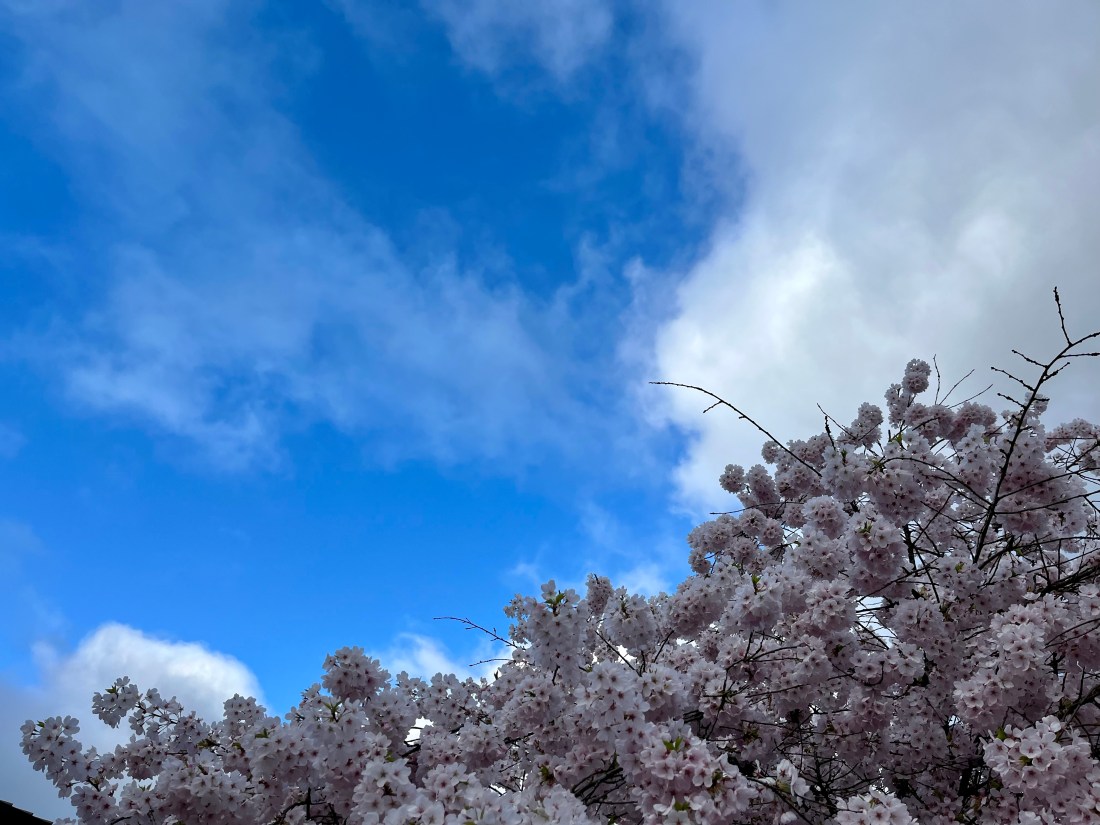
It’s hard to believe but in some places Plum Blossom season is already here! My wife sent me this post from Dazaifu Tenmangu Shrine in western Japan showing the first blooms of the year:
This is a famous Shinto shrine (homepage here) that venerates the God of Learning, Tenjin (天神), better known in history as Sugawara no Michizane.1 I have visited Kitano Tenmangu Shrine in Kyoto, and Yushima Tenmangu Shrine in Tokyo, but Dazaifu is in western Japan where Michizane died in exile and not easily accessible for me, though my sister-in-law somehow got me a charm from there last year. I’ve always liked Tenjin/Michizane, so if I had to pick a Shinto deity, he gets my vote.
Plum blossoms, which imported from China (unlike native cherry blossoms), were trendy among the elite of Japanese society as far back as the Manyoshu anthology (7th century):
Original Manyogana
Modern Japanese
Romanization
Rough Translation1
和何則能尓
我が園に
Waga sono ni
Perhaps
宇米能波奈知流
梅の花散る
Ume no hana chiru
the plum blossoms will
比佐可多能
ひさかたの
Hisakata no
scatter in my garden
阿米欲里由吉能
天より雪の
Ama yori yuki no
like falling snow
那何久流加母
流れ来るかも
Nagarekuru kamo
from the gleaming heavens
1 Amateur translation, apologies for any mistakes
Later, because of Michizane’s devotion to his old plum tree while in exile, plum blossoms became associated with his deified form of Tenjin, and thus Tenmangu shrines typically have some on the sacred grounds.
My own tree2 blooms in early-to-mid February and I look forward to it every year.
I hope you all get a chance to see some plum blossoms in your area too!
1 Elevating historical figures to the status of kami is not that unusual in Shinto religion.
2 Mine are more typical Thundercloud Plum trees (Prunus cerasifera), common here in the US, while Japanese umé (梅) are a somewhat different variety (Prunus mume). But I am happy with what I have.
Author’s note: I reposted this from the other blog. There’s a lot of overlap here, and it just made sense to post in both blogs (probably the first I’ve ever done that in 11+ years!). If you’ve already read the other post, apologies for posting again.
In a lesser-known Imperial poetry anthology called the Shui Wakashu (拾遺和歌集), poem 1342, is recorded what is believed to be Lady Izumi’s1 final poem:
Japanese
Romanization
Translation
暗きより
Kuraki yori
The way I must enter
暗き道にぞ
Kuraki michi ni zo
leads through darkness to darkness —
入りぬべき
Irinu beki
O moon above the mountains’ rim
はるかに照らせ
Haruka ni terase
please shine a little further
山の端の月
Yama no wa no tsuki
on my path.
Translation by Jane Hirshfield and Mariko Aratani in The Ink Dark Moon.
This poem was addressed to a Buddhist monk named “Shoku” and includes several Buddhist allusions. The most important is the phrase “darkness to darkness”, which comes from chapter seven of the Lotus Sutra:
….from darkness they [living beings] enter into darkness, to the end never hearing the Buddha’s name [hear the Dharma].
This refers to the Buddhist notion of Samsara, the near-infinite, aimless wandering that living beings undergo lifetime after lifetime, like a cosmicrat race. Such beings, who have yet to hear the Dharma [the teachings] of the Buddha, will continue to wander lifetime after lifetime without rest.
Thus, Lady Izumi is asking Shoku to help shine a light in the darkness for her, so that she may find the way [follow the Buddhist path].
I had trouble deciding which blog to put this in, since it covers both themes, but I decided to originally post in the other blog since the poem was introduced in the new historical drama about Lady Murasaki, Izumi’s contemporary.
Lady Izumi was, to put it mildly, a complex woman. She had incredible talent, and found herself in one scandal3 after another as powerful men fell at her feet, plus she earned scorn from other women such as Lady Murasaki. And yet, she was also very kind, devout and struggled to balance both the religious and worldly aspects of her life, while raising her orphaned granddaughter.
Hirshfield and Aratani note that if this poem is indeed her last, the final word she ever wrote was tsuki (月), “moon”.
2 alternate translation by Murano reads: …they go from darkness to darkness, and do not hear of the names of the Buddhas.
3 this was a conservative, narrow, aristocratic society where men frequently had affairs, but it was much more scandalous if women did. The idea that women could want, and enjoy sex, was not something people really accepted at the time.
I had a bit of free time today, and I finished up another episode of the Japanese historical drama, the Thirteen Lords of the [Kamakura] Shogun (discussed here), the episode where Minamoto no Yoshitsune has been killed at last, which I talked about in a recent post. It was a really heavy, dark episode, but also really moving. I really wish this show was available overseas.
As with every episode, the show has a nice segment at the end showcasing where these events actually took place in Japan, and some extra history as well. It seems that Yoshitsune died at a place called Takadachi (高館) near the village of Hiraizumi (平泉) in the old province of Oshu, but now modern Iwate Prefecture. Evidentially, the famous Haiku poet Matsuo Basho visited there centuries later in 1689 when Yoshitsune, and the Northern Fujiwara clan that protected (then betrayed) him, were nothing more than ancient history.
According to Basho’s own travel diary, the Oku no Hosomichi (おくのほそ道) or “The Narrow Road to the Interior”, when he visited the Takadachi, he composed this haiku:
Japanese
Romanization
My Amateur Translation
夏草や
Natsu kusa ya
Ah summer grass:
兵どもが
Tsuwamono domo ga
fleeting echos of
夢の跡
Yume no ato
great warriors past
Usually this haiku is translated as something like “Summer grass is all that remains of warriors’ ambitions” or something along those lines, and that’s what I first thought. However, then I found this site, which makes a convincing argument that the nuance is a little different. The key is the word yumé (夢) which means “dream”, much like in English. However, in Basho’s time, it was more narrowly used to refer to sleep only, not ambition.
Evidentially it is a common trope in Noh Theater where a character dreams about someone important who died, and their restless spirit is unable to move on to the afterlife. But then the character wakes up, and the spirit disappears. Since Basho was no doubt familiar with Noh drama and its iconic stories, the site above argues that it’s possible that Basho was referring to echoes of the past, not warrior’s ambitions. Maybe he dozed off and dreamt of Yoshitsune, Benkei his stalwart partner, and the lords of the Northern Fujiwara. Or maybe he still felt their lingering presence. Who knows?
That is why I translated it the way I did. The rhyming was coincidental, but kind of catchy so I kept it in there. Apologies for any mistakes or clumsiness of the translation.
Out of all the haiku I’ve read, I find this one particularly moving for some reason especially with the alternate interpretation.
Namu Amida Butsu
P.S. Another of Basho’s haiku, commemorating another slain member of the Genji (Minamoto) Clan.
In Japanese culture there is a phrase, gogatsu-byō (5月病), which means “May Illness”. It’s a tongue-in-cheek saying that describes the feeling of haziness or lethargy that many people experience in late April/early May.
In Japan’s case, this is keenly felt by students whose school year ends in April (not June),1 and new office workers who often start their careers in May. People are burned out in April and by the time May rolls around, they get tired plus the weather is warm and pleasant.
Another phrase you hear around this time is:
春眠暁を覚えず
shunmin akatsuki wo oboezu
I’ve talked about this phrase before, and its origin in a Tang-Dynasty Chinese poem, titled “Spring Dawn” (春曉 Chūn Xiǎo) composed by poet Mèng Hàorán (689/691–740, 孟浩然). In Japanese he was called mōkōnen. The original poem was translated into Japanese at some point, and the first verse became a phrase all its own. Here’s a side by side comparison of the original Chinese with the Japanese translation plus English:
Chinese
Romanization
Japanese
Romanization
Translation1
春眠不覺曉
Chūn mián bù jué xiǎo
春眠暁を覚えず
Shunmin akatsuki wo oboezu
I slumbered this spring morning, and missed the dawn,
Even if you don’t live in Japan, that sense of late spring haziness is something we can all appreciate.
1 If I recall correctly, Japanese students don’t have a long summer break, like kids i, the US. Instead they have more breaks scattered throughout the year, and so summer break in Japan only lasts a few weeks.
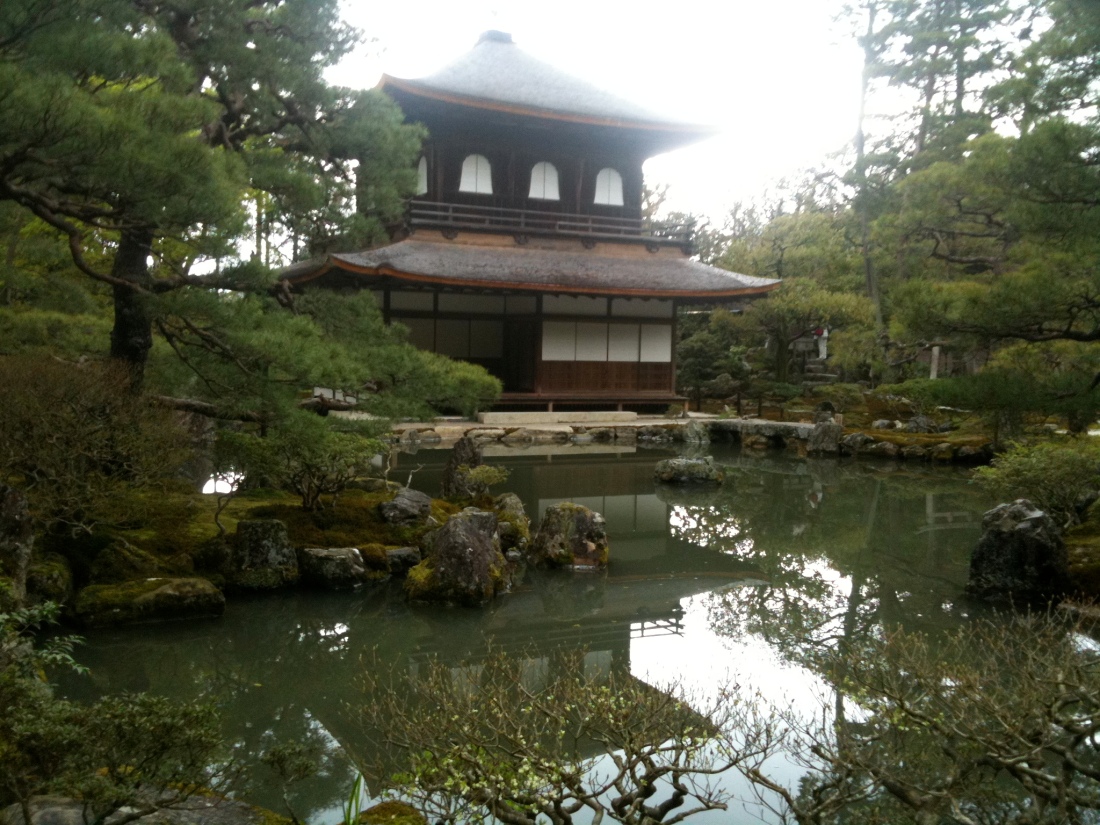
In Professor Donald Keene’s biography about the life of Shogun Ashikaga Yoshimasa (足利 義政, 1436 – 1490), includes a poem composed by Yoshimasa, now retired and living in his villa, the Silver Pavilion, ruminating on his former life as the supreme military commander of Japan:
Ashikaga no Yoshimasa, arguably one of the most influential people in Japanese art and aesthetics, yet ironically one of the worst military leaders in Japanese history, was never a serious student of Buddhism (though he was nominally ordained as a Rinzai Zen monk) but it’s interesting to hear him regret his life of luxury and power. To me, it is a contrast with Miyazawa Kenji’s famous poem Unbeaten By Rain (雨にも負けず).
A life of honesty poverty is probably better than wealthy lifestyle full of discord.
P.S. Photo taken of the Silver Pavilion, by me, in 2010.
Recently, my family and I observed the 100th day memorial for “baba”, my wife’s mother in Japan, and grandmother to our kids. This had me thinking about another poem by Lady Izumi1 from The Ink Dark Moon by Jane Hirshfield and Mariko Aratani:
Original Japanese
Romanization
Translation
跡をみて
Ato wo mite
Even in my dreams
偲ぶもあやし
Shinobu mo ayashi
I never think of you—
ゆめにても
Yume nite mo
how strange now,
何事のまた
Nanigoto no mata
seeing your handwriting,
有りしともなく
Arishi to mo naku
to recall…
Translation by by Jane Hirshfield and Mariko Aratani
I can understand this sentiment. When doing the memorials, it can feel kind of formulaic, but then sometimes I will see something that reminds me of my mother in law, and I can still her presence somehow. While I was in Japan, my father in law, noticing my interest in the Hyakunin Isshu, gave me a book to take home that belonged to his wife (my late mother-in-law).
「新百人一首をおぼえよう」(Let’s Memorize the Hyakunin Isshu, new edition) by 佐佐木幸綱 (Sasaki Yukitsuna)
This is a nice book, published back in 2002 that covers the Hyakunin Isshu anthology with lots of neat photography of famous locations, and tips and mnemonics for memorizing poems for karuta card game. I’ve enjoyed reading through it.
But more importantly, it provides a tangible link to my mother-in-law. Due to language barrier, I wasn’t able to converse with her much in my early years of marriage, and in the later years her health had declined to the point we couldn’t converse anyway. So, I wasn’t able to connect with her as much as I wanted to.
But with this book, I feel connected to her in a way I couldn’t before. My only regret is that we didn’t share this hobby before.
However, as Lady Izumi’s poetry shows, there is another side to grief and losing loved ones:
Original Japanese
Romanization
Translation
としをへて
Toshi wo hete
Through the years
物思ふことは
Mono omou koto wa
I’ve become used to sorrow:
ならひにき
Narai ni ki
there was not one spring
花に別れぬ
Hana ni wakarenu
I didn’t leave behind
春しなければ
Haru shinarakereba
the flowers
Translation by by Jane Hirshfield and Mariko Aratani
and:
Original Japanese
Romanization
Translation
頼むとて
Tanomu tote
Do you now know
頼みけるこそ
Tanomi keru koso
this world
はかなけれ
Hakana kere
is a waking dream?
昼間の夢の
Hiruma no yume no
However much I needed you,
よとは知らずや
Yo towa shirazu ya
that is also a fleeting thing…
Translation by by Jane Hirshfield and Mariko Aratani
As one gets older, one becomes somewhat numb to all the people that we’ve lost. The second poem here has overtly Buddhist undertones, reminding the reader that, as the Diamond Sutra famous says:
All composed things are like a dream, a phantom, a drop of dew, a flash of lightning. That is how to meditate on them. That is how to observe them.
Translation by Ven. Thich Nhat Hanh, in The Diamond That Cuts Through Illusion
For my part, I have lost friends as far back as high school, known relatives who have taken their own lives, lost loved ones due to cancer, dementia, pneumonia, etc.
Chances are, you have too.
As time goes on, this number will continue to grow. If you imagine scattered blossoms in spring, one can easily find parallels to life and the people all around us.
With all the time I have to kill while in quarantine in the den, I have been cleaning up my old blog on the Hyakunin Isshu poetry anthology. It’s been great rediscovering things, including poem 60 of the anthology, a poem composed by Lady Izumi‘s daughter, Ko-Shikibu no Naishi (小式部内侍, d. 1025).
Lady Izumi by this time had quite a reputation as a master poet, and her daughter probably had to live in her shadow. While her mother was away in the province of Tango, Ko-Shikibu no Naishi was participating in a poetry contest, a major social event among the aristocrats of capitol. These contests were serious business. The host would choose a topic, and pit poets against one another, and the right poem could really make or break one’s reputation.
As part of the contest, Middle Counselor Sadayori started trash-talking Ko-Shikibu no Naishi saying:
What will you do about the poems? Have you sent someone off to Tango [to ask your mother for help]? Hasn’t the messenger come back? My, you must be worried.
So, Ko-Shikibu comes with some poetic freestyling:
The poem doesn’t translate easily into English, but according to Dr Mostow, the poem is a masterpiece because it recites three places in Tango Province in geographic order, has the following puns:
iku in Ikuno also means to go 行く, and
fumi means both a letter 文 and to step 踏み, and
the bridge mentioned, Ama-no-Hashidate, is associated with “stepping” too.
… and she did all this off the cuff.
The comeback was so good, that Sadayori reportedly fled.
Picture this, but it’s 1,100 years ago, in Japan, and Eminem is a lady.
Pretty amazing comeback by Ko-Shikibu no Naishi, and a sign that talent runs in the family. Sadly, her life was snuffed out at a young age due to illness, and Lady Izumi never quite recovered with loss…
Speaking of the moon, October in Japanese Buddhism, specifically the Jodo Shu sect of Buddhism is an important time called jūya-e (十夜会), meaning “Ten Nights observance”. It is also sometimes known as:
jūya hōyō (十夜法要, “ten night Buddhist sermon”)
jūyakō (十夜講 “ten night lecture”)
jūya nenbutsu (十夜念仏, “ten night nembutsu“), or more formally
jūnichi jūya hōyō (十日十夜法要, “ten day and ten night Buddhist sermon”)
Jūya-e isn’t a holiday as such, but it is traditionally a time of renewed practice and study of the Buddhist teachings, particularly the Pure Land Buddhist teachings. In the old calendar, it began on the fifth night of the 10th month and extended to the fifteenth day of the month. In the modern calendar this means that Juya-e starts on October 5th to 14th. Jodo Shu followers might dedicate themselves to more chanting of the nembutsu for 10 nights, often in a group setting, among other things. Often special services are held at the local temple, though not necessarily for all ten days.
The tradition behind Jūya-e lies with a 15th century samurai noble named Taira no Sadakuni (平貞国) who having become disillusioned by this world shut himself in the temple of Shinnyodō (真如堂), more properly a Tendai Buddhist temple known as Shinshō Gokurakuji (真正極楽寺), for ten nights and days of intensive Buddhist practice.
Why ten? The basis for this lies in a passage from one of the three core sutras of the Pure Land tradition, the Sutra on the Buddha of Immeasurable Life, a.k.a. the Larger Sutra, the Sutra of Immeasurable Life, etc.:
“In this world, you should extensively plant roots of virtue, be benevolent, give generously, abstain from breaking the precepts, be patient and diligent, teach people with sincerity and wisdom, do virtuous deeds, and practice good. If you strictly observe the precepts of abstinence with upright thought and mindfulness even for a day and a night, the merit acquired will surpass that of practicing good in the land of Amitayus for a hundred years. The reason is that in that Buddha-land of effortless spontaneity all the inhabitants do good without committing even a hair’s breadth of evil. If in this world you do good for ten days and nights, the merit acquired will surpass that of practicing good in the Buddha-land of other quarters for a thousand years. The reason is that in the Buddha-land of other quarters many practice good and very few commit evil. They are lands where everything is naturally provided as a result of one’s merit and virtue, and so no evil is done. But in this world much evil is committed, and few are provided for naturally; people must work hard to get what they want. Since they intend to deceive each other, their minds are troubled, their bodies exhausted, and they drink bitterness and eat hardship. In this way, they are preoccupied with their toil no have time for rest.
The idea is that in the Pure Land of Amitabha Buddha, people naturally commit good deeds and have peaceful minds due to the wholesomeness of the environment. Conversely, trying to stay good in this world with all its hassles and troubles is a lot harder, and so the merit attained is far greater. Even a little bit here really counts for something.
Speaking of Jūya-e in literature, I also found this haiku by Kobayashi Issa:
Japanese
Romanization
Rough translation
もろもろの
Moro moro no
All kinds of
愚者も月見る
Gusha mo tsuki miru
Foolish people see the moon and realize
十夜かな
Jūya kana
“Hey, it’s the Ten Nights observance!”
Poem source: Zenkōji temple with my rough, rough translation
The moon was a common metaphor in medieval Japanes Buddhism for the light of wisdom and compassion of Amitabha Buddha, as evinced by a much earlier poem by the founder of the Jodo Shu sect of Buddhism, Honen in the 12th century:
Japanese
Romanization
Rough translation
月影の
Tsuki kage no
Though there is no corner
いたらぬ里は
Itaranu sato wa
Of the world where the moon’s light
なけれども
Nakeredomo
Does not shine,
眺むる人の
Nagamuru hito no
Only those who gaze up at it
心にぞすむ
Kokoro ni zosumu
Appreciate its light
Yet again, my rough translation
If you’re wondering what to do during Jūya-e season, and not part of a Buddhist community, try stretching your Buddhist practice for 10 days, something above and beyond your usual Buddhist practice. However, also make sure the practice is sustainable too. Finding that balance is tricky, especially if you’re not part of a temple community, but with a bit of effort, one can find that sweet spot and have a fruitful and joyous season.
There’s a famous Japanese poem that you will often see in Jodo Shinshu Buddhist literature usually translated as “Just Right” or “Just As You Are” or “Sono-mana”. Rev. Taitetsu Unno, who passed away some years ago, translated the poem in one of his books, and it has been popular since among English-speaking Shin Buddhists (a.k.a. Jodo Shinshu followers).
Recently, I remembered this poem, and tried to find the original in Japanese, and when I did, I realized that there were some problems with the English translation. Nothing serious, but worth sharing.
The actual name of the poem in Japanese is 仏様のことば(丁度よい)or hotoke-sama no kotoba (chōdo yoi), which means “The Buddha’s Words (Just Right)”. It was composed by one Maekawa Gorōmatsu at the age of 93.
Original Japanese
Romanization
Rough Translation (bold text is my translation)
仏様のことば (丁度よい)
Hotoké-sama no kotoba (chōdo yoi)
Words of the Buddha (just right)
お前はお前で丁度よい
omae wa omae de chōdo yoi
You, as you are, are just right.
顔も体も名前も姓も
kao mo karada mo namae mo sei mo
Your face, your body, your name, your surname,
お前にそれは丁度よい
omae ni sore wa chōdo yoi
they are, for you, just right.
貧も富も親も子も
hin mo tomi mo oya mo ko mo
Whether poor or rich, your parents, your children,
息子の嫁もその孫も
musuko no yomé mo sono mago mo
your daughter-in-law, your grandchildren
それはお前に丁度よい
sore wa omae ni chōdo yoi
they are, for you, just right.
幸も不幸もよろこびも
kō mo fukō mo yorokobi mo
Happiness, unhappiness, joy and even sorrow,
悲しみさえも丁度よい
kanashimi sae mo chōdo yoi
for you, they are just right.
歩いたお前の人生は
aruita omae no jinsei wa
The life that you have walked
悪くもなければ良くもない
warukumo nakeraba yoku mo nai
is neither good nor bad.
お前にとって丁度よい
omae ni totte chōdo yoi
For you, it is just right.
地獄へ行こうと極楽へ行こうと
jigoku e ikō to gokuraku e ikō to
Whether you fall into Hell, or go to the Pure Land
行ったところが丁度よい
itta tokoro ga chōdo yoi
Where you go is just right.
うぬぼれる要もなく 卑下する要もない
unuboreru yō mo naku higé suru yō mo nai
No need to take pride in anything, no need to be humble either.
上もなければ下もない
ué mo nakereba shita mo nai
If there’s nothing above, there’s nothing below either.
死ぬ月日さえも丁度よい
shinu ashita sae mo chōdo yoi
Even the day and time of your death is just right, too.
仏様と二人連の人生
Hotoké-sama to futarizuré no jinsei
A life hand in hand with the Buddha
丁度よくないはずがない
chōdo yokunai hazu ga nai
Couldn’t possibly be wrong for you.
丁度よいのだと聞こえた時
chōdo no da to kikoeru toki
Rather, when you hear that it is just right for you,
憶念の信が生まれます
okunen no shin ga umaremasu
Enduring faith [confidence in the Buddha] is born.
南無阿弥陀仏
namu amida butsu
Praise to the Buddha of Infinite Light (a.k.a. the nembutsu)
English translations of this poem usually stop around two-thirds of the way through the poem, but I have posted the poem in full from Japanese sources, and simply translated the last part myself. Apologies for any mistakes or poor translation choices.






 Gleanings in Buddha-Fields
You must be logged in to post a comment.