The Goma Fire Ritual

My family and I visit a certain Shingon-sect Buddhist temple in the area for New Years tradition, and also for Setsubun rituals (namely mamemaki bean-throwing, plus good luck). Neither my wife nor I follow the Shingon sect, but Japanese-buddhist temples for the Japanese community (not Westerners) are rare, so we are glad to visit despite the lengthy drive.

Shingon Buddhism, one of two “esoteric” (mikkyō, 密教) Buddhist traditions in Japan,1 relies on a complex array of ceremonies, rituals, symbolism, and mantra chants that help awaken one’s Buddha-nature not through words, but through a kind of non-verbal impact. This requires a trained teacher to guide one through it, hence it’s called “esoteric” Buddhism (a.k.a. Vajrayana Buddhism). Years ago, I attended a “moon meditation” sitting once where each one of us sat and meditated before a hanging scroll showing a full moon. It was an interesting experience.

Anyhow, one ceremony that’s very common in Shingon is called the Goma-taki (護摩炊き) ritual, or “fire ceremony”. This is often called Goma in English. This is a video provided by Koyasan Temple in Japan which shows a complete ceremony: a priest creates a pyre within a sacred space, often before a statue of Fudo-myo-o (不動明王). Throughout the ceremony, the priest recites certain chants and uses certain hand-gestures. The fire is thought to purify one’s mental defilements, burn away past karma too, and also certain sticks are added to the fire with people’s aspirations and wishes written on them.

At our temple here locally, the priest conducts the Goma ritual as well, and people receive blessings from the ceremony one by one, and we also receive small o-fuda talisman that we place next to our Buddhist altar at home for protection. These are larger than omamori charms, made of wood or cardboard, and usually enshrined, not carried on your person.

The origins of the Goma-taki ritual are taken from Indian religious practices of the past, but gradually underwent “Buddhification” (absorbing practices, and making them Buddhist) and this is why, I believe, that esoteric Buddhism arose in later generations of Buddhism in India.2 The deities portrayed in esoteric Buddhism also have origins in India, but transformed as they were brought through China to Japan.

Goma-taki rituals are frequently held for the public in larger Japanese temples, so you can easily drop and just observe, but be aware they can take up to an hour or more. But it is a pretty interesting experience and well worth observing.

Namu Daishi Henjo Kongo
(Praise to the Great Teacher Vairocana Vajra, a.k.a. Kukai / Kobo Daishi)3

1 the other is Tendai Buddhism, which calls it taimitsu (台密), not mikkyo. What are the differences? Not sure. Both lineages come from the same Chinese-Buddhist tradition of the time, but beyond that, no idea.

2 Seen from one perspective, the earliest texts and traditions in Buddhism did not feature any esoteric practices and rituals, so if you’re looking for “pristine” Buddhism then esoteric practices don’t fit this. From another point of view, Buddhism continued to innovate across generations, first Mahayana Buddhism, then esoteric practices, so in that light esoteric Buddhism solves problems of practice and teaching that earlier Buddhism struggled with. I don’t know which viewpoint is the right one, personally. I am a big proponent of easy, accessible Buddhist teachings and practices (hence the nembutsu, precepts, etc), and esoteric Buddhism doesn’t make this easy. And yet, it is surprisingly popular in Japan (2nd only to Pure Land Buddhism), so maybe there’s something there that I’ve failed to notice all this time? 🤷🏼‍♂️

3 This is often recited in Shingon tradition the way namu amida butsu is recited in Pure Land traditions in Japan.


The Onmyoji of the Heian Period

The Heian Period of Japanese history is a really fascinating period, both culturally and historically to me. I even made a whole side-blog devoted to it (15th anniversary this week!). When you read books like the Diary of Lady Murasaki or the Pillow Book, there are a lot of cultural allusions that are hard to translate into English, or even contemporary Japanese culture, and that includes the role of professional diviners called the Onmyōji (陰陽師).

The Onmyoji were not mere soothsayers, but were trained to read various signs and calculations, and compile calendars for the coming year to determine the movements of the gods, moon, stars, etc. This was then used by the aristocracy to make decisions, where to travel and so on.

Much of these calculations were based on practices imported from China: the Five Elements Theory, Yin-Yang philosophy, geomancy,1 and so on. When we think of elements: we think of earth, wind, fire and water,2 but in Chinese philosophy it was earth, wood, metal, fire and water. In the traditional calendar used today across Asia, these philosophies are still preserved. For example, this year (2026) is the yang-fire-horse: (丙午, hi-no-e-uma in Japanese)

The Crest of the famous Onmyoji, Abe no Seimei. The five points alluded to the Five Elements. Courtesy of Wikipedia.

But let’s look at a concrete example.

Onmyoji often calculated inauspicious directions of travel. The idea was that a certain Taoist god named Ten-ichi-ji (天一神) would wander in various cardinal directions. If you traveled in the direction that Ten-ichi-ji was dwelling on that particular day, you would suffer the wrath of that god and be cursed. Therefore, people had to avoid traveling certain directions on certain days. This would lead to convoluted efforts to reach your destination from another direction, a practice called katatagae (方違え). People would travel the night before (before it became inauspicious), or travel in a roundabout direction to get there.

In the Pillow Book, Sei Shonagon discusses the hassles of inauspicious directions:

[154] When Her Majesty [Empress Teishi] was in mourning for the previous Regent, she was required to leave the palace at the time of the Great Purification at the end of the sixth month. However, the Office of the Empress’s Household happened to be in a forbidden direction at the time, so she moved instead to the Aitadokoro [residence], which belonged to the Council of State.

Our first night there was hot and extraordinarily dark, and we spent it feeling cramped and rather anxious as we waited for the dawn.

Another example were abstinence days. Onmyoji calculated days that were highly inauspicious, called monoimi (物忌み), which required people to undergo a day of abstinence. People who were stuck at home on an abstinence days had to avoid anything impure: sex, travel, talking too loud, important work, certain foods, etc. They even had to wear special talisman in their hair or hat.

In the Pillow Book, Sei Shonagon recalls an incident with her lover Yukinari:3

[129] One evening, Secretary Controller Yukinari visited the Office of the Empress’s Household, and stayed talking far into the night. He finally left as dawn was approaching, remarking that he must return by the Hour of the Ox since he was obliged to stay at the palace all day owing to an Imperial abstinence.

Translation by Meredith McKinney

By the way, the passage above also contains Sei Shonagon’s famous poem which was later used in the Hyakunin Isshu (poem 62).

Further, she remarks how annoying abstinence days were:

[22] …. You’ve taken special care to send off a beautiful, carefully written letter, and you’re eagerly awaiting the reply — time passes, it seems awfully long in coming, and then finally your own elegantly folded or knotted letter is brought back, now horribly soiled and crumpled and with no signs reminaing of the brush stroke that sealed it. “There was no one in”, you’re told, or “They couldn’t accept it on account of an abstinence”. This is dreadfully dispiriting.

Onmyoji didn’t just make calendars, they also performed various purification rituals, and exorcisms that Buddhist or Shinto priests would not do. In the Diary of Lady Murasaki, the eponymous author4 writes about the commotion and rituals the Onmyoji would use to protect Empress Shoshi WHILE SHE WAS IN LABOR:

At the moment of birth what awful wails of anguish came from the evil spirits! Preceptor Shin’yo had been assigned to Gen no Kurõdo, a priest called Myoso to Hye no Kurõdo, and the Master of Discipline from the Hojüji to Ukon no Kurodo. Miya no Naishi’s enclosure was being overseen by Preceptor Chisan; he was thrown to the ground by the spirits and was in such distress that Preceptor Nengaku had to come to his aid with loud spells. Not that his powers were on the wane, it was just that the evil proved so very persistent. The priest Eiko, brought in to help Lady Saisho’s exorcist, became hoarse from shouting spells all night.

This mixture of Buddhist monks (trained in esoteric Buddhism) pairing with exorcists and mediums (Onmyoji) loud in yelling and chanting during a woman’s birth feels weird by today’s standards, but Shoshi’s father, the regent Fujiwara no Michinaga had everything riding on his daughter safely giving birth to a male who could inherit the Imperial Throne, so he spared no expense. Lucky for him, it worked.

Onmyoji gradually lost influence during later centuries of Japanese history, but never quite faded altogether. Technically, they were banned in the early-modern Meiji Period, but gradually reformed as a particular sect of Shinto to this day.

Title art for the anime Onmyoji on Netflix. I’ve watched a few episodes so far.

Next time, we’ll talk about a certain legendary Onmyoji named Abe no Seimei (shown above), who is a popular subject of Japanese movies, anime, manga, etc.

1 Geomancy (lit. “earth divination”) in Chinese culture today can be seen in practices like Feng Shui, the Ba Gua and so on. My wife is Japanese, not Chinese, but she does take an active interest in Feng Shui (called fūsui in Japanese). I am more ambivalent, but in spite of my “logical mind”, I am curious.

2 Or just Earth, Wind and Fire. 😁

3 See poem 62 of the Hyakunin Isshu.

4 See poem 57 of the Hyakunin Isshu.

Liberals and Conservatives: Ancient Japanese Style

Long, long ago, I wrote about the struggles in the Late Roman Republic between its version of progressives versus conservatives. The Roman Republic did not have political parties as we would know them, but the factions and disagreements on how to solve changing political issues did exist in its Senate, much as happens in the modern world.

But that’s not something limited to ancient Rome.

In the late 6th century CE Japan was still limited to a small kingdom called Yamato (大和) which had conquered most of its rival kingdoms. At this time, the ruler of Yamato was still little more than a “chieftain” of the largest territory called an ō-kimi (大君) meaning “big king”, not even emperor (tennō, 天皇) as they are called now. Further, the authority of the king depended on powerful clans who had strong influence on the government.

For example, during Emperor Yōmei’s short and problematic reign there rose a power struggle between two opposing factions, the Soga (蘇我) clan, and the Mononobe (物部), and during the interregnum after he died. One one side of the struggle was a reform faaction that wanted to modernize the government based on the based on Sui-Dynasty Chinese government models, away from the older, clan-based kingship. This faction included:

If the Soga were a progressive, reform faction wanting to modernize the country using the latest imported culture from China, the Mononobe were the exact opposite. The Mononobe Clan was a conservative, traditional clan that distrusted the new imported Chinese culture, and especially the foreign-imported religion of Buddhism. They supported the more native Shinto traditions, and were on the more xenophobic side of the political spectrum. Their current head, Mononobe no Moriya, actively skirmished with Soga no Umako during Yomei’s reign.

According to a historical text from the time, the Nihon Shoki (also discussed here and here), these conflicts came to a head in the year 587 after Emperor died, and a successor had to be chosen. In Japanese this is called the Teibi Conflict (teibi no ran, 丁未の乱) of 587. The Soga Clan and Prince Shotoku supported one successor, the Mononobe, the other. During the battle for succession, Mononobe no Moriya attacked Buddhist temples, and burned some of the images (often imported from the Korean kingdom of Baekje).

Finally, the battle came to a head at Mount Shigi (shigisan, 信貴山) in July of 587. The Soga lost multiple engagements at first and retreated. Then, according to tradition, Prince Shotoku, who was related to the Imperial family, fashioned a sacred branch of sumac, prayed to the Four Heavenly Kings (四天王) of Buddhism,1 promising to build a temple if they could help him trounce the Mononobe.

The subsequent battle was a complete rout for the Mononobe clan, and their leader Moriya was shot with an arrow. The rest was history: Shitenno-ji Temple, one of the oldest in Japan.

Under the reign of Empress Suiko, one of the few, powerful female monarchs in Japanese history,2 Japan further prospered under the triad of Suiko, Soga no Umako and Prince Shotoku, her advisors. Prince Shotoku in particular was said to have introduced:

  • Japan’s first ever Buddhist-influenced constitution: the Seventeen-article Constitution (jūshichijō kenpō, 十七条憲法 ). It’s not a modern, legal document, but it was meant to provide a spiritual framework for governing the country.3
  • Reorganized the bureaucracy into a meritocratic system based on the Chinese model, the Twelve Level Cap and Rank System (kan’i jūnikai, 冠位十二階).
  • The first use of the title “Emperor” (tennō, 天皇), when Prince Shotoku addressed the Emperor of China from the “Emperor” of Japan. This was a bit of a diplomatic coup by placing Japan as a co-equal to Imperial China.

What I always find interesting about this period of Japanese history was the overtly progressive nature and forward-thinking of the government at the time, not to mention a powerful female sovereign, and how it triumphed over conservative, xenophobic thinking. Of course, by today’s standards, it doesn’t seem that progressive, and some of these reforms eventually petered out,4 or were abandoned for various reasons, but some aspects persisted up until modern times. It is also the subject of various manga over the years.

But also, what I really like about this period is that the old order wasn’t totally destroyed either. The two sides eventually just learned to co-exist for many generations (e.g. the Nara and Heian periods of Japanese history). It wasn’t a smooth transition, but the forces of history marched on nonetheless.

P.S. Fun fact, one of the supporters of the conservative Mononobe faction was a small clan called the Nakatomi. Later, the Nakatomi would become the Fujiwara, and would eventually dominate political life in Japan. History is weird.

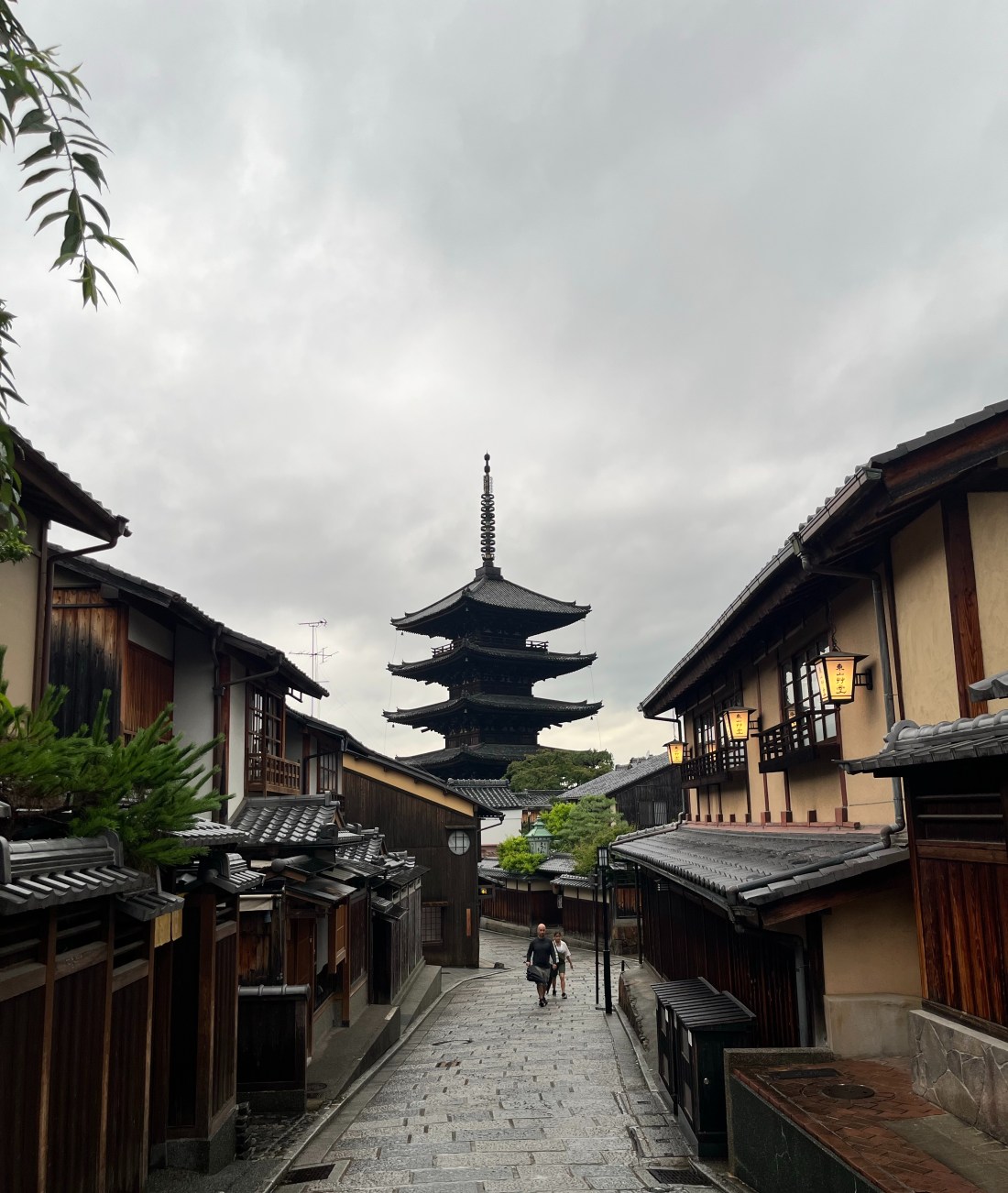
P.P.S. Featured photo is one of many pagodas (Buddhist stupa) promulgated by Shotoku, this one in Kyoto.

1 In Sanskrit, these were the Caturmahārājakayikas or Caturmahārāja. For example, if you visit Todaiji, you see some of the Four Guardian Kings around the giant statue of the Buddha, plus many other, older temples. I liked their adaptation in Roger Zelazny’s “Lord of Light” as well.

2 There were other Empresses who reigned as well, some powerful, but many remained as temporary regents until someone else could assume the throne.

3 The modern constitution of Japan adopted in 1947, at the instigation of US Occupation Forces, is ironically significantly more progressive and modern than the US Constitution. To be fair, they were written almost 200 years apart, but the Japanese Constitution explicitly grants suffrage to women and abolishes slavery. Even now, with its amendments, the US Constitution grants neither. In college, I met the lady (a US army secretary at the time) who helped write the clause on women’s suffrage. She was a very fascinating person, though she’s probably passed away by now.

4 Many generations later, this was still largely true: powerful clans ruled many parts of Japan outside the capital, gradually evolving into a feudal system over the centuries, until the Meiji Restoration of 1868,

Zen Words in Japanese Language

In terms of demographics, Zen in Japan never reached the mass appeal that the Pure Land and Shingon sects ever did,1 but it has had an unusually large influence on the culture. When people think of this, they usually think of things like sand gardens, tea ceremonies, or certain temples in Kyoto, but the language includes many words originally borrowed from Chinese-Zen (a.k.a. Chan) terminology imported into Japan.

This is not unusual, as it happens in English and other languages too: religious terminology gradually become increasingly widespread and lose their original religious context. The English word “goodbye” evidentially derived from “god be with ye”, for example.

So, let’s look at a few examples in Japanese.

The word aisatsu (挨拶), meaning customary greetings, was originally from the back and forth questions a Zen teacher would ask a student to test their grasp of the Dharma. Back then it was called ichiai-issatsu (一挨一拶), so the word has shortened over time.

The verb ganbaru (頑張る), which you see all the time in Japanese and means to “hang in there” had a somewhat different meaning in the past. It’s original meaning was the tendency for people to cling to their egos and assert their viewpoint even in the face of reality. The word has changed to a more positive meaning over time.

The word shujinkō (主人公) meaning the main character of a story (or drama) originally comes from a famous collection of Zen koan called the Mumonkan, wherein a certain monk would talk to himself and say things like “hey you, stay awake [don’t be fooled]”. The “you” here is where shujinkō comes from.

The phrase ichi-go-ichi-é (一期一会) normally means a once-in-a-lifetime experience, but in a Zen or tea ceremony context it means that this moment is like no other, never to be repeated.

The word kanben (勘弁) which my wife sometimes yells at me (kanben shite yo! “use your head”, “be reasonable!”) originally described a teacher thoroughly investigating a student’s grasp of the Dharma.

Finally, the word genkan (玄関) is a very common word in Japanese, meaning the front entry way, where you take off your shoes, etc. Originally this was limited to the area near a temple’s gate, but during the Edo Period the usage became more popularized to mean the entryway of a home.

There are other, more obscure terms as well, often in the form of phrases and idioms.

The phrase nichi nichi kore kō nichi (日日是好日) means “every day is a good day”, and I talked about it in this older post. This is directly taken from Chinese, but pronounced in a Japanese way.

Similarly, another famous Chinese-Zen phrase is kyakka shōko (脚下照顧) which loosely translated means something like “watch your feet!”. More specifically, it means to observe one’s self carefully, using the example of your feet. If your shoelaces are untied, your walking gets sloppy, or your shoes get messy, or you trip and fall. So, if you notice this, and tie your shoelaces, then you are catching the problem early, and avoiding future issues.

So, that’s a look at Zen-Buddhist words in Japanese language. Thanks for reading!

1 According to one of my books, the Rinzai Zen sect has about 1.1 million registered followers, while the Jodo Shinshu sect has 11 million (10 times that number) and Shingon sect about 7 million. Soto Zen has about 3.5 registered followers, so somewhat larger, but not that much.

Autumn Nanakusa

In the past, I’ve written about a certain obscure holiday in Japanese culture called Nanakusa (七草, “seven herbs”)1, which takes place every January 7th, just after the New Year.

While reading about the Diary of Lady Murasaki (discussed on my other blog) I discovered that there is a parallel Nanakusa tradition in Autumn as well. There is no designated holiday, but since antiquity, these flowers and herbs were prized during the season of Autumn.

Old Japanese NameModern NameEnglishScientific Name
女郎花 (おみなえし) 
ominaeshi
オミナエシ 
ominaeshi
Golden LacePatrinia scabiosifolia
尾花 (おばな) 
obana
ススキ 
susuki
Chinese Silver GrassMiscanthus sinensis
桔梗 (ききょう) 
kikyou
キキョウ 
kikyou
Balloon FlowerPlatycodon grandiflorus
撫子 (なでしこ) 
nadeshiko
カワラナデシコ 
kawaranadeshiko
Fringed PinkDianthus superbus
藤袴 (ふじばかま) 
fujibakama
フジバカマ 
fujibakama
Eupatorium fortunei
葛 (くず)
kuzu
クズ 
kuzu
KudzuPueraria lobata
萩 (はぎ)
hagi
ハギ 
hagi
Japanese bush cloverLespedeza
Courtesy of Wikipedia

This page shows some really nice visuals of each flower.

Some of these plants aren’t necessarily well-known today, but even as a foreigner, I recoginize a few of them. Susuki grass (a.k.a. Chinese silver grass) is an important part of Otsukimi, and Nadeshiko flowers are frequently used as a symbol of femininity in Japan. The national soccer/football team is named Nadeshiko Japan in fact. Hagi is used in Ohagi treats as well.

Regarding the reference in Lady Murasaki’s diary near the beginning is written the following text:

I look out from my room at the head of the corridor into the light morning mist. Dew is still on the ground, but His Excellency [Fujiwara no Michinaga, her benefactor] is already out in the garden ordering his attends to clear the stream of some obstruction. Plucking a sprig from a large cluster of maiden-flowers that blooms there on the south side of the bridge, he peers in over the top of the curtain frame…

Translation by Dr Richard Bowring

The “maiden flowers” according to the Japanese text are ominaeshi (golden lace) flowers. So, even in the 11th century, a thousand years ago, these flowers were prized among the aristocracy of Japan. Immediately after, Michinaga challenges her to compose a poem about the ominaeshi he plucked (a common practice back then), and she composes the following:

JapaneseRomanizationTranslation
女郎花OminaeshiNow I see the
さかりの色をSakari no iro wocolor of this maiden-flower
見るからにMiru kara niin bloom,
露のわきけるTsuyu no wakikeruI know how much the dew
身こそ知らるれMikoso shirarurediscriminates against me.
Translation by Dr Richard Bowring

Michinaga is impressed by her quick wit (it’s basically why he hired her as a handmaiden to his daughter), he responds with:

JapaneseRomanizationTranslation
白露はShiratsuyu waIt is not the dew
わきてもおかじWakitemo okajithat chooses where
女郎花Ominaeshito fall;
こころからにやKokoro kara ni yadoes not the flower choose
色の染むらむIro no somu ranthe color it desires?
Translation by Dr Richard Bowring

Such a poetic exchange for a single flower.

In fact, the Autumn list of flowers dates much further back than the 11th century. Take a look at these two poems from the Manyoshu anthology, poem 1537:

Original Manyogana2Modern JapaneseRomanizationRough Translation
秋野尓秋の野にAki no no niIn the autumn fields
咲有花乎咲きたる花をSakitaru hana woif you count the
指折指折りOyobi-oriblossoming flowers
可伎數者かき数ふればKakikazo furebaon your fingers:
七種花七種の花Nanakusa no hanathe flowers of Nanakusa
Other source: https://manyoshu-japan.com/12041/

and poem 1538:

Original ManyoganaModern JapaneseRomanizationRough Translation
芽之花萩の花Hagi no hanaHagi flowers
乎花葛花尾花葛花Obana kuzu hanaObana, kudzu flowers
瞿麦之花なでしこの花Nadeshiko no hanaNadeshiko flowers
姫部志をみなへしOminaeshiOminaeshi,
又藤袴また藤袴Mata fujihakamaand Fuji-hakama
朝皃之花朝顔の花Asagao no hanaAsagao flowers3
Other source: https://manyoshu-japan.com/12040/

… as you can see, these two poems are linked. It’s interesting that even as far back as the 7th century, these seven flowers were celebrated in poetry, and this tradition still persists in Japan today, the 21st.

Wishing you all a happy Nanakusa!

1 Not to be confused with the Colonel’s “eleven herbs and spices”. 😉 I have enjoyed Kentucky Fried Chicken in Japan, and we try to try to enjoy it for Christmas every year even in the US, per Japanese tradition.

2 Manyogana was an early Japanese script that used Chinese characters in a very phonetic way. This was eventually replaced by the simpler, short-hand form called hiragana. Only very early works of Japanese are recorded in Manyogana, but that does include the Manyoshu anthology.

3 A couple quick notes from the referenced website: the name Fujihakama has gradually changed pronunciation to Fujibakama. Also, apparently the Asagao flower referenced in the Manyoshu isn’t the same as the modern Asagao “morning glory” flower. It’s not clear what flower this referred to at the time. Finally, this flower isn’t the same as the kikyou flower that is now part of the seven flowers of Autumn Nanakusa.

The Flow of Time

SPOCK: “Change is the essential process of all existence.”

Star Trek, “Let That Be Your Last Battlefield” (s3:ep15), Stardate 5730.2

It is that time once again as we celebrate a new year. It’s an exciting time: plenty to celebrate and look forward to, but some very difficult times too:

Mark Twain: “I come from a time when men achieve power and wealth by standing on the backs of the poor, where prejudice and intolerance are commonplace and power is an end unto itself.”

Star Trek: The Next Generation, “Time’s Arrow, part two” (s6:ep1), Stardate 46001.3

Nonetheless, time keeps moving on.

In my spare time, I have been avidly studying (re-studying) the Soto Zen text, the Shushogi. As I talked about before, this is streamlined collection of Dogen’s writings from the Shobogenzo, but with a focus on lay followers.

One of the themes repeated over and over is that time passes, and it only passes in one direction:

Time flies with more speed than an arrow; life moves on, more transient than dew. By what skillful means can you reinstate a day that has passed? To live one hundred years wastefully is to regret each day and month. Your body becomes filled with sorrow. Although you wander as the servant of the senses during the days and months of a hundred years — if you truly live one day, you not only live a life of a hundred years but save the hundred years of your future life…..true practice of the Law for one day is the seed of all the Buddha and their activities.

The Shushōgi, chapter five, fascicle thirty

A long life wasted in empty pursuits is nothing compared to a day spent in earnest practice. Even applying the Buddhist teachings a little bit, benefiting yourself and others, is still a great investment. Like exercise, a little bit goes a long way, and each day is an opportunity. Each one of us, just as we are now, is capable of doing something good and noble.

By the way, a quick blog update: I’ve been struggling in recent months to maintain a consistent schedule for posts (it was self-imposed anyway), so starting in 2026 I am going to try and be more flexible with posting. I am not sure how that will look, but you may see “bursts of inspiration” followed by some dry spells. We’ll see how things unfold. In the meantime, I’ve been adding more pages to the blog under the Buddhism section including the Letter on White Ashes, and the Shushogi above. Not the rest I intended,1 but something I enjoy doing. 🙂

Stay safe and happy 2026 to everyone!

1 I also played a lot of The One Ring RPG in my spare time, plus watching Star Trek: Enterprise for the first time ever. It is a terrific series, and I regret not watching it when it was on-air. So, I did have some downtime too. 😉

Joya no Kane: A Japanese New Year Tradition

When people ask me about Japanese New Year (o-shōgatsu, お正月), I like to describe it as melding both Christmas and American Thanksgiving into one three-day holiday. It has its origins in Chinese Lunar New Year, but because of the change in calendar, it now takes place on January 1st through 3rd.

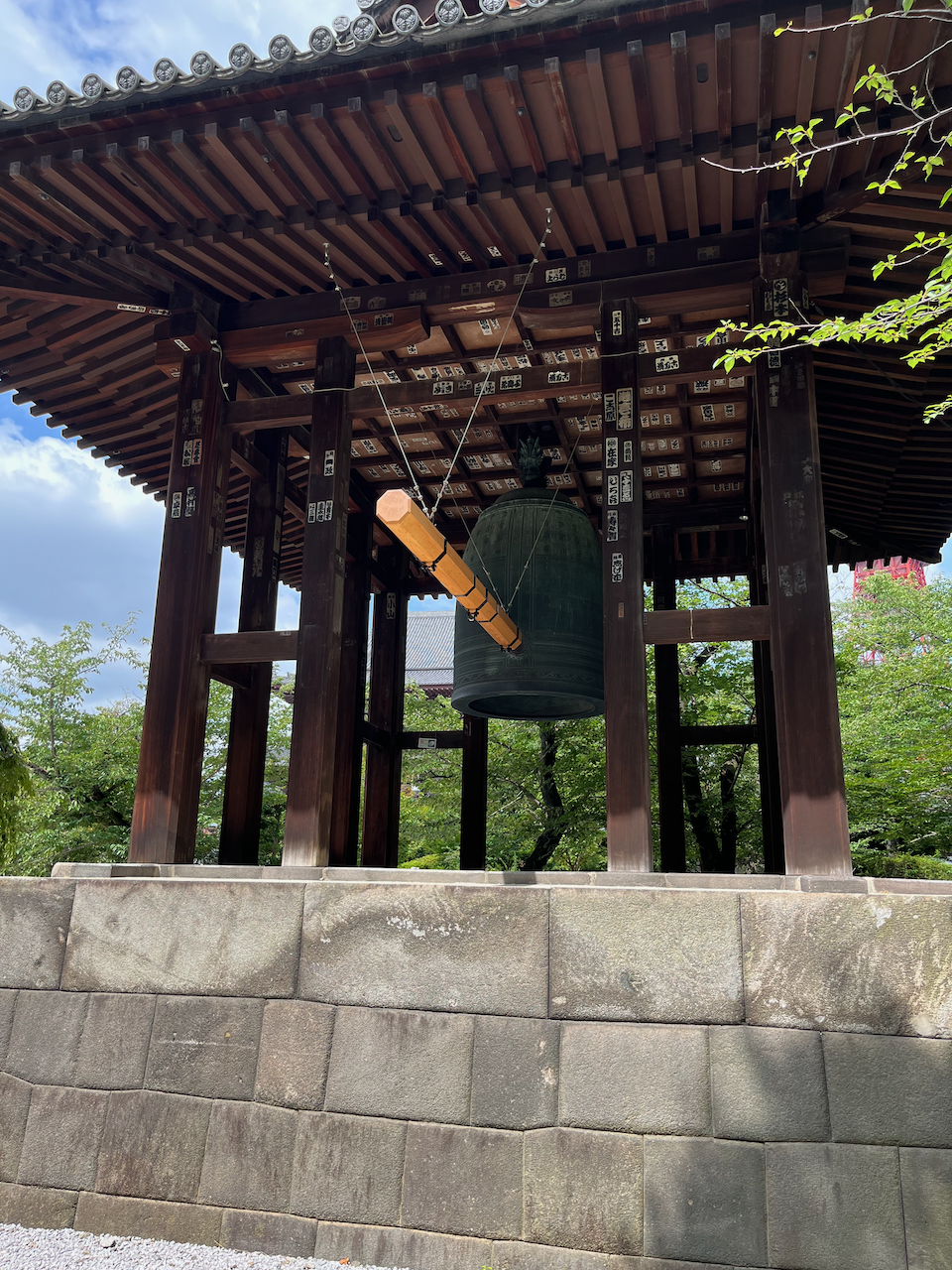
But New Year’s Eve, called Omisoka (大晦日), also has lots of traditions of its own. One of them is a tradition called Joya no Kané (除夜の鐘) which means ringing of the large temple bell, the bonshō (梵鐘). You can see an example of a Bonsho here from my last visit to Zojoji:

The tradition is that the bell is run 108 times before midnight. Why 108 times? This reflects the Buddhist concept that the mind has 108 defilements (bonnō, 煩悩). According to Wikipedia, the tradition actually began in China in the Chan (Zen) monasteries there, and there is a parallel tradition in Korea too, though they ring the bell 33 times.

Typically the ringing of the bell starts around 11pm, the local temple members line up, and each one takes turns rining the bell once, but pulling on the large beam that strikes the bell using a rope tied to it. Many temples will save the very last (108th) ringing until just after midnight. For this reason, the ceremony is often also called ni-nen mairi (二年参り, “two year crossing”).

This is a news clip from 2023 showing the ringing of the bell at Zojoji temple:

The temple of Chion-in (another favorite of mine) also has a dramatic bell-ringing ceremony too:

As for me, I’ve only attended one Joya no Kane in Japan in 2007, back when we used to visit family for New Years,1 my second visit there. My father in law owns a business that makes gravestones in Japan, so while he is not part of a particular Buddhist temple, he has many business partners that are Buddhist temples.

That particular year, he was invited to attend the Joya no Kane ceremony at a certain Jodo Shu-sect temple in the city. Because I was newly introduced to Jodo Shu Buddhism a few years earlier, I was excited to go. My father in law gave me this sutra book for Jodo Shu Buddhism, which I wrote about here. It was the first sutra book I ever owned, as far as I can recall.

I don’t remember which temple it was, but it was fairly large temple, and there were many people in attendance. The rest of the family wasn’t interested and stayed home to watch Japanese TV. My father-in-law and I sat for a brief Buddhist service, and a small sermon, then we started to line up for the temple bell ringing. I remember being somewhere near the middle of the line, maybe second half. The process took nearly an hour. It was late, cold, and waiting in line so long was a little tiring. When it was finally my turn, the moment went super fast so I barely remember what happened. The hanging beam was heavier than I expected, so I didn’t get a very good swing. Just enough to hit the bell and that was it.

We drove home after that, where my wife, daughter, and in-laws were all watching Kohaku Uta Gassen. All in all, it was a good night.

So, that’s my only memory of Joya no Kane, but I think it’s a near tradition and well worth attending if you ever get the opportunity.

Happy 2026 everyone and wishing you a wonderful new year.

1 When our firstborn was a little girl, we liked visiting in winter because there’s lots of fun things to do, but once she started grade school, we moved to summers. In either case, the winters in Japan are very cold, and the summers are extremely hot and humid.

Person to Person

Some years ago, I received a tenugui (手ぬぐい), a kind of cotton cloth traditdionally used in Japan, with the following calligraphy on it:

我逢人
gahōjin

“self meets person”

I have briefly mentioned here this notion, but today I wanted to delve into it more. I have struggled to find a clear reference, but according to one story I found, these were the words uttered by founder of Soto Zen in Japan, Dogen, after first encountering his new teacher Rújìng (如淨, 1163–1228) in China.1 Dogen had studied under the Tendai sect in Japan for years, but he was dissatisfied with the lack of rigor, and journeyed with his mentor to Song-dynasty China to learn more there. At the Tiantong Temple (天童寺, Tiāntóngsì) he met Rujing, and after their first meeting, Dogen was said to have uttered these words meaning “At last, I have met someone”.

The sentiment here is that even though we might be physically in a room full of people, we may not really connect with them. We all go through this feeling. In modern society, that sense of isolation in a crowded room may feel even more acute. It is indeed a noisy yet lonely world we live in, and as the Buddha described it, a world of aimless wandering.

Only when you connect with someone does it really feel like you meet them. This could be someone romantic, or someone like a mentor, or just a really good friend. When you connect with that person, you can speak your mind 100%, and they will understand you. Such encounters are indeed rare (I can probably think of maybe 10-15 people in my own life), but it’s an example of how karma can work in mysterious ways, maybe across many lifetimes.

It is also why, in my opinion, when one encounters the light of Amida Buddha, or the Dharma in general, it subtly alters one’s aimless trajectory. Imagine an asteroid hurtling through the void of space for eons, then one day it’s finally caught within the gravity of a star. It’s still moving, but now its trajectory gradually bends more and more toward the star. I like to think of encountering the Dharma like that.

It’s also a great example of how Zen phrases and idioms proliferate Japanese language.

Namu Shakamuni Butsu

P.S. Please enjoy the Maha Santa Claus Sutra, an old classic I wrote 6 years old (!). Happy Holidays!

1 In Chinese, he is known better is Tiāntóng Rújìng (天童如净, “Rujing of Tiantong [temple]”).

The Many Names of The Nianfo

The nianfo (念佛) is widely recited across many cultures and languages by people who follow the Pure Land Buddhist tradition. In Japanese it is called the nembutsu (念仏), and that is the name I most often use on this blog. In Korean it is the yeombul (염불), and in Vietnamese it is the niệm phật. Just as the name differs by language, the phrase itself has changed pronunciation as it is adopted in other cultures and languages, just like the sutras did.

Let’s look at examples.

The original form of the nianfo (as far as I can tell) comes from Sanskrit language in India. In Sanskrit, “nianfo” was buddhānusmṛti (buddhānussati in Pāli language). The venerable site Visible Mantra states that it was recited like so:1

namo’mitābhāyabuddhāya

In the Siddham script, still used in some esoteric practices, this is written as:

𑖡𑖦𑖺𑖦𑖰𑖝𑖯𑖥𑖯𑖧𑖤𑖲𑖟𑖿𑖠𑖯𑖧

From here, Buddhism was gradually imported into China from India (a fascinating story in and of itself), and because Chinese language and Sanskrit are so different, this was no easy task. Nevertheless, the buddhānusmṛti was translated as nianfo (念佛) and written as:

南無阿彌陀佛

This was how the Chinese at the time approximated the sound of the Sanskrit phrase. In modern, Simplified Chinese characters this looks like:

南无阿弥陀佛

But how does one read these characteres? That’s a fun question to answer.

You see, Chinese has many dialects because of geography, regional differences, and migration of people. Thus, even though Chinese characters are written the same (with only modest regional differences), the way they are read and pronounced varies. Thanks to Wiktionary, I found a helpful list to illustrate:

Dialect or writing systemPronunciation
Mandarin, Pinyin systemNāmó Ēmítuófó or
Námó Ēmítuófó
Mandarin, Zhuyin (Bopomofo) systemㄋㄚ ㄇㄛˊ ㄜ ㄇㄧˊ ㄊㄨㄛˊ ㄈㄛˊ, or
ㄋㄚˊ ㄇㄛˊ ㄜ ㄇㄧˊ ㄊㄨㄛˊ ㄈㄛˊ
Cantonese, Jyutping systemnaam4 mo4 o1 mei4 to4 fat6
naam4 mo4 o1 nei4-1 to4 fat6
naa1 mo4 o1 mei4 to4 fat6, or
naa1 mo4 o1 nei4-1 to4 fat6
Hakka, Sixian or Phak-fa-su systemNà-mò Ô-mì-thò-fu̍t
Nà-mò Ô-nî-thò-fu̍t
Nà-mò Â-mì-thò-fu̍t
Eastern Min, BUC system
Nàng-mò̤-ŏ̤-mì-tò̤-hŭk
Puxian Min, Pouseng Ping’ing systemna2 mo2 or1 bi2 tor2 hoh7, or
na2 mo2 or1 bi2 tor2 huoh7
Southern Min (a.k.a. Hokkien), Peh-oe-ji systemLâm-bû O-bí-tô-hu̍t
Lâm-bû-oo-mì-tôo-hu̍t

Of these dialects, I am only familiar with Mandarin and (to a much lesser extent) Hokkien, so I can only trust the others based on Wikipedia.

Anyhow, China was a powerful, dynamic culture at the time, and it had a profound influence on its smaller neighbors such as the Korean peninsula, Japan, and northern Vietnam (a.k.a. Dai Viet). Just as the neighbors of the Romans (including the Byzantines) absorbed Roman culture, the neighbors of China did the same even though the languages were very different.

Thus, the nembutsu in these languages became:

LanguageHow to Recite
JapaneseKanji: 南無阿弥陀仏
Romaji: Namu Amida Butsu
KoreanHanja: 南無阿彌陀佛
Hangul: 나무아미타불
Romanization: Namu Amita Bul
VietnameseChữ Hán: 南無阿彌陀佛
Quốc ngữNam mô A-di-đà Phật2

What about Tibetan Buddhism? I am really unfamiliar with that tradition, so I might be wrong here, but my understanding is that Tibetan veneration of Amida Buddha stems from a different tradition, so instead of the nianfo, they recite appropriate mantras instead. Beyond that, I don’t know.

Anyhow, this is a brief look at how a simple Sanskrit phrase has evolved into so many traditions and ways to express veneration to the Buddha of Infinite Light. Thanks for reading!

𑖡𑖦𑖺𑖦𑖰𑖝𑖯𑖥𑖯𑖧𑖤𑖲𑖟𑖿𑖠𑖯𑖧
南無阿彌陀佛
Namu Amida Butsu

P.S. Another post despite my intended rest. The time off really has helped, so it’s been well worth it, but now I am eager to write again. 😌

1 As I’ve written before, writing Sanskrit in the more modern Devanagari script is kind of pointless since Sanskrit was never written in that until late in history, long after Buddhism in India was gone. Sanskrit does not have a native script either, so the Roman Alphabet is as god as any.

2 Brushing off my college Vietnamese, this is pronounced as “Nam-moe Ah-zee-dah-fut”.

Countdown to Bodhi Day

Buddhist holidays are few and far between, especially in overseas (non-Buddhist cultures), but since we raise our kids both through Japanese and American culture, I try to give them a unique, memorable tradition for the holidays. So, when the kids were young, I borrowed the Japanese-Buddhist holiday of Jodo-é (成道会) and adapted it for American Christmas culture. This holiday is better known in English as Bodhi Day and is observed on December 8th every year.1

Bodhi Day, sometimes incorrectly called Rōhatsu (臘八) in Zen-specific contexts,2 celebrates the awakening of Shakyamuni Buddha, the historical founder of Buddhism. It is the day where the Buddha is said to have meditated under the Bodhi Tree, saw his past lives laid out before him, resisted the temptations of Mara, and in the early morning broke through the wall of ignorance to see things as they were. By awakening thus, he is called a buddha (lit. “an awakened one”).

So, at the time, I took inspiration from our local Japanese-American temple (which had a great kid’s program), and made a “Bodhi Tree”: a miniature Christmas tree that a statue of the Buddha sits under. After that, I setup a small Buddhist-style shrine with an offering plate, water, bell, LED candle, etc. You can see an example above from years ago.

Also, to make it fun for the kids, I always give a gift on Bodhi Day, usually books they like. Such gifts don’t have to be Buddhist books, just something they would enjoy reading.3 Also, we usually have a fun family dinner together, and I usually read the story of the Buddha from an old Japanese-manga I found years ago. These celebrations are not strictly “Buddhist”, but it’s something festive and wholesome with the family, while celebrating the enlightenment of Shakyamuni Buddha,4 in a way that blends American traditions with Japanese ones.

Anyhow, Bodhi Day is 8 days away, so until then, hoping you all have a great week!

Namu Shakamuni Butsu

1 Many other Buddhist traditions still use the lunar calendar, so the dates will vary. I like using the Japanese version with the solar calendar because it’s easier to predict and blends into holiday season more easily.

2 The problem with the term Rohatsu 臘八 is that is refers only to the Zen practice of sesshin or dedicated meditation practice (i.e. a kind of austere retreat). This is obviously unsuitable for kids, and even in Japanese Zen, the holiday is called generally called Jōdō-é (成道会) among lay followers. So, calling it Rohatsu is misleading, and too narrow to be useful anyway.

3 When you are a kid, the last thing you want is religious books. So, I give fun books, comic books, etc.

4 The enlightenment story of Shakyamuni Buddha also serves as a template for other Buddhas and their enlightenment stories in Buddhist literature, too. See the preamble for the Larger Sutra of the Buddha of Immeasurable Life as an example.