What Is A Shogun

With the conclusion of the hit mini-series Shogun,1 it seemed like good time to delve into what a Shogun was. I talked a lot about the first few Shoguns of the Kamakura Period, and the Shoguns of the late Edo Period, but there’s a lot more to the story.

In early Japanese history (a.k.a. Japanese antiquity), the government was modeled on a Chinese-style, Confucian-influenced bureaucracy. This is epitomized in the Ritsuryo Code which started in 645, under the Taika Reforms, and continued (nominally) in some form all the way until 1868.

This imperial bureaucracy elevated the Emperor of Japan to the first rank, and other officials and nobility were allocated ranks below this. The ranks dictated all kinds of things: salaries, colors to wear at the Court, other rights and responsibilities, etc. There were bureaucratic offices for all sorts of government functions: land management, taxes, religious functions, military and so on.

The imperial court did not rule all of Japan as we know it today. The north and eastern parts of Japan in particular were dominated by “barbarian” groups called Emishi whose origins are somewhat obscure but are probably ethnically different than early Japanese people.

To subdue these people, certain military commanders in the Imperial bureaucracy were granted a temporary title of sei-i taishōgun (征夷大将軍), or “Supreme Commander of Barbarian-suppressing Forces”. Since a military force needs a clear chain of command, someone had to be made the supreme commander, and this was what the Shogun was meant to do.

But everything changed after the Genpei War, and the fall of the Heike Clan.

After the Genji clan (a.k.a. the Minamoto) crushed the Heike clan, they assumed military control of Japan. The head of the Genji clan, Minamoto no Yoritomo, was granted the title of sei-i taishōgun by the Emperor permanently, and given the task pacifying the rest of Japan. The title became hereditary, not temporary, and thus created a new system of government in Japan.

The original Imperial Court, and its institutions, remained in place in Kyoto. However, practical control of Japan was managed through the new bakufu (幕府) government headquartered in the eastern city of Kamakura. This began a period of history called the Kamakura Period of 1185–1333.

From here, Japan’s history and its bakufu governments can be divided like so:

PeriodCapitolNotes
Kamakura Period (1185–1333)KamakuraAfter Minamoto no Yoritomo‘s death, plagued with infighting and power-plays by vassals. Minamoto line died with Sanetomo’s untimely death, further heirs drawn from obscure Hojo relatives.
Southern Court Insurrection
(1336 – 1392)
YoshinoEmperor Go-Daigo attempts to reassert authority of the Imperial line. Kamakura Bakufu dispatches Ashikaga Takauji to suppress rebellion, but is betrayed by Takauji.
Muromachi Period
(1336 to 1573)
KyotoFirst 3 shoguns were strong rulers, but quality of rulership slowly declines, culminating in 8th shogun Yoshimasa, and the disastrous Onin War. High point of Kyoto culture, ironically.
Warring States
Period
(1467 – 1615)
Kyoto
(barely)
After Onin War of 1467, Ashikaga Shoguns still nominally rule until 1573, but country descends into civil war. Almost no central authority.
Oda Nobunaga
(1573 – 1582)
KyotoAfter driving out last of Ashikaga Shoguns, Oda Nobunaga reaches deal with reigning Emperor and conferred titles of authority. Almost unifies Japan. Later betrayed and murdered by a vassal.
Azuchi-Momoyama Period
(1585 – 1598)
KyotoAfter unifying Japan after Oda Nobunaga’s demise, vassal Toyotomi Hideyoshi unifies, and then rules Japan as the Sesshō (摂政, “regent to Emperor”) then Kampaku (関白, “chief advisor”). Dies in 1598, and son is too young to rule. Country falls into civil war again.
Edo Period
(1600 – 1867)
Edo
(Tokyo)
Tokugawa Ieyasu, a former vassal of Oda Nobunaga, then unifies Japan for the final time, and moves capitol to a newly fortified town of Edo (modern Tokyo). Effective policies by Ieyasu and his early descendants avoids many problems of past Shogunates, and provides stable rule for 268 years until Meiji Restoration of 1868. Similar to Muromachi period, quality of rulership gradually declines, but effective policies help maintain stability far longer.2

The last shogun, Tokugawa Yoshinobu, relinquishes authority back to Emperor at Osaka Castle in 1867.

During this entire period of history, the Imperial line, and its Court of noble families in Kyoto never ended. The Southern Court vs. Northern Court briefly split the Imperial family into two competing thrones, but once they reunified, everything continued on as normal. The Emperors reigned, but the military governments ruled.

Once the Meiji Restoration of 1868 came, this changed, and with a new constitution borrowed from the Prussian model, the Emperor’s assumed direct control again until the modern constitution in 1947 when the Emperor returned to a mostly ceremonial role that we see today.

The series of Shogun takes place at the very end of the Azuchi-Momoyama Period to the very beginning of the Edo Period, but as you can see, Japan’s military history was far longer, and its many ruling families each faced different challenges. For the peasants on the ground, who they paid taxes to may have changed, but life overall probably remained somewhat the same.

1 I read the original book by James Clavell back in the day, including his other books: King Rat, Taipan, and so on. Great story-telling, especially King Rat (based on his personal experiences), but older me kind of facepalms now at the bad stereotypes, linguistic mistakes, and so on.

Abarembo Shogun” Television series set piece, Toei Uzumasa Studios Kyoto Japan. Photo by fg2, Public domain, via Wikimedia Commons

2 It’s also why, today, many historical dramas, comics and stories take place in the Edo Period. My father-in-law likes to watch one Japanese TV show called Abarenbo Shogun (暴れん坊将軍, “Unfettered Shogun”), which is a mostly fictional drama about the unusually talented 8th Shogun of the Edo Period, Tokugawa Yoshimune (1684 – 1751). In the drama Yoshimune, often traveling in disguise, solves mysteries and fights crime. It’s campy, but also a fun show to watch. The “Megumi” lantern shown on the right is a set piece from the show.

The Downfall of Two Brothers

I’ve talked about the first shogun of Japan’s new Kamakura government, Minamoto no Yoritomo and his betrayal of his vassals here and here, but I also alluded to his execution of his younger half-brother, Minamoto no Yoshitsune. Yoshitsune’s downfall is indeed a sad tale. But as we’ll see, Yoritomo’s own downfall, while slower, wasn’t much better.

Minamoto no Yoshitsune was a military genius and the youngest of nine sons of Minamoto no Yoshitomo (Yoritomo was the oldest). When Yoshitomo was executed by his rival, Taira no Kiyomori, the half brothers were all scattered in exile, but gradually reunited under Yoritomo. Out of these brothers, Yoshitsune was the most talented in warfare. Yoshitsune led the led against the Heike clan and eventually destroyed it in the battle of Dan-no-ura.

Yoshitsune has been celebrated throughout Japanese history as the ultimate warrior, who along with his companion Benkei, went on many adventures and fought many battles. Yoshitsune’s bravery and unconventional strategies, coupled with Benkei’s stalwart strength and loyalty have been the subject of many Noh and Kabuki plays, as well as many works of art.

The famous battle between Benkei and Yoshitsune on the Gojobashi bridge in Kyoto. Photo courtesy of Wikimedia Commons.

But one thing Yoshitsune was not good at was politics. Once the Heike were destroyed, tensions rose between the new military commander (shogun 将軍), namely his older half-brother Yoritomo, and the conniving emperor Go-Shirakawa. The Imperial family had lost power due to the Heike clan, and were eager to get it back. The Genji clan defeated the Heike and weren’t keen to hand over their hard-fought power.

Yoshitsune was caught between these two men, and used as a proxy for their struggle for power. The Emperor, grateful for Yoshitsune’s efforts appointed him Kebiishi (検非違使): the Sheriff of Kyoto the capitol. Accepting this position, however, meant that Yoshitune was now working under the Emperor, not his half-brother the Shogun, and Yoritomo was evidentially furious by this. From here on out, he began to suspect his baby brother of plotting to overthrow him. The historical drama, Thirteen Lords of the Shogun, implies that certain retainers, perhaps jealous of Yoshitsune, may have been whispering in Yoritomo’s ear, fanning his paranoia further. When Yoshitsune tried to return to Kamakura to talk to his brother directly, he was refused entry and had to idle in the nearby town of Koshigoé.

While staying at Koshigoe, Yoshitsune wrote the following letter to his older brother:

So here I remain, vainly shedding crimson tears….I have not been permitted to refute the accusations of my slanderers or [even] to set foot in Kamakura, but have been obliged to languish idly these many days with no possibility of declaring the sincerity of my intentions. It is now so long since I have set eyes on His Lordship’s compassionate countenance that the bond of our blood brotherhood seems to have vanished.

Source: Wikipedia

Painting of Shizuka from 1825 by Hokusai, Public domain, via Wikimedia Commons

Yoshitsune was unable to ease his older brother’s concerns, nor did he want to be under control of the Emperor either, so he bowed out, and retreated to the province of Ōshū way up north, where he had previously been exiled. It was familiar land, and the ruler of Oshu promised to watch Yoshitsune on behalf of Yoritomo, while also protecting him from Yoritomo. With his mistress, Shizuka,2 they moved there and things were quiet for a time.

However, Yoritomo wasn’t satisfied. When Yoshitsune’s keeper passed away, the keeper’s son hatched a plan with Yoritomo to allow Yoritomo’s troops to attack his Yoshitsune’s house.

Legends hype up this last stand by Yoshitsune (with Benkei defending), but in any case, Yoshitsune the famed military commander was killed by his own half-brother, and his head was preserved in a box with sake. Yoshitsune was later enshrined as a kami at Shirahata Shrine in Fujisawa.3

Yoshitsune died in 1189, and by 1192 Yoritomo was in full control of Japan since the Emperor had died as well. As the shogun, the supreme commander of military forces, no one could oppose Yoritomo any longer, the country had been pacified at last, and he had avenged his father for his wrongful death.

……..but, this came at a steep, steep price. Yoritomo had to dodge other assassination attempts, and spent the remaining years of his life constantly watching his back. He had paid for his power in blood and betrayal, and even after taking tonsure as a Buddhist monk,4 he never really found any peace. When he died at age 51, more than a few probably sighed in relief. Yoritomo was powerful, and crafty, but he was brutal and paranoid, and everyone around him spent their lives in constant fear. One can not help but see the similarities to certain dictators today.

P.S. if you go to Tsurugaoka Hachimangu shrine in Kamakura, Japan, you can see a tiny museum, just to the left of the inner sanctum, which has relics from Yoritomo’s life. It’s easy to miss, but tickets are cheap, and it’s amazing to see. We saw it in December 2022, just after watching the historical drama, and it was pretty amazing. The new, larger museum near the front entrance is also great. A visitor can easily spend half a day at Tsurugaoka Hachimangu, especially if you are a history nerd.

P.P.S. Official website for Shirahata Shrine in Fujisawa. No English, sorry, but it’s close to Fujisawa station if you’re in the neighborhood.

1 I couldn’t find a good translation of Kebiishi in English, but based on the duties, and based on varied definitions of “Sheriff” in English-speaking countries, this seemed the closest equivalent. Needless to say, being the sheriff of the capital city was a prestigious honor, but also comes with plenty of political strings attached.

2 Another revered character in the plays and art about Yoshitsune. Yoshitsune had married another one for political reasons, and Shizuka was technically his concubine, but they seemed to have genuinely loved one another and so she alone stayed with Yoshitsune at Oshu. She is often revered for her sincere, loving devotion, and for their doomed fate.

3 When we visit family friends in Japan, we often go to Fujisawa. It’s a nice seaside town, but I never knew that Yoshitsune was enshrined here. I might try to stop by one of these days and get a stamp for my book.

4 A Buddhist monk, as in an bhikkhu or renunciant. More on the terminology here. The practice of retiring to the monastic life was a common practice among the nobility in pre-modern Japan. His wife, Hojo no Masako, not only retired to the monastic life, but still took the reins of power after Yoritomo’s death becoming the famous “warlord nun“. Go-Shirakawa, the scheming emperor, had technically retired to the monastic life as well, but only as a means of dodging certain constraints on his power by the Fujiwara clan. Politics were…. complicated in those days, and few who retired truly let go of power, despite the Buddhist prohibition for Buddhist monks to be involved in politics. Then again, even now some monks fail to heed this prohibition either. Once again, politics and religion should not mix.

Also, at the risk of being sanctimonious, I wonder if Yoritomo’s Buddhist devotion did him much good in the afterlife, given how many people he had murdered. This is not unlike the ancient king in India, Ajatashatru, who while devoted to the historical Buddha Shakyamuni, had also murdered his way to the top. Because of the weight of his crimes, Ajatashatru’s devotion and progress on the Buddhist path was greatly hindered for many lifetimes to come according to Shakyamuni. I can’t help but think Yoritomo suffered the same fate. In other words, we all pay our debts some time.

Injustice

In a couple recent posts, I touched upon the misdeeds of one 12th century warlord named Minamoto no Yoritomo in the excellent Japanese historical drama, the Thirteen Lords of the Shogun. Huge credit to Japanese actor Oizumi Yo (大泉洋) for his brilliant performance by the way.

There’s one particularly heart-breaking scene halfway thorugh the drama series: Yoritomo bullies his retainer, Hojo no Yoshitoki, to carry out a series of bloody purges (partly as a test of loyalty). Yoshitoki hesitates, seekingly ready to stand up to Yoritomo at last, but in the end he backs down. Later in the episode after the purges have taken place, Yoshitoki is at home holding his infant baby, but quietly cries to himself. He says to his child, “please forgive your dad” as the episode ends. 😭

While some of this is dramatic fiction, Yoritomo really was a ruthless man, just one of many in history who exerts power and does whatever is necessary to keep it. They exploit others and toss them aside when they are done. Such men are so hopelessly self-absorbed that they pull everyone in orbit down with them, and even then it’s not enough. Like a bucket with a big hole at the bottom, the more they try to fill it and appease their ego, the more they need to fill it again.

For you science types you can also compare them to a singularity (e.g. a black hole): something that has collapsed in on itself and now pulls everything in destroying them in the process.

Sagittarius A*, the black hole at the center of our galaxy.

For simplicity, we’ll call these people “super assholes”. It’s a pseudo-Buddhist term. 😉

Even in modern times, such powerful assholes still exist. They merely changed jobs. Some run major corporations, some rule dictatorships, others are just obnoxious politicians, lawyers, priests, media influencers and so on. Yet in spite of their obvious misdeeds and harm to others, they seem invulnerable, able to evade justice through wealth, power and just being enough of an asshole.

Worse, even if you manage to take down one asshole, another one inevitably arises.


All governments suffer a recurring problem: Power attracts pathological personalities. It is not that power corrupts but that it is magnetic to the corruptible.

Frank Herbert, Chapterhouse: Dune (Dune #6)

That said, all is not hopeless.

When I think about this issue, I sometimes consider a passage from the Earth Store Bodhisattva Sutra, chapter five:

The power of karma is extremely great. It rivals Mount Sumeru in its heights. It surpasses the great oceans in its depths. It obstructs the path leading to sagehood. For that reason, beings should never think that minor bad deeds are unimportant or assume that they do not count as offenses. After death, there will be retributions to undergo that reflect all those details.

Translation by City of Ten Thousand Buddhas

This is, admittedly, a pretty small comfort to the countless people whose lives have been destroyed, literally and figuratively, by such powerful men. Sure, they may self-destruct someday, and face some kind of karmic retribution in the future, but what about the people who are suffering or dead now?

Make no mistake, though, time does go on, awful people wither and die, and their legacies are forgotten. Remember the ancient Assyrian king, Ashurbanipal? His was a reign of terror. But soon after he died, the dreaded Assyrian Empire fell and its legacy is now just dust. Small comfort to people at the time, but still.

Screenshot from the game Fire Emblem: Three Houses.

If you compare these “super assholes” to black holes in space, I find the best thing to do is steer clear of their orbit. If you’re far away, you can still escape with minimal effort, but get too close and you may get sucked in further no matter what you do, just like Hojo no Yoshitoki. Sometimes it’s better to just lay low and let things pass.

Sometimes, though, it feels unavoidable, and that becomes the true test of one’s character.

Namu Amida Butsu

P.S. I coincidentally wrote most of this before a certain asshole was convicted (you know who). I fear he will somehow escape justice though, but he will be dead in time anyway.

Update: I was right afterall.

Separated by Centuries

This is another cool moment in Japanese history (previous post here) that I wanted to share while re-watching the drama Thirteen Lords of the Shogun. Shortly after the death of Kazusa Hirotsune, the head of the Genji (Minamoto) clan named Minamoto no Yoritomo, sought to finally take the fight to Heike (Taira) clan. The trouble was was that he had a rival within the Genji clan itself.

Yoshinaka as portrayed in woodblock print from 1866, source Wikimedia Commons.

The Genji clan was quite large by this time, going all the way back a few centuries to Emperor Saga in the early 9th century. By the time of the Genpei War (late 11th century), the clan had a number of sub-clans, domains and so on. One such branch was led by Yoritomo’s cousin, Kiso no Yoshinaka.1 Yoshinaka and Yoritomo initially worked together, and Yoshinaka even sent his son, Yoshitaka (木曽義高), in good faith as a hostage at Yoritomo’s court in the city of Kamakura. However, the relationship quickly became estranged, and they competed for who could get to the capitol of Kyoto first to rescue the Emperor under house-arrest from the Heike clan.

What Yoshinaka didn’t know was that the scheming Emperor, Go-Shirakawa, was already in league with Yoritomo. Go-Shirakawa expressed gratitude to Yoshinaka, and even bestowed the lofty title of Asahi Shogun, or “Asahi” Commander of the Armed Forces, and commanded him to take the fight to the Heike. And yet, Go-Shirakawa still threw in his lot with with Yoshinaka’s cousin Yoritomo. Things quickly went downhill as Yoshinaka, realizing that he was being double-crossed, seized the Emperor briefly, and battled his cousin’s forces. In the end, Yoshinaka and his army were wiped out. His son, Yoshitaka, did not survive much longer despite being wed to Yoritomo’s daughter O-hime. This part of the historical drama is really sad because it was clear that Yoshitaka did nothing wrong, but was simply a victim of politics.

In the historical drama, and in Japanese literature, Yoshinaka is portrayed as sincere and well-meaning, but out of his league compared to the scheming of the Emperor and of Yoritomo. He was a genuine warrior, loved by his vassals, but court politics were beyond his ability, and he was ultimately betrayed by the very forces he sought to help. Seeing a pattern with Yoritomo?

So, why bring this up?

Yoshinaka’s remains were interred at a small Buddhist temple named Gichū-ji2 in the city of Otsu, in Shiga Prefecture. Centuries later, the famous haiku poet, Matsuo Basho, visited the temple on one of this pilgrimages. Basho was evidentially an admirer of Yoshinaka and composed a haiku upon visiting the gravesite:

JapaneseRomanizedRough Translation2
義仲のYoshinaka noIs this not the mountain
寝覚めの山かMezame no yama kathat Yoshinaka woke up on?
月悲しTsuki kanashiThe melancholy moon.
2 any faults in the translation are my own

According to tradition, it is thought that one night while sleeping on a mountainside, Yoshinaka woke up and gazed at the moon. Here, on that same mountainside, the moon shines melancholy, still reflecting over the demise of Yoshinaka.

Later, when Basho passed away he was, according to his wishes, also interred at Gichū-ji so that he may rest alongside the admired warlord.

There’s a travel blog entry in Japanese that shows the temple grounds and the grave sites, while this page shows the temple.

It’s interesting that such a talented poet was so infatuated by this legendary, though ill-fated warlord that he would be buried alongside him despite the passage of centuries.

P.S. If you thought Yoritomo was a scallywag now, wait until you get to the murder of Yoritomo’s own half-brother, the talented general Yoshitsune.

P.P.S. Yoritomo also punished another branch of the Genji clan, the Genji of Kai province, by executing that lord’s young heir on suspicion of treason as well.

P.P.P.S. Yoritomo was, suffice to say, a cold-blooded ruler. Not surprisingly, the Shogunal military government he founded got off to a rotten foundation and struggled after his death. Unlike the video game character Edelgard, Yoritomo seemed to have no moral conviction. He wanted power and vengeance.

1 Fun fact: the actor who played Kiso no Yoshinaka in the historical drama was also in Godzilla Minus One. He appears in the opening scene as a runway mechanic, Tachibana, talking to the ensign.

2 The kanji characters 義仲 can be read as either “Yoshinaka”, as in Kiso no Yoshinaka’s name, or as “Gichū”, the name of the temple. Clever.

The Five Mountains System in Medieval Japan

In a recent post I talked about how Zen imported from Song-Dynasty China found patronage with the elite samurai families of the city of Kamakura. Sometimes this was due to the cultural prestige of Zen among “country bumpkin samurai”, but also the new Zen monastic community drew sincere students as well, helping it take root. Zen still had a very small presence, compared to other Buddhist institutions in medieval Japan, but it was definitely the “up and coming” sect.

By the 14th century, and with the destruction of the Hojo Family (ending the Kamakura Period of history), the seat of government shifted back to Kyoto under the new Ashikaga Shogunate (a.k.a. the Muromachi Period of Japanese history). The Ashikaga Shoguns, many of whom were avid Sinophiles, further cultivated the Rinzai Zen institutions from China, and created a new hierarchy of temples called the Five Mountains System. The same system existed in China, where “mountain” was synonymous with “Buddhist monasteries”, but the Chinese version was a looser organization and not strictly related to Zen Buddhism.

The Japanese version organized Rinzai Zen temples (and some Soto Zen temples) across the country into one of three administrative “ranks” with the “five mountains” (gozan, 五山) at the very top. These temples, as we’ll see later, functioned less as Buddhist temples and increasingly as bureaucratic hubs for the rest of the temples in Japan. They enjoyed much patronage and prestige, but the monastic life greatly suffered.

The three ranks were:

  • Gozan (五山) temples, the top-tier
  • Middle-tier jissatsu (十刹) temples, and
  • Shozan (諸山) temples at the bottom.

Confusingly, many Rinzai Zen temples existed outside this temple structure, either by choice, or just lacked prestige, and were derisively called rinka (林下, “the forest below”) to distinguish from more prestigious temples “up on the mountain”. I briefly mentioned rinka temples in this old post.

Anyhow, let’s look more closely at each.

The Gozan Temples

The list of gozan temples varied over time, usually whichever temples the current Shogun patronized. Further, there were actually two sets of gozan temples, one for Kyoto and one for the former capitol of Kamakura. Which one was more important depending on who was in power.

For example, in 1341, under guidance from Tadayoshi, the ranks were as follows (homepages linked where possible):

RankKamakura TemplesKyoto Temples
1KenchōjiNanzenji
2EngakujiTenryuji
3Jufukuji
4Kenninji
5Tōfukuji
“associate”
temple
Jōchiji

For each rank, the Kamakura temples were elevated slightly higher than their Kyoto counterparts. By 1380 under the 3rd Shogun, Yoshimitsu:

RankKamakura TemplesKyoto Temples
1KenchōjiNanzenji
2EngakujiTenryuji
3JufukujiKenninji
4JōchijiTōfukuji
5JōmyōjiManjuji

And by 1386, also under Yoshimitsu, the rankings switch in favor of the Kyoto temples, but also Nanzenji gets elevated to a “superior gozan temple”. Plus, a new temple built on Yoshimitsu’s orders, Shōkokuji, was slotted into the Gozan temple ranks.

RankKyoto TemplesKamakura Temples
“superior”Nanzenji
1TenryujiKenchōji
2ShōkokujiEngakuji
3KenninjiJufukuji
4TōfukujiJōchiji
5ManjujiJōmyōji

The Gozan temples were the top of a large administrative bureaucracy that managed the many other Rinzai Zen temples, and as such enjoyed much patronage and influence. However, as we’ll see later, this came at a heavy cost.

Middle Rank Temples: Jissatsu

The ten temples of the middle rank, the jissatsu (十刹), were major temples in the provinces that served as middle-management. They managed other temples in the provinces and were subordinate to the gozan temples, but also held much influence too. Eventually, the jissatsu temples were also split up into 10 temples under the Kyoto gozan temples, and 10 more under the Kamakura gozan temples.

The list of temples moves around a lot, and sometimes temples were promoted to gozan temples, or downgraded.

Lower Rank Temples: Shozan

The shozan temples are the lowest-ranking, but also the largest group by far. At any time, up to 250 temples were ranked as shozan temples. As with the jissatsu temples, the shozan temples were usually provincial temples that simply didn’t have the prestige or political influence that the jissatsu had. However, they were still important in extending Shogunal control over the provinces, and thus still had ranking.

What Happened to the Gozan System?

As we saw in an old post, whenever the Buddhist establishment developed close ties with the ruling regime, this worked as long as the regime was powerful, but began to collapse easily when the regime was weak.

In the case of the Gozan system, the Zen temples never maintained huge standing armies that other, older temples such as Enryakuji (Tendai) or Kofukuji (Hossō sect) did, and so they relied on the Ashikaga shoguns for protection. As the Ashikaga shogunate started to weaken, local warlords in the provinces and the rival temple armies began to assert their power, and the Gozan temples suffered.

In fact, the disastrous Ōnin War in the 15th century practically destroyed many of these monasteries along with most of Kyoto city. Some of these temples never to rebuilt, or became greatly diminished. By this point, the Ashikaga “shoguns” had no real power outside of the Kyoto area, and thus couldn’t protect or influence other temples anyway.

However, probably the biggest reason for their decline was that spiritual practices at these temples declined and atrophied as they became more and more important politically. In the book Five Mountains: The Rinzai Zen Monastic Institution in Medieval Japan by Professor Martin Collcutt, Collcutt shows how records and journals at these temples showed that they had a very active social scene: banquets, religious functions, public rituals, and so on, but very little actual Zen practice as we know it. Monastic discipline greatly declined, and while they flourished culturally, the religious practices suffered. The famous Zen monk, Ikkyu, at the time lamented the decline in monastic discipline. Then again, he was a bit of an eccentric curmudgeon anyway.

Ironically, Rinzai Zen temples that existed outside the Gozan system, gained lasting prominence instead. The modern lineages in Rinzai derive from two temples that were not in the Gozan system: Daitokuji and Myōshinji. Both had reputations for maintaining austere Zen practices, and enjoyed patronage from wealthy merchants, and the increasingly powerful provincial warlords. Under Hakuin (mentioned here), the two temples became the basis for Rinzai Zen today.

Admittedly, both Daitokuji and Myoshinji suffered from corruption as well, as they gained social prominence, but Hakuin’s reforms later fixed this.

So, repeat after me: religion and politics should not mix.

P.S. happy Spring Ohigan! 🌸

A Not-So Brief History of Zen and Samurai

There is a persistent image in the West of samurai being adherents of Zen, that the “way of the warrior” (bushido)1 and Zen are somehow one and the same. One can imagine a samurai who has practiced swordsmanship to a finely honed skill, meditating under a waterfall, and writing Zen-like deathbed poetry before preparing to throw away their life in battle. In my first visit to Ryoanji temple (featured photo shown above), 28-year old me had a similar image in mind persisting all the way back when I was a naïve 16-year old white kid just reading about Zen for the first time. Looking back after almost 20 years of Buddhist-study and practice, I facepalm at myself a little, but it’s a very persistent image in media. (side note: Last Samurai is not my favorite movie)

So, did samurai really embrace Zen, and was Zen essentially a “samurai religion”? Turns out, it’s complicated, and most of the imagery was romanticized.

Recently, I dusted off an old book that I hadn’t read in years: Five Mountains: The Rinzai Zen Monastic Institution in Medieval Japan by Professor Martin Collcutt. As I am stuck home in Covid-isolation for a few days, I finally have time to both read and write about it.

Dr Collcut summarizes all this in the book:

Even at the height of its influence in the last fourteenth century, Zen–including the more widely diffused Sōtō Zen–probably had still not replaced devotion to Kannon, Jizō [Bodhisattva], the Lotus Sutra [e.g. Nichiren Buddhism], or the Pure Land of Amida in the hearts of most ordinary, and many high-ranking, Japanese samurai.

page 80

Further:

Zen in the Kamakura and Muromachi periods can be called “the religion of the samurai” only in the sense that most patrons of Zen were samurai, not in the sense that it was practiced assiduously or exclusive by all, or even perhaps the majority, of those who would be described as warriors.

page 80

So where did the image come from? Let’s take a brief look at the history of Zen, especially Rinzai Zen, in Japan.

The Two Lineages of Zen in Japan

Japan has historically two sects of Buddhism, both descended from Chinese lineages: Soto and Rinzai Zen. The differences between the two are too big to cover here, and there’s plenty of information on the web that explore the two. Suffice to say, the two lineages came to Japan in the 12th century, but took pretty different trajectories.

Soto Zen, founded by Dogen after journeying to China, did not sit well with existing powerful Buddhist sects in Japan, because of Dogen’s unwavering commitment to his ideal of ideal Zen practice, and was pushed out to the countryside. For centuries it was obscure, and enjoyed little patronage beyond certain local samurai families, primarily for the sake of prestige. Its popularity grew later through the efforts of a monk named Keizan, who developed increasing patronage from (mostly) provincial samurai rulers, and cultivated more community support. Professor Bodiford’s book, Sōtō Zen in Medieval Japan, is an excellent overview of its history. In any case, all Soto Zen traditions in Japan (and beyond) trace back to Dogen.

Rinzai Zen, founded by Eisai, has a much more complicated history. Eisai was willing to compromise more when he returned from China with the Buddhist establishment, so early Rinzai Zen was more like a hybrid Zen-Tendai Buddhist institution with a lot of esoteric practices. It enjoyed further popularity under Enni Ben’en (圓爾辯圓, 1202 – 1280) in the capitol of Kyoto, but remained a relatively small sect, often conflated with existing Buddhist institutions at the time.

Zen really didn’t take off until the second-half of the Kamakura Period under the Hojo Clan regency. After the death of Sanetomo, the 3rd shogun, the subsequent shoguns, distant offshoots of the family, were installed but increasingly powerless against their own regents, the Hojo Clan. Under talented Hojo leaders such as Hojo Tokiyori and Tokimune, power was consolidated, and they became the effective rulers of Japan.

But there was a persistent issue: the Hojo Clan, while militarily powerful and based in Kamakura was seen as inferior to the old aristocracy (e.g. the Fujiwara) in Kyoto who had centuries of refinement to rely upon compared to the upstarts. The old Buddhist establishment was still closely allied to the aristocracy, and thus hostile to the Hojo Clan.

Enter the Mongols

When the Mongols finally destroyed the Song Dynasty in China, establishing the new “Yuan” Dynasty, the upheaval affected many monastic institutions. Some monks, including ardent Song-loyalists, decided to leave China and make the journey to Japan either to get away from Mongol authority, or possibly in some cases, to work as spies for the Mongols who later tried to invade Japan.

Starting with a monk named Lanxi Daolong (蘭溪道隆, 1213-1278), who came to Japan in 1246 for reasons not entirely clear, followed by Wuan Puning (兀庵普寧, 1197 – 1276) in 1260, a steady stream of Rinzai-lineage monks came to Japan. For the Hojo leadership, this new source of Chinese education, culture and religious teachings practically fell into their lap, and they quickly adopted these new monks, establishing a series of monasteries in the new capital of Kamakura starting with Kenchōji (website here) in 1253, and expanding to other temples such as Engaku-ji in 1282. These new temples in Kamakura Zen temples were different than the ones that Eisai and Enni Ben’en’s temples had established in Kyoto, designed to match Song Dynasty practices, with Chinese monks frequently serving as abbots.

Thus, Rinzai Zen in Japan was essentially established as two separate lineages2 albeit with a common ancestry: the first lineage established by Eisai and popularized in Kyoto by Enni Ben’en that incorporated more native Japanese-Buddhist practices, and the second lineage which came later driven by Chinese Zen monks during the end of the Song Dynasty who established a more “pure” form of Zen based on the Chinese model. It should be noted that the Chinese monks mentioned above did journey to Kyoto as well to update existing monasteries of the older lineage to modern (e.g. Song Dynasty) standards as well, but the temple of Kenchōji was the premiere Zen temple for centuries in Japan. Further, by the 14th century, and especially later, much of Rinzai Zen was more homogenized than the early communities.

The arrival of the Chinese-Buddhist teachers to Japan in the 13th century is important to note, though, because this is the point in time where the samurai class really start to interact with Zen communities.

The Hojo Clan had finally found a way to one-up their rivals in Kyoto by raising their own cultural credentials with the new immigrants from China, but also some Hojo family members really did embrace Rinzai Zen teachings. Hojo Tokiyori (北条 時頼, 1227 – 1263) and his son, Tokimune (北条 時宗, 1251 – 1284) both became avid students under Chinese teachers, patronized the new monastic communities in Kamakura, and encouraged its practice among their samurai vassals. Other regents of the Hojo Clan never took much interest. But now, Zen finally had the patronage it needed to expand and grow in Japan, yet as Collcut’s book shows, it was still largely adopted for cultural prestige, and also oftentimes due to obligation towards Hojo Clan. Many of these vassal clans later rose to be major powers centuries later (cf. Hosokawa, Takeda, Uesugi, Tokugawa, etc) with their own patronage to Zen temples in their provinces.

Later, as the Hojo Clan finally declined in power, and gradually replaced by the Ashikaga Clan (e.g the Muromachi Period), the pattern continued. Both the emperors of the time such as Go-Daigo and Hanazono, and the Ashikaga Shoguns patronized Rinzai Zen temples, but often times for political expediency. The “Five Mountains” monastic system developed at this time, borrowed from Chinese cultural, is a big topic, and worthy of its own post.

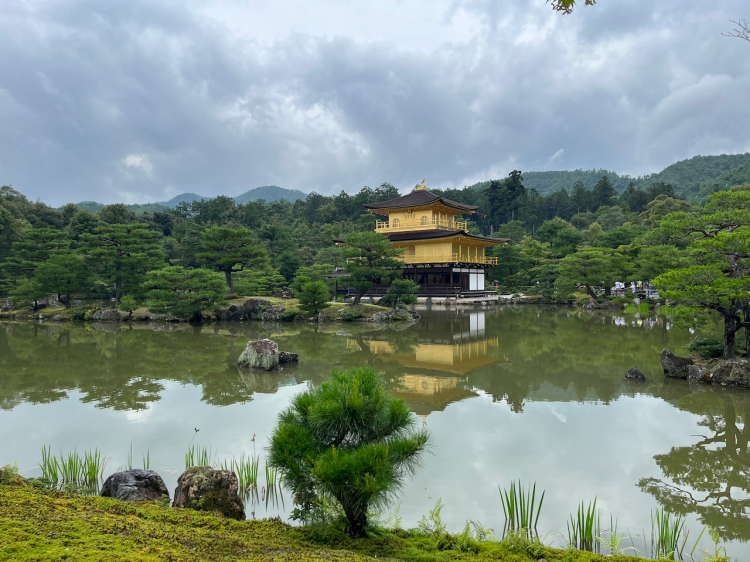
The Golden Pavilion, built as a villa for Ashikaga Yoshimitsu, later converted to a Rinzai Zen temple.

The high-point of “Zen-Samurai” culture as we know it can probably be traced to the 8th shogun of the Ashikaga Clan, Yoshimasa (足利 義政, 1436 – 1490) who while being a dismal military commander, was a brilliant innovator of Zen aesthetics. Yoshimasa had a taste of artistic genius, and patronized Zen-influenced architecture, painting, poetry, and gardening, and so on, but also directly added his own spin. The “zen aesthetic” we all recognize is largely due to Yoshimasa who synthesized earlier Song-Dynasty culture through establishment of institutions by the Hojo Clan.

However, on a personal level, Yoshimasa recited the nembutsu and seldom meditated.

Conclusion

All this is not meant to detract from Zen teachings, or the contributions of Zen monks to Japanese culture, or to imply that there were no Zen-devotees among the samurai class, but as I alluded to in the beginning, the romanticized Zen-Samurai image mostly exists on paper or in the writings of its sincere devotees. It was the ideal at the time among enthusiasts, and this ideal has persisted into Western culture, including teachers and self-help gurus.

How samurai in Japan, or Japanese in general, interacted with Buddhism (including Zen) was complicated and very individual, and not always related to piety. When you look at other pre-modern cultures, you see similar patterns. The emperors of the Eastern Romans had a complex relationship with the Church, and usually were not interested in the deeper teachings, or various doctrinal conflicts of the Byzantine Orthodox church except when it interfered with political goals (cf. iconoclasm, schisms, etc), or were varying degrees of sincerity. Further, how they practiced religion would have been noticeably different than your typical Eastern Roman in the provinces or the streets of Byzantium.

Now, imagine the same in any other culture: Western medieval communities, people in the Islamic caliphate, Chinese Buddhists, etc.

In short, how people interact with religion, and how its romanticized, are two different things. The dynamic interaction of people, culture and religion is fascinating, but not very marketable. The romanticized form of religion is marketable, but is like a bag of potato chips: tastes good, but rarely provides anything meaningful.

1 Please, please, please: if you ever go visit Japan, do not wear a “bushido” shirt. It really pegs you as a tourist.

2 The third “Obaku” sect of Zen in Japan is in fact yet another Rinzai Zen lineage that came from China, this time from the Ming Dynasty. By this point, Pure Land Buddhism and Zen in China had largely reconciled, and Obaku Zen includes more elements of Pure Land than is found in other Rinzai lineages, while still retaining its core Zen element.

New Pilgrimage Books

Hello readers,

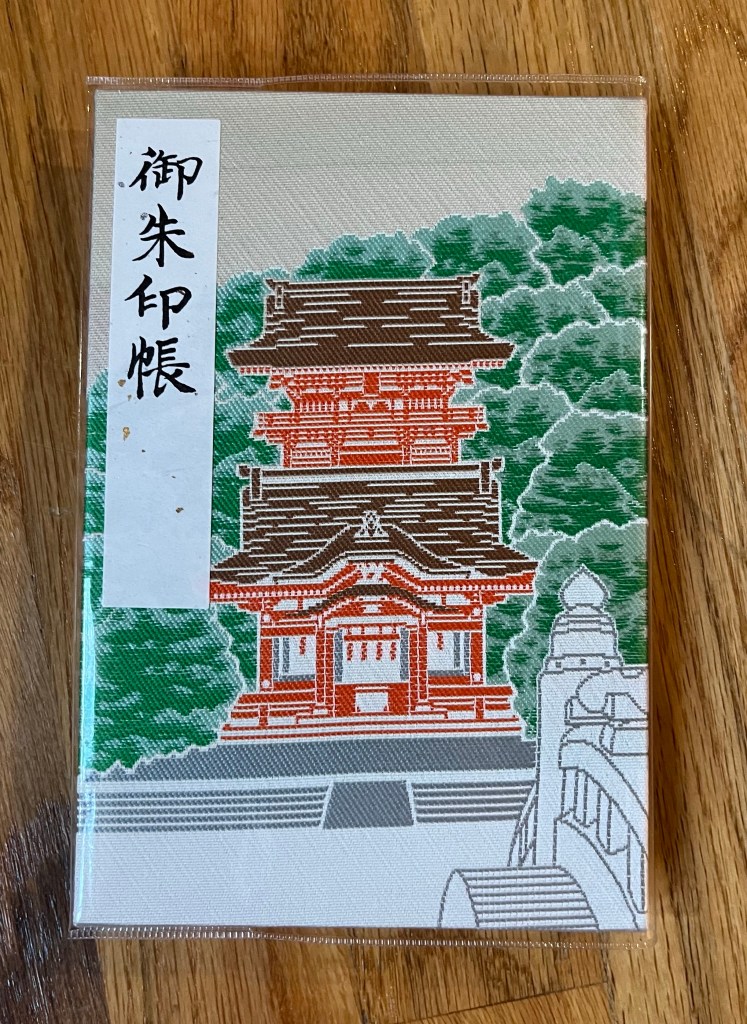
A while back, I talked about something in Japanese culture called a goshuinchō (ご朱印帳), or pilgrimage book. This is a tradition that started in the late-medieval Edo period, when life in Japan finally stabilized and people could afford to travel the countryside on Buddhist pilgrimages, or just sight-seeing. People would get a “seal” (shuin 朱印) at the site to prove they were there, brag to friends, build up merit for the afterlife, etc. The tradition of collecting stamps still carries on today in various forms.

When I last wrote about it, I had a single book for all my visits to both Buddhist temples and Shinto shrines. I learned later that these are traditionally kept in separate books. Since mine had filled up anyway, I had planned to buy two new books on my next visit, but then the Pandemic happened and I couldn’t visit Japan for 3 years.

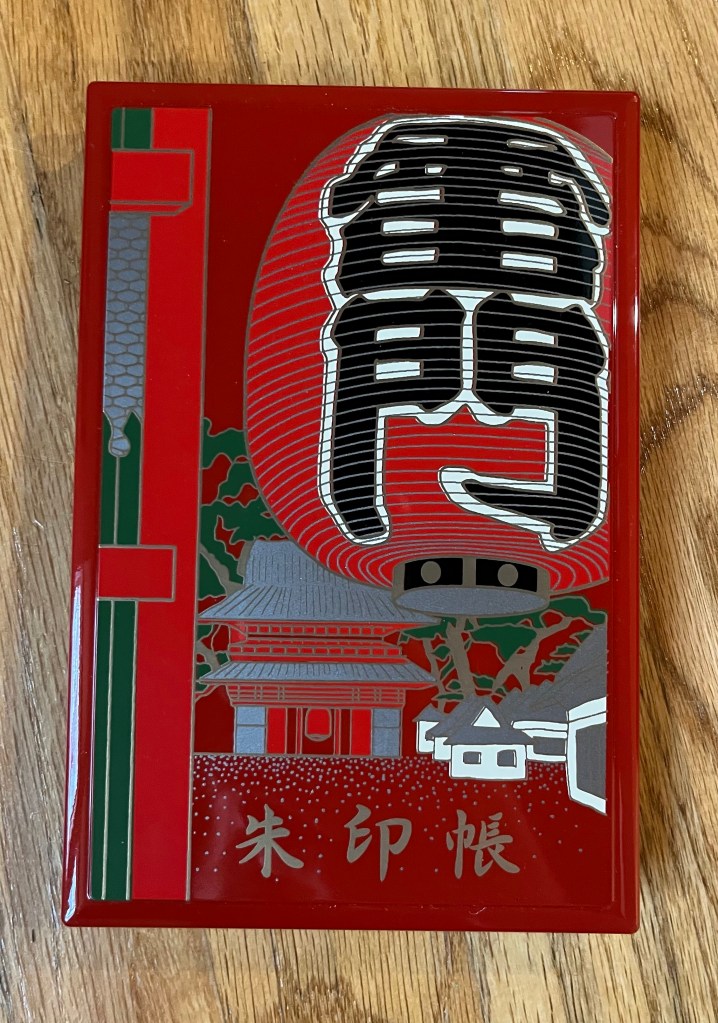
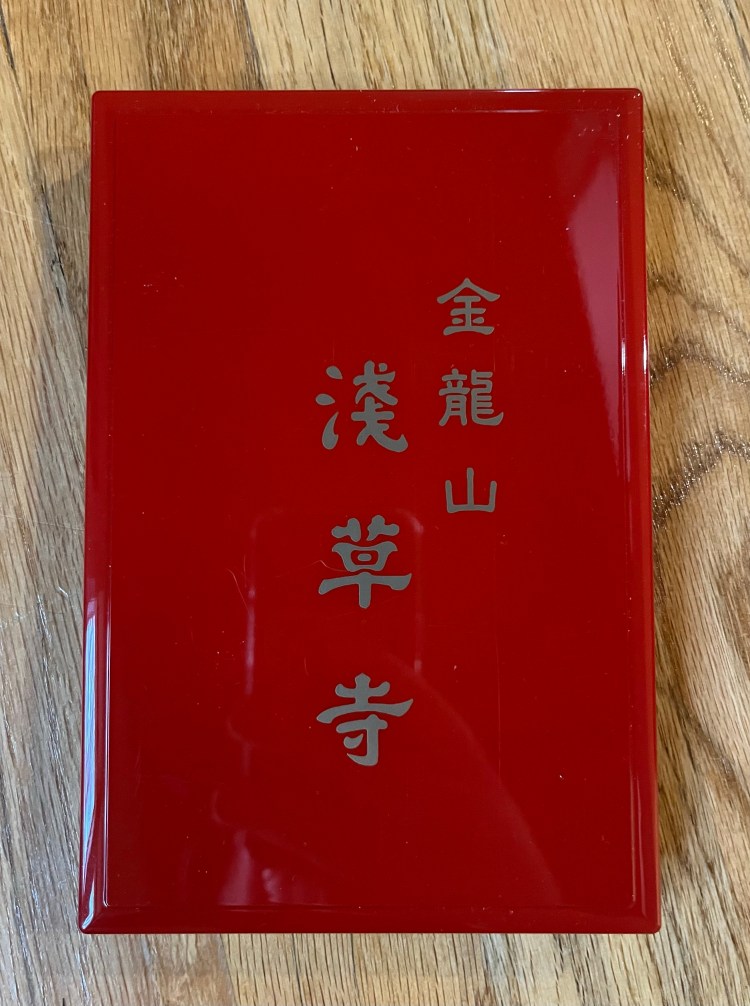
Finally, on our latest trip, I was able to get some fresh, new books. This first one comes from the famous Buddhist temple of Asakusa (a major tourist spot in Tokyo), also known as Sensōji:

Sensoji sold two pilgrimage books: the basic option, and the deluxe book. I went with the deluxe option which was about ¥1000. It came with a fresh, new seal from Sensoji as well (the one on the right):

Later, when I visited the Great Buddha in Kamakura, I also got a second seal (on the left).

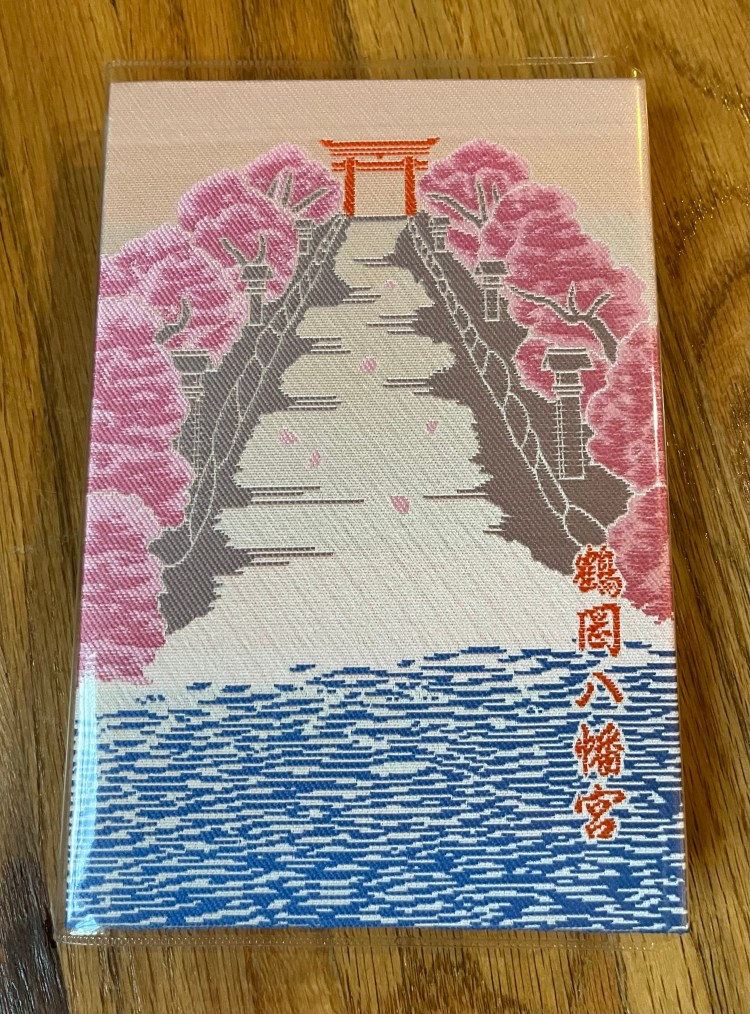
During that same trip to Kamakura, I also got a pilgrimage book for Shinto shrines as well from the famous Tsurugaoka-Hachimangū Shrine, which also had a really neat custom cover:

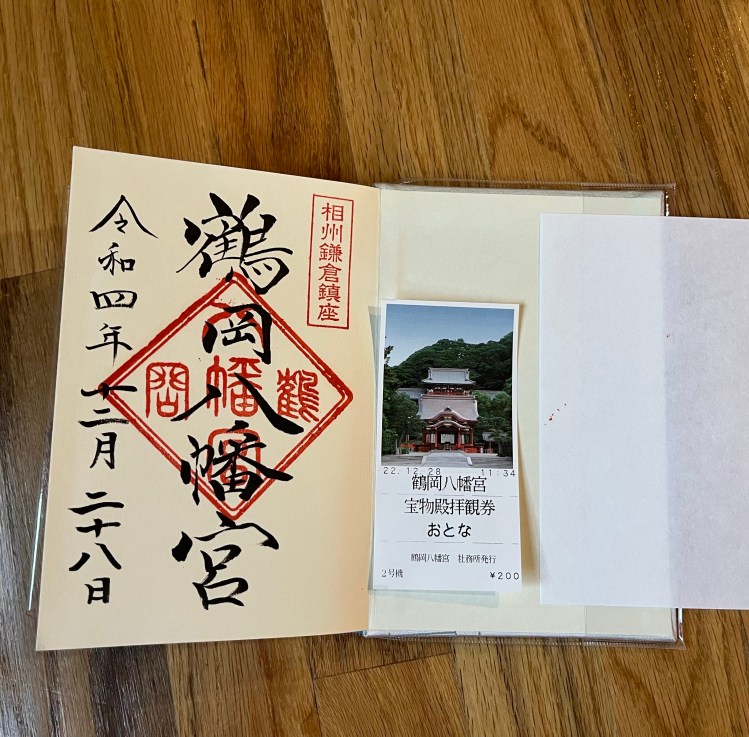
Tsurugaoka-Hachimangū Shrine has major historical significance due to its association with the old Kamakura Shogunate (mentioned here, here and here), as well as the death of Minamoto no Sanetomo. It’s a gorgeous cover, and I got a seal for this book as well:

The ticket shown here is from the museum which the family and I visited. It was neat to see real relics from the Shogunate, but that is a story for another day.

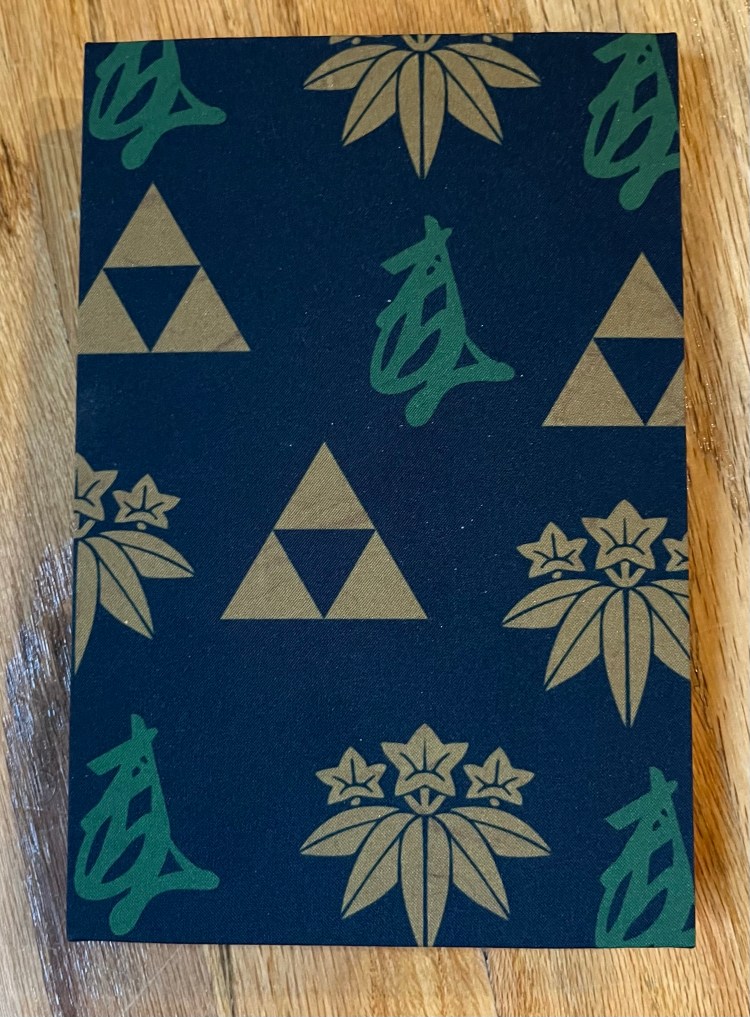
However, it turns out two books wasn’t quite enough. So, when we visited the NHK museum for the Thirteen Lords of the Shogun, the historical drama I loved to watch, I got a third book:

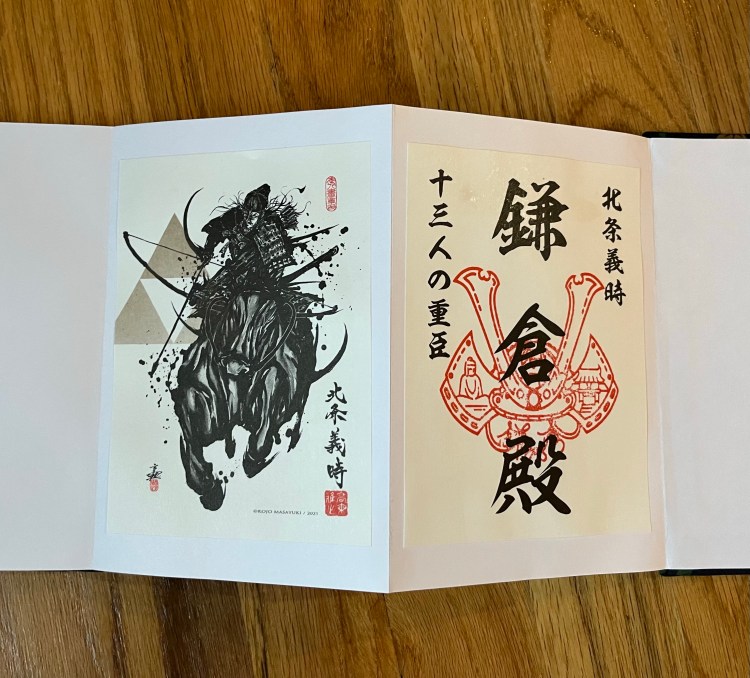
This one features the famous “triforce” logo of the Hojo family crest. I have noticed that pilgrimage books aren’t limited to just religious sites, people get stamps for all kinds of places they visit (many cities will have campaigns for kids to visit sites and get stamps too), so I decided to use this one for miscellaneous touristy sites I visit. At the gift shop, I got a couple stamps related to the Hojo clan and Hojo no Yoshitoki in particular:

Sometimes, when you visit a site, they will have pre-made “seals” rather than hand-written ones. The Great Buddha of Kamakura sold pre-made ones to avoid contact due to Covid-19, as did the gift shop. When you get such seals, you can simply glue them on. I use my kids’ Elmer’s glue sticks which do a nice job of adhering to the page without wrinkling the paper due to moisture.

Since I have three books, not one, I expected it to take much longer to fill them out. The last book I had, purchased at Todaiji Temple in Nara, took about 14 years (2005-2019) to fill out since I could only visit Japan on a sporadic basis. However, I remember my late mother-in-law carrying a well-worn book around whenever we visited Buddhist temples together. A pilgrimage is something very personal, and may last a long time if taken care of.

So, if you visit a famous site in Japan, especially temples or shrines, look for a ご朱印帳 sign nearby, and chances are you can pick up a pilgrimage book for a reasonable price and start collecting seals.

Awesome Historical Totebag

Speaking of the famous “nun warlord” Hojo no Masako, I wanted to share something really great that I picked up in Japan in Kamakura (still uploading pics from that trip, blog post coming later):

This totebag features the famous speech by Hojo no Masako shortly before the Jokyu War of 1221, when the retainers of the new Kamakura government (shown above) balked at taking up arms against Emperor Gotoba:

その恩[故右大将軍, 源頼朝に]はすでに山よりも高く、海よりも深い。

“The obligation we bear to the late Udaishogun (Minamoto no Yoritomo, Masako’s husband) is higher than a mountain, and deeper than the sea.”

from the “Azuma Kagami” (吾妻鏡, “Mirror of the East”), dated to , made in the 19th day of 5th month of the 3rd year of JOKYU era

The totebag is really cute, and represents a really great moment in Japanese history. I have been proudly using it for shopping and such since I came back to the US. The bag is made by Samurai Kibun (homepage here), which makes a lot of great products featuring famous figures in Japanese history. It appears they are focused on domestic, Japanese audiences, so there is no English site, and it states that it cannot ship overseas. So, chances are, you’re more likely to see Samurai Kibun goods in local shops in Japan.

So, if you are in Japan and you do find some of their goods, definitely show some support and pick something up!

The Man Who Held It All Together: Hojo no Yoshitoki

I’ve talked about several aspects (and people) of a fascinating by tumultuous period of Japanese history from the late 12th to the early 13th centuries. The climatic battle between the Genji (Minamoto) and Heike (Taira) clans led to the establishment of Japan’s first military government (a Shogunate) away from the aristocratic Imperial court. This new “Kamakura Shogunate” was a fragile set of alliances, punctuated by more than a few shady murders by rivals.

So for today, I wanted to focus on the one man who, in spite of everything, managed to hold this house of cards together: Hōjō no Yoshitoki (北条義時, 1163 – 1224).1

Cover for “北条義時 歴史を変えた人物伝” (“Yoshitoki: Biographies of Figures Who Changed History”), available through Kodansha Press. I happened to buy this book early in 2022 and have been reading it from time to time.

Hojo no Yoshitoki was the younger brother of the famous “Nun Warlord” Hojo no Masako, and later became head of the Hojo clan after his older brother died in war, and his father was exiled by Masako.

Yoshitoki served as the “regent” of the Shoguns, eventually becoming the de facto ruler. I watched the NHK “Taiga Drama” series, The 13 Lords of the Shogun,2 and was super excited to visit the city of Kamakura once again (more on that in a later post) when we visited in December. One of the first things I noticed was how prominent the drama, and in particular Hojo no Yoshitoki were. His visage was everywhere:

Hojo no Yoshitoki in the center, surrounded by the other 13 lords on a box of chocolate mochi. The mochi was excellent, by the way.
A billboard in Kamakura featuring the museum exhibit for the show. Note the “triforce” in the background, the symbol of the Hojo clan.

The drama portrays Hojo no Yoshitoki as a somewhat tragic, but stalwart figure. He serves the new Shoguns as their close advisor and ally, but also they force his hand sometimes to do the dirty work necessary to keep the Shogunate functioning. As he gets older, and the subsequent Shoguns are increasingly ineffective, he steps in his role as shikken (執権) and asserts control along with his sister Masako. Thus, the Shogunate centered in the city of Kamakura was effectively run by the Hojo clan and Yoshitoki in particular.

A poster for The 13 Lords of the Shogun, portraying Hojo no Yoshitoki (played by Oguri Shun). All rights held by NHK.

Yoshitoki’s story, like his sister Masako’s, is pretty dramatic. His father, Hojo no Tokimasa, allied himself with Minamoto no Yoritomo who later led the Genji clan as they rallied back and destroyed the Heike. This was a big deal since the Hojo were descended from the Heike, but for various reasons had fallen out with them. The Hojo’s alliance also convinced other local warlords to side with the Genji as well. The Hojo were the glue that made it all happen.

The trouble was was that after the war was over, the shoguns weren’t particularly great rulers. Yoritomo, the first shogun, was mercurial and had many of his rivals killed including his various half-brothers (often forcing Yoshitoki to get involved). He also slept around a lot, infuriating his wife Hojo no Masako. The second shogun, Yoriie,3 was combative and had little patience for the subtleties of government, and was eventually stripped of his power by his retainers. He plotted to overthrow the Hojo, but failed. Yoriie’s younger brother Minamoto no Sanetomo was a more gentle figure, but had little power or force of will, and by this point the shogun’s power was so diminished that it was little more than a fancy title. Then, Sanetomo was killed by his nephew (Yoriie’s second son) Kugyo, ending the Minamoto line.

And that was all before the Emperor Gotoba attempted to restore the power of the Imperial Court through the Jokyu War. Hojo no Masako’s role in rallying the troops has been covered in other posts, but Yoshitoki had a strong hand in this too.

In fact, while brother and sister frequently clashed with one another, they still worked together to keep everything functioning. Yoshitoki often functioned as the administrator, while Masako was the “spirit” behind everything, especially after her husband died, and especially when they had to exile their own father Hojo no Tokimasa for his autocratic tendencies.

Sadly, due to holiday schedule, and traveling, I missed the final episodes of the NHK drama, so I don’t know how it ended (I have already pre-ordered the DVDs), but it’s clear that Yoshitoki and his sister Masako held the government together under very difficult circumstances.

The manga above is just one of several published over the years that I found covering the life of Hojo no Yoshitoki. He is a figure regarded in Japanese history as an able leader, a loyal retainer to the Shogun, and while his hands weren’t clean, he still came out of it all with a good reputation. Given how much backstabbing and plotting went on by his family, his allies, and his enemies, that no small feat.

Yoshitoki was, to put it mildly, the man who held it all together.

P.S. Japanese family names precede given names, hence Hojo the family name comes first. Also, in Japanese antiquity, the “no” was used by people of pedigree, implying they were from an important clan or house. Hence, Minamoto no Yoritomo would, roughly translated into English, mean “Yoritomo of the House of Minamoto”.

1 In Japanese ō and o are pronounced the same (e.g. as “oh”), but ō is two beats, while o is just one beat. This may seem odd to English speakers, and to us it sounds the same, but it makes a big difference in pronouncing Japanese correctly. More on that in a latter post. For the purposes of this post, Hojo and Hōjō are basically the same.

2 I originally mistranslated 鎌倉殿の13人 as The 13 Lords of Kamakura in earlier posts … oops.

3 Pronounced like Yo-ri-i-e (it’s easier to parse in Japanese than in Romanized script).

Lonely At The Top: Minamoto no Sanetomo

I’m still keeping up with the Japanese historical drama the Thirteen Lords of Kamakura, discussed here, which is based primarily on the Azuma Kagami (吾妻鏡) a historical text about the period, and a fascinating look at how the Shogunate, or samurai military government, of the Kamakura Period rose and fell.

The rise of the Kamakura Shogunate began with the climactic battle between the Heiki (Taira) clan and the Genji (Minamoto). In order to topple their rivals, the Genji had to enlist a complex web of alliances with other samurai clans in the eastern regions of Japan, with Kamakura as their capitol, most crucially the Hojo Clan (the source of the Triforce in the Legend of Zelda series). This alliance overwhelmed the Heike and led to downfall.

However, once the Heike were wiped out, and the old Imperial political order ended, the various clans including the Minamoto themselves turned on one another to sort out who the Shogun would be, and would be pulling the strings behind the throne. The first Shogun, Minamoto no Yoritomo, turned on his half brothers and killed them one by one using flimsy legal pretexts, while his firstborn son Yoriie, the second Shogun, vied with his council (the aforementioned 13 Lords above) until he was driven into permanent exile. Hojo Masako, the so-called “Warlord Nun” contended with her father Hojo Tokimasa when he tried to assert a dominant hand, and had him exiled too. As all this was going on, the various allied clans took sides with members of the Hojo and Minamoto. Generation after generation, people kept stabbing each other in the back in order to advance their faction in the new military government.

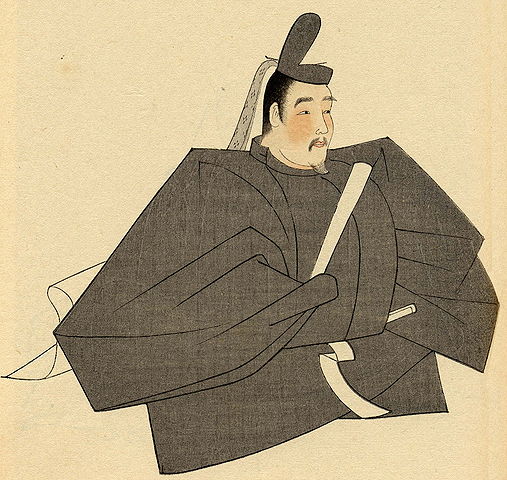
Sanetomo in court clothing, painting by the priest Goshin. Photo courtesy of Hannah, Public domain, via Wikimedia Commons

This left Yoritomo’s younger son, Minamoto no Sanetomo (源 実朝, 1192 – 1219), to assume the position as Shogun, the 3rd in line. Sanetomo was doomed from the beginning.

Sanetomo was a puppet of his maternal family, the Hojo Clan, who surrounded him as advisors and ministers, but also carried out the real functions of government. Sanetomo knew from early on that he was essentially a figurehead, and could easily be toppled by whatever faction wanted to replace him with a more amenable candidate for Shogun. It is said that Sanetomo retreated into drinking and composing poetry, of which one of them is included in the Hyakunin Isshu anthology:

JapaneseRomanizationTranslation by Joshua Mostow
世の中はYo no naka waIf only this world
つねにもがもなTsune ni mo ga mo nacould always remain the same!
なぎさこぐNagisa koguThe sight of them towing
あまの小舟のAma no obune nothe small boats of the fishermen
who row in the tide
綱手かなしもTsuna de kanashi mois touching indeed!
Also posted in the other blog…

Sanetomo evidentially composed the poem after watching some fishermen at work on the shore, envying their simple lives in contrast to the constant political infighting and manipulation that surrounded his.

Sadly, things never got better.

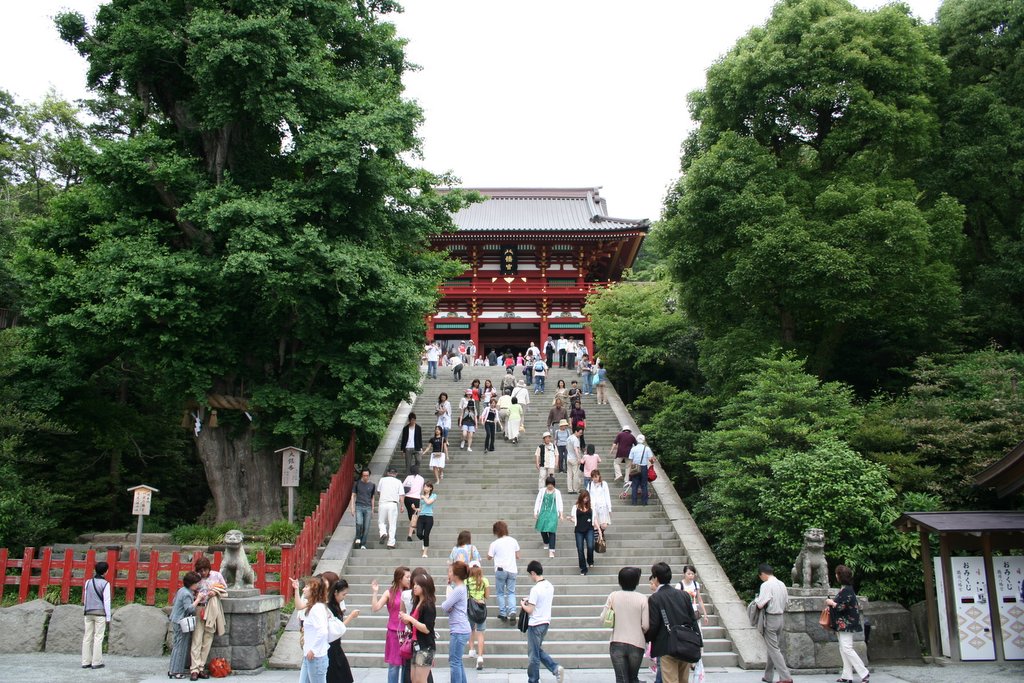
Sanetomo’s life ended at the age of 28, when he was assassinated by his nephew at the footsteps of the famous Tsurugaoka Hachimangu Shrine (visual tour here) in Kamakura. It is said his nephew hid behind the ginkgo tree there, and as Sanetomo descended the steps, leapt out and ran him through with a sword.

The gingko tree where Sanetomo’s assassin hid is shown here on the left. In 2010, the tree now many hundreds of years old, fell over in a powerful wind storm, and has been partially rehabilitated from a shoot. No machine-readable author provided. Abrahami assumed (based on copyright claims)., CC BY-SA 2.5, via Wikimedia Commons

Further, the Kamakura Shogunate only spiraled further. With Sanetomo’s death, the Minamoto line ended, and the Hojo Clan promoted various relations of the Minamoto (often drawn from the Fujiwara clan) as the subsequent Shoguns. Each one of these shoguns was simply another figurehead, while the Hojo tightened their grip on power as “regents”. Once Hojo Masako died, there was no one left savvy enough to hold it together, and the Mongol invasions further drained away any remaining resources until the government was finally toppled by a rival warlord.

Sanetomo’s life, the ignominious circumstances that surrounded his family (both his father’s line and his mother’s family’s scheming) ensured that even with the powerful title of Sei-i Taishōgun (征夷大将軍, “Commander-in-Chief of the Expeditionary Force Against the Barbarians”) he lived alone and apart from everyone, constantly in fear of his life, and powerless to do anything about it.