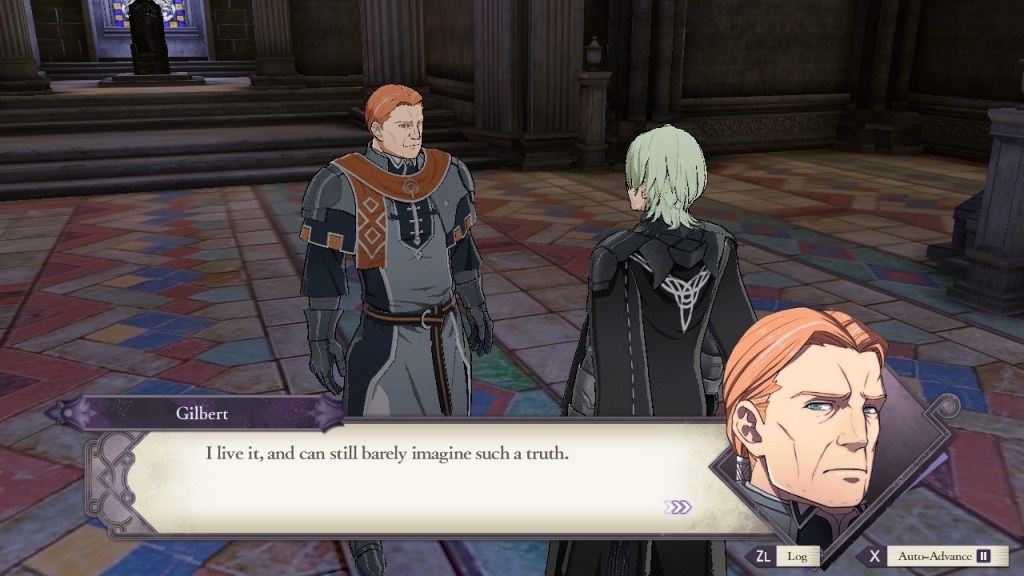
I’ve been thinking about this quote from Fire Emblem: Three Houses ever since the conflict in Gaza has started. I recognize that different readers will have different views about the Gaza conflict, so I won’t try to impose any ideas or viewpoints.
So, I’ll just leave that quote for your consideration, as well as these:
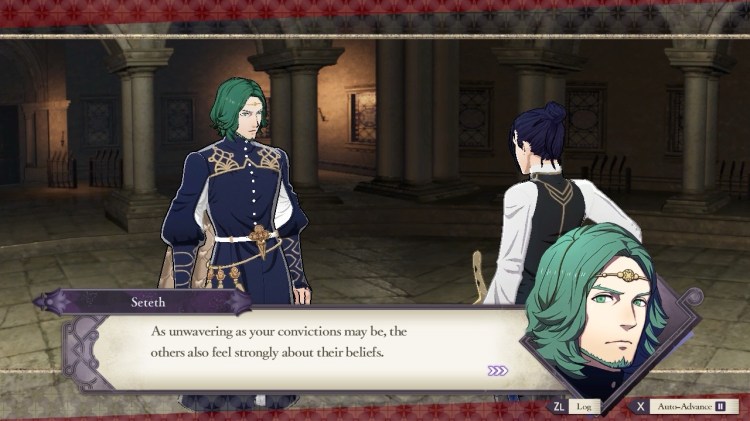
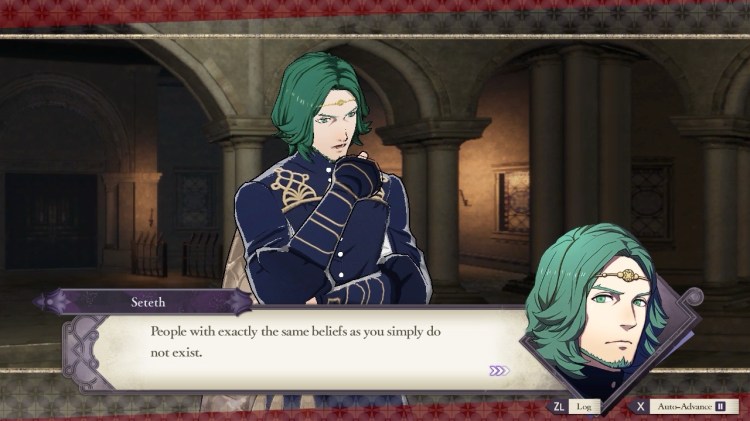
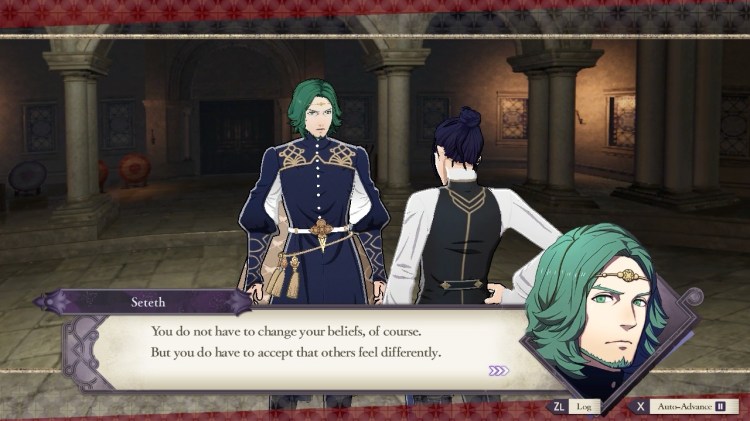
I thought this was a neat dialogue between two of the characters in the game Fire Emblem: Three Houses. The older Seteth (green hair) is offering some advice to the young and prickly Felix:
This might seem self-evident, but because we only see the world through our own viewpoint, our own thoughts and experiences, it’s easy to forget that other people have other viewpoints and other experiences, and come to their own conclusions, right or wrong.
Different game, but I hope the sentiment makes sense. 😆 It’s also why Buddhism emphasizes unconditional goodwill so much.
Since I started playing Fire Emblem: Three Houses, I have been continuously impressed with how well-written and relatable the cast of characters is. But there’s more to it.
Early in the story, when you first meet the other characters and students, many come off as quirky, annoying or just mean. However, as you progress in the game and get to know them through dialogues (e.g. “supports”), you learn more about why they are the way they are. Why is Dorothea such a good-digger? Why is Felix such a jerk? Why is Marianne so gloomy, Lysithea a workaholic, Sylvain a womanizer, and so on.
What you learn over time is that many of these characters, even the more stable ones, have some kind of personal trauma or persistent fear that’s driving their lives. Some characters have more crippling mental health issues, while some just hide their pain better than others.
After playing through a game like this, it’s not hard to see that many people around you are almost certainly suffering from some past traumas or persistent mental health problems. The degree or nature of that problem is different for each person, and some people hide it better than others, but I bet if you scratch the surface you will see it.
Of course, this applies to ourselves too. Past traumas, emotional pain and lingering, persistent mental habits color our behavior on a daily basis.
I grew up as the eldest son of a single mom in a conservative community in the 1980’s, and experienced plenty of bullying and ostracism as a result, while trying to grow up fast and help the family.1 I have no doubt this colors my behavior today. Seeing my grandmother dead from cancer at age 57 on the hospital bed two days after Thanksgiving in 1990 still comes back to me every November.
But there’s more to this.
As the game progresses, and through increased interaction, many of the characters open up about their pain and trauma to others and from this they find kindred spirits, or they gain new perspectives. It doesn’t erase the past, but oftentimes it helps them find closure, or get the support they needed.
In Buddhism, we revere the Sangha (the community) as one of the three treasures, along with the Buddha (teacher) and the Dharma (the teachings). The Sangha is essential in Buddhism because people can’t do it alone. The Buddha recognized from the beginning that people need one another, and can support one another.
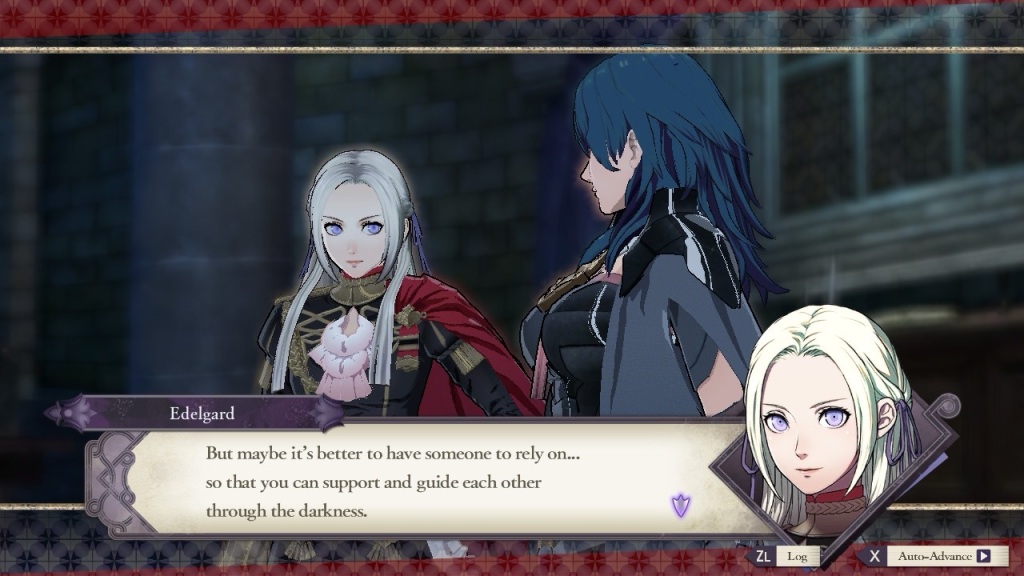
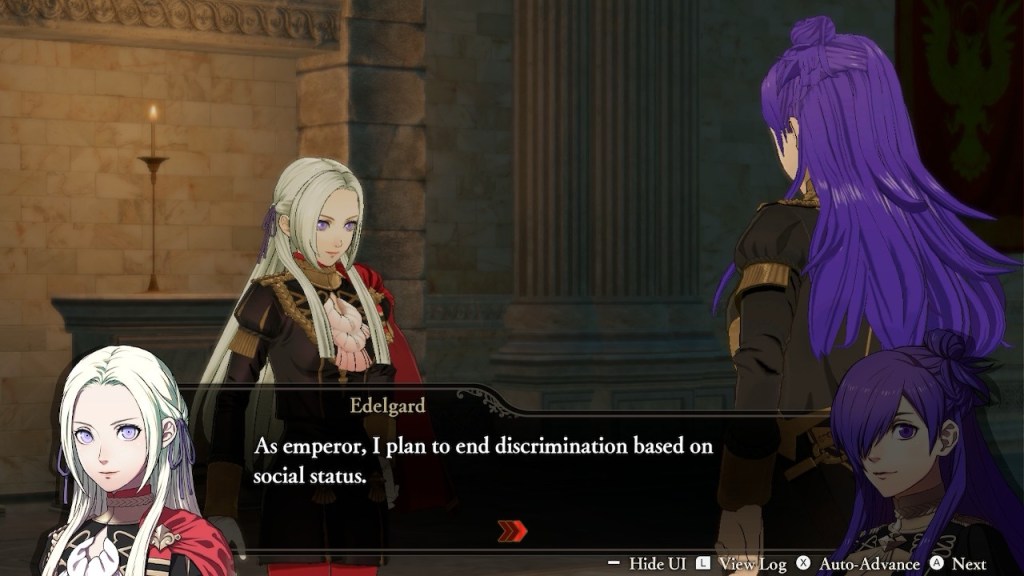
I love how Edelgard may appear as a villain at first glance, but then there are moments like these…
Even when the Sangha has its fair share of dickheads and scallywags, the mutual support people offer one another is part of the therapy that Buddhism offers. This isn’t limited to Buddhism, by the way; one can find solace in any religious community. My other grandmother was a devout Lutheran and would go to her local church every Sunday for many years.
It’s just that Buddhism overtly recognizes that everyone suffers from mental health problems on some level, which are given fancy terms like kleshas in Sanskrit, or bonnō in Japanese, but also that there aren’t easy solutions. It’s a long slow process, and it requires a mutual support network.
It’s scary to share one’s pain with others, or even with yourself,2 but it can really take a heavy load off you, and help provide new perspectives. You don’t have to force it either. As you spend time with others, people naturally start to open up over time. There’s no magic here, it’s just simply that people need one another, and this is how we find peace and wellbeing.
Namu Amida Butsu
1 a little bit like Jonathan Byers in Stranger Things, minus all the weird extra-dimensional stuff. Maybe. 😋
2 sometimes a personal journal or an anonymous blog can really work wonders.
More than faith, or doctrine, or anything, the notion of ignorance in Buddhism is of central importance. It is the root of all evil, so to speak. However, ignorance in Buddhism doesn’t mean stupidity. Very smart people can be ignorant. Ignorance has nothing to do with intelligence, it has everything to do with perception.
Each being born into this world is born under specific conditions and circumstances. Those circumstances color our world, from who our parents are, our culture, the language we speak by default, religious beliefs, and so on. Further, these circumstances influence how we react to new things, which develop into further lines of thoughts, choices, and so on. Rinse and repeat.
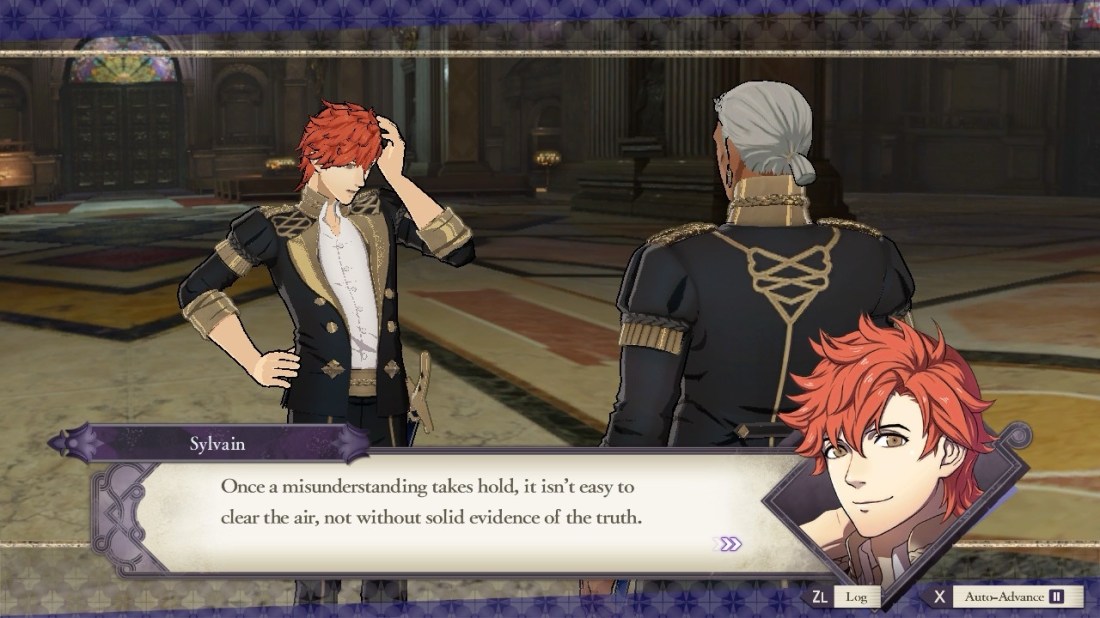
As the screenshot from Fire Emblem: Three Houses above shows: small misunderstandings take hold and are hard to undo.
There is a classic story in India, common to various religious traditions including Buddhism. In the story, a monk is wandering out late night through a grassy field to use the restroom, and steps on a snake. He panics, faints and then falls over unconscious. The next morning he wakes up, and realizes that he stepped on an old piece of rope, not a snake. He was certain at night, based on limited information, that he had stepped on a snake, but his perception was flawed and he drew an incorrect decision.1
Even if consider ourselves wise, and “know better” than others, we have to stay vigilant at all times. Little mistakes in understanding can lead to painful consequences.
I recently got mad at someone during an online game when I thought they were showing off. I was sure they were flaunting their victory in my face, and was pretty cranky all day until I reviewed the game and realized that I had misunderstood their last play. Once I realized that, I knew right away I was in the wrong, but I couldn’t undo the grumbling, anger, and ruined day. That quick half-second misunderstanding cost me a day. Fights with spouses or partners often start like this. Wars between two countries or two ethnic groups start like this.
Ignorance also comes in the form of overconfidence in one’s understanding of the world. A sense of self-satisfaction.
The first step in avoiding a trap, is knowing of its existence.
–Dune (1984)
There is no quick and easy solution in Buddhism for this. Knowing what ignorance is, and how insidious it is, and how easily we as functional adults can otherwise get duped by it is a step. Vigilance into one’s own thoughts, words, and actions is essential.
Namu Amida Butsu
1 Similarly, the Buddha described grasping Buddhist doctrines properly as similar to grasping a viper. If done improperly, it can cause much harm.
I’ve been thinking about this conversation, shown above, from the game Fire Emblem: Three Houses. The game was made in 2019, just before the Pandemic, and other nonsense that went on in 2020 onward. How prophetic that statement was. Then again, I suppose this is something every generation has to live through in some ways. Sooner or later, things change, we lose something in the process and never get it back.
Wise words indeed…
It reminds me of a quote from the Analects of Confucius:
[9:17] The Master [Confucius], standing by a river, said, “It goes on like this, never ceasing day or night!”
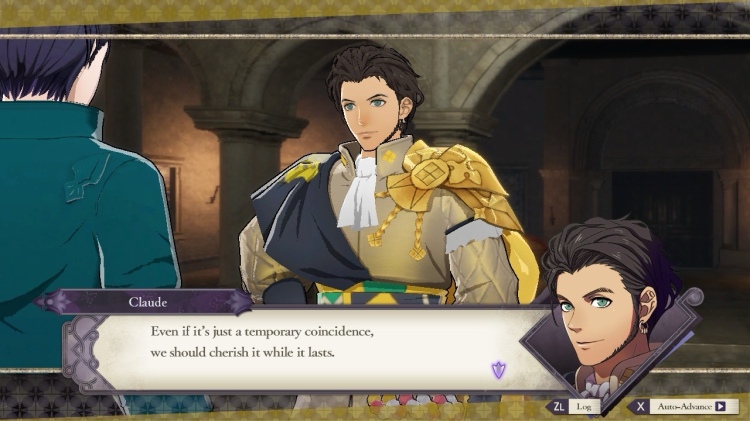
Not to long ago, I tried to describe the First Noble Truth of Buddhism as pain, but I was thinking about it a bit more, and I think it’s a bit more nuanced than that. Buddhism describes the nature of existence as samsara, which in the past I’ve described as a kind of cosmic rat race, or described elsewhere as “aimless wandering”. And yet, while playing Fire Emblem: Three Houses, this dialogue by Claude (arguably the “bro” we all need in life1) got me thinking:
“Even if it’s just a temporary coincidence, we should cherish it while it lasts.”
We never really get to cherish the good moments in life as long as we’d like, and there’s always just a bit too few of them anyway. Many Buddhist cultures romanticize this through things like cherry blossoms, poetry, and such, but it’s a sentiment that all people everywhere across history have felt. Even futuristic cyberpunk.
Further, we are thrust into life with being given any clear guide. Sure, we might find religion (or religion is thrust upon us in our youth), but this is not always guaranteed to be satisfying, and for us spiritually-inquisitive types, it’s not hard to scratch the surface and find issues here too. On the other hand, I think it’s wrong that there are no answers either. The world does function according to some kind of principle, just as it follows the laws of physics, even if we don’t fully understand it, and it behooves us to figure out what the principle is.
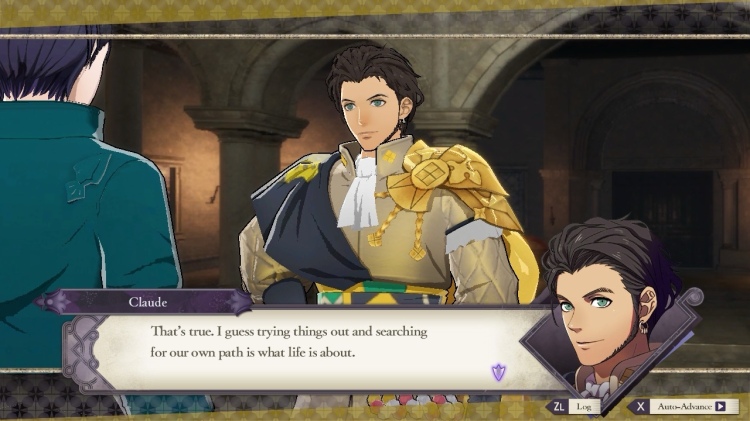
I think Claude is onto something here when he says that life is probably about living and experiencing and learning from it.
“That’s true. I guess trying things out and searching for our own path is what life is about.”
Or this quote from the classic science-fiction novel Dune Messiah:
“If you need something to worship, then worship life – all life, every last crawling bit of it! We’re all in this beauty together!”
Frank Herbert
The tragedy though comes from the fact that we’re not given so little time to do it well, and life often gets in our way. If we don’t find the answer we’re looking for in 40 years or even 400 years, then was any of it worth it? It’s hard to say. Further, in whatever life to come, we have to pay for our choices we made here, regardless of what happens next.
So, Claude is right: we really do need to cherish these moments. There are simply too few.
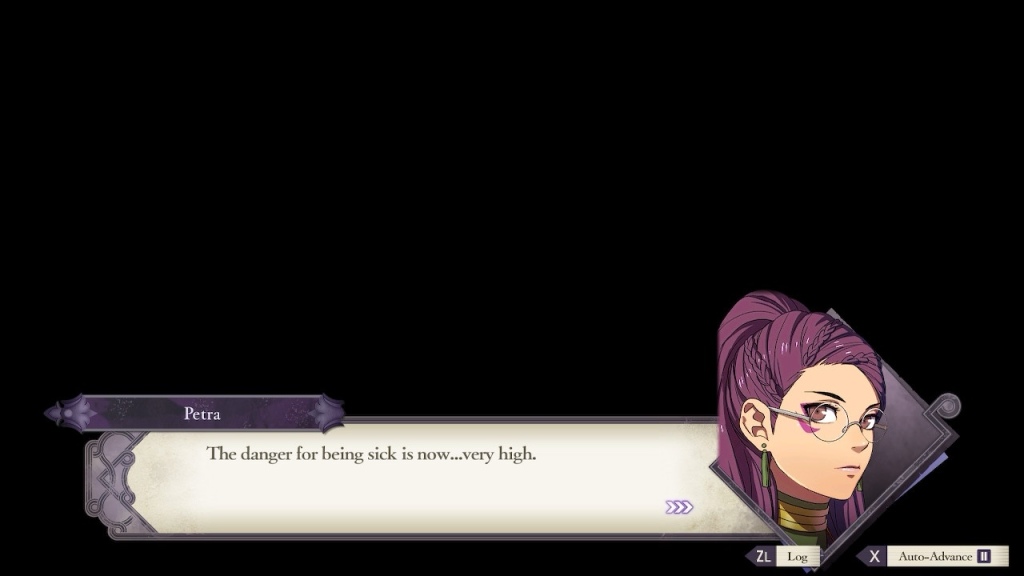
P.P.S. Not related to anything Buddhist, but Petra trying on glasses for the first time was a great gag. Sometimes you just have to enjoy the “small happinesses” in life.
“The danger for being sick is now … very high.”
P.P.P.S. The title of this post was inspired by the soundtrack song of the same name:
1 Big kudos to Joe Zieja for his amazing voice acting, by the way.
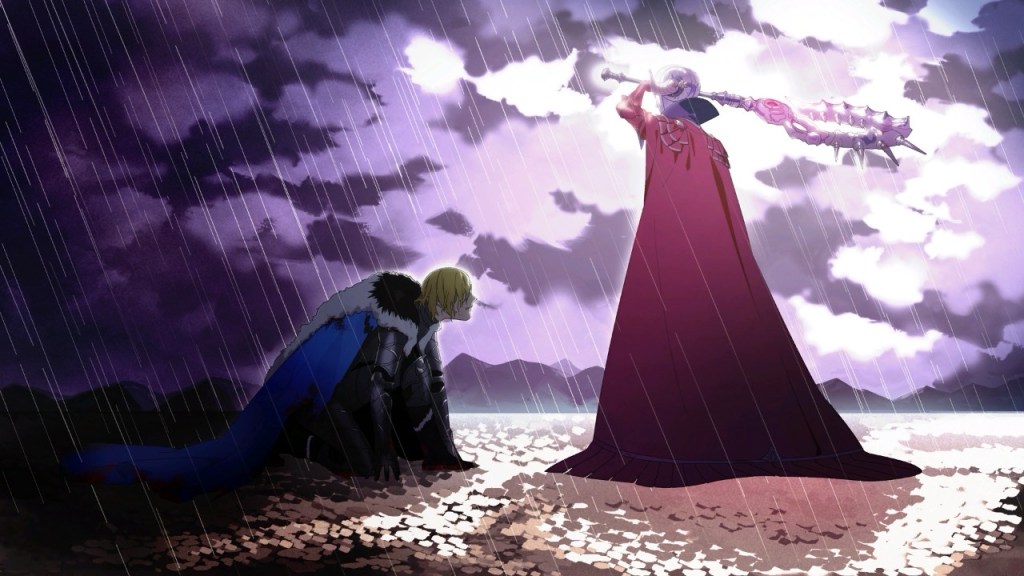
I finished my second play-through of Fire Emblem: Three Houses this weekend, the Verdant Wind route. My first play-through was through the Crimson Flower route (e.g. the Black Eagles) and it was a beautiful story, but seeing Edelgard from another perspective, and especially her demise, really hit me hard.
Seeing the many sides of Lady Edelgard truly made me appreciate her the way I might appreciate a figure from a Greek tragedy.
Warning: further spoilers ahead.
Of the three lords in Fire Emblem: Three Houses, Edelgard was the most ambitious, but also incredibly charming. Even her most trusted retainer, Hubert, had a love/hate relationship with her: deeply devoted but also afraid of her power, and her willingness to make morally questionable choices. Most routes through the game don’t really delve into why she is like this until you get to the Crimson Flower route.
There, over time, you learn of her manipulation by powerful relatives (and their dark allies), or her suffering by their experiments,1 and also the loss of her siblings. In the end, she decides to take control of her fate, and the fate of all of Fódlan, in her hands.
The game designers wisely avoided making her a Mary Sue type character. Instead, she makes some very tough and cruel decisions when necessary.
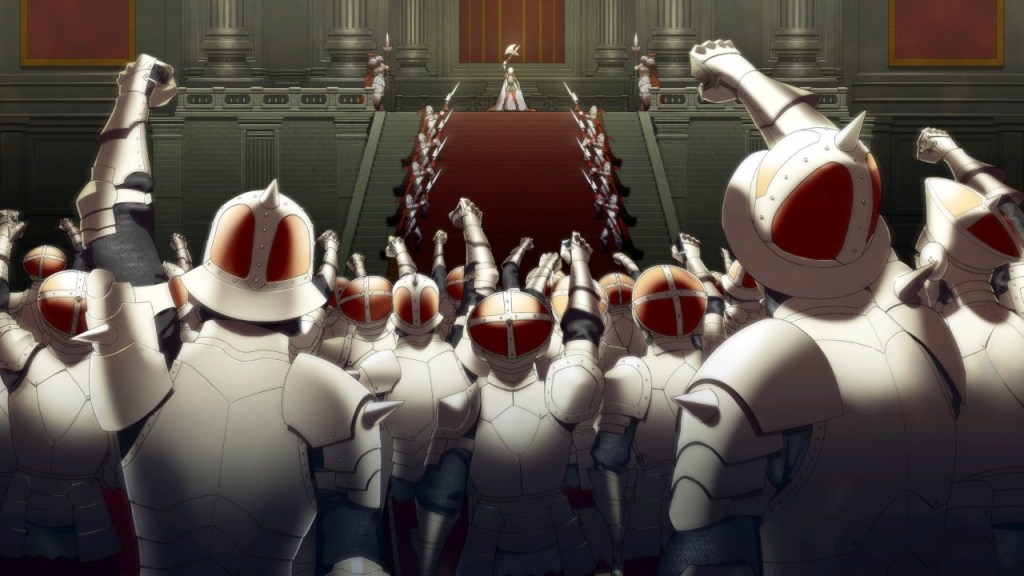
Further, there’s no denying that through her leadership, she unleashes terrible destruction and death to achieve her aims. She knows that her path will be a dark and bloody one, and decides to walk it anyway, believing that the ends justify the means.
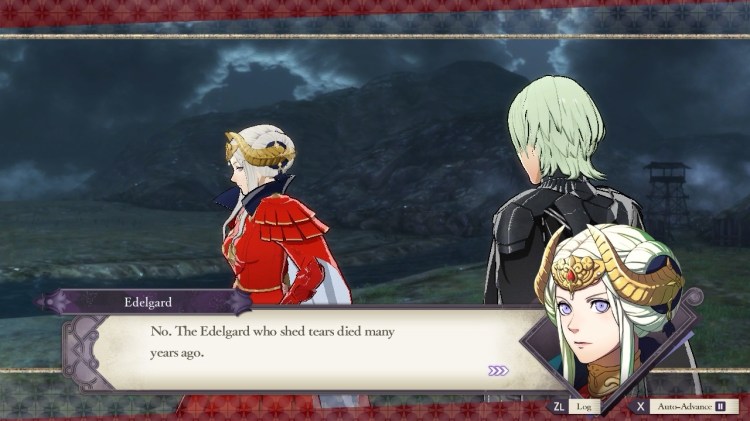
“No. The Edelgard who shed tears died years ago.”
And yet, despite her tough exterior, she also never completely loses her humanity.
She is devoted to her fellow students, and to Byleth, and devoted to a future where the old aristocracy and the Church are overthrown and everyone can be equal. In spite of her cold exterior, when Byleth falls in the Crimson Flower route, she sheds many tears.
She even grieves for Dmitri, even if she tries to hide it.
Edelgard was the ardent revolutionary of the game,2 and whether you liked her or not, she drove the story, and she commanded genuine admiration and respect from her peers, and from players like myself. It is sad that in most game routes she suffers a tragic ending one way or another, when all she wanted to do was prevent others from suffering the same fate that she did. Her choice in methods of course is where people might disagree (and do), but in the end she was still a human being, not a two-dimensional villain, and her humanity, flaws and all, is what makes her such a compelling character.
If that doesn’t feel like a Greek tragedy, I don’t know what is.
P.S. Amazing voice acting by Tara Platt, by the way. She really brought Edelgard to life.
P.P.S. I still have two more routes to go.
1 In the Verdant Wind route, Lysithea implies that Edelgard suffered much as she did through those experiments. That explains their similar hair color, and it makes me wonder if Edelgard similarly suffers from a shorter lifespan, though this is never explored.
2 Arguably, Claude is also a revolutionary, but he also had the luxury of being able to wash his hands of the messier aspects whenever he wanted to. That said, Claude is the “bro” that everyone needs in their life, and I really liked his story route ending too, especially since in my play-through he ended up marrying Leonie which was a pleasant surprise.
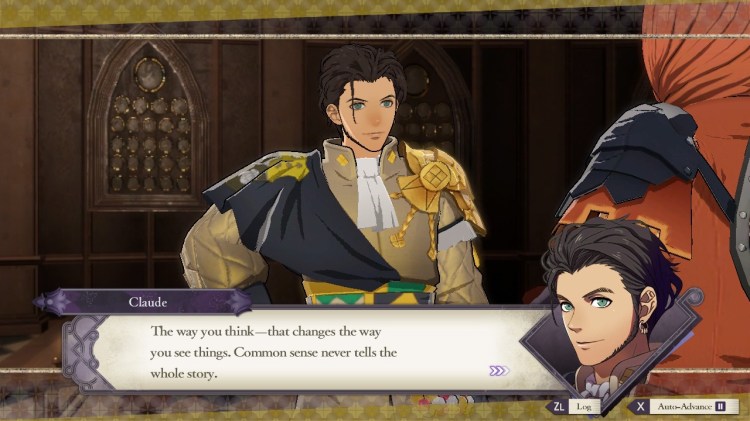
After finishing the game Fire Emblem: Three Houses, I am playing through again, but this time through the Golden Deer house,1 and I stumbled upon this amazing quote by one of the characters, Claude:
Claude is a particularly insightful character in the game (and probably one of the coolest), but this statement really sounds Buddhist to me, especially if you are familiar with Yogacara Buddhism, or the concept of mind as mirror.
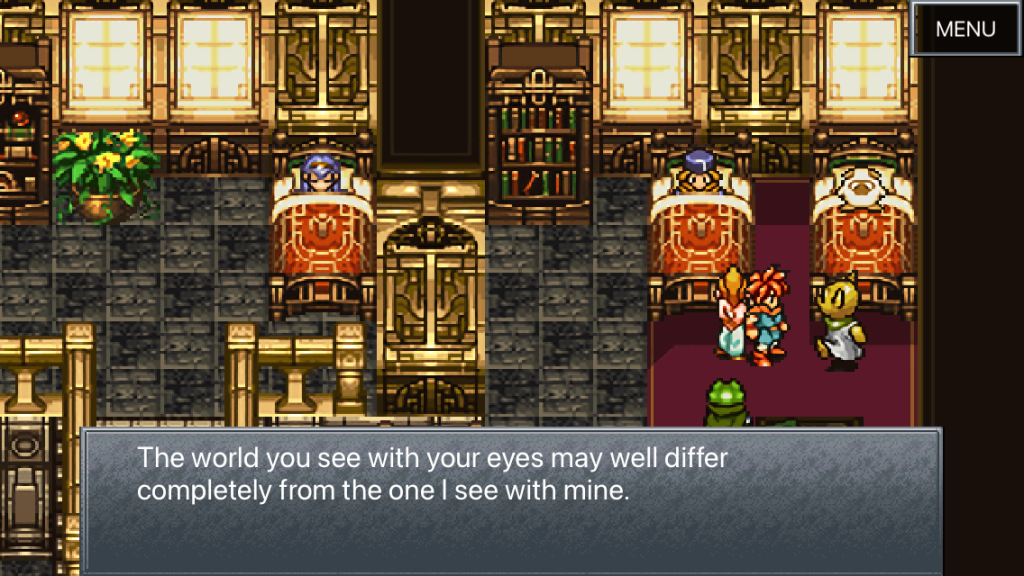
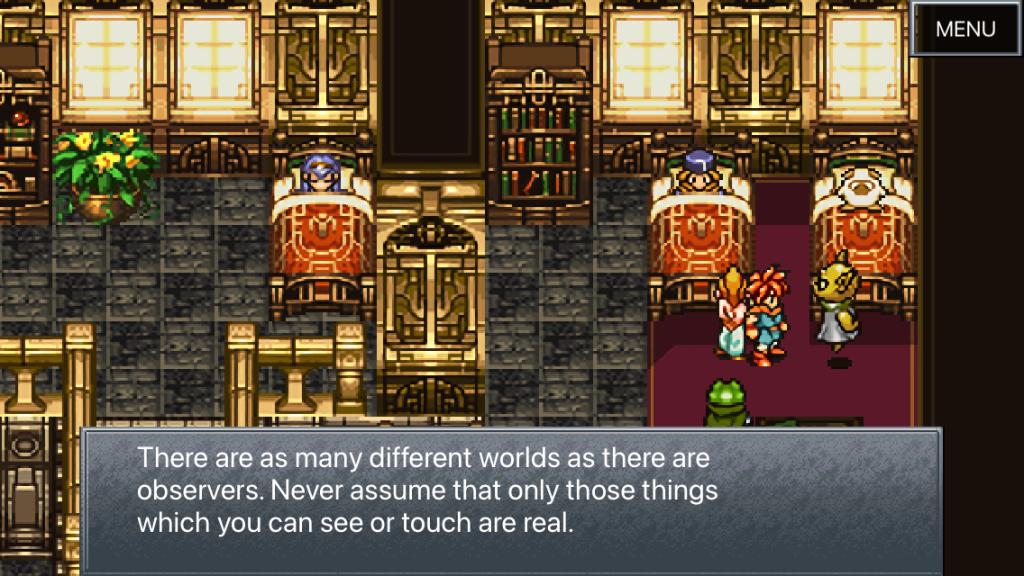
It also reminds me of that quote I posted previously from Chrono Trigger:
Speaking of Fire Emblem: Three Houses, I have really enjoyed how diverse and well-written the characters are. With each path, the characters start out pretty different, but in time they learn to understand one another as your teamwork builds up, and in spite of their different viewpoints, they learn to work more closely together, sometimes even romantically. They don’t necessarily agree with one another, but they learn to co-exist at the very least. That’s not an easy thing to do, but I believe it’s the emotionally mature thing to do.
In any case, I think what matters is learning to appreciate how one-sided your own viewpoint is, even when it feels like “common sense”.2
The choices you make, the lifestyle you choose then to create a feedback loop that reinforces your own view of the world, and this in turn skews your thinking more and more to one viewpoint. It’s an easy thing to say, but hard to notice in oneself. You don’t have to throw it all out, but never be afraid to question your own assumptions.
Since this is also the start of the Juya season in the Jodo Shu tradition, best wishes to you all!
Namu Amida Butsu
1 previously Black Eagle house. Edelgard is controversial, but that lady was amazing. I got a little choked up at the end.
2 even the Buddha called this out in the famous Kalama Sutta.
Amidst all the posts about Japanese history and Buddhism, I had been playingZelda: Tears of the Kingdom in my spare time, but to be honest I found the game long and tedious compared to its predecessor. Once I defeated Ganon (in mid-suavamente, no less), I was exhausted and put the game down and haven’t picked it up since.
Looking for other games to play, I realized that I had purchased Fire Emblem: Three Houses a while back and hadn’t played it. Thanks to Super Smash Brothers Ultimate, I was introduced to the Fire Emblem series (big in Japan, not as well known here), and figured I should try at least one game.
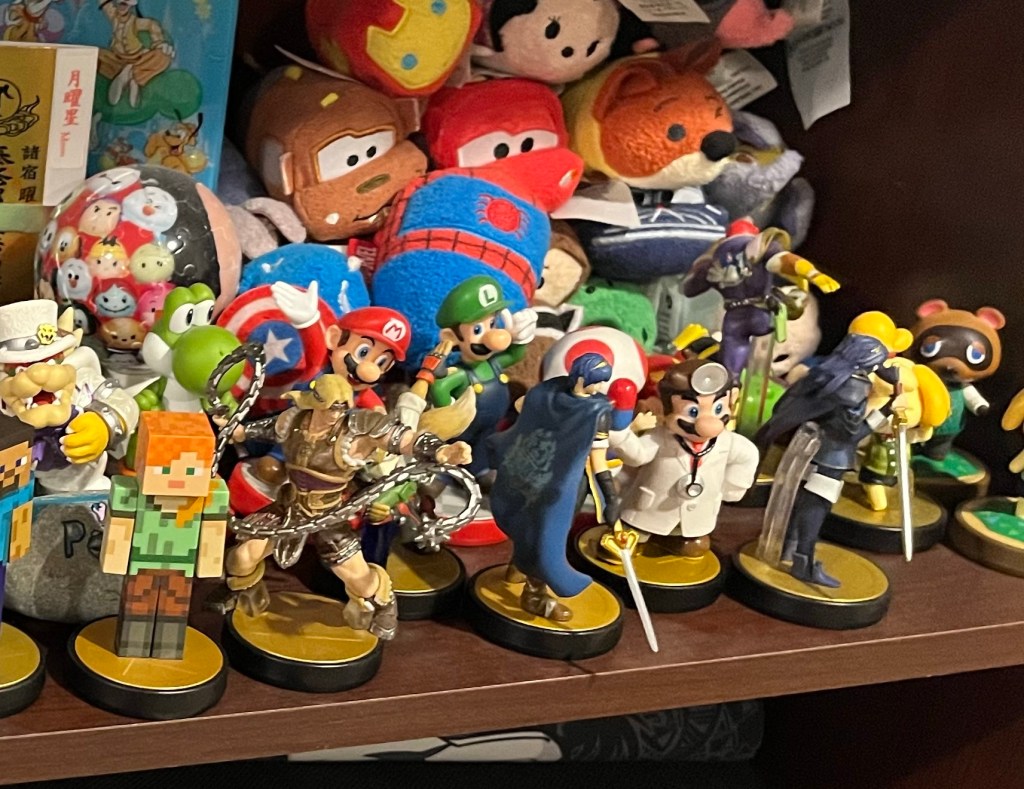
My Amiibo collection includes both Marth and Lucina from Fire Emblem, since I “main” both characters in Super Smash, plus Captain Falcon. FALCON PUUUNCH!!
I have been totally hooked on it since.
The Fire Emblem series has apparently been around a long time, famous for its turn-based strategy, and permanent death for any teammate that falls in battle. However, another side to the series is its character depth.
In Fire Emblem: Three Houses, you become a teacher of one of three classes, or “houses”. The students mainly hail from nobility from a given region of the continent, but also some commoners too. The house you choose greatly impacts the story, and if you play through again with a different house, or even different choices at key points, the story alters drastically. Further, the way the students interact with one another also grows and develops over time. You learn their backstories (often quite surprising), or their relationship with another student may change over time. You can, with a bit of effort, recruit students from other houses to join yours, further expanding the range of interactions.
It feels an awful lot like anime version of Hogwarts Castle (a la Harry Potter) at first glance, and normally anime does not interest me. However, the sheer breadth of characteres, interactions, and ways to built your team is fascinating, and the character depth is really well-written.
Even now, I can close my eyes, recall each of my students and something about them. Since I picked the Black Eagle House, I can tell you all about Linhardt, Caspar and Ferdinand, not to mention the ladies like Bernadetta, Dorothea, and Petra. Even the villainous characters are surprisingly three-dimensional, not cartoony evil.
Further, per Fire Emblem tradition, you have the option to romance characters and such, and even marry them at a later stage in the game. Many of the characters are bisexual, so regardless of what gender you pick for the hero, Byleth, romance is still an option. Some characters are openly bi which caught me by surprise, but a refreshing one.
Early in the game, I was trying to romance both Shamir (I am a sucker for tough women), and having intimate tea time with Lady Rhea at the same time. I figured that Lady Rhea was a villain early on (at least in some story lines), but it was fun to try. It’s a guilty pleasure but a fun one.
All in all, life in Garreg Mach monastery is really fun, even more so than the combat, as you can explore and interact as much as you like.
Then comes the emotional gut punch.
The story, at least through the Black Eagle House, contains some pretty shocking twists that caught me by surprise. It’s like being on a roller coaster that slowly creeps up and then suddenly the bottom drops out and it’s free fall from there. Brilliant story-telling.
There have been some very heart-warming moments thus far, and some moments or choices I made which made me feel pretty awful. I feel like there’s a hidden subtext about kids having to grow up too fast, which as a parent breaks my heart. I had to grow up too fast in my youth, and it’s hard watching kids in the game be forced to do the same, but that’s the reality of the situation as well.
I haven’t finished the first play-through yet, but I am roughly halfway and absolutely loving it, while also planning ahead toward my next play through, either through the Blue Lions or the Golden Stag house (that Claude is such a charmer).
It’s funny reviewing a game from 2019, but as someone who’s entirely new to the Fire Emblem I have been genuinely impressed with the game and the series overall. Quite honestly, I wish I had known about this sooner, but I am glad I took a chance on an unfamiliar franchise. If you own a Switch, definitely pick up the game if you can, and let me know which House you picked. 😁
P.S. Fun fact: the Japanese name for the game is ファイアーエムブレム 風花雪月 (faia enburemu fūkasetsugetsu) whereby by 風花雪月 stands for the four story lines:
風 (fū, “wind”) – as in Verdant Wind.
花 (ka, “flower”) as in Crimson Flower.
雪 (setsu, “snow”) as in Silver Snow.
月 (getsu, “moon”) as in Azure Moon.
Brilliant.
P.P.S. RIP Billy Kametz, voice of Ferdinand von Aegir:













 Gleanings in Buddha-Fields
You must be logged in to post a comment.