A Product Of One’s Era

I stared for half a day once at an old man sitting on a bench in Arrakeen. He was a fifth-generation descendant of Stilgar the Naib and did not even know it. I studied the angle of his neck, the skin flaps below his chin, the cracked lips and moistness about his nostrils, the pores behind his ears, the wisps of gray hair which crept from beneath the hood of his antique stillsuit. Not once did he detect that he was being watched. Hah! Stilgar would have known it in a second or two. But this old man was just waiting for someone who never came. He got up finally and tottered off. He was very stiff after all of that sitting. I knew I would never see him in the flesh again. He was that near death and his water was sure to be wasted. Well, that no longer mattered.

Frank Herbert, “God Emperor of Dune”, chapter 5

It’s not uncommon to hear our grandparents1 talk about the “olden days”, and how we kids “have it easy!”. Chances are, you probably heard this too. As we get older, we start doing it too!

But sometimes I think about this quote from Herbert’s “God Emperor of Dune”. The planet Arrakis was once a harsh, forbidding desert planet where water was extremely scarce, and its Fremen people lived on the edge of survival. And yet, when Leto II Atreides the God Emperor ascended to power, he transformed the planet into a tropical paradise. Insodoing, the Fremen became softer generation after generation, forgetting their hard-learned survival skills.

Yet, I don’t mean this as a judgment. Instead, I think people are unwittingly products of their surroundings. At birth we don’t choose our parents, our native language, or which country, ethnicity, or “caste” we are born into. We are simply thrust into some circumstances outside our control, and even if we reject them, it still shapes who we are.

Further, as society moves from times of war (or pandemic), to times of peace, people change in response. Then, if war breaks out again, they change again. During times of prosperity, people behave one way, but in times of scarcity, they change again. It’s not that one generation is somehow better than another: they just respond to different conditions.

So, sometimes, I think about what forces have shaped myself up until now: my family’s political leanings, the socio-economic circumstances, and why these might have shaped my own personal biases. Even now, as I watch my kids grow up and leave the nest, I can already see generational differences with them, shaped by technology, world events, changes in social attitudes and so on. My grandchildren’s grandchildren will be even more different.

This is neither bad nor good, it’s just how things work.

P.S. Double-post today!

1 Including the dinner table … happy Thanksgiving!

Change

Think of this as “part two” of yesterday’s post. Some other quotes I found that I felt expressed the same sentiment, both from Star Trek, and from Dune.


Spock: Change is the essential process of all existence.

Star Trek, “Let That Be Your Last Battlefield”, Stardate 5730.2

“Deep in the human unconscious is a pervasive need for a logical universe that makes sense. But the real universe is always one step beyond logic.”

Frank Herbert, Dune

“When things change, your absolute universe vanishes, no longer accessible to your self-limiting perceptions. The universe has moved beyond you.”

Frank Herbert, Heretics of Dune

Just posting as-is. Enjoy!

It’s Just There

I used to be an avid Dune reader in my younger years, and posted quotes from it all the time in earlier iterations of the blog. Anyhow, I found this quote from the third book:

The universe is just there; that’s the only way a Fedaykin can view it and remain the master of his senses. The universe neither threatens nor promises. It holds things beyond our sway: the fall of a meteor, the eruption of a spiceblow, growing old and dying. These are the realities of this universe and they must be faced regardless of how you feel about them. You cannot fend off such realities with words. They will come at you in their own wordless way and then, then you will understand what is meant by “life and death.” Understanding this, you will be filled with joy.

Muad’Dib to his Fedaykin, from Frank Herbert’s “Children of Dune”

I have probably said this a few times recently, but like it or not we are not the center of the Universe, no matter how much we like to think we are. The universe will carry on without or without us, and sometimes it’s capable of really wondrous moments, and sometimes it will unleash some really shitty realities on us. And there’s only so much we can do to control that. Like a raft navigating treacherous waters, we have to carefully row and pay attention to the currents.

In spite of all this, though, it doesn’t mean we have to sit and be passive either.

Speaking of old science-fiction quotes…I am an avid Roger Zelazny reader, and Isle of the Dead is among my favorite books ever. I always like this quote because of its cosmic feel, but also its unintentional Buddhist message which resembles Saicho’s famous quote about “lighting one corner of the world”:

“Earth-son, I greet you by the twenty-seven Names that still remain, praying the while that you have cast more jewels into the darkness and given them to glow with the colors of life.”

Roger Zelazny, “Isle of the Dead”

Also, consider the 16th chapter of the Lotus Sutra:

My pure land is not destroyed, yet the multitude see it as consumed in fire, with anxiety, fear and other sufferings filling it everywhere….But those who practice meritorious ways, who are gentle, peaceful, honest and upright, all of them will see me here in person, preaching the Law [a.k.a. The Dharma]

Translation by Burton Waton

Thus, even in the midst of crisis, or madness, or despair the light of the Dharma still shines even when it seems obfuscated. It is always there for those willing to look, and for those willing to cast a few jewels into the darkness.

Buddhist Chanting for Difficult Times

Daily writing prompt
What strategies do you use to increase comfort in your daily life?

I have never tried using these WordPress writing prompts, but I thought I’d try as a fun exercise today.

Life is stressful. That’s the First Noble Truth of Buddhism. More precisely life is marked with stress, unease, discontent, and so on, collectively called dukkha in Sanskrit. Put more succinctly, shit happens sooner or later. It is impossible to avoid, but at the same time, a well-trained even-keel mind can weather the storm and thereby help ease one’s life, but also make life better for those around you too.

Buddhism as a 2,500 year old religion comes with a really large toolkit of methods, practices, and liturgy that can help bring peace of mind.

Most people think of meditation first, but this is simply not always practical, especially if you are a working parent, busy college student, and so on. There are other practices available that can more easily be fit into a busy lifestyle, and are not difficult to learn.

The first is to take up the Five Precepts as a baseline for one’s conduct. This is a passive practice, but helps provide some guideposts to life, gradually smooths out our rough edges, and builds self-confidence as well.

The second is Buddhist chanting.

There are many, many things one can chant in Buddhism: mantras, excerpts of Buddhist texts (sutras), full Buddhist texts, or devotional phrases as well.

Mantras are very short, but esoteric phrases often used for chanting, recited originally in Sanskrit language, but filtered over time in other languages. One of the best known is the Mantra of Light, but you can find many mantras. People often recite these 3 or 7 or even 21 times, but traditions vary. Consult your preferred tradition if you are unsure. Keep in mind that many traditions within Buddhism simply don’t use mantras, or use very sparingly.

Buddhist texts (sutras), or even excerpts of Buddhist texts, are an almost universal chanting practice. They are longer than mantras, but also more commonly practiced, and have a nice habit of reinforcing important teachings within yourself. You can recite them in the old, liturgical language, or recite in your own language. It does not really matter.

By far the most popular Buddhist text to recite is the Heart Sutra. The Heart Sutra is somewhat unusual because you can recite the entire text, from start to finish, in about 1-2 minutes. It is profound, but also really pithy. Another common chanting text you can do from start to finish is the Metta Sutta in the Theravada tradition. Most other Buddhist sutras are a challenge to recite in one sitting (some are extremely long), so instead people traditionally recite key excerpts only. The Lotus Sutra is particularly quote-worthy; it has many verses and quotations that are chanted by themselves without chanting the entire chapter. There are other good quote-worthy Buddhist sutras as well.

When chanting Buddhists sutras (or excerpts), you can either do it in a chanting voice, or simply recite the same way you might read a poem aloud, or something like reciting the “Litany of Fear” in Dune. Personally, I find chanting in English sounds silly, so I recite with an even voice instead.

Finally, we have devotional phrases. Because Buddhist deities are many and varied, each embodying some essential truth or concept in Buddhism, people tend to gravitate toward one or another. This is fine, and perfectly normal in Buddhism. One might gravitate toward the historical Buddha, Shakyamuni. One might gravitate toward Guan-yin (aka Avalokiteshvara, Chenrezig, Kannon, etc). One might gravitate toward the Buddha of Infinite Light (aka Amitabha, Amida, etc). Over time, you might shift as well. Again, perfectly normal.

In any case, many of these deities will have some simple devotional phrase: “Hail to X”, or “Praise to Y”, and so on. These might overlap with mantras, but aren’t necessarily mantras. They are often exoteric (no subtle, hidden meaning), not esoteric. Sometimes mantras are used as devotional phrases too. It’s also common in some traditions to praise the Lotus Sutra itself, not as a deity, but as the embodiment of the highest and best Buddhist teachings.

All of these devotional phrases are short, simple, and easy to recite. People often recite in groups of three, but you can recite as little or as much as you like. Consult your preferred tradition if you are unsure.

When should one do Buddhist chanting?

Whenever appropriate. If you get up first thing in the morning and recite your chosen sutra, mantra or devotional phrase, that’s great. If you do it before going to bed, that’s great. If you are stressed out at work, and need a moment, go in a quiet spot, and recite something Buddhist. If you are moved by something spiritual, you can also recite something in the form of gratitude. There are many times and places to do Buddhist chanting. Find what works, experiment if needed, see what sticks in your life.

One thing to keep in mind though: always do it respectfully, solemnly, and without showing off. Intention and sincerity are important.

Why should one do Buddhist chanting?

There are many reasons why one takes up the practice. For some, it helps settle the mind, especially when stressed or worried about something. It tends to reinforce positive habits too. Sometimes it can also bring a flash of insight because one’s mind is settled and they meaning of the texts finally makes sense. It also helps generate good karma for the future, like planting seeds for later harvest. By settling the mind, it also helps disengage negative habits and avoid negative consequences later.

Coupled with the Five Precepts I mentioned above, the long-term effects are both peace of mind for yourself, but also others around you as the wholesome effects “rub off”.

The Five Precepts and Buddhist chanting are two practices that almost anyone can do almost anywhere under any circumstances. You might have to tailor things to make it sustainable in your life, but there’s plenty of wiggle-room to make it work. Also, don’t be afraid to make adjustments.

Good luck!

The Journeys of Xuanzang, part one: Desert Monasteries

In the prologue, we introduced the Buddhist monk Xuan-zang and explored the world of Tang-dynasty China. Xuan-zang left this world behind, contravening imperial decree about leaving the country without a permit, to pursue Buddhist teachings in India.

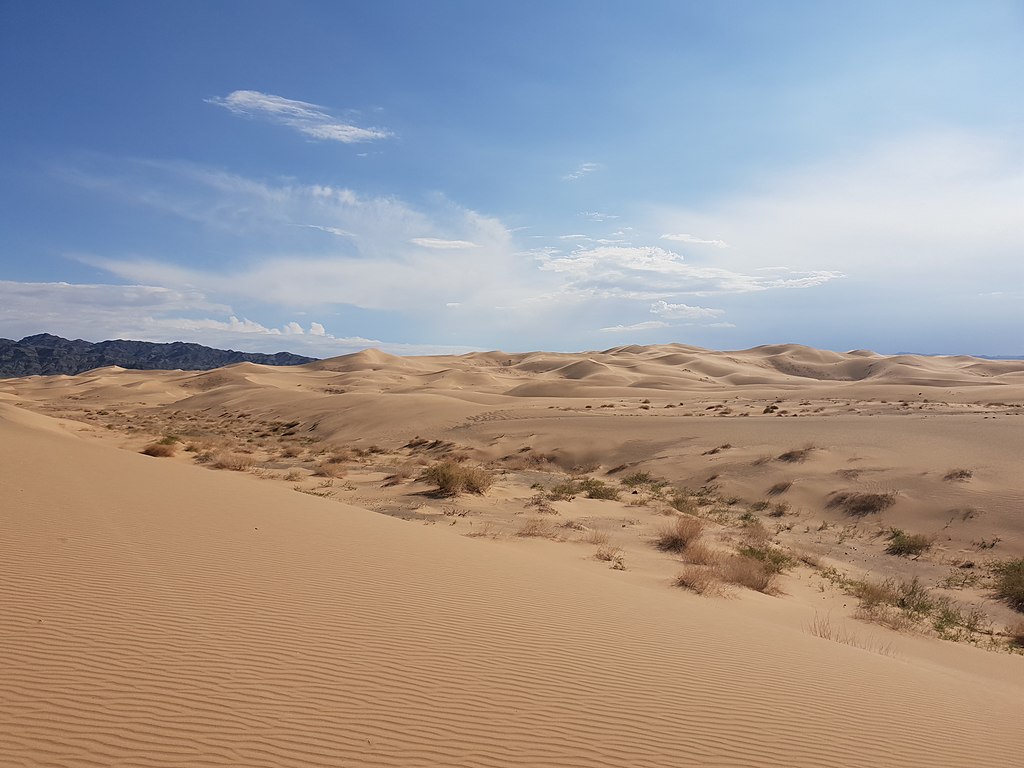
However, once he left the Yumen Pass, he immediately ran into a major issue: the Gobi Desert.

The Gobi Desert, photo by Richard Mortel, CC BY 2.0, via Wikimedia Commons

The road from the Yuman Pass to the next stop, the oasis at Hami, was barren, dry, with extreme heat and cold, and not well marked. Xuan-zang, who had little experience with this kind of travel, at one point lost his waterskin, became lost, and collapsed due to exhaustion. It is said that the bodhisattva Guan-yin guided him in his darkest hour to Hami.

The Hami Oasis

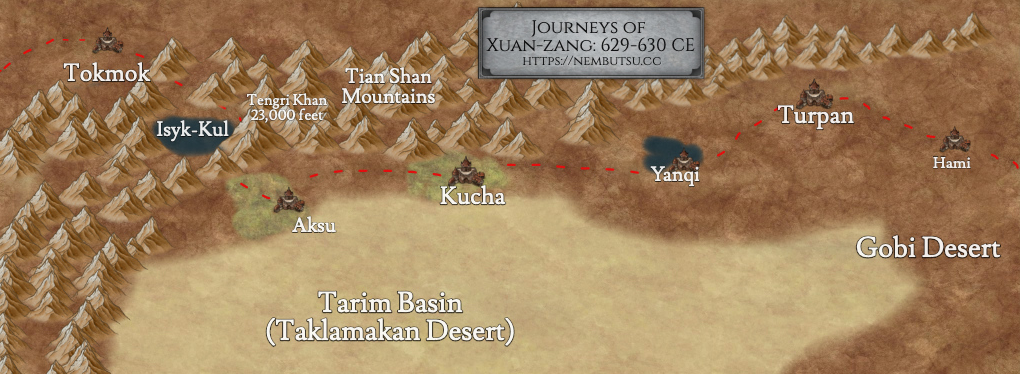
A map of the first part of Xuanzang’s journey. I made this using Inkarnate (a great online map tool). Apologies for any geographical mistakes. Free for non-commercial use.

The town of Hāmì (哈密), also known as Kumul (قۇمۇل) in Uyghur, was populated by a Chinese military colony since the Sui Dynasty, but had been cut off from China during turbulent times. At Xuan-zang’s time, it pledged loyalty to the regional Turk rulers while still maintaining diplomatic relations with the new Tang Dynasty. Some months after Xuan-zang left, Great Tang’s expansion absorbed Hami into its empire.

Here in Hami, Xuan-zang stayed at a Buddhist monastery where three Chinese monks lived. They were overjoyed to see a fellow monk, and offered him lodging. Xuan-zang did not stay too long here, and moved onto the larger city of Turpan.

The King of Turpan

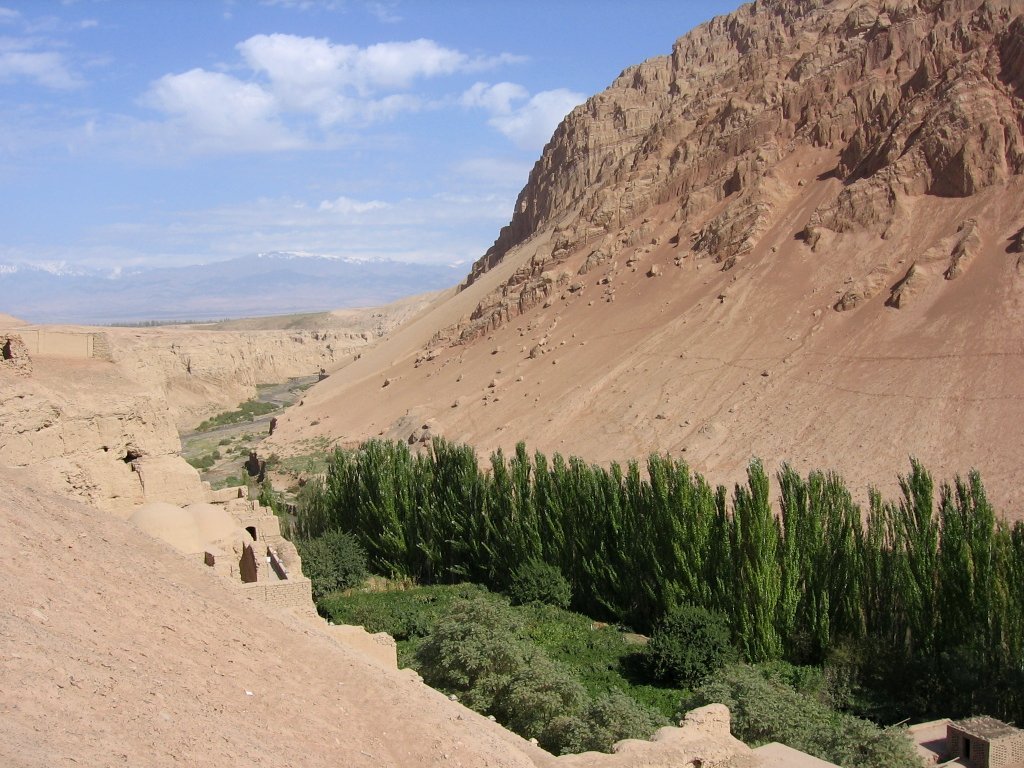
The “Flaming Mountains” near the city of Turpan on the Silk Road. Photo by es:User:Colegota, CC BY-SA 2.5 ES, via Wikimedia Commons

The city of Turpan (Uyghur: تۇرپان) also called Tǔlǔfān (吐鲁番) in Chinese was a prosperous city since ancient times, and changed hands often, but since antiquity had a large Chinese community, and considerable Chinese cultural influence, especially compared to cities further west.

The King of Turpan at this time was a devout Buddhist, and gave Xuan-zang a warm welcome upon his arrival, but also pressured him to stay rather than continue his journey. When Xuan-zang politely refused, the King of Turpan begged, cajoled, and threatened him. Xuan-zang was not allowed to leave, and he resorted to fasting to make his point. The king relented, and got Xuan-zang’s promise that he would stay for a month to preach to the people of Turpan, and would return later upon his return trip.

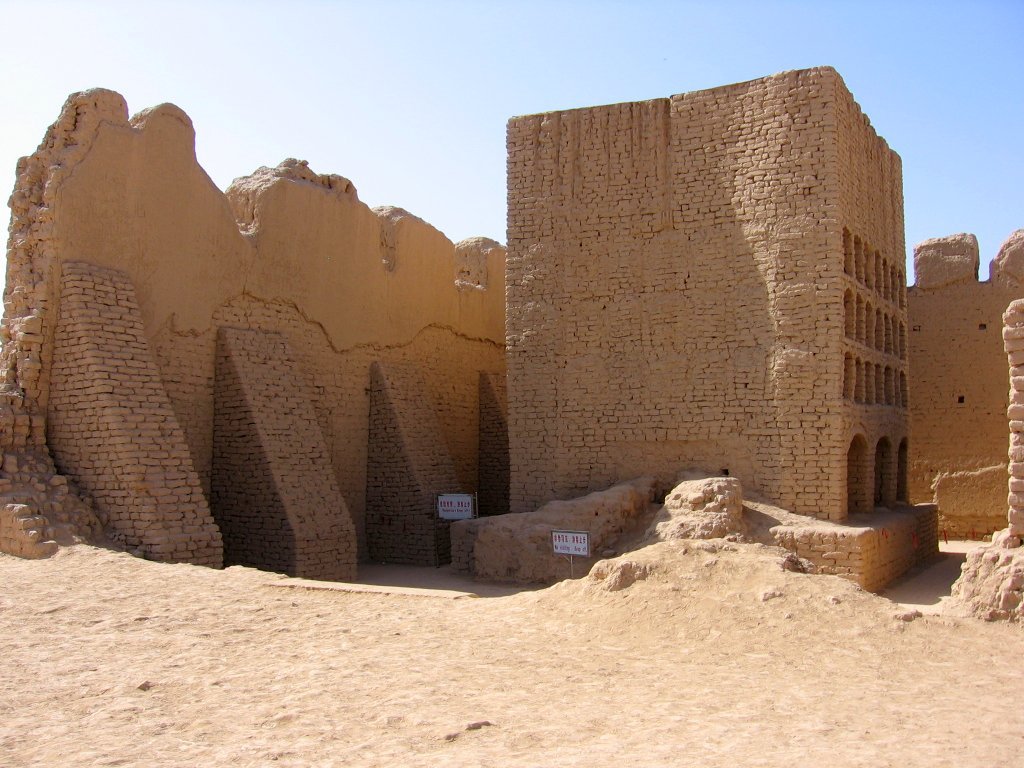
Once this agreement was reached, Xuan-zang stayed as promised. He used this time to explore the area, including the ancient city of Gāochāng (高昌), also known as Qocho, which was the former capital of a once-powerful kingdom, where he gave sermons to audiences there. Archeological excavations have show plenty of evidence of a vibrant Buddhist community at the time.

Remnants of a Buddhist stupa at Gaochang. Photo by Colegota, CC BY-SA 2.5 ES, via Wikimedia Commons

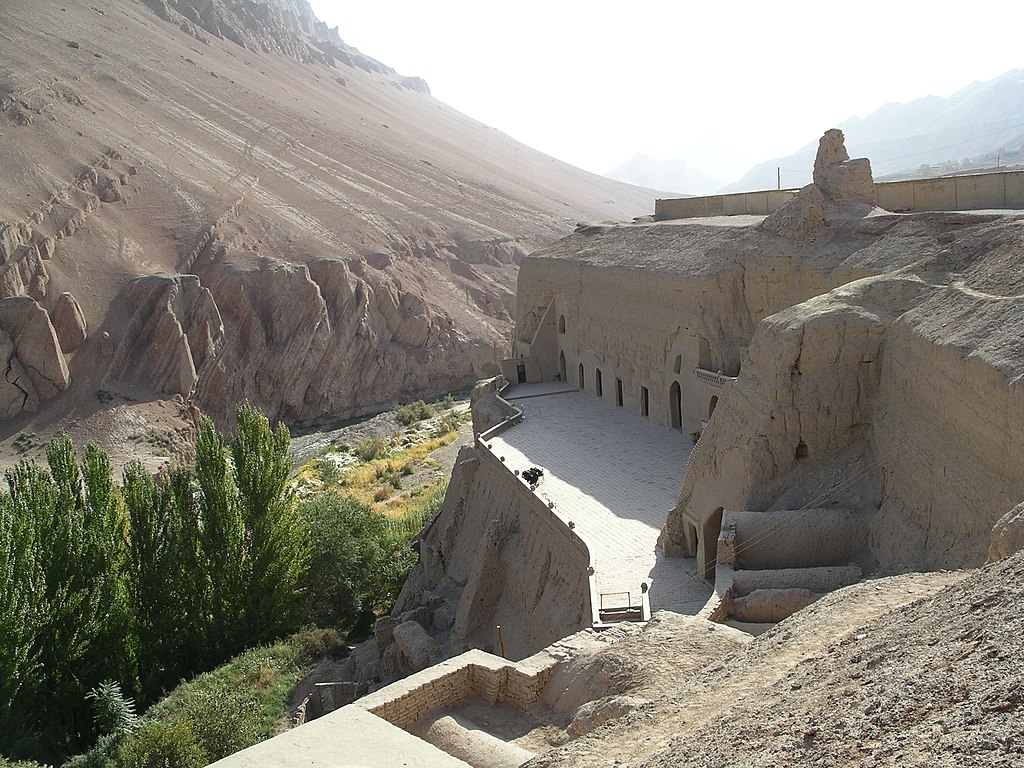
Xuan-zang also likely visted the nearby Bezeklik caves as well:

The Bezeklik Caves as seen from above. Photo courtesy of Wikimedia Commons.
Photo by T Chu, CC BY 2.0, via Wikimedia Commons

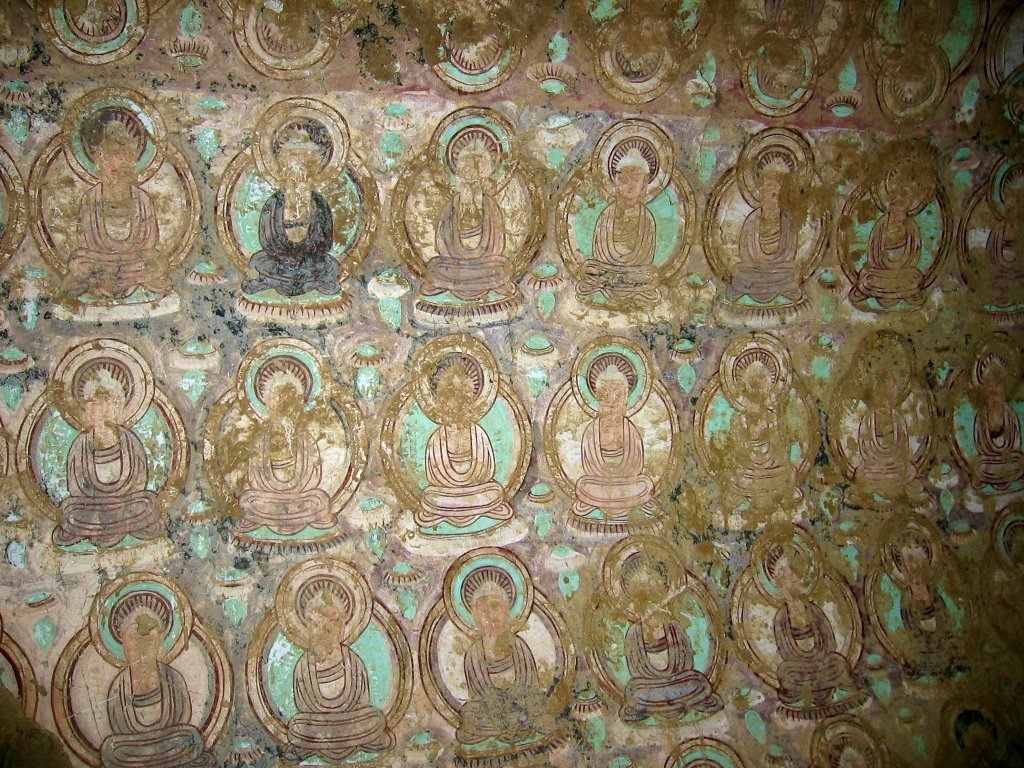
The Bezeklik caves are a massive grotto that served as a monastery for the local Buddhist monastic community. Many of the walls and ceilings were painted with frescoes of the Buddha, or other famous imagery, though in later generations, these were often defaced or damaged by locals for one reason or another (superstition, religious prohibition against human imagery, or simply raw materials).

A fresco of various buddhas. Notice that the faces have been scratched off. Photo by Colegota, CC BY-SA 2.5 ES, via Wikimedia Commons

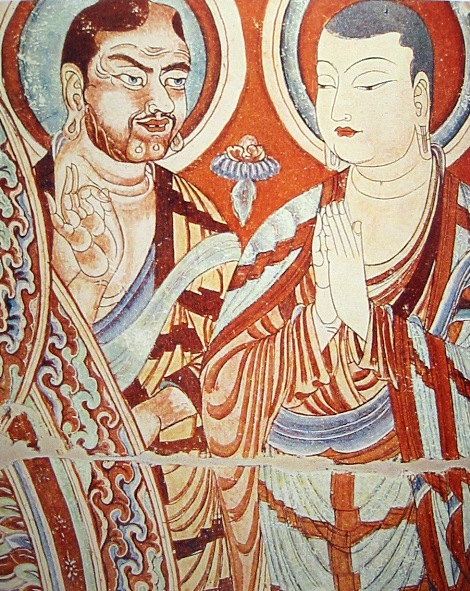
Further, European archeologists looted the caves and brought many works of art back to Europe, only for them to be destroyed later in World War II. Thus, very little remains of the artwork now, but what does remain is simply spectacular, and a shining example of the fusion of cultures along the Silk Road at this time.

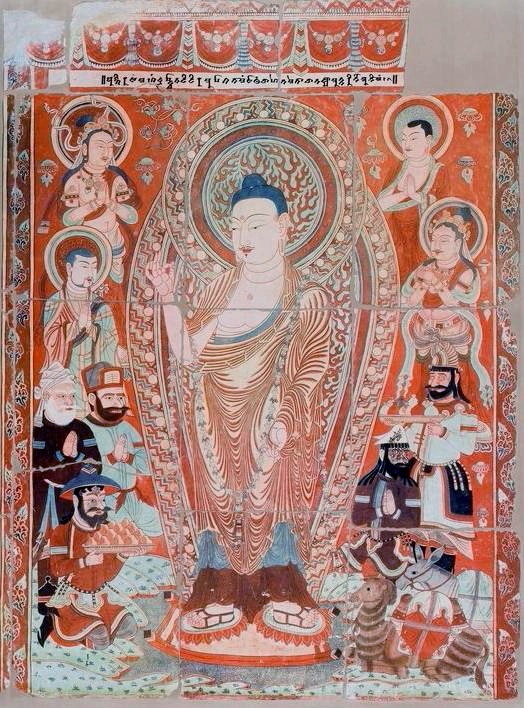
Bezeklik caves, Pranidhi scene 14, temple 9. Note the Sogdian men depicted in reverence of the Buddha. See page for author, Public domain, via Wikimedia Commons
Two Buddhist monks, one Eurasian (possibly Sogdian or Tokharian), and one East Asian. Public domain, via Wikimedia Commons
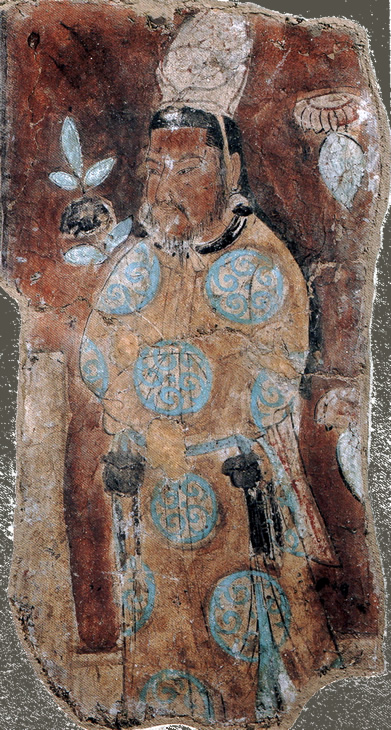
A Uyghur prince, photo by The original uploader was Kellerassel at German Wikipedia., Public domain, via Wikimedia Commons

Once Xuan-zang’s month was completed, the King of Turpan made good on his word. He provided Xuan-zang with many goods, supplies and letters of introduction to the kings further along the road. He now traveled with a caravan toward the next city Yānqí (焉耆) known by many other names, including Karasahr (قاراشەھەر in Uyghur) or Agni from the old Tokharian name, but not before being robbed by bandits! Evidentially, the bandits had already killed and robbed an earlier caravan, and were content to be bribed by Xuan-zang’s party and left with no further violence.

Upon reaching the city of Yanqi/Karasahr/Agni, Xuan-zang was said to have received a warm welcome, and described a city with ten different monasteries, and with two thousand monks practicing Hinayana Buddhism.1 He did not have flattering things to say about the king of Yanqi though, and later in 643 when the king broke his allegiance with Great Tang, the emperor Taizong, whom we met in the prologue episode, steamrolled Yanqi’s army and took the king prisoner.

Xuan-zang for his part only stayed for one night and moved on toward the city of Kucha. Kucha is an important city in early Buddhist history, but as we’ll see in our next episode, it was caught in a game of political tug-of-war…

Until the next episode: the Western Turks!

1 The term Hinayana is a loaded term in Buddhism, and frequently misunderstood. It has also been used as a pejorative by Mahayana Buddhists too. Without getting lost in the weeds, think of “Hinayana” Buddhism as any pre-Mahayana Indian-Buddhist school. It is not the same as Theravada Buddhism (the other major branch of Buddhism) since both branches were geographically separate and had little interaction with one another.

Injustice

In a couple recent posts, I touched upon the misdeeds of one 12th century warlord named Minamoto no Yoritomo in the excellent Japanese historical drama, the Thirteen Lords of the Shogun. Huge credit to Japanese actor Oizumi Yo (大泉洋) for his brilliant performance by the way.

There’s one particularly heart-breaking scene halfway thorugh the drama series: Yoritomo bullies his retainer, Hojo no Yoshitoki, to carry out a series of bloody purges (partly as a test of loyalty). Yoshitoki hesitates, seekingly ready to stand up to Yoritomo at last, but in the end he backs down. Later in the episode after the purges have taken place, Yoshitoki is at home holding his infant baby, but quietly cries to himself. He says to his child, “please forgive your dad” as the episode ends. 😭

While some of this is dramatic fiction, Yoritomo really was a ruthless man, just one of many in history who exerts power and does whatever is necessary to keep it. They exploit others and toss them aside when they are done. Such men are so hopelessly self-absorbed that they pull everyone in orbit down with them, and even then it’s not enough. Like a bucket with a big hole at the bottom, the more they try to fill it and appease their ego, the more they need to fill it again.

For you science types you can also compare them to a singularity (e.g. a black hole): something that has collapsed in on itself and now pulls everything in destroying them in the process.

Sagittarius A*, the black hole at the center of our galaxy.

For simplicity, we’ll call these people “super assholes”. It’s a pseudo-Buddhist term. 😉

Even in modern times, such powerful assholes still exist. They merely changed jobs. Some run major corporations, some rule dictatorships, others are just obnoxious politicians, lawyers, priests, media influencers and so on. Yet in spite of their obvious misdeeds and harm to others, they seem invulnerable, able to evade justice through wealth, power and just being enough of an asshole.

Worse, even if you manage to take down one asshole, another one inevitably arises.


All governments suffer a recurring problem: Power attracts pathological personalities. It is not that power corrupts but that it is magnetic to the corruptible.

Frank Herbert, Chapterhouse: Dune (Dune #6)

That said, all is not hopeless.

When I think about this issue, I sometimes consider a passage from the Earth Store Bodhisattva Sutra, chapter five:

The power of karma is extremely great. It rivals Mount Sumeru in its heights. It surpasses the great oceans in its depths. It obstructs the path leading to sagehood. For that reason, beings should never think that minor bad deeds are unimportant or assume that they do not count as offenses. After death, there will be retributions to undergo that reflect all those details.

Translation by City of Ten Thousand Buddhas

This is, admittedly, a pretty small comfort to the countless people whose lives have been destroyed, literally and figuratively, by such powerful men. Sure, they may self-destruct someday, and face some kind of karmic retribution in the future, but what about the people who are suffering or dead now?

Make no mistake, though, time does go on, awful people wither and die, and their legacies are forgotten. Remember the ancient Assyrian king, Ashurbanipal? His was a reign of terror. But soon after he died, the dreaded Assyrian Empire fell and its legacy is now just dust. Small comfort to people at the time, but still.

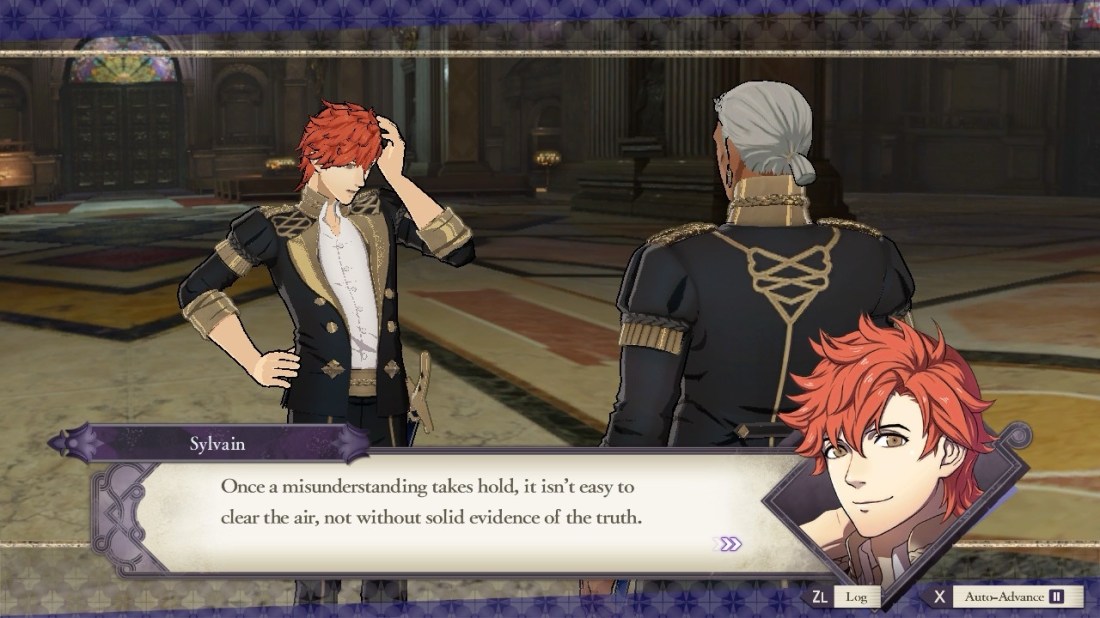
Screenshot from the game Fire Emblem: Three Houses.

If you compare these “super assholes” to black holes in space, I find the best thing to do is steer clear of their orbit. If you’re far away, you can still escape with minimal effort, but get too close and you may get sucked in further no matter what you do, just like Hojo no Yoshitoki. Sometimes it’s better to just lay low and let things pass.

Sometimes, though, it feels unavoidable, and that becomes the true test of one’s character.

Namu Amida Butsu

P.S. I coincidentally wrote most of this before a certain asshole was convicted (you know who). I fear he will somehow escape justice though, but he will be dead in time anyway.

Update: I was right afterall.

Ego Unfettered

This article from the Guardian is a poignant reminder of what happens when you have power and money, and no restraint. The symbolism of a moldy mansion, rampant infections, and miserable people is not lost on readers either.

In an old bilingual book about Rinzai Zen I picked up at the airport in Japan once, the author described the normal, run-of-the-mill mind as the “mind that leads the mind astray” (mayowasu kokoro, 迷わす心):

この「迷わす心」はいくら自分の意識で落ち着こう、ものごとを客感的に見よう、判断しようとしても、思う通りにはいかない。

No matter how you try to calm this “mind that leads the mind astray” through your own efforts, and no matter how you try to see and judge things objectively, you are likely to fail.

page, 30-31

Until one has fully broken through to the state of awakening (e.g. Buddhahood, enlightenment, etc), one cannot fully trust one’s own mind, no matter how certain one is. The mind operates from a basis of ignorance, insufficient information, a single point of view, etc. It is a slippery slope from a mistaken assumption, or a selfish thought to a line of thought that leads one further and further astray. One thinks they are working towards their own happiness and well-being, but in the end may drag others down with them.

This sort of ego is also self-reinforcing:

Your habits always come hunting after you. The self you construct will haunt you. A ghost wandering around in search of your body, eager to possess you. We are addicted to the self we construct.

Frank Herbert, Chapterhouse: Dune (Dune, #6), also posted here.

Thus, an unrestrained mind is ultimately a disaster for oneself, and those around them. It can happen to any of us, given the right circumstances. Or, as the old Tears for Fears song goes:

Thus as is written in the Dhammapada:

375. Control of the senses, contentment, restraint according to the code of monastic discipline — these form the basis of holy life here for the wise monk.

376. Let him associate with friends who are noble, energetic, and pure in life, let him be cordial and refined in conduct. Thus, full of joy, he will make an end of suffering.

translation by Ven. Acharya Buddharakkhita

Better to know one’s limit, stay vigilant, and savor the moments you have.

Namu Shakamuni Butsu
Namu Amida Butsu

Ignorance

More than faith, or doctrine, or anything, the notion of ignorance in Buddhism is of central importance. It is the root of all evil, so to speak. However, ignorance in Buddhism doesn’t mean stupidity. Very smart people can be ignorant. Ignorance has nothing to do with intelligence, it has everything to do with perception.

Each being born into this world is born under specific conditions and circumstances. Those circumstances color our world, from who our parents are, our culture, the language we speak by default, religious beliefs, and so on. Further, these circumstances influence how we react to new things, which develop into further lines of thoughts, choices, and so on. Rinse and repeat.

As the screenshot from Fire Emblem: Three Houses above shows: small misunderstandings take hold and are hard to undo.

There is a classic story in India, common to various religious traditions including Buddhism. In the story, a monk is wandering out late night through a grassy field to use the restroom, and steps on a snake. He panics, faints and then falls over unconscious. The next morning he wakes up, and realizes that he stepped on an old piece of rope, not a snake. He was certain at night, based on limited information, that he had stepped on a snake, but his perception was flawed and he drew an incorrect decision.1

Even if consider ourselves wise, and “know better” than others, we have to stay vigilant at all times. Little mistakes in understanding can lead to painful consequences.

I recently got mad at someone during an online game when I thought they were showing off. I was sure they were flaunting their victory in my face, and was pretty cranky all day until I reviewed the game and realized that I had misunderstood their last play. Once I realized that, I knew right away I was in the wrong, but I couldn’t undo the grumbling, anger, and ruined day. That quick half-second misunderstanding cost me a day. Fights with spouses or partners often start like this. Wars between two countries or two ethnic groups start like this.

Ignorance also comes in the form of overconfidence in one’s understanding of the world. A sense of self-satisfaction.

The first step in avoiding a trap, is knowing of its existence.

–Dune (1984)

There is no quick and easy solution in Buddhism for this. Knowing what ignorance is, and how insidious it is, and how easily we as functional adults can otherwise get duped by it is a step. Vigilance into one’s own thoughts, words, and actions is essential.

Namu Amida Butsu

1 Similarly, the Buddha described grasping Buddhist doctrines properly as similar to grasping a viper. If done improperly, it can cause much harm.

Unfulfilled

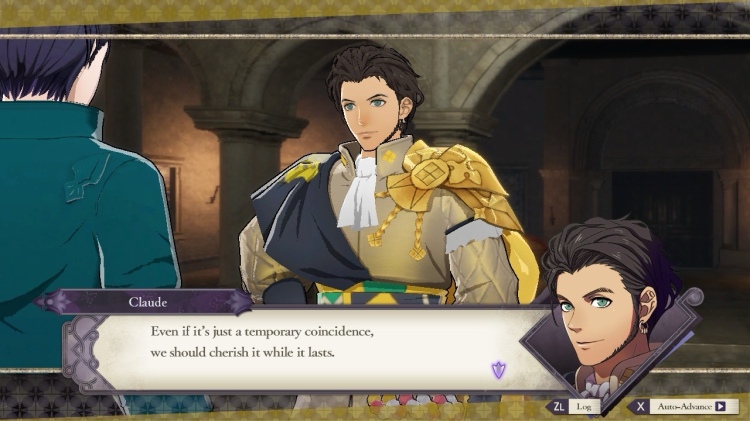
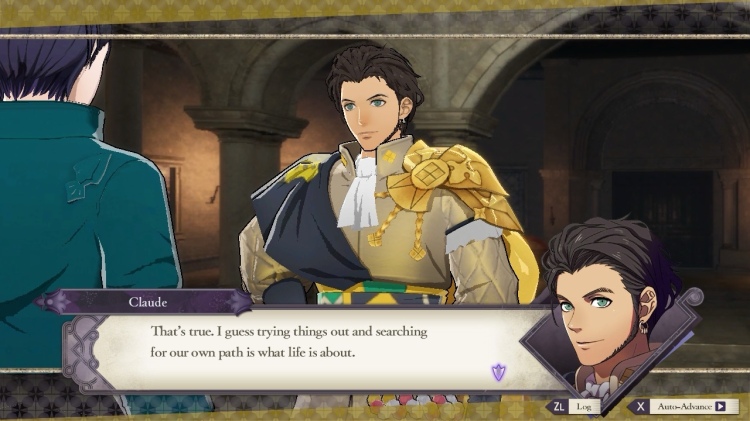
Not to long ago, I tried to describe the First Noble Truth of Buddhism as pain, but I was thinking about it a bit more, and I think it’s a bit more nuanced than that. Buddhism describes the nature of existence as samsara, which in the past I’ve described as a kind of cosmic rat race, or described elsewhere as “aimless wandering”. And yet, while playing Fire Emblem: Three Houses, this dialogue by Claude (arguably the “bro” we all need in life1) got me thinking:

“Even if it’s just a temporary coincidence, we should cherish it while it lasts.”

We never really get to cherish the good moments in life as long as we’d like, and there’s always just a bit too few of them anyway. Many Buddhist cultures romanticize this through things like cherry blossoms, poetry, and such, but it’s a sentiment that all people everywhere across history have felt. Even futuristic cyberpunk.

Further, we are thrust into life with being given any clear guide. Sure, we might find religion (or religion is thrust upon us in our youth), but this is not always guaranteed to be satisfying, and for us spiritually-inquisitive types, it’s not hard to scratch the surface and find issues here too. On the other hand, I think it’s wrong that there are no answers either. The world does function according to some kind of principle, just as it follows the laws of physics, even if we don’t fully understand it, and it behooves us to figure out what the principle is.

I think Claude is onto something here when he says that life is probably about living and experiencing and learning from it.

“That’s true. I guess trying things out and searching for our own path is what life is about.”

Or this quote from the classic science-fiction novel Dune Messiah:

“If you need something to worship, then worship life – all life, every last crawling bit of it! We’re all in this beauty together!”

Frank Herbert

The tragedy though comes from the fact that we’re not given so little time to do it well, and life often gets in our way. If we don’t find the answer we’re looking for in 40 years or even 400 years, then was any of it worth it? It’s hard to say. Further, in whatever life to come, we have to pay for our choices we made here, regardless of what happens next.

So, Claude is right: we really do need to cherish these moments. There are simply too few.

Namu Amida Butsu

P.S. more wisdom from Claude.

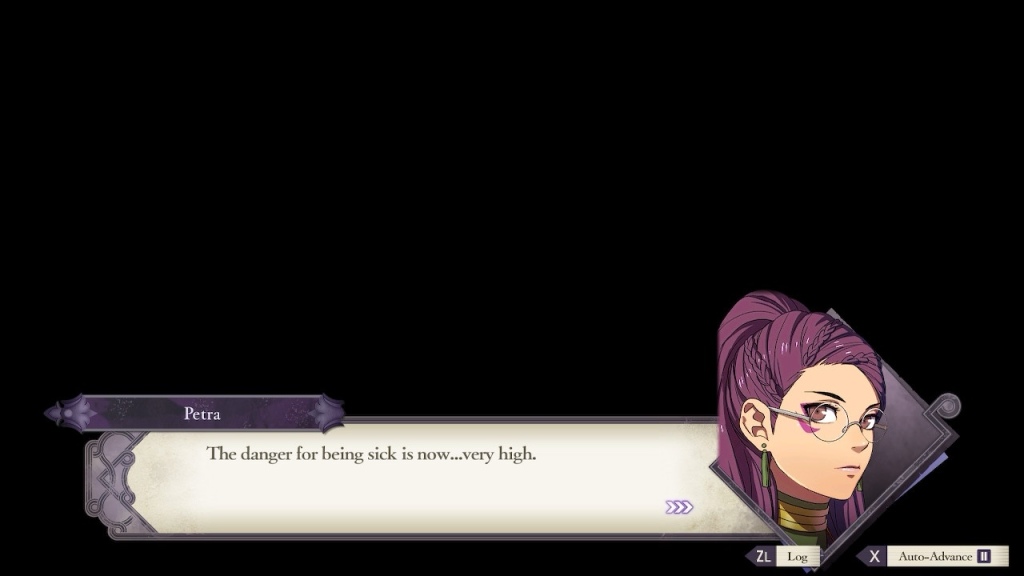
P.P.S. Not related to anything Buddhist, but Petra trying on glasses for the first time was a great gag. Sometimes you just have to enjoy the “small happinesses” in life.

“The danger for being sick is now … very high.”

P.P.P.S. The title of this post was inspired by the soundtrack song of the same name:

1 Big kudos to Joe Zieja for his amazing voice acting, by the way.

The Trap of Self

Another interesting quote from the Dune series:

Your habits always come hunting after you. The self you construct will haunt you. A ghost wandering around in search of your body, eager to possess you. We are addicted to the self we construct.

Frank Herbert, Chapterhouse: Dune (Dune, #6)

This is the heart of Buddhist teachings: the conceit of self that we (ironically) construct.