Self-Mastery

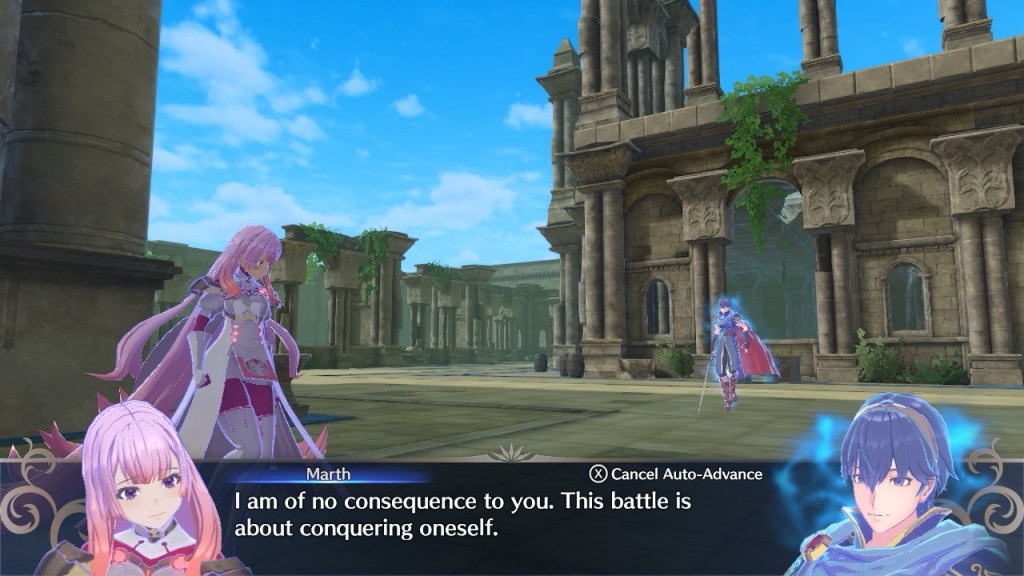
A screenshot from Fire Emblem: Engage. I enjoy the game, though I am still a Three Houses kind of guy.

Out of all things the things one can accomplish in their lives, self-mastery is probably one of the most difficult.

As the Buddha said in the Dhammpada:

185. Not despising, not harming, restraint according to the code of monastic discipline, moderation in food, dwelling in solitude, devotion to meditation — this is the teaching of the Buddhas.

Translation by Acharya Buddharakkhita

Plain and simple, Buddhism is about restraint, non-violence, and devotion to the training. This can come in many forms, but if it leads to moderation, dignity, self-mastery, and goodwill towards others, this is in accord with the Buddha’s teachings.

Recently, we had a holiday work party at a local Brazilian steakhouse. I have never been to one before but it had many finely cuts meats, and they were served in large quantities over and over.

I am not vegetarian yet (work in progress), but I have been gradually reducing my meat consumption since early 2025. I definitely do not eat steaks and sausages very much. But everyone else was consuming in large quantities. I had a few samples and soon quit because I knew I couldn’t digest so much meat (it was kind of gross). I am really glad I did because although I missed out on some good food, I saved myself from indigestion, nausea and “meat sweats”.

Indeed the Buddha famous said:

186-187. There is no satisfying sensual desires, even with the rain of gold coins. For sensual pleasures give little satisfaction and much pain. Having understood this, the wise man finds no delight even in heavenly pleasures. The disciple of the Supreme Buddha delights in the destruction of craving.

Translation by Acharya Buddharakkhita

Indulging in a ton of food seems like a refuge for us, it makes us happy, but it is not a reliable one. Overindulgence leads to future health problems and misery.

As the Buddha warns through the sutras, there is no safe, reliable refuge. We still dwell in the “burning house” of the Lotus Sutra: death, old age, and disease are things we have to face, amusing ourselves with our toys, but the house burns around us nonetheless.

If you are a high-rolling CEO or a pleb, it is the same problem, just a different scale.

But the Buddha by his accomplishments and his awakening, and thus letting go, has reached safety:

I have already left the
burning house of the triple world.1
I am tranquil and peaceful
In a bower in a forest.

translation by Rev. Senchu Murano, chapter three of the Lotus Sutra

Hence, the Buddha (like all buddhas) seeks to lead people out of the burning house too, to the safety of the forest.

The first step in the Buddhist path (i.e. leaving the burning house) is, in my opinion (among others), taking the small steps toward moderation and self-restraint. Such things pay dividends in the short-term through having fewer hassles, a balanced personal budget, and provide mental well-being both through increased self-confidence and also fewer regrets.

In the long-term it provides far more.

Namu Shakamuni Butsu

1 This is a Buddhist term that shows up in the sutras a lot. It just means the cosmos, the Universe, the “Whole Enchilada“, etc.

Live And Let Live

SPOCK: Insults are effective only where emotion is present.

Star Trek, “Who Mourns for Adonais?” (s2ep2), stardate 3468.1

SPOCK: Where there’s no emotion, there’s no motive for violence.

Star Trek, “Dagger of the Mind” (s1ep9), stardate 2715.1

I wrote about the Buddhist virtue of forbearance before, but I had an important reminder recently why this matters so much in Buddhist practice.

Our natural tendency is to hold a grudge when someone slights us, or when we have been wronged. This is normal human pattern of behavior. But, like self-doubt, this is a form of conceit, putting ourselves and our ego before others.

In the Dhammapada, a collection of sayings attributed to the Buddha and one of the very earliest Buddhist texts still preserved, the Buddha has much to say regarding the subject. For example:

133. Speak not harshly to anyone, for those thus spoken to might retort. Indeed, angry speech hurts, and retaliation may overtake you.

134. If, like a broken gong, you silence yourself, you have approached Nibbana [a.k.a. Nirvana, final Unbiding], for vindictiveness is no longer in you.

The Dhammapada, translation by Acharya Buddharakkhita

The Buddha was uncompromising on this: no vengeance, lest you bring even further misery upon yourself.

Indeed, the Buddha taught by freeing oneself of ill-will and other negative emotions, one is liberated:

197. Happy indeed we live, friendly amidst the hostile. Amidst hostile men we dwell free from hatred.

198. Happy indeed we live, friendly amidst the afflicted (by craving). Amidst afflicted men we dwell free from affliction.

199. Happy indeed we live, free from avarice amidst the avaricious. Amidst the avaricious men we dwell free from avarice.

200. Happy indeed we live, we who possess nothing. Feeders on joy we shall be, like the Radiant Gods.

The Dhammapada, translation by Acharya Buddharakkhita

Of course, this is easier said than done.

As with self-doubt or any negative emotion, stop and think like a Vulcan: assess the situation including your own feelings. Is this productive? Is it harmful? Is it based on conceit?

Spock in season 3 episode 21, the “Cloud Minders”, played by Leonard Nimoy

Many times, we are prone to act or lash out, but if we take a moment to assess our feelings, and the situation, we are more capable of handling it rationally. In so doing, we avoid further misery for ourselves and others.

When the ego is bruised, it demands attention and resolution. But that is short-sighted, and rarely fixes anything.

SEPTIMUS: Our way is peace.

Star Trek, the Son Worshiper, “Bread and Circuses” (s2ep25), stardate 4040.7.

A commitment toward peace and well-being towards others feels counter-intuitive at times, but peace toward others inevitably leads toward peace for oneself.

Namu Shakamuni Butsu

Instinct and Restraint

Another post in my backlog that I wanted to share. I really didn’t intend this to relate to any recent events or anything, I just think it’s an evergreen quote by Captain Kirk.

KIRK: [War] is instinctive. But the instinct can be fought. We’re human beings with the blood of a million savage years on our hands! But we can stop it. We can admit that we’re killers… but we’re not going to kill today. That’s all it takes! Knowing that we’re not going to kill – today!

Star Trek, “A Taste of Armageddon”, stardate 3192.1

The Buddha was also very clear about the need for disciples to give up violence. This is not always easy, but the cost of war is rarely small.

Namu Amida Butsu

Letting Go of Expectations of Others

Spock: No one can guarantee the actions of another.

Star Trek, “Day of the Dove” (s3ep7), stardate unknown

The third season of the classic TV series, Star Trek, gets a lot of flak for being lower in quality, but some of the best episodes of the series can be found there. One of my personal favorites is “Day of the Dove”.

The premise is strange at first glance: the Enterprise crew and a group of Klingon prisoners are trapped on the Enterprise by a phantasmal alien that feeds on anger and conflict, which keeps manipulating both sides in order to instigate them into hopeless, unending cycle of conflict. The alien furnishes weapons, seals corridors, plants false memories, and heals fatal injuries all so that the Enterprise crew and Klingons fight can ad infinitum, even as the ship is hurling out of control beyond the edge of the galaxy.

There’s a lot to unpack in this episode, and much of it still relates to circumstances today. But I’ll let you the reader decide for yourself.

In any case, Spock’s quote above illustrates something very Buddhist in my opinion: people expect other people to think and feel the way they do. When they don’t, we get frustrated. We naturally tend to see our own viewpoint as “pristine” and the more other’s deviate from this, the weirder or aberrant they are. We get frustrated when we they don’t do what we expect them to do. This can also happen between spouses, co-workers, and so on.

But as Spock rightly implies, this is arrogant, irrational, and dare I say “illogical”. We are not the center of the Universe, why should other people think and do as we do?

In the classic Buddhist text, the Dhammapada, are the following verses:

  1. One who, while himself seeking happiness, oppresses with violence other beings who also desire happiness, will not attain happiness hereafter.
  2. One who, while himself seeking happiness, does not oppress with violence other beings who also desire happiness, will find happiness hereafter.
  3. Speak not harshly to anyone, for those thus spoken to might retort. Indeed, angry speech hurts, and retaliation may overtake you.
  4. If, like a broken gong, you silence yourself, you have approached Nibbana,1 for vindictiveness is no longer in you.

[skipping for brevity…]

142. Even though he be well-attired [instead of dressed like a humble monk], yet if he is poised, calm, controlled and established in the holy life, having set aside violence towards all beings — he, truly, is a holy man, a renunciate, a monk.

translation by Acharya Buddharakkhita

Oftentimes, it is simply better to let go, let people be who they are, even if they are wrong or short-sighted, and wish them no harm.

Namu Shakamuni Butsu
Namu Amida Butsu

1 Nibbana is the Pali-style pronunciation of Nirvana. Both mean the same thing in a Buddhist context: liberation, unbinding, freedom. A Buddha’s awakening to the truth (e.g. enlightenment) leads to a state of letting go, unbinding. The Buddha Shakyamuni described it as a flame extinguished.

Fall Ohigan 2024: Don’t Shoot Yourself In the Foot

Hello readers,

The Japanese-Buddhist holiday of Ohigan is fast approaching, and I haven’t written about it in years (!), so I felt like posting about it today.

Ohigan (お彼岸, “the other Shore”) started with the pious 8th-century emperor Shomu. The name implies crossing over from this shore, which is comprised of greed, anger, desired, pain, frustration, strife, etc, etc., the usual nonsense. Contrast that with the “other shore” in Buddhism which symbolizes peace, contentment, freedom from harm, fear, conflict, etc. Because Ohigan is observed both at the Spring and Autumnal equinoxes, this is a time when the weather is mild, and so people can slow down and re-commit to the Buddhist path.1 Given how climate change is affecting the weather, this point is not lost on us today either.

Ages and ages ago, quotations of the historical Buddha, Shakyamuni (a.k.a. Siddhartha Gautama) were collected in India in a text called the Dhammapada. Despite the centuries gap between what the Buddha said, and what was recorded later, the Dhammpada probably represents one of the very oldest texts, and the closest to the historical Buddha that we’ll ever get. It’s short, easy to digest, and has lots of little witticisms that even today people can learn from.

One of them is this quote:

371. Meditate, O monk! Do not be heedless. Let not your mind whirl on sensual pleasures. Heedless, do not swallow a red-hot iron ball, lest you cry when burning, “O this is painful!”

Translation by Acharya Buddharakkhita

In modern American English, I suppose we’d translate this as “don’t shoot yourself in the foot”.

But, of course we do this all the time. My doctor told me pretty bluntly that I should lose weight, and I want to lose weight, and yet when someone in the family offers to buy some bubble tea, I totally forget. What little spare time I have is usually spent playing Fire Emblem2 games instead of doing anything constructive like washing the dishes.

Centuries later, someone asked the Pure Land Buddhist teacher, Honen in the 12th century a series of questions and answers, this is question 57:

一。さけのむは、つみにて候か。
答。ま事にはのむべくもなけれども、この世のならひ。

Q: Is it a sin to drink saké [alcohol]?
A: Indeed one ought not to drink, but [you know] it is the way of the world.

Honen the Buddhist Saint, page 56

This is our normal state of being. Most of the time its benign, but clearly some actions we do are self-destructive even if just a little bit, and it’s hard to break the cycle if we aren’t even aware we’re doing the cycle to begin with.

So, there tends to be a need for both awareness, as well as self-restraint. When one becomes aware of their own habits, they are more capable of stopping self-destructive habits. By moderating or restraining bad habits, one tends to have fewer headaches later, and thereby getting one step closer on the Buddhist path.

There’s no magic formula for this. As we’ve seen in Mahayana Buddhism, there are countless ways to approach this both in the grand sense, but in the little day to day efforts too. Everyone is encouraged to find their own way, or emulate others they find admirable. The latter is why the Sangha, the Buddhist community, is considered one of the Three Treasures by the way. People can’t always see what they’re doing is harmful, and even if they can, they can’t always fix it without support from loved ones and people they trust.

The Buddhist path is long, spanning countless lifetimes, but even tiny little changes we make here and now, even if we falter, will still have big effects in the future. Don’t underestimate your own ability, and don’t be afraid to rely on others if needed. If nothing else, recite the nembutsu.3

Happy Ohigan!

Namo Shakyamuni Buddha

P.S. The featured image is the temple of Todaiji in Nara, Japan, another project by Emperor Shomu.

1 In modern Japanese culture, it is often a holiday time for overworked employees, and a chance to go to their home town, pay respects to their ancestors, etc. Like a smaller scale Obon.

2 After this initial post, I have still been actively playing Three Houses for the past year (!), but I have also branched into other games in the series. I have five games currently and am various stages of each. It’s a terrific series, but Three Houses will always be my favorite. Such a beautiful story, such an emotional rollercoaster. If you own a Nintendo Switch, I hope you get a chance to play it.

3 Question 69 of same letter addressed to Honen:

一。心に妄念のいかにも思はれ候は、いかがし候べき。
答。ただよくよく念仏を申させ給へ。

Q: When bad thoughts keep arising within my mind, what should I do?
A: The only thing to do is to repeat Nembutsu.

Honen the Buddhist Saint, page 56

Sometimes, that’s all you can do.

Who Dwells In This House?

I’ve been mulling over a certain quotation of Honen (法然, 1133–1212), the 12th century Buddhist monk credited with spreading the Pure Land tradition in Japan, and thus founder of movements such as Jodo-Shu and Jodo-Shinshu:

“All of our deeds in the realms of saṃsāra result from ties with the three worldly passions of greed, anger, and ignorance. Understand that when the worldly passions of greed, anger, and ignorance surface, an illusion arises that causes one to fall into the lower realms. Do your best to prevent such an occurrence.

If these worldly passions arise, merely think of them as a guest of the heart, and think of nembutsu as the host of the heart. In this way, birth in the Pure Land will be possible. Contrarily, if you think of the worldly passions as the host and nembutsu as the guest, nembutsu becomes virtue mixed with worldly passions and falsity, making birth in the Pure Land impossible.

In essence, even if worldly passions surface in the moments before and after nembutsu is recited, do not allow these passions to intermingle with the recitation of the six characters, Na mu A mi da Butsu.”

Translation from The Promise of Amida Buddha (Digital Edition, pg 105) Joji Atone & Yoko Hayashi, originally posted here.

What Honen says here is quite profound, and shows a good grasp of the challenges of the spiritual life. Saying your are spiritual, or calling yourself a spiritual person frankly isn’t enough. It’s just words and labels. The real question is is who or what lives in the house of your heart?

I’ve been thinking about this a lot, and with some shame, I think the Buddha tends to be more of a guest at times than the host. I’ve been Buddhist at least 2005, but I am also a working parent, and, live with a lot of distractions. So, of course my practice and conduct suffer at times.

And yet, I think it’s more than that.

As members of the homo sapiens species, our natural inclinations are, crudely speaking, to feed, fight, and fuck.

In one sense, this is perfectly normal as a biological species. We are hairless apes after all. Our ancestors were doing this for 300,000 years or more. But deep down it’s just instinct baked into the fiber of our being. What seems perfectly good and normal to us humans may differ from another species. What seems tasty to a jackal might be revolting to us humans.

Further, the Buddha Shakyamuni didn’t necessarily call this “evil”, but he did describe people who lived by such instincts as “run-of-the-mill”, nothing extraordinary. There was nothing praiseworthy about choosing this default lifestyle driven by one’s passions and instincts. Such people are born, grow, struggle, procreate, and die. End of story.

Instead, the Buddha praised those who lived a life of self-control and mental discipline such as this quote from the Dhammapada:

280. The idler who does not exert himself when he should, who though young and strong is full of sloth, with a mind full of vain thoughts — such an indolent man does not find the path to wisdom.

281. Let a man be watchful of speech, well controlled in mind, and not commit evil in bodily action. Let him purify these three courses of action, and win the path made known by the Great Sage.

Translation by Acharya Buddharakkhita, sourced from here: https://www.accesstoinsight.org/tipitaka/kn/dhp/dhp.20.budd.html

But this all comes back to the point that Honen made earlier. Honen spoke about it in the context of Pure Land Buddhism, and the desire to be reborn in the Pure Land, but it’s not hard to broaden this to the entire Buddhist tradition. Whoever we choose to let dwell in our house, that is what will drive our actions. Other aspects of our lives drop in as guests, come and go.

Later in the Dhammapada, the Buddha warns that this ins’t just a mental exercise: the clock is ticking:

287. As a great flood carries away a sleeping village, so death seizes and carries away the man with a clinging mind, doting on his children and cattle.

288. For him who is assailed by death there is no protection by kinsmen. None there are to save him — no sons, nor father, nor relatives.

289. Realizing this fact, let the wise man, restrained by morality, hasten to clear the path leading to Nibbana [a.k.a. Nirvana, “final unbinding”].

Translation by Acharya Buddharakkhita, sourced from here: https://www.accesstoinsight.org/tipitaka/kn/dhp/dhp.20.budd.html

In the Lotus Sutra, the Parable of the Burning House also reminds us that we are “on the clock”, and the Buddha calls us to get out before it is too late.

Namo Shakyamuni Buddha
Namu Amida Butsu

P.S. even a pinch of austerity is a good start. 😏

Ego Unfettered

This article from the Guardian is a poignant reminder of what happens when you have power and money, and no restraint. The symbolism of a moldy mansion, rampant infections, and miserable people is not lost on readers either.

In an old bilingual book about Rinzai Zen I picked up at the airport in Japan once, the author described the normal, run-of-the-mill mind as the “mind that leads the mind astray” (mayowasu kokoro, 迷わす心):

この「迷わす心」はいくら自分の意識で落ち着こう、ものごとを客感的に見よう、判断しようとしても、思う通りにはいかない。

No matter how you try to calm this “mind that leads the mind astray” through your own efforts, and no matter how you try to see and judge things objectively, you are likely to fail.

page, 30-31

Until one has fully broken through to the state of awakening (e.g. Buddhahood, enlightenment, etc), one cannot fully trust one’s own mind, no matter how certain one is. The mind operates from a basis of ignorance, insufficient information, a single point of view, etc. It is a slippery slope from a mistaken assumption, or a selfish thought to a line of thought that leads one further and further astray. One thinks they are working towards their own happiness and well-being, but in the end may drag others down with them.

This sort of ego is also self-reinforcing:

Your habits always come hunting after you. The self you construct will haunt you. A ghost wandering around in search of your body, eager to possess you. We are addicted to the self we construct.

Frank Herbert, Chapterhouse: Dune (Dune, #6), also posted here.

Thus, an unrestrained mind is ultimately a disaster for oneself, and those around them. It can happen to any of us, given the right circumstances. Or, as the old Tears for Fears song goes:

Thus as is written in the Dhammapada:

375. Control of the senses, contentment, restraint according to the code of monastic discipline — these form the basis of holy life here for the wise monk.

376. Let him associate with friends who are noble, energetic, and pure in life, let him be cordial and refined in conduct. Thus, full of joy, he will make an end of suffering.

translation by Ven. Acharya Buddharakkhita

Better to know one’s limit, stay vigilant, and savor the moments you have.

Namu Shakamuni Butsu
Namu Amida Butsu

Make Your Own Buddhist Sutra Book

Lately I’ve been talking a lot about home Buddhist practice, including home Buddhist services and such. These are things that devout lay-Buddhists often do (myself included), but then I realized I never talked about making one’s own sutra book.

There are a couple reasons why one might make their own.

First, Buddhist resources outside of Buddhist countries are hard to find. For someone like me who lives on a large city with a large Asian community this is not so hard. But if you lived in, say, rural Iowa, it might be a lot harder. So, sometimes you have to just DIY.

Second, it’s a nice way to personalize your Buddhist practice in a way that suits you.

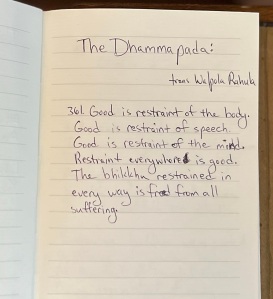
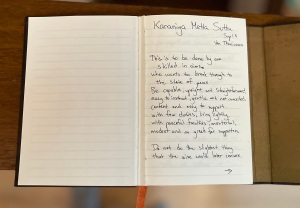
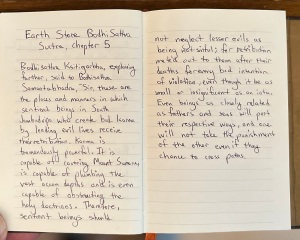
I started making my own maybe about 9-10 years ago. I picked up a nice little Paperblanks notebook at the airport at the time, and I decided to collect Buddhist sutras and quotes that I liked. I started out small, just copying things now and then from sites like accesstoinsight.org, or copied from books.

This is a small quote from the Dhammapada :

And the Metta Sutta from the Pali Canon:

I also recorded Mahayana Buddhist sutras as well, such as this quote from chapter 5 of the Earth Store Bodhisattva Sutra:

I copied each of these by hand. I even tried to copy much longer texts, such as the 4th chapter of the Golden Light Sutra, which is a very beautiful prose about repentance and goodwill, but the text was much longer than I thought, and I eventually gave up halfway.

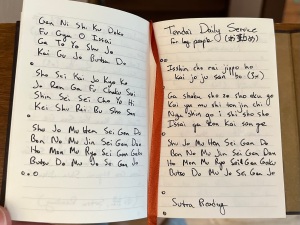
But eventually, around 2017-2018, when I left my old Jodo Shinshu-Buddhist community and started exploring other sects, I focused more on home practice and I started to add Japanese-style liturgies as well:

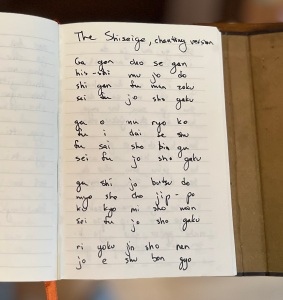
I also wrote specific sutra chants too, such as the Shiseige:

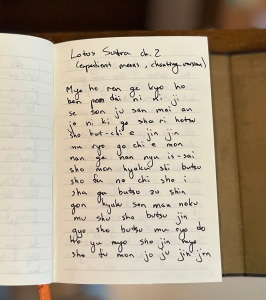
And chapter 2 of the Lotus Sutra:

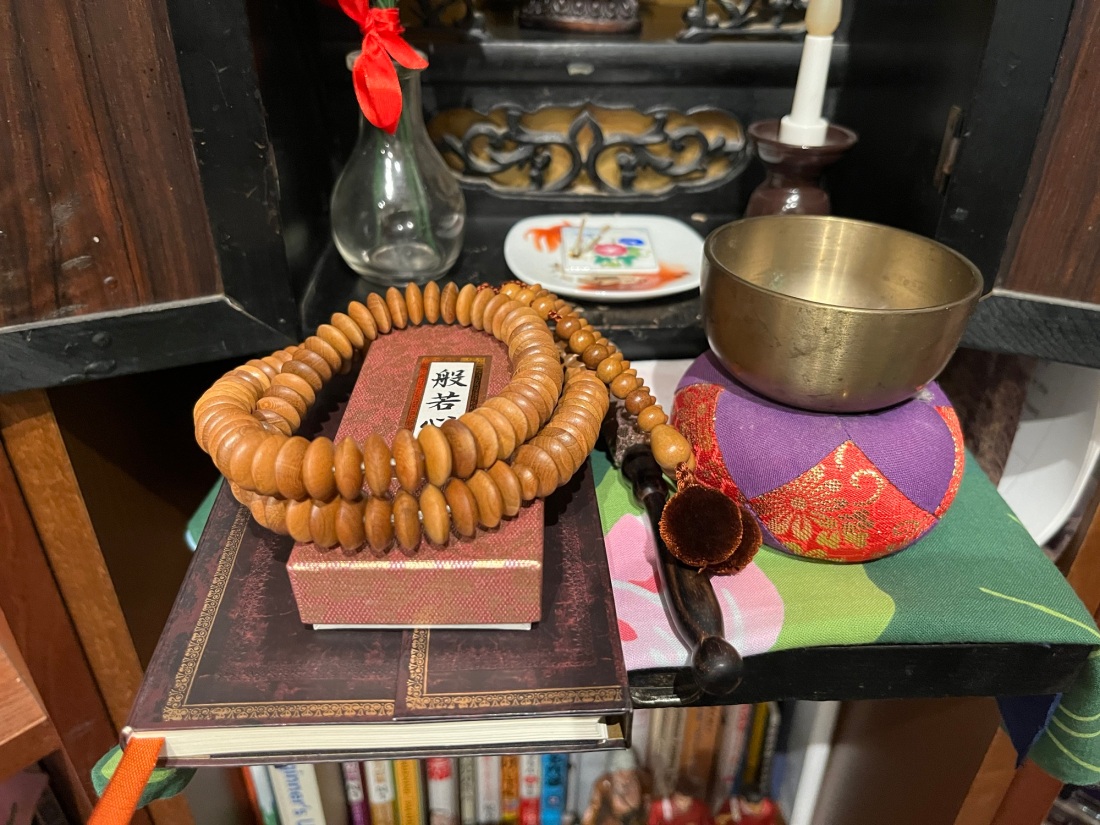
As you can see from the featured photo above,1 I keep this sutra book on my home altar (bottom left in photo), and use it almost daily. A personal sutra book works best when it’s meaningful, simple and useful for you, so the important thing is to not do what other people do, but make it useful for yourself. Find sutras or Buddhist quotes you like, collect them into a notebook, and copy them by hand (word of advice, use a gel pen, not a ballpoint pen, it’s easier to read), and make it your own. There’s no wrong way to do it.

Further, the sutra book I made has gradually progressed over time, just as my own path and practice have and I still have more room to write things in the future.

1 You can also see my Buddhist rosary, a Tendai-style rosary I ordered online, along with a boxed copy of the Heart Sutra, which I got in 2023 while visiting Nara‘s Kofukuji Temple, one of my personal favorite.