I found this nice excerpt from the 25th chapter of the Lotus Sutra, better known as the “Kannon Sutra” for some, and just wanted to share:
All darkness is dispelled by the light of his wisdom As spotless and as pure as the light of the sun. The light destroys the dangers of wind and fire, And illumines the whole world brightly.
His precepts out of his loving-kindess brace us up as thunderbolts. His wishes out of his compassion are as wonderful as large clouds. He pours the rain of the Dharma as sweet as nectar, And extinguishes the fire of illusions.
Chapter Twenty-five of the Lotus Sutra, the “Kannon Sutra”, by Rev. Senchu Murano. You can find an alternate translation by Dr Burton Watson.
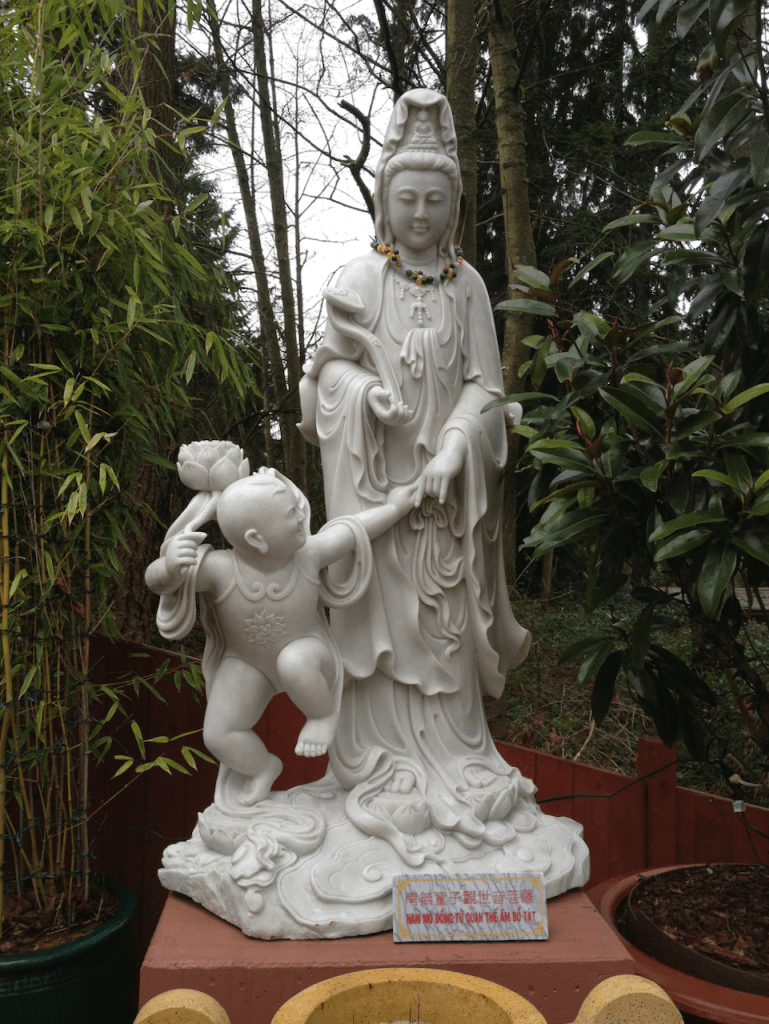
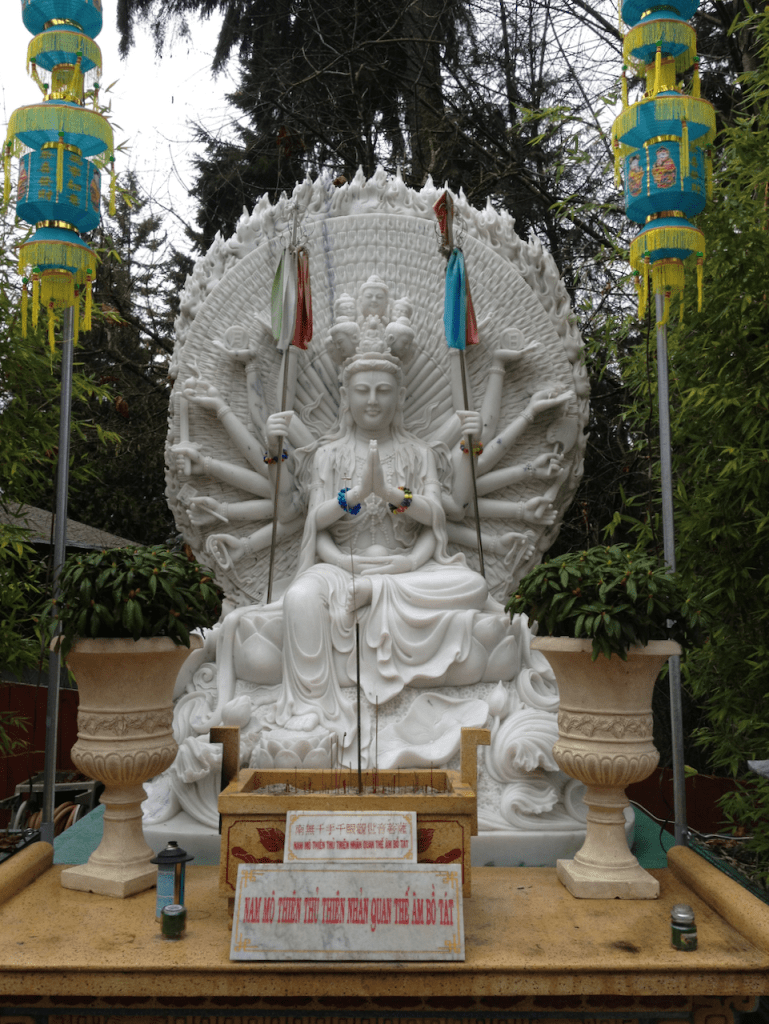
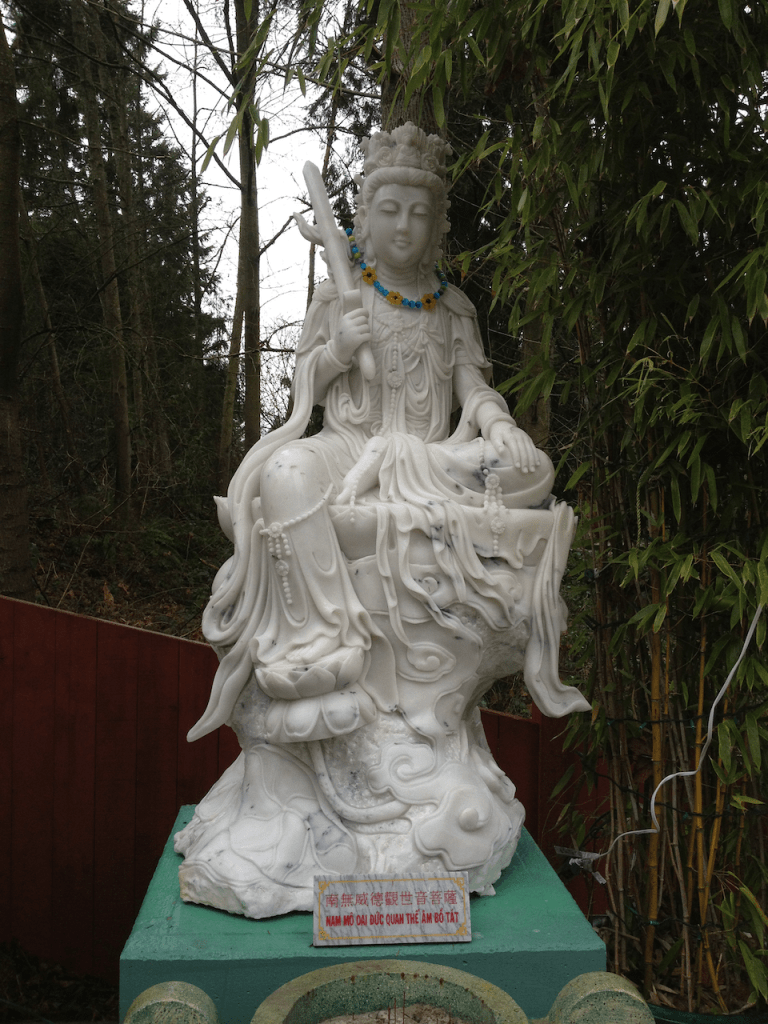
By the way, fun language-nerd fact: I noticed that my two books on the Lotus Sutra (Watson and Murano translations) both translate this passage using “he/him/his” pronoun, but both in the Lotus Sutra, and in popular culture, Avalokitesvara1 is frequently described as both male or female: a princely figure (male), a loving mother figure (female), etc. Here are just some examples from a Vietnamese-Buddhist temple in Lynnwood, WA:
In East-Asian Buddhism, the sutra is preserved in Classical Chinese, so I looked at the translated section above and it shows neither pronoun. Instead, the Chinese Character 観 is used which is the first character of Avalokitesvara’s name: 観世音.
This is hard to do in English: a pronoun is usually required, but in many languages, it’s not. In this case, the original text just abbreviated “Avalokitesvara” into a single character into the passage above.
Clever.
Namu Kanzeon Bosatsu
1 a.k.a. Guan-yin, Kannon, Gwan-seum, Chenrezig, etc. To confuse matters, how the Sanskrit name is spelled in English varies. The most phonetic spelling is Avalokiteshvara, but it’s often spelled the more Sanskrit-ey way Avalokiteśvara, expect that ś is hard to print sometimes. Thus, confusingly it becomes Avalokitesvara (no “sh” sound). Transliterating one language to another, especially languages so different like Sanskrit and Chinese is really tough…… but it’s also fun to see how different generations approached it.
Long, long ago, I wrote about the struggles in the Late Roman Republic between its version of progressives versus conservatives. The Roman Republic did not have political parties as we would know them, but the factions and disagreements on how to solve changing political issues did exist in its Senate, much as happens in the modern world.
But that’s not something limited to ancient Rome.
In the late 6th century CE Japan was still limited to a small kingdom called Yamato (大和) which had conquered most of its rival kingdoms. At this time, the ruler of Yamato was still little more than a “chieftain” of the largest territory called an ō-kimi (大君) meaning “big king”, not even emperor (tennō, 天皇) as they are called now. Further, the authority of the king depended on powerful clans who had strong influence on the government.
For example, during Emperor Yōmei’s short and problematic reign there rose a power struggle between two opposing factions, the Soga (蘇我) clan, and the Mononobe (物部), and during the interregnum after he died. One one side of the struggle was a reform faaction that wanted to modernize the government based on the based on Sui-Dynasty Chinese government models, away from the older, clan-based kingship. This faction included:
Soga no Umako – head of the once powerful Soga clan, who had ties to the Korean peninsula
If the Soga were a progressive, reform faction wanting to modernize the country using the latest imported culture from China, the Mononobe were the exact opposite. The Mononobe Clan was a conservative, traditional clan that distrusted the new imported Chinese culture, and especially the foreign-imported religion of Buddhism. They supported the more native Shinto traditions, and were on the more xenophobic side of the political spectrum. Their current head, Mononobe no Moriya, actively skirmished with Soga no Umako during Yomei’s reign.
According to a historical text from the time, the Nihon Shoki (also discussed here and here), these conflicts came to a head in the year 587 after Emperor died, and a successor had to be chosen. In Japanese this is called the Teibi Conflict (teibi no ran, 丁未の乱) of 587. The Soga Clan and Prince Shotoku supported one successor, the Mononobe, the other. During the battle for succession, Mononobe no Moriya attacked Buddhist temples, and burned some of the images (often imported from the Korean kingdom of Baekje).
Finally, the battle came to a head at Mount Shigi (shigisan, 信貴山) in July of 587. The Soga lost multiple engagements at first and retreated. Then, according to tradition, Prince Shotoku, who was related to the Imperial family, fashioned a sacred branch of sumac, prayed to the Four Heavenly Kings (四天王) of Buddhism,1 promising to build a temple if they could help him trounce the Mononobe.
The subsequent battle was a complete rout for the Mononobe clan, and their leader Moriya was shot with an arrow. The rest was history: Shitenno-ji Temple, one of the oldest in Japan.
Under the reign of Empress Suiko, one of the few, powerful female monarchs in Japanese history,2 Japan further prospered under the triad of Suiko, Soga no Umako and Prince Shotoku, her advisors. Prince Shotoku in particular was said to have introduced:
Japan’s first ever Buddhist-influenced constitution: the Seventeen-article Constitution (jūshichijō kenpō, 十七条憲法 ). It’s not a modern, legal document, but it was meant to provide a spiritual framework for governing the country.3
Reorganized the bureaucracy into a meritocratic system based on the Chinese model, the Twelve Level Cap and Rank System (kan’i jūnikai, 冠位十二階).
The first use of the title “Emperor” (tennō, 天皇), when Prince Shotoku addressed the Emperor of China from the “Emperor” of Japan. This was a bit of a diplomatic coup by placing Japan as a co-equal to Imperial China.
What I always find interesting about this period of Japanese history was the overtly progressive nature and forward-thinking of the government at the time, not to mention a powerful female sovereign, and how it triumphed over conservative, xenophobic thinking. Of course, by today’s standards, it doesn’t seem that progressive, and some of these reforms eventually petered out,4 or were abandoned for various reasons, but some aspects persisted up until modern times. It is also the subject of various manga over the years.
But also, what I really like about this period is that the old order wasn’t totally destroyed either. The two sides eventually just learned to co-exist for many generations (e.g. the Nara and Heian periods of Japanese history). It wasn’t a smooth transition, but the forces of history marched on nonetheless.
P.S. Fun fact, one of the supporters of the conservative Mononobe faction was a small clan called the Nakatomi. Later, the Nakatomi would become the Fujiwara, and would eventually dominate political life in Japan. History is weird.
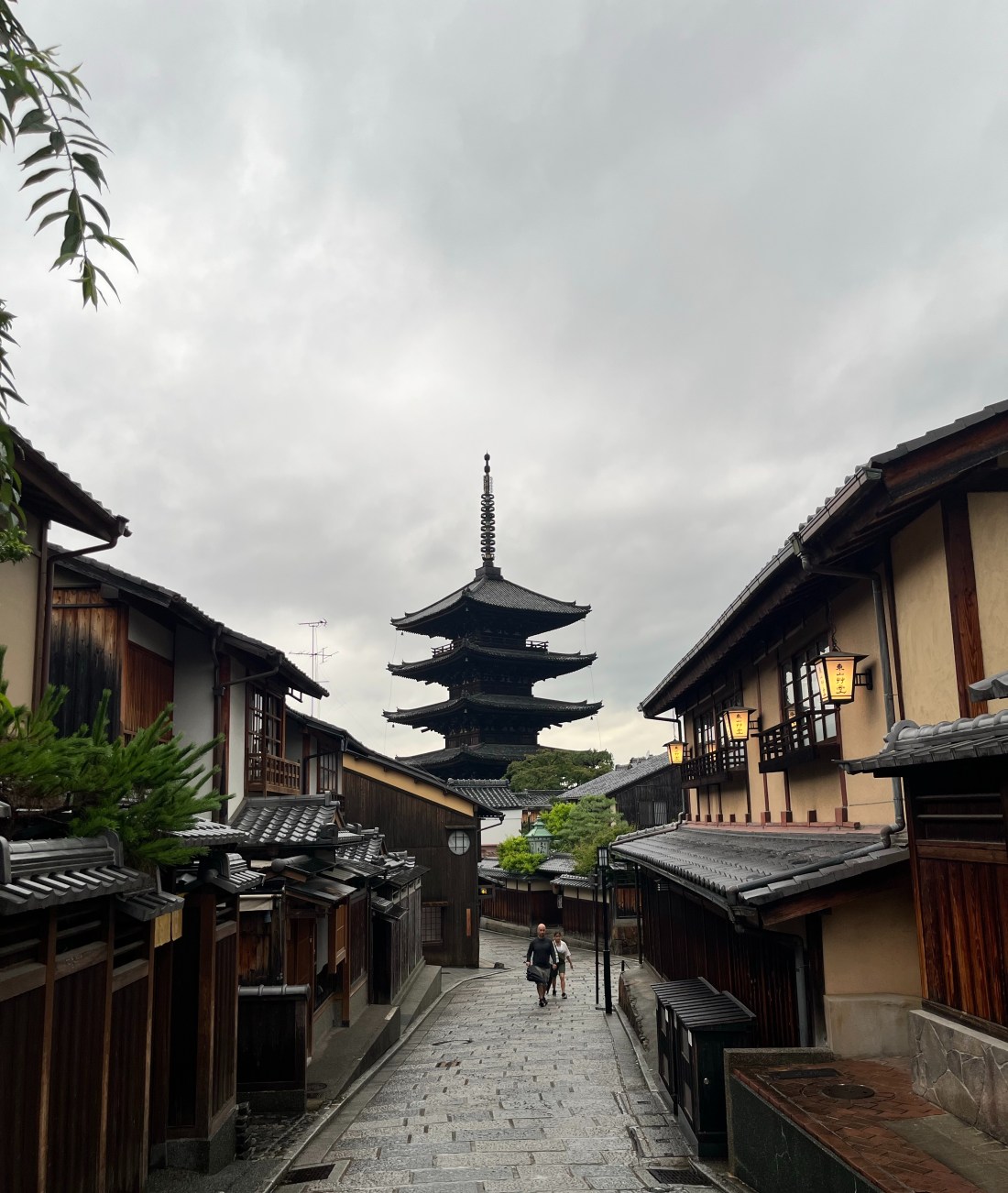
P.P.S. Featured photo is one of many pagodas (Buddhist stupa) promulgated by Shotoku, this one in Kyoto.
1 In Sanskrit, these were the Caturmahārājakayikas or Caturmahārāja. For example, if you visit Todaiji, you see some of the Four Guardian Kings around the giant statue of the Buddha, plus many other, older temples. I liked their adaptation in Roger Zelazny’s “Lord of Light” as well.
2 There were other Empresses who reigned as well, some powerful, but many remained as temporary regents until someone else could assume the throne.
3 The modern constitution of Japan adopted in 1947, at the instigation of US Occupation Forces, is ironically significantly more progressive and modern than the US Constitution. To be fair, they were written almost 200 years apart, but the Japanese Constitution explicitly grants suffrage to women and abolishes slavery. Even now, with its amendments, the US Constitution grants neither. In college, I met the lady (a US army secretary at the time) who helped write the clause on women’s suffrage. She was a very fascinating person, though she’s probably passed away by now.
4 Many generations later, this was still largely true: powerful clans ruled many parts of Japan outside the capital, gradually evolving into a feudal system over the centuries, until the Meiji Restoration of 1868,
This is a passage from the lesser-known tenth chapter of the Lotus Sutra, but it’s something I think about from time to time:
… if you wish to expound this sūtra Enter the room of the Tathāgata, Wear the robe of the Tathāgata, Sit on the seat of the Tathāgata, [And after doing these three things,] Expound it to people without fear!
To enter the room of the Tathāgata means to have great compassion.
To wear his robe means to be gentle and patient.
To sit on his seat means to see the voidness of all things.
Expound the Dharma only after you do these [three] things!
Translation by Rev. Senchu Murano
The Lotus Sutra is interesting because it talks about itself a lot, but when the Lotus Sutra talks about the Lotus Sutra, it’s not necessarily talking about the literal text on the page. The text hints at a deeper, ineffable teaching that only becomes clear as one progresses through the Buddhist path. So, I believe, that there’s the “literal” Lotus Sutra on the page, and the deeper meaning behind it.
Anyhow, what really matters here is that the Buddha, Shakyamuni, is giving advice on how to properly teach the Dharma. I know that some readers have a background in teaching, or therapy, or other similar fields, so this probably applies some readers more than others. But the sixteenth chapter of the Lotus Sutra and its countless “Bodhisattvas of the Earth” strongly hints that anyone can be a teacher, and anyone can uphold the Lotus Sutra. You just have to believe in yourself and follow the Buddha’s advice.
This is important as a bad teacher, someone charismatic but drowning in their own ego, can really damage a community and the reputation of the Buddha-Dharma. If you decide to take on the role of a teacher,1 it’s super important that you understand the responsibility. Hence, the Buddha’s advice:
Goodwill towards all beings, which includes upholding your own personal conduct.
Patience towards all beings, because everyone starts from somewhere.
Appreciating the emptiness of it all: any fame, fortune (or babes), or power you get from being a teacher are temporary and futile anyway. You will still grow old, sick and die, so it is not a dignified pursuit.
On the other hand, one of the best things you can do to teach the Buddha-Dharma is to simply live it in your own life. Even if you don’t say a word, people will pick up on it, and in so doing, you’ll be following the Buddha’s advice anyway.
That, in my opinion, is a true Bodhisattva of the Earth.
Namu Shakamuni Butsu
1 I feel a pang of hypocrisy as I write this. I am not teacher, just a nerd, but I often like sharing things so I guess I am a teacher? I dunno. I have taught classes before in my old Buddhist temple, but only short, historical seminars, but even that feels like a big responsibility. I respect what real clergy do.
It’s hard to believe but in some places Plum Blossom season is already here! My wife sent me this post from Dazaifu Tenmangu Shrine in western Japan showing the first blooms of the year:
This is a famous Shinto shrine (homepage here) that venerates the God of Learning, Tenjin (天神), better known in history as Sugawara no Michizane.1 I have visited Kitano Tenmangu Shrine in Kyoto, and Yushima Tenmangu Shrine in Tokyo, but Dazaifu is in western Japan where Michizane died in exile and not easily accessible for me, though my sister-in-law somehow got me a charm from there last year. I’ve always liked Tenjin/Michizane, so if I had to pick a Shinto deity, he gets my vote.
Plum blossoms, which imported from China (unlike native cherry blossoms), were trendy among the elite of Japanese society as far back as the Manyoshu anthology (7th century):
Original Manyogana
Modern Japanese
Romanization
Rough Translation1
和何則能尓
我が園に
Waga sono ni
Perhaps
宇米能波奈知流
梅の花散る
Ume no hana chiru
the plum blossoms will
比佐可多能
ひさかたの
Hisakata no
scatter in my garden
阿米欲里由吉能
天より雪の
Ama yori yuki no
like falling snow
那何久流加母
流れ来るかも
Nagarekuru kamo
from the gleaming heavens
1 Amateur translation, apologies for any mistakes
Later, because of Michizane’s devotion to his old plum tree while in exile, plum blossoms became associated with his deified form of Tenjin, and thus Tenmangu shrines typically have some on the sacred grounds.
My own tree2 blooms in early-to-mid February and I look forward to it every year.
I hope you all get a chance to see some plum blossoms in your area too!
1 Elevating historical figures to the status of kami is not that unusual in Shinto religion.
2 Mine are more typical Thundercloud Plum trees (Prunus cerasifera), common here in the US, while Japanese umé (梅) are a somewhat different variety (Prunus mume). But I am happy with what I have.
This blog, and its blogger, have focused on the Pure Land tradition of Buddhism for many years. I didn’t really start practicing Buddhism seriously until I encountered the Jodo Shu-sect teachings of Honen way back in 2005. It really inspired something in me that’s never stopped even as my practice has taken many twists and turns.
But, strangely, I’ve never actually talked about what a “pure land” is. That’s the subject of today’s post.
The concept of a “Buddha land” or “Pure land” is actually a broad and rich tradition within Mahayana Buddhism, and well worth exploring. Here, I am not talking just about Amida Buddha and his Pure Land, but the general concept. It shows up a lot in Mahayana Buddhism and its many traditions, including the Zen tradition. It also shows up in contemporary Asian literature as well, including Akutagawa Ryunosuke’s famous short story “The Spider’s Thread” (蜘蛛の糸) as well as the Legend of Zelda series. Once you recognize it, references to Buddha lands show up in many unexpected places.
And yet, it all started long ago in India.
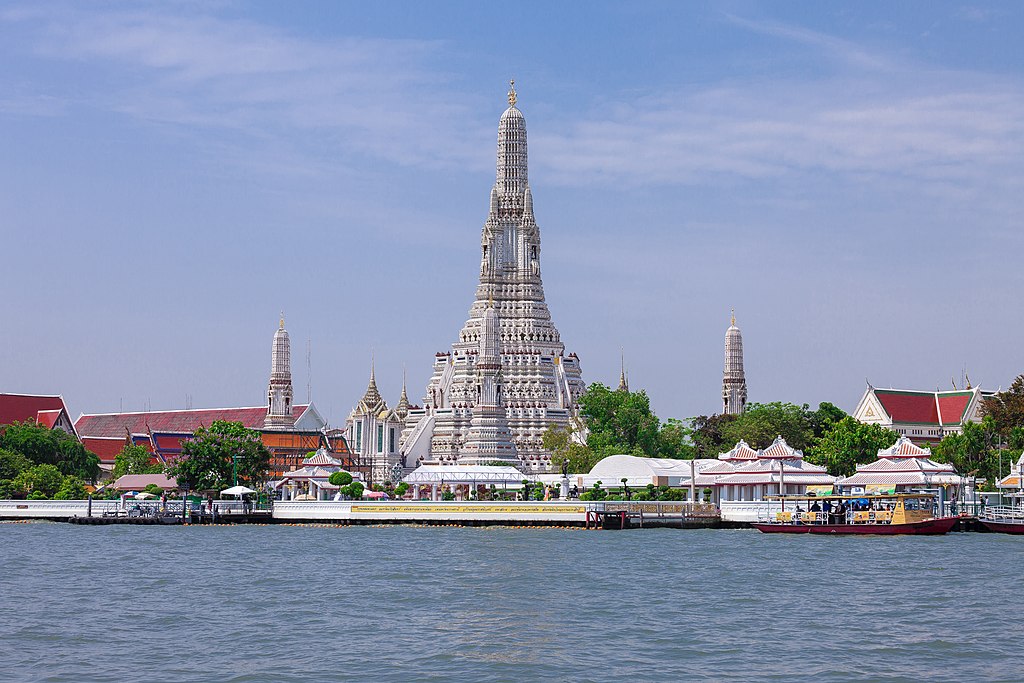
Traditional cosmology (i.e. “how the world is arranged”) in India tended to see a flat world with continents strung together in all directions, including above and below. Some of these continents would be anchored by a massive mountain in the middle, called Mount Sumeru (or Mount Meru). You can see this also in Buddhist architecture such as this famous temple in Bangkok, Thailand:
Incidentially, people in India thought that they lived in one of these continents called Jambudvipa, which was on the southern end of Mount Sumeru. For example, in the Earth Store Bodhisattva Sutra, you see text like so (chapter 4):
Thus, in this Saha world, on the continent of Jambudvipa, this Bodhisattva teaches and transforms beings by means of millions of billions of expedient devices.
Translation by City of Ten Thousand Buddhas
Anyhow, different continents were more peaceful and civilized than others. In some continents dwelt a living buddha, and by their sheer presence, the land would be purified, and all would be peaceful. Such lands are called buddhakṣetra in Sanskrit.
At that time the Buddha told the Elder Shāriputra, “Passing from here through hundreds of thousands of millions of Buddhalands to the West, there is a world called Ultimate Bliss. In this land a Buddha called Amitābha right now teaches the Dharma
Translation by City of Ten Thousand Buddhas
In this sutra, the Pure Land of Amitabha is just one of many such lands that exist to the west, but a particularly splendid Buddha land. Buddhas and Buddha lands were thought to exist in all cardinal directions, and the Amitabha Sutra above goes to great lengths to describe some of them, but highlights Amida Buddha’s Pure Land in particular.
Another example of a Buddha land is the realm of the Medicine Buddha, called Lapis Lazuli, which was thought as existing to the east (not west). The Medicine Buddha Sutra describes it at length. It even goes out of its way to say it’s easier to be reborn in the realm of Lapis Lazuli than the Pure Land of Amitabha:
“If their rebirth in the Pure Land is still uncertain, but they hear the name of the World-Honored Medicine Buddha, then, at the time of death, eight great Bodhisattvas, namely, [list of names] will traverse space and descend to show them the way. They will thereupon be reborn spontaneously in jeweled flowers of many hues. [i.e. be reborn in the Buddha land of the Medicine Buddha]
Translated and annotated under the guidance of Dharma Master Hsuan Jung by Minh Thanh & P.D. Leigh
If a person could be reborn in their next life in a Buddha land, any Buddha land, and thus be in the presence of a living Buddha, it is thought they would find refuge, but also they would advance much better along the Buddhist path. The idea of Pure Lands never supplanted or replaced more tradition Buddhism, but if your current circumstances prevented you from following the Buddhist path, you could opt to be reborn in a Buddha land and make up for it in the future.
… but then we come to another Buddha land worth noting: the Buddha land of Shakyamuni Buddha himself. The sixteenth chapter of the Lotus Sutra drops a plot twist wherein the Buddha never really died, and exists for all time on Vulture Peak in India (a real place where historically he and the Buddhist community often dwelt), and preaching the Dharma to any who see him (details added by me in parantheses):
I live on Mt. Sacred Eagle (another name for Vulture Peak) And also in the other abodes For asaṃkhya (countless) kalpas (eons).
…”This world is in a great fire. The end of the kalpa [of destruction] is coming.” In reality this world of mine is peaceful. It is filled with gods and men.
Translation by Rev. Senchu Murano
The Lotus Sutra version of the Pure Land is less about esoteric geography, and more about Shakyamuni Buddha always being here, whether we see them or not. It comes down to wisdom, clarity, and good conduct.
This viewpoint is found in Zen as well. When we look at the Hymn of Zazen by Japanese monk, Hakuin, who was a lifelong devotee of the Lotus Sutra, we can see the influence:
浄土即ち遠からず Jōdo sunawachi tōkarazu
“Indeed, the Pure Land is not far away”
Amateur translation by me
and:
当所即ち蓮華国此身即ち仏なり Tōsho sunawachi rengekoku, kono mi sunawachi hotoke nari
“This place is none other than the Land of Lotuses [the Pure Land], this body is none other than the Buddha.”
Amateur translation by me
But this isn’t just Hakuin talking. As we saw with the Obaku Zen tradition (a cousin of Hakuin’s Rinzai tradition), they felt the same way, only replacing Shakyamuni with Amida Buddha. But the sentiment was the same. You’ll find similar sentiments in esoteric traditions too, but I have little experience with those and cannot explain in much detail.
So, that brings us to the point: how does one interpret all these Pure Lands, these Buddha lands? My views have gradually changed over time, but I don’t pretend to have the answer. I think in a way that all viewpoints are correct. It is like the famous parable of the blind men describing an elephant: everyone has some idea, but the big picture is beyond our grasp. So, there’s no wrong way to interpret it. If one believes it’s a faraway refuge to be reborn into, that’s totally fine.1 If one believes it’s all in the mind, that’s fine too.
Even the Buddhist sutras, including some I linked above, state that simply “hearing” of the Buddha lands is a merit unto itself. So, if you’ve made it this far, you’re already doing just fine. Just apply the teachings in the way that best fits you.
Namu Shakamuni Butsu Namu Amida Butsu
1 Maybe this is my background as a scifi fan or something, but I do like to imagine that instead of physical continents, the various worlds and Buddha lands are just planets and worlds across the entire Universe. But that’s a personal view, more fantasy than firm belief, so please take it with a grain of salt.
In late 2025, by chance, I found an interesting book at the local Japanese bookstore titled 眠れなくなるほど面白い図解禅の話, “An explanation of Zen so interesting you can’t sleep”, which provides a nice overview for Japanese readers about Zen. It covers a lot of little details like different sects, founders, historical bits, cultural stuff, and so on, that are hard to find in English publications.
Anyhow, the book talks about something I’ve never heard before called the Shiseiku (四聖句) which can be translated as “The Four Holy Verses [of Zen]”. This is a set of verses, imported from Chinese Chan Buddhism and attributed to Bodhidharma, and distill what Zen is all about:
Chinese / Simplified1
Pinyin
Sino-Japanese
English2
不立文字 / 不立文字
bù lì wén zì
fu ryū mon ji
“Buddha-nature cannot be expressed in words.”
教外別傳 / 教外别传
jiào wài bié chuán
kyō ge betsu den
“The teachings of Buddha-nature exist outside scripture.”
直指人心 / 直指人心
zhí zhǐ rén xīn
jiki shi nin shin
“The heart of the Buddha’s teachings are transmitted directly, person to person.”
見性成佛 / 见性成佛
jiàn xìng chéng fó
ken shō jō butsu
“A person who sees their own true nature is a buddha.”
1 Rough translation by me, apologies for any mistakes
Let’s break these down.
The gist is that the deeper teachings of Buddhism cannot be expressed in words, but must be experienced first-hand. This is not an exclusive concept to Zen, by the way. Take a look at an early sutra of the Buddhist tradition:
“This Dhamma that I have attained is deep, hard to see, hard to realize, peaceful, refined, beyond the scope of conjecture, subtle, to-be-experienced by the wise.
The Ayacana Sutta (SN 6.1), translation by Ven. Thanissaro Bhikkhu
… among other places:
36. “When a monk’s mind is thus freed, O monks, neither the gods with Indra, nor the gods with Brahma, nor the gods with the Lord of Creatures (Pajaapati), when searching will find on what the consciousness of one thus gone (tathaagata) is based. Why is that? One who has thus gone is no longer traceable here and now, so I say.
Buddhism provides signposts, maps, or guides through the sutras, through Dharma talks (sermons), and such. However, sooner or later one has to apply the teachings themselves to fully grasp it. This includes one’s own “Buddha nature”: that capacity we have toward becoming buddhas ourselves.
Although Zen tends to have an anti-intellectual image, it’s important to understand that there is a genuine need for scriptural texts and references, especially as one starts out. The Buddha even warns us about making bad assumptions before fully grasping the Dharma, like trying to grasp a poisonous viper incorrectly.
But over the years, through practice this become less essential. Life is something to experience, to live, and to learn from. Even the really ugly shit. In the same way, imagine a pilot training to fly. Reading the manual isn’t enough; they must put in enough hours of “flight time” before they get a license.
But I digress.
The final verse (a buddha is one who sees their own nature) needs some extra explanation. What separates a buddha from a mundane human being is a degree of awakening, not supernatural powers. Or as Dogen Zenji explains in the Genjō Kōan:
To study the Buddha-Way is to study the Self. To study the Self is to forget the Self. To forget the Self is to be enlightened by all things. To be enlightened by all things is to drop off the body and mind of self and others.
In other words, through Buddhism, you see your own nature. By seeing your own nature, you drop the delusions and gain clear insight. By gaining clear insight, you awaken as a Buddha.
1 For those unfamiliar, Chinese characters come in the traditional form and simplified form. The traditional form is what you mainly see outside of the People’s Republic of China. The simplified form is mostly used within the PRC. Interestingly, Japanese uses halfway solution: some characters are simplified, some are not. Anyhow, in most cases, the characters are the same, but you can probably spot a few differences.
2 This is my own translation. Apologies in advance for any mistakes.
PHLOX: It’s clearly had an impact on you. You seem more certain of yourself. T’POL: I’ve never felt less certain. PHLOX: You’re re-examining your core beliefs. Something most people never do.
Star Trek: Enterprise, “Daedelus” (s4:ep10)
Core beliefs do not change easily.
Whether they are morally right or wrong, our beliefs are tightly woven into our sense of identity. If someone challenges our beliefs, they challenge our fundamental sense of self, everything we’ve been taught or learned up to this point, and the conclusions we’ve made as a result.
Indeed, this is why people have such a vast diversity of beliefs, and why we stubbornly cling to them too: we are constructing the world around us based on our perceptions, environment, and experiences.
But that sense of self, including its beliefs, preferences, etc, is an illusion. This is the fundamental Buddhist doctrine of “no(-lasting)-self” called anātman in Sanskrit, or 無我 in East-Asian Buddhism.1
To clarify, this does not mean we don’t exist. But our sense of self is not permanent or static, like a soul or spirit that exists apart from the body. It shifts and changes, like the famous Ship of Theseus. In other words: it’s not something we can rely upon.
Hence, the Buddha told his son Rahula2 to maintain the view that:
‘This is not mine, this is not me, this is not my self.’
What we feel and think isn’t something we can truly call our own. The mind and sense of self is fungible, and what we hold personally dear and true can change as well. This challenges our sense of self, and this makes us uncomfortable, like T’Pol from the show Enterprise3 as she began to challenge her own Vulcan beliefs.
But that’s also how people learn and grow.
Namu Shakamuni Butsu
1 Pronounced wúwǒ in Chinese, and muga in Japanese, among other languages.
2 Rahula was born when the Buddha was still a prince, and later when the Buddha awakened and became a spiritual teacher, he reunited with his family. Some of them ordained as monks and nuns, some did not. Rahula was one of those who ordained.
3 I never actually watched Star Trek: Enterprise back in the day. I was in college and very busy, plus I didn’t really like the UPN channel at the time. However, I finally rewatched it during my personal break and I realized that the show is really, really good. If you are a Trek fan, it’s worth watching.
In terms of demographics, Zen in Japan never reached the mass appeal that the Pure Land and Shingon sects ever did,1 but it has had an unusually large influence on the culture. When people think of this, they usually think of things like sand gardens, tea ceremonies, or certaintemplesinKyoto, but the language includes many words originally borrowed from Chinese-Zen (a.k.a. Chan) terminology imported into Japan.
This is not unusual, as it happens in English and other languages too: religious terminology gradually become increasingly widespread and lose their original religious context. The English word “goodbye” evidentially derived from “god be with ye”, for example.
So, let’s look at a few examples in Japanese.
The word aisatsu (挨拶), meaning customary greetings, was originally from the back and forth questions a Zen teacher would ask a student to test their grasp of the Dharma. Back then it was called ichiai-issatsu (一挨一拶), so the word has shortened over time.
The verb ganbaru (頑張る), which you see all the time in Japanese and means to “hang in there” had a somewhat different meaning in the past. It’s original meaning was the tendency for people to cling to their egos and assert their viewpoint even in the face of reality. The word has changed to a more positive meaning over time.
The word shujinkō (主人公) meaning the main character of a story (or drama) originally comes from a famous collection of Zen koan called the Mumonkan, wherein a certain monk would talk to himself and say things like “hey you, stay awake [don’t be fooled]”. The “you” here is where shujinkō comes from.
The phrase ichi-go-ichi-é (一期一会) normally means a once-in-a-lifetime experience, but in a Zen or tea ceremony context it means that this moment is like no other, never to be repeated.
The word kanben (勘弁) which my wife sometimes yells at me (kanben shite yo! “use your head”, “be reasonable!”) originally described a teacher thoroughly investigating a student’s grasp of the Dharma.
Finally, the word genkan (玄関) is a very common word in Japanese, meaning the front entry way, where you take off your shoes, etc. Originally this was limited to the area near a temple’s gate, but during the Edo Period the usage became more popularized to mean the entryway of a home.
There are other, more obscure terms as well, often in the form of phrases and idioms.
The phrase nichi nichi kore kō nichi (日日是好日) means “every day is a good day”, and I talked about it in this older post. This is directly taken from Chinese, but pronounced in a Japanese way.
Similarly, another famous Chinese-Zen phrase is kyakka shōko (脚下照顧) which loosely translated means something like “watch your feet!”. More specifically, it means to observe one’s self carefully, using the example of your feet. If your shoelaces are untied, your walking gets sloppy, or your shoes get messy, or you trip and fall. So, if you notice this, and tie your shoelaces, then you are catching the problem early, and avoiding future issues.
So, that’s a look at Zen-Buddhist words in Japanese language. Thanks for reading!
1 According to one of my books, the Rinzai Zen sect has about 1.1 million registered followers, while the Jodo Shinshu sect has 11 million (10 times that number) and Shingon sect about 7 million. Soto Zen has about 3.5 registered followers, so somewhat larger, but not that much.
In the past, I’ve written about a certain obscure holiday in Japanese culture called Nanakusa (七草, “seven herbs”)1, which takes place every January 7th, just after the New Year.
While reading about the Diary of Lady Murasaki (discussed on my other blog) I discovered that there is a parallel Nanakusa tradition in Autumn as well. There is no designated holiday, but since antiquity, these flowers and herbs were prized during the season of Autumn.
This page shows some really nice visuals of each flower.
Some of these plants aren’t necessarily well-known today, but even as a foreigner, I recoginize a few of them. Susuki grass (a.k.a. Chinese silver grass) is an important part of Otsukimi, and Nadeshiko flowers are frequently used as a symbol of femininity in Japan. The national soccer/football team is named Nadeshiko Japan in fact. Hagi is used in Ohagi treats as well.
Regarding the reference in Lady Murasaki’s diary near the beginning is written the following text:
I look out from my room at the head of the corridor into the light morning mist. Dew is still on the ground, but His Excellency [Fujiwara no Michinaga, her benefactor] is already out in the garden ordering his attends to clear the stream of some obstruction. Plucking a sprig from a large cluster of maiden-flowers that blooms there on the south side of the bridge, he peers in over the top of the curtain frame…
The “maiden flowers” according to the Japanese text are ominaeshi (golden lace) flowers. So, even in the 11th century, a thousand years ago, these flowers were prized among the aristocracy of Japan. Immediately after, Michinaga challenges her to compose a poem about the ominaeshi he plucked (a common practice back then), and she composes the following:
Japanese
Romanization
Translation
女郎花
Ominaeshi
Now I see the
さかりの色を
Sakari no iro wo
color of this maiden-flower
見るからに
Miru kara ni
in bloom,
露のわきける
Tsuyu no wakikeru
I know how much the dew
身こそ知らるれ
Mikoso shirarure
discriminates against me.
Translation by Dr Richard Bowring
Michinaga is impressed by her quick wit (it’s basically why he hired her as a handmaiden to his daughter), he responds with:
Japanese
Romanization
Translation
白露は
Shiratsuyu wa
It is not the dew
わきてもおかじ
Wakitemo okaji
that chooses where
女郎花
Ominaeshi
to fall;
こころからにや
Kokoro kara ni ya
does not the flower choose
色の染むらむ
Iro no somu ran
the color it desires?
Translation by Dr Richard Bowring
Such a poetic exchange for a single flower.
In fact, the Autumn list of flowers dates much further back than the 11th century. Take a look at these two poems from the Manyoshu anthology, poem 1537:
… as you can see, these two poems are linked. It’s interesting that even as far back as the 7th century, these seven flowers were celebrated in poetry, and this tradition still persists in Japan today, the 21st.
Wishing you all a happy Nanakusa!
1 Not to be confused with the Colonel’s “eleven herbs and spices”. 😉 I have enjoyed Kentucky Fried Chicken in Japan, and we try to try to enjoy it for Christmas every year even in the US, per Japanese tradition.
2 Manyogana was an early Japanese script that used Chinese characters in a very phonetic way. This was eventually replaced by the simpler, short-hand form called hiragana. Only very early works of Japanese are recorded in Manyogana, but that does include the Manyoshu anthology.
3 A couple quick notes from the referenced website: the name Fujihakama has gradually changed pronunciation to Fujibakama. Also, apparently the Asagao flower referenced in the Manyoshu isn’t the same as the modern Asagao “morning glory” flower. It’s not clear what flower this referred to at the time. Finally, this flower isn’t the same as the kikyou flower that is now part of the seven flowers of Autumn Nanakusa.
185. Not despising, not harming, restraint according to the code of monastic discipline, moderation in food, dwelling in solitude, devotion to meditation — this is the teaching of the Buddhas.
Translation by Acharya Buddharakkhita
Plain and simple, Buddhism is about restraint, non-violence, and devotion to the training. This can come in many forms, but if it leads to moderation, dignity, self-mastery, and goodwill towards others, this is in accord with the Buddha’s teachings.
Recently, we had a holiday work party at a local Brazilian steakhouse. I have never been to one before but it had many finely cuts meats, and they were served in large quantities over and over.
I am not vegetarian yet (work in progress), but I have been gradually reducing my meat consumption since early 2025. I definitely do not eat steaks and sausages very much. But everyone else was consuming in large quantities. I had a few samples and soon quit because I knew I couldn’t digest so much meat (it was kind of gross). I am really glad I did because although I missed out on some good food, I saved myself from indigestion, nausea and “meat sweats”.
Indeed the Buddha famous said:
186-187. There is no satisfying sensual desires, even with the rain of gold coins. For sensual pleasures give little satisfaction and much pain. Having understood this, the wise man finds no delight even in heavenly pleasures. The disciple of the Supreme Buddha delights in the destruction of craving.
Translation by Acharya Buddharakkhita
Indulging in a ton of food seems like a refuge for us, it makes us happy, but it is not a reliable one. Overindulgence leads to future health problems and misery.
As the Buddha warns through the sutras, there is no safe, reliable refuge. We still dwell in the “burning house” of the Lotus Sutra: death, old age, and disease are things we have to face, amusing ourselves with our toys, but the house burns around us nonetheless.
If you are a high-rolling CEO or a pleb, it is the same problem, just a different scale.
But the Buddha by his accomplishments and his awakening, and thus letting go, has reached safety:
I have already left the burning house of the triple world.1 I am tranquil and peaceful In a bower in a forest.
translation by Rev. Senchu Murano, chapter three of the Lotus Sutra
Hence, the Buddha (like all buddhas) seeks to lead people out of the burning house too, to the safety of the forest.
The first step in the Buddhist path (i.e. leaving the burning house) is, in my opinion (amongothers), taking the small steps toward moderation and self-restraint. Such things pay dividends in the short-term through having fewer hassles, a balanced personal budget, and provide mental well-being both through increased self-confidence and also fewer regrets.
In the long-term it provides far more.
Namu Shakamuni Butsu
1 This is a Buddhist term that shows up in the sutras a lot. It just means the cosmos, the Universe, the “Whole Enchilada“, etc.






 Gleanings in Buddha-Fields

You must be logged in to post a comment.