Hubris

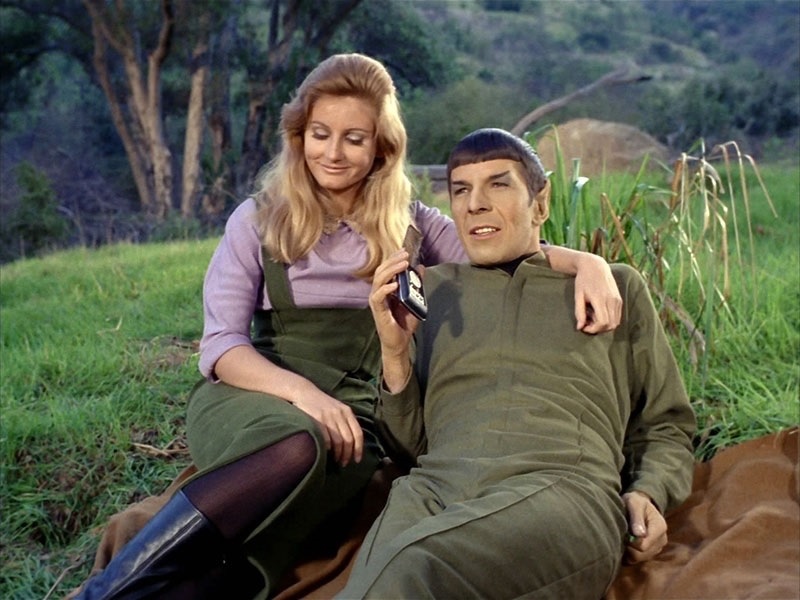
“…tin-plated, overbearing, swaggering dictator with delusions of godhood.”

Scotty, “Trouble with Troubles” (s2ep15), Stardate: 4523.3

Thinking of the story of Taira no Kiyomori, among other things today.

The Floating World

All conditioned dharmas
Are like dreams, illusions, bubbles, or shadows;
Like drops of dew, or like flashes of lightning;
Thusly should they be contemplated.

The Diamond Sutra, Translation courtesy of Lapis Lazuli Texts

It would be illogical to assume that all conditions remain stable.

Spock, “The Enterprise” Incident”, stardate 5027.3

The “Floating World”, or Ukiyo (浮世) is an old Buddhist term meaning the world of fleeting forms and temporary joys we live in as part of Samsara. It later became, in the 16th century onward, a term for the pleasure quarters of the city of Edo (later Tokyo) when it became the capital of the new Shogunate. The idea was simple: the pleasure quarters offered everything a person could want, if they could afford it, even if it was just part of the mundane, effervescent world.

Block print titled Taking the Evening Cool by Ryōgoku Bridge, c. 1745, by Okumura Masanobu, Public domain, via Wikimedia Commons

But it’s not hard to see that this kind of Floating World, with all its glamour and joys, can be found almost anywhere at any time. Even modern Pop Culture and entertainment, even social media, is just another form of the Floating World.

It’s not that the Floating World, modern Pop Culture, or social media inherently are evil, but they glosses over the pains and realities of life. For every successful actor or actress in Hollywood, it’s not hard to find many others who scrape by. Even those who succeed pay a very heavy price. For every person who greets you at the five-star restaurant with a smile, there are countless people in the back who are slaving away to wash the dishes, cut vegetables, and so on, to say nothing of the waiter’s own personal pains and dilemmas. For every pretty girl who smiles at you, she is glossing over her own pain and trauma. And so on.

Scratch the veneer and see a lot of people working hard to make customers, listeners or viewers happy, but themselves are stressed, exhausted, miserable, or unhappy with their lives.1 Just like the rest of us.

In a sense, the whole thing is a golden sham.

And yet, why do we still gravitate toward such things, even when we know they are transient and don’t provide any lasting happiness? I am no different. When I’ve had a hard day at work, and after dinner with the family, I don’t meditate; I sit down and play a Fire Emblem game. Even Lady Izumi, a thousand years ago, lamented her inattentiveness.

Because we are human, and being human is hard sometimes.

Still, it’s worthwhile to see one’s own behavior and learn from it: the way we flit from something fun to something else fun. Even that can be illuminating. I learned a thing or two just writing this post. 🤔

But yes, life is hard, and it hurts, and it’s exhausting. The joys in life are fleeting, and yet we chase after them for even a temporary respite.

Nonetheless, the house around us is still burning. Time is short.

1 Of course, if you’re thinking to yourself “better them than me”, do not be so sure.

Star Trek and Space Lincoln!!

Season three of Star Trek has one of my most favorite, albeit silliest episodes in the entire series: The Savage Curtain. The episode starts off with a bang: Abraham Lincoln (played by Lee Bergere) floating in space on his trademark chair.

From there, the Enterprise crew and in particular Kirk and Spock are confronted by some of “histories worst villains” as well as an encounter with Spock’s idol, Surak (played by Barry Atwater), father of Vulcan philosophy.

A picture of Surak of Vulcan, his right hand in the Vulcan Salute.
Surak of Vulcan, founder of Vulcan Logic, in the Star Trek episode the “Savage Curtain” (season 3, episode 22)

The rock aliens who force the “good” historical figures to combat the “evil” historical figures want to compare and contrast their philosophical ideas against one another to see which is better.

Kahless the Unforgettable (played by Bob Herron) and Colonel Greene (played by Phillip Pine)

The premise might seem a bit silly, but it is a fascinating contrast of ideas:1

  • Surak – a pacifist, non-violent approach
  • Lincoln – fight if necessary, and “on their level”.
  • Col. Greene – power is all matters
  • Kahless – victory by any means
  • Kirk – do what it takes to save his crew
  • Spock – honor his commitments to Starfleet, and fight with Kirk, even if is compromises his personal morals

Although Surak loses his life in the combat, he has some really great quotes in this episode that I think are worth sharing:2

The face of war has never changed.  Surely it is more logical to heal than to kill.

Surak of Vulcan, “The Savage Curtain” (s3ep23), stardate 5906.5

and also:

I am pleased to see that we have differences.  May we together become greater than the sum of both of us.

Surak of Vulcan, “The Savage Curtain” (s3ep22), stardate 5906.4

Lincoln’s performance throughout the episode is great as he embodies the great American president as we want him to be: gentle, but tough when needed. One can’t help but compare this to Bill and Ted’s Excellent Adventure, even if they are completely different movies, because Abraham Lincoln is such a beloved figure.

At the very end of the episode, there is a subtle dialogue worth sharing:

KIRK: They seemed so real. And to me, especially Mister Lincoln. I feel I actually met Lincoln.

SPOCK: Yes, and Surak. Perhaps in a sense they were real, Captain. Since they were created out of our own thoughts, how could they be anything but what we expected them to be?

Source: http://www.chakoteya.net/StarTrek/77.htm

In fact, I think there’s something very Buddhist about this. The inhabitants of the planet didn’t necessarily create historically accurate versions of Lincoln, Surak, etc, but what we wanted them to be in our minds. In a sense, we create our own gods and idols through our hopes and aspirations (for good or for ill). This isn’t always bad, but it does show how unwittingly we bend the world around us to fit our beliefs and views.

Anyhow, The Savage Curtain is such a fun, surreal episode, and a fascinating contrast of ideas and people in history, and how they interact. These ideas and philosophies are timeless in many ways, and crop up over and over again in history, but by pitting a bunch of historical figures in space against once another, it takes on a whole new dimension of weird, silly, fun.

Also:

P.S. Many reviews point out that The Savage Curtain borrows elements from older, venerable episodes, and thus judge it an inferior episode. I can’t disagree that it borrows a lot of elements, but I like to think it is a capstone to several previous “moral tale” episodes. The action sequences aren’t quite as good, but I don’t think that was the point. It was battle of ideas, not sticks.

P.P.S. I bet you could take all 8 characters, including Kirk and Spock, in the battle and somehow arrange them into a classic D&D alignment chart. The rock aliens of Excalbia would probably be true-neutral.

1 I wish “Zorra” (Carol Daniels) and “Genghis Khan” (Nathan Jung) had dialogue, as it would have been interesting to have more contrasting goals and aspirations.

2 More on witnessing war.

Happy New Year 2025

Hello Readers,

It’s 2025, and I am happy to be back. The break wasn’t as restful as hoped (too many holiday obligations), but I did accomplish most of my goals, and got to celebrate my firstborn’s 18th birthday which was an important milestone for us parents. I also played lots of Fire Emblem: Engage,1 and watched plenty of old Star Trek episodes.

Anyhow, for the first temple visit of the year, the priest stated that according to the traditional 60-year Chinese calendar 2025 was the sign ki-no-to-mi (乙巳), which can be roughly translated as “yin wood snake”, which implied change coming to fruition, like a tree growing its branches. For context, last year was “yang wood dragon” (ki-no-é-tatsu, 甲辰). Which implied much turmoil, like a baby dragon bursting from its shell.

While I might be speaking from confirmation bias, I cannot help but feel recent events in the last few years reflect this. But, I suppose it’s up to individual interpretation.2

Anyhow, I have some fun posts coming up that I finally finished while on break.

Hoping you all have a great year, or at least stay out of trouble. 😅

1 Engage doesn’t have the emotional depth of Fire Emblem: Three Houses (I doubt few games would), but it has grown on me, and I enjoy many aspects about it, and will likely play through it again.

2 I consulted the Yi Jing for the year, and my own personal fortune wasn’t great either. Warnings of not “stepping on a tiger’s tail” and such.

Happy Holidays 2024

Spock sitting in an orange room, facing right, his fingers steepled as he meditates on a problem.

On my planet, to rest is to rest — to cease using energy.  To me, it is quite illogical to run up and down on green grass, using energy, instead of saving it.

Spock, “Shore Leave”, stardate 3025.2

Dear Readers,

Wishing you all a restful end of year, and a happy 2025!

I am going to take the next couple of weeks off myself and recharge, spend time with the family and so on. But, I also have a personal to-do list I made for myself to capitalize on the downtime and get some things done, including:

  • Finishing a novel I’ve been reading
  • A bit more Buddhist practice
  • Finishing the next installment of the Journeys of Xuan-zang (part 5 is interesting, but taking way longer than expected to finish)
  • A couple bonus projects if I have time.
  • A bit of studying

So, unlike Spock, I’ll be probably busy, but also productive on a personal level. I mostly gave myself some really easy “softball” goals so I don’t burn out on my time off, but then again, maybe I should trim this list down and have more time to just space out.

I’ll let you all know in 2025. Until then, take care!

P.S. Related post from a few years earlier.

Live And Let Live

SPOCK: Insults are effective only where emotion is present.

Star Trek, “Who Mourns for Adonais?” (s2ep2), stardate 3468.1

SPOCK: Where there’s no emotion, there’s no motive for violence.

Star Trek, “Dagger of the Mind” (s1ep9), stardate 2715.1

I wrote about the Buddhist virtue of forbearance before, but I had an important reminder recently why this matters so much in Buddhist practice.

Our natural tendency is to hold a grudge when someone slights us, or when we have been wronged. This is normal human pattern of behavior. But, like self-doubt, this is a form of conceit, putting ourselves and our ego before others.

In the Dhammapada, a collection of sayings attributed to the Buddha and one of the very earliest Buddhist texts still preserved, the Buddha has much to say regarding the subject. For example:

133. Speak not harshly to anyone, for those thus spoken to might retort. Indeed, angry speech hurts, and retaliation may overtake you.

134. If, like a broken gong, you silence yourself, you have approached Nibbana [a.k.a. Nirvana, final Unbiding], for vindictiveness is no longer in you.

The Dhammapada, translation by Acharya Buddharakkhita

The Buddha was uncompromising on this: no vengeance, lest you bring even further misery upon yourself.

Indeed, the Buddha taught by freeing oneself of ill-will and other negative emotions, one is liberated:

197. Happy indeed we live, friendly amidst the hostile. Amidst hostile men we dwell free from hatred.

198. Happy indeed we live, friendly amidst the afflicted (by craving). Amidst afflicted men we dwell free from affliction.

199. Happy indeed we live, free from avarice amidst the avaricious. Amidst the avaricious men we dwell free from avarice.

200. Happy indeed we live, we who possess nothing. Feeders on joy we shall be, like the Radiant Gods.

The Dhammapada, translation by Acharya Buddharakkhita

Of course, this is easier said than done.

As with self-doubt or any negative emotion, stop and think like a Vulcan: assess the situation including your own feelings. Is this productive? Is it harmful? Is it based on conceit?

Spock in season 3 episode 21, the “Cloud Minders”, played by Leonard Nimoy

Many times, we are prone to act or lash out, but if we take a moment to assess our feelings, and the situation, we are more capable of handling it rationally. In so doing, we avoid further misery for ourselves and others.

When the ego is bruised, it demands attention and resolution. But that is short-sighted, and rarely fixes anything.

SEPTIMUS: Our way is peace.

Star Trek, the Son Worshiper, “Bread and Circuses” (s2ep25), stardate 4040.7.

A commitment toward peace and well-being towards others feels counter-intuitive at times, but peace toward others inevitably leads toward peace for oneself.

Namu Shakamuni Butsu

Withdrawing

Kang a Klingon warrior leaning on a sword, point down, against an Enterprise console, staring bravely in the distance.

Kang: “Only a fool fights in a burning house.”

Star Trek, “Day of the Dove” (s3ep11), stardate unknown 

Ever since … recent events, I’ve been thinking about this quote a lot.

This also reminded of a passage from the Analects of Confucius:

[8:13] The Master said: “Be of unwavering good faith and love learning. Be steadfast unto death in pursuit of the good Way.1 Do not enter a state which is in peril, nor reside in one which people have rebelled. When the Way prevails in the world, show yourself. When it does not, then hide. When the Way prevails in your own state, to be poor and obscure is a disgrace. But when the Way does not prevail in your own state, to be rich and honored is a disgrace.”

Translation by Dr Charles Muller

The Analects is a compilation of Confucius’s (a.k.a. “the Master”, or “Master Kong”, etc) teachings by his disciples, completed around the 1st or 2nd century BCE. This particular passage does a nice job of summarizes Confucius’s general teachings: at all times a “gentleman” (jūn zǐ, 君子) should always stick to their principles regardless of the conditions of the world.

There are times where one openly expresses their views and strives to do what’s right, where one can share their talents for public good. But there are also times when one should bide their time, avoid getting entangled, and focus inward. Whatever is necessary to maintain one’s integrity at all times. Better to be broke but maintain integrity, than to compromise personal values for the sake of gain.

In Confucius’s time the central state of the Zhou Dynasty kingship was breaking down, and the different nobles governing each fiefdom were either breaking away and declaring themselves kings, or being overthrown by their own ministers who would in turn assert authority. It was a cutthroat time in Chinese history, and Confucius wanted no part in it.

One cannot help but find parallels even today.

P.S. Featured photo is of Kang the Klingon from the Stat Trek episode “Day of the Dove”, played by the brilliant Michael Ansara.

1 When Confucius speaks of the “Way” (daò, 道) he is using a common Chinese religious term for things like righteousness, justice, stability, and so on. The Taoist usage of the term is similar, and draws from the same “cultural well” even if nuances differ.

Change

Think of this as “part two” of yesterday’s post. Some other quotes I found that I felt expressed the same sentiment, both from Star Trek, and from Dune.


Spock: Change is the essential process of all existence.

Star Trek, “Let That Be Your Last Battlefield”, Stardate 5730.2

“Deep in the human unconscious is a pervasive need for a logical universe that makes sense. But the real universe is always one step beyond logic.”

Frank Herbert, Dune

“When things change, your absolute universe vanishes, no longer accessible to your self-limiting perceptions. The universe has moved beyond you.”

Frank Herbert, Heretics of Dune

Just posting as-is. Enjoy!

Battlefields

Spock: To expect sense from two mentalities of such extreme viewpoints is not logical.

Star Trek, “Let That Be Your Last Battlefield” (s3ep15), Stardate: 5730.2

In the infamous episode of Star Trek, season three, Let That Be Your Last Battlefield, we see two aliens who have been chasing and attempting to defeat one another for “50,000 standard years” because the patterns on their faces are different.

“Bele” (L), played by Frank Gorshin, and “Lokai” (R), played by Lou Antonio

In the big climax at the end, they commandeer the Enterprise and return to their home world which is now a dead, lifeless world: their people have annihilated one another in Bele and Lokai’s absence. Rather than giving up, Bele and Lokai beam down to the surface (after an awkward running scene through the hallways) and continue their battle for all eternity.

This scene included stock footage from the Second World War, iirc. Because the war was only a generation earlier, the message was not lost on viewers.

The final dialogue of the episode between the crew is:

SULU: But their planet’s dead. Does it matter now which one’s right? 

SPOCK: Not to Lokai and Bele. All that matters to them is their hate. 

UHURA: Do you suppose that’s all they ever had, sir? 

KIRK: No, but that’s all they have left. 

While the episode exaggerates the topic, it does beg the question: how can people get into such a death spiral of conflict and hatred?

The single most important thing in Buddhism is the mind. Not a god or deity, but the mind. We see the world through our mind, we shape our view of the world through our mind, etc, etc. In a sense, even the gods are a product of the mind.1

The implications of this are really profound, but on a practical level it also helps explain why two seemingly rational adults can have such profoundly different views, to the point of being entirely hostile to one another.

When the Buddha spoke to a wandering ascetic named Vaccha, the Buddha called this need to assert a view-point “I-Making”. In the Aggi-Vacchagotta Sutta (MN 72 of the Pali Canon), Vaccha is trying to pin down the Buddha’s stance on this philosophical debate or that. But the Buddha is having none of that:

“A ‘position,’ Vaccha, is something that a Tathāgata [a Buddha] has done away with. What a Tathāgata sees is this: ‘Such is form, such its origination, such its disappearance….Because of this, I say, a Tathāgata—with the ending, fading away, cessation, renunciation, & relinquishment of all suppositions, all excogitations, all I-making & mine-making & obsessions with conceit—is, through lack of clinging/sustenance, released.”

Translation by Ven. Thanissaro Bhikkhu

In modern English, the Buddha is saying that holding onto views and beliefs just “feeds the ego”. By feeding the ego, it also imprisons us.

It’s hard to see this, because we naturally piece together the world around us through our experiences, but no matter who we are, the picture is incomplete and we fill in the rest based on conjecture, belief and hearsay. Nonetheless, if someone attacks our beliefs, it is an attack on our deepest sense of self too. This leads to the death spiral I alluded to earlier: the stronger we try to assert our beliefs (even if they are logical and sound), the more we stir conflict, forcing us to push even harder against perceived resistance.

But, like the honey badger, the Buddha don’t care. And because he has stopped clinging, he has no ego to bruise. Without an ego to bruise, he no longer suffers and is fully liberated.

This sounds far easier than it is, but that’s the gist. Sometimes it’s just better to shut up, don’t assume you know the answer, and just pay attention to the world around you. Imagine a blade of grass bending in the wind.

Afterall, what is the alternative?

P.S. as with the previous post, I started this months ago, and just now catching up.

1 put another way: we create our god by projecting our own ego.

Instinct and Restraint

Another post in my backlog that I wanted to share. I really didn’t intend this to relate to any recent events or anything, I just think it’s an evergreen quote by Captain Kirk.

[War] is instinctive. But the instinct can be fought. We’re human beings with the blood of a million savage years on our hands! But we can stop it. We can admit that we’re killers… but we’re not going to kill today. That’s all it takes! Knowing that we’re not going to kill – today!

Kirk, “A Taste of Armageddon”, stardate 3192.1

The Buddha was also very clear about the need for disciples to give up violence. This is not always easy, but the cost of war is rarely small.

Namu Amida Butsu