Uniquely You

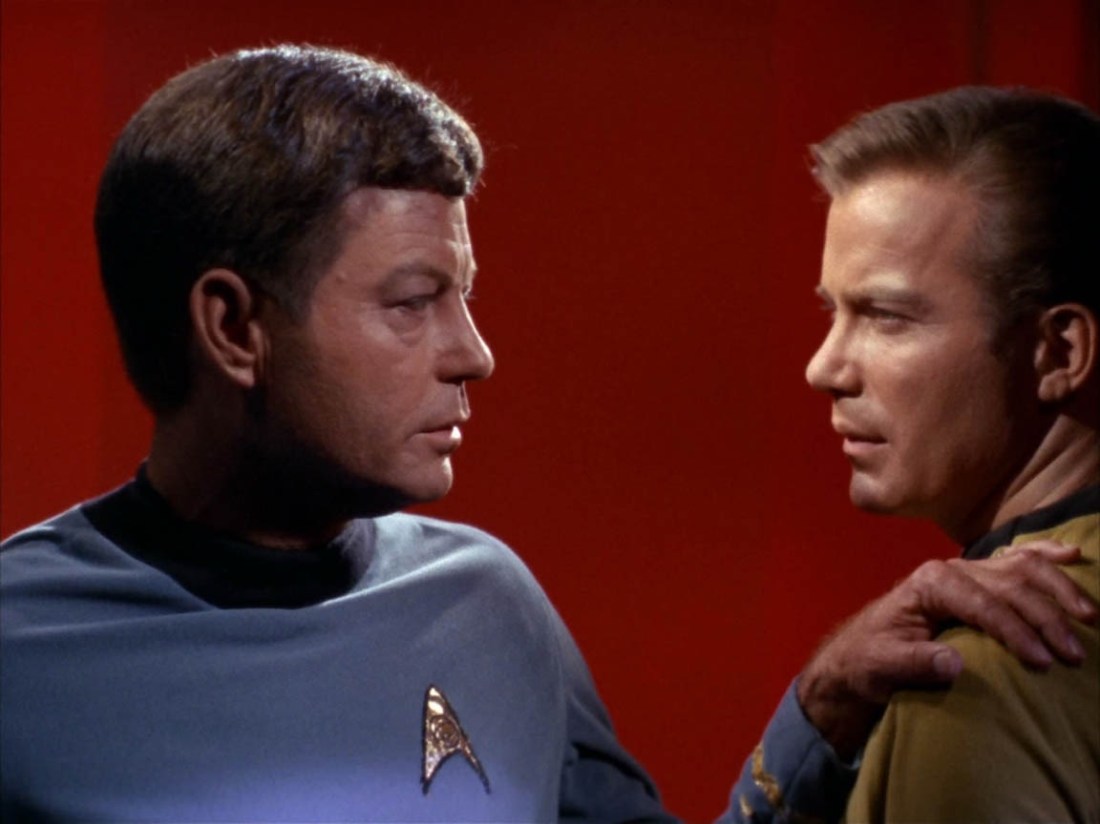
McCoy: “…In this galaxy, there’s a mathematical probability of three million Earth-type planets. And in all of the universe, three million million galaxies like this. And in all of that, and perhaps more, only one of each of us. Don’t destroy the one named Kirk.”

Star Trek, “Balance of Terror” (s1ep14), Stardate 1709.2

This excellent quote by Star Trek reminds me of a famous Jodo Shinshu-sect Buddhist poem called either “Sonno-mama” or “Just As You Are”, which I posted here many moons ago.

Of course, we can quibble with the mathematics of what Dr McCoy said. (spoiler: the Universe is way bigger than what writers in the 1960’s thought…), but the implication is the same.

So take a moment to admire your life, this moment, and your place in the universe. 🙏

Have a good weekend!

Namu Amida Butsu

Stardate Order: a fun way to watch Star Trek

I have talked about Saturday Night Trek on this blog, and recently the community completed another watch-through of the series. It was at this point we debated what order to watch the episodes again: broadcast order or production order.

Then someone showed us this page listing the series in Stardate order. The “Stardate” is a fictional calendar system that Star Trek uses to track calendar events. Coincidentally, as original series shows were produced they were often (though not always) given an incremental Stardate. So, Stardate order is another way of tracking when certain episodes were produced, but as the website shows, there are exceptions. Some episodes list no Stardate, others are seemingly contradictory with other episodes. So, it’s a rough, chronological timeline, but I think it’s a noble effort.

So, why bother watching in Stardate order?

Based on the experiences so far, we have found that the episodes thus far make more logical sense when watched in this order. Changes in casting, costumes, or certain continuity aspects suddenly seem a lot smoother and less jarring this way. This also causes some fun surprises like watching The Squire of Gothos (s1ep17) and Balance of Terror (s1ep14) sooner than broadcast order.

Gary Lockwood and Sally Kellerman as psychic beings with rapidly increasing god-like powers from the episode Where No Man Has Gone Before (s1ep3).

It also reveals some interesting patterns that may not show up in broadcast order. For example, if followed by Stardate order, a handful really early Star Trek episodes feature crew members or psychic beings who run amok: Where No Man Has Gone Before (s1ep3), The Enemy Within (s1ep5), and Charlie X (s1ep2). It also has odd surprises, such as Elaan of Troyius (s3ep13) right in the middle of season 2, while All Our Yesterdays (s3ep23, the penultimate episode) is shown last. That episode is a much better series sendoff than the final broadcast episode Turnabout Intruder (s3ep24).

Of course, Star Trek is Star Trek. However you watch is right for you. But I will say that so far our Saturday Night Trek crew has found that Stardate order is surprisingly enjoyable, and a fresh new way to enjoy our beloved series.

P.S. This is a bonus post this week. 😉

The Death of Gods

“I hope that your Engels and your Lenins never replace the religion that I hate, or the superstitions I have battened upon. You Babakov, have more blood on your hands than I have ever drunk. In destroying the gods of light you are also destroying the Dark Ones. We shall be avenged!”

Roger Zelazny, “On the Road to Splenoba”

I found this quote recently in an old, obscure Roger Zelazny short story titled On the Road to Splenoba, in which a vampire comes into contact with a Communist official with a surprise ending. No spoilers, sorry.

Anyhow, I just thought this quote was really neat because it speaks to the way the modern world has kind of destroyed the worldview where higher powers manage everything. We can’t attribute the motions of the planets, or the weather to deities the way we used to, because we know “under the hood” how these things work. People are no longer at the mercy of diseases thanks to medical technology.1 Of course, with the benefit of science, we also have a much better picture of the origins of the Earth, life, etc.

However, as the quote alludes to, it also feels like a bit of the magic of the world is gone too.

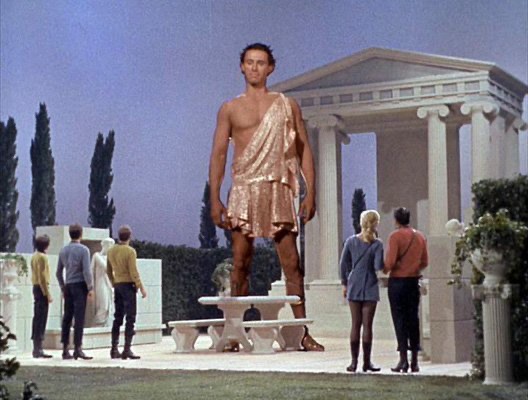
This reminds me of the Star Trek episode “Who Mourns for Adonais?“, when the Enterprise encounters the ancient Greek deity, Apollo, on a remote planet, and ultimately kill him in order to escape his grasp.

The “god” Apollo, played by Michael Forest.

The ending is melancholy:

KIRK: Would it have hurt us, I wonder, just to have gathered a few laurel leaves?

Star Trek, “Who Mourns for Adonais?” (s2ep2), stardate: 3468.1

The human race had outgrown Apollo, and gone on to accomplish many great things, yet it also cost something in the process. Maybe this is like growing up, trading a child’s imagination and wonderment for an adult’s self-mastery and freedom to choose one’s life…

1 Skepticism toward medical science is a modern issue though… 🙄. I doubt few who lived in the era of measles would object to taking a vaccine, but people have the luxury of choice now, even if those choices are reckless ones.

The Beauty of Diversity

A picture of Surak of Vulcan, his right hand in the Vulcan Salute.

Positing infinity, the rest is easy.

Roger Zelazny, Creatures of Light and Darkness

I’ve been sitting on this post for a while, trying to grapple with recent attacks on diversity and inclusion.

In the Star Trek episode, The Savage Curtain, Surak of Vulcan upon meeting humans for the first time (Kirk and Abe Lincoln) says a line that’s easily overlooked, but I think is also very beautiful:

I am pleased to see that we have differences.  May we together become greater than the sum of both of us.

Surak of Vulcan, “The Savage Curtain” (s3ep22), stardate 5906.4

The Vulcan philosophy in Star Trek is based upon a recognition of diversity: IDIC, or “Infinite Diversity in Infinite Combinations”. That is to say, each of us exists as combination of such elements and thus take on a greater significance together than separate:

KIRK: We’ve each learned to be delighted with what we are. The Vulcans learned that centuries before we did.
SPOCK: It is basic to the Vulcan philosophy, sir. The combination of a number of things to make existence worthwhile.

Star Trek, “The Savage Curtain” (s3ep22), stardate 5906.4

This is of course at the heart of Buddhist doctrine as well. Because all phenomena arise from various causes and conditions, given the right causes and conditions, anything is possible. And, given the scale of the universe, one can safely assume that practically everything exists, has existed, or will exist.

My head hurts just thinking about the implications.

Thus, I think, it is very helpful to consider and accept just how varied and weird existence is, and appreciate its sheer diversity. This isn’t just some political slogan: diversity, change, and infinity are the very nature of existence whether people want to accept that or not. Might as well embrace it, and save yourself the undue stress.

Namu Amida Butsu

Big Changes, Little Changes

A beach scene with a rocky shore, and waves lapping up to teh shore. In the distance is a cloudy sunset.

Q: The redoubtable Commander Riker, whom I noticed before. You seem to find this all very amusing.
RIKER: I might, if we weren’t on our way to help some suffering and dying humans who–
Q: Your species is always suffering and dying.

Star Trek: The Next Generation, “Hide and Q” (s1ep10), Stardate: 41590.5

Something a little embarrassing I want to confess: sometimes, when I am uneasy or stressed, I go back and read some of my own posts. I don’t do this because of vanity (hopefully) or conceit, but I like to remind myself of certain things I might forget amidst daily turmoil. I suppose I write some of these blog posts as for myself to sort out what’s bothering me, as I do for the dear readers who follow the blog.1

One of my favorite posts of all time is this one. After visiting the Royal British Columbia Museum in 2022, and watching the excellent documentary about the different geologic ages of Antarctica, I walked away deeply impressed. These experiences help give a larger perspective about the world around us, and show how change is a constant of the universe whether we see it or not.

Change happens on the micro-level in our daily lives: one day to the next, we get older, our hobbies change, things at work happen, hairstyles change, etc. When I look at old photos of me and the kids, I am amazed at how much skinner I was, and no grey hear. 🤣

The world around us changes too: political, economically, and so on. The neighborhood you live in will look different 10 years from now, or looking back it’s probably changed in the past 10 years. Thinking about my life as a college kid in the early 2000’s, the Dot-com Era, it’s amazing how much has changed in a mere 20 years. Some things got better, some things got worse.

But if we step back even further, we can see with the benefit of hindsight slow-moving, multi-generational historical changes. From following the excellent History of Byzantium podcast, it’s amazing how much changes in the Eastern Roman (a.k.a. Byzantine) empire across generations. During the time of emperor Justinian the Great, chariot races were still hugely important in Byzantium, the empire had tenuous toeholds in North Africa and Spain, and many people still actively spoke Latin. By the time of emperor Manuel Komnenos, the Eastern Roman empire was far smaller, Greek language had long since replaced Latin, and the single universal church had long since split between Roman Catholic and Orthodox faiths. Between the 6th and 12th centuries, many changes happened, but because they stretch across many generations, it’s not possible for someone living within the city of Byzantium to fully grasp the scale of the changes. It was still the same Eastern Roman empire, and would continue for another 200+ years, but it had changed and evolved as external circumstances changed.

But let’s step even further back. An Egyptian peasant working the fields, or helping to build the Great Pyramid of Khufu, would be utterly stunned at the world today. Such a world would feel totally alien to him or her. It’s not just the level of technology we enjoy today, or the quality of our medicine, but also the way we view the world. Things that seem like common sense to such a peasant would feel strange or silly to us. Things that we inherently believe as 21st century adults would feel strange or bizarre to that peasant. We can’t really pin down when or how such things changed, but it’s series of gradual changes, each one piling on top of the rest.

And yet we can step even further back. If we look at the human race, it is new to the planet Earth. People can deny this using specious reasoning, but science doesn’t care what people believe or don’t believe. The natural world just works the way it does. We humans are just here, living on the Earth, but the Earth does not belong to us. We are its stewards. If not us, perhaps the Apes or Squids will be its stewards. 😏

Which I think brings me to my point: of all the craziness and turmoil going, I think there are two things to take away from all this:

  • We may lament how things have taken for the worse, but in a dispassionate sense, this is just more change unfolding due to causes and conditions that until now we may not have ever noticed. It doesn’t necessarily mean they are good changes, or harmless, but change is change. Also, by extension, the way things are now won’t always be this way in the future. Change is still happening, even if we can’t see it.
  • Of all the things to concern ourselves with most, in my humble opinion, the Environment (with a big “E”) is the most important. If we want to benefit Mankind, the Earth, and all life on it in ways that we’ll never see in our lifetime, if we want to get the most “bang for our buck”, then anything we can do to help the Environment works towards that end. Small changes and efforts now will ripple across generations we will never see, and help shape the Earth, hopefully in a positive way.

At times like this, I truly believe my old minister Rev. Don Castro of Seattle Buddhist Church was onto something when he described Buddhism, including Pure Land Buddhism, as an eco-religion. Amida Buddha, the Buddha of Infinite Light, embodies many things:

  1. As an embodiment of the Dharma, Amida sheds light on the continuous nature of all things: impermanent, fluid, changing.
  2. Also as an embodiment of the Dharma, Amida doesn’t require praise or devotion. The Dharma is just there, whether people notice it or not, whether they believe it or not. But as a Buddha, Amida tirelessly works to help all beings, to awaken them, to provide peace of mind.
  3. Also as an embodiment of the Dharma, Amida embodies how all things relate to one another. The small things that we do day to day to help improve, or degrade, life around us affect others even if they are far removed.
  4. Finally, Amida Buddha as the Dharma teaches rational, not selfish, thinking and non-fear. In a sense, WWTD: What Would Tuvok do?

All this is to say, I suppose, even amidst crazy times, do not fear. Take inspiration from the Buddha, make rational, wholesome choices, yet never assume things will stay a certain way forever. Do not be complacent, nor take things for granted.

Namu Amida Butsu

P.S. featured photo taken at Richmond Beach in Shoreline, WA earlier this year.

1 This blog is small-time, but it’s a labor of love, and I genuinely appreciate each and every reader.

What Does It Mean To Be Human?

DROXINE: But what else can they [the Troglytes] understand, Mister Spock?
SPOCK: All the little things you and I understand and expect from life, such as equality, kindness, justice.

Star Trek, “The Cloud Minders” (s3ep21), Stardate: 5818.4

This is another one of those deep thoughts I’ve been having lately. Discrimination and bias once again rear their ugly heads in our society, and it’s really disheartening. It’s as if we’ve made so little progress after all these generations, struggles, achievements and so on.

It also makes me wonder something: how much of this discrimination is taught, and how much of it is ingrained? In other words: nuture (taught) versus nature (ingrained). Are some people just born inherently more xenophobic, or does the environment cultivate a more heightened sense of identity at the expense of others? Are we still just mostly hairless apes, fighting over more sophisticated tribal forms, or does our human nature give us the power of reason to override this?

Anyhow, the reason why I posted the Star Trek quote above is that I think what Spock says is true: discrimination and xenophobia are self-centered, and the opposite of goodwill. If a person has empathy and puts themselves in the shoes of another, it’s a lot hard to discriminate against them.

An illustration of the Buddha, dressed in ochre robes and a halo around his head, placing his hand gently on the head of an elephant that has bowed down before him.
An illustration of the Buddha, Shakyamuni, placing his hand gently on the head of an elephant that had been riled up by his cousin Devadatta, to trample the Buddha out of spite.

In the venerable Buddhist text, the Karaniya Metta Sutta (Sn 1.8 of the Pali Canon), the Buddha says simply (emphasis added):

Whatever living beings there may be;
Whether they are weak or strong, omitting none,
The great or the mighty, medium, short or small,
The seen and the unseen,
Those living near and far away,
Those born and to-be-born — May all beings be at ease!

Translation by The Amaravati Sangha

The Buddha didn’t equivocate: goodwill towards others must be equitable, and toward all.

Still, this is, admittedly, easier said than done: developing such a level of goodwill takes work, introspection, and such. For some, their sense of goodwill and empathy towards others is somehow stunted, or in some cases completely absent. If it were easy, why don’t we all just be kind towards others?

I think this is where our biological nature gets in the way sometimes. As hairless apes, our basic instinct is to still fight and defend, even if the specific causes of conflict are different than our ancient ancestors. The way our blood gets boiling when we’re competing with someone, or someone makes us mad is no accident. That’s evolution. But, at least through introspection and mindfulness, we can catch these feelings as they arise and make intelligent decisions. Breaking out of our own self-centered viewpoint is what it’s all about, and is one thing that separates us from other animal lifeforms.

Namu Shakamuni Butsu

Happy Vulcantines Day

Hello Dear Readers,

Today is February 14th, Valentine’s Day. To celebrate in a classic Star Trek way, I’ve decided to watch these classic episodes involving Spock and his various romantic escapades:

This Side of Paradise

This is one of my personal favorite episodes of Star Trek, but also features a particularly poignant chapter of Spock’s romantic life, and a great performance by Jill Ireland, the scientist who had a long-standing crush on Spock. The end where Spock expresses regret at the loss of happiness is particularly bittersweet, plus the premise of the entire episode is really good. Creepy, but good. We’re also reminded that Kirk’s true love (besides Spock) is his ship.

Amok Time

This classic episode is of course one of the most famous, and most popular episodes, and for good reason. It explores Spock’s Vulcan culture in-depth, and features a wedding ceremony gone haywire. Spock’s comment about “wanting” versus “having” is particularly powerful. Both Arlene Martel (T’Pring), and Celia Lovsky (T’Pau) gave amazing performances too.

I also really like Nurse Chapel’s (Majel Barrett) moments too between her and Spock, and the unrequited love. This episode ties in nicely with the excellent series Strange New Worlds too, I think, on many levels.

The Enterprise Incident

This is a great post-divorce episode, in which Spock has a rebound girlfriend. Overall, the episode plot seems a bit contrived, but it’s a much needed exploration of Romulan culture, apart from Balance of Terror in season one. Spock’s chemistry with Joanne Linville’s character is excellent.

The Cloud Minders

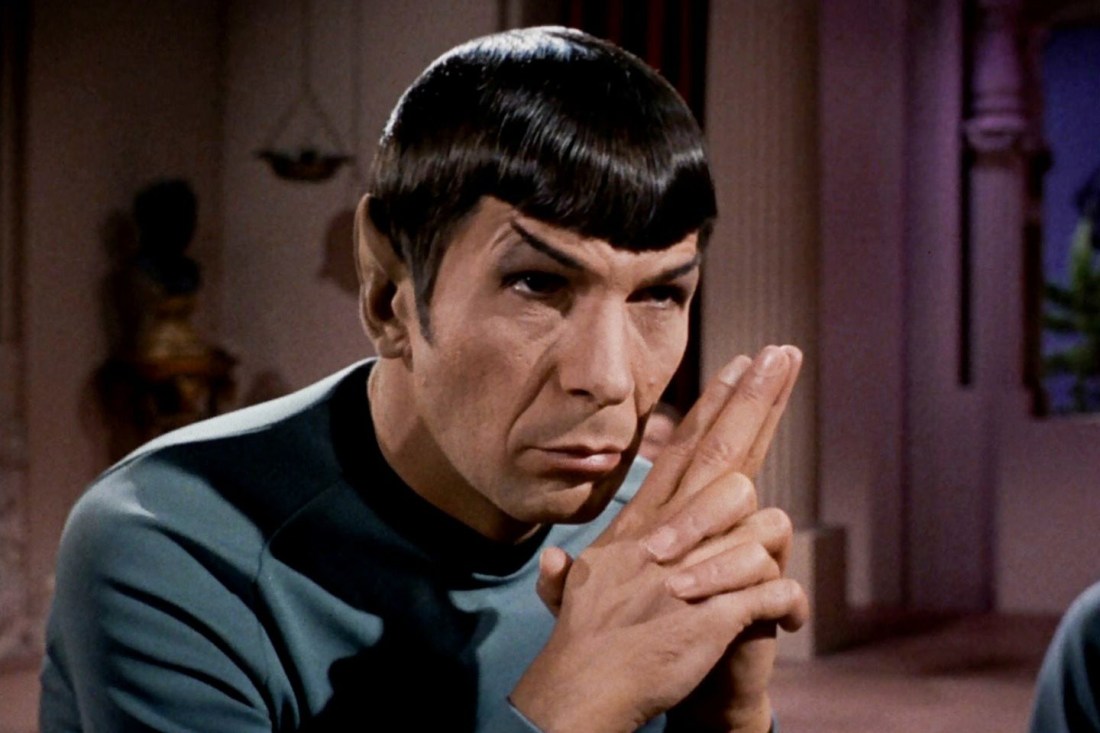
Spock sitting in an orange room, facing right, his fingers steepled as he meditates on a problem.

I’ve written about this episode a few times, and needless to say I love it. Both Charlene Polite and Diana Ewing provide romantic foils for Kirk and Spock respectively, but for once Spock out-charms Kirk.

All Our Yesterdays

The penultimate episode, and arguably what should have been the series finale, is a fantastic season three episode, and probably the most controversial romance Spock had. Zarabeth (played by the lovely Mariette Hartley) and Spock only share a brief time together, but it’s enough to spawn a great spinoff novel, and a compelling story across millennia.

Enjoy and Happy Vulcantines Day!! 🖖🏼

Edit: forgot to include The Cloud Minders… updated.

Respect for Life

Recently, I was watching an iconic episode of Star Trek, “Arena” (s1ep19, a.k.a. the one with the Gorn), and I noticed this dialogue for the first time:

SPOCK: You mean to destroy the alien ship, Captain? 
KIRK: Of course.
SPOCK: I thought perhaps the hot pursuit alone might be sufficient. Destruction might be unnecessary.
KIRK: Colony Cestus Three has been obliterated, Mister Spock. 
SPOCK: The destruction of the alien vessel will not help that colony, Jim.
KIRK: If the aliens go unpunished, they’ll be back, attacking other Federation installations.
SPOCK: I merely suggested that a regard for sentient life —
KIRK: There’s no time for that.

I was impressed by how much Spock went out of his way to avoid destroying sentient life, as his duty allowed. This is not the only time he does this, see for example in Devil in the Dark (s1ep25):

SPOCK: Or it is the last of a race of creatures which made these tunnels. If so, if it is the only survivor of a dead race, to kill it would be a crime against science.

Of course, it’s also known that Leonard Nimoy helped develop the character’s iconic Vulcan Neck Pinch too: a non-violent way of subduing humanoids. He also didn’t hesitate to toss people from time to time…

Nonetheless, Spock’s respect for all life, and commitment to reason, science, and non-violence is really admirable. In Arena, Kirk is taking vengeance against the Gorn for the destruction of Cestus III, but Spock points out that destroying the Gorn vessel won’t bring back Cestus III. Later, as the episode shows, the destruction of Cestus III was due to a misunderstanding between the Federation and the Gorn. Spock was right: wanton destruction would have done no good. Kirk’s mercy toward the Gorn at the end is also praised by the Metrons who instigated the arena-style battle of the episode.

I suppose my point here is that science, reason, and respect for all life are worthy traits to uphold even today. 🖖🏼

P.S. Many years ago, when I visited the Star Trek museum exhibit at the Museum of Pop Culture in Seattle and I got to see the original Gorn costume:

One Damn Thing After Another

Life’s incessant ceremonies leap everlasting,
humans spring eternal on hope’s breast,
and frying pans without fires are often far between…

Roger Zelazny, Sign of the Unicorn

This quote from the Chronicles of Amber series, a hugely underrated fantasy series these days, sums up many aspects of life nicely. Life is, in many ways, one damn thing after another, with only brief respites in between.

Of course, this is what the Buddha warned in the first of the Noble Truths. He described life is being marked with dukkha. It doesn’t mean we are always writhing in agony, it’s just that life is marked with dukkha, and it rears its head from time to time.

But what is dukkha?

The analogy frequently used back then was the example of a potter’s wheel:

Photo by Mochammad Algi on Pexels.com

A potter’s wheel that runs smoothly and easily was described using the term sukkha. But dukkha is more like a potter’s wheel that wobbles, grinds when it turns, and requires effort to keep it spinning. Similarly, life feels like a grind sometimes.

Of course, someone may point out that’s the point of life:

MCCOY: Well, that’s the second time man’s been thrown out of paradise.

KIRK: No, no, Bones. This time we walked out on our own. Maybe we weren’t meant for paradise. Maybe we were meant to fight our way through. Struggle, claw our way up, scratch for every inch of the way. Maybe we can’t stroll to the music of the lute. We must march to the sound of drums.

Star Trek, “This Side of Paradise” (s1ep25), Stardate 3417.3

The Buddha didn’t necessarily say life is “evil” or “awful”, but pointing out the obvious: there is no rest, no lasting refuge. Also, even though sometimes life really does feel awful, life still goes on.

It is this need for a lasting refuge, a way beyond the great Cosmic Rat Race, that leads people to the Dharma.

Namu Shakumuni Butsu

P.S. apparently I’ve written another post with the same title two years ago. 😏

Ideas

Vanna: “It’s hard to believe that something which is neither seen nor felt can do so much harm.”

Kirk: “That’s true. But an idea can’t be seen or felt. And that’s what kept the Troglytes in the mines all these centuries. A mistaken idea.”

Star Trek, “The Cloud Minders” (s3ep21), stardate 5819.0

I’ve talked about this episode before, but I thought this quote was worthy of its own post.

Because all sentient beings who come into this world must struggle to piece together an understanding of things based on limited information, it’s easy to pick up ideas that are wrong or mistaken but make logical sense. Or, alternatively these ideas are foisted upon them by those they trust, such as parents or your society without the tools necessary to discern the truth.

Thus two rational people can have radically different views of things. One or both of these people can have very harmful negative views, and yet from their own perspective, they may sincerely believe they’re doing the right thing, and assume everyone else around them is stupid or insane..

But then how does one discern what is true or not?

The Buddha taught, on the one hand, that all viewpoints are just a form of conceit (lit. “I-making”) and diverge from reality. They’re based on limited information, logic and so on, and so none of them quite hit the mark. The Parable of the Blind Men and the Elephant is often cited as an example of how people form opinions based on limited facts and are willing to fight over this. In fact, the Buddha himself cited this story in an old, obscure sutra called the Tittha Sutta (Ud 6.4 of the Pali Canon):

…”Saying ‘An elephant is like this, an elephant is not like that! An elephant is not like this, an elephant is like that!’ they fought each other with their fists. And the king was delighted (with the spectacle).

“Even so, bhikkhus, are those wanderers of various sects blind, unseeing… saying, “Dhamma is like this!… Dhamma is like that!'”

Translation by John D. Ireland

The Buddha then recites a verse like so:

Some recluses and brahmans, so called, Are deeply attached to their own views; People who only see one side of things Engage in quarrels and disputes.

Translation by John D. Ireland

So, the Buddha warned against becoming attached to one’s own views because it just feeds the ego, and leads to conflict.

On the other hand, he taught the importance of using the Dharma as an objective benchmark (e.g. a “yardstick”) for how to judge one’s own conduct and views, and especially to see what the results are: do they lead to beneficial results, or harmful results? For example in the classic text, the Kalama Sutta (AN 3.65 in the Pali Canon), we see the Buddha explaining how to properly discern a teaching:

10. “Come, Kalamas. Do not go upon what has been acquired by repeated hearing; nor upon tradition; nor upon rumor; nor upon what is in a scripture; nor upon surmise; nor upon an axiom; nor upon specious reasoning; nor upon a bias toward a notion that has been pondered over; nor upon another’s seeming ability; nor upon the consideration, ‘The monk is our teacher.’ Kalamas, when you yourselves know: ‘These things are good; these things are not blamable; these things are praised by the wise; undertaken and observed, these things lead to benefit and happiness,’ enter on and abide in them.

Translation by Soma Thera

We can see that just because something seems logical doesn’t mean it necessary leads to wholesome results (praised by the wise, leading to wellbeing, etc). One’s intuition isn’t always a reliable guide. Teachings and ideas that lead to wholesome outcomes are in accord with the Dharma, and because they are in accord with the Dharma, they lead to wellbeing, peace of mind, liberation, etc.

Of course, in Buddhist history, there’s examples of eminent monks going off the rails, too. So, just. because one is a Buddhist, doesn’t mean one automatically does it right. It takes time, reflection, and a willingness to keep trying.

Namu Shakamuni Butsu