What separates countries and empires from civilizations is not size or wealth, or military power. It is their cultural significance, their contribution to Humanity.
Cultures might conquer others, but also ascend above raw power and economic exploitation, and contribute to science, art, philosophy, literature, and so on. Such contributions leave a lasting mark on Humankind for the better, not worse.
Conquering other nations, exploiting other people’s resources, and such contributes nothing useful. No one will remember you when you are gone someday, except maybe historians.
Instead, if a nation is going to be remembered, it will be remembered for leaving violence behind, and embracing reason and goodwill. By lifting people up, not trampling them By elevating science and reason, not superstition and religion. This is true for empires long ago, but also for police-states now.
At least that’s my opinion… 🖖🏼
1 Quoted from both Star Trek IV: The Voyage Home, and the Star Trek: Enterprise episode “The Forge” (s4:ep7)
PHLOX: It’s clearly had an impact on you. You seem more certain of yourself. T’POL: I’ve never felt less certain. PHLOX: You’re re-examining your core beliefs. Something most people never do.
Star Trek: Enterprise, “Daedelus” (s4:ep10)
Core beliefs do not change easily.
Whether they are morally right or wrong, our beliefs are tightly woven into our sense of identity. If someone challenges our beliefs, they challenge our fundamental sense of self, everything we’ve been taught or learned up to this point, and the conclusions we’ve made as a result.
Indeed, this is why people have such a vast diversity of beliefs, and why we stubbornly cling to them too: we are constructing the world around us based on our perceptions, environment, and experiences.
But that sense of self, including its beliefs, preferences, etc, is an illusion. This is the fundamental Buddhist doctrine of “no(-lasting)-self” called anātman in Sanskrit, or 無我 in East-Asian Buddhism.1
To clarify, this does not mean we don’t exist. But our sense of self is not permanent or static, like a soul or spirit that exists apart from the body. It shifts and changes, like the famous Ship of Theseus. In other words: it’s not something we can rely upon.
Hence, the Buddha told his son Rahula2 to maintain the view that:
‘This is not mine, this is not me, this is not my self.’
What we feel and think isn’t something we can truly call our own. The mind and sense of self is fungible, and what we hold personally dear and true can change as well. This challenges our sense of self, and this makes us uncomfortable, like T’Pol from the show Enterprise3 as she began to challenge her own Vulcan beliefs.
But that’s also how people learn and grow.
Namu Shakamuni Butsu
1 Pronounced wúwǒ in Chinese, and muga in Japanese, among other languages.
2 Rahula was born when the Buddha was still a prince, and later when the Buddha awakened and became a spiritual teacher, he reunited with his family. Some of them ordained as monks and nuns, some did not. Rahula was one of those who ordained.
3 I never actually watched Star Trek: Enterprise back in the day. I was in college and very busy, plus I didn’t really like the UPN channel at the time. However, I finally rewatched it during my personal break and I realized that the show is really, really good. If you are a Trek fan, it’s worth watching.
All my deeds and past days were dark and full of evil. But a new day is come.
J.R.R. Tolkien, The Children of Húrin
Within the Silmarillion by J.R.R. Tolkien, is the tale (later edited and compiled as The Children of Húrin) of one human warrior named Túrin. The wicked father of dragons, Glaurung, has poisoned his mind and he goes mad with grief and (among other terrible crimes) mistakenly kills his elven friend.
Later, in a flash of awakening, through an encounter with another friend, he realizes what Glaurung has done to confuse him and lead him astray. He can’t change the past, but his mind is clear and he resolves to start over and focus on the task at hand: defeating the dragon and the dark forces of his land.
The Buddhist archetype for this is Angulimala: a ruthless madman that inflicted great harm, but in a moment of clarity changed his ways. This is how the Buddha-Dharma often works.
Anyway, the reason why I mention all this is that like the quote by Tolkien, each day is a new day. That doesn’t mean the karma you’ve created in the past will magically go away, but today is a chance to start over and try again.
KIRK: [War] is instinctive. But the instinct can be fought. We’re human beings with the blood of a million savage years on our hands! But we can stop it. We can admit that we’re killers… but we’re not going to kill today. That’s all it takes! Knowing that we’re not going to kill – today!
Star Trek, “A Taste of Armageddon” (s3:ep15), Stardate 3192.1
We still have our debts to pay off, but today we can choose to be a better person.
SPOCK: “Change is the essential process of all existence.”
Star Trek, “Let That Be Your Last Battlefield” (s3:ep15), Stardate 5730.2
It is that time once again as we celebrate a new year. It’s an exciting time: plenty to celebrate and look forward to, but some very difficult times too:
Mark Twain: “I come from a time when men achieve power and wealth by standing on the backs of the poor, where prejudice and intolerance are commonplace and power is an end unto itself.”
Star Trek: The Next Generation, “Time’s Arrow, part two” (s6:ep1), Stardate 46001.3
In my spare time, I have been avidly studying (re-studying) the Soto Zen text, the Shushogi. As I talked about before, this is streamlined collection of Dogen’s writings from the Shobogenzo, but with a focus on lay followers.
One of the themes repeated over and over is that time passes, and it only passes in one direction:
Time flies with more speed than an arrow; life moves on, more transient than dew. By what skillful means can you reinstate a day that has passed? To live one hundred years wastefully is to regret each day and month. Your body becomes filled with sorrow. Although you wander as the servant of the senses during the days and months of a hundred years — if you truly live one day, you not only live a life of a hundred years but save the hundred years of your future life…..true practice of the Law for one day is the seed of all the Buddha and their activities.
The Shushōgi, chapter five, fascicle thirty
A long life wasted in empty pursuits is nothing compared to a day spent in earnest practice. Even applying the Buddhist teachings a little bit, benefiting yourself and others, is still a great investment. Like exercise, a little bit goes a long way, and each day is an opportunity. Each one of us, just as we are now, is capable of doing something good and noble.
By the way, a quick blog update: I’ve been struggling in recent months to maintain a consistent schedule for posts (it was self-imposed anyway), so starting in 2026 I am going to try and be more flexible with posting. I am not sure how that will look, but you may see “bursts of inspiration” followed by some dry spells. We’ll see how things unfold. In the meantime, I’ve been adding more pages to the blog under the Buddhism section including the Letter on White Ashes, and the Shushogi above. Not the rest I intended,1 but something I enjoy doing. 🙂
Stay safe and happy 2026 to everyone!
1 I also played a lot of The One Ring RPG in my spare time, plus watching Star Trek: Enterprise for the first time ever. It is a terrific series, and I regret not watching it when it was on-air. So, I did have some downtime too. 😉
SPOCK: On my planet, to rest is to rest — to cease using energy. To me, it is quite illogical to run up and down on green grass, using energy, instead of saving it.
Star Trek, “Shore Leave”, stardate 3025.2
Unlike my 2024 post, I intend to really take time off this time.
The truth is, is that I am deeply burned out. My wife and discussed this recently, and the chaos of preparing our firstborn for college, and our second-born ready for middle school, plus work demands have left us deeply exhausted. When we described it to one another, we quickly concluded that we were not depressed, just burned out. As parents, we had been running at full speed for almost two years, and now that things have quieted down, the fatigue finally caught up to us.
So, for the rest of 2025, I want to just sit around and do nothing: no personal projects, blogging, etc. I do plan to do some light reading (including some new books I picked up), play more soloThe One Ring RPG, watch more Star Trek,1 maybe finally finish painting some figurines that have sat half-completed for a year. I have one more blog post in the works, but otherwise, I’m taking some much needed personal downtime.
Just some of my unfinished painted figurines…
Thank you all for your understanding, and I wish you both a happy holidays and a wonderful new year!
1 I also recently picked up the Star Trek Adventures role-playing game from Modiphius as well, but I haven’t progressed very far in learning the game yet.
From the classic Star Trek episode, “Specter of the Gun” (s3:ep6), stardate 4385.3
Speaking of missed opportunities and the many rebirths of Buddhism, there’s another side to this discussion.
The Buddha really emphasized the importance of the life you live now. Yes, each sentient being lives a long endless stream of rebirths ad nauseum, but it’s not as if you just move to a new body, and pick up where you left off. Long story short, death is real, and not something to take lightly. Yes, your karma will propel another birth to take place, but this is a different person, and they have to start over to some degree.
I can’t really go into the theological questions,1 and I don’t know them very well myself, but in India there was much ink spilled over this distinction. For us 21st century readers, let me try to give an example.
Look at “Rogue-like” games such Hades, or Rogue Legacy 2. In such games, your character dies a lot, and each time you die, you have to start all the way from the beginning. Your character might inherit some rewards for past efforts (e.g. past lives), but this doesn’t doesn’t guarantee success, and your next run might be a total disaster and even set you back. In Rogue Legacy 2 in particular, each time you start over, you choose a new character, randomly generated from a few options.
So, each time you start over, you have to treat each life as something important and make the most of it. I think Buddhism works much the same way.
Namu Shakamuni Butsu
1 the crude summary is that in Hindu religion, the soul (atman) traverses from body to body. The Buddha taught anatman (“no soul”) instead. The Buddhist version implies cleaner “break” between lifetimes, but how it all works is beyond me.
Spock: Mr Scott, there was no deity involved. It was my cross-circuiting to B that recovered them.
McCoy: Then thank pitchforks and pointed ears.
Star Trek, “Obsession” (s2:ep13), stardate 3620.7
In the host of world religions, Buddhism occupies a strange place. In one sense, it is a world religion because it is followed by many different peoples, cultures, and languages throughout its 2,500 year history.
But unlike other world religions there is no central deity, no creator.
Hold on, you might be thinking, what about the Buddha?
The Buddha is the central figure of Buddhism. He is the teacher, but in the Buddhist tradition he was once a person, just like you and me, who through countless lifetimes as a bodhisattva fully accomplished the path and awakened to the Dharma: the principles of existence. He taught the Dharma to his disciples, and they became the first generation of the Sangha, the community.
Thus, these comprise the Three Treasures of Buddhism.
But why do people pray to the Buddha?
Because the Buddha and all other such figures in Buddhism are not passive. The Buddha taught the Dharma out of compassion and goodwill for all beings, and the countless Bodhisattvas such as Kannon guide any sentient beings who take up the Buddhist path. Amida Buddha provides a refuge for all beings who wish to be reborn there.
Kannon (観音) Bodhisattva in her more motherly form.
The underlying theme isn’t Enlightenment for Enlightenment’s sake. It is to help beings who suffer so that eventually they too may reach Buddhahood (a.k.a. Enlightenment).
One does not have to pray to the Buddhas and Bodhisattvas. The most important thing is to put the Buddhist teachings into practice as one can. But in times of unease, uncertainty or crisis it’s perfectly fine to pray to a Buddha or Bodhisattva that you revere. I do it from time to time myself when I am worried about my kids, on plane flights, before surgery, etc.
But also, in the end, I am responsible for my choices, my words, and my thoughts.
When you plant melon seeds you get melons, and when you plant beans you get beans. [Effect follows causes] like a shadow follows a physical shape, like an echo responds to a sound. Nothing is sown in vain. This is called “believing in the result”.
Ou-yi’s Mind Seal of the Buddhas, translation by J. C. Clearly
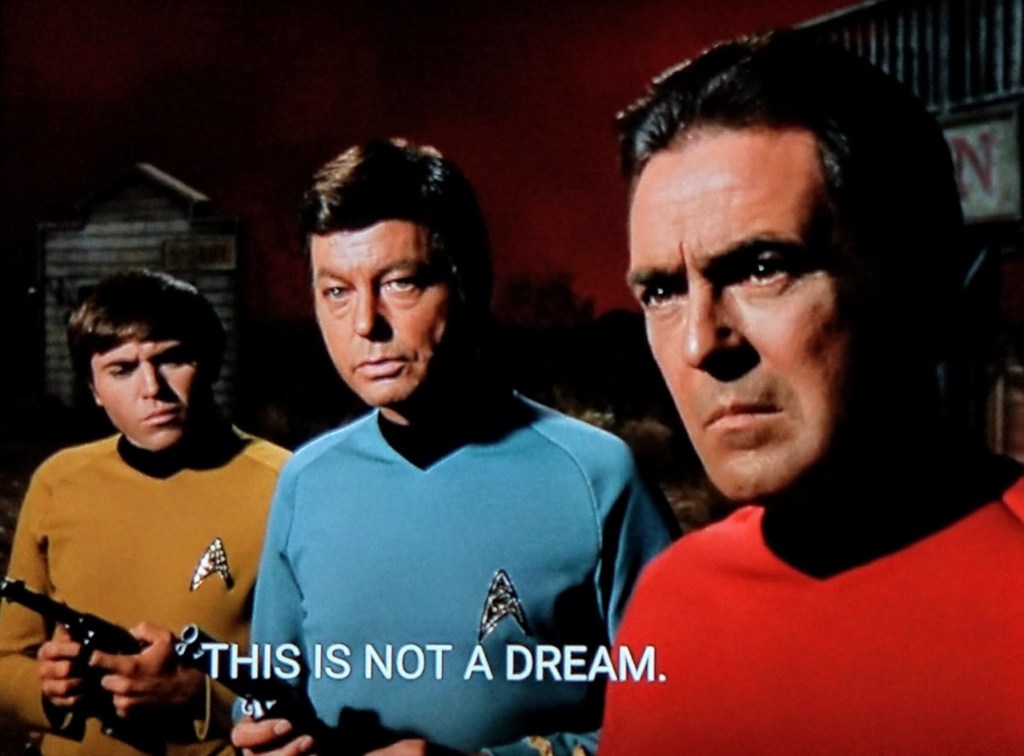
I alone bear the fruits of my choices, words and thoughts.
From Star Trek episode “Spectre of the Gun” (s3:ep6)
One Zen anecdote that I remember from my youth, was a story where a student declared to his master “all is illusion”. The master, listening to this whacked the student on the head (or pinched his nose, I forget) and said “was that an illusion?”.
I always liked this anecdote, but didn’t really appreciate until I got older and had more field-experience with Buddhism.
There’s a tendency to view Buddhism as a way to transcend one’s problems. People like to meditate in Buddhism, or do chanting, because they think it will “chill them out” or go into “Zen mode” as a way of facing life’s problems. Once you’re blissed out and calm, you’ll not be bothered by problems anymore, and all will be well. Right?
Sooner or later, you have to come down and still deal with problems in life: work, food, jerks, illness, boredom, bills, political crises, economic hardships, debt, injustice, broken cars, crying kids, angry spouses, dogs with “intestinal issues”, getting older, loneliness, house chores, the inevitable death of everyone you know, back problems, and so on. The list goes on and on. It does not go away, no matter how much you want it to.
Once you come to grips with this, which also happens to be the First Noble Truth of Buddhism, then the rest starts to fall into place. Until then, no chanting, meditation, prayer, seminars, self-help exercises, fancy gurus, or books will do any good. Not because you’re stupid, or unworthy, or not disciplined enough; it’s because you can’t put the cart before the horse. 🛒🐴
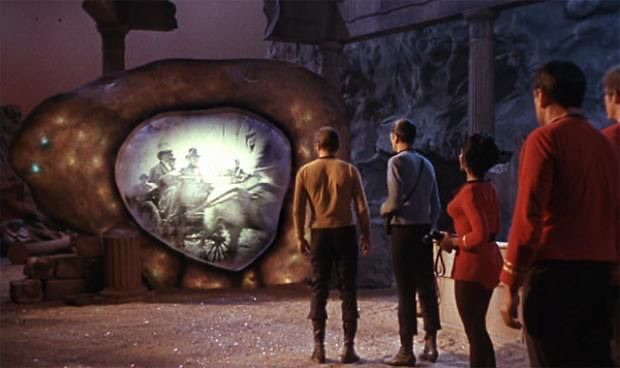
One of the most iconic episodes of the original Star Trek series is the episode “City on the Edge of Forever” (season 1, episode 28), where Kirk and Spock have to travel back in time through the Guardian of Forever, in order to correct a change in the timeline that drastically affects their future. The climatic ending involves a tragic moment where Kirk has to let someone they love die in order to correct the timeline.
During my last watch-through of this episode with the Saturday Night Star Trek team, I started thinking about the time-travel implications of this episode. If you haven’t seen the episode, please stop here and watch the episode (or save this post for another time). I think this episode is even trippier than you night believe at first.
Warning: spoilers.
Canonical Story
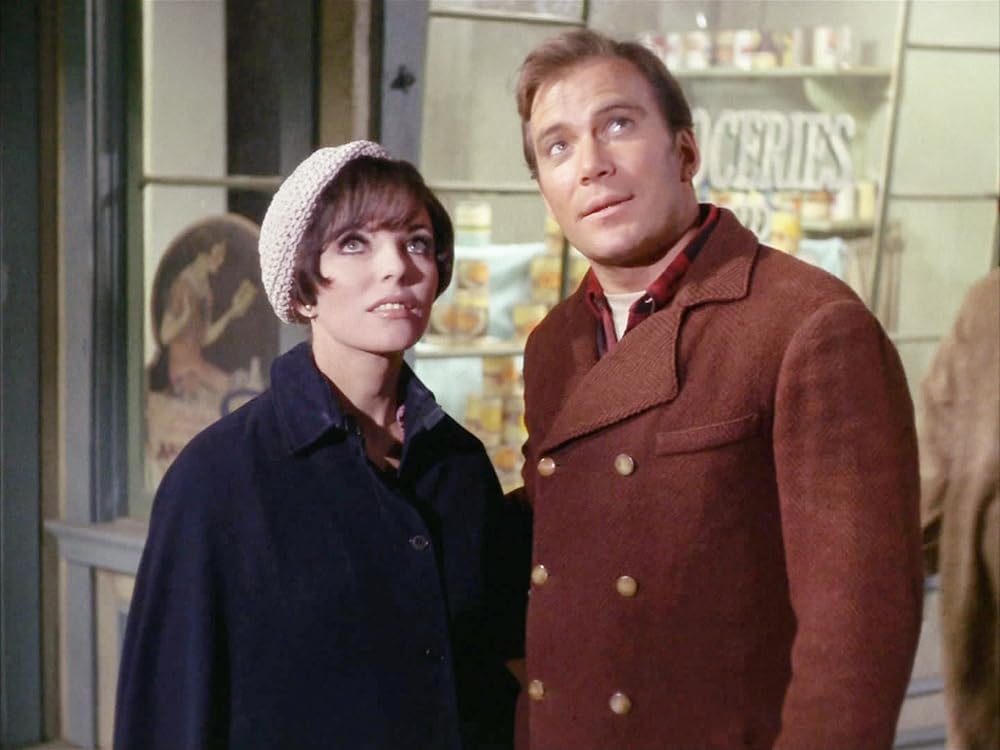
Edith Keeler (played by Joan Collins), and James Kirk (played by William Shatner)
This episode treats time travel in the following order:
McCoy (deluded by overdose of medication) travels back in time to 1930’s and somehow saves Edith Keeler.
Edith Keeler’s existence helps trigger a pacifist movement that delays US entry into World War II (Spock: “the right idea, but the wrong time”) leading to catastrophic consequences. The alternate (correct) history is that she dies in a car accident.
Kirk and McCoy travel back in time to stop this.
Kirk saves Edith Keeler from a fall down the stairs that might have killed her.
After being admonished by Spock, Kirk chooses not to save Edith Keeler when she is struck by a car, ending her life. This restores the timeline to the way it was.
Kirk, Spock, and McCoy return to the 23rd century, all is well (minus Kirk’s poor heart).
This is the canonical story.
My Fan Theory: Kirk is the Source of the Timeline not Restorer
My personal theory is that James Kirk didn’t restore the timeline as such; he caused it. The future we see now in Star Trek universe was a direct result of, not saved by, James T Kirk.
If you think about it for a moment, the canonical history is that Edith Keeler dies by a car accident before the start of World War II, but in the story, the reason why she gets into a car accident in the first place is because she crosses the street to see Jim Kirk. If both Jim and McCoy hadn’t travelled back, would Edith Keller still die by a car accident?
This is where causality in time travel gets weird. Assuming Jim Kirk is the cause of the canonical timeline, then presumably he was predestined at some point to find the Guardian of Forever, go back in time, interact with Edith Keeler in such a way that she dies by car accident.
The implication is that Jim Kirk was always going to travel back in time at the set date (barring further time travel shenanigans), which implies predestiny.
But what if Kirk and the Enterprise somehow never found the Guardian of Forever? Then Edith’s particular death shouldn’t happen, causing a paradox.
Or, if as Spock implies, time flows like river with “currents and eddies” and thus Edith Keeler would have still died by a traffic accident, but not this particular one, thus the timeline stays more or less unchanged.
Which one is true? Who knows.
The Weight of the Decision
The other aspect of this episode is that the timeline of Earth drastically changes due to the death (or life) of Edith Keeler. This means that following these events in the 1930’s countless people are drastically affected. Depending on the timeline, Person A might be killed in WWII, or they might live. If they live, Person A might have kids that otherwise might not exist.
Thus when Kirk restores (or causes) the timeline, his action causes the life or death of countless humans he will never know about. Similarly, McCoy’s initial interference.
So, regardless of which timeline is correct, Kirk and/or McCoy will be responsible for the countless deaths and lives that come after. A weighty decision indeed.
Another Timeline Change: Death by Phaser
Another aspect that’s often missed is McCoy’s first arrival in the 1930’s. He is robbed by a local homeless guy (the same guy who makes lewd comments about Edith Keeler earlier in the episode), who takes his hand-phaser and accidentally vaporizes himself. This seems to prevent any Federation technology from leaking back to the past (good), but the death of the homeless guy may have additional timeline consequences that we don’t know about, and never see the results of.
Granted, as Spock said in his “currents and eddies” comment, the timeline may resist change, and so the death of the man may not change all that much. But it’s also possible that his absence triggers events that the subtly alter the future in ways we don’t know about, even if they are not as dramatic as Edith Keeler’s.
So, when the Enterprise crew return to the ship, I wonder if they noticed any subtle oddities…
Conclusion
Time travel is weird, and the causality of time travel is even weirder. Since no one has actually travelled in time (as far as we know), the implications of changing the past are entirely theoretical, but it’s fun to imagine.
And, not surprisingly, “City on the Edge of Forever” remains one of the most iconic episodes in Star Trek. 🖖🏼
P.S. The Star Trek novel Yesterday’s Son by A.C. Crispin explores the Guardian of Time, and a certain other Star Trek episode involving Spock and a woman, and the implications of both. Quite a fun read if you find it.
P.P.S. An accidental double-post today. I made a scheduling error. 😅
M’BENGA: Prejudice has kept people from helping each other for centuries with no scientific justification. And after we met our neighbours in the galaxy, we found new bigotries….In any case, they’re meaningless to me. I am a physician.
Star Trek: Strange New Worlds, “Ghost of Illyria” (s1ep3), Stardate 1224.3
Prejudice is something far more insidious than simple racism, and something we all face on some level. We discriminate based on all kinds of criteria: race, ethnicity, religion, gender, politics, sports teams, departments at work, etc. If someone is somehow different, we are inclined to see them as an outsider. It’s subtle and tough to resist without conscious effort.
My personal belief is that prejudice is born from some kind primitive instinct of self-preservation, by making discerning choices with only limited information. Sometimes this might keep us alive, other times, it causes hostility and animosity.
But I am not the only one who seems to think this way…
But I digress.
In the famous Star Trek episode “Arena”, Kirk is compelled to fight a Gorn to the death in single combat:
The episode emphasizes how repulsive and cruel the reptilian Gorn are, and yet at the end when Kirk finally defeats the Gorn, he spares its life. This earns him the respect of the Metrons, the highly-advanced aliens who instigated the duel.
METRON: By sparing your helpless enemy who surely would have destroyed you, you demonstrated the advanced trait of mercy, something we hardly expected…. There is hope for you. Perhaps in several thousand years, your people and mine shall meet to reach an agreement. You are still half savage, but there is hope. We will contact you when we are ready.
Star Trek, “Arena” (s1ep18), Stardate 3045.6
The Metrons knew that violence and hatred were primitive and hardly distinguish a species, but mercy and goodwill do. It requires thought and mental discipline to override one’s basic instincts, but it is almost always the right choice.
Namu Shakamuni Butsu
P.S. The Gorn play a much more prominent role in Strange New Worlds than original Star Trek … with mixed results.




 Gleanings in Buddha-Fields
You must be logged in to post a comment.