
Just happy that this dumb election is finally winding down and life is finally starting to moving on.
Category: Politics
Poverty and Crime
From the 14th century Japanese text, “Essays in Idleness” (tsurezuregusa 徒然草) composed by Buddhist monk Kenkō:
I believe therefore that it would be better, instead of imprisoning thieves and concerning ourselves only with punishing crimes, to run the country in such a way that no man would ever be hungry or cold. When a man lacks steady employment, his heart is not steady, and in extremity he will steal. As long as the country is not properly governed and people suffer from cold and hunger, there will never be an end to crime. It is pitiful to make people suffer, to force them to break the law, and then to punish them.
Translation by Professor Donald Keene

Election De Ja Vu
So, how about that election huh? 😅
Anyhow, on the lighter side of things, I found this post on Twitter:
This is a spoof account of the famous 16th century Japanese warlord, Ishida Mitsunari, who commanded the “western army” (seigun 西軍) lost a decisive battle at Sekigahara to the “eastern army” (tōgun 東軍) of Tokugawa Ieyasu. Ieyasu went on to found the Tokugawa Shogunate which lasted the next 260+ years.
The text reads:
I was thinking to myself, “where have I seen this situation before?”
Ah, the Battle of Sekigahara.
Ouch.
Vote!
November is approaching fast, and you know what that means: election time. Because I live in a state that does mail-in voting anyway (and has been for a long time), by the time you’ve read this, I’ve already voted.
That said, I hope everyone here who is eligible to vote will vote. The more people vote, the healthier a democracy gets, and with all the nuttiness going on, this is a particularly important year to vote. In the end, we decide our fate as a people and a country.
In other words:
As for me, I am taking a bit of a break for the next week or so while I turn off social media and focus on some personal projects among other things. See you all after November 3rd!
War? No Thank You: Wise Words from the Buddha

With all the talk lately about the US and Iran, I thought about this quote from a Buddhist text called the Dhammapada. The Buddha, said in the Dhammapada, verses 129-132:
All tremble at violence; all fear death. Putting oneself in the place of another, one should not kill nor cause another to kill.
Translation by Acharya Buddharakkhita
All tremble at violence; life is dear to all. Putting oneself in the place of another, one should not kill nor cause another to kill.
One who, while himself seeking happiness, oppresses with violence other beings who also desire happiness, will not attain happiness hereafter
One who, while himself seeking happiness, does not oppress with violence other beings who also desire happiness, will find happiness hereafter.
Or as Star Trek so eloquently put it:
Death. Destruction. Disease. Horror. That’s what war is all about. That’s what makes it a thing to be avoided.
Kirk, “A Taste of Armageddon” (s1ep23), stardate 3193.0
and:
If some day we are defeated, well, war has its fortunes, good and bad.
Commander Kor, “Errand of Mercy” (s1ep26), stardate 3201.7
Indeed, the only good WAR is this one:
Goodwill towards others is the cornerstone of Buddhism, and something we can all foster in the world starting with ourselves.
Namo Tassa Bhagavato Arahato Sammasambuddhasa
(“Praise to the Blessed One, the Noble One, the fully Awakened One.”)
Edit: since this post was written in 2020, there has been more war since then, both in eastern Europe, and in the Middle East. Once again, I quote Star Trek:
The face of war has never changed. Surely it is more logical to heal than to kill.
Surak of Vulcan, “The Savage Curtain” (s3ep22), stardate 5906.5

The Hellenistic World: Ancient Greece on a Wider Scale
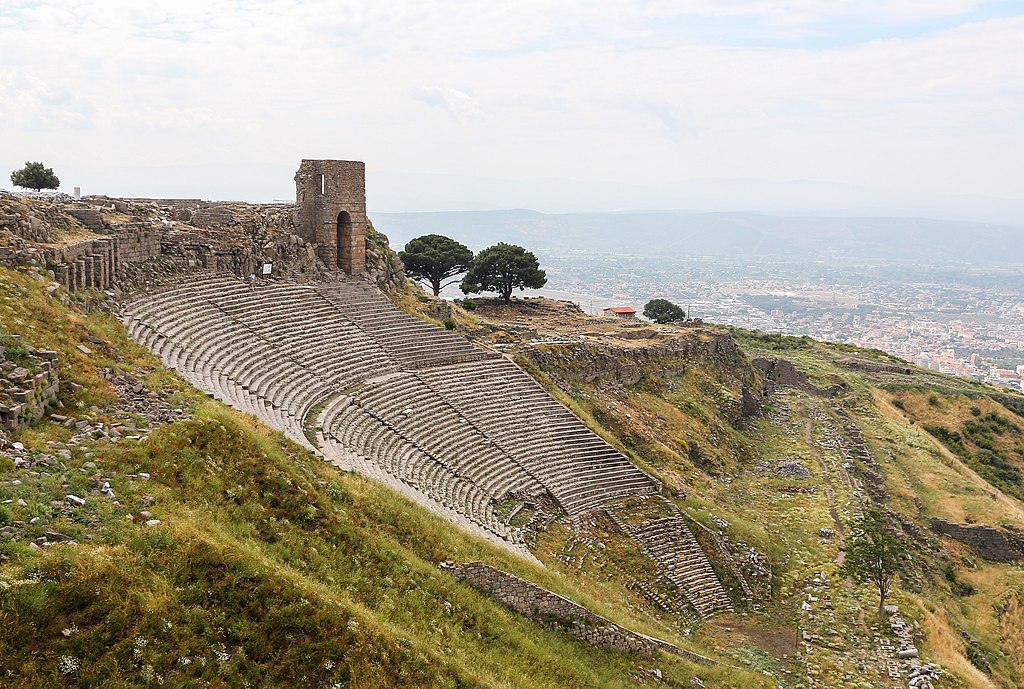
When most people think of Ancient Greece, they think of ancient Athens with its democracy and philosophers, or Sparta with its militaristic culture.1 But Greece was a much larger and more complex culture, and no where is this more evident than in the Hellenistic Period.
The Hellenistic Period, covers a broad period from the death of Alexander the Great in the 4th century, to Cleopatra’s reign in the 1st century BCE. During this period, Alexander’s conquest quickly devolved into multiple, powerful Hellenized (Greek) kingdoms that vied one another for domination in the four Wars of the Diadochoi, followed by a breakup of the empire into distinct kingdoms, each with their strengths and challenges. Many were ruled by a former companion of Alexander, and their dynasties lasted for centuries, others were existing Greek colonies that navigated the complex Hellenistic world through alliances and building armies of their own.

These powerful kingdoms included, but were not limited to:
- Ptolemies who ruled Egypt, including the famous city of Alexandria.
- Seleucids who ruled the vast lands once ruled by the Persians including Babylon, Judea, and for a time the lands next to India (present day Pakistan and Afghanistan).
- Attalids who ruled the powerful, dynamic city-state of Pergamum.
- Antigonids who reigned in Greece and Macedon after Alexander’s death.
- The powerful western colony of Syracuse, home of Archimedes
- The colony of Cyrene in North Africa
- The Bactrian Greeks, who broke away from the Seleucids.
- The Indo-Greek kingdoms, who broke away from the Bactrian Greeks.
- The powerful Kingdom of Pontus surrounding today’s Crimean peninsula.

A lot of aspects that people are vaguely aware of about the ancient Greek world are often found within the Hellenistic Period, including things referenced in the Bible, the Buddhist tradition, major philosophical schools, venerable works of art, and rivals to the later Roman Empire. Eventually, the Roman Empire defeated all but the most eastern regions (who fell to the Parthians and other conquerors), but the legacy they left behind has persisted through the centuries even up until now.
I’ve been reading a lot about this period from an excellent book called From Alexander to Cleopatra: The Hellenistic World by Michael Grant. This book covers every facet of life in the Hellenistic World: history, structure, life, art, architecture, philosophy, etc.
What’s most fascinating about the Hellenistic Period is how diverse the different characters and regions of the larger Greek world were, and yet how each had distinctive Greek influence. For example, the city-state of Syracuse, home of Archimedes, on the island of Sicily was a remote Greek colony yet it was also a great center of learning with additional influences from the Carthage and Roman culture. On the other end of the Hellenistic world was the city of Seleucia, which was built deep in the heart of Mesopotamia had much cultural exchange particularly in the fields of mathematics and astronomy between the Greeks and the native Mesopotamian culture. Everywhere the Greeks and their colonies went, they left their mark upon the world, but the native cultures left their marks on the Greeks as well.
The book and its contents are much too broad and complex to cover in this blog post, but it’s well worth a read, and I will likely be revisiting this topic again soon in subsequent posts covering different aspects of the Hellenistic Period.
While this period is not well known to general audiences, the Hellenistic Period represents the high-water mark of Greek culture, but also reflects a deeply cosmopolitan and dynamic period of history where changes to society and ideas were emerging, and in ways not previously seen in western culture, yet with lasting effect.
P.S. If you’d like to learn more about the Hellenstic Age, I highly recommend the Hellenistic Age Podcast. I’ve been enjoying this for months and it is top-notch.
1 The myths of Sparta present a lot of problems and misconceptions. Movies like 300 are a joke, and not remotely accurate to life in actual Sparta, but that’s a rant for another day.
Gauls in the Roman Senate: A Cautionary Tale

Recently, I was reminded of an anecdotal tale from the early Roman Empire about the introduction of Gauls to the Roman Senate. The anecdote is also frequently alluded to in Professor Mary Beard’s excellent overview of Roman History titled SPQR: A History of Ancient Rome.
In 48 CE, Emperor Claudius was trying to convince the Roman Senate in his capacity as princeps (first among equals in the Senate) to allow Gauls as members of the Senate. According to Professor Beard, Claudius played up Rome’s ancient history during the time of Romulus and the fact that it had been founded on foreigners being integrated into Rome (sometimes forcibly), so why should Gauls, who had been part of Rome for generations since Julius Caesar’s conquest, be any different?
But this didn’t go down well, for some Romans. There were plenty of Roman stereotypes about Gauls, not the least of which was their different appearance. According to Greek historian Diodorus Siculus he described them in the first century BCE like so (source):
Some of them shave their beards, but others let it grow a little; and the nobles shave their cheeks, but they let the mustache grow until it covers the mouth.
Romans often used the term “hairy Gaul” (Gallia Comata) to describe the province of Transalpine Gaul which included territory that Julius Caesar had conquered in the Gallic Wars. In the video series Historia Civilis, the narrator explains in one video that when Caesar in his role as dictator, appointed some Gauls to the Senate in order to fulfill some of his post-conquest promises, the people in Rome had an uproar. There were jokes about Gauls invading Rome (just as they did centuries before), asking for directions to the Senate house. Professor Beard confirms these jokes were making the rounds among the people in Rome.

However, despite these persistent stereotypes as hairy barbarians, the Gauls, especially among the nobility, were adopting Roman lifestyle habits, dress, using Latin language and even teaching their children Latin. They were just about as Roman as anyone else was, but Roman “natives” kept looking down at them.
A century later, when Emperor Claudius gave his speech, he still had to justify the idea to the Senate:
If anyone concentrates on the fact that the Gauls gave Julius Caesar, now a god, such trouble in war for ten years, he should consider that they have also been loyal and trustworthy for a hundred years since then.
Mary Beard, “SPQR”, chapter 12
It’s interesting that many Romans, despite being founded on a tradition of integration with foreigners, still couldn’t stomach the idea of Gauls in the Senate both in Julius Caesar’s time and later with Emperor Claudius. Despite Roman citizenship being granted to people in the provinces, some people simply felt they were more “Roman” than others, regardless of legal status.
Interesting parallels for our times.
P.S. For a fascinating look at the real Gauls, including Celtic culture at large, I highly recommend this podcast. Needless to say, there is a lot about ancient Celts that people don’t know.
Liberals and Conservatives: Roman Style!
While enjoying the awesome Youtube series Historia Civilis and its coverage of the last days of the Roman Republic, I picked up a terrific book on the history of Rome, its politics and how people lived. I’ve been fascinated by the political and social struggles of the Roman Republic because there are interesting parallels to contemporary life here.
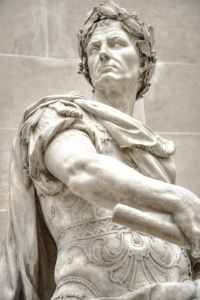
The Roman Republic had a similar political system to what we find in many Western democracies: it had a Senate (from the Latin senex or “old man”) and it had elections, though they tended to be pretty biased toward the land-owning elite and used a convoluted system based on social class. To keep the power of the Senate (and its elite) in check, the Republic also had a Tribune of the Plebs that differed than the Senate and frequently drew from the lower classes.
Further, although the Republic had extended its borders to the Italian peninsula and beyond, politics and citizenship were still biased toward actual residents of Rome, and especially toward certain families with a long, distinguished history. Cicero, for example, was a novus homo or “new man” from the provinces newly entered into political life, and that fact dogged his career.
Over time, this system started to break down. By 137 BCE, a man named Tiberius Gracchus (grandson of the famous Scipio Africanus) was increasingly concerned about the plight of small farmers in the Italian countryside, and their vulnerability to landed gentry that displaced them. When he was elected to the Tribune of the Plebs in 133 BCE, he started pushing for land reform.
Not surprisingly, this started a hornet’s nest of debate and some even spread rumors that Tiberius Gracchus was setting himself up as a king (a grievous sin in Roman culture that even later Emperors avoided). By 129 BCE, in classic Roman style, he was found dead from mysterious circumstances. Professor Mary Beard, who wrote SPQR, points out that Tiberius Gracchus may not have been altogether altruistic and may have also held a personal grudge against the Senate for past slights, but his message of land reform was enough to ignite the populace.
But the debates about land-reform, and rights of the gentry versus general populace didn’t stop with Gracchus’s death. The two factions gradually coalesced around two factions:
- The optimates, meaning “the best” who were the conservative faction. They were concerned about changes to the Roman Republic and wanted preserve the traditions of the Republic, including governance by the optimī or “the best”.
- the populares or “reform” faction. They opposed the conservatives and sought to reform Roman society. The meaning of the name is “for the people”.
Professor Mary Beard points out that these factions weren’t political parties in the modern sense, but different politicians held allegiance to one or the other. Julius Caesar, despite coming from a well to do family, was a Populares probably because he was more interested in opposing the old order for his own personal gain, than actual concern of the people (except where it served his interests). Gnaeus Pompeius Magnus (e.g. “Pompey”) sided with the Optimates, but was no less ambitious than Caesar, and the Optimates needed a champion on their side. It was a marriage of convenience.
In any case, the Populares, starting with Gracchus, pushed for reforms such as:
- Restricting the size and amount of property that Roman citizens could own. Some of the landed elite of Rome held multiple, multiple properties both within Rome and many villas in the countryside. Cicero, a man of middling wealth, owned over a dozen individual villas, cottages, and other properties. Men like Caesar’s one-time ally, Crassus, were obscenely wealthy.
- Improvements to the “grain dole”. Since many Roman farmers were being pushed into the city to find work (as their lands were being bought up), Rome needed a more consistent solution to address the rampant poverty in the city. With the new grain dole, the government (and not private contractors as previously done) would buy grain monthly from certain reserved countryside areas and provide to Rome’s poorest citizens according to the census. Such a system did not exist anywhere else in the Western world until modern times.
- Expand citizenship to more people in the Italian peninsula, and even colonies abroad.
- Fight the corruption in Roman elections, which were often rampant with bribery and other dirty tricks.
The struggle between Optimates and Populares was messy and not always clear cut. For example, a powerful senator named Clodius fought on the side of the Populares, but used privately-hired thugs to terrorize other senators to vote his way until he in turn was killed by Milo’s thugs. Until then, weapons were not allowed at all within the city limits of Rome, but by the time of Clodius the ancient customs were ignored and gangs fought on the street. On the other side of things, Cato the Younger, was a staunch conservative, but had a reputation (unlike his peers) for honesty and integrity even if he came across as grating and excessively moralizing at times.
In the end, none of it mattered. Both Caesar and Pompey had massive private armies, decades of military experience, and fought a lengthy, protracted civil war that ended with Caesear’s victory. He pushed the Senate to make him a lifelong dictator, and shortly thereafter was assassinated by his peers. Once his adopted son, Octavian, swooped in to takeover as “first among equals” (princeps) following another civil war with Marc Antony, it was all over.
Interestingly, when Julius Caesar returned to Rome after the Civil War, he made good on a number of Populares reforms and anti-corruption reforms that remained well into the waning days of the later Roman Empire. However, the two factions pretty much melted away by the time that Emperor Augustus Caesar (Octavian) took over.
The reason why I mention all this is that it’s fascinating to see the struggles between Roman reformers, and Roman conservatives, just as the same struggles happen today. There were scoundrels on both sides, men of virtue, and plenty of power-hungry opportunists too. Many of the battle cries of the different factions might sound eerily familiar today too, as if not a whole lot has changed in 2000+ years, and we’re just repeating the same patterns over and over across the generations…
Roman Politics in a Nutshell
Lately, I’ve been watching some fascinating videos by Historia Civilis on Youtube (Patreon page here) about politics in the days of the Roman Republic and the transition to an empire. This video is an overview of how the Roman consulship worked:
The fact that Rome had two leaders, or consuls, and a Senate is pretty fascinating to me. It’s interesting to see how politics then really don’t differ all that much from now.
Anyhow, great video series, so please take a look and show the author some appreciation! 🙂
Politics and Hysteria

This was a sobering article I found in the Atlantic:
In particular, this quote really disturbed me:
This matters because political disdain has begun to distort our perception of reality. Democrats now think Republicans are richer, older, crueler, and more unreasonable than they are in real life, according to multiple studies, including one by Douglas Ahler and Gaurav Sood published in The Journal of Politics in April. Republicans, meanwhile, think Democrats are more godless, gay, and radical than they actually are. The more righteous we get, the more mistakes we make.
As is the case anywhere else in the world, demonization eventually bends toward violence. Already, nearly 20 percent of Democrats and Republicans say that many members of the other side “lack the traits to be considered fully human,” according to a 2017 survey by the political scientists Nathan Kalmoe and Lilliana Mason. Even more chilling: About 15 percent of Republicans and 20 percent of Democrats agree that the country would be “better off if large numbers of opposing partisans in the public today ‘just died.’”
The Buddha, Shakyamuni, had a few things to say about this subject. In the Metta Sutta is the famous quotation:
May all be well and secure, May all beings be happy!
And in the Aggi-Vacchagotta Sutta he talks about how he does not cling to self-centered views:
“A ‘position,’ Vaccha, is something that a Tathagata has done away with. What a Tathagata sees is this: ‘Such is form, such its origination, such its disappearance; such is feeling, such its origination, such its disappearance; such is perception…such are fabrications…such is consciousness, such its origination, such its disappearance.’ Because of this, I say, a Tathagata — with the ending, fading away, cessation, renunciation, & relinquishment of all construings, all excogitations, all I-making & mine-making & obsessions with conceit — is, through lack of clinging/sustenance, released.”
What the Buddha is saying is that it’s really all just inside our head. The more we build up these things in our mind, the more we cut ourselves off from reality. This is the opposite of liberation.
In other words: CTFD.
 Gleanings in Buddha-Fields


You must be logged in to post a comment.