Battlefields

SPOCK: To expect sense from two mentalities of such extreme viewpoints is not logical.

Star Trek, “Let That Be Your Last Battlefield” (s3ep15), Stardate: 5730.2

In the infamous episode of Star Trek, season three, Let That Be Your Last Battlefield, we see two aliens who have been chasing and attempting to defeat one another for “50,000 standard years” because the patterns on their faces are different.

“Bele” (L), played by Frank Gorshin, and “Lokai” (R), played by Lou Antonio

In the big climax at the end, they commandeer the Enterprise and return to their home world which is now a dead, lifeless world: their people have annihilated one another in Bele and Lokai’s absence. Rather than giving up, Bele and Lokai beam down to the surface (after an awkward running scene through the hallways) and continue their battle for all eternity.
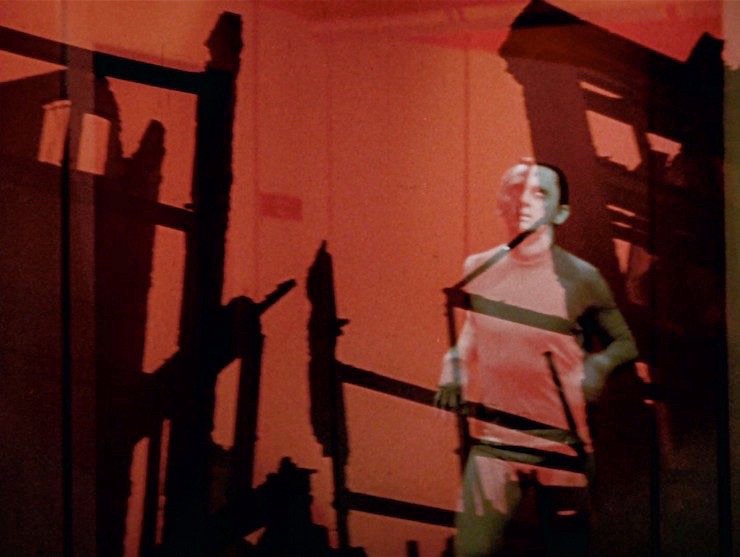
This scene included stock footage from the Second World War, iirc. Because the war was only a generation earlier, the message was not lost on viewers.

The final dialogue of the episode between the crew is:

SULU: But their planet’s dead. Does it matter now which one’s right? 

SPOCK: Not to Lokai and Bele. All that matters to them is their hate. 

UHURA: Do you suppose that’s all they ever had, sir? 

KIRK: No, but that’s all they have left. 

While the episode exaggerates the topic, it does beg the question: how can people get into such a death spiral of conflict and hatred?

The single most important thing in Buddhism is the mind. Not a god or deity, but the mind. We see the world through our mind, we shape our view of the world through our mind, etc, etc. In a sense, even the gods are a product of the mind.1

The implications of this are really profound, but on a practical level it also helps explain why two seemingly rational adults can have such profoundly different views, to the point of being entirely hostile to one another.

When the Buddha spoke to a wandering ascetic named Vaccha, the Buddha called this need to assert a view-point “I-Making”. In the Aggi-Vacchagotta Sutta (MN 72 of the Pali Canon), Vaccha is trying to pin down the Buddha’s stance on this philosophical debate or that. But the Buddha is having none of that:

“A ‘position,’ Vaccha, is something that a Tathāgata [a Buddha] has done away with. What a Tathāgata sees is this: ‘Such is form, such its origination, such its disappearance….Because of this, I say, a Tathāgata—with the ending, fading away, cessation, renunciation, & relinquishment of all suppositions, all excogitations, all I-making & mine-making & obsessions with conceit—is, through lack of clinging/sustenance, released.”

Translation by Ven. Thanissaro Bhikkhu

In modern English, the Buddha is saying that holding onto views and beliefs just “feeds the ego”. By feeding the ego, it also imprisons us.

It’s hard to see this, because we naturally piece together the world around us through our experiences, but no matter who we are, the picture is incomplete and we fill in the rest based on conjecture, belief and hearsay. Nonetheless, if someone attacks our beliefs, it is an attack on our deepest sense of self too. This leads to the death spiral I alluded to earlier: the stronger we try to assert our beliefs (even if they are logical and sound), the more we stir conflict, forcing us to push even harder against perceived resistance.

But, like the honey badger, the Buddha don’t care. And because he has stopped clinging, he has no ego to bruise. Without an ego to bruise, he no longer suffers and is fully liberated.

This sounds far easier than it is, but that’s the gist. Sometimes it’s just better to shut up, don’t assume you know the answer, and just pay attention to the world around you. Imagine a blade of grass bending in the wind.

Afterall, what is the alternative?

P.S. as with the previous post, I started this months ago, and just now catching up.

1 put another way: we create our god by projecting our own ego.

Saints Into Savages

Author’s note: I wrote this a couple months ago, but have been so backed up, I am finally posting it now. It was not intended to relate to current events. Just Star Trek nerdism, and me philosophizing.

The third-season episode of Star Trek titled Plato’s Children is often criticized as one of the worst episodes of the series. It actually has a really interesting premise, but suffers from poor execution.1

The Enterprise comes to planet populated by a self-styled republic,2 modeled after ancient Greek poleis, comprised of aliens who each have tremendous psychic powers. They live in great comfort, and spend their days pursuing whatever they want, but members of this republic have become so lazy, and have atrophied so much that they can’t manage even basic first-aid. When the leader suffers from a cut, he fails to do anything about it until it becomes seriously infected.

Further, one member of the community suffers from dwarfism, and no psychokinetic powers, and the other members of the republic bully him for entertainment and menial tasks. Michael Dunn’s performance as the “dwarf” character was excellent by the way. The same members also torment the Enterprise crew for an extended period of time to get what they want.3

By the end of the episode, it’s clear that the members of this republic are perpetually bored, and half-mad from having terrific power, but nothing constructive to use it for.

Without any struggle in life, or a way to stay grounded, I think the tendency is for one to gradually go mad. People’s minds, even when satisfied with basic needs, have a tendency to create more and more subtle problems for themselves. These problems nest fractally, there is no bottom.

Further, the other major point of the episode is said by the villain Patronius when he is defeated by Kirk:

Patronius: “Uncontrolled, power will turn even saints into savages. And we can all be counted on to live down to our lowest impulses.”

Star Trek, “Plato’s Stepchildren” (s3ep10), Stardate 5784.2

This is a very unintentionally Buddhist thing to say too. The mind is capable of the heights of sainthood (or bodhisattva-hood in Buddhism), as well as the depths of depravity, and everything in between. Under the right conditions any person can become a tyrant, or a saint bodhisattva. It’s not so much a question of personal will-power, environment matters more than one might think.

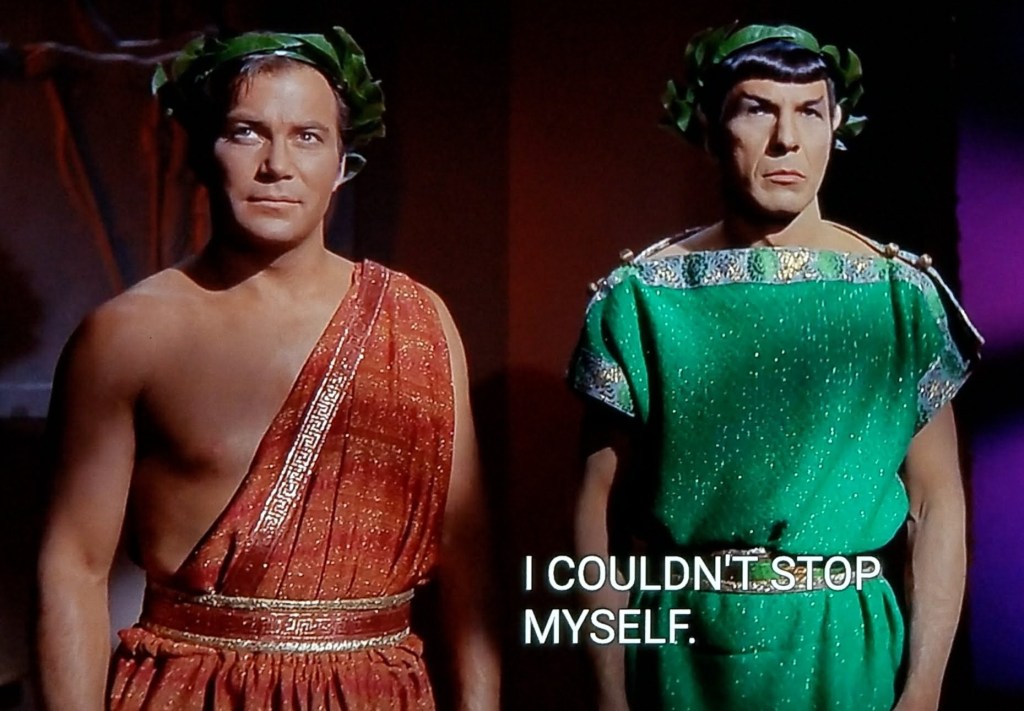
Under the right circumstances, you might even wear a toga….

It is always important to stay just a little vigilant toward one’s own mind. Perfectly rational people can easily go off the rails under the right circumstances. Further, you can’t control what others think and do (nor should you), but you can control how you react to them, or how you choose to conduct yourself. A mind unrestrained will inevitably run into disaster.

Namu Shaka Nyorai

1 Like many season 3 episodes.

2 The use of “republic” as modern people think it, is pretty different than the “res publica” as understood by Romans. It was more closer to a commonwealth, than a particular political structure, so even after Octavian took over as the princeps (the first “Emperor” in all but name), the res publica kept going well into the Easter Roman Byzantine era and beyond. By then, the Latin term was gradually replaced with the Greek equivalent: Politeia (πολιτεία).

3 This is why this episode is so unpopular. The script is pretty thin, so i guess the idea was to stretch out the time by adding more of these torment scenes.

Human Evolution

McCoy: Well, that’s the second time man’s been thrown out of paradise.

Kirk: No, no, Bones, this time we walked out on our own. Maybe we weren’t meant for paradise. Maybe we were meant to fight our way through, struggle, claw our way up, scratch for every inch of the way. Maybe we can’t stroll to the music of the lute. We must march to the sound of drums.

— Star Trek, “This Side of Paradise”, stardate 3417.7

Been thinking about this one all weekend. With all the upcoming chaos on Tuesday, and the continued struggles in society, I guess this one really hit home.

How often mankind has wished for a world as peaceful and secure as the one Landru provided.

Spock, “Return of the Archons” (s1ep21), stardate 3192.1

Of course, every generation everywhere faces its own crises, and somehow the Human race keeps going. We stumble, we fall back, but somehow we inevitably pick ourselves up, and move forward again.

The Hero Of Our Own Story

A rich man thinks all other people are rich, and an intelligent man thinks all other people are similarly gifted. Both are always terribly shocked when they discover the truth of the world.

“I, Strahd” by P.N.Elrod

Another book I have been reading lately for Halloween is the novel I, Strahd, which is a fictional autobiography of the villain of the “Barovia” fantasy-gothic horror setting: Strahd von Zarovich. As an autobiography, Strahd talks about his origins and justifies why he’s such a monster, literally and figuratively. It was one of the most popular novels of the Ravenloft series that was published in the 1990’s to promote this venerable Dungeons and Dragons setting, and is a kind of “bible” for fans of the setting due to broad number of characters, helpful backstories, and compelling story.1

But I digress.

People naturally assume their values and beliefs are pristine because that’s all they ever know, and that others will naturally agree to them. They are then shocked to discover that other functional adults subscribe to very different beliefs. Their own world is briefly shattered or they feel threatened, and conclude that such adults are just stupid, insane or evil. What follows usually isn’t good.

Even when people claim they are open to discussion or free-thinkers, I am reminded of Dave Barry’s famous quote:

People who want to share their religious views with you almost never want you to share yours with them.

Of course this applies to me as well. But on the other hand, I have to remind myself that I am not the center of the Universe. Whether I am actually right or not is irrelevant; I have to accept that not everyone comes to the same conclusions that I do, and I have no right to judge them for their views:

Gandalf: “Do not be too eager to deal out death in judgment. Even the very wise can not see all ends. My heart tells me that Gollum has some part to play yet, for good or ill before this is over.”

“Fellowship of the Ring”, by J.R.R. Tolkien

Hence the Dhammapada has the famous line:

Hatred is never appeased by hatred in this world. By non-hatred alone is hatred appeased. This is a law eternal.

Translation by Ven. Acharya Buddharakkhita

It doesn’t mean you have to be best friends with other people, but you have to accept the sheer variety of people, ideas and beliefs no matter how stupid they seem.

Spock: Madness has no purpose.  Or reason.  But it may have a goal.

Star Trek, “The Alternative Factor”, stardate 3088.7

You don’t have to give them oxygen either. Some ideas are better left dead. It’s about tolerance of people, not tolerance of bad ideas. Ideas are, like all phenomena, contingent and impermanent (Buddhism par excellence).

As soon as you begin to harbor ill-will toward others who are different, you will quickly spiral into a dark path of your own doing.

Namu Amida Butsu

P.S. I have a huge backlog of drafted posts lately, so you may see a few more this week. I hope you enjoy.

1 It is a terrific read, but I admit I still like Vampire in the Mists featuring his rival, the elf-vampire Jander Sunstar, even more. Strahd is definitely *not* the hero in that tale. Heart of Midnight was also an excellent read and a close third for me. To be honest, all the novels I’ve read int he series so far, even the less compelling ones, are still good reads.

Realpolitik

Something that’s been on my mind lately is this quote from the original Star Trek series:

Dr. McCoy: Spock, I’ve found that evil usually triumphs – unless good is very, very careful.

Star Trek, “The Omega Glory” (1968)

These days, pretty much the entirety of the 2020’s in particular, it really feels like good has to extra vigilant, doesn’t it? Like wherever one turns, evil seems to always get the upper hand.

Different episode (“Bread and Circuses”), but same energy. RIP DeForrest Kelley …

This isn’t even just a statement of politics. We are definitely living through some pretty difficult times, and it brings out the worst in others.

Consider this iconic quote from the Buddhist text, the Dhammapada:


183. To avoid all evil, to cultivate good, and to cleanse one’s mind — this is the teaching of the Buddhas.

Trans. Acharya Buddharakkhita

The statement is pretty vague, but to me it feels like there’s an order and logic to this statement.

Avoiding all evil begins with things like the Five Precepts and is probably the first step as a Buddhist. It doesn’t solve everything, but it’s a good starting point. You’re stemming the worst instincts at least.

Next, one cultivates good through Buddhist practice such as dedication of merit, the four bodhisattva vows, and just good old-fashioned metta. The idea being that cultivating wholesome states of mind gradually sinks in and reinforces itself. Presumably.

Finally, cleansing the mind. This is where practices like meditation, mindfulness and such really come in handy. Having a good heart is not enough: one needs to balance it with wisdom and clarity.

In another episode of Star Trek, titled “The Savage Curtain” (the one with Space Lincoln), the founder of Vulcan philosophy Surak heedlessly goes alone to try and negotiate peace. His stubbornness costs him his life. Lincoln also tries to save him but gets killed as well.

“Space Lincoln” was awesome.

This theme repeats across multiple episodes: striving to do good not enough, one needs to vigilant. On the other hand, being passive and intellectual doesn’t accomplish much good either.

So, you need both.

Even in these difficult times, it’s helpful to maintain goodwill towards all beings (even the really awful jerks who might not deserve it), have realistic expectations, meet evil with good, but also meet ignorance with wisdom including your own.

Inequality

Spock sitting in an orange room, facing right, his fingers steepled as he meditates on a problem.

This troubled planet is a place of the most violent contrasts. Those who receive the rewards are totally separated from those who shoulder the burdens. It is not a wise leadership….

Star Trek: The Original Series, “The Cloud Minders” (s3ep21)

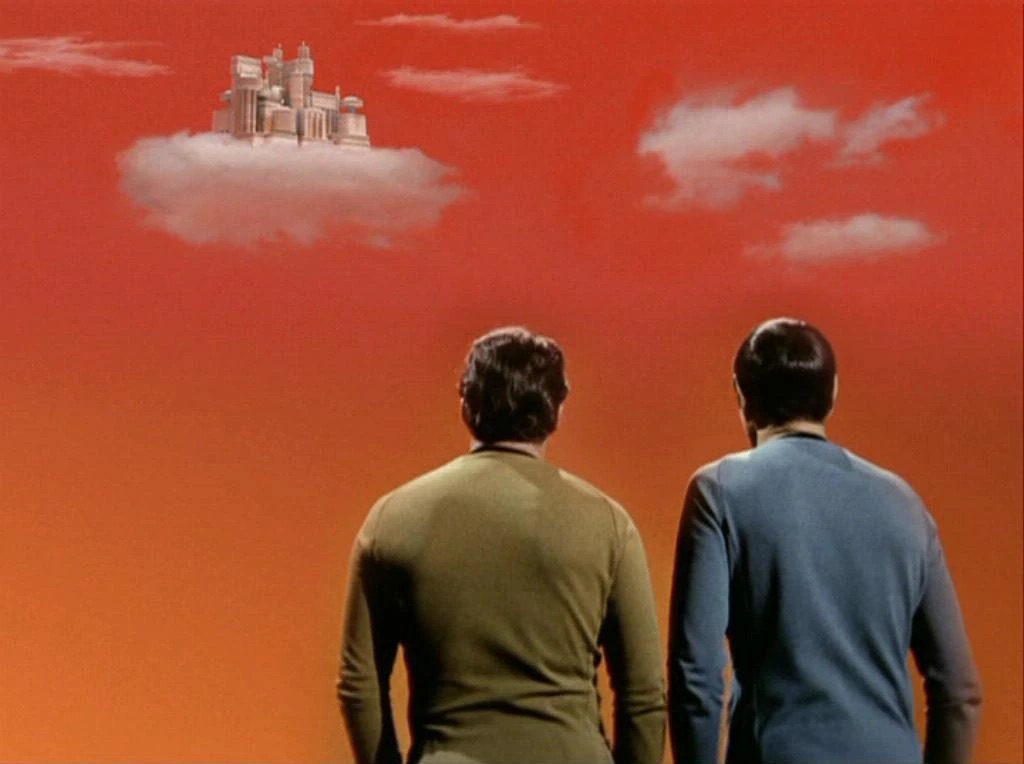
The classic Star Trek episode, “The Cloud Minders”, is a fun episode late in the third season that explores a society that is separated into two social classes: the intellectual class living in the clouds and a working-class that lives below in the mines.

Years later, in the Japanese game Chrono Trigger, a similar theme was explored with a society that lived around 12,000 BC that had an elite intellectual class living in the clouds, and a worker class that lived in the icy wastes below.

It’s fascinating, if not somewhat disturbing to see real-life examples of this too. As much as I admire the Heian Period of Japanese culture, it’s not hard to see parallels: an elite literati that sits around and writes poetry all day, and a much larger illiterate peasant class that toils in the fields for their benefit. The inequality is disturbing.

Indeed, this pattern repeats over and over again in human history, regardless of time or place. There is even a political theory toward this end call the Iron Law of Oligarchy. Are we not also living under some form of oligarchy even today?

Further, the more that people “in the clouds” become cut off, the harder it is to develop empathy for those who toil, and easier to just blame them for their own predicament. This is the very antipathy of metta in Buddhism, the goodwill towards all beings, big or small, smart or foolish.

In some ways, the early Mahayana-Buddhist texts such as the Lotus Sutra or Three Pure Land Sutras1 were pretty revolutionary texts. The famous 12th chapter of the Lotus Sutra, and its story of the Dragon Princess deserves a look. In this story, the daughter of the Dragon King under the sea is introduced as a being of great wisdom despite only being 8 years old. The Buddha’s disciple Shariputra, representing the conservative faction of the Buddhist community scoffs at this:

At that time Shariputra said to the dragon girl, “You suppose that in this short time you have been able to attain the unsurpassed way. But this is difficult to believe. Why? Because a woman’s body is soiled and defiled, not a vessel for the Law [the Buddha-Dharma]. How could you attain the unsurpassed bodhi [awakening]? The road to Buddhahood is long and far-reaching. Only after one has spent immeasurable kalpas [eons] pursuing austerities, accumulating deeds, practicing all kinds of paramitas [self-perfections], can one finally achieve success. Moreover, a woman is subject to the five obstacles….”

Translation by Burton Watson: https://nichiren.info/buddhism/lotussutra/text/chap12.html

The Dragon King’s daughter rebuffs Shariputra’s criticism and wows them all:

At that time the members of the assembly all saw the dragon girl in the space of an instant change into a man and carry out all the practices of a bodhisattva, immediately proceeding to the Spotless World of the south, taking a seat on a jeweled lotus, and attaining impartial and correct enlightenment. With the thirty-two features and the eighty characteristics [signs of a Buddha], he expounded the wonderful Law for all living beings everywhere in the ten directions.

Translation by Burton Watson: https://nichiren.info/buddhism/lotussutra/text/chap12.html

The intended message here may seem a little strange to modern audiences. This was written for a patriarchal society in antiquity, but it’s clear the Lotus Sutra taught all beings, regardless of gender, age, or even human vs. non-human status, are equally capable of Buddhahood (full enlightenment) if given the chance. When they are not, society is stifled and suffers.

In the same way, when society maintains inequality for the sake of a few, or for the sake of tradition, it degrades society by robbing it of vitality and well-being for all.

Namo Amida Buddha

1 More on the Pure Land Buddhist path and its egalitarian approach.

Injustice

In a couple recent posts, I touched upon the misdeeds of one 12th century warlord named Minamoto no Yoritomo in the excellent Japanese historical drama, the Thirteen Lords of the Shogun. Huge credit to Japanese actor Oizumi Yo (大泉洋) for his brilliant performance by the way.

There’s one particularly heart-breaking scene halfway thorugh the drama series: Yoritomo bullies his retainer, Hojo no Yoshitoki, to carry out a series of bloody purges (partly as a test of loyalty). Yoshitoki hesitates, seekingly ready to stand up to Yoritomo at last, but in the end he backs down. Later in the episode after the purges have taken place, Yoshitoki is at home holding his infant baby, but quietly cries to himself. He says to his child, “please forgive your dad” as the episode ends. 😭

While some of this is dramatic fiction, Yoritomo really was a ruthless man, just one of many in history who exerts power and does whatever is necessary to keep it. They exploit others and toss them aside when they are done. Such men are so hopelessly self-absorbed that they pull everyone in orbit down with them, and even then it’s not enough. Like a bucket with a big hole at the bottom, the more they try to fill it and appease their ego, the more they need to fill it again.

For you science types you can also compare them to a singularity (e.g. a black hole): something that has collapsed in on itself and now pulls everything in destroying them in the process.

Sagittarius A*, the black hole at the center of our galaxy.

For simplicity, we’ll call these people “super assholes”. It’s a pseudo-Buddhist term. 😉

Even in modern times, such powerful assholes still exist. They merely changed jobs. Some run major corporations, some rule dictatorships, others are just obnoxious politicians, lawyers, priests, media influencers and so on. Yet in spite of their obvious misdeeds and harm to others, they seem invulnerable, able to evade justice through wealth, power and just being enough of an asshole.

Worse, even if you manage to take down one asshole, another one inevitably arises.


All governments suffer a recurring problem: Power attracts pathological personalities. It is not that power corrupts but that it is magnetic to the corruptible.

Frank Herbert, Chapterhouse: Dune (Dune #6)

That said, all is not hopeless.

When I think about this issue, I sometimes consider a passage from the Earth Store Bodhisattva Sutra, chapter five:

The power of karma is extremely great. It rivals Mount Sumeru in its heights. It surpasses the great oceans in its depths. It obstructs the path leading to sagehood. For that reason, beings should never think that minor bad deeds are unimportant or assume that they do not count as offenses. After death, there will be retributions to undergo that reflect all those details.

Translation by City of Ten Thousand Buddhas

This is, admittedly, a pretty small comfort to the countless people whose lives have been destroyed, literally and figuratively, by such powerful men. Sure, they may self-destruct someday, and face some kind of karmic retribution in the future, but what about the people who are suffering or dead now?

Make no mistake, though, time does go on, awful people wither and die, and their legacies are forgotten. Remember the ancient Assyrian king, Ashurbanipal? His was a reign of terror. But soon after he died, the dreaded Assyrian Empire fell and its legacy is now just dust. Small comfort to people at the time, but still.

Screenshot from the game Fire Emblem: Three Houses.

If you compare these “super assholes” to black holes in space, I find the best thing to do is steer clear of their orbit. If you’re far away, you can still escape with minimal effort, but get too close and you may get sucked in further no matter what you do, just like Hojo no Yoshitoki. Sometimes it’s better to just lay low and let things pass.

Sometimes, though, it feels unavoidable, and that becomes the true test of one’s character.

Namu Amida Butsu

P.S. I coincidentally wrote most of this before a certain asshole was convicted (you know who). I fear he will somehow escape justice though, but he will be dead in time anyway.

Update: I was right afterall.

Forbearance

The Lotus Sutra, one of the most fundamental texts of Mahayana Buddhism, relies on a number of allegories to make its point. The last few chapters feature archetypal bodhisattvas (including Avalokitesvara) who each represent different virtues espoused in Mahayana Buddhism.

For today, we are looking at the Chapter Twenty. This chapter features a bodhisattva named Sadāparibhūta, who in Chinese was named 常不輕菩薩 (cháng bù qīng púsà), which in turn became jōfukyō bosatsu in Japanese. In English, we translate this as the Never-Disparaging Bodhisattva.

The story of Chapter Twenty is that Never-Disparaging Bodhisattva previously lived as a simple, unlettered monk during a past aeon where the Buddhist monastic community was arrogant and domineering. Nonetheless, this humble monk always bowed to other monks, nuns and laity stating that they would one day become Buddhas themselves.

As an uneducated monk making such bold statements, the other monks and nuns found him presumptuousness (I would have appreciated the compliment, personally), and assaulted him. Rather than fighting back, he would retreat and then bow toward them from a distance, still acknowledging their inherent Buddha-nature (e.g. they had the capacity to become Buddhas someday).

This continued on for years, yet the monk never got angry and continued venerating those around him. When he was finally on his deathbed though…

…he heard up in the sky fully twenty thousand, ten thousand, a million verses of the Lotus Sutra….and he was able to accept and uphold them all. Immediately he gained the kind of purity of vision and purity of the faculties of the ear, nose, tongue, body and mind….Having gained this purity of the six faculties, his life span was increased by two hundred ten million nayutas of years, and he went about widely preaching the Lotus Sutra for people.

Translation by Dr Burton Watson

The monks, nuns, and laity were astounded by the transformation reformed their ways, becoming sincere disciples. The chapter then ends in a lengthy series of “plot twists” where such and such person in that past aeon was now a disciple in Shakyamuni’s retinue, while Shakyamuni himself was originally Bodhisattva Never-Disparaging.

I say this a bit tongue-in-cheek because the narrative style of the Lotus Sutra can feel a bit forced at times to modern audiences. However, the underlying message is really profound and something I think about regularly, especially when someone really annoys me.

Chapter Twenty is all about forbearance.

This isn’t a new teaching within Buddhism. You can find many similar teachings on forbearance in older texts such as Pali Canon (example here), the Dhammapada, and also one of the Six Perfections. From the very beginning, Buddhism elevated forbearance as a crucial teaching. It is central to the concept of goodwill in Buddhism.


3. “He abused me, he struck me, he overpowered me, he robbed me.” Those who harbor such thoughts do not still their hatred.

4. “He abused me, he struck me, he overpowered me, he robbed me.” Those who do not harbor such thoughts still their hatred.

The Dhammapada, translation by Ven. Acharya Buddharakkhita

What makes the Lotus Sutra approach interesting is the use of simile and archetypal characters. Nonetheless, even in a later text like the Lotus Sutra, the message remains the same: a disciple must always practice forebearance and avoid ill-will towards others if they intend to attain a state of peace.

This is harder than it sounds, believe me.

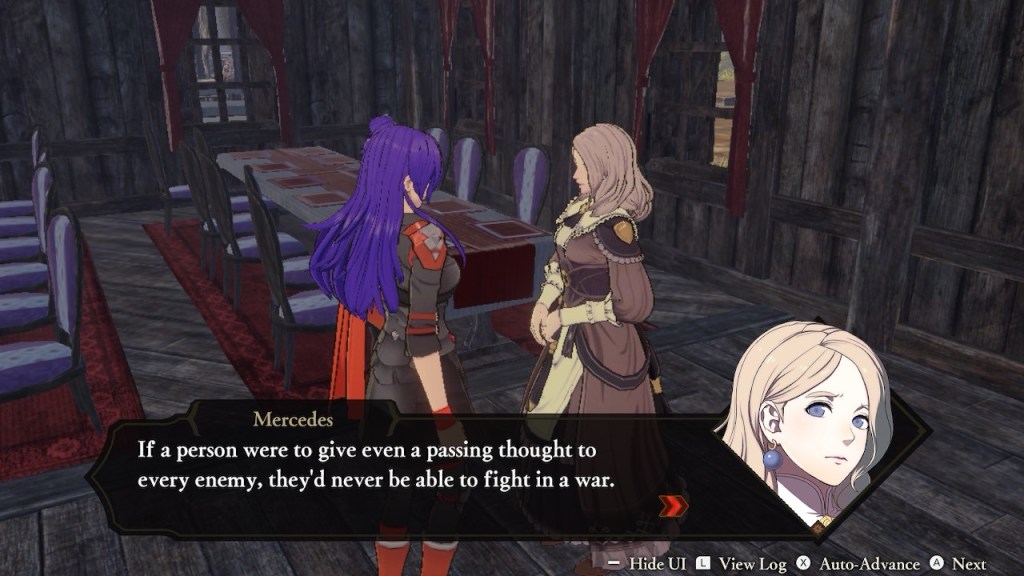
A scene from Fire Emblem: Three Hopes… Mercedes is a great character

Not too long ago, I was yelled at by a neighbor for something me (and my dog) didn’t do. It was frustrating. I tried to explain, but they didn’t listen and cursed and yelled at me. I was pretty angry, but I managed to hold my tongue and just walk away. Even now, weeks later, I am still a bit raw about it, and every time I walk past that house (which is almost daily, unfortunately), I still am a little bitter about it.

But then I have to remind myself the opening words of the Dhammapada, or the example of the Bodhisattva Never-Disparaging. Because ill-will is one of the Five Hindrances, it must be counteracted with goodwill (or at least wisdom to see why ill-will is self-destructive).

Further, because the Never-Disparaging Bodhisattva was able to practice the Buddhist path to fruition, there’s a second, related teaching that the Lotus Sutra emphasizes.

The start of the chapter talks about how those who uphold the Lotus Sutra purify their senses, and the Bodhisattva Never-Disparaging has his senses purified before his death. This “Lotus Sutra” isn’t the historical Lotus Sutra as a text, it is the deep, fundamental teaching of Buddhism that the text represents. The Bodhisattava’s unwavering conduct in the face of adversity led to his awakening to (i.e. he “heard” the teachings of) the Lotus Sutra and his senses were purified. He saw world with clarity and purity, and was this capable of teachings others.

Further, the other disciples picked up on his change. It’s not clear how or why, but there was just something “different” about him, and this metaphorical (not literal) aura was something that others around him picked up on.

You can find similar teachings in Yogacara school of Buddhism, even when it’s phrased differently. In Yogacara Buddhism, they talk about the mental feedback loop or “seeds” of the mind planting and replanting themselves through our thoughts, choices and habits. Like a pair of jeans, these seeds also give off a “scent” or “perfume” in Yogacara terms. If you wear a pair of jeans to a bar, it smells like tobacco and alcohol. If you wear a pair of jeans at a bbq, it will smell like bbq. If you wear a pair of jeans to a Buddhist temple, it will smell like incense. In the same way, one’s environment and conduct does “perfume” a person, and if one chooses the wholesome, noble path, people will eventually pick up on it. But it does require patience (shall we say _forbearance_ 😉).

Forbearance, like the other Six Perfections, is a very long-term virtue to perfect, with many setbacks, but as the Lotus Sutra shows, if carried to fruition, it is a great benefit to oneself, but also those around you.

P.S. The featured image is from Fire Emblem: Three Hopes, the successor to Three Houses. I have been enjoying this game too. The character here, Mercedes, is one of the nicest and most positive characters of the game. Also shout-out to Dorothy Elias-Fahn for her excellent voice-acting.

Statement on the Gaza War

I’ve been sitting on this post for almost two three months, debating whether I should post it or not. I try to avoid politics, not always perfectly, but I feel it’s important to speak out even if it’s far too late to make a difference.

The conflict in Gaza has been carrying on since October of 2023, and at first I was ambivalent. This is an area of the world I just don’t understand very well. But over time I have been increasingly concerned about the plight of the Gaza Palestinians, and the situation is just getting worse and worse.

Whatever justification Israel had at the outset, the response has been overwhelming and disproportionate. Whatever mandate Israel had at the time, it has long since lost sight of it.

Politics notwithstanding, Palestinians are people too. I have known a number of Palestinians in my lifetime and I am happy to have called them friends. I think about them

What finally pushed me to speak up was this article from the BBC, followed by this article. Regardless of what makes sense on a strategic or political level, it doesn’t justify such mass destruction, mass starvation, and mass civilian casualties. At the same time, I don’t want to detract from the Israeli hostages and lost lives that started this conflict, because they too are people and they deserve happiness and well-being. But this can’t come at the expense of so many Palestinians. One life isn’t worth countless others.

I know these things are much more complicated than one blogger can really hope to understand or explain, but I wanted to speak out in support of the Palestinians. That’s all I have to say.

P.S. Disabling comments on this post given the volatility of this topic.

P.P.S. Feature photo is Gaza City in 2007, courtesy of Wikipedia.

Tolerance

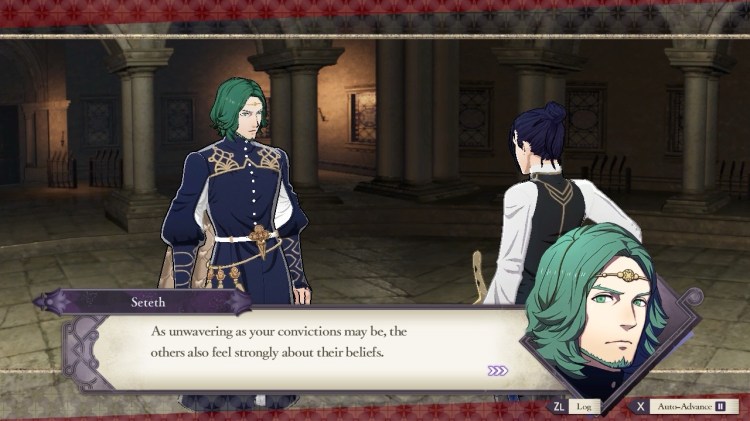
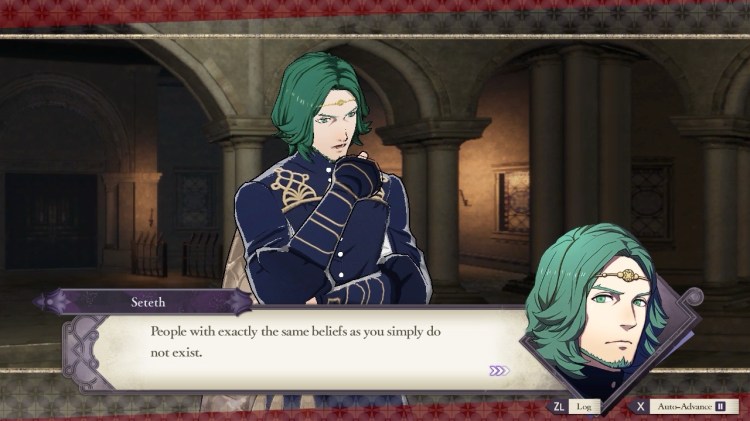
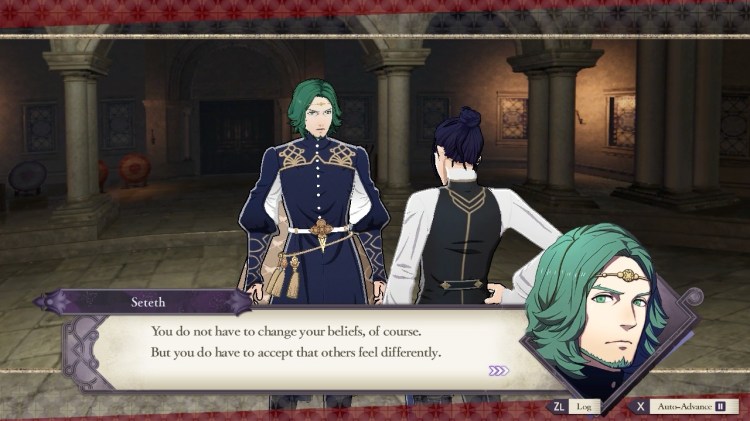
I thought this was a neat dialogue between two of the characters in the game Fire Emblem: Three Houses. The older Seteth (green hair) is offering some advice to the young and prickly Felix:

This might seem self-evident, but because we only see the world through our own viewpoint, our own thoughts and experiences, it’s easy to forget that other people have other viewpoints and other experiences, and come to their own conclusions, right or wrong.

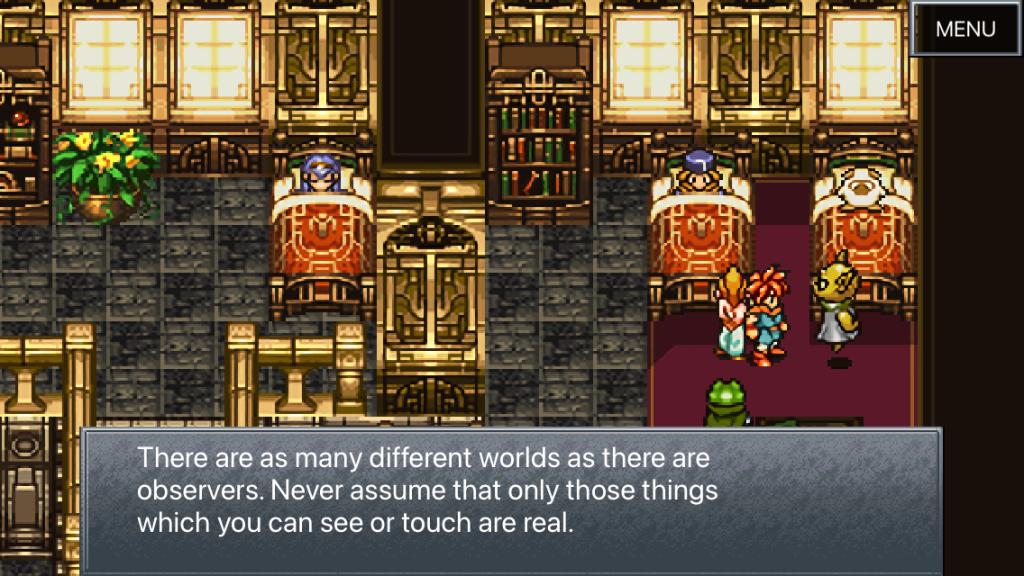
Different game, but I hope the sentiment makes sense. 😆 It’s also why Buddhism emphasizes unconditional goodwill so much.

Namu Amida Butsu