What separates countries and empires from civilizations is not size or wealth, or military power. It is their cultural significance, their contribution to Humanity.
Cultures might conquer others, but also ascend above raw power and economic exploitation, and contribute to science, art, philosophy, literature, and so on. Such contributions leave a lasting mark on Humankind for the better, not worse.
Conquering other nations, exploiting other people’s resources, and such contributes nothing useful. No one will remember you when you are gone someday, except maybe historians.
Instead, if a nation is going to be remembered, it will be remembered for leaving violence behind, and embracing reason and goodwill. By lifting people up, not trampling them By elevating science and reason, not superstition and religion. This is true for empires long ago, but also for police-states now.
At least that’s my opinion… 🖖🏼
1 Quoted from both Star Trek IV: The Voyage Home, and the Star Trek: Enterprise episode “The Forge” (s4:ep7)
Long, long ago, I wrote about the struggles in the Late Roman Republic between its version of progressives versus conservatives. The Roman Republic did not have political parties as we would know them, but the factions and disagreements on how to solve changing political issues did exist in its Senate, much as happens in the modern world.
But that’s not something limited to ancient Rome.
In the late 6th century CE Japan was still limited to a small kingdom called Yamato (大和) which had conquered most of its rival kingdoms. At this time, the ruler of Yamato was still little more than a “chieftain” of the largest territory called an ō-kimi (大君) meaning “big king”, not even emperor (tennō, 天皇) as they are called now. Further, the authority of the king depended on powerful clans who had strong influence on the government.
For example, during Emperor Yōmei’s short and problematic reign there rose a power struggle between two opposing factions, the Soga (蘇我) clan, and the Mononobe (物部), and during the interregnum after he died. One one side of the struggle was a reform faaction that wanted to modernize the government based on the based on Sui-Dynasty Chinese government models, away from the older, clan-based kingship. This faction included:
Soga no Umako – head of the once powerful Soga clan, who had ties to the Korean peninsula
If the Soga were a progressive, reform faction wanting to modernize the country using the latest imported culture from China, the Mononobe were the exact opposite. The Mononobe Clan was a conservative, traditional clan that distrusted the new imported Chinese culture, and especially the foreign-imported religion of Buddhism. They supported the more native Shinto traditions, and were on the more xenophobic side of the political spectrum. Their current head, Mononobe no Moriya, actively skirmished with Soga no Umako during Yomei’s reign.
According to a historical text from the time, the Nihon Shoki (also discussed here and here), these conflicts came to a head in the year 587 after Emperor died, and a successor had to be chosen. In Japanese this is called the Teibi Conflict (teibi no ran, 丁未の乱) of 587. The Soga Clan and Prince Shotoku supported one successor, the Mononobe, the other. During the battle for succession, Mononobe no Moriya attacked Buddhist temples, and burned some of the images (often imported from the Korean kingdom of Baekje).
Finally, the battle came to a head at Mount Shigi (shigisan, 信貴山) in July of 587. The Soga lost multiple engagements at first and retreated. Then, according to tradition, Prince Shotoku, who was related to the Imperial family, fashioned a sacred branch of sumac, prayed to the Four Heavenly Kings (四天王) of Buddhism,1 promising to build a temple if they could help him trounce the Mononobe.
The subsequent battle was a complete rout for the Mononobe clan, and their leader Moriya was shot with an arrow. The rest was history: Shitenno-ji Temple, one of the oldest in Japan.
Under the reign of Empress Suiko, one of the few, powerful female monarchs in Japanese history,2 Japan further prospered under the triad of Suiko, Soga no Umako and Prince Shotoku, her advisors. Prince Shotoku in particular was said to have introduced:
Japan’s first ever Buddhist-influenced constitution: the Seventeen-article Constitution (jūshichijō kenpō, 十七条憲法 ). It’s not a modern, legal document, but it was meant to provide a spiritual framework for governing the country.3
Reorganized the bureaucracy into a meritocratic system based on the Chinese model, the Twelve Level Cap and Rank System (kan’i jūnikai, 冠位十二階).
The first use of the title “Emperor” (tennō, 天皇), when Prince Shotoku addressed the Emperor of China from the “Emperor” of Japan. This was a bit of a diplomatic coup by placing Japan as a co-equal to Imperial China.
What I always find interesting about this period of Japanese history was the overtly progressive nature and forward-thinking of the government at the time, not to mention a powerful female sovereign, and how it triumphed over conservative, xenophobic thinking. Of course, by today’s standards, it doesn’t seem that progressive, and some of these reforms eventually petered out,4 or were abandoned for various reasons, but some aspects persisted up until modern times. It is also the subject of various manga over the years.
But also, what I really like about this period is that the old order wasn’t totally destroyed either. The two sides eventually just learned to co-exist for many generations (e.g. the Nara and Heian periods of Japanese history). It wasn’t a smooth transition, but the forces of history marched on nonetheless.
P.S. Fun fact, one of the supporters of the conservative Mononobe faction was a small clan called the Nakatomi. Later, the Nakatomi would become the Fujiwara, and would eventually dominate political life in Japan. History is weird.
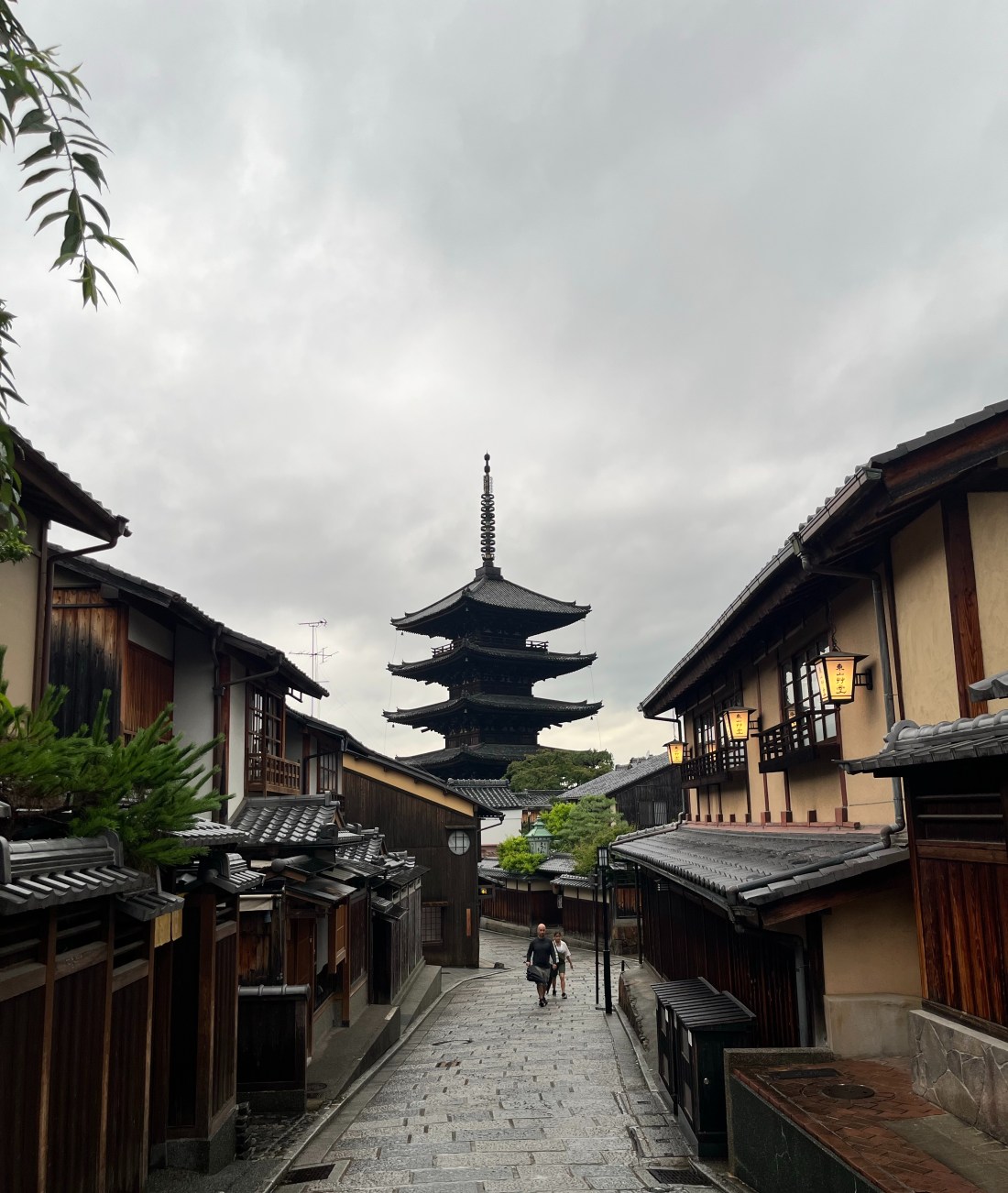
P.P.S. Featured photo is one of many pagodas (Buddhist stupa) promulgated by Shotoku, this one in Kyoto.
1 In Sanskrit, these were the Caturmahārājakayikas or Caturmahārāja. For example, if you visit Todaiji, you see some of the Four Guardian Kings around the giant statue of the Buddha, plus many other, older temples. I liked their adaptation in Roger Zelazny’s “Lord of Light” as well.
2 There were other Empresses who reigned as well, some powerful, but many remained as temporary regents until someone else could assume the throne.
3 The modern constitution of Japan adopted in 1947, at the instigation of US Occupation Forces, is ironically significantly more progressive and modern than the US Constitution. To be fair, they were written almost 200 years apart, but the Japanese Constitution explicitly grants suffrage to women and abolishes slavery. Even now, with its amendments, the US Constitution grants neither. In college, I met the lady (a US army secretary at the time) who helped write the clause on women’s suffrage. She was a very fascinating person, though she’s probably passed away by now.
4 Many generations later, this was still largely true: powerful clans ruled many parts of Japan outside the capital, gradually evolving into a feudal system over the centuries, until the Meiji Restoration of 1868,
This blog, and its blogger, have focused on the Pure Land tradition of Buddhism for many years. I didn’t really start practicing Buddhism seriously until I encountered the Jodo Shu-sect teachings of Honen way back in 2005. It really inspired something in me that’s never stopped even as my practice has taken many twists and turns.
But, strangely, I’ve never actually talked about what a “pure land” is. That’s the subject of today’s post.
The concept of a “Buddha land” or “Pure land” is actually a broad and rich tradition within Mahayana Buddhism, and well worth exploring. Here, I am not talking just about Amida Buddha and his Pure Land, but the general concept. It shows up a lot in Mahayana Buddhism and its many traditions, including the Zen tradition. It also shows up in contemporary Asian literature as well, including Akutagawa Ryunosuke’s famous short story “The Spider’s Thread” (蜘蛛の糸) as well as the Legend of Zelda series. Once you recognize it, references to Buddha lands show up in many unexpected places.
And yet, it all started long ago in India.
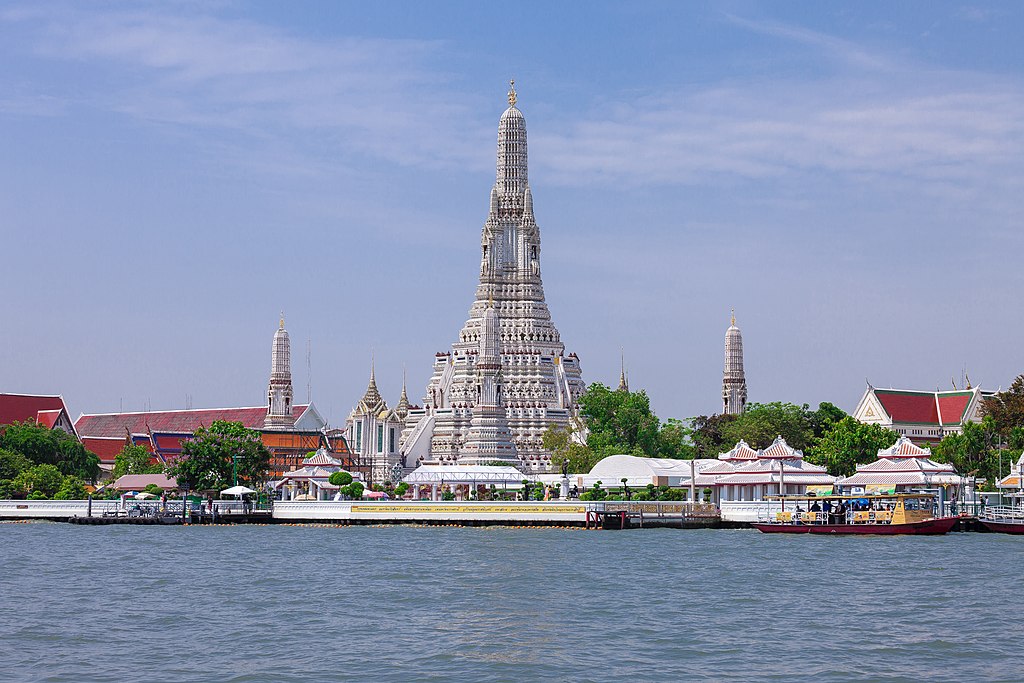
Traditional cosmology (i.e. “how the world is arranged”) in India tended to see a flat world with continents strung together in all directions, including above and below. Some of these continents would be anchored by a massive mountain in the middle, called Mount Sumeru (or Mount Meru). You can see this also in Buddhist architecture such as this famous temple in Bangkok, Thailand:
Incidentially, people in India thought that they lived in one of these continents called Jambudvipa, which was on the southern end of Mount Sumeru. For example, in the Earth Store Bodhisattva Sutra, you see text like so (chapter 4):
Thus, in this Saha world, on the continent of Jambudvipa, this Bodhisattva teaches and transforms beings by means of millions of billions of expedient devices.
Translation by City of Ten Thousand Buddhas
Anyhow, different continents were more peaceful and civilized than others. In some continents dwelt a living buddha, and by their sheer presence, the land would be purified, and all would be peaceful. Such lands are called buddhakṣetra in Sanskrit.
At that time the Buddha told the Elder Shāriputra, “Passing from here through hundreds of thousands of millions of Buddhalands to the West, there is a world called Ultimate Bliss. In this land a Buddha called Amitābha right now teaches the Dharma
Translation by City of Ten Thousand Buddhas
In this sutra, the Pure Land of Amitabha is just one of many such lands that exist to the west, but a particularly splendid Buddha land. Buddhas and Buddha lands were thought to exist in all cardinal directions, and the Amitabha Sutra above goes to great lengths to describe some of them, but highlights Amida Buddha’s Pure Land in particular.
Another example of a Buddha land is the realm of the Medicine Buddha, called Lapis Lazuli, which was thought as existing to the east (not west). The Medicine Buddha Sutra describes it at length. It even goes out of its way to say it’s easier to be reborn in the realm of Lapis Lazuli than the Pure Land of Amitabha:
“If their rebirth in the Pure Land is still uncertain, but they hear the name of the World-Honored Medicine Buddha, then, at the time of death, eight great Bodhisattvas, namely, [list of names] will traverse space and descend to show them the way. They will thereupon be reborn spontaneously in jeweled flowers of many hues. [i.e. be reborn in the Buddha land of the Medicine Buddha]
Translated and annotated under the guidance of Dharma Master Hsuan Jung by Minh Thanh & P.D. Leigh
If a person could be reborn in their next life in a Buddha land, any Buddha land, and thus be in the presence of a living Buddha, it is thought they would find refuge, but also they would advance much better along the Buddhist path. The idea of Pure Lands never supplanted or replaced more tradition Buddhism, but if your current circumstances prevented you from following the Buddhist path, you could opt to be reborn in a Buddha land and make up for it in the future.
… but then we come to another Buddha land worth noting: the Buddha land of Shakyamuni Buddha himself. The sixteenth chapter of the Lotus Sutra drops a plot twist wherein the Buddha never really died, and exists for all time on Vulture Peak in India (a real place where historically he and the Buddhist community often dwelt), and preaching the Dharma to any who see him (details added by me in parantheses):
I live on Mt. Sacred Eagle (another name for Vulture Peak) And also in the other abodes For asaṃkhya (countless) kalpas (eons).
…”This world is in a great fire. The end of the kalpa [of destruction] is coming.” In reality this world of mine is peaceful. It is filled with gods and men.
Translation by Rev. Senchu Murano
The Lotus Sutra version of the Pure Land is less about esoteric geography, and more about Shakyamuni Buddha always being here, whether we see them or not. It comes down to wisdom, clarity, and good conduct.
This viewpoint is found in Zen as well. When we look at the Hymn of Zazen by Japanese monk, Hakuin, who was a lifelong devotee of the Lotus Sutra, we can see the influence:
浄土即ち遠からず Jōdo sunawachi tōkarazu
“Indeed, the Pure Land is not far away”
Amateur translation by me
and:
当所即ち蓮華国此身即ち仏なり Tōsho sunawachi rengekoku, kono mi sunawachi hotoke nari
“This place is none other than the Land of Lotuses [the Pure Land], this body is none other than the Buddha.”
Amateur translation by me
But this isn’t just Hakuin talking. As we saw with the Obaku Zen tradition (a cousin of Hakuin’s Rinzai tradition), they felt the same way, only replacing Shakyamuni with Amida Buddha. But the sentiment was the same. You’ll find similar sentiments in esoteric traditions too, but I have little experience with those and cannot explain in much detail.
So, that brings us to the point: how does one interpret all these Pure Lands, these Buddha lands? My views have gradually changed over time, but I don’t pretend to have the answer. I think in a way that all viewpoints are correct. It is like the famous parable of the blind men describing an elephant: everyone has some idea, but the big picture is beyond our grasp. So, there’s no wrong way to interpret it. If one believes it’s a faraway refuge to be reborn into, that’s totally fine.1 If one believes it’s all in the mind, that’s fine too.
Even the Buddhist sutras, including some I linked above, state that simply “hearing” of the Buddha lands is a merit unto itself. So, if you’ve made it this far, you’re already doing just fine. Just apply the teachings in the way that best fits you.
Namu Shakamuni Butsu Namu Amida Butsu
1 Maybe this is my background as a scifi fan or something, but I do like to imagine that instead of physical continents, the various worlds and Buddha lands are just planets and worlds across the entire Universe. But that’s a personal view, more fantasy than firm belief, so please take it with a grain of salt.
The Hellenistic Age in history is the period after Alexander the Great died in 323 BCE, when his soldiers scrambled for power over the vast conquered empire, and ruling the known world for three centuries until they were toppled one by one by the Roman Republic.
These dynasties, descended from Alexander’s generals and philoi (trusted companions), were all Greco-Macedonian in culture and language, yet because each dynasty ruled over a different culture: Egyptian, Persian, Babylonian, and so on, they took on their own unique characteristics. These Hellenistic kings exemplified masculine warrior king ideology as they competed for legitimacy through warfare and conquest, with no overarching political ideology.
The Seleucid Empire, descended from former general Seleukos I Nikator (“the victor”). The Seleucid Dynasty had by far the largest chunk of Alexander’s conquests, but also the most difficult to maintain. The diversity of people of people from the Levant, including the Hebrews, the Babylonians, the Parthians, and peoples in northwest India required constant vigilance to rule by a tiny Greco-Macedonian minority.
To assist with their rule, the Seleucids wisely adopted Babylonian customs and religious ceremonies, while their patron god Apollo synthesized with eastern Persian (and Parthian) cultures who venerated archery. The Seleucid kings had to go on campaign constantly to maintain control over such a large empire, while maintaining religious functions in Babylon. The satraps (local kings ruling each province in Persian tradition) required constant discipline because they were prone to set themselves up as rivals. The early Seleucid rulers also established or augmented Greek colonies across the empire to help maintain rule.
The powerful Antiochus III Megas, (a.k.a. Antiochus the Great) made a famous Anabasis campaign that took him all the way to Kabul, Afghanistan to crush rebel satrap Euthydemus I, in Bactria, before swinging back around and crushing then re-subjugating Persia, and Coele Syria (the lands around modern Israel). Antiochus III Megas, the most successful of the Seleucid rulers, only keep it all together through sheer force of will and constant warfare, and many later rulers were simply not as capable or successful.
After Antiochus III, the empire began to unravel as his sons Seleucus IV Philopator and Antiochus IV Epiphanes, and their progeny gradually split the ruling family, as one side would usurp the throne, while the other would eventually reclaim it. All this happened, as enemies gradually increased on their borders, and the territory they ruled over got smaller and smaller.
Antiochus IV Epiphanes is particularly infamous in the biblical tradition, namely in the Old Testament, for his Abomination of Desolation (defiling the Temple of Jerusalem and replacing worship of G*d with pagan idols) and became the archetypal antichrist figure later. The Hellenistic Age podcast has a really nice series of episodes about this period:
Definitely check them out if interested. By the way, the Jewish holiday of Hanukkah dates from the time of Antiochus IV, and his (failed) efforts to crush the Maccabean revolt, though according to the Hellenistic Age Podcast, the tradition of the Menorah seems to date some time later. (Happy Hanukah to Jewish readers, btw!)
Ptolemaic Egypt
The Ptolemies, by contrast, ruled a somewhat smaller empire, but it was more culturally unified, and incredibly rich. By the time Alexander the Great came to Egypt, Egypt as a nation-state had already existed for 2500-3000 years. So, Egyptian culture was OLD even by the standards of the ancient Greeks.
To rule such a state, the Ptolemies adopted rulership as another Pharonic dynasty, technically the 33rd such dynasty if you are counting. Unlike the traditional dynasts of Egypt, who ruled from either Memphis (Old Kingdom) or Thebes (New Kingdom), the Ptolemies settled in the northwest city of Alexandria, and ruled over a small but powerful Greek aristocracy. Much like the Seleucids, this ethnically Greek minority had certain privileges and rights that the rest of the population did not, and frequently filled key positions of the powerful bureaucracy. Their phalanx armies were, until relatively late, ethnically Greek in composition, while the Egyptian mostly fielded armies of archers and sailors. The Ptolemies were filthy rich, because the bureaucratic system they inherited from Egyptian society was so effective at regulating taxation and exploiting the farm labor for maximum profit.
Alexandria itself grew to a powerful center of learning and culture in the Mediterranean (rivaled only by Antioch in the Seleucid Empire) under Ptolemy II Philadelphus, and Greek religion synthesized with Egyptian leading to gods such as Sarapis with Greek deities, leading to an explosion of popularity in Egyptian deities (particularly Isis) outside of Egypt. These “refurbished” Egyptian deities didn’t always resemble their original Egyptian form, but represented a fascinating synthesis of Greek thought and Egyptian religion.
Edit: Extra History happened to put out a nice video about the Ptolemies in Egypt here:
Confusingly, every single king from Ptolemy I Soter to Ptolemy XIV Philopator was named Ptolemy. Every one of them. Further, brother-sister marriages were practiced with each generation per Egyptian custom, so after so many generations, you can guess what happened. The truth is, Hellenistic kings frequently married their sisters, not just the Ptolemies, since the available pool of “eligible” women of sufficient pedigree (ethnically Macedonian-Greek, from one of the elite families) were pretty small. So, after a few generations, every Hellenistic monarch was marrying a relative in some form of another, much like the Hapsburgs many centuries later.
Corruption was a chronic problem in the Ptolemy court, especially after Ptolemy IV Philopator, who lived a reckless and decadent life, then died, leaving the kingdom a mess for sycophants and corrupt officials to run into the ground. Things unravelled and got so bad that at one point, there were two Ptolemy kings (VI and VIII) who were rivals, one of them married to his sister Cleopatra III at some point, each fighting over Egypt as the Seleucid rule Antiochus IV above nearly overran Egypt until the Romans stepped into tell him to go home.
Out of all Hellenistic kingdoms, Egypt under the Ptolemies lasted the longest, but by the time that Cleopatra (yes that famous Cleopatra, the VII) died with her lover Marcus Antonius (Marc Antony) after the Battle of Actium, Egypt was a flailing, second-rate power that had greatly diminished through the centuries.
Problems with the Hellenistic Kingdoms
Although each kingdom, including the Ptolemies and Seleucids, was diverse in how Greek culture interacted with local cultures, there were some functional problems that affected each one until the Romans eventually crushed them one by one.
First, as you might have guessed, they fought each other a lot. The Hellenistic dynasts were constantly warring with one another. This required tremendeous funds to raise armies, but Hellenistic warfare relied upon Greco-Macedonian phalanxes, which were difficult to raise and train. So, with their vast wealth, they would often just buy their way out of the problem and hire huge mercenary armies. However, once you lost your army in battle, it was hard to raise another one quickly. By contrast, the Romans raised large citizen armies quickly and cheaply, so when an army was lost, they’d just raise more of them and replace their numbers. When Antiochus III lost to the Romans at the Battle of Magnesia, the empire never quite recovered.
Second, each royal family was constantly fighting with itself. The Antigonids who ruled Macedon proper were the exception, in that they faithfully supported one another until near the end, but the Seleucids and especially the Ptolemies were constantly murdering other family members. The strong central power of the king, with little or no shared power, meant that absolute power was very attractive and “there could only be one”.
Third, because monarchs often died relatively young, eunuchs and powerful ministers often filled in as regents (again the Antigonids were a happy exception), and many of them did not rule justly or honestly, leading to further conflicts and revolts.
Finally, because they were ethnic minorities ruling over much larger territories, mismanagement led to revolts that required even more resources to suppress. Very few Ptolemies, for example, learned the Egyptian language fluently, preferring to use Greek. Some monarchs tried to “Hellenize” subject cultures through organizing Greek-style poleis cities, gymnasiums and other features. Further, subject people often found it handy to take on Greek-style names, and style in order to find work in the government. Many famous Jewish people at the time spoke and wrote in fluent Greek while still maintaining traditions handed down from their Hebrew forefathers.
Across the Hellenistic world, the once powerful kingdoms, descendents of Alexander the Great and his famed army, collectively faded in power through squabbles, unstable regimes, and failure to adapt to new threats, and some whims of Fate, until they either were crushed by other, newer powers (Rome in the West, Parthians in the East). That being the case, the cultural legacy of the Hellenistic kingdoms, and the (often bumpy) synthesis of cultures is super fascinating, and its echoes still lives on with us today in such things as Hanukkah, Buddhist statuary, famous philosophers, the Library of Alexandria, and many more.
P.S. featured photo is a reconstruction of the Pergamon Temple in Berlin, Germany, a famous Hellenistic Age monument. Photo by Lestat (Jan Mehlich), CC BY-SA 3.0, via Wikimedia Commons.
More than any other year in recent history, it seems like 2025 is a year where we are suffering more than before. It is frustrating to watch all this unfold, frustrating to know that even when you try to help, it feels like it makes no difference, and frustrating to see no light at the end of the tunnel. I feel a combination of denial, passivity, frustration, anger, despair, and everything in between, over and over.
IVANOVA: Damn it, John, there’s always too many of them and not enough of us. What am I supposed to do?
SHERIDAN: Fight them without becoming them.
Babylon 5, “Dust to Dust”, s3:ep06
But I’ve also been thinking about this a lot, and I realized that the forces of History are always in motion, even if we don’t see them. It can take years, or in some cases decades to see the bigger picture.
Claude from Fire Emblem: Three Houses saying “…but even while you’re standing still, the world keeps on moving. I always find that oddly comforting.”
But also, the little things we are doing here and now still matter. What happens to others who are suffering affects us, even if we are not consciously aware of it.
G’KAR: If we deny the other, we deny ourselves and we will cease to exist.
Babylon 5, “Point of No Return”, s3:ep9
Even those whom we oppose are suffering, even if we do not comprehend it:
If both sides are dead, no one will care which side deserves the blame. It no longer matters who started it, G’Kar. It only matters who is suffering.
Babylon 5, “Dust to Dust”, s3:ep6
So, simply standing back and letting history unfold isn’t enough. On the other hand it is just not possible to save the whole world. Even if I gave away everything I have here and now, it would be a drop in the bucket.
Instead, each one of us needs to find one small thing that we can dedicate ourselves to, for the good of others. In a Pure Land Buddhist text, The Larger Sutra of Immeasurable Life, the Buddha Amitabha started as a king, then a bodhisattva, and through tireless efforts over eons transformed his realm into the Pure Land through countless good acts, accumulated merit, and so on. This process was glacial, but it came to fruition nonetheless.
In the same way, each one of us when we dedicate ourselves to a cause, however small, it feels glacial. Nothing changes. But change does happen. As with the forces of History, things do unfold, but our actions help shift the currents of the “river of History” ever so little.
But even so, not every one will see this and understand. In the immense Buddhist tome, the Avatamsaka Sutra (a.k.a. the “Flower Garland Sutra”), is a famous quote:
On seeing a bodhisattva Perform various practices, Some give rise to a good mind and others a mind of evil, But the bodhisattva embraces them all.
VIR: I believe there are currents in the universe. Eddies and tides that pull us one way or the other. Some we have to fight, some we have to embrace.
Babylon 5, “The Geometry of Shadows”, s2:ep3
I really liked this quote from the science-fiction classic Babylon 5 (which I’ve been re-watching lately)1 because it speaks to the sense that many things happen outside our control. Instead, we’re constantly pulled along by other forces, and some of these can be beneficial, others can be harmful, and simply just pull us in unexpected directions. Some of these currents are very strong and difficult to resist, some are barely noticeable until we look back.
Further, we don’t always know where these currents will take us. So, there’s always danger in choosing one course or another.
DRAAL: What’s the third principle of sentient life? It is the capacity for self-sacrifice. The ability to override evolution and self-preservation…
Babylon 5, “A Voice in the Wilderness (part 1)”, s1:ep18
I think intuition is not enough to navigate this mess. One also needs a set of independent principles to help guide one, and that’s where things like the five precepts of Buddhism really come in handy. It’s not a list of “don’t do” things, it is a list of training rules to help strengthen the mind, and benefit others.
Also, clarity of mind.
Rather than giving in to self-doubt, stay cool, and take things one step at a time, navigate eddies and currents, but also don’t lose your goodwill towards others.
MCCOY: What he’s saying, Spock, is that a man who holds that much power, even with the best intentions, just can’t resist the urge to play God.
Star Trek, “Patterns of Force” (s2ep21), Stardate 2534.0
Since the beginning of time, powerful men have risen and then fallen. Doesn’t matter which culture, or which time period, sooner or later someone wants to be the Alpha, King of Kings, Pharoah, Shogun, President for Life, etc etc. It happens over and over again, and more often than not they self-destruct or their legacy crumbles after their death.
Take the case of Marcus Licinius Crassus, better known in history as simply “Crassus”. Crassus was absurdly rich. His wealth, and the political influence he bought with it, would make many hotshot-CEO’s today look like chumps.
We can look at examples and think to ourselves “what fools!”, but I think an even bigger lesson from this is that it can happen to any of us given the right circumstances. When we have power and authority, it is almost inevitable that we start to play god. In the Star Trek episode “Patterns of Force”, a historian tampered with an alien planet and (inadvertently) turned them into space Nazis.
The Ring of Power from J.R.R, Tolkien’s Lord of the Rings series illustrates this. Any person who gets a hold of the Ring, whether they be wizards, kings or elf-lords or even just hobbits, inevitably become corrupted.
Even Galadriel, one of the last of the mighty Noldor Elves on Middle-Earth and among the wisest of the elf-lords, was briefly tempted when Frodo offered her the ring, asking him if he wanted her to be a queen “terrible and fair”. Yet unlike her kin, she was able to resist and avoided a more terrible fate.
I feel I would be tempted too. This week I am filling in for my boss who’s on vacation, and even with this small dose of authority, I feel tempted to throw my weight around. How much more so if I was a world leader.
Why are we prone to this behavior?
I suspect it’s simply ego: our desire to mold the world in our own image. Even if we believe we are doing the right thing for others, our own ego blinds us to realities on the ground. If I had such power, I would probably fall into the same trap. People with strong egos are even more blind because they want so badly to project themselves onto the world while choosing to ignore the suffering it causes.
Of course someone has to be in charge. There has to be some form of authority for societies (or offices) to function. But it has to be treated as a radioactive, hot potato: something to be handled very carefully.
Anyhow, rambling thoughts here from the “Ozymandius” of my workplace.
Something fun to end this post though (direct link).
Another interesting quote from a 13th century Japanese Zen text, the Zuimonki (first described here), about the importance of not engaging in debates with others.
1-10) In a dharma talk, Dōgen said,
Even if you are speaking rationally and another person says something unreasonable, it is wrong to defeat him by arguing logically. On the other hand, it is not good to give up hastily saying that you are wrong, even though you think that your opinion is reasonable.
Neither defeats him, nor withdraw saying you are wrong. It is best to just leave the matter alone and stop arguing. If you act as if you have not heard and forget about the matter, he will forget too and will not get angry. This is a very important thing to bear in mind.
I think there’s only so much one can do to convince others, and if you meet someone who’s already made up their mind, it’s very unlikely you can change it because one’s beliefs are part of their core identity.
Spock: “Humans do have an amazing capacity for believing what they choose and excluding that which is painful.”
Star Trek, “And The Children Shall Lead” (s3ep4), stardate 5029.5
At that point, any effort to convince them is a sunk cost, a waste of energy.
So, like Dogen says, better to just drop the subject and let it go.
I’ve been sitting on this post for a little while, trying to decide how best to put things into words. I don’t like delving into contemporary issues, or politics. But it’s hard to ignore the many problems going on right now.
In particular, I keep thinking about the above quote, and the related Ship of Theseus for us Westerners. Even in peaceful times, it’s hard not to look back and see how things have changed, and won’t go back to the way things were before. Even more so in dramatic times.
But this year, I feel we’ve definitely crossed some kind of threshold, not just in a nostalgic sense.
Even after the Roman general Sulla retired in 78 BCE as dictator, the Roman Republic didn’t carry on as it did before. Instead, rapid decline continued as other men such as Cicero, Pompey, Caesar, and Augustus seized on the precedent to push their own vision of rulership. If one powerful man can break precedent, then what’s to stop others from doing the same?
Of course, this decline of the Republic1 had other precedents too. Bit by bit, across generations, things changed and the effects weren’t always clear until too late. Sulla opposed the populist, reformist Gracchi brothers, and the Gracchi Brothers in turn were opposed to increased centralization of land-wealth, which in turn had been caused by Rome’s increasing power and influence across the Italian Peninsula, etc, etc. Where one issue begins and another ends is hard to fathom. Instead, bit by bit, like the wooden planks on the Ship of Theseus, small changes gradually add up until something is no longer recognizable.
If we look at other societies, such as the fall of Heian Period aristocracy in 12th century Japan, it is the same thing: small changesbuiltup, followed by a dramatic shift in power, and then the aristocracy was then permanently diminished in power, replaced by military governments. Once the threshold was crossed, it was never the same, and that’s why the author of the Hojoki wrote what he did.
“How did you go bankrupt?” “Two ways. Gradually, then suddenly.”
Ernest Hemingway, The Sun Also Rises
Thus, here I sit, an armchair philosopher watching everything I took for granted in my youth change around me, often abruptly, until it’s no longer recognizable. I don’t know how things will resolve, though somehow they will. Yet, countless changes that will only make sense in hindsight have led to this moment in history that I am forced to live in, and I have to accept that in a sense it’s already over.
1 Technically speaking, the Republic (a.k.a. res publica in Latin, or politeia in Greek) never ended until 1453 with the fall of Constantinople. The way that modern historians define a republic is different than how Romans thought of it. The imperial era from Augustus onward was still seen as the res publica/politeia, it just gradually changed and evolved … like the Ship of Theseus … from one system of administration or another. But Romans never really viewed a “break” between the senatorial style of government and the later imperial one as a change in historical period.
Spock: Evil does seek to maintain power by suppressing the truth. McCoy: Or by misleading the innocent.
Star Trek, “And The Children Shall Lead” (s3ep4), stardate 5029.5.
The season three episode of Star Trek, “And The Children Shall Lead” is widely considered a bottom-tier episode. It had a lot of problems, including its casting. Even as a classic Star Trek fan, I kind of despise this episode.
The evil entity “Gorgan”, played by infamous laywer Melvin Mouron Belli who had no prior acting experience. It was season three Trek at its worst.
But the premise of the episode did make a really important point: given the right persuasion, people (including children), can be made to do all kinds of terrible things. It just comes down to what someone asserts is “true” and if their argument is convincing enough. There’s plenty of examples in history, so I won’t belabor the point.
Or, like that old Simpsons gag:
Of course, ignorance as to what is actually true is the basis for our suffering, according to Buddhism. As thinking human beings, we have to piece together our understanding of the world as best we can, and hopefully we have good mentors along the way, but even a good mentor is not perfect. Simply put, subtle misperceptsions and misunderstandings can provide a foundation for a mountain of bad assumptions, stupid conduct, needless suffering. Thus, in Buddhism, this fundamental misunderstanding of things is one of the Three Poisons of the mind: the other two being anger and craving. But even anger and craving derive from misunderstanding too.
This is not something that can be fixed with some clever logic, or vaguely “zen-like” words. It’s a deeply seeded part of ourselves, something we cannot normally perceive in our daily lives, and even when you suppress it with willpower, it will surface again when you least expect it.
The Buddha described the awakening experience as “uprooting”:
….he [the renunciant monk] should develop the perception of inconstancy so as to uproot the conceit, ‘I am.’
Translation by Thanissaro Bhikkhu in the Meghiya Sutta of the Pali Canon (Ud 4:1 Meghiya)
Such a tree of ignorance isn’t cut down, leaving a stump; it is uprooted entirely.
Spock: “Humans do have an amazing capacity for believing what they choose and excluding that which is painful.”
Star Trek, “And The Children Shall Lead” (s3ep4), stardate 5029.5
But how can mundane people, who have yet to fully awaken, discern the truth?
The Buddha taught the Dharma. The Dharma is like a principle of existence (think: laws of physics), and it is something one can objectively measure their thoughts and actions against. In the words of the Buddha:
“Therefore, did we say, Kalamas, what was said thus, ‘Come Kalamas. Do not go upon what has been acquired by repeated hearing; nor upon tradition; nor upon rumor; nor upon what is in a scripture; nor upon surmise; nor upon an axiom; nor upon specious reasoning; nor upon a bias towards a notion that has been pondered over; nor upon another’s seeming ability; nor upon the consideration, “The monk is our teacher.”
Translation by Soma Thera of the Kalama Sutta of the Pali Canon (AN 3.65)
Intuition, logic, reasoning, or trust in a teacher or tradition is insufficient, because our own fundamental ignorance warps our understanding of such things. Instead, the Buddha encourages us to use simple benchmarks:
“What do you think, Kalamas? Does absence of greed [or hate, or delusion] appear in a man for his benefit or harm?” —
“For his benefit, venerable sir.” —
“Kalamas, being not given to greed [or hate, or delusion], and being not overwhelmed and not vanquished mentally by greed [or hate, or delusion], this man does not take life, does not steal, does not commit adultery, and does not tell lies; he prompts another too, to do likewise. Will that be long for his benefit and happiness?” —
“Yes, venerable sir.”
Translation by Soma Thera of the Kalama Sutta of the Pali Canon (AN 3.65)
Here, the Buddha is using the Five Precepts as a simple benchmark. Teachings and actions that lead to adherence of the Five Precepts (not taking life, stealing, adultery, etc) are proper teachings; choices that lead to breaking the Five Precepts are thus improper teachings. The monastic precepts are larger and have more rules, as are the Bodhisattva Precepts, but the essence is the same: a lifestyle that is honest, clean, and does not harm others in body, speech or mind.
The need for an objective benchmark such as the Dharma, is how we can know that words and teachings by others are for good or for ill. Evil can incite others to hate, or to lie and steal, but these clearly violate the benchmark that is the Five Precepts, and thus no matter what they say, we know they are false, conducive to harm, not good.








 Gleanings in Buddha-Fields


.jpg)
You must be logged in to post a comment.