From Darkness Into Darkness: Lady Izumi’s Final Poem

Author’s note: I reposted this from the other blog. There’s a lot of overlap here, and it just made sense to post in both blogs (probably the first I’ve ever done that in 11+ years!). If you’ve already read the other post, apologies for posting again.

In a lesser-known Imperial poetry anthology called the Shui Wakashu (拾遺和歌集), poem 1342, is recorded what is believed to be Lady Izumi’s1 final poem:

JapaneseRomanizationTranslation
暗きよりKuraki yoriThe way I must enter
暗き道にぞKuraki michi ni zoleads through darkness to darkness —
入りぬべきIrinu bekiO moon above the mountains’ rim
はるかに照らせHaruka ni teraseplease shine a little further
山の端の月Yama no wa no tsukion my path.
Translation by Jane Hirshfield and Mariko Aratani in The Ink Dark Moon.

This poem was addressed to a Buddhist monk named “Shoku” and includes several Buddhist allusions. The most important is the phrase “darkness to darkness”, which comes from chapter seven of the Lotus Sutra:

….from darkness they [living beings] enter into darkness,
to the end never hearing the Buddha’s name [hear the Dharma].

translation by Burton Watson2

This refers to the Buddhist notion of Samsara, the near-infinite, aimless wandering that living beings undergo lifetime after lifetime, like a cosmic rat race. Such beings, who have yet to hear the Dharma [the teachings] of the Buddha, will continue to wander lifetime after lifetime without rest.

Thus, Lady Izumi is asking Shoku to help shine a light in the darkness for her, so that she may find the way [follow the Buddhist path].

I had trouble deciding which blog to put this in, since it covers both themes, but I decided to originally post in the other blog since the poem was introduced in the new historical drama about Lady Murasaki, Izumi’s contemporary.

Lady Izumi was, to put it mildly, a complex woman. She had incredible talent, and found herself in one scandal3 after another as powerful men fell at her feet, plus she earned scorn from other women such as Lady Murasaki. And yet, she was also very kind, devout and struggled to balance both the religious and worldly aspects of her life, while raising her orphaned granddaughter.

Hirshfield and Aratani note that if this poem is indeed her last, the final word she ever wrote was tsuki (月), “moon”.

1 poem 56 in the Hyakunin Isshu.

2 alternate translation by Murano reads: …they go from darkness to darkness, and do not hear of the names of the Buddhas.

3 this was a conservative, narrow, aristocratic society where men frequently had affairs, but it was much more scandalous if women did. The idea that women could want, and enjoy sex, was not something people really accepted at the time.

Echoes of the Past

I had a bit of free time today, and I finished up another episode of the Japanese historical drama, the Thirteen Lords of the [Kamakura] Shogun (discussed here), the episode where Minamoto no Yoshitsune has been killed at last, which I talked about in a recent post. It was a really heavy, dark episode, but also really moving. I really wish this show was available overseas.

As with every episode, the show has a nice segment at the end showcasing where these events actually took place in Japan, and some extra history as well. It seems that Yoshitsune died at a place called Takadachi (高館) near the village of Hiraizumi (平泉) in the old province of Oshu, but now modern Iwate Prefecture. Evidentially, the famous Haiku poet Matsuo Basho visited there centuries later in 1689 when Yoshitsune, and the Northern Fujiwara clan that protected (then betrayed) him, were nothing more than ancient history.

A photo of the fields at Takadachi today, photo by Sen-K, Public domain, via Wikimedia Commons

According to Basho’s own travel diary, the Oku no Hosomichi (おくのほそ道) or “The Narrow Road to the Interior”, when he visited the Takadachi, he composed this haiku:

JapaneseRomanizationMy Amateur Translation
夏草やNatsu kusa yaAh summer grass:
兵どもがTsuwamono domo gafleeting echos of
夢の跡Yume no atogreat warriors past

Usually this haiku is translated as something like “Summer grass is all that remains of warriors’ ambitions” or something along those lines, and that’s what I first thought. However, then I found this site, which makes a convincing argument that the nuance is a little different. The key is the word yumé (夢) which means “dream”, much like in English. However, in Basho’s time, it was more narrowly used to refer to sleep only, not ambition.

Evidentially it is a common trope in Noh Theater where a character dreams about someone important who died, and their restless spirit is unable to move on to the afterlife. But then the character wakes up, and the spirit disappears. Since Basho was no doubt familiar with Noh drama and its iconic stories, the site above argues that it’s possible that Basho was referring to echoes of the past, not warrior’s ambitions. Maybe he dozed off and dreamt of Yoshitsune, Benkei his stalwart partner, and the lords of the Northern Fujiwara. Or maybe he still felt their lingering presence. Who knows?

That is why I translated it the way I did. The rhyming was coincidental, but kind of catchy so I kept it in there. Apologies for any mistakes or clumsiness of the translation.

Out of all the haiku I’ve read, I find this one particularly moving for some reason especially with the alternate interpretation.

Namu Amida Butsu

P.S. Another of Basho’s haiku, commemorating another slain member of the Genji (Minamoto) Clan.

Cherry Blossoms at the University of Washington

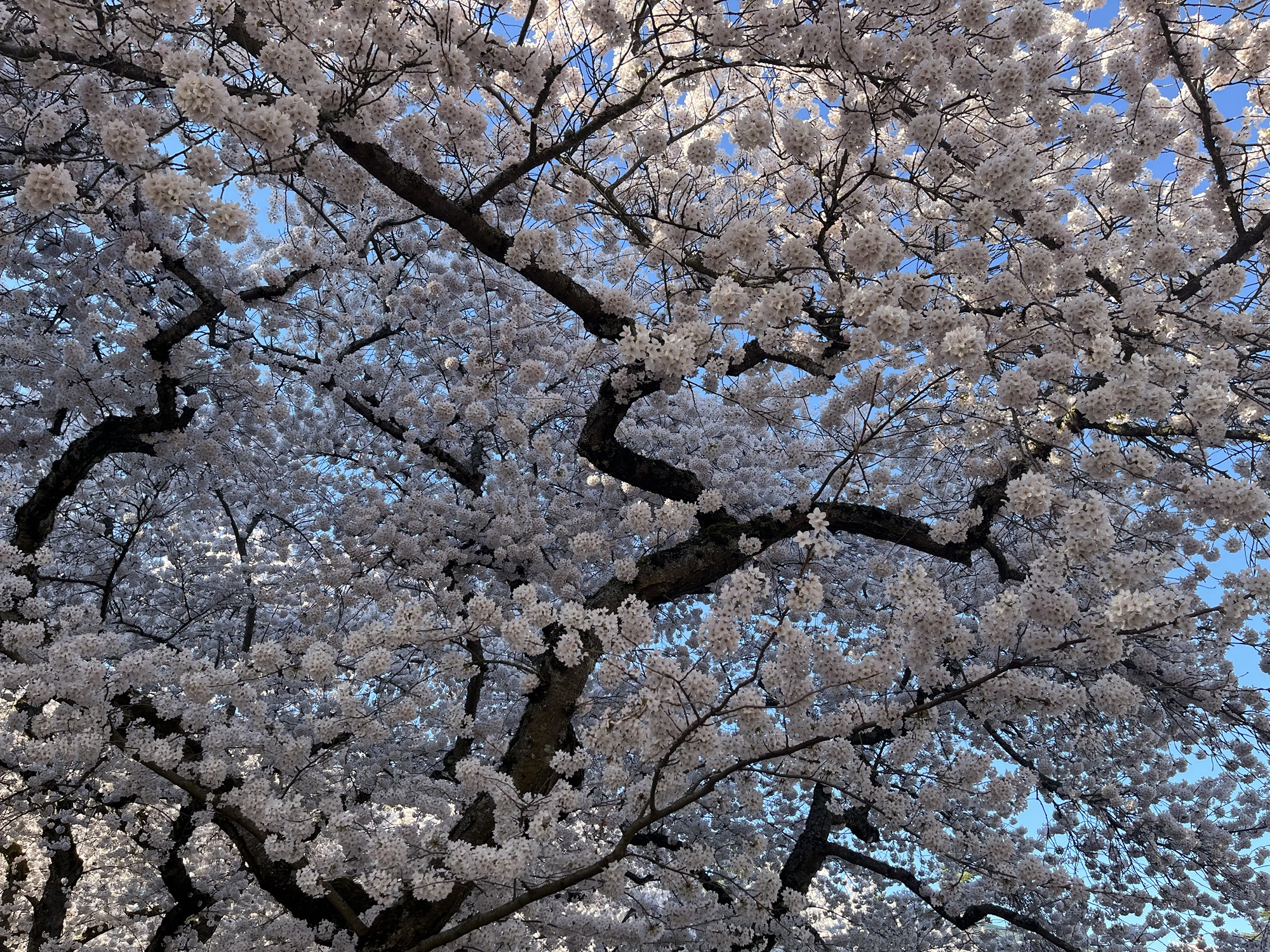
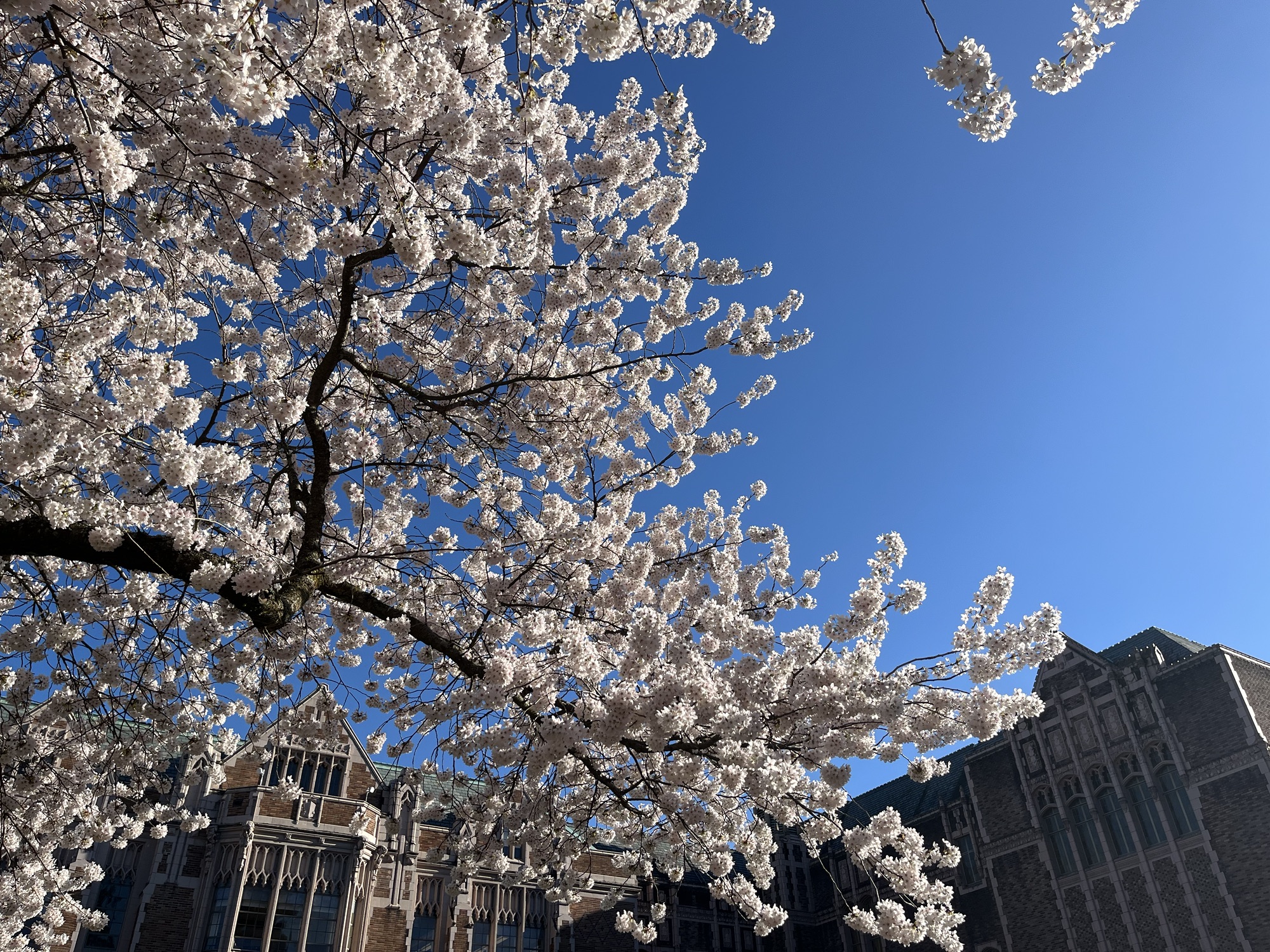
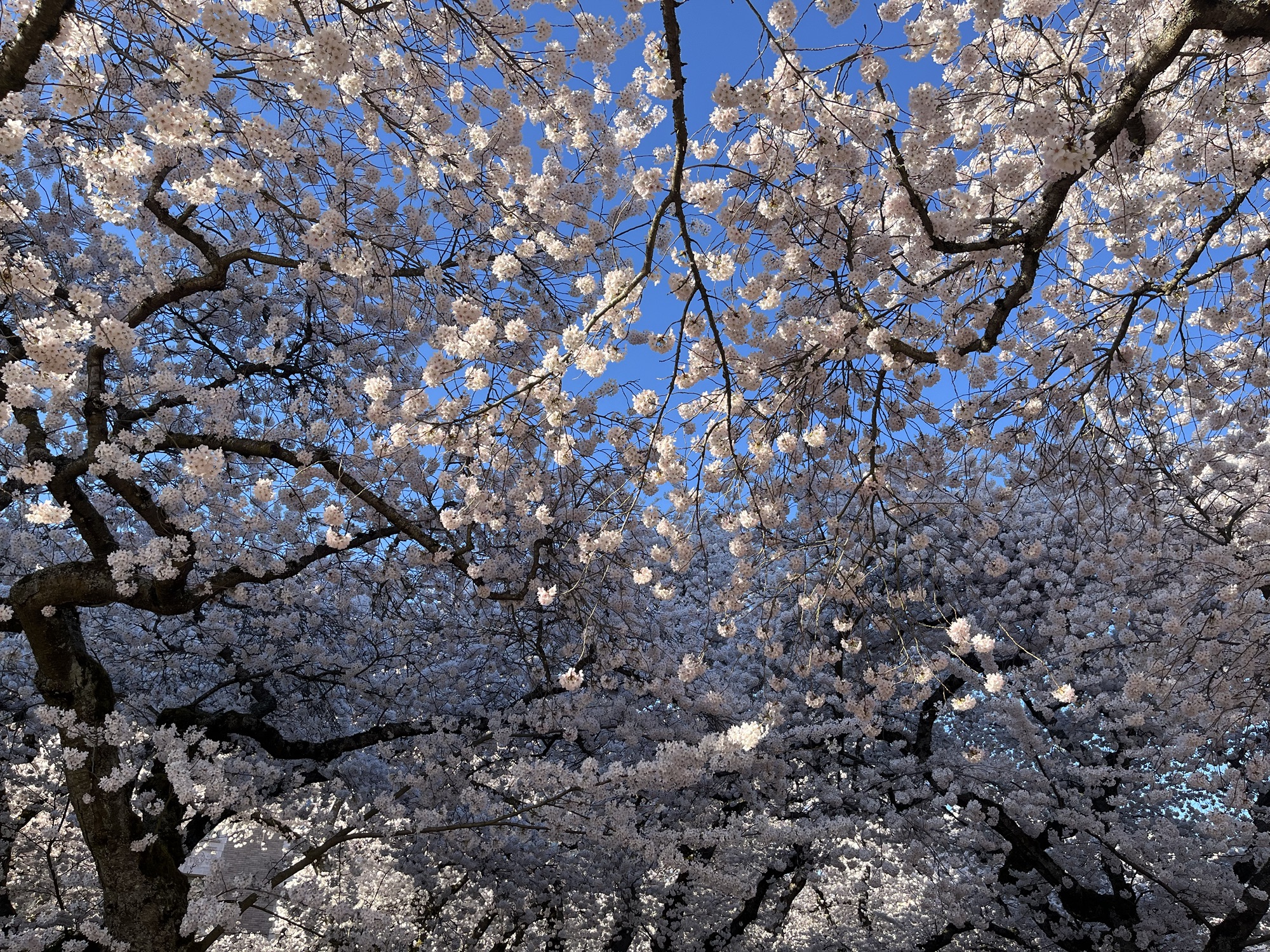
I’ve been talking a lot about heavy, often historical subjects lately, but today I just wanted to share something more local. Every year, my family and I go to see the cherry blossoms at the local University of Washington. This is part of a popular Japanese tradition called ohanami (お花見) or “flower viewing”. Ever since our children were little babies, my wife and I never fail to go to the University of Washington every year, and take lots of family photos and such. A lot of other people come too, and it is a fun community event. The UW has even created a dedicated website just for the occasion, plus social media accounts, and you can even watch a live-cam version of it:

A lot has changed in the last 15 years!

Depending on weather, timing of the bloom, etc, some times we arrive at full bloom (mankai, 満開, in Japanese) and at other times we come too late or a bit too early. This year we came on Tuesday and the timing and weather turned out perfect.

The UW actually has a few clusters of cherry trees, and different varieties, which you can see on the official map, so we tried to visit as many as I could. Also, on my other blog, I wrote a brief guide to Japanese cherry blossoms as well, so feel free to take a look.

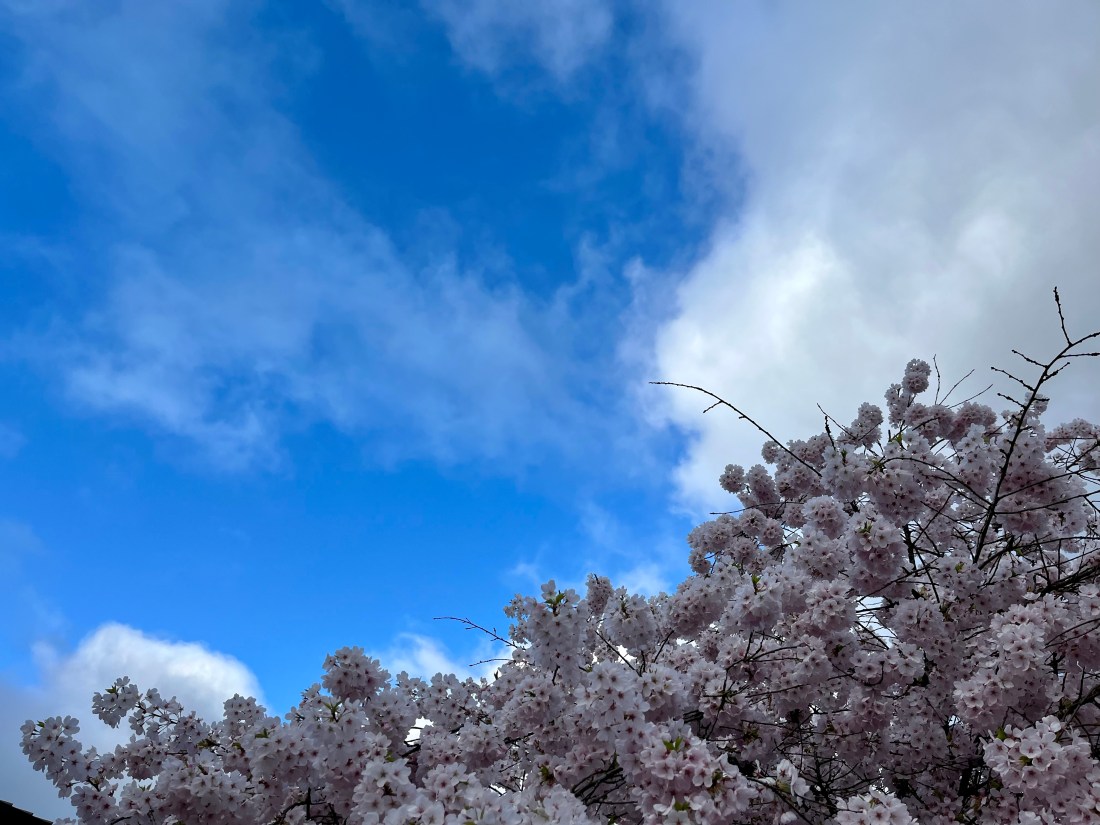
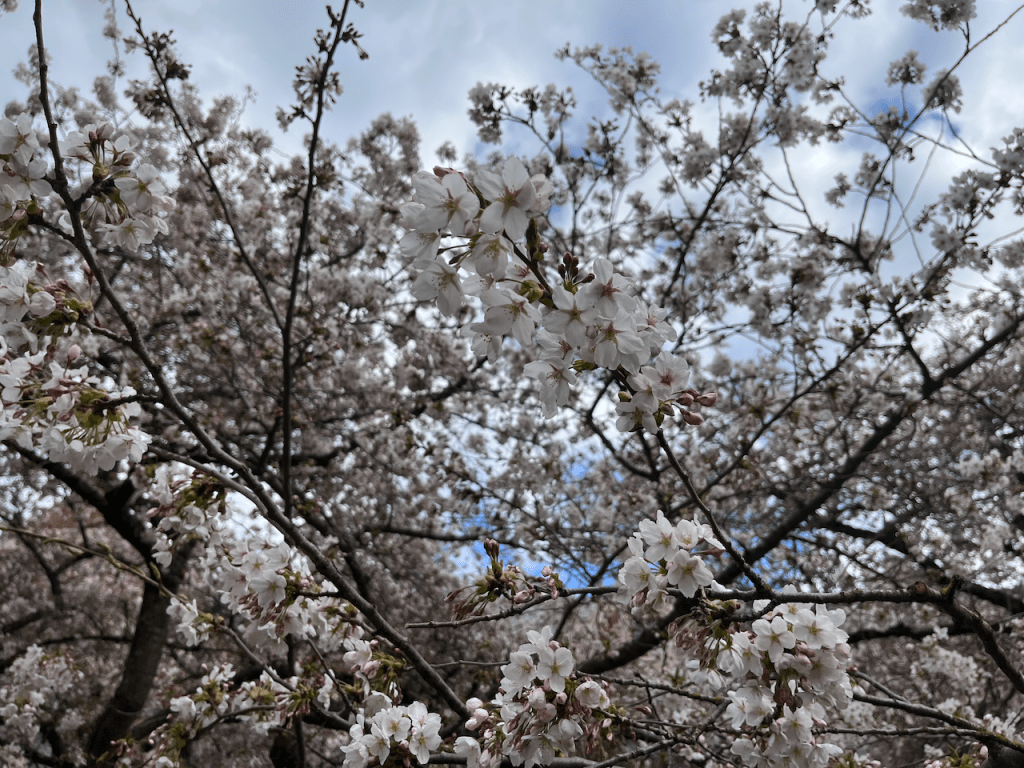
The main attraction of course is the Quad, and the Yoshino cherry trees there:

The “Yoshino” cherry tree is the most common and iconic cherry tree variety. In Japanese it is called the somei yoshino.

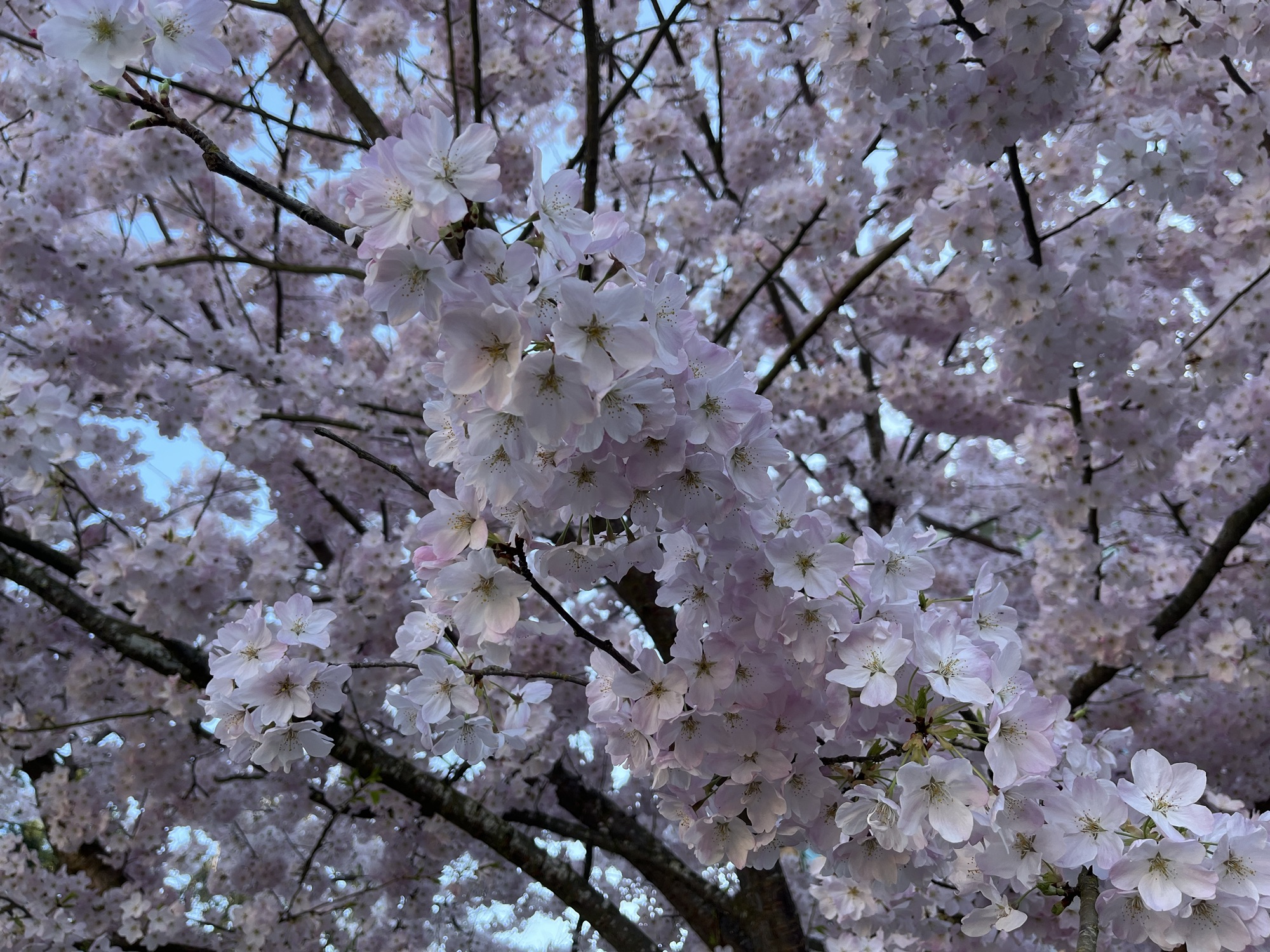
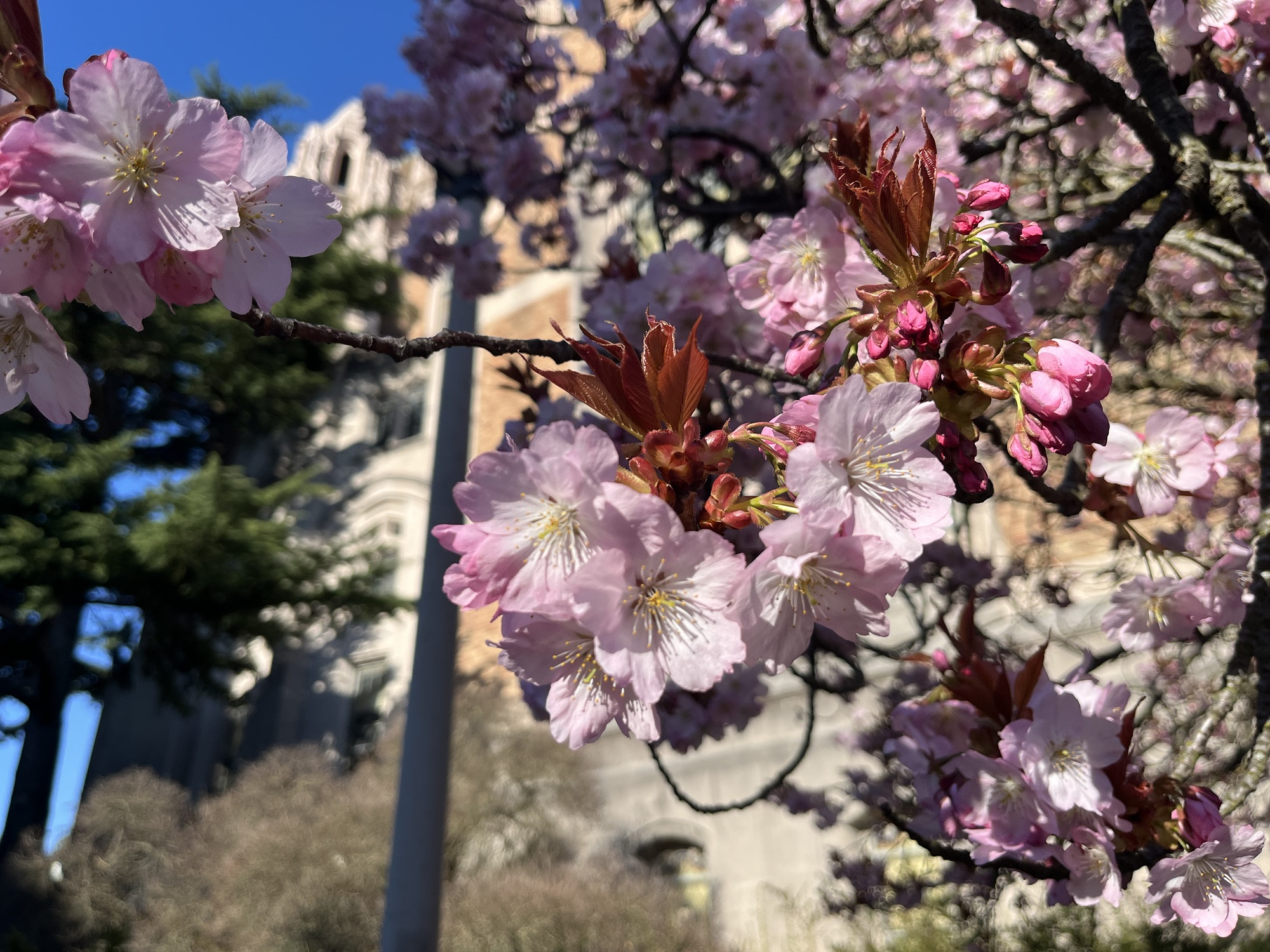
Next we moved south to see some of the varieties around Drumheller fountain. Not all varieties were in bloom yet, but we did see one called Kanzan,1 which I had never seen before. The blossoms were noticeably pinker, and had two layers of blossoms, not one.

I really liked this variety myself.

Later, we ran into some good friends who were also viewing the cherry blossoms. Since I hadn’t really been out much this past month, due to surgery recovery, it’s really nice to see some friends and socialize for a while. We later went and got some gyros at a place I used to frequent back in college.

One the way, we saw one other variety I had not seen before: a Mt Fuji Cherry tree:

I had not heard of this variety either, but it is apparently a variety of the Prunus Serrulata tree,2 and is known for it’s all white blossoms. This is probably why it got it’s name “Mount Fuji” since it matches the color of snow. In Japanese it is called the “Shirotae” variety, where shirotae is a well-known pillow word in Japanese poetry meaning something that is gleaming white.

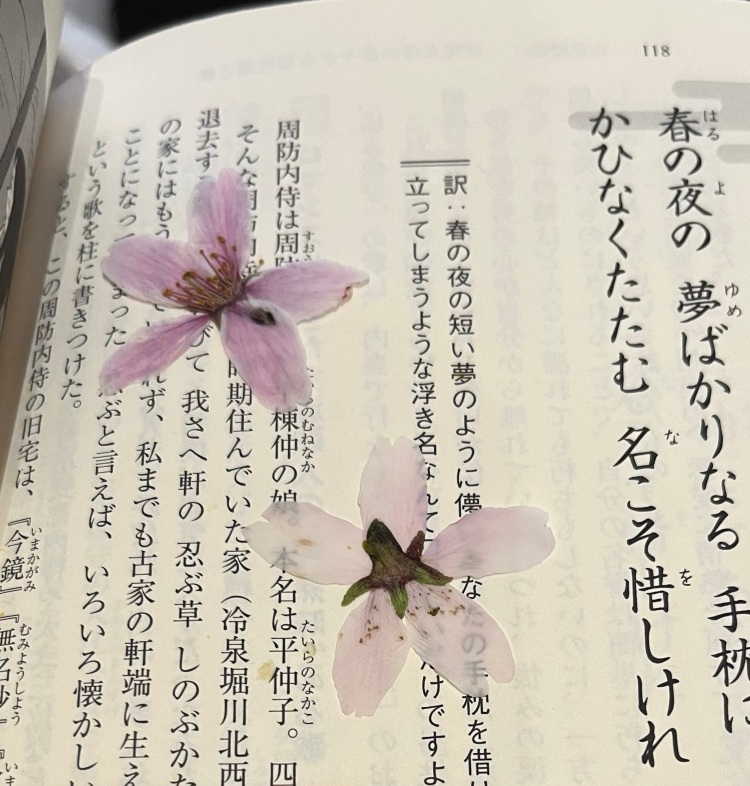
Anyhow, the weather worked out really well, and seeing old friends after a rough month really made the trip extra special. I had brought along one of my favorite books about the Hyakunin Isshu with me, and when a couple blossoms fell to the ground, I used it to press them within the pages. After a week, the pressed blossoms turned out pretty nice.

All in all, it was a memorable day, and really uplifting after a difficult month.

P.S. I know I’ve said it before, but a happy Spring Ohigan to all.

1 The UW website lists them as “Kwanzan”, but that is an older, archaic style of romanization of Japanese language. In Japanese it is definitely spelled “kanzan”. In the same way, the Bodhisattva Kannon was often spelled as “Kwannon” in older English literature.

2 The UW has another variety of Prunus Serrulata called the Shirofugen (a.k.a. Fugenzo in Japanese), but they were not in bloom when we came there.

May Illness

In Japanese culture there is a phrase, gogatsu-byō (5月病), which means “May Illness”. It’s a tongue-in-cheek saying that describes the feeling of haziness or lethargy that many people experience in late April/early May.

In Japan’s case, this is keenly felt by students whose school year ends in April (not June),1 and new office workers who often start their careers in May. People are burned out in April and by the time May rolls around, they get tired plus the weather is warm and pleasant.

Another phrase you hear around this time is:

春眠暁を覚えず

shunmin akatsuki wo oboezu

I’ve talked about this phrase before, and its origin in a Tang-Dynasty Chinese poem, titled “Spring Dawn” (春曉 Chūn Xiǎo) composed by poet Mèng Hàorán (689/691–740, 孟浩然). In Japanese he was called mōkōnen. The original poem was translated into Japanese at some point, and the first verse became a phrase all its own. Here’s a side by side comparison of the original Chinese with the Japanese translation plus English:

ChineseRomanizationJapaneseRomanizationTranslation1
春眠不覺曉Chūn mián bù jué xiǎo春眠暁を覚えずShunmin akatsuki wo oboezuI slumbered this spring morning, and missed the dawn,
處處聞啼鳥Chùchù wén tíniǎo処々に啼鳥を聞くSho sho ni teichō to kikuFrom everywhere I heard the cry of birds.
夜來風雨聲Yè lái fēngyǔ shēng夜来風雨の声Yarai fūu no koeThat night the sound of wind and rain had come,
花落知多少Huā luò zhī duōshǎo花落つること知る多少Hana otsuru koto shinnu tashōzoWho knows how many petals then had fallen?
1 Translation courtesy of http://www.chinese-poems.com/m9.html

Even if you don’t live in Japan, that sense of late spring haziness is something we can all appreciate.

1 If I recall correctly, Japanese students don’t have a long summer break, like kids i, the US. Instead they have more breaks scattered throughout the year, and so summer break in Japan only lasts a few weeks.

Cherry Blossoms at the UW

In Japan, the tradition of viewing cherry blossoms, or sakura (桜), is a very popular one. Every year, we take the kids to the University of Washington for cherry blossom viewing, called o-hanami (お花見) in Japanese.

It was a very lovely time with the family. Centuries ago, the brilliant, and yet failed Shogun Ashikaga Yoshimasa (also mentioned here), once composed a poetic verse:1

JapaneseRomanizationTranslation
咲き満ちてSakimichiteFlowers in full bloom —
花よりほかのHana yori hoka noBut apart from the blossoms,
色もなしIro mo nashiNo color anywhere.
Translation by Donald Keene in Yoshimasa and the Silver Pavilion: The Creation of the Soul of Japan

Centuries earlier, in the Hyakunin Isshu collection another poet composed some verses on cherry blossoms too:2

JapaneseRomanizationTranslation
もろともにMorotomo niLet us think of each
哀れと思へAware to omoeother fondly,
山桜Yama-zakuraO mountain cherries!
花より外にHana yori hoka niFor, outside of your blossoms,
知る人もなしShiru hito mo nashithere’s no one who knows my feelings.
Translation by Dr Joshua Mostow

We toured the cherry blossoms, took photos amidst other people, and then we headed to the library at the University of Washington, something I that brought back a lot fo memories for me:

… and finally we stopped nearby for some good ramen:3

It was a somewhat unplanned event, since we usually don’t go on a weekday, but we decided to chance it due to the weather, and like any unplanned event, we were pleasantly surprised.

As an o-hanami event, the kids had a wonderful time, and hopefully some good memories for the future.

1 According to Donald Keene, this was the hokku (発句), or opening verse, of a renga poem.

2 Poem 66, see here for more details.

3 I enjoy miso-flavored ramen in particular. Ramen courtesy of Hokkaido Ramen Santouka.

A Life of Pomp and Regret

In Professor Donald Keene’s biography about the life of Shogun Ashikaga Yoshimasa (足利 義政, 1436 – 1490), includes a poem composed by Yoshimasa, now retired and living in his villa, the Silver Pavilion, ruminating on his former life as the supreme military commander of Japan:

JapaneseRomanizationTranslation
くやしくぞKuyashiku zoToday I recall
過ぎしうき世をSugoshi uki yo woThe sad world I lived
今日ぞ思ふKyou zo omouWith bitter regret —
心くまなきKokoro kumanakiMy mind serene as I gaze
月をながめてTsuki wo nagameteAt a moon free of shadows
Translation by Donald Keene

Ashikaga no Yoshimasa, arguably one of the most influential people in Japanese art and aesthetics, yet ironically one of the worst military leaders in Japanese history, was never a serious student of Buddhism (though he was nominally ordained as a Rinzai Zen monk) but it’s interesting to hear him regret his life of luxury and power. To me, it is a contrast with Miyazawa Kenji’s famous poem Unbeaten By Rain (雨にも負けず).

A life of honesty poverty is probably better than wealthy lifestyle full of discord.

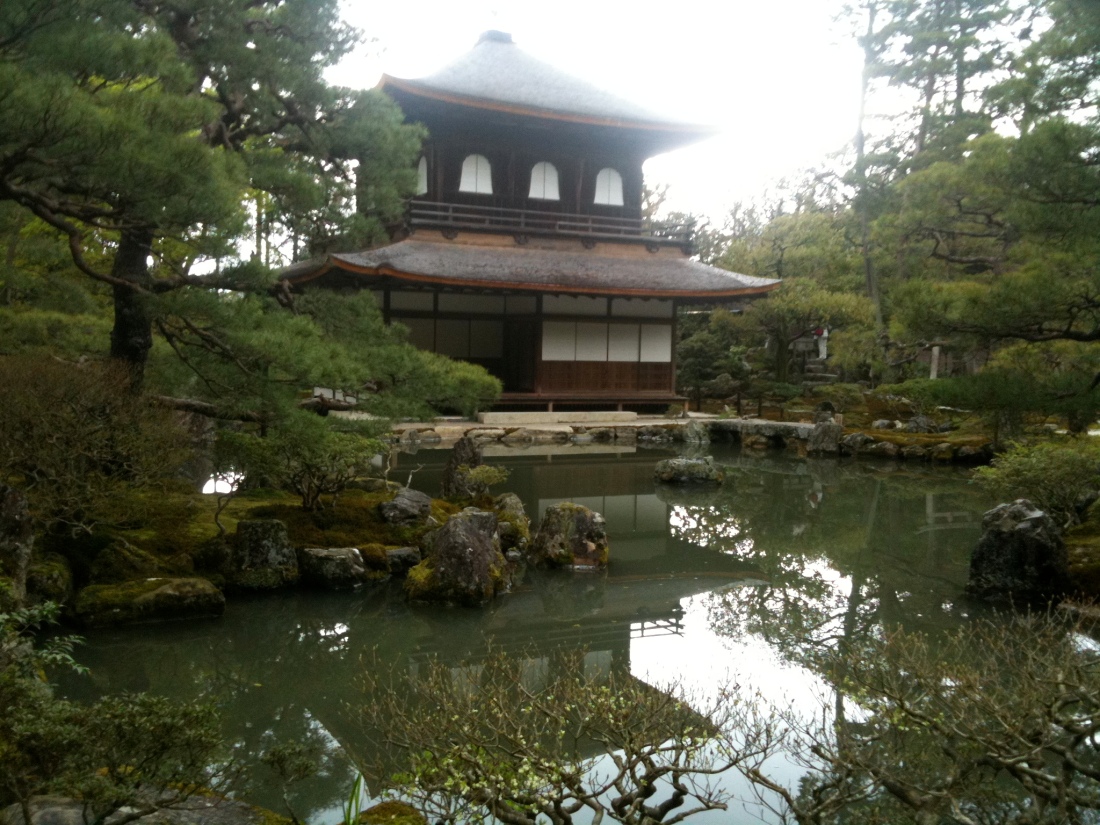
P.S. Photo taken of the Silver Pavilion, by me, in 2010.

Remembering Loved Ones

Recently, my family and I observed the 100th day memorial for “baba”, my wife’s mother in Japan, and grandmother to our kids. This had me thinking about another poem by Lady Izumi1 from The Ink Dark Moon by Jane Hirshfield and Mariko Aratani:

Original JapaneseRomanizationTranslation
跡をみてAto wo miteEven in my dreams
偲ぶもあやしShinobu mo ayashiI never think of you—
ゆめにてもYume nite mohow strange now,
何事のまたNanigoto no mataseeing your handwriting,
有りしともなくArishi to mo nakuto recall…
Translation by by Jane Hirshfield and Mariko Aratani

I can understand this sentiment. When doing the memorials, it can feel kind of formulaic, but then sometimes I will see something that reminds me of my mother in law, and I can still her presence somehow. While I was in Japan, my father in law, noticing my interest in the Hyakunin Isshu, gave me a book to take home that belonged to his wife (my late mother-in-law).

「新百人一首をおぼえよう」(Let’s Memorize the Hyakunin Isshu, new edition) by 佐佐木幸綱 (Sasaki Yukitsuna)

This is a nice book, published back in 2002 that covers the Hyakunin Isshu anthology with lots of neat photography of famous locations, and tips and mnemonics for memorizing poems for karuta card game. I’ve enjoyed reading through it.

But more importantly, it provides a tangible link to my mother-in-law. Due to language barrier, I wasn’t able to converse with her much in my early years of marriage, and in the later years her health had declined to the point we couldn’t converse anyway. So, I wasn’t able to connect with her as much as I wanted to.

But with this book, I feel connected to her in a way I couldn’t before. My only regret is that we didn’t share this hobby before.

However, as Lady Izumi’s poetry shows, there is another side to grief and losing loved ones:

Original JapaneseRomanizationTranslation
としをへてToshi wo heteThrough the years
物思ふことはMono omou koto waI’ve become used to sorrow:
ならひにきNarai ni kithere was not one spring
花に別れぬHana ni wakarenuI didn’t leave behind
春しなければHaru shinarakerebathe flowers
Translation by by Jane Hirshfield and Mariko Aratani

and:

Original JapaneseRomanizationTranslation
頼むとてTanomu toteDo you now know
頼みけるこそTanomi keru kosothis world
はかなけれHakana kereis a waking dream?
昼間の夢のHiruma no yume noHowever much I needed you,
よとは知らずやYo towa shirazu yathat is also a fleeting thing…
Translation by by Jane Hirshfield and Mariko Aratani

As one gets older, one becomes somewhat numb to all the people that we’ve lost. The second poem here has overtly Buddhist undertones, reminding the reader that, as the Diamond Sutra famous says:

All composed things are like a dream,
a phantom, a drop of dew, a flash of lightning.
That is how to meditate on them.
That is how to observe them.

Translation by Ven. Thich Nhat Hanh, in The Diamond That Cuts Through Illusion

For my part, I have lost friends as far back as high school, known relatives who have taken their own lives, lost loved ones due to cancer, dementia, pneumonia, etc.

Chances are, you have too.

As time goes on, this number will continue to grow. If you imagine scattered blossoms in spring, one can easily find parallels to life and the people all around us.

1 Other recent mentions here, here and here.

Of Burning Houses and Rain

Here is another wonderful poem (previous posts here and here) by the 11th century Japanese poetess, Lady Izumi (izumi shikibu 和泉式部 in Japanese), that I found in The Ink Dark Moon by Jane Hirshfield and Mariko Aratani:

Original JapaneseRomanizationTranslation*
ものをのみMono o nomiShould I leave this burning house
思ひの家をOmoi no ie oof ceaseless thoughts
出でてふるIdete furuand taste the pure rain’s
一味の雨にIchimi no ame nisingle truth
ぬれやしなましNure ya shina mashifailing upon my skin?
* Translation by by Jane Hirshfield and Mariko Aratani

The headline for this poem reads:

On the night of the sixth, the sound of the night monk’s voice reciting the Sutras mingled with the sound of incessant rain, and truly this seemed to be a world of dreams…

Lady Izumi cleverly makes not one, not two, but THREE separate allusions to the famous Lotus Sutra, in this poem. I’ve talked about the Lotus Sutra before. It’s a very influential Buddhist text in the Mahayana tradition, and contains many parables and dramatic allusions, compared to some of the drier, more textbook style Buddhist sutras. Thus, allusions to the Lotus Sutra are found throughout literature in East Asia. In my opinion, understanding the Lotus Sutra is key to understanding Buddhism in East Asia: Zen, Pure Land, Tiantai, Nichiren and Vajrayana, etc.

The “burning house” here alludes to the Parable of the Burning House of third chapter of the Lotus Sutra. I’ve talked about it here, among other places. This is pretty straightforward to understand in the poem: the Burning House here is symbolic of the world we live in, burning with passions, craving, anger, delusion, old age, disease, and so on. We can step out of the burning house if we choose to, but we are often distracted by things in the house, and thus unaware that the timbers all around us are on fire, putting us in mortal danger.

The second allusion is that of rain. In the fifth chapter of the Lotus Sutra, there is a parable describing rain on plants, the so-called The Parable of the Medicinal Herbs:

What falls from the cloud is water of a single flavor, but the plants and trees, thickets and groves, each accept the moisture that is appropriate to its portion. All the various trees, whether superior, middling or inferior, take that is fitting for large or small and each is enabled to sprout and grow. Root, stem, limb, leaf, the glow and hue of flower and fruit— one rain extends to them and all are able to become fresh and glossy, whether their allotment of substance, form and nature is large or small, the moistening they receive is one, but each grows and flourishes in its own way.

The Buddha is like this when he appears in the world, comparable to a great cloud that covers all things everywhere, Having appeared in the world, for the sake of living beings he makes distinctions in expounding the truth regarding phenomena.

Translation by Burton Watson

This is, for me, one of my most favorite parts of the Lotus Sutra. As a sutra, it’s very inclusive (cf. the Parable of the Dragon Princess), but it also acknowledges that there is a huge variety of people in the world. Some people are just different than others, but they can all benefit from the Dharma in their own way, just like the various plants in world drinking from the rain.

Finally, the third allusion in Lady Izumi’s poem is that of a single “taste”. Both the Parable of the Burning House and the Parable of the Medicinal Herbs make a single point: the Dharma of the Buddha appears in a variety of ways, or “gates” for one to enter, but in the end the Dharma tastes the same equally, and is but one truth. So, whichever gate one enters, the rain will ultimately taste the same. For the Burning House, when the children come outside, their father offers, in the end, a single magnificent cart (not many) to offer them as an incentive.

Turning back to Lady Izumi, it’s obvious that she was very thoughtful of these things, even if she struggled to practice them amidst her life. Even when she was surrounded by scandal, and lost both her lovers and her daughter to illness, she could see past it and look at the greater picture.

Namu Amida Butsu

Inattention

Photo by Gleb Dolskiy on Pexels.com

A while back, I talked about a famous poetess from 11th century Japan named Lady Izumi, one of several famous ladies of the court at that time, but for some reason the one I find most fascinating.1 Lady Izumi was a prolific poet, and I have been reading samples of her poetry compiled in The Ink Dark Moon by Jane Hirshfield and Mariko Aratani. I found this poem the other day and wanted to share. The headline of the poem was that Lady Izumi was on retreat while on retreat at a mountain temple in autumn…

Original JapaneseRomanizationEnglish translation*
心にはKokoro niwaAlthough I try
ひとつみのりをHitotsu minori woto hold the single thought
思へどもOmoe domoof Buddha’s teaching in my heart,
蟲のこゑこゑMushi wa koegoeI cannot help but hear
聞ゆなるかなKikoyu naru kanathe many crickets’ voices calling as well.
* Translations by Jane Hirshfield and Mariko Aratani

I think this speaks to the classic frustration many Buddhists (among others) have: the willingness to undertake a practice, and the reality of not being able to stay focused. If it were easy, we’d probably all be doing it.

Lately, in an effort to reconnect to the local Buddhist community, and due to recent experiences in Victoria, BC, I decided to join a local Soto Zen group for remote meditation sessions. It’s been great actually: I have something in the week to look forward to besides more work meetings, and it provides a nice spiritual anchor in my life again. However, I noticed that while meditating for 25 minutes at a time, my mind rarely stays focused for long. Sometimes I can discipline myself for a few minutes, counting my breaths, etc. However, most of the time my mind is just wandering around for most of the session.

When I was younger and first encountered the nembutsu, I used to dedicate myself to reciting the nembutsu 1080 times (using my rosary to help count). Usually this takes about 15-20 depending on the speed of recitation. I (surprisingly) continued this practice for months. However, I also noticed a pattern: my mind would quickly grow bored from reciting, then anxious to hurry up and finish, and then relief when I got near the end. My mind would wander, just as it does with meditation.

So, the experience that Lady Izumi has is not unique to her, and even now, a thousand years later, I can empathize with her.

Further, I don’t think there’s an easy solution here: it’s something that every one has to work out for themselves.

Namu Amida Butsu

1 Speaking of fascinating, you might like to read my review of the Diary of Lady Murasaki, her contemporary on my other blog. Lady Murasaki evidentially didn’t think too highly of Lady Izumi.

Ancient Japanese Rap Battling

With all the time I have to kill while in quarantine in the den, I have been cleaning up my old blog on the Hyakunin Isshu poetry anthology. It’s been great rediscovering things, including poem 60 of the anthology, a poem composed by Lady Izumi‘s daughter, Ko-Shikibu no Naishi (小式部内侍, d. 1025).

Lady Izumi by this time had quite a reputation as a master poet, and her daughter probably had to live in her shadow. While her mother was away in the province of Tango, Ko-Shikibu no Naishi was participating in a poetry contest, a major social event among the aristocrats of capitol. These contests were serious business. The host would choose a topic, and pit poets against one another, and the right poem could really make or break one’s reputation.

As part of the contest, Middle Counselor Sadayori started trash-talking Ko-Shikibu no Naishi saying:

What will you do about the poems? Have you sent someone off to Tango [to ask your mother for help]? Hasn’t the messenger come back? My, you must be worried.

So, Ko-Shikibu comes with some poetic freestyling:

JapaneseRomanizationTranslation
大江山OeyamaŌe Mountain and
いく野の道のIkuno no michi nothe road that goes to Ikumo
とほければTo kerebaare far away, and so
まだふみも見ずMada fumi mo mizunot yet have I trod there, nor letter seen,
天の橋立Ama no Hashidatefrom Ama-no-Hashidate
Translation by Dr Joshua Mostow

The poem doesn’t translate easily into English, but according to Dr Mostow, the poem is a masterpiece because it recites three places in Tango Province in geographic order, has the following puns:

  • iku in Ikuno also means to go 行く, and
  • fumi means both a letter 文 and to step 踏み, and
  • the bridge mentioned, Ama-no-Hashidate, is associated with “stepping” too.

… and she did all this off the cuff.

The comeback was so good, that Sadayori reportedly fled.

Picture this, but it’s 1,100 years ago, in Japan, and Eminem is a lady.

Pretty amazing comeback by Ko-Shikibu no Naishi, and a sign that talent runs in the family. Sadly, her life was snuffed out at a young age due to illness, and Lady Izumi never quite recovered with loss…