This is a passage from the lesser-known tenth chapter of the Lotus Sutra, but it’s something I think about from time to time:
… if you wish to expound this sūtra Enter the room of the Tathāgata, Wear the robe of the Tathāgata, Sit on the seat of the Tathāgata, [And after doing these three things,] Expound it to people without fear!
To enter the room of the Tathāgata means to have great compassion.
To wear his robe means to be gentle and patient.
To sit on his seat means to see the voidness of all things.
Expound the Dharma only after you do these [three] things!
Translation by Rev. Senchu Murano
The Lotus Sutra is interesting because it talks about itself a lot, but when the Lotus Sutra talks about the Lotus Sutra, it’s not necessarily talking about the literal text on the page. The text hints at a deeper, ineffable teaching that only becomes clear as one progresses through the Buddhist path. So, I believe, that there’s the “literal” Lotus Sutra on the page, and the deeper meaning behind it.
Anyhow, what really matters here is that the Buddha, Shakyamuni, is giving advice on how to properly teach the Dharma. I know that some readers have a background in teaching, or therapy, or other similar fields, so this probably applies some readers more than others. But the sixteenth chapter of the Lotus Sutra and its countless “Bodhisattvas of the Earth” strongly hints that anyone can be a teacher, and anyone can uphold the Lotus Sutra. You just have to believe in yourself and follow the Buddha’s advice.
This is important as a bad teacher, someone charismatic but drowning in their own ego, can really damage a community and the reputation of the Buddha-Dharma. If you decide to take on the role of a teacher,1 it’s super important that you understand the responsibility. Hence, the Buddha’s advice:
Goodwill towards all beings, which includes upholding your own personal conduct.
Patience towards all beings, because everyone starts from somewhere.
Appreciating the emptiness of it all: any fame, fortune (or babes), or power you get from being a teacher are temporary and futile anyway. You will still grow old, sick and die, so it is not a dignified pursuit.
On the other hand, one of the best things you can do to teach the Buddha-Dharma is to simply live it in your own life. Even if you don’t say a word, people will pick up on it, and in so doing, you’ll be following the Buddha’s advice anyway.
That, in my opinion, is a true Bodhisattva of the Earth.
Namu Shakamuni Butsu
1 I feel a pang of hypocrisy as I write this. I am not teacher, just a nerd, but I often like sharing things so I guess I am a teacher? I dunno. I have taught classes before in my old Buddhist temple, but only short, historical seminars, but even that feels like a big responsibility. I respect what real clergy do.
This blog, and its blogger, have focused on the Pure Land tradition of Buddhism for many years. I didn’t really start practicing Buddhism seriously until I encountered the Jodo Shu-sect teachings of Honen way back in 2005. It really inspired something in me that’s never stopped even as my practice has taken many twists and turns.
But, strangely, I’ve never actually talked about what a “pure land” is. That’s the subject of today’s post.
The concept of a “Buddha land” or “Pure land” is actually a broad and rich tradition within Mahayana Buddhism, and well worth exploring. Here, I am not talking just about Amida Buddha and his Pure Land, but the general concept. It shows up a lot in Mahayana Buddhism and its many traditions, including the Zen tradition. It also shows up in contemporary Asian literature as well, including Akutagawa Ryunosuke’s famous short story “The Spider’s Thread” (蜘蛛の糸) as well as the Legend of Zelda series. Once you recognize it, references to Buddha lands show up in many unexpected places.
And yet, it all started long ago in India.
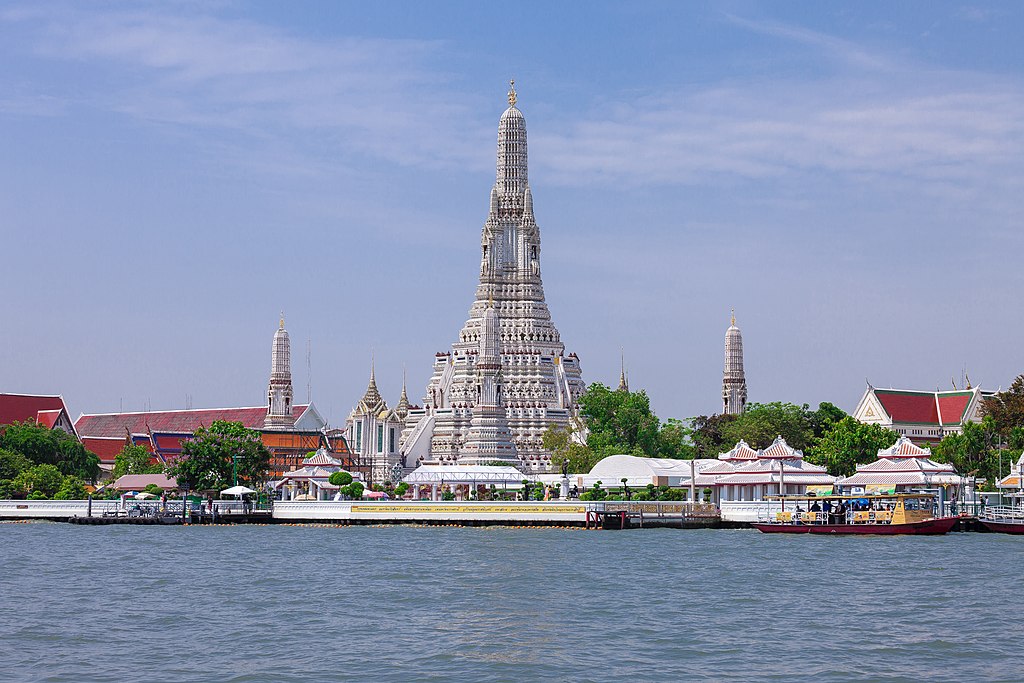
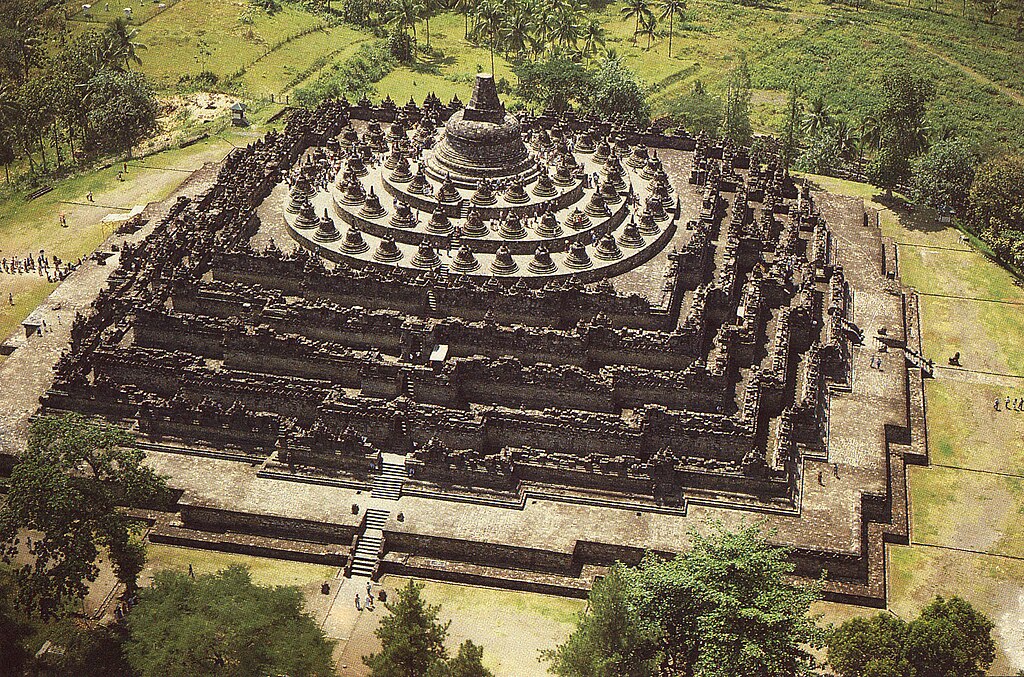
Traditional cosmology (i.e. “how the world is arranged”) in India tended to see a flat world with continents strung together in all directions, including above and below. Some of these continents would be anchored by a massive mountain in the middle, called Mount Sumeru (or Mount Meru). You can see this also in Buddhist architecture such as this famous temple in Bangkok, Thailand:
Incidentially, people in India thought that they lived in one of these continents called Jambudvipa, which was on the southern end of Mount Sumeru. For example, in the Earth Store Bodhisattva Sutra, you see text like so (chapter 4):
Thus, in this Saha world, on the continent of Jambudvipa, this Bodhisattva teaches and transforms beings by means of millions of billions of expedient devices.
Translation by City of Ten Thousand Buddhas
Anyhow, different continents were more peaceful and civilized than others. In some continents dwelt a living buddha, and by their sheer presence, the land would be purified, and all would be peaceful. Such lands are called buddhakṣetra in Sanskrit.
At that time the Buddha told the Elder Shāriputra, “Passing from here through hundreds of thousands of millions of Buddhalands to the West, there is a world called Ultimate Bliss. In this land a Buddha called Amitābha right now teaches the Dharma
Translation by City of Ten Thousand Buddhas
In this sutra, the Pure Land of Amitabha is just one of many such lands that exist to the west, but a particularly splendid Buddha land. Buddhas and Buddha lands were thought to exist in all cardinal directions, and the Amitabha Sutra above goes to great lengths to describe some of them, but highlights Amida Buddha’s Pure Land in particular.
Another example of a Buddha land is the realm of the Medicine Buddha, called Lapis Lazuli, which was thought as existing to the east (not west). The Medicine Buddha Sutra describes it at length. It even goes out of its way to say it’s easier to be reborn in the realm of Lapis Lazuli than the Pure Land of Amitabha:
“If their rebirth in the Pure Land is still uncertain, but they hear the name of the World-Honored Medicine Buddha, then, at the time of death, eight great Bodhisattvas, namely, [list of names] will traverse space and descend to show them the way. They will thereupon be reborn spontaneously in jeweled flowers of many hues. [i.e. be reborn in the Buddha land of the Medicine Buddha]
Translated and annotated under the guidance of Dharma Master Hsuan Jung by Minh Thanh & P.D. Leigh
If a person could be reborn in their next life in a Buddha land, any Buddha land, and thus be in the presence of a living Buddha, it is thought they would find refuge, but also they would advance much better along the Buddhist path. The idea of Pure Lands never supplanted or replaced more tradition Buddhism, but if your current circumstances prevented you from following the Buddhist path, you could opt to be reborn in a Buddha land and make up for it in the future.
… but then we come to another Buddha land worth noting: the Buddha land of Shakyamuni Buddha himself. The sixteenth chapter of the Lotus Sutra drops a plot twist wherein the Buddha never really died, and exists for all time on Vulture Peak in India (a real place where historically he and the Buddhist community often dwelt), and preaching the Dharma to any who see him (details added by me in parantheses):
I live on Mt. Sacred Eagle (another name for Vulture Peak) And also in the other abodes For asaṃkhya (countless) kalpas (eons).
…”This world is in a great fire. The end of the kalpa [of destruction] is coming.” In reality this world of mine is peaceful. It is filled with gods and men.
Translation by Rev. Senchu Murano
The Lotus Sutra version of the Pure Land is less about esoteric geography, and more about Shakyamuni Buddha always being here, whether we see them or not. It comes down to wisdom, clarity, and good conduct.
This viewpoint is found in Zen as well. When we look at the Hymn of Zazen by Japanese monk, Hakuin, who was a lifelong devotee of the Lotus Sutra, we can see the influence:
浄土即ち遠からず Jōdo sunawachi tōkarazu
“Indeed, the Pure Land is not far away”
Amateur translation by me
and:
当所即ち蓮華国此身即ち仏なり Tōsho sunawachi rengekoku, kono mi sunawachi hotoke nari
“This place is none other than the Land of Lotuses [the Pure Land], this body is none other than the Buddha.”
Amateur translation by me
But this isn’t just Hakuin talking. As we saw with the Obaku Zen tradition (a cousin of Hakuin’s Rinzai tradition), they felt the same way, only replacing Shakyamuni with Amida Buddha. But the sentiment was the same. You’ll find similar sentiments in esoteric traditions too, but I have little experience with those and cannot explain in much detail.
So, that brings us to the point: how does one interpret all these Pure Lands, these Buddha lands? My views have gradually changed over time, but I don’t pretend to have the answer. I think in a way that all viewpoints are correct. It is like the famous parable of the blind men describing an elephant: everyone has some idea, but the big picture is beyond our grasp. So, there’s no wrong way to interpret it. If one believes it’s a faraway refuge to be reborn into, that’s totally fine.1 If one believes it’s all in the mind, that’s fine too.
Even the Buddhist sutras, including some I linked above, state that simply “hearing” of the Buddha lands is a merit unto itself. So, if you’ve made it this far, you’re already doing just fine. Just apply the teachings in the way that best fits you.
Namu Shakamuni Butsu Namu Amida Butsu
1 Maybe this is my background as a scifi fan or something, but I do like to imagine that instead of physical continents, the various worlds and Buddha lands are just planets and worlds across the entire Universe. But that’s a personal view, more fantasy than firm belief, so please take it with a grain of salt.
I stared for half a day once at an old man sitting on a bench in Arrakeen. He was a fifth-generation descendant of Stilgar the Naib and did not even know it. I studied the angle of his neck, the skin flaps below his chin, the cracked lips and moistness about his nostrils, the pores behind his ears, the wisps of gray hair which crept from beneath the hood of his antique stillsuit. Not once did he detect that he was being watched. Hah! Stilgar would have known it in a second or two. But this old man was just waiting for someone who never came. He got up finally and tottered off. He was very stiff after all of that sitting. I knew I would never see him in the flesh again. He was that near death and his water was sure to be wasted. Well, that no longer mattered.
Frank Herbert, “God Emperor of Dune”, chapter 5
It’s not uncommon to hear our grandparents1 talk about the “olden days”, and how we kids “have it easy!”. Chances are, you probably heard this too. As we get older, we start doing it too!
But sometimes I think about this quote from Herbert’s “God Emperor of Dune”. The planet Arrakis was once a harsh, forbidding desert planet where water was extremely scarce, and its Fremen people lived on the edge of survival. And yet, when Leto II Atreides the God Emperor ascended to power, he transformed the planet into a tropical paradise. Insodoing, the Fremen became softer generation after generation, forgetting their hard-learned survival skills.
Yet, I don’t mean this as a judgment. Instead, I think people are unwittingly products of their surroundings. At birth we don’t choose our parents, our native language, or which country, ethnicity, or “caste” we are born into. We are simply thrust into some circumstances outside our control, and even if we reject them, it still shapes who we are.
Further, as society moves from times of war (or pandemic), to times of peace, people change in response. Then, if war breaks out again, they change again. During times of prosperity, people behave one way, but in times of scarcity, they change again. It’s not that one generation is somehow better than another: they just respond to different conditions.
So, sometimes, I think about what forces have shaped myself up until now: my family’s political leanings, the socio-economic circumstances, and why these might have shaped my own personal biases. Even now, as I watch my kids grow up and leave the nest, I can already see generational differences with them, shaped by technology, world events, changes in social attitudes and so on. My grandchildren’s grandchildren will be even more different.
More than any other year in recent history, it seems like 2025 is a year where we are suffering more than before. It is frustrating to watch all this unfold, frustrating to know that even when you try to help, it feels like it makes no difference, and frustrating to see no light at the end of the tunnel. I feel a combination of denial, passivity, frustration, anger, despair, and everything in between, over and over.
IVANOVA: Damn it, John, there’s always too many of them and not enough of us. What am I supposed to do?
SHERIDAN: Fight them without becoming them.
Babylon 5, “Dust to Dust”, s3:ep06
But I’ve also been thinking about this a lot, and I realized that the forces of History are always in motion, even if we don’t see them. It can take years, or in some cases decades to see the bigger picture.
Claude from Fire Emblem: Three Houses saying “…but even while you’re standing still, the world keeps on moving. I always find that oddly comforting.”
But also, the little things we are doing here and now still matter. What happens to others who are suffering affects us, even if we are not consciously aware of it.
G’KAR: If we deny the other, we deny ourselves and we will cease to exist.
Babylon 5, “Point of No Return”, s3:ep9
Even those whom we oppose are suffering, even if we do not comprehend it:
If both sides are dead, no one will care which side deserves the blame. It no longer matters who started it, G’Kar. It only matters who is suffering.
Babylon 5, “Dust to Dust”, s3:ep6
So, simply standing back and letting history unfold isn’t enough. On the other hand it is just not possible to save the whole world. Even if I gave away everything I have here and now, it would be a drop in the bucket.
Instead, each one of us needs to find one small thing that we can dedicate ourselves to, for the good of others. In a Pure Land Buddhist text, The Larger Sutra of Immeasurable Life, the Buddha Amitabha started as a king, then a bodhisattva, and through tireless efforts over eons transformed his realm into the Pure Land through countless good acts, accumulated merit, and so on. This process was glacial, but it came to fruition nonetheless.
In the same way, each one of us when we dedicate ourselves to a cause, however small, it feels glacial. Nothing changes. But change does happen. As with the forces of History, things do unfold, but our actions help shift the currents of the “river of History” ever so little.
But even so, not every one will see this and understand. In the immense Buddhist tome, the Avatamsaka Sutra (a.k.a. the “Flower Garland Sutra”), is a famous quote:
On seeing a bodhisattva Perform various practices, Some give rise to a good mind and others a mind of evil, But the bodhisattva embraces them all.
One thing that really annoys me as a long-time Buddhist is the tendency for self-help and spritual seminars to cost so much money. I saw this advertised locally in my area for weeks, and the starting price for a seat is $250 for a backrow seat, which to me is totally bonkers.
The Dharma, as taught by Shakyamuni Buddha was freely given, and required nothing.
Having said that, as a counter to pricey spiritual seminars, I wanted to promote a concept: the Art of Dying.
DYING?!
It is a simple concept: you are going to die. You cannot necessarily choose the hour or manner of your death. But it will occur inevitably occur.
You do not have to take my word for it. Here’s a Buddhist sutra (freely given I might add) from the words of the Buddha:
There is no bargaining with Mortality & his mighty horde.
Whoever lives thus ardently, relentlessly both day & night, has truly had an auspicious day:
But, to summarize the Parable, the Buddha Shakyamuni asks us, the reader, to imagine a great, big mansion that’s old, rickey, and so on. Then, imagine the house is burning. Deep inside, some kids are playing in a room, unaware the house is on fire. The father, having just returned from a trip, sees his kids in danger and calls out to them to leave the house at once. The kids, engrossed in their games, fail to see their situation. Finally, the father offers them great rewards if they leave (specifically carts of goods), and the kids finally come out.
The father, Shakyamuni Buddha, has left the burning house and stands outside. He calls to those in danger, namely the “kids”, to see their peril and to come out too.
What about the burning house itself? That is the world we live in, with strife, conflict, disease, chaos, aging, and death.
The late Thich Nhat Hanh wrote about this too:
“Imagine two hens about to be slaughtered, but they do not know it. One hen says to the other, “The rice is much tastier than the corn. The corn is slightly off.” She is talking about relative joy. She does not realize that the real joy of this moment is the joy of not being slaughtered, the joy of being alive.”
This gets to the heart of the Buddha’s teachings: do not squander the time you have on this Earth. It doesn’t mean you can’t enjoy life and your loved ones, but remember: Death will not wait for it to be convenient for you.
When you hear this, your instinct might be the “live, laugh, and love”, indulge in all the fun things in life before it’s too late. But that’s not what the Buddha intended. When you look back at the Parable of the Burning House, the father wasn’t asking the kids to play more, he was telling them to get out before it’s too late.
Further, in the Mahayana tradition, one can get themselves out of the burning house, but helping and guide others to get out of the burning house is even better. One can call such people bodhisattvas.
But you can’t help others (let alone yourself) until you :
Recognize the situation
Put down your own toys and find the way out before you can help others.
This is part of the progression of the Buddhist path: get your foundations in order, increasing confidence in the Dharma (which you can see in your own life), and turning outward to help other beings.
But starting at the beginning, how does one establish a foundation?
Everyone is different, but generally it starts with some simple things:
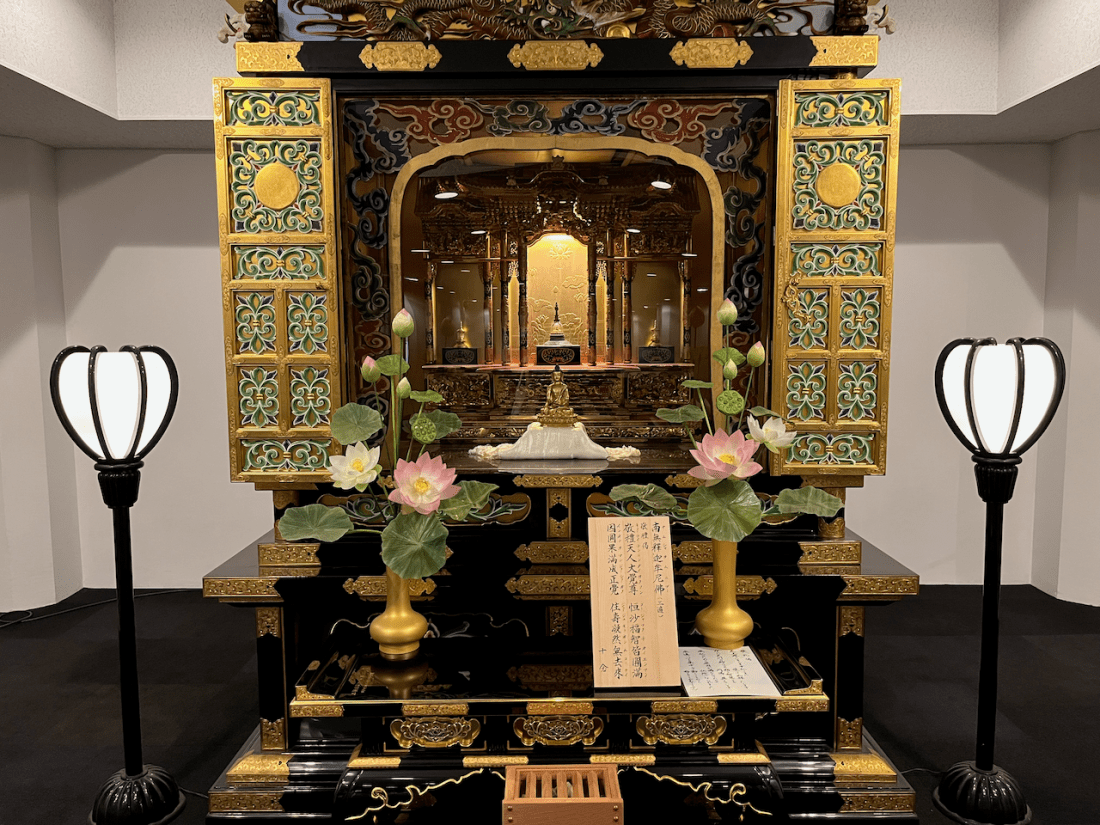
Taking the Buddha, Dharma and Sangha as one’s chosen refuge (you can do this by yourself or in a community). You can setup a small shrine too.
Taking up an ethical life, such as undertaking the Five Precepts
If all five are too hard, start with one, and work your way up over the months and years.
Say to yourself (yes, you): May I be well, may I be free from harm.
Now think of loved ones: may they be well, may they be free from harm.
Now think of all living beings (even the awful ones): may they be well, may they be free from harm.
Setup a reasonable daily practice. Think of it like exercise or stretching: if you start too aggressively, you’ll injure yourself and set yourself back. So start small, and build up.
What does a daily practice look like? Some examples here.
A small meditation practice can be beneficial too, but intention matters.
Study the sutras. Not self-help books, but the sutras. Commentaries on the sutras, such as those provided by Thich Nhat Hanh are quite good and easy to find in used and independent bookstores such as Powell’s City of Books.
Find worthy teachers and communities, not slick, overpriced seminars or cults. Caveat emptor.
Repeat. Buddhism is a long-term practice. “Play the long game“, but also remember you are on the clock. Time is short.
So, that’s your free teaching for today. Thanks for attending this seminar. Want to support the blog? Pay it forward or something. This is “Buddhism on a Budget”, and I strongly feel this is how Buddhism should be.
VIR: I believe there are currents in the universe. Eddies and tides that pull us one way or the other. Some we have to fight, some we have to embrace.
Babylon 5, “The Geometry of Shadows”, s2:ep3
I really liked this quote from the science-fiction classic Babylon 5 (which I’ve been re-watching lately)1 because it speaks to the sense that many things happen outside our control. Instead, we’re constantly pulled along by other forces, and some of these can be beneficial, others can be harmful, and simply just pull us in unexpected directions. Some of these currents are very strong and difficult to resist, some are barely noticeable until we look back.
Further, we don’t always know where these currents will take us. So, there’s always danger in choosing one course or another.
DRAAL: What’s the third principle of sentient life? It is the capacity for self-sacrifice. The ability to override evolution and self-preservation…
Babylon 5, “A Voice in the Wilderness (part 1)”, s1:ep18
I think intuition is not enough to navigate this mess. One also needs a set of independent principles to help guide one, and that’s where things like the five precepts of Buddhism really come in handy. It’s not a list of “don’t do” things, it is a list of training rules to help strengthen the mind, and benefit others.
Also, clarity of mind.
Rather than giving in to self-doubt, stay cool, and take things one step at a time, navigate eddies and currents, but also don’t lose your goodwill towards others.
G’KAR: Too easy an answer. We all believe in something… greater than ourselves. Even if it’s just the blind forces of chance.
NA’TOTH: Chance favours the warrior.
Babylon 5, “By Any Means Necessary” (s1ep12)
I have been re-watching the classic science-fiction series, Babylon 5, and I found this neat dialogue between two of the Narn characters. G’Kar is a devout follower of the Narn religion, while his attaché Na’Toth is not.
G’Kar makes a good point: everyone believes in something. Even an atheist believes in something: science and reason instead of faith. Even someone who is agnostic believes in a higher power even if they can’t define it for themselves. Or people believe in chance, or the natural world or whatever. All of these are beliefs.
But then, I wonder: is belief (even Buddhist belief) just an extension of oneself? Is it a way to make sense of the world outside ourselves?
By the way, I think there’s nothing wrong with having beliefs (Buddhist or otherwise), but I think one’s beliefs are a good indicator of one’s inner fears and anxieties. Two people might sincerely believe in the God of the Bible, but each one emphasizes something different, or interprets God differently. So, how much of this is real, and how much is this just a projection of oneself onto the world?
So, then back to the top of the post: what do you believe in, and what does it say about you? 😏 You can learn a lot just by exploring this question.
Namu Shakamuni Butsu
P.S. Featured photo is “best buddies” Londo and G’kar from Babylon 5. RIP Andreas Katsulas (G’kar).
P.P.S. If you remember Mr Morden from Babylon 5, and his question “what do you want?”, that too is very instructive.
MCCOY: What he’s saying, Spock, is that a man who holds that much power, even with the best intentions, just can’t resist the urge to play God.
Star Trek, “Patterns of Force” (s2ep21), Stardate 2534.0
Since the beginning of time, powerful men have risen and then fallen. Doesn’t matter which culture, or which time period, sooner or later someone wants to be the Alpha, King of Kings, Pharoah, Shogun, President for Life, etc etc. It happens over and over again, and more often than not they self-destruct or their legacy crumbles after their death.
Take the case of Marcus Licinius Crassus, better known in history as simply “Crassus”. Crassus was absurdly rich. His wealth, and the political influence he bought with it, would make many hotshot-CEO’s today look like chumps.
We can look at examples and think to ourselves “what fools!”, but I think an even bigger lesson from this is that it can happen to any of us given the right circumstances. When we have power and authority, it is almost inevitable that we start to play god. In the Star Trek episode “Patterns of Force”, a historian tampered with an alien planet and (inadvertently) turned them into space Nazis.
The Ring of Power from J.R.R, Tolkien’s Lord of the Rings series illustrates this. Any person who gets a hold of the Ring, whether they be wizards, kings or elf-lords or even just hobbits, inevitably become corrupted.
Even Galadriel, one of the last of the mighty Noldor Elves on Middle-Earth and among the wisest of the elf-lords, was briefly tempted when Frodo offered her the ring, asking him if he wanted her to be a queen “terrible and fair”. Yet unlike her kin, she was able to resist and avoided a more terrible fate.
I feel I would be tempted too. This week I am filling in for my boss who’s on vacation, and even with this small dose of authority, I feel tempted to throw my weight around. How much more so if I was a world leader.
Why are we prone to this behavior?
I suspect it’s simply ego: our desire to mold the world in our own image. Even if we believe we are doing the right thing for others, our own ego blinds us to realities on the ground. If I had such power, I would probably fall into the same trap. People with strong egos are even more blind because they want so badly to project themselves onto the world while choosing to ignore the suffering it causes.
Of course someone has to be in charge. There has to be some form of authority for societies (or offices) to function. But it has to be treated as a radioactive, hot potato: something to be handled very carefully.
Anyhow, rambling thoughts here from the “Ozymandius” of my workplace.
Something fun to end this post though (direct link).
I intentionally left this post in my blog draft folder for months, but now I am ready to post.
After a small revelation back in early May, I wanted to give it time and ensure that this change in Buddhist path wasn’t a spur of the moment decision.
After that little experience in May, I realized that I had misunderstood Zen Buddhism. Some of this is due to mixed experiences at local (Western) Zen communities,1 and in my opinion, systemic issues with Buddhist publications in English.3 Once I had better access to Japanese-language resources, and based on things I had sort of rediscovered, I decided to try to and go heads down for a few months and do my best to practice Zen as a lay person and parent.
My daily reminder list on my smartphone. A mix of mundane and Buddhist practice. 坐禅 means “zazen” and お勤め means “otsutome” (home service).
It took a lot of trial and error to get this right. At first, I had a tendency to succumb to self-doubt and start doing zazen meditation longer and longer, but then I would burn out, or have a busy day and skip. So, eventually I forced myself to keep it to five minutes, and I found I was able to sustain the practice more. Also, if I missee a day somehow, I would not punish myself over it.
Second, I struggled with how to do a Zen-style home service, so I had to do some research and this led to posts like this and this (these are for my own benefit as much to readers 😏 ). This home service underwent a few updates and changes over time, but I gradually settled on things over time, thanks to an old service I forgot I had.
Finally, I wanted to ensure I focused on Buddhist conduct as a foundational practice, and in particularly by upholding the Ten Bodhisattva Precepts. It’s also emphasized by such pastZenmonks as a foundation for other aspects of Zen, but compared to the basic Five Precepts, I found myself struggling both to remember what the Ten Precepts were, and also remembering to avoid things like not bring up the past faults of others, or harboring ill-will towards others. This is still a work in progress, but I assumed it would be. It took me many years of following the Five Precepts before it became second-nature.
Anyhow, since I started this little project four months ago, I am happy to say that I have mostly stuck with it. I can count the days I missed practice on my two hands, which over four months is pretty good. I realized that small, realistic, daily practice is much more effective than trying to focus on big retreats. So, in a sense, it’s been a big win and a learning lesson for myself.
But also I realized that I also really missed some aspects of the Pure Land practice that I had been doing up until this point. For me, I found that Pure Land Buddhism tends to appeal to the heart, while Zen appeals to the mind.
Dr. Janet Wallace: “The heart is not a logical organ.”
Star Trek, “The Deadly Years” (s2ep12), stardate 3479.4
So, my practice has continued to evolve to mostly Rinzai-Zen style practice, but also with a few Pure Land elements too. I suppose this is more inline with mainland Chinese Buddhism where such distinctions are less important than Japanese Buddhism, which tends to be sectarian. Also, if it works for Obaku Zen, it works for me.
So, that’s my update. Am I Zen Buddhist now? I don’t know. I am hesitant to use that label because I am hesitant to associate myself with that community. On the other hand, I’ve found it very beneficial so far, but I haven’t forgotten what I learned from Pure Land Buddhism either. So, I guess I am both, neither, whatever. At this point, taking inspiration from Chinese Buddhism: I uphold the precepts, meditate a bit each day, dedicate merit to loved ones and those suffering in the world, praise Amida Buddha, Shakyamuni Buddha, Kannon and the Lotus Sutra. Whatever label fits that is what I am these days. 🤷🏼♂️
Frankly, I stopped caring. I like how my practice has evolved these past months, and happy to continue.
P.S. Posting a little off-schedule, but oh well. Enjoy!
1 Not all experiences have been negative, but I have run into more than a few “Bushido Bros” and Japan nerds2 that soured my experience.
2 Yes, I am a Japan nerd too. I fully admit this, but nerds can be kind of intense and exhausting to talk to, so I don’t like to hang out too much with other Japan nerds.
3 It’s hard to quantify, but English books about Buddhism are either very dry, bland, and scholarly, or read like psychology self-help books, or just too mystical. When I read books in Japanese on similar subjects, I find them more down-to-earth and engaging. I know different people have different preferences, but I don’t like most English publications I find at the local bookstore. It is also why I try to share information (or translate if necessary) whenever I find it.









 Gleanings in Buddha-Fields

You must be logged in to post a comment.