Priorities

Hello Dear Readers,

The last couple weeks in lockdown (with at least 4 more ahead) have been interesting. After the initial panic, we’ve gradually settled into a routine where keep our kids “in school” during weekdays, take walks a lot in the neighborhood, only visit the grocery store as needed, and generally learn to keep ourselves entertained otherwise.

Being stuck at home a lot does tend to shift priorities. A lot of my personal projects have kind fallen further and further behind, because they just don’t really feel that important anymore.

I have caught up on a few books, movies, old episodes of Star Trek: the Next Generation,1 updated the blog (obviously 😏), and been playing Adventurer’s League online with the same community I played with before.2 Things like language study, Buddhist practice, Magic the Gathering and some writing projects have all died on the vine, leaving me with those things which I guess I valued enough to keep up.

All of this takes a backseat to my wife and kids though. Since I don’t work in the office anymore, I can enjoy dinners with them more consistently, and the (mostly) daily walks around the neighborhoods in the warm, spring weather and finally got some things done around the house. This is not to trivialize the danger of the novel Coronavirus, but it’s nice to be able to turn lemons into lemonade sometimes. 😊

In any case, as we’ve settled into a pretty good routine, it’s interesting how trivial some things seem now compared to life before COVID-19, and how others have bubbled to the surface.

It’s fair to say that those of who survive this (and one should never be too confident about one’s own mortality) are going to party like it’s 1999 when this has passed, but at the time, it is going to change our lives. It already has.

1 If you are a Star Trek TNG fan, I highly, highly recommend the new Star Trek: Picard series as well. Season one was terrific. Going back to watch Star Trek: Discovery as well.

2 Happy to see a couple of my more neglected characters in Adventurer’s League finally get some “flight time” and development. Also, it turns out that Eldritch Knights and Land Druids are pretty fun to play. Maybe I’ll post about that soon.

Buddhism, HTML and diacritics

If you want to impress your friends (or your blog readers…*ahem*) when you talk about Buddhism, why not use some HTML diacritics?

You see, most of the Buddhist terms you read about derive from one or more non-European langauges:

  • Sanskrit: the holy language used in Hinduism, religious literature. Now a dead language.
  • Pali: an ancient language in India, mostly used for trade. It was popular as a lingua franca. Also a dead language.
  • Classical Chinese: this is how Chinese was in the olden days. There are more Buddhist texts preserved in Classical Chinese than any other language.
  • Japanese: actually, most Japanese Buddhist terms are really just Classical Chinese with Japanese pronunciations, as was the style back then.

None of these languages natively use a Romanized script like Western European languages do, so it’s up to translators to figure out how to Romanize things. So, to capture all the sounds that don’t exist in English, linguistics experts recycle Roman letters, but add extra characters: diacritics.1

Until real recently, it was pretty difficult to print non-standard Roman characters on a webpage. Back then, users had to download special fonts, and your browser had to be able to read them.
Now though, as the Internet becomes more international, you can pretty much print any Romanized character you want using special “extended-ASCII” codes in HTML.

For example, let’s say I want to print an ā character. In the old days, I could use a Character Palette program on Windows or Mac to copy/paste it (if I could find it), but now I can just use the HTML extended-ASCII code & # 257 ;. This is, all one word, an ampersand, a pound sign, the HTML code number and a semi-colon. If you put these together the web browser will automatically translate it into the right letter you want.

All extended-ASCII letters in HTML have the format of:

&#(number);

So, the trick is just remembering what number you want, and fill in the blanks. Remember that you have to do this for each special letter you want to print.

Here’s a helpful chart for some commonly used diacritics and letters for Buddhist terms. Most are for Pali/Sanskrit, but for Japanese, the long vowel sounds are used too (ā, ī, ō, ū):

  • á – 225, the a with an acute mark
  • é – 233, the e with an acute mark
  • ñ – 241, the n with a tilde over it
  • ú – 250, the u with an acute mark
  • ā – 257, the long “ah” sound
  • ī – 299, the long “ee” sound
  • ō – 333, the long “oh” sound
  • ś – 347 (346 for upper case), the s with an acute mark. In practice, this is functionally the same as ṣ but written different in Sanskrit.
  • ū – 363, the long “oo” sound
  • ḍ – 7693, a “d” sound in Sanskrit
  • ḥ – 7717, a breathy “h” at the end, a.k.a. the visarga.
  • ḷ – 7735, the nasal “l” sound
  • ṁ – 7745, a soft “m” sound
  • ṃ – 7747, the “ng” sound
  • ṅ – 7749, another “ng” sound
  • ṇ – 7751, the soft “n” sound
  • ḍ – 7693, the nasal “d” sound
  • ṛ – 7771, the deep “r” sound in the back of the throat.
  • ṣ – 7779 (7778 for upper case), the emphatic “s” sound
  • ṭ – 7789, the nasal “t” sound

Try it out on your webpages and see if it works well for you. After a few times, it gets much easier to accurate represent Buddhist terms in English. Good luck and happy blogging!

Edit: an alternate system of romanizing Sanskrit called the Harvard-Kyoto system exists too. Use what seems appropriate for you.

What’s in a four-syllable phrase? Yojijukugo

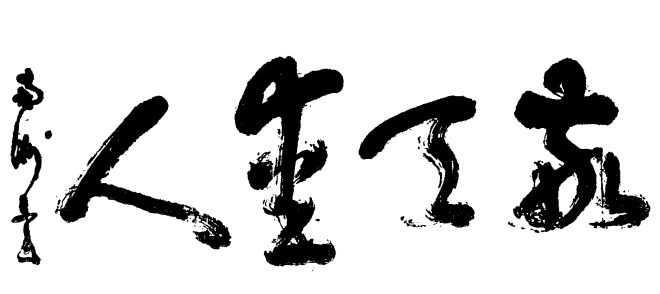
e8a5bfe983b7e58d97e6b4b2e7bf81e4b98be69bb8
A famous yojijukugo phrase by Saigō Takamori(1828-1877): 敬天愛人, keiten aijin (“Revere heaven, love people”). Courtesy of Wikipedia.

Japanese as a language is somewhat unusual in that it belongs to its own language family¹ genetically but has inherited so much from the Asian mainland.  Chinese compound words make up a large bulk of Japanese vocabulary, even if the grammar and usage are entirely different, but that is not all.

Japanese inherited pithy four-syllable phrases from Chinese called yojijukugo (四字熟語).

Yojijukugo cover a wide range of topics and sentiments.  Most are kind of obscure and tend to imply a level of sophistication, like Latin or French phrases in English, others are so common that you hear them all the time.  Some come from specific phrases in ancient Chinese literature, while a small few even come from Indian-Buddhist sources, albeit through Chinese.

One of the most common by far is isshō kenmei (一生懸命) which means to do one’s utmost, “give it your all”.  Like all yojijiukugo, this 4-syllable phrase actually comprises two compound words: isshō (一生) meaning “one’s life” and kenmei (懸命) which means earnest or one’s utmost.  It’s used in situations like:

Another example that’s very common (and one I often use when texting my wife) is isseki nichō (一石二鳥), which like in English, simply means “two birds with one stone”.

Yet another my wife and I use, especially when talking about our aspirations for our kids is bunbu ryōdō (文武両道) which means something like “well-lettered and athletic”, which is the best of both worlds. This one, in particularly, I think reflects the ideal samurai back in the medieval period who was both highly cultured and a deadly warrior.

The four seasons even get a Yojijukugo phrase that you’ll sometimes hear: shunka shūtō (春夏秋冬) which literally just means “spring, summer, fall and winter” since Spring was traditionally the start of the new year before the modern calendar.

One yojijukugo I know is shimen soka (四面楚歌), which is a good example of something more obscure and erudite. It refers to an ancient battle in the Chinese Warring States period when the ancient state of Chu was facing defeat by the rising state of Qin, and at one point its capital was literally besieged on 4 sides. This one signifies something like “the writing is on the wall” meaning defeat is all but certain, but I forget the exact backstory to this. Like many yojijukugo, the backstory and context may require some explanation even for Japanese people, and hence they’re not widely used except in adult literature.

Finally, here’s an example of a Buddhist yojijukugo that I have sometimes heard: isshin furan (一心不乱) which means to be singularly focused on something.  This phrase is literally taken verbatim from one of my favorite Buddhist sutras: the Amitabha Sutra a.k.a. the Smaller Sukhavati-vyūha Sutra.  It is found in the following excerpt (translation by the Venerable Hsuan Hua):

“Sariputra, if there is a good man or a good woman who hears spoken ‘Amitabha’ and holds the name, whether for one day, two days, three days, four, five days, six days, as long as seven days, with one heart unconfused (一心不乱), when this person approaches the end of life, before him will appear Amitabha and all the assembly of holy ones.

In modern usage, this phrase has largely lost its Buddhist context and can just mean any goal that a person is hyper-focused on.

So, are yojijukugo worth memorizing as a language student?  Frankly, no.  Apart from a few very commonly-used phrases, the rest appear rarely enough that you just need a decent dictionary to look them up with.  Chances are you might not see them again.  The ones that do appear often are something you’ll just pick up anyway along with other Japanese phrases.  Going out of your way to learn a bunch of yojijukugo that you’re likely to never use isn’t really worth the time.

On the other hand, it’s worth having a familiarity with the concept of yojijukugo because they are a part of Japanese culture and language and they are rich with expressions and historical/religious meanings.

¹ More accurately, the Japonic language family includes both standard Japanese and Okinawan (Ryukyuan) languages.  In my very limited experiences seeing and hearing Okinawan, I can’t help but notice that it looks and sounds like Japanese but with fewer Chinese influences.  However, that is just one person’s impression.

It Never Hurts to Review

woman in front of her computer
Photo by Ree on Pexels.com

My studies of Japanese have persisted over the years, all the way back since college (and even dabbling a bit in high school in the 90’s), but really took off after I married my wife. On our first trip to Japan post-wedding, I was totally unprepared for being in Japan and was helpless to communicate.  This spurred me to take Japanese studies more seriously, especially when I discovered the JLPT exams.  As a person who likes working toward specific, measurable goals, this helped spur my Japanese studies quite a bit and I managed to pass the N2 exam at the time (about 7-8 years ago).  I took the N1 a few years later and complete bombed, partly due to a mistake on my bubble-sheet.

However, after that, my Japanese studies really started to plateau, then drop off.  I still watched Japanese TV with the wife and kids, and had a few podcasts I would listen too, but overall I got pretty lazy and atrophied.

The problem, looking back, was a combination of:

  1. no worthwhile goals, and
  2. lack of resources in intermediate Japanese
  3. embarrassed by my lack of conversational skills; my studies for the JLPT didn’t help conversational skills as much as I had hoped

In essence, the problem was just that I was bored and demoralized.

So, lately after a burst of inspiration, I decided to try again.  Not for the sake of the JLPT necessarily, I just wanted to get back to basics and start studying Japanese again in hopes that it would help my conversational ability.  Also, I suppose it was motivated a bit my nostalgia too.  I enjoyed those times when I was studying hell-for-leather for the JLPT and learning Japanese as quickly as I could.

Anyhow, since I live in an area with a large Japanese community, I went to my local Kinokuniya bookstore and looked at the Japanese-language materials.  A lot had changed since I last studied Japanese, and it was nice to see how far things had come along.  When I first studied in the 1990’s and later in college, there wasn’t as much material and it was focused too much on stilted, business Japanese, but also the grammatical explanations were often inaccurate and confusing, especially when explaining particles.

That said, out of the books I looked at, the series of books I liked best is the Japanese From Zero series. The book is pretty easy going, but the exercises are clever and good at reinforcing essential points. I decided to start with book 3 because it’s a good starting point for me, but not too remedial. Just as I used to do back in the day. ☺️

The point of all this though is that I thought I was all washed up as a Japanese-language student, and ultimately a failure. But really, it was all in my mind. Of all the languages I’ve dabbled in over the years, Japanese is the only one that I’ve really stuck with and still continue to enjoy 20 years later, and even now I’m still learning something new all the time. When I focused less on what I had done (or failed to do), and just found what I enjoyed about Japanese, it revived my interest and motivation. Rather than worry about what I could be, I just decided to focus on what I enjoy about it, and let the rest work itself out.

P.S.  For the astute reader, this may also explain the increased activity on the blog.  😉

Don’t Mess With Donkeys

This is something I saw on Twitter recently, showing an ancient Egyptian papyrus translation:

Like others on the Twitter feed, I can only wonder what the heck happened to the donkey.  Some people live “interesting” lives.  🤣

P.S.  Special shout-out to Susan Rayhab for sharing interesting historical tidbits.  Translations can be a thankless job sometimes, but it’s wondering when people share interesting snippets of history like this.  Have you thanked your historian lately? 🥇

Here Today, Gone Tomorrow

I saw this Twitter post today by the awesome blog Sententiae Antiquae:

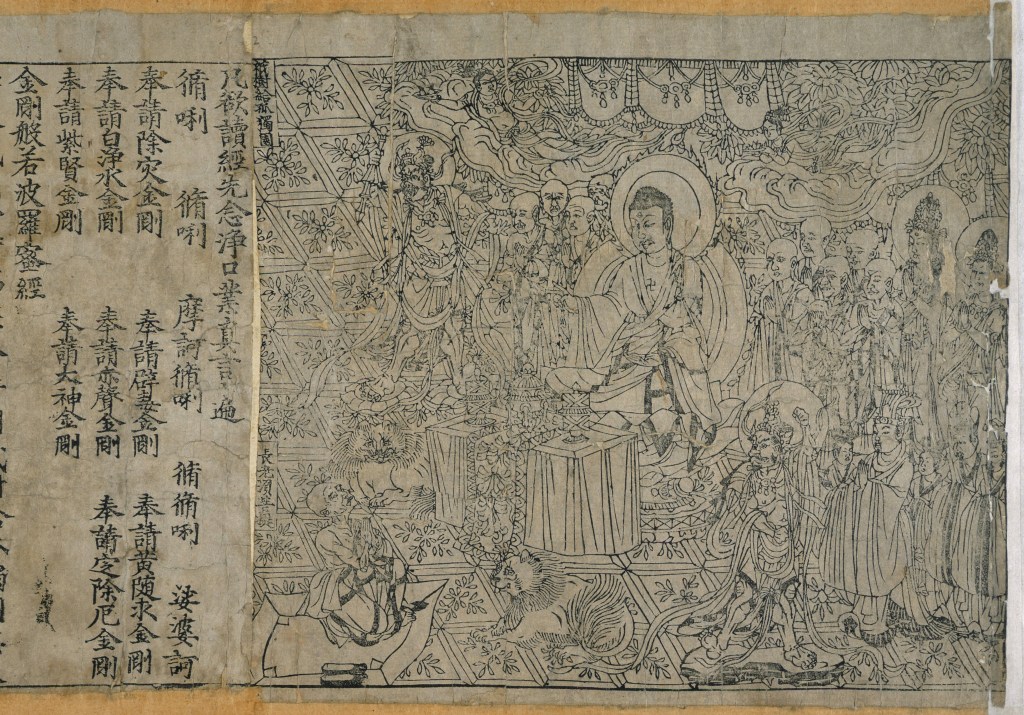
This quotation by ancient Greek poet, Pindar, reminded me of a venerable Buddhist text called the Diamond Sutra,¹ quoted here from Thich Nhat Hanh’s The Diamond That Cuts Through Illusion:

jingangjing

“All composed things are like a dream,
a phantom, a drop of dew, a flash of lightning.
That is how to meditate on them,
that is how to observe them.”

I always enjoy seeing examples of wisdom that appear across disparate ancient cultures, and yet still apply today.

¹ Fun fact, the Diamond Sutra was among the first texts to be printed in world history, centuries before Gutenburg.


Japanese Particles Make the Difference

Japanese_Hiragana_kyokashotai_NI

Every language is different, and each one has its idiosyncrasies.  The more languages you study and familiarize yourself with, the more this becomes apparent.  This is not something you have to be a polyglot for, but just part of the fun of learning other languages.  In the case of Japanese, the biggest idiosyncrasy I have come across is the system of particles.

Particles in Japanese (and Korean language, iirc) are the language’s answer to determine who did what, where and how.  While this is very different from Western languages, it practice it basically does the same thing that inflections and conjugations do in languages like ancient Greek or Sanskrit, or word-order does in English.  Different systems, same outcome.  Particles have no intrinsic meaning; they cannot stand alone. However, if they’re attached to end of the word they’re affecting, it takes on a new meaning.  Some common examples:

  • book + は (wa) / が (ga) – The book (does something or is something).¹
  • book + を (wo) – Something “does” the book (e.g. direct object).
  • book + に (ni) – Something “targets” the book.²
  • book + で (de) – “With the book” (e.g. “instrumental case” for grammarians)
  • book + の (no) – “The book’s …” (possessive)
  • book + も (mo) – “The book too …” (inclusive list)

But, the devil’s in the details.  For example, English has lots of small, unwritten rules about what to use here, but not there (e.g. when to use preposition X vs. Y).  Native speakers just intuitively learn these, but people learning English as a second language just have to slowly grind their way through and learning these subtleties over time.  In Japanese, the same thing happens with particles.  These little usage rules are too numerous to memorize as a grammar exercise, they’re things you just kind of learn through time and grinding.

Take the common verb hanasu (話す, to speak).  The usage that I knew of was (person) + 話す which means “to talk with (person)”.  However, as I learned recently in the excellent textbook Japanese From Zero! 3 (originally published by Yesjapan.com), there are other common usages:

  • (person) + と + 話す – to talk to (person)
  • (topic) + の + こと + を + 話す – to talk about (topic)

This isn’t the only example where particles can tweak the meaning of a verb.  Another common example is 出る (deru, “to come out”):

  • (place) + を + 出る – to leave (place)
  • (TV show) + に + 出る – to appear on (TV show)
  • (object) + が + 出る – (object) comes out.

…this is not a comprehensive overview, but you can see how the particles really make a difference.  Similarly in English, the difference between “think of”, “think about” and “think up” is subtle, but each one is different.

Unfortunately, as I alluded to earlier, this is not something you can really memorize grammar rules for.  There’s just too many exceptions, examples, etc.  Instead, it helps to read actual Japanese sentences and use the cloze method for any Japanese flash-cards you make, such as through Anki SRS:

This helps isolate the particles needed, and get a feel for what’s correct and what’s not.

Good luck!

P.S.  Suggestion reading on particles are Tae Kim’s excellent Guide to Japanese and tofugu.com’s cheatsheet.

¹ は (wa) and が (ga) are much too complicated to go into depth.  The easiest way to think of it is that “wa” just sets the topic of conversation, while the “ga” particle specifically answers the “who” “what” or “which” question only.  They’re often used in the same sentence as a result.

² Credit for this term goes to Tae Kim’s Guide to Japanese.  Sometimes に (ni) is wrongly translated as a “location/time” particle, but this is misleading in a lot of examples.  It’s not the direct object, but it is being targetted by the verb for some other reason.  For example (but not always) an indirect object.  Some verbs just take に no matter what.

The Hellenistic World: Ancient Greece on a Wider Scale

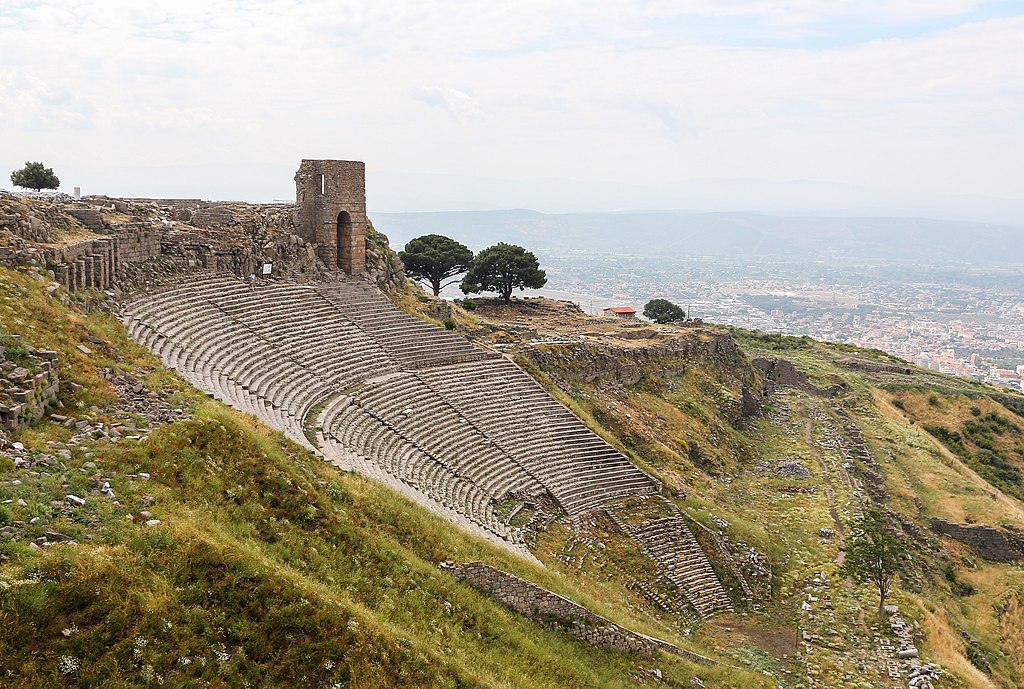
Ancient Greek theatre of Pergamon, Turkey, photo by Bernard Gagnon, CC BY-SA 3.0, via Wikimedia Commons

When most people think of Ancient Greece, they think of ancient Athens with its democracy and philosophers, or Sparta with its militaristic culture.1 But Greece was a much larger and more complex culture, and no where is this more evident than in the Hellenistic Period.

The Hellenistic Period, covers a broad period from the death of Alexander the Great in the 4th century, to Cleopatra’s reign in the 1st century BCE.  During this period, Alexander’s conquest quickly devolved into multiple, powerful Hellenized (Greek) kingdoms that vied one another for domination in the four Wars of the Diadochoi, followed by a breakup of the empire into distinct kingdoms, each with their strengths and challenges. Many were ruled by a former companion of Alexander, and their dynasties lasted for centuries, others were existing Greek colonies that navigated the complex Hellenistic world through alliances and building armies of their own.

Hellenistic world 281 B.C.

These powerful kingdoms included, but were not limited to:

  • Ptolemies who ruled Egypt, including the famous city of Alexandria.
  • Seleucids who ruled the vast lands once ruled by the Persians including Babylon, Judea, and for a time the lands next to India (present day Pakistan and Afghanistan).
  • Attalids who ruled the powerful, dynamic city-state of Pergamum.
  • Antigonids who reigned in Greece and Macedon after Alexander’s death.
  • The powerful western colony of Syracuse, home of Archimedes
  • The colony of Cyrene in North Africa
  • The Bactrian Greeks, who broke away from the Seleucids.
  • The Indo-Greek kingdoms, who broke away from the Bactrian Greeks.
  • The powerful Kingdom of Pontus surrounding today’s Crimean peninsula.
buddha-vajrapani-herakles
An example of Greco-Buddhist art in Gandhara (modern day Pakistan), showing the Buddha and flanked by guardian Vajrapani, whose depiction clearly borrows from the Greek hero Herakles. Courtesy of Wikipedia.

A lot of aspects that people are vaguely aware of about the ancient Greek world are often found within the Hellenistic Period, including things referenced in the Bible, the Buddhist tradition, major philosophical schools, venerable works of art, and rivals to the later Roman Empire. Eventually, the Roman Empire defeated all but the most eastern regions (who fell to the Parthians and other conquerors), but the legacy they left behind has persisted through the centuries even up until now.

I’ve been reading a lot about this period from an excellent book called From Alexander to Cleopatra: The Hellenistic World by Michael Grant. This book covers every facet of life in the Hellenistic World: history, structure, life, art, architecture, philosophy, etc.

What’s most fascinating about the Hellenistic Period is how diverse the different characters and regions of the larger Greek world were, and yet how each had distinctive Greek influence.  For example, the city-state of Syracuse, home of Archimedes, on the island of Sicily was a remote Greek colony yet it was also a great center of learning with additional influences from the Carthage and Roman culture.  On the other end of the Hellenistic world was the city of Seleucia, which was built deep in the heart of Mesopotamia had much cultural exchange particularly in the fields of mathematics and astronomy between the Greeks and the native Mesopotamian culture.  Everywhere the Greeks and their colonies went, they left their mark upon the world, but the native cultures left their marks on the Greeks as well.

The book and its contents are much too broad and complex to cover in this blog post, but it’s well worth a read, and I will likely be revisiting this topic again soon in subsequent posts covering different aspects of the Hellenistic Period.

While this period is not well known to general audiences, the Hellenistic Period represents the high-water mark of Greek culture, but also reflects a deeply cosmopolitan and dynamic period of history where changes to society and ideas were emerging, and in ways not previously seen in western culture, yet with lasting effect.

P.S. If you’d like to learn more about the Hellenstic Age, I highly recommend the Hellenistic Age Podcast. I’ve been enjoying this for months and it is top-notch.

1 The myths of Sparta present a lot of problems and misconceptions. Movies like 300 are a joke, and not remotely accurate to life in actual Sparta, but that’s a rant for another day.

New Year’s Terms and Greetings in Japanese

Although it’s still a couple weeks away, New Year’s is just around the corner, and it is a big occasion in Japanese culture.  You see, Japan, like many other east Asian countries, relied on the Chinese lunar calendar for centuries, but then moved to the Western solar calendar during the 19th century Meiji Period.  New Year’s retained its cultural value, but moved to a fixed date of January 1st as a result.

When people ask me what Japanese New Year, or oshōgatsu (お正月), is like, I tell them it’s  Thankgiving and Christmas rolled into a single 3-4 day holiday.  While Christmas (and Halloween) might be trendy in Japan, they don’t have nearly the same deep cultural roots.

For example: New Year’s Greetings.

an_instance_of_new_year_card_in_japan
An example of a Japanese greeting card of nengajō (年賀状), courtesy of Wikipedia.

When you first encounter someone (or send a card) after the New Year, there’s certain customary greetings used.  Some are more formal and used only for one’s elders, while others are more friendly.

The default greeting used is:

明けましておめでとう
akemashite omedetō

This basically means “Congrats on the beginning of a new year”. The verb akeru (明ける) refers endings and beginnings.  For example, sunrises (end of night, beginning of day) and years.

However, when speaking to one’s elders it’s more appropriate to use:

明けましておめでとうございます
akemashite omedetō gozaimasu

The extra gozaimasu is a honorific frequently used in Japanese, though much too formal for use with friends, colleagues, etc.

If you want to go the extra mile, an even more honorific term might be:

謹んで新年のお慶びを申し上げます
tsutsushinde shinnen no oyorokobi wo mōshiagemasu

While it’s kind of hard to translate into English, it basically means “we wish to humbly express our pleasure at the coming of a new year”.¹  This is a great example of Japanese keigo speech, which is not easy to learn but can really spice up your communications if used correctly. This is something you might in business Japanese, but definitely not among friends or acquaintances.

In any case, New Year’s greetings are not limited to these examples.

For example, you might see the term geishun (迎春) posted on advertisements, greeting cards, etc.  This literally means “welcoming spring”, however this is a relic of the old lunar calendar, where Spring often marked the new year.  Now it just means “[Happy] New Year”.  The term above isn’t appropriate more respectful or polite correspondences though, so there are other, similar terms you can use:

  • kinga-shinnen (謹賀新年) – this means something like “Humbly wishing you a happy new year”.
  • kyōga-shinnen (恭賀新年) – this means something like “Reverently/respectfully wishing you a happy new year”.

There’s a much nicer explanation on this website (Japanese language only).

In any case, Japanese New Year is full of traditions and this includes special phrases and terms of address.  If you can remember akemashite omedetō [gozaimasu] as a way to greet people after the New Year, you’re on very solid footing.  If you learn some of the additional phrases though, you not only impress others, but you also get a window into Japanese New Year culturally. 😀

¹ Based on personal experience, one of the biggest differences between Japanese and English is levels of politeness.  Japanese can have many levels of respect (or disrespect), while English sounds relatively “flat”.  That’s not to say English doesn’t have levels respect or disrespect, but it’s interesting that even when addressing royalty (or  head of state), English sounds relatively unchanged when compared to talking with a sibling or friend.  Japanese on the other hand has more dramatic differences in terms of pronouns, verbs, stock-phrases, etc.

Stop Memorizing Kanji and Learn Through Convergence

ca7e9dbf-2a54-4a0c-a6d0-e08cfed9ec5b-14523-00000f80b731e6a9_file

From time to time, I meet other folks who, like me, are interested in Japanese culture and language.  I have been studying it more or less since I married my wife, but more seriously about 10 years ago when I was focused on passing the JLPT exams, and through it all I’ve made a lot of rookie mistakes in how I learned the language.

When I chat with other Japanophiles, I often see the same patterns in how people learn the language and some of these patterns aren’t helpful.

One of these patterns I often see is when people try to brute-force memorize Japanese “kanji” or Chinese characters.  Japanese uses them¹ a lot and they seem pretty daunting when you first encounter them, so people often fall into the pattern thinking that if they memorize X kanji, they can read Japanese.  They build large flashcard libraries and cycle through them every so often.

Unfortunately (and again speaking for experience and many wasted hours), this doesn’t work because:

  • The sheer number of kanji is too great to retain in one’s mind for long.  Seriously, as soon as  you stop memorizing a kanji character, you’ll start to forget within a week.  SRS (space-repetition study) helps a bit, but once you’re memorizing more than a couple hundred kanji things get out of hand.  And remember, there are thousands of kanji to memorize, not just the 2100+ on the Joyo Kanji list.
  • Past a certain point, the on-yomi (Sinified, non-native reading) for kanji really start to run together.  For example, how many kanji out there have a on-yomi of chō ?  A lot.
  • Knowing a kanji in isolation isn’t nearly as useful as one might assume.  People frequently make the mistake of assuming Chinese characters are self-contained “symbols”,² but they frequently work in concert with other Chinese characters to form proper words.  This is true in Chinese language as much as it is in Japanese despite being totally different languages otherwise.
  • Finally, this really isn’t how Japanese people themselves learn Kanji.  I know because I’ve seen my kids grow up and learn Japanese.  They do rote memorizing, initially, but the real learning comes from all the reading and writing of Japanese that they do.  Rote memorizing is really only useful for learning the proper stroke-order, in my humble opinion.

So, just put down the flashcards and let’s look at another way of learning kanji.  I like to call this the “Convergence Method”.

In so many words, the Convergence Method works like so:

  1. Learn some Japanese words.  Learn how to pronounce them, read them and write them.
  2. Learn some more Japanese words.  Repeat #1.
  3. Eventually, the kanji in those words will start to overlap with one another.
  4. Kanji learned.

Case in point.  Here’s some random Japanese words:

  • 発見hakken (discovery)
  • 見物kenbutsu (sightseeing)
  • 意見iken (viewpoint, opinion)
  • 見事migoto (something splendied)
  • 見る – miru (to see, to watch)

Based on these 5 words, what’s the common denominator?  The kanji 見 which can mean things like “to see, “to observe”, “to watch” and so on.  It can be read sometimes as ken and sometimes as mi or miru.

Now, if you see a 6th word, 見当, and without any other clues, you can reasonably guess how to read the first character and guess it’s general meaning.  That’s how convergence works.

Similarly for , it appears in such words as:

  • 弁当bentō (boxed lunches)
  • 本当hontō (truth, fact)
  • 当時tōji (at that time)
  • 当てるateru (to guess, to hit a target, etc)

So, 見当 is probably going to be read as kentō and probably alludes to “see, observe” and “truth, fact”.  And you’d be pretty close to the mark.

Thus, the key to reading and writing Japanese isn’t memorizing kanji, it’s learning vocabulary, and enough of it to get critical mass to see words overlap.

Good luck!

¹ Interestingly, you also see some usage of Chinese characters in other Chinese-influenced cultures as Korea and Vietnam, but to a far lesser degree, and often in nostalgic or marketing contexts.

² This is another reminder why Chinese character tattoos are generally a bad idea.  Having 光 (light) as a tattoo makes about as much sense as tattooing the Greek φος (phos-) on my arm.  Phos- what? Phosphate? Phosphorescence? I won’t even touch on the times I’ve seen people tattoo the wrong Chinese character on their arm even though it has the same on-yomi as the one they were thinking of.  Compare 禅 (“zen” as in Zen Buddhism) with 善 (“zen” as in a set of dishes, etc).