The last couple weeks in lockdown (with at least 4 more ahead) have been interesting. After the initial panic, we’ve gradually settled into a routine where keep our kids “in school” during weekdays, take walks a lot in the neighborhood, only visit the grocery store as needed, and generally learn to keep ourselves entertained otherwise.
Being stuck at home a lot does tend to shift priorities. A lot of my personal projects have kind fallen further and further behind, because they just don’t really feel that important anymore.
I have caught up on a few books, movies, old episodes of Star Trek: the Next Generation,1 updated the blog (obviously 😏), and been playing Adventurer’s League online with the same community I played with before.2 Things like language study, Buddhist practice, Magic the Gathering and some writing projects have all died on the vine, leaving me with those things which I guess I valued enough to keep up.
All of this takes a backseat to my wife and kids though. Since I don’t work in the office anymore, I can enjoy dinners with them more consistently, and the (mostly) daily walks around the neighborhoods in the warm, spring weather and finally got some things done around the house. This is not to trivialize the danger of the novel Coronavirus, but it’s nice to be able to turn lemons into lemonade sometimes. 😊
In any case, as we’ve settled into a pretty good routine, it’s interesting how trivial some things seem now compared to life before COVID-19, and how others have bubbled to the surface.
It’s fair to say that those of who survive this (and one should never be too confident about one’s own mortality) are going to party like it’s 1999 when this has passed, but at the time, it is going to change our lives. It already has.
1 If you are a Star Trek TNG fan, I highly, highly recommend the new Star Trek: Picard series as well. Season one was terrific. Going back to watch Star Trek: Discovery as well.
2 Happy to see a couple of my more neglected characters in Adventurer’s League finally get some “flight time” and development. Also, it turns out that Eldritch Knights and Land Druids are pretty fun to play. Maybe I’ll post about that soon.
This is something I saw on Twitter recently, showing an ancient Egyptian papyrus translation:
"I swear by all the gods that I have done nothing of what has been said, except only about the donkey of Karas… And if you are angry because I did not send anything… the reason is that I was kicked by a horse…" (SB XVIII 13867, 125-175 CE). pic.twitter.com/G2hkfeJ87x
Like others on the Twitter feed, I can only wonder what the heck happened to the donkey. Some people live “interesting” lives. 🤣
P.S. Special shout-out to Susan Rayhab for sharing interesting historical tidbits. Translations can be a thankless job sometimes, but it’s wondering when people share interesting snippets of history like this. Have you thanked your historian lately? 🥇
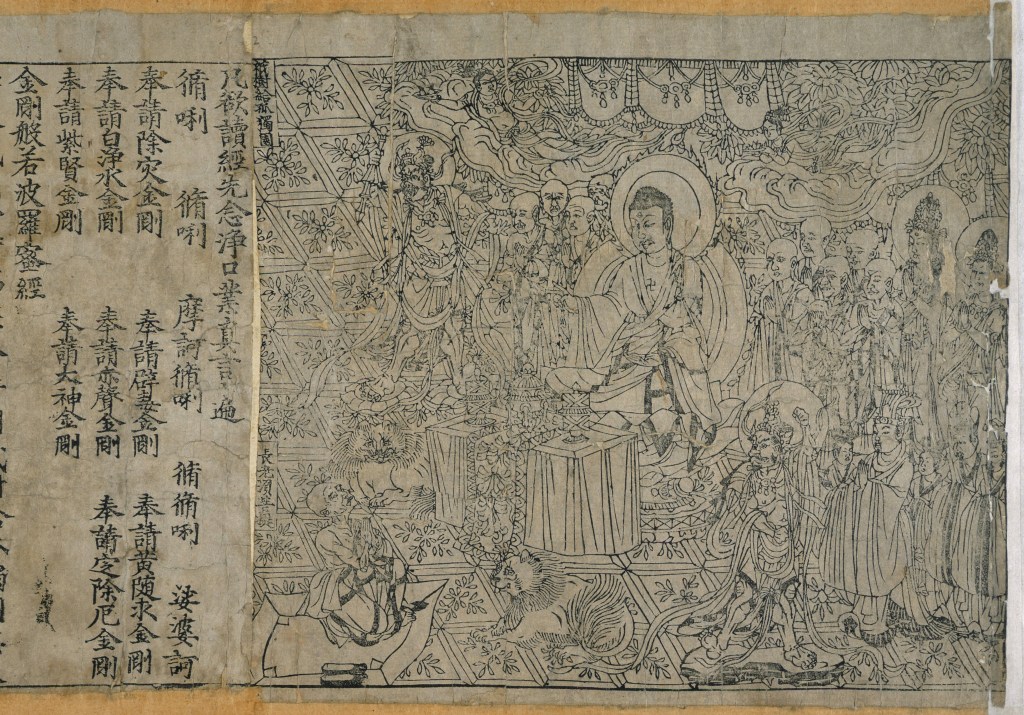
This quotation by ancient Greek poet, Pindar, reminded me of a venerable Buddhist text called the Diamond Sutra,¹ quoted here from Thich Nhat Hanh’s The Diamond That Cuts Through Illusion:
“All composed things are like a dream, a phantom, a drop of dew, a flash of lightning. That is how to meditate on them, that is how to observe them.”
I always enjoy seeing examples of wisdom that appear across disparate ancient cultures, and yet still apply today.
¹ Fun fact, the Diamond Sutra was among the first texts to be printed in world history, centuries before Gutenburg.
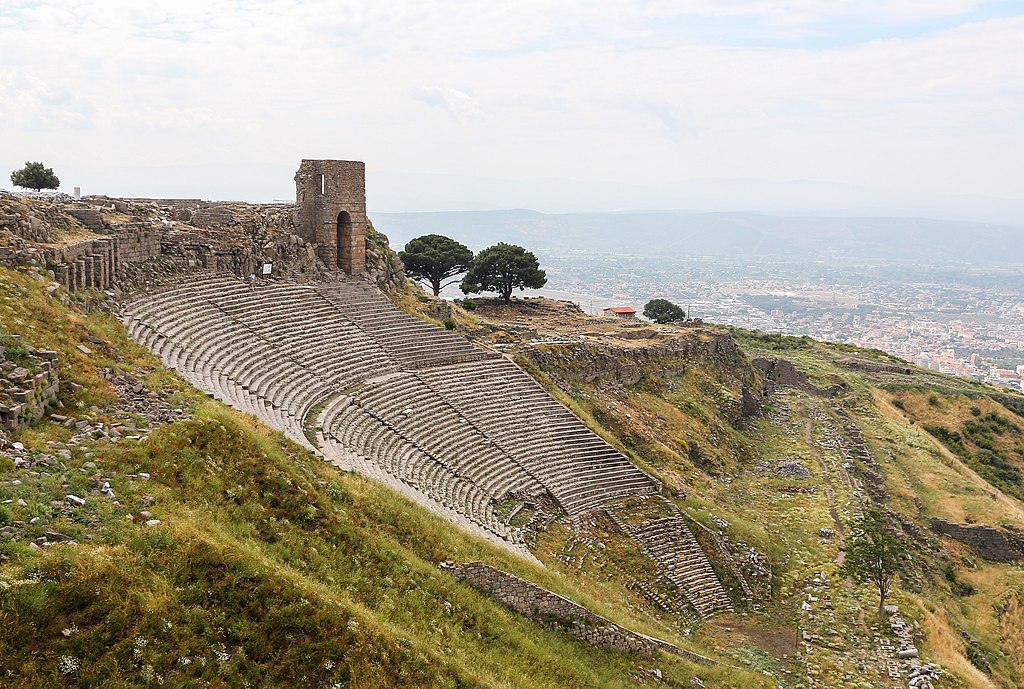
When most people think of Ancient Greece, they think of ancient Athens with its democracy and philosophers, or Sparta with its militaristic culture.1 But Greece was a much larger and more complex culture, and no where is this more evident than in the Hellenistic Period.
The Hellenistic Period, covers a broad period from the death of Alexander the Great in the 4th century, to Cleopatra’s reign in the 1st century BCE. During this period, Alexander’s conquest quickly devolved into multiple, powerful Hellenized (Greek) kingdoms that vied one another for domination in the four Wars of the Diadochoi, followed by a breakup of the empire into distinct kingdoms, each with their strengths and challenges. Many were ruled by a former companion of Alexander, and their dynasties lasted for centuries, others were existing Greek colonies that navigated the complex Hellenistic world through alliances and building armies of their own.
These powerful kingdoms included, but were not limited to:
Ptolemies who ruled Egypt, including the famous city of Alexandria.
Seleucids who ruled the vast lands once ruled by the Persians including Babylon, Judea, and for a time the lands next to India (present day Pakistan and Afghanistan).
Attalids who ruled the powerful, dynamic city-state of Pergamum.
Antigonids who reigned in Greece and Macedon after Alexander’s death.
The powerful western colony of Syracuse, home of Archimedes
The powerful Kingdom of Pontus surrounding today’s Crimean peninsula.
An example of Greco-Buddhist art in Gandhara (modern day Pakistan), showing the Buddha and flanked by guardian Vajrapani, whose depiction clearly borrows from the Greek hero Herakles. Courtesy of Wikipedia.
A lot of aspects that people are vaguely aware of about the ancient Greek world are often found within the Hellenistic Period, including things referenced in the Bible, the Buddhist tradition, major philosophical schools, venerable works of art, and rivals to the later Roman Empire. Eventually, the Roman Empire defeated all but the most eastern regions (who fell to the Parthians and other conquerors), but the legacy they left behind has persisted through the centuries even up until now.
I’ve been reading a lot about this period from an excellent book called From Alexander to Cleopatra: The Hellenistic World by Michael Grant. This book covers every facet of life in the Hellenistic World: history, structure, life, art, architecture, philosophy, etc.
What’s most fascinating about the Hellenistic Period is how diverse the different characters and regions of the larger Greek world were, and yet how each had distinctive Greek influence. For example, the city-state of Syracuse, home of Archimedes, on the island of Sicily was a remote Greek colony yet it was also a great center of learning with additional influences from the Carthage and Roman culture. On the other end of the Hellenistic world was the city of Seleucia, which was built deep in the heart of Mesopotamia had much cultural exchange particularly in the fields of mathematics and astronomy between the Greeks and the native Mesopotamian culture. Everywhere the Greeks and their colonies went, they left their mark upon the world, but the native cultures left their marks on the Greeks as well.
The book and its contents are much too broad and complex to cover in this blog post, but it’s well worth a read, and I will likely be revisiting this topic again soon in subsequent posts covering different aspects of the Hellenistic Period.
While this period is not well known to general audiences, the Hellenistic Period represents the high-water mark of Greek culture, but also reflects a deeply cosmopolitan and dynamic period of history where changes to society and ideas were emerging, and in ways not previously seen in western culture, yet with lasting effect.
P.S. If you’d like to learn more about the Hellenstic Age, I highly recommend the Hellenistic Age Podcast. I’ve been enjoying this for months and it is top-notch.
1 The myths of Sparta present a lot of problems and misconceptions. Movies like 300 are a joke, and not remotely accurate to life in actual Sparta, but that’s a rant for another day.
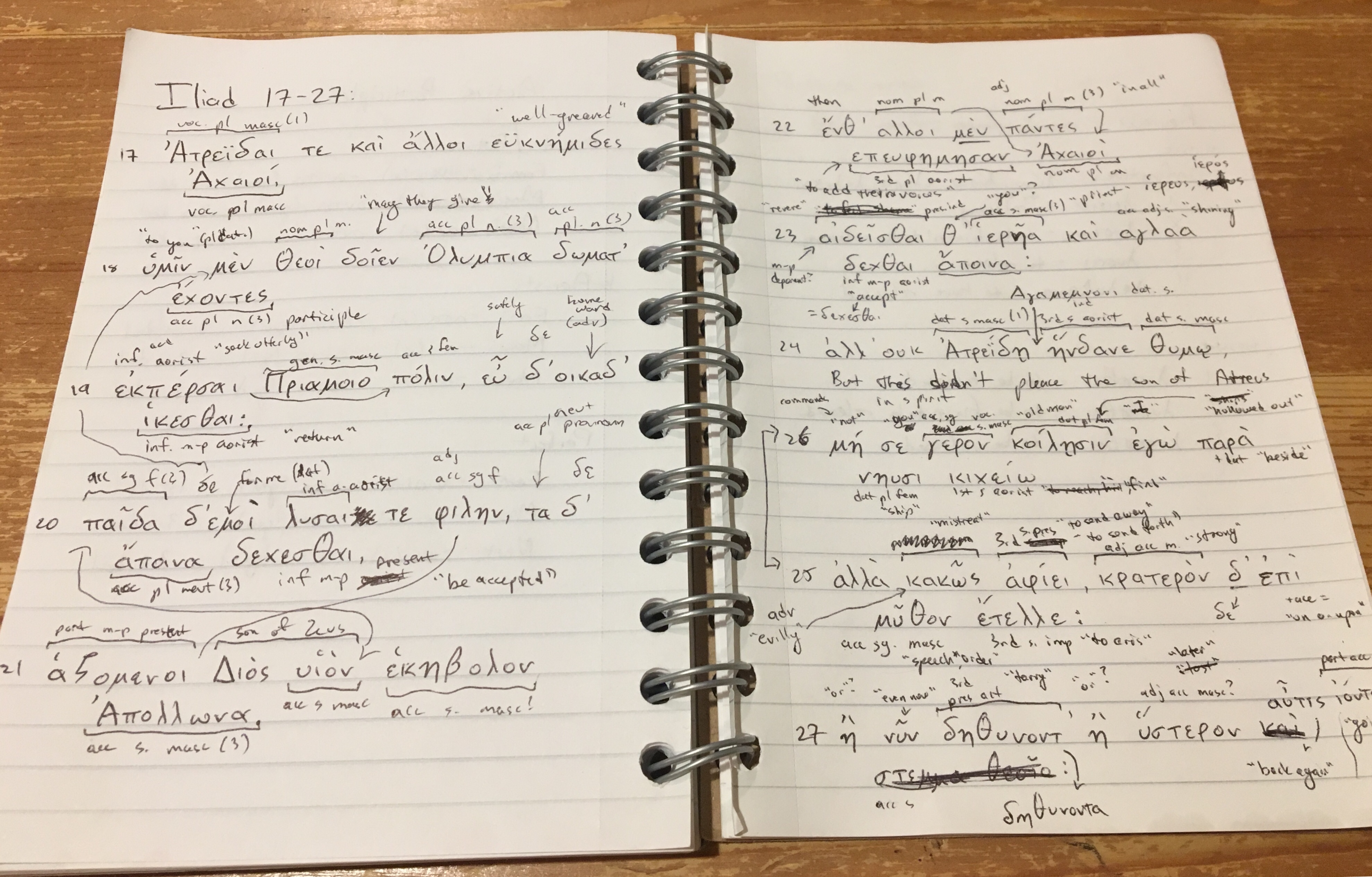
As my studies of Ancient Greek continue, thanks to the Greek 101 course available at The Great Courses, I have been translating small sections of ancient text, The Iliad, as part of the homework. You can see my crazy chicken-scratch above for lines 17-27 in the first book. For today’s post, I wanted to draw attention to lines 26-32 of Book 1 of the Iliad, wherein, Agamemnon lord of the Achaean Greeks, rebuffs the priest Chryses‘s efforts to ransom his daughter back. The original Greek text below is provided in full in the courtesy of Tufts University:
The 1898 translation by Samuel Butler translates this as:
“Old man,” said he, “let me not find you tarrying about our ships, nor yet coming hereafter. Your scepter of the god and your wreath shall profit you nothing. I will not free her. She shall grow old in my house at Argos far from her own home, busying herself with her loom and visiting my couch; so go, and do not provoke me or it shall be the worse for you.”
But there’s some wordplay here being left out of the translation (which I learned about more in the Greek 101 course) in line 31:
ἱστὸν ἐποιχομένην
Butler simply translates this as “working the loom”. However, according to Tufts University online dictionaries, the word ἱστός(histos, 2nd declension masculine, expressed above in accusative form) can mean anything that is “upright”. This can mean the beam of a loom, but other things too. Further, ἐποίχομαι (epoikhomai, expressed above as a feminine-accusative participle) is a deponent verb meaning to “go over” or “ply”. So, while in the literal sense it means “ply the loom”, it’s pretty obvious that Agamemnon is also making a lewd joke about Chryses’s daughter to her dad’s face.
Even by the standards of the day, when women were frequently captured in war and enslaved, this was pretty rude and obnoxious. Other Greek myths outside the Iliad about Agamemnon do not paint a better picture. In one story, Agamemnon offends the goddess Artemis prior to sailing off to the Trojan War, and different plays explain why: in Electra it is because he sacrificed a sacred animal to Artemis, and boasted of his own skill in hunting. In the play Agamemnon, Artemis is angry at Agamemnon because he will throw many lives away for the sake of punishing the Trojans.
In any case, between the Iliad and the later Greek plays, it’s clear that King Agamemnon was the archetypal arrogant and powerful king who ignored the gods and the well-being of others, at his own peril.




 Gleanings in Buddha-Fields


You must be logged in to post a comment.