Going Off The Rails: A Cautionary Historical Tale

Speaking of going off the rails, I once wrote about how politics had a pretty corrosive effect on the Tendai Buddhist monastic community on Mount Hiei during the late Heian Period of Japanese history, but there’s aspect to this increased corruption and declining monastic discipline: the esoteric Buddhist tradition itself. Scholar Paul Groner has done extensive research about Tendai Buddhism and history, and published an article in 1987 about an influential Tendai monk named Annen (安然, 841–889?) who’s innovations to esoterica and Buddhism had a detrimental impact to the community.

This is also covered in a book I’ve been reading recently about the “Original Enlightenment” teaching that medieval Tendai strongly advocated at the time. More on that book later (it’s a tough read, so it’s taking me a while).

A quick history of Tendai Buddhism in Japan and the Esoteric tradition.

Esoteric Buddhism (a.k.a. Vajrayana) was imported into Japan in early centuries of history, but mostly as an afterthought.1 It wasn’t until a monk named Kukai (空海; 774 – 835), founder of Shingon that Vajrayana Buddhism came to the fore. Kukai had studied it thoroughly under Indian and Chinese masters in the Chinese capital, and brought back a full program to Japan. It was the hot, new thing among the elite classes of Japan at time.

Saicho, founder of Tendai, had made the same journey to China, but was focused on learning Tian-tai (parent sect of Tendai) teachings, and only had a partial, incomplete training in Vajrayana. His disciples Ennin and Enchin also journeyed to China, and came back with a much more complete training, and helped establish a separate esoteric lineage from their rivals, the Shington sect under Kukai. The esoteric tradition within Tendai is called Taimitsu (台密).

Esoteric Buddhism was hugely popular among the affluent nobility in the capitol of Kyoto, who employed monks to officiate ceremonies, exorcise demons, cure illnesses, and bring prosperity. The Imperial Court also employed large numbers of monks regularly to pray for the safety of the nation from natural disasters, plagues and such. Over time, the Tendai sect in particular, due to its close proximity to the capitol, and extensive esoteric tradition developed a very close relationship with the government. Monks who were esoteric masters (阿闍梨, ajari) were especially popular among the elite. Further, because high-ranking monks in the Tendai order often came from noble families, there was increasing social relationships too. Popular monks were invited to parties, participated in poetry recitals and so on.

Back to Annen.

According to Dr Groner’s article, Annen was trained by two eminent monks at the time: Tankei (湛契, 817-880) and Henjo (遍昭, 817-890), the same Henjo who wrote poem 12 of the Hyakunin Isshu anthology. Both were part of the Tendai order on Mount Hiei, but found favor with the aristocracy and became “celebrity” priests.

Tankei was later defrocked after an affair with the Imperial prince’s wet nurse, but due to connections went on to serve in the Imperial bureaucracy and rose through the ranks until he reached junior fourth rank (equivalent to minor nobility). Strangely, while the Imperial government supported his defrocking over the affair, the Tendai sect establishment were angry about it, apparently not viewing the breaking of the vow of celibacy as a serious issue.

Similarly, Henjo was a nobleman for a long time, eventually who ordained in the Tendai order after the death of his liege Emperor Ninmyo in the year 850. By 868, after becoming an accomplished esoteric master, he mingled with the nobility again and was even granted a property by Ninmyo’s son for a new temple: the Unrin-in (雲林院). As Henjo established a monastic community there, in close proximity of the capitol, he started running the community his own way, shortening monastic training time, relaxing standards, etc.

Annen through training under Tankei and Henjo, developed into an accomplished master of the esoteric practices. He became a prolific writer and advocated a more urbane approach to monastic discipline where sincere intention was more important than actual discipline through the monastic precepts. For example, in his work, the futsu jubosatsukai koshaku (普通授菩薩戒広釈), Annen downplayed violating the precepts by explaining them away as an training expedient. It would be OK to violate the precepts in some situations, for example as an act of compassion for sentient beings.

Not everyone within the Tendai order agreed with this: The venerable Enchin complained in his generation that monks were already getting lax, wearing expensive robes, skipping the fortnight assembly, and so on. But Annen’s influence was too strong, and his interpretation of following the precepts loose enough for monks to bend the rules as this wished. This coupled with certain trendy theories at the time, such as the idea that “grasses and trees were enlightened”, led to a decline in monastic discipline that persisted all the way until the Edo Period (17th -19th century) when serious efforts to reintroduce monastic discipline were finally re-introduced. This was the Anraku Movement, by the way.

The issue is twofold: the vagueness of the Bodhisattva precepts employed by the Tendai sect exclusively allowed for individual interpretation. A monk with sincere intentions might still uphold proper behavior, but a monk with less sincere intentions might bend the interpretation to suit his conduct, rather than the other way around.

The second issue was the increasing intermixing of monks with the aristocracy. In the Buddha’s time ages ago in India, this was strictly forbidden. Monks were to withdraw from the contemporary world, and concentrate on strict monastic practice. Now, monks were fraternizing openly with the Imperial court instead of focusing on practice. This was done under the guise of “compassion for others”, but the results speak for themselves.

Anyhow, it easy to see how religious practice and teachings can fall under the sway of sophistry and go off the rails. Even in the Buddha’s time, he addressed this. In a conversation with the senior disciple Kashyapa in the Saddhammapaṭirūpaka Sutta (SN 16:13), the Buddha explains:

“These five downward-leading qualities tend to the confusion and disappearance of the true Dhamma. Which five? There is the case where the monks, nuns, male lay followers, & female lay followers live without respect, without deference, for the Teacher. They live without respect, without deference, for the Dhamma… for the Saṅgha… for the training… for concentration. These are the five downward-leading qualities that tend to the confusion and disappearance of the true Dhamma.

Translation by Thanissaro Bhikkhu

Once people started interpreting the Dharma their own way, the real Dharma got obfuscated, monastic disciples get confused, and things go off the rails.

Not surprisingly, this wasn’t the last time this happened in Japanese history.

P.S. Dr Groner’s article is a good read, so check it out.

1 Called Mikkyō (密教) in Japanese, “secret teaching”.

A Modern Buddhist Ghost Story

Recently my wife shared a certain Youtube channel in Japanese by a Nichiren priest1 who lives in Kyoto. It’s a nice channel with some good Dharma talks, and good English translations via closed-captioning. In particular, she shared this video with me. The owner does not allow embedding into the blog, so you’ll have to click on the link above instead.

This is a story from the priest’s own childhood and reflects a Japanese sentiment that the dead remain with us for some time. This is not always seen as a bad thing, just more of a sensitivity to death and mortality, especially the loss of loved ones. It also plays into various practices and superstitions as well, which are too many to go into here. Also, the word “gacha-gacha” are the little capsule machines in Japan that have knick-knacks, toys and such.

Japanese ghost stories, such as those in the famous collection Kaidan (or Kwaidan in older spellings) are not the same as ghost stories in the West which tend to focus on evil or tragic stories. Japanese ghost stories, by contrast, tend to be more weird and less scary. Of course, there are exceptions such as the films The Ring and The Grudge. So, it’s not all roses.

But I digress. The video above is actually a very interesting story, and well worth watching. Enjoy!

P.S. of course if you don’t believe in ghosts or prefer not to deal with them, remember this scene from Thor: Ragnarok:

1 For various and complicated reasons, Nichiren Buddhism tends to have a lot of sub-sects, and they frankly don’t always get along. Most overseas Westerners tend to encounter fringe sects and offshoots2 such as Nichiren Shoshu or more oftentimes SGI (Soka Gakkai), or Rissho Kosei-kai. I have had positive experiences with RKK myself, though I am not a follower. But it’s important to remember that these are offshoots, and not necessarily “normative” Nichiren Buddhism. Mainstream Nichiren Buddhism, or Nichiren-shu, is the mainstream branch and has the most extensive history. It is what you see most often in Japan. They all chant the odaimoku (Namu Myoho Renge Kyo), but disagree on matters of interpretation and practice. As the Romans would say: Caveat Emptor.

2 This issue of fringe sects having many followers in the West is not limited to Nichiren Buddhism. You can find this in western Tibetan Buddhist communities, Zen communities, etc. Westerners are often converts with zero experience in Buddhist culture, and looking for answers. It’s not hard for a cult to gain followers easily this way, even when the home culture rejects them. I wish I could offer advice on this, but there’s not much I can say other than do your homework, be cautious, and if a sect’s claims seem outlandish no matter how much you might agree with them, they probably are outlandish.

Hubris

“…tin-plated, overbearing, swaggering dictator with delusions of godhood.”

Scotty, “Trouble with Troubles” (s2ep15), Stardate: 4523.3

Thinking of the story of Taira no Kiyomori, among other things today.

The Floating World

All conditioned dharmas
Are like dreams, illusions, bubbles, or shadows;
Like drops of dew, or like flashes of lightning;
Thusly should they be contemplated.

The Diamond Sutra, Translation courtesy of Lapis Lazuli Texts

It would be illogical to assume that all conditions remain stable.

Spock, “The Enterprise” Incident”, stardate 5027.3

The “Floating World”, or Ukiyo (浮世) is an old Buddhist term meaning the world of fleeting forms and temporary joys we live in as part of Samsara. It later became, in the 16th century onward, a term for the pleasure quarters of the city of Edo (later Tokyo) when it became the capital of the new Shogunate. The idea was simple: the pleasure quarters offered everything a person could want, if they could afford it, even if it was just part of the mundane, effervescent world.

Block print titled Taking the Evening Cool by Ryōgoku Bridge, c. 1745, by Okumura Masanobu, Public domain, via Wikimedia Commons

But it’s not hard to see that this kind of Floating World, with all its glamour and joys, can be found almost anywhere at any time. Even modern Pop Culture and entertainment, even social media, is just another form of the Floating World.

It’s not that the Floating World, modern Pop Culture, or social media inherently are evil, but they glosses over the pains and realities of life. For every successful actor or actress in Hollywood, it’s not hard to find many others who scrape by. Even those who succeed pay a very heavy price. For every person who greets you at the five-star restaurant with a smile, there are countless people in the back who are slaving away to wash the dishes, cut vegetables, and so on, to say nothing of the waiter’s own personal pains and dilemmas. For every pretty girl who smiles at you, she is glossing over her own pain and trauma. And so on.

Scratch the veneer and see a lot of people working hard to make customers, listeners or viewers happy, but themselves are stressed, exhausted, miserable, or unhappy with their lives.1 Just like the rest of us.

In a sense, the whole thing is a golden sham.

And yet, why do we still gravitate toward such things, even when we know they are transient and don’t provide any lasting happiness? I am no different. When I’ve had a hard day at work, and after dinner with the family, I don’t meditate; I sit down and play a Fire Emblem game. Even Lady Izumi, a thousand years ago, lamented her inattentiveness.

Because we are human, and being human is hard sometimes.

Still, it’s worthwhile to see one’s own behavior and learn from it: the way we flit from something fun to something else fun. Even that can be illuminating. I learned a thing or two just writing this post. 🤔

But yes, life is hard, and it hurts, and it’s exhausting. The joys in life are fleeting, and yet we chase after them for even a temporary respite.

Nonetheless, the house around us is still burning. Time is short.

1 Of course, if you’re thinking to yourself “better them than me”, do not be so sure.

Who is Vairocana Buddha: the Buddha of the Sun ?

Now, I, Vairocana Buddha am sitting atop a lotus pedestal;

On a thousand flowers surrounding me are a thousand Sakyamuni Buddhas.

Each flower supports a hundred million worlds; in each world a Sakyamuni Buddha appears.

All are seated beneath a Bodhi-tree, all simultaneously attain Buddhahood.

All these innumerable Buddhas have Vairocana as their original body.

The Mahayana version of the “Brahma Net Sutra”, translation by Young Men’s Buddhist Association

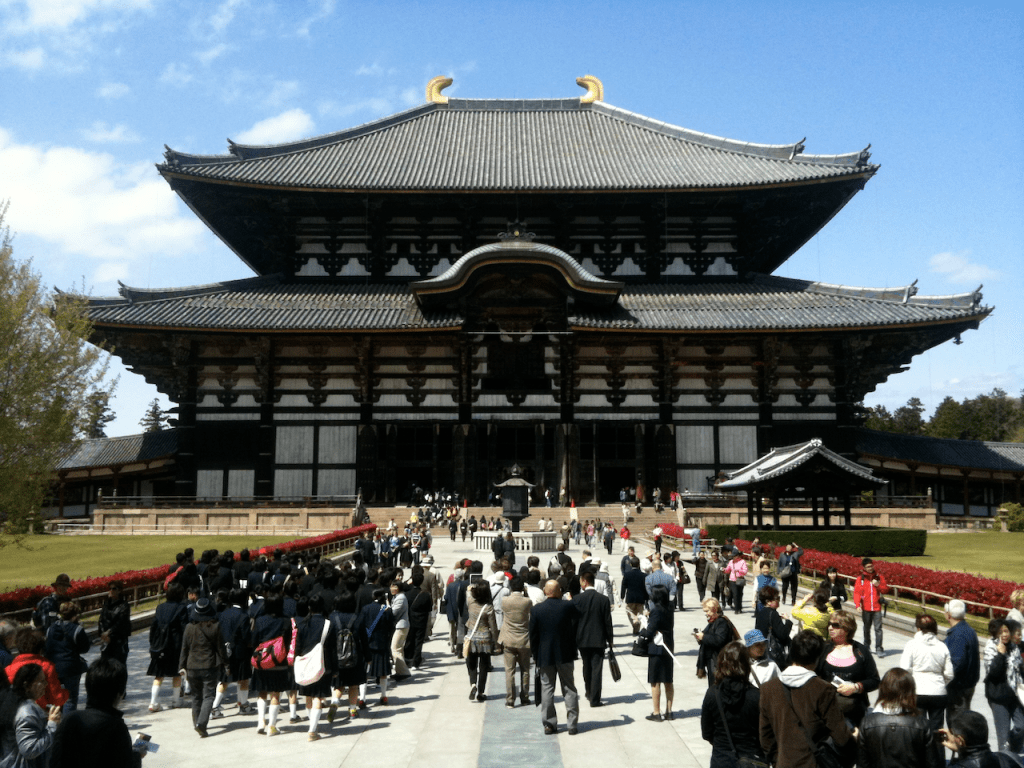
If you ever visit the famous Todaiji temple in Nara, Japan, you will see a truly colossal structure like so:

Taken by me on April 2010.

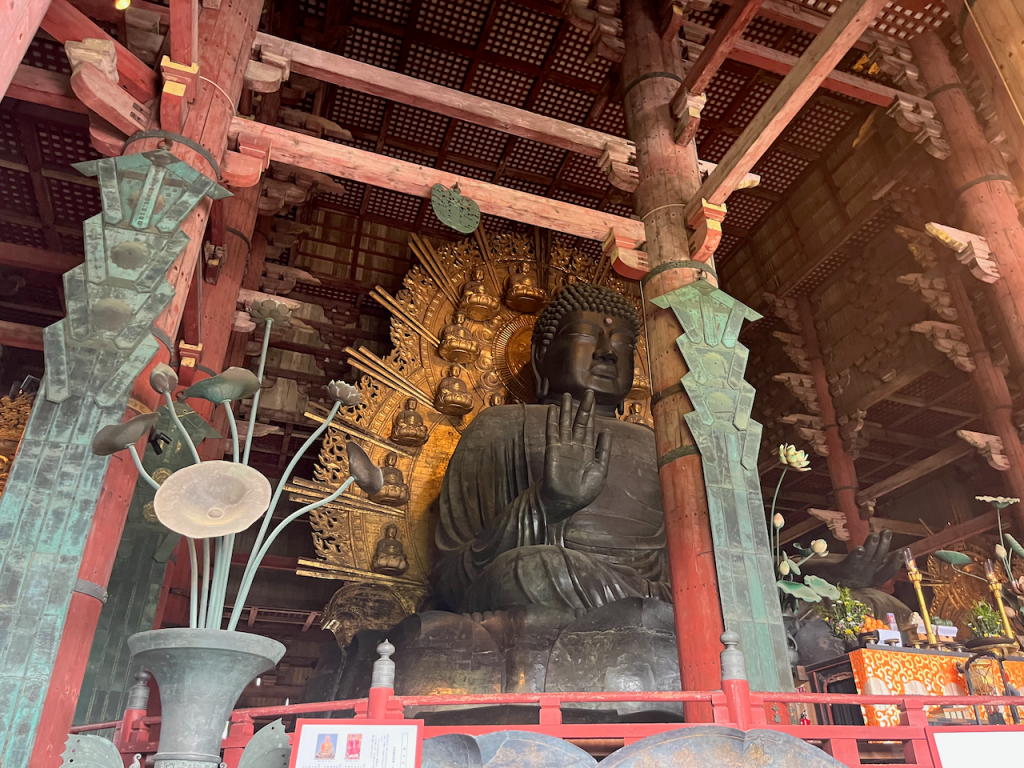
Inside as you approach is a colossal Buddha statue:

A massive temple interior showing an immense, seated bronze Buddha statue with a similarly massive halo behind it. There are small buddhas in the halo. The buddha holds its palm straight out at the viewer.
A side profile of the Great Buddha (daibutsu) of Todaiji Temple in Nara, Japan. This Buddha is Vairocana Buddha, the “Buddha of the Sun”. Taken in 2023.

This picture does not convey the size very well. It’s truly massive. But what is this Buddha?

This Buddha is a somewhat obscure figure named Vairocana (pronounced Wai-ro-chana) in Sanskrit, which means something like “of the Sun”. So, Vairocana is the Buddha of the Sun.

Vairocana features in a few Buddhist texts in the Mahayana canon: the Brahma Net Sutra quoted above and the voluminous Flower Garland Sutra, for example. It is also very prominent in esoteric traditions in Japan (Shingon and Tendai sects) as Maha-Vairocana (“Great Buddha of the Sun”).

The Brahma Net Sutra introduced Vairocana and explains that all Buddhas that appear in such-and-such time and place are embodiments of Vairocana. Thus Vairocana isn’t just another buddha, but is their source. Vairocana, in other words, embodies the Dharma.

That is why in the Great Buddha statue above at Todaiji Temple, you see rays of light emanating outward with “mini Buddhas” among them. Each of these Buddhas is thought to have the same basic origin story as the historical Shakyamuni Buddha. Hence in the text they are all just called “Shakymunis”. All these Buddhas have the same basic qualities ( Chapter Two of the Lotus Sutra teaches the same thing, by he way), one is the same as all the others.

This is primarily a Mahayana-Buddhist concept, but has precedence in pre-Mahayana sources. Consider the Vakkali Sutta from the Pali Canon:

“Enough, Vakkali! What is there to see in this vile body? He who sees Dhamma, Vakkali, sees me; he who sees me sees Dhamma. Truly seeing Dhamma, one sees me; seeing me one sees Dhamma.”

Translation by Maurice O’Connell Walshe

So the historical Buddha, founder of the Buddhist religion, Shakyamuni, is telling his disciples that his personage is less important than the Dharma. Mahayana Buddhism simply applies this same teaching towards all the Buddhas.

Also, some Buddhist texts assign different Buddhas to this role: the “cosmic” Shakyamuni Buddha of the Lotus Sutra or Amida Buddha in interpretations.

But it doesn’t really matter what you call this embodiment of the Dharma.

What matters, I think, is that the source of Buddhist wisdom is the Dharma, not a specific teacher, and that the Dharma pervades everywhere, regardless of the particular community, or lack thereof….

Japanese Enka Music

When most people think of Japanese music they think of J-Pop, and “idol” girls, etc.1 But there’s a whole other side of Japanese music that is found everywhere, but a bit more of an acquired taste: Enka (演歌).

The closest comparison I can think of, is that Enka music in Japan is similar to Country music in the US: raw, folksy, culturally specific, etc. Compare this to Pop music which is usually polished for as wide an audience as possible. Enka instead harks back to a more bygone era of Japanese culture, so it has a nostalgic feel to it, while also using modern and instruments.

I have a lot of memories of my in-laws in Japan watching Enka singers on TV, and singing along with songs they grew up with. Even my late mother-in-law, who was usually pretty quiet, would sing her favorite tunes sometimes. It was very sweet. So, despite not being Japanese, I have a surprising number of memories and nostalgia for it.

But as a foreigner, it’s also hard to get into unless you know where to start. Enka is a big industry in Japan, and there are plenty of artists who come and go, famous songs, etc. Sometimes, even foreigners sometimes become successful Enka singers. I vaguely know some very famous singers (through my in-laws), but although I like Enka, I never really knew where to start.

Luckily, the family and I were watching this year’s Kohaku Uta-Gassen show on Japanese TV for New Year’s, and they often showcase mix of venerable artists as well as newer ones. This song, Kurenai no Chō (“crimson butterfly”, 紅の蝶) is by Yamauchi Keisuke (山内惠介), is great and I have been listening to it on repeat lately. You can purchase it overseas on iTunes and such.

Anyhow, while Japanese music is not always easy to find outside of Japan, you can find some good Enka artists, especially more modern ones, and find some music you might like. It’s hard to explain what Enka sounds like, but I hope you take the time to sample songs and get a feel for it. Enka is a really fun genre.

1 I never really got into J-Pop music after all these years. I had a big K-Pop phase some years ago, and occasionally still purchase an album or two, but J-Pop just never interested me.

Happy New Year 2025

Hello Readers,

It’s 2025, and I am happy to be back. The break wasn’t as restful as hoped (too many holiday obligations), but I did accomplish most of my goals, and got to celebrate my firstborn’s 18th birthday which was an important milestone for us parents. I also played lots of Fire Emblem: Engage,1 and watched plenty of old Star Trek episodes.

Anyhow, for the first temple visit of the year, the priest stated that according to the traditional 60-year Chinese calendar 2025 was the sign ki-no-to-mi (乙巳), which can be roughly translated as “yin wood snake”, which implied change coming to fruition, like a tree growing its branches. For context, last year was “yang wood dragon” (ki-no-é-tatsu, 甲辰). Which implied much turmoil, like a baby dragon bursting from its shell.

While I might be speaking from confirmation bias, I cannot help but feel recent events in the last few years reflect this. But, I suppose it’s up to individual interpretation.2

Anyhow, I have some fun posts coming up that I finally finished while on break.

Hoping you all have a great year, or at least stay out of trouble. 😅

1 Engage doesn’t have the emotional depth of Fire Emblem: Three Houses (I doubt few games would), but it has grown on me, and I enjoy many aspects about it, and will likely play through it again.

2 I consulted the Yi Jing for the year, and my own personal fortune wasn’t great either. Warnings of not “stepping on a tiger’s tail” and such.

What Is A Shogun

With the conclusion of the hit mini-series Shogun,1 it seemed like good time to delve into what a Shogun was. I talked a lot about the first few Shoguns of the Kamakura Period, and the Shoguns of the late Edo Period, but there’s a lot more to the story.

In early Japanese history (a.k.a. Japanese antiquity), the government was modeled on a Chinese-style, Confucian-influenced bureaucracy. This is epitomized in the Ritsuryo Code which started in 645, under the Taika Reforms, and continued (nominally) in some form all the way until 1868.

This imperial bureaucracy elevated the Emperor of Japan to the first rank, and other officials and nobility were allocated ranks below this. The ranks dictated all kinds of things: salaries, colors to wear at the Court, other rights and responsibilities, etc. There were bureaucratic offices for all sorts of government functions: land management, taxes, religious functions, military and so on.

The imperial court did not rule all of Japan as we know it today. The north and eastern parts of Japan in particular were dominated by “barbarian” groups called Emishi whose origins are somewhat obscure but are probably ethnically different than early Japanese people.

To subdue these people, certain military commanders in the Imperial bureaucracy were granted a temporary title of sei-i taishōgun (征夷大将軍), or “Supreme Commander of Barbarian-suppressing Forces”. Since a military force needs a clear chain of command, someone had to be made the supreme commander, and this was what the Shogun was meant to do.

But everything changed after the Genpei War, and the fall of the Heike Clan.

After the Genji clan (a.k.a. the Minamoto) crushed the Heike clan, they assumed military control of Japan. The head of the Genji clan, Minamoto no Yoritomo, was granted the title of sei-i taishōgun by the Emperor permanently, and given the task pacifying the rest of Japan. The title became hereditary, not temporary, and thus created a new system of government in Japan.

The original Imperial Court, and its institutions, remained in place in Kyoto. However, practical control of Japan was managed through the new bakufu (幕府) government headquartered in the eastern city of Kamakura. This began a period of history called the Kamakura Period of 1185–1333.

From here, Japan’s history and its bakufu governments can be divided like so:

PeriodCapitolNotes
Kamakura Period (1185–1333)KamakuraAfter Minamoto no Yoritomo‘s death, plagued with infighting and power-plays by vassals. Minamoto line died with Sanetomo’s untimely death, further heirs drawn from obscure Hojo relatives.
Southern Court Insurrection
(1336 – 1392)
YoshinoEmperor Go-Daigo attempts to reassert authority of the Imperial line. Kamakura Bakufu dispatches Ashikaga Takauji to suppress rebellion, but is betrayed by Takauji.
Muromachi Period
(1336 to 1573)
KyotoFirst 3 shoguns were strong rulers, but quality of rulership slowly declines, culminating in 8th shogun Yoshimasa, and the disastrous Onin War. High point of Kyoto culture, ironically.
Warring States
Period
(1467 – 1615)
Kyoto
(barely)
After Onin War of 1467, Ashikaga Shoguns still nominally rule until 1573, but country descends into civil war. Almost no central authority.
Oda Nobunaga
(1573 – 1582)
KyotoAfter driving out last of Ashikaga Shoguns, Oda Nobunaga reaches deal with reigning Emperor and conferred titles of authority. Almost unifies Japan. Later betrayed and murdered by a vassal.
Azuchi-Momoyama Period
(1585 – 1598)
KyotoAfter unifying Japan after Oda Nobunaga’s demise, vassal Toyotomi Hideyoshi unifies, and then rules Japan as the Sesshō (摂政, “regent to Emperor”) then Kampaku (関白, “chief advisor”). Dies in 1598, and son is too young to rule. Country falls into civil war again.
Edo Period
(1600 – 1867)
Edo
(Tokyo)
Tokugawa Ieyasu, a former vassal of Oda Nobunaga, then unifies Japan for the final time, and moves capitol to a newly fortified town of Edo (modern Tokyo). Effective policies by Ieyasu and his early descendants avoids many problems of past Shogunates, and provides stable rule for 268 years until Meiji Restoration of 1868. Similar to Muromachi period, quality of rulership gradually declines, but effective policies help maintain stability far longer.2

The last shogun, Tokugawa Yoshinobu, relinquishes authority back to Emperor at Osaka Castle in 1867.

During this entire period of history, the Imperial line, and its Court of noble families in Kyoto never ended. The Southern Court vs. Northern Court briefly split the Imperial family into two competing thrones, but once they reunified, everything continued on as normal. The Emperors reigned, but the military governments ruled.

Once the Meiji Restoration of 1868 came, this changed, and with a new constitution borrowed from the Prussian model, the Emperor’s assumed direct control again until the modern constitution in 1947 when the Emperor returned to a mostly ceremonial role that we see today.

The series of Shogun takes place at the very end of the Azuchi-Momoyama Period to the very beginning of the Edo Period, but as you can see, Japan’s military history was far longer, and its many ruling families each faced different challenges. For the peasants on the ground, who they paid taxes to may have changed, but life overall probably remained somewhat the same.

1 I read the original book by James Clavell back in the day, including his other books: King Rat, Taipan, and so on. Great story-telling, especially King Rat (based on his personal experiences), but older me kind of facepalms now at the bad stereotypes, linguistic mistakes, and so on.

Abarembo Shogun” Television series set piece, Toei Uzumasa Studios Kyoto Japan. Photo by fg2, Public domain, via Wikimedia Commons

2 It’s also why, today, many historical dramas, comics and stories take place in the Edo Period. My father-in-law likes to watch one Japanese TV show called Abarenbo Shogun (暴れん坊将軍, “Unfettered Shogun”), which is a mostly fictional drama about the unusually talented 8th Shogun of the Edo Period, Tokugawa Yoshimune (1684 – 1751). In the drama Yoshimune, often traveling in disguise, solves mysteries and fights crime. It’s campy, but also a fun show to watch. The “Megumi” lantern shown on the right is a set piece from the show.

Buddhist Practice: Environment Matters

A few years ago, when the family and I visited Japan for my mother-in-law’s funeral, we had a long visit with the temple family who presided over the funeral. Their family and my wife’s have known each other for generations; their kids have grown up with my kids and so on. We are pretty close.

The father, who runs this small parochial Jodo Shinshu-sect temple,1 enjoys sharing Buddhist insights and discussions with me, and in spite of my language limitations, I always look forward to the conversation. He also makes excellent homemade umeboshi in his spare time.

Anyhow, he mentioned that many families in Japan have leftover Buddhist altar goods after grandparents pass away, and so he entrusted us with a statue of Amida Buddha shown below. It had been sitting in storage for a long time, and since such goods are far less common in the West, I think he wanted to help deal with surplus, but also help Buddhism overseas. Needless to say, we were grateful.

The challenge after we came home was that we didn’t know where to put it. It was too big for our altar, so we put it on top of a bookshelf, but the bookshelf was remote so we didn’t see it much. But then, my wife decided to put it near the front door mezzanine like so:

Once we did this I noticed a change in pattern. Because we pass by it constantly, I started reciting the nembutsu more. Since we go up and down the stairs all day, having the Amida Buddha statue there is a nice reminder, and it’s easy to find 30 seconds in the day to recite the nembutsu. Plus we sometimes light incense, and so on.

This is a long-winded post, but this experience made me realize that Buddhist practice doesn’t just depend on willpower and self-discipline, environment matters too. Simple changes in environment or routine can go a long way.

Namu Amida Butsu

1 it might surprise some readers to learn that many Buddhist priests in Japan marry and have kids. There’s a lot of complex, historical reasons that I can’t go into here. Plus, Jodo Shinshu has, since inception, been an exclusively lay-oriented sect anyway. I neither condone nor condemn it, it’s just how Buddhism is practiced there.

The Zen Temple of Tenryuji

During a recent trip to Japan, we visited the city of Kyoto. Since antiquity, it was a trendy of the nobility to build villas in the hilly suburbs of Kyoto (presumably cooler there in the summer), which in turn became Buddhist temples generations later. Some of these temples grew to be very powerful during Muromachi Period of Japanese history, namely the Zen temples of the Five Mountains System.

We were lucky enough to visit two of the five temples of the Five Mountains System: Tenryuji and Kenninji. Tenryuji is located in the western area of Kyoto, in Arashiyama district. By contrast, Kenninji is in east Kyoto at Higashiyama. Both of these were apex temples in the Five Mountains System, centers of Rinzai-sect Zen, and greatly benefited from patronage by the Ashikaga shogun rulers, before they lost prestige again and essentially became museum pieces.

Both temples are quite large, and very tourist-friendly, but they each have their own character, so I am making a separate post for each temple.1

Tenryuji Temple

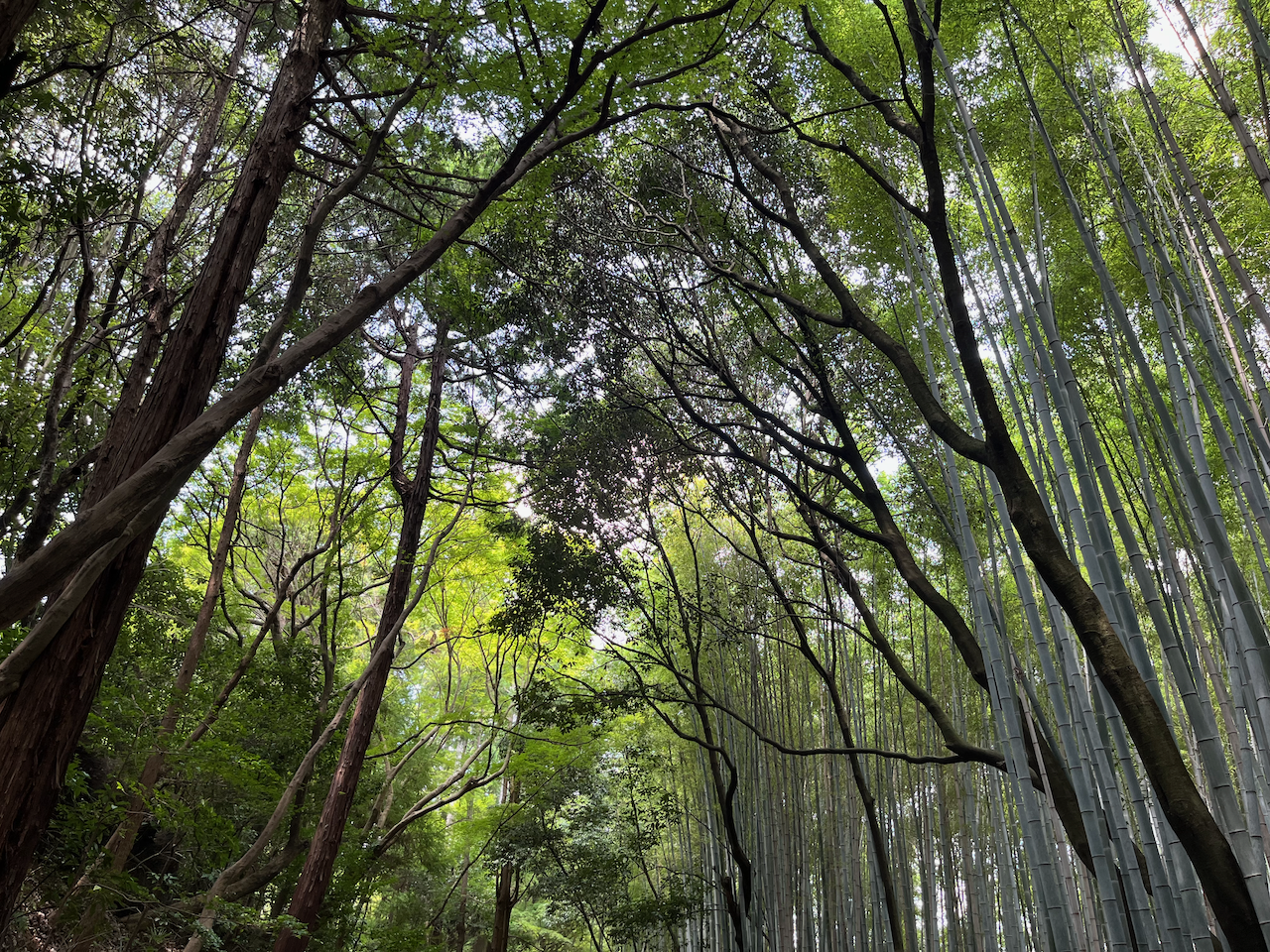
Tenryuji Temple, official website here, is a temple that has seen a lot historically. It was number two or three in the Five Mountains hierarchy, and was thus a very prestigious temple. It contains many terrific works of art, and a gorgeous pond created by Muso Soseki back in the day. Because it is right next to the famous bamboo forests of Arashiyama in western Kyoto, we were able to view both on the same hike, as well as the iconic Togetsu-kyo Bridge:

I should add that the temperature was 37C (98F) in Kyoto and extremely humid that day. The walk through bamboo forests was incredibly enchanting, but also grueling due to heat.

It’s not clear from the photos, but because of the shade and the high humidity, there was a constant mist between the trees, and an oppressive air. It was really cool, and would make a great setting for any Asian-style D&D campaign (not unlike the ones that I made previously … 😏).

Once you emerge from the bamboo forest, you enter the back-entrance of Tenryuji Temple. The front entrance that’s very close to the Saga-Arashiyama train station as well, so you can also visit from that direction too. The signs are very obvious.

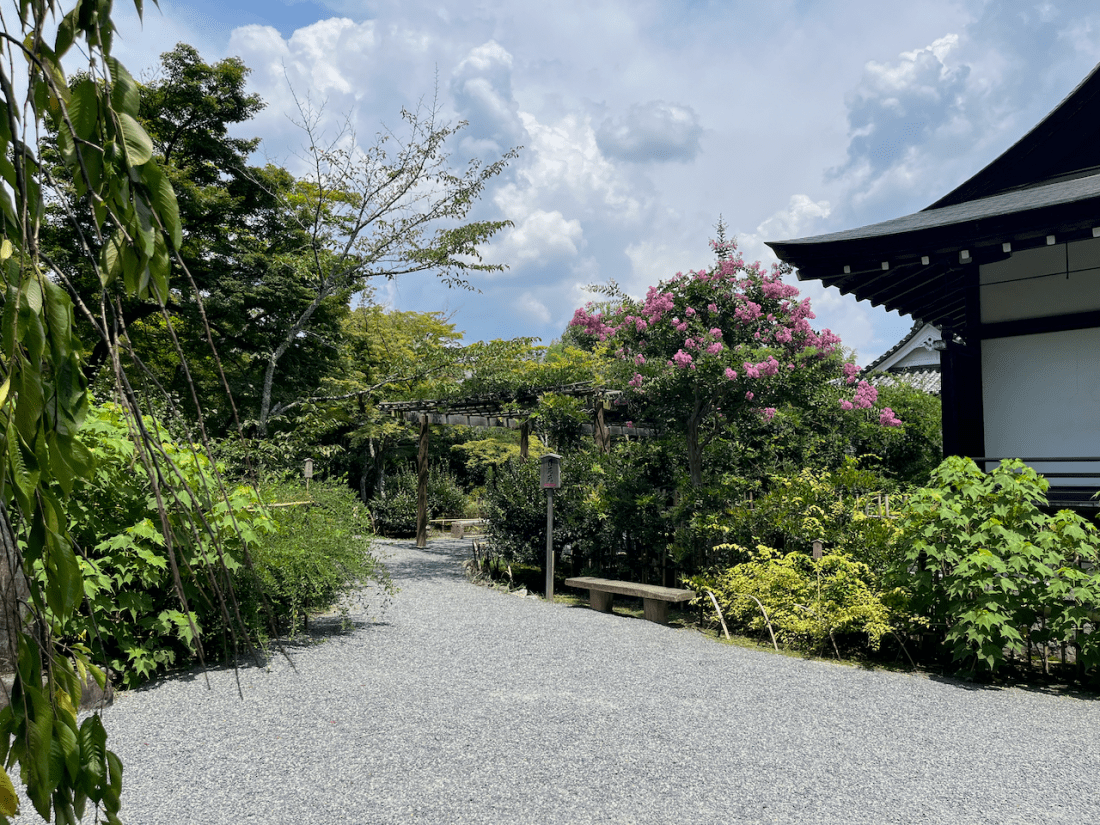
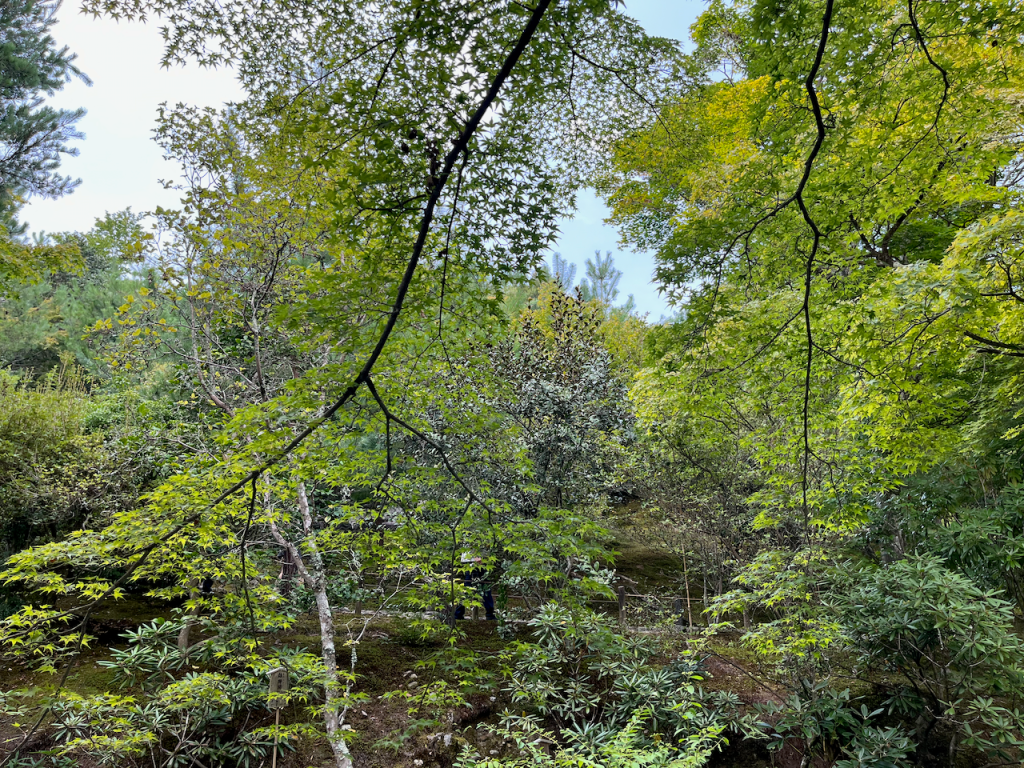
The main buildings were clustered together in the middle of the property, with a really nice garden walk surrounding it, including many lovely or rare plants. If I were a botanist, I’d probably have a field-day here. The signs are all multi-lingual too, which is really handy.

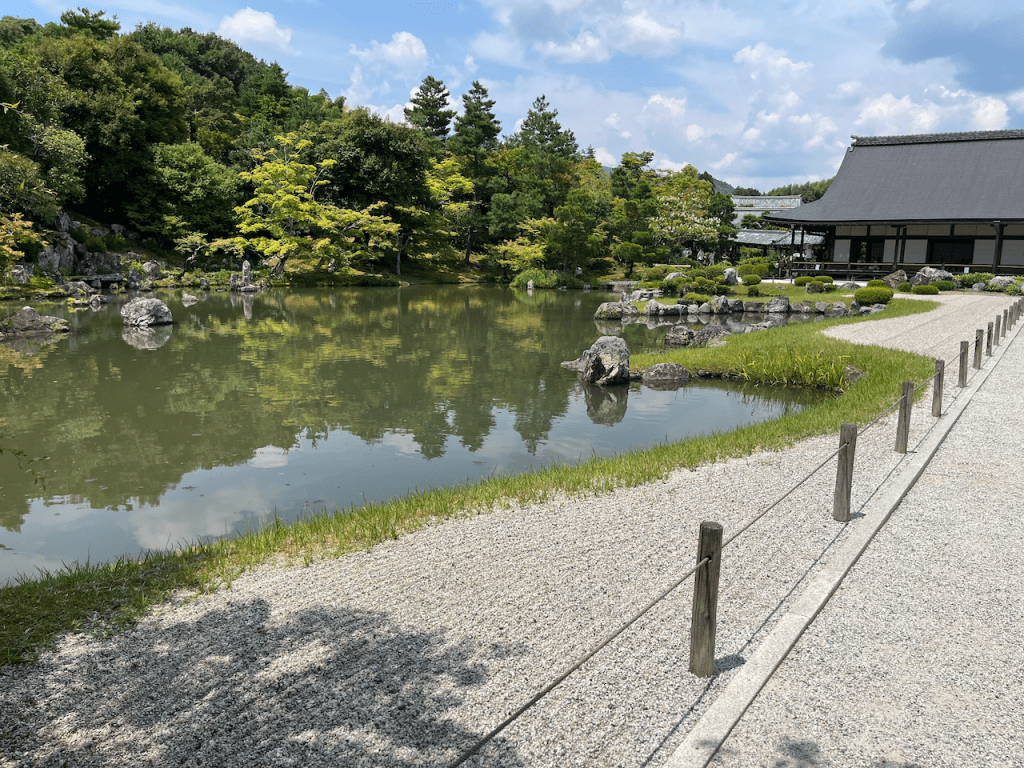
If you continue around the walk, you will come to the Sogenchi (曹源池) Pond, which according to the sign is modeled on Chinese architecture at the time (and a common feature of Japanese aesthetics during the Muromachi Period):

Similarly, you find a lovely sand garden (karesansui in Japanese, 枯山水 ) nearby too:

I wanted to take more photos of the interior of Tenryuji, but there were just too many tired, overheated tourists, and Instagram influencers. I chuckled as I saw a couple young ladies who were way over-dressed in fine, Chinese-style silk dresses and taking turns posing and photographing each other. The heat and humidity were so intense, I can’t imagine why they would do this to themselves. But I digress.

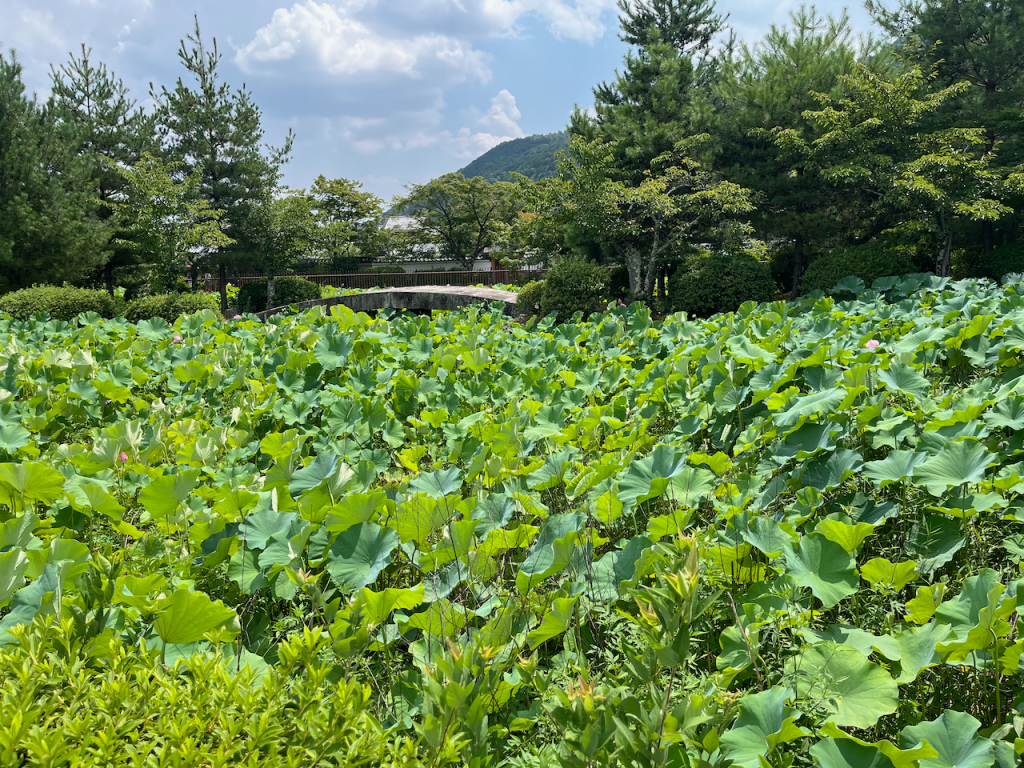
Finally, as exited Tenryuji toward the train station side we saw a very nice lotus pond:

Tenryuji Temple is, for historical reasons, a shadow of its former self, but even what remains is very scenic and embodies much of the beauty and prestige of Arashiyama. I didn’t enjoy it on the same level as another Zen temple, Ryoanji, but it is lovely. For poetry fans, the Arashiyama district is also the site where the Hyakunin Isshu anthology was compiled, which I covered on my other blog.

That said, Arashiyama is quite touristy and crowded. It’s pretty foreign friendly, and if you’re just passing through Kyoto for the first time, it’s a great place to stop. But, for me, if you have the time and want to really get to know Kyoto life and culture, there are other places I prefer.

Next time, we’ll talk about Kenninji, which was smaller than Tenryuji, but had some pretty mind-blowing artwork.

P.S. 欢迎中国游客,感谢您的阅读。

1 I tried to put both in a single post, but it quickly got too large. I am a victim of my own hubris…