Gardening with Shiso

Since the Pandemic started in early 2020, my wife and I took up very small-scale gardening in our backyard. My wife likes growing flowers and herbs, I like growing vegetables. This year, we both experimented with growing a popular Asian herb called shiso (シソ) in Japanese.1

Shiso, also known as Perilla frutescens, is a member of the mint family and is also related to the sesame plant. Its taste is hard to explain, but the leaves are often shredded, or cut very thin and eaten raw along side things like natto, sushi, or cooked meat. It tastes very refreshing, but also kind of strong.

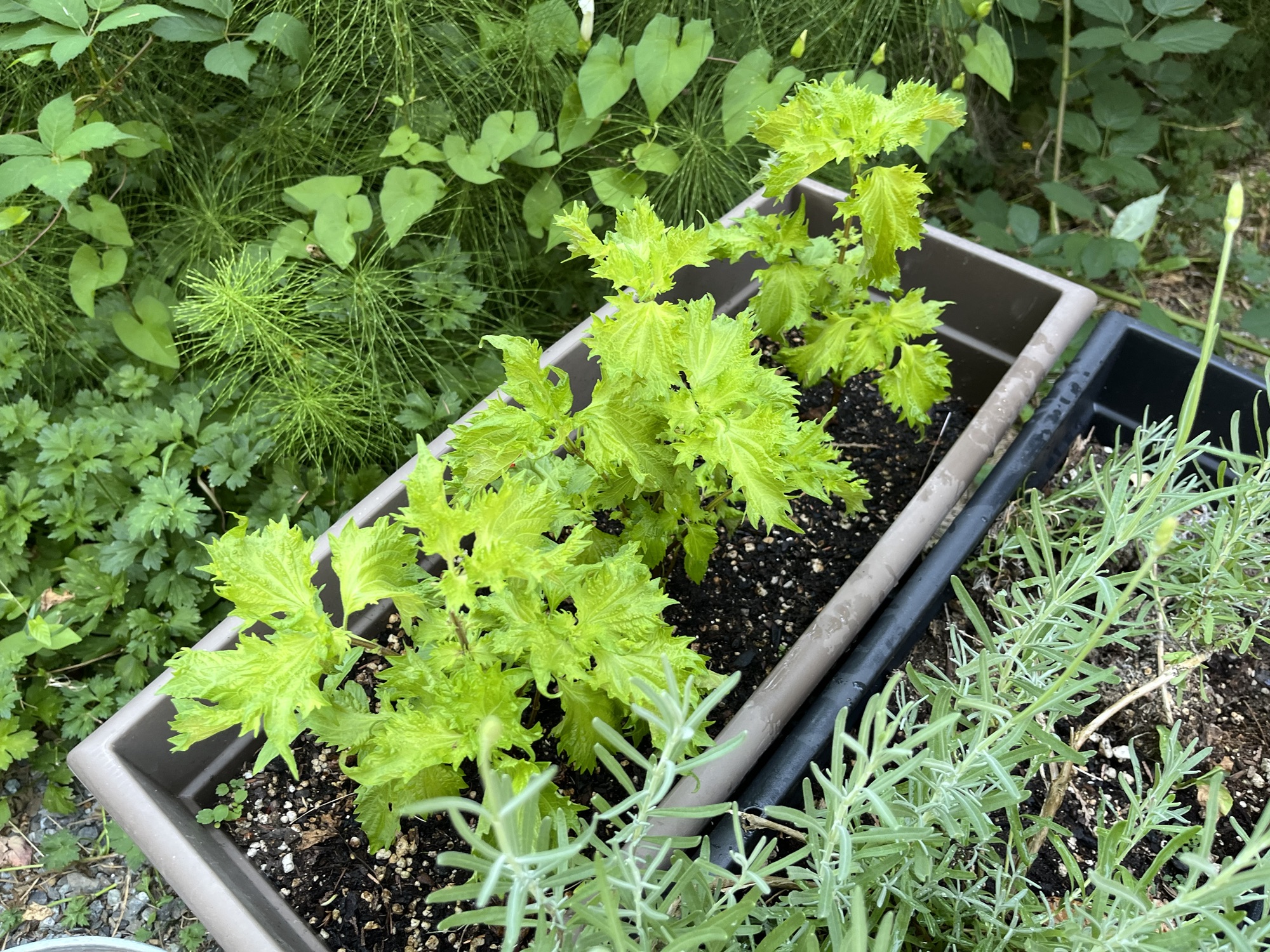
Anyhow, it turns out that there are many varieties of shiso, and my wife and I each planted a different variety. My wife chose this variety from a starter:
I grew this variety, aojiso (“green shiso”) from seeds:

The plants look similar, but are somewhat different. My wife’s variety is more ruffled, and green on the underside, while mine is flatter, more heart-shaped and reddish on the underside. Her shiso plants have a lighter flavor, mine are pretty strong tasting.

Both shiso varieties seemed to struggle to germinate in the colder PNW climate, but suddenly when June came and the weather warmed up noticeably they started growing much faster. They also get thirsty quickly, so they require water often.

Once they start sprouting leaves though, they sprout a lot. We keep harvesting and the plants keep growing more. Shiso is delicious, but it’s not possible for us to finish this much.

Shiso is not something Westerners often eat, but it’s widely used in Japanese, Korean, Vietnamese, and Chinese cuisine, and it is fun to grow. It just needs a much warmer environment, and plenty of water.

Wisteria

Posting this a bit late (been busy with new puppy), but I wanted to share a tweet I saw from the famous Kasuga Grand Shrine, one of the holiest Shinto shrines in Japan.

With all the attention on cherry blossoms and such, it’s sometimes easy to forget other flowers in bloom. The wisteria (fuji 藤 in Japanese), is a popular flower in Japan, and also the family crest used in the Jodo Shinshu Buddhist tradition.

Enjoy!

Winter Is Here

Winter is here in the Pacific Northwest! In the old Japanese calendar, this period is known as rittō (立冬, “first winter”). My gardening book mentioned that historically frost comes around here typically on November 17th, and I was quite surprised to see that it really happened:

The trees around my son’s elementary school were beautiful in the winter frost too. I started keeping a gardening journal to keep track of local weather patterns, how the plants in the garden are doing, what works and what doesn’t.

The last few weeks have been a whirlwind of activity, both good and bad. I celebrated my birthday recently, and got some great history books, but I also managed to back my car into the garage door (it was opening, but hadn’t fully come up when my car clipped it). We’ve seen some pretty rough rain storms lately, but also the winter weather has been beautiful too. I pulled a muscle pretty badly last week, but on the other hand, I’ve been getting plenty of exercise.

I’ve seen plenty of ups and downs lately, but such is the eight winds of life.

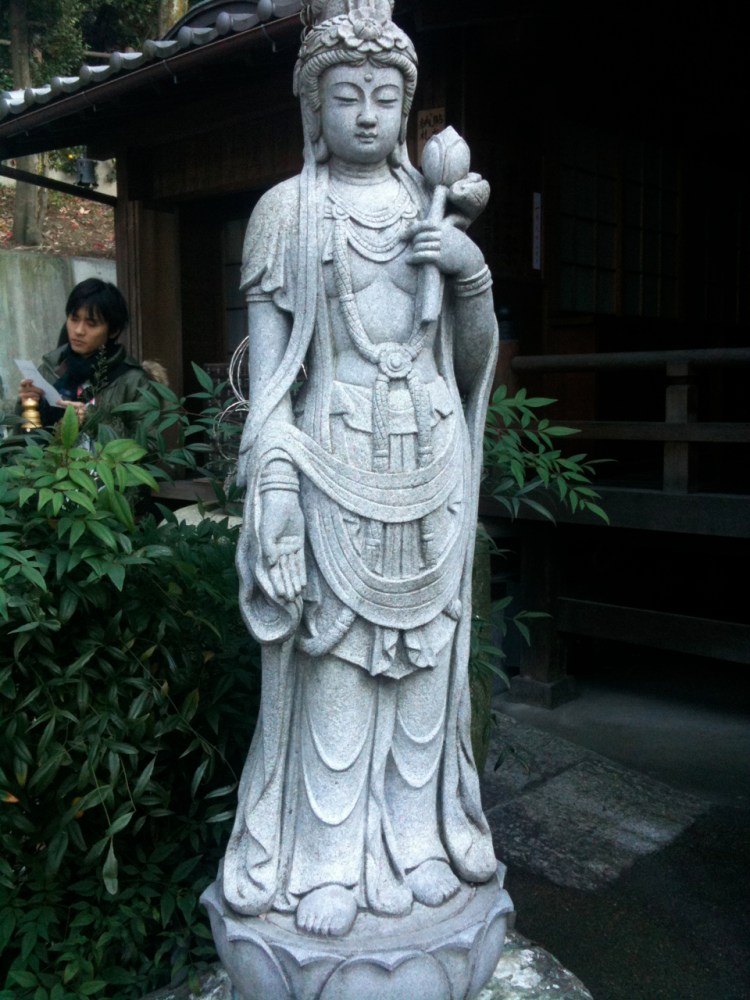
On a spiritual note, I enjoy focusing on devotional services to Kannon Bodhisattva (my other favorite Buddhist figure) lately. Because Kannon is popular among nearly all Buddhist schools and traditions, it doesn’t have some of the dogmatic “baggage” associated with other deities, so it’s easy to take up devotion practices to Kannon while allowing you to pursue other Dharma Gates within Buddhism.

Taken in 2011 at Daienji Temple (大円寺) in Tokyo, Japan. It is still one of my favorite works of Buddhist art that I have seen in Japan.

So, namu kanzeon bosatsu and best wishes to readers!

Plum Blossoms Are Here!

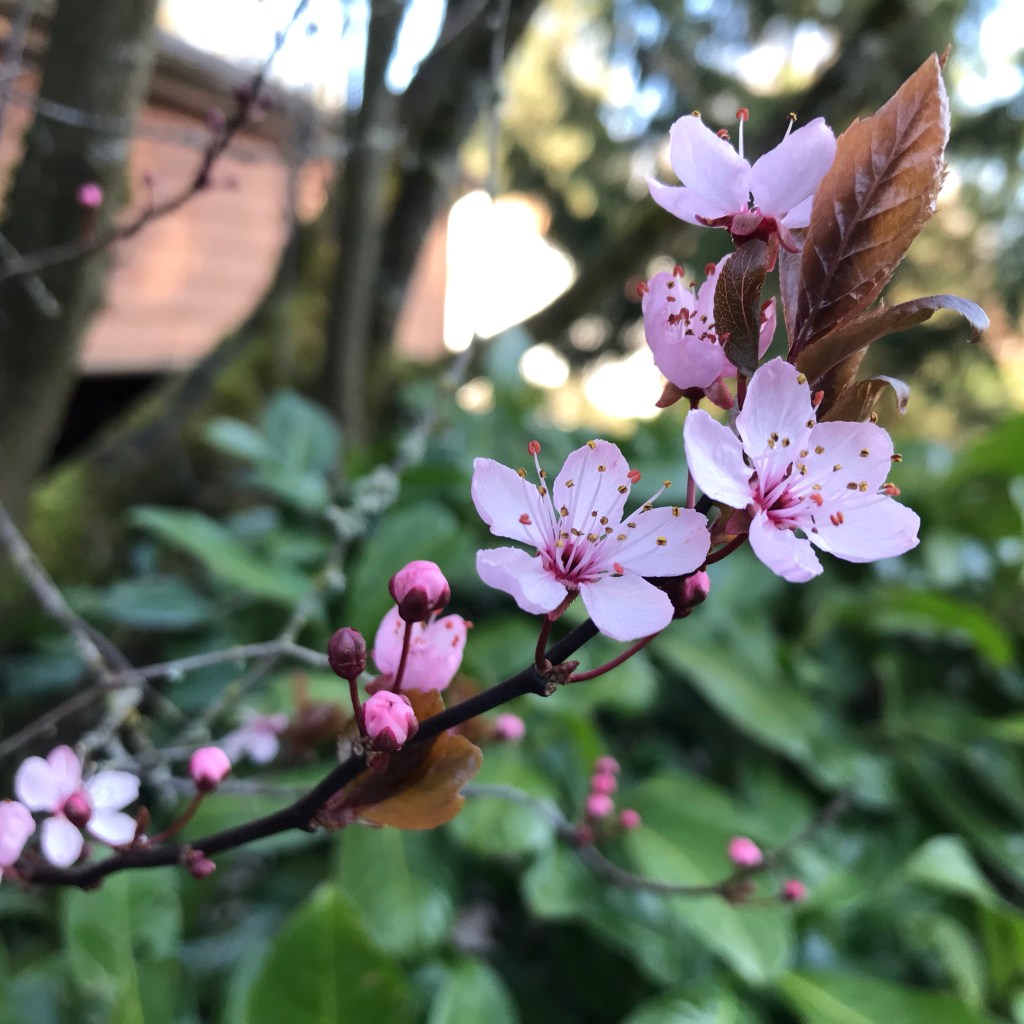
The Thundercloud plum trees in our yard finally blossomed, starting with the pink one:

…. followed by the white one next:

These pictures aren’t great, as I took them on top of a ladder with my arm stretched as high as I could while holding a mobile phone. But, I am happy with the results.

As readers may recall, plum trees are among my favorite, and once again I am reminded of this old poem by the famous scholar Sugawara no Michizane (菅原 道真 845 – 903) when he was in exile:

JapaneseRomanizationTranslation
東風吹かばKochi fukabaWhen the east wind blows,
にほひをこせよNioi okose yolet it send your fragrance,
梅の花Ume no hanaoh plum blossoms.
主なしとてAruji nashi toteAlthough your master is gone,
春を忘るなHaru o wasuru nado not forget the spring.

Enjoy!

Spring On Its Way

Some wildflowers sprouting in the yard yesterday…

It is mid-January, deep in “small cold and big cold”, but already signs of life are returning to the yard, and the world around us. Inspired, I found this old Japanese waka poem (originally posted in my other blog) composed by a female poet named kunaikyō (宮内卿), also called wakakusa no kunaikyō (若草の宮内卿). This poem, number 76 in the Japanese Imperial anthology named the Shin Kokin Wakashū, has young grass (wakakusa, 若草) as the topic.

JapaneseRomanizationTranslation
薄く濃きUsuku kokiLight and dark:
野辺のみどりのNobe no midori nothe green of the field’s
若草のWakakusa noyoung herbs
あとまで見ゆるAto made miyurudistinct in
雪のむら消えYuki no muragiepatches of fading snow.
Translation by Professor Joshua Mostow

Oh Noes! Gardening Disaster

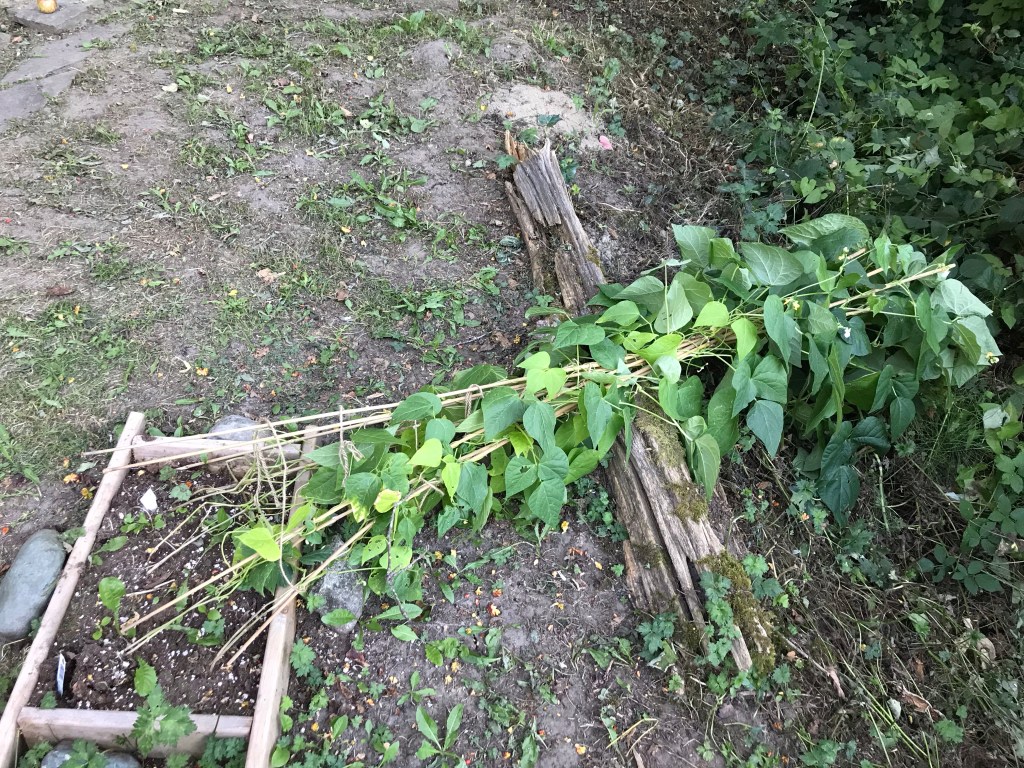
Welp, our little gardening project may have come to an end. Our bean plants became overgrown and top-heavy and finally one day the bamboo “teepee” we setup toppled over. I tried a few times to put it back up but each time the foundation was shaky and it would fall down hours later. I am not sure why, but I suspect either wind or small hungry critters would knock it over.

The root cause was two things. First, the beans had noticeably grown larger than I expected, and the 6-foot tall poles weren’t large enough in the long-run. By the time it toppled over, the beans had grown a length and a half and were hanging down quite a bit. Second, I wanted to do this on a budget (since it was my first vegetable gardening project ever), and so I used very basic bamboo poles. If I had to do it all over again, I would’ve probably uses a proper trellis. Further, I wish I had maybe planted the plans further apart with their own trellises. To be fair, this was all new to me, and I had no idea what to expect, but now realize that the size and space of the garden really matters.

Anyhow, to fix this, we tried to disentagnle the bean plans from the bamboo poles, and trim them back, and redo the teepee better. The result hasn’t been great. The structure is more stable than before, but the plants don’t look healthy since their roots have been damaged from falling over, and their stems were trimmed back quite a bit. One of the plans died almost immediately, but I think I can nurse back one or two plans back to health before winter.

In the meantime, our Butter Crunch Lettuce is growing pretty well:

Two weeks ago…
Today

With the benefit of experience, I’ve been reading on up Butter Crunch Lettuce best-practices (i.e. don’t water too heavily, right spacing, sunlight, etc), so I feel that in the long-run the lettuce will probably fare better than the pole beans did, but here’s hoping. 😌

Gardening Success

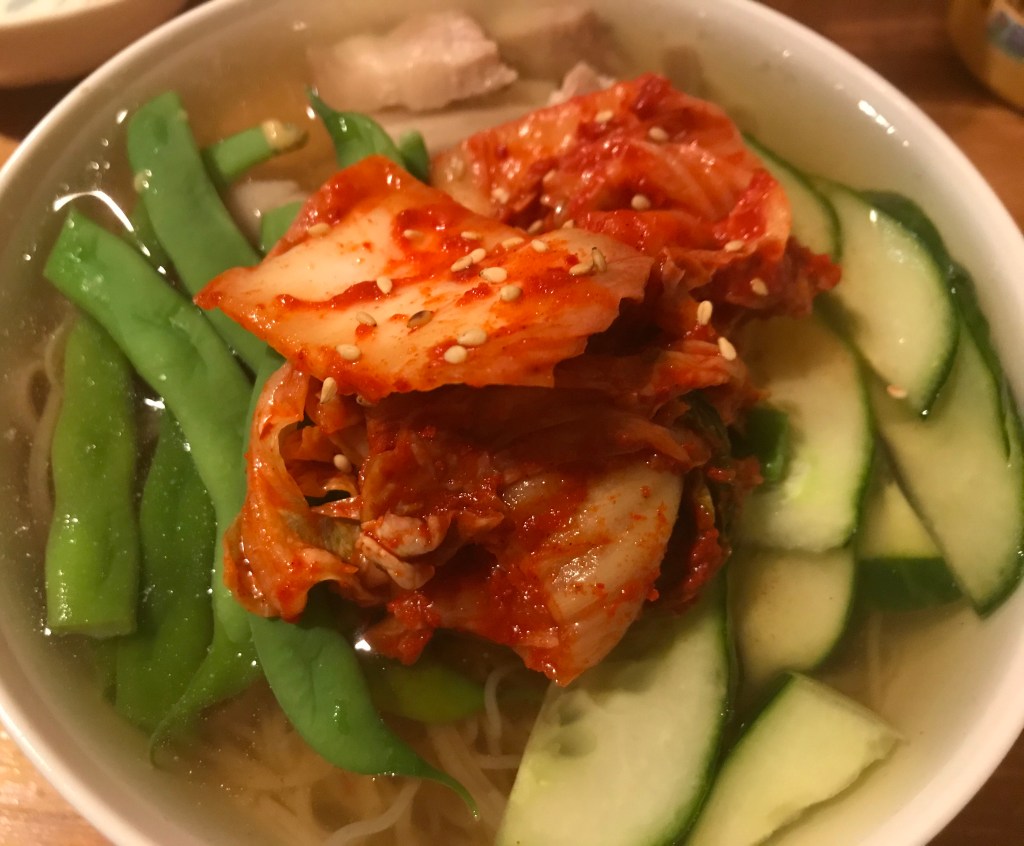
Korean naengmyeon (냉면, cold noodles) my wife made for dinner using the beans I grew. If you have never tried naengmyeon, it is super good, super cheap and super easy to make from kits sold at your local Asian food store.

In spite of all the crazy crap that 2020 has brought us, I am happy to report that my little bean garden has borne fruit. A lot of it!

The bean plants are growing taller than me! Also, please wear a mask as much as you can outside. 😏

The bean stalks have recent started growing over the 6-foot bamboo stakes I had put in, and once the beans started growing from the dying, white flowers, they seemed to mature within a week or so.

The beans taste pretty good, though it seems like that they taste better when stir-fried or cooked in some way. We’ve been keeping the picked beans in a paper towl to prevent excess moisture, then storing in a plastic Ziploc bag in the fridge. They seem to keep that way for about a week or more.

As for me, I finally grew something, and I am very happy about it. I’ve spent much of my life working on abstract stuff, but actually make something that the whole family can enjoy is a great feeling. Further, we’ve since moved into a new phase of our gardening project: butterhead lettuce! Stay tuned for more.

Beans!

At last, my dear readers, my humble gardening project is beginning to bear fruit. Dad joke; you’re welcome. 😏

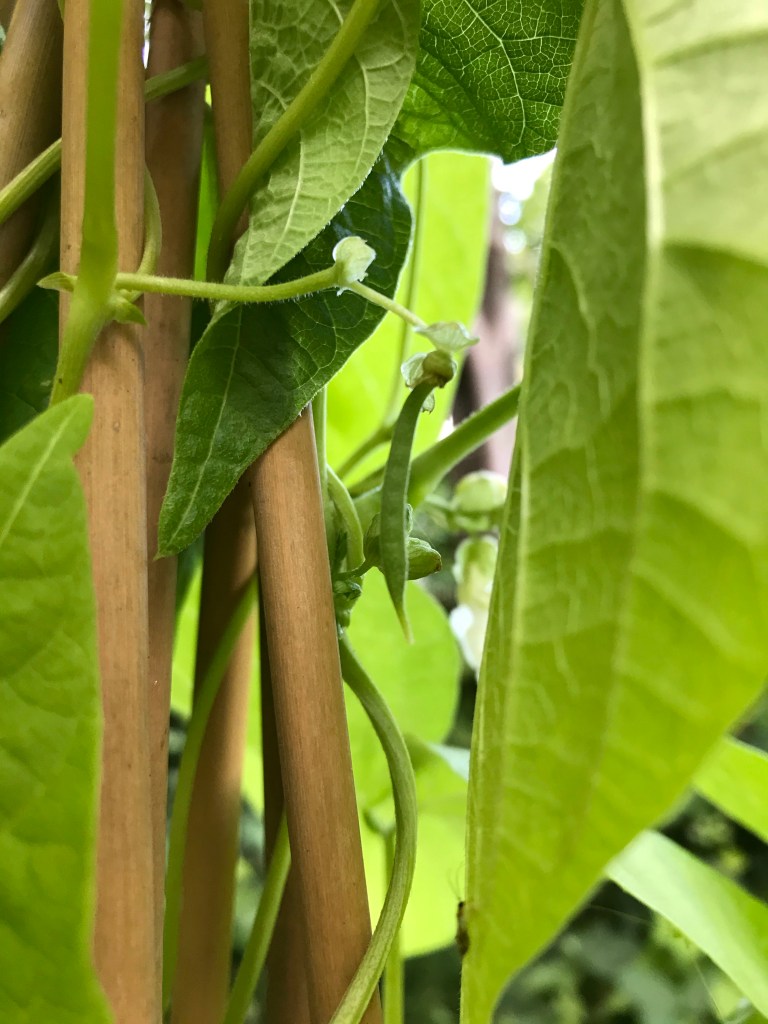
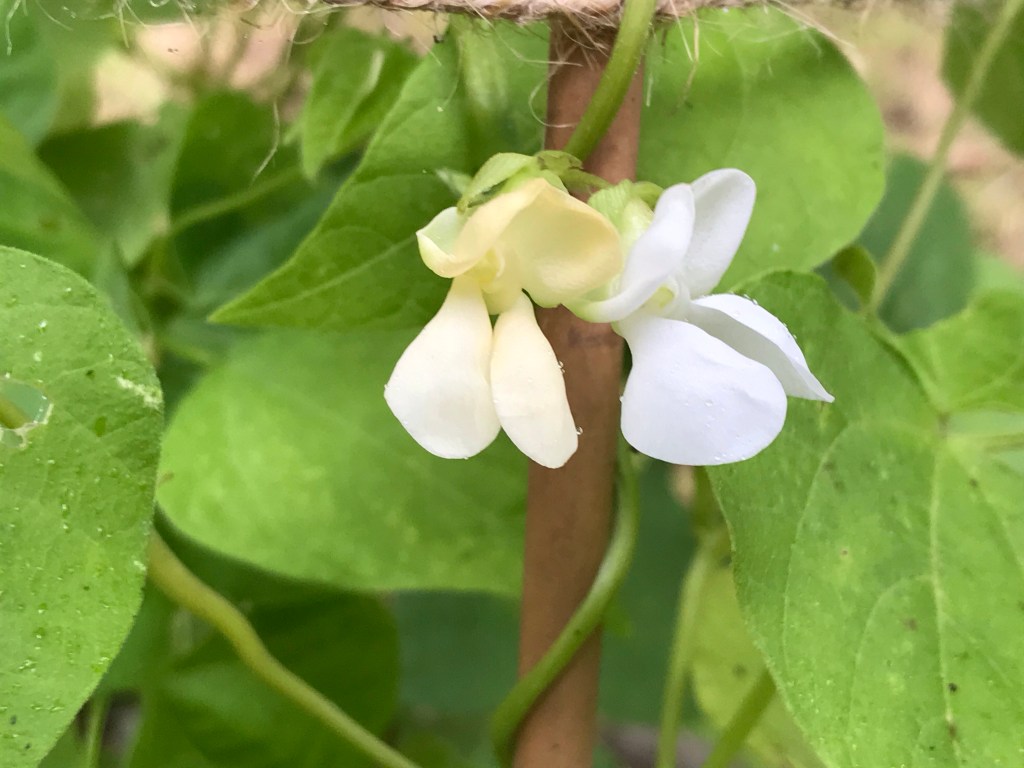
A few weeks ago, I posted some updated photos of my pole bean plants, which had grown much, much taller, but hadn’t bore fruit. Then I noticed little white buds on the plants, and I thought these where the beans. However, it turns out that they were white flowers, not beans.

The flowers stayed for about a week, yellowed and fell off. Another week later, I noticed this tiny, tiny bean growing from where a flower had been. It’s smaller than my thumbnail, but will no doubt get bigger. Plus, the bean plants have many more flowers now, which if current trends continue, mean more beans. 💰

Gardening for Fun and Fun

Amidst parenting, reading about Japanese Buddhist History, and transitioning jobs, I have had some time under lockdown to take up a new pursuit: vegetable gardening!

My family and I have almost 0 gardening experience, and no real luck or understanding of how it works, but I’ve always longed to turn a small plot around our home (which basically does nothing but grow weeds all day)1 into something more creative. But I also expected to fail miserably so I decided to start small. I had some scrap wood (but no nails sadly), so I cleared a very small patch and just put together a small gardening box here.

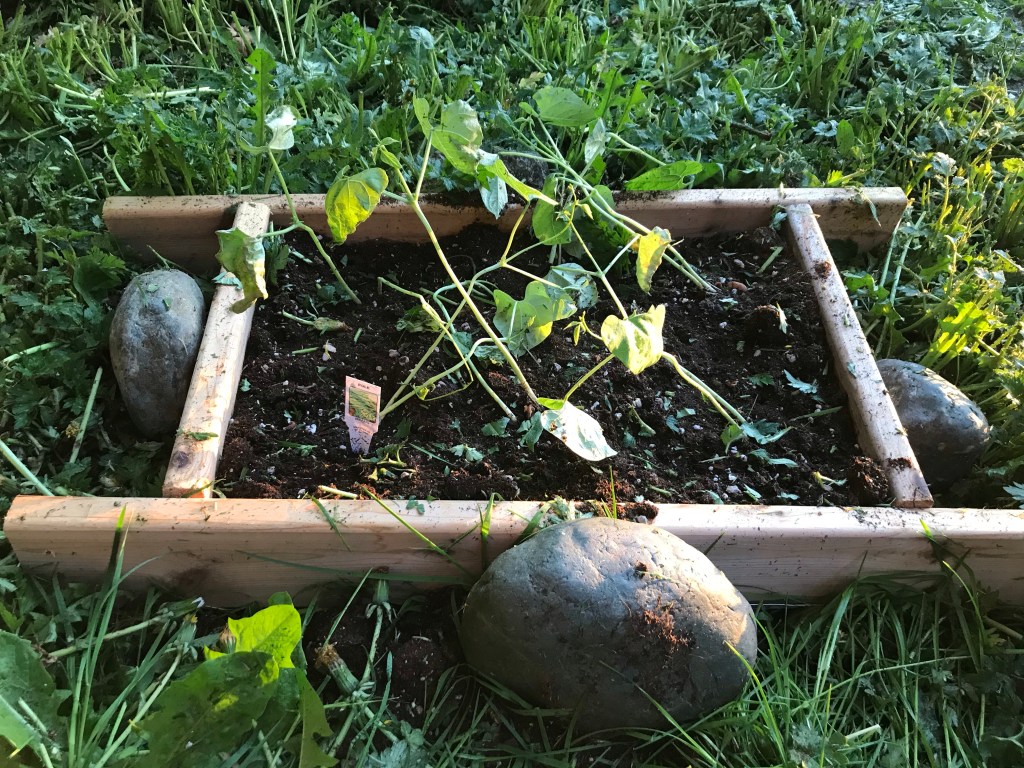
Then, I bought some seedlings from the local Safeway and only later did I realize that these were pole bean plants. Here’s day one:

Day One

I decided to just use rocks to prop up the box, which for such a small garden works fine. Later I will build a proper box for garden 2.0. At this point, I just used some old potting soil to fill up the garden, and plant the sprouts. As you can see, the seedlings had grown somewhat, but can’t support themselves.

So, I grabbed some bamboo skewers and tried to prop them up:

Day One: Now with sticks!

This lasted for a few days, until I realized that this setup wasn’t very stable. So, I took more bamboo skewers, tied the top with some of my wife’s sewing thread, into a basic “teepee”-style setup:

Day Eight

This proved a lot more stable, but I didn’t make enough “teepees”, so some of the plants quickly fell off. The plants that are propped on the skewer tents have been growing pretty quickly and now grow over the skewer, which means I need taller trellises to support them:

Day Ten

I’ll post more as the garden prospers (or not). I can’t imagine this tiny garden will yield many beans, but if it bears any fruit, I will be thrilled. As someone who spent his life growing up in one cheap apartment complex after another, being able to tend a garden is a new, exciting experience and my hope is that this small garden will give me more valuable experience for future gardening ventures. 😎

1 To be honest, I also like to leave the weeds there as a place for bees, hummingbirds and other small fauna to thrive. It probably doesn’t make me look good in the eyes of my wealthy neighbor next door and their sculpted garden (and its cadre of hired help), but I kind of take pride in it. Yes, I do maintain the yard, but I like to let things grow naturally when reasonable.