More than faith, or doctrine, or anything, the notion of ignorance in Buddhism is of central importance. It is the root of all evil, so to speak. However, ignorance in Buddhism doesn’t mean stupidity. Very smart people can be ignorant. Ignorance has nothing to do with intelligence, it has everything to do with perception.
Each being born into this world is born under specific conditions and circumstances. Those circumstances color our world, from who our parents are, our culture, the language we speak by default, religious beliefs, and so on. Further, these circumstances influence how we react to new things, which develop into further lines of thoughts, choices, and so on. Rinse and repeat.
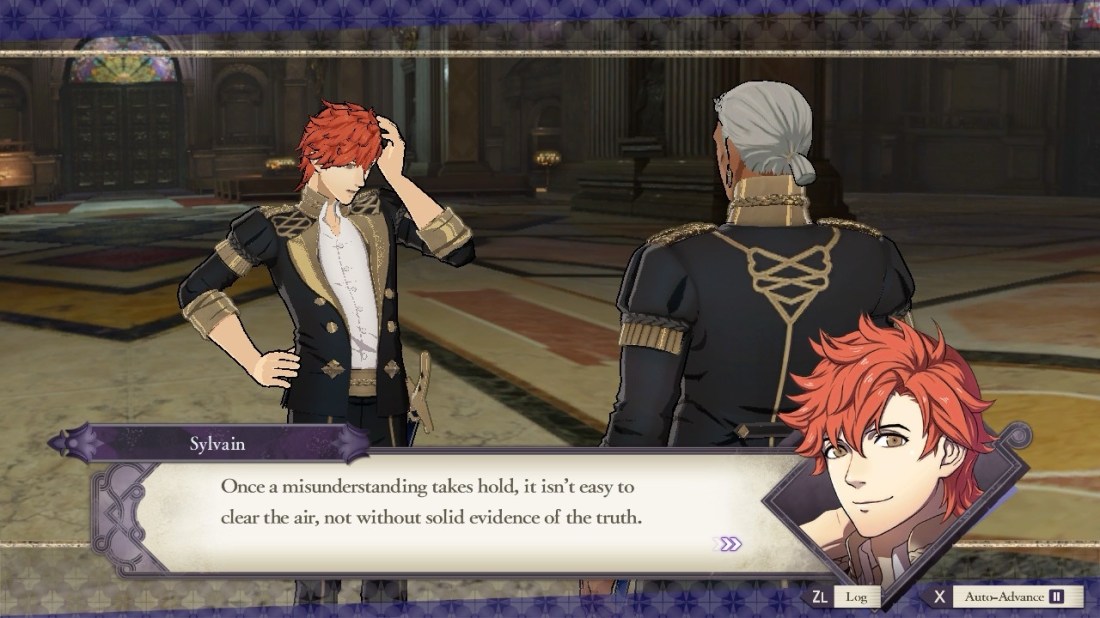
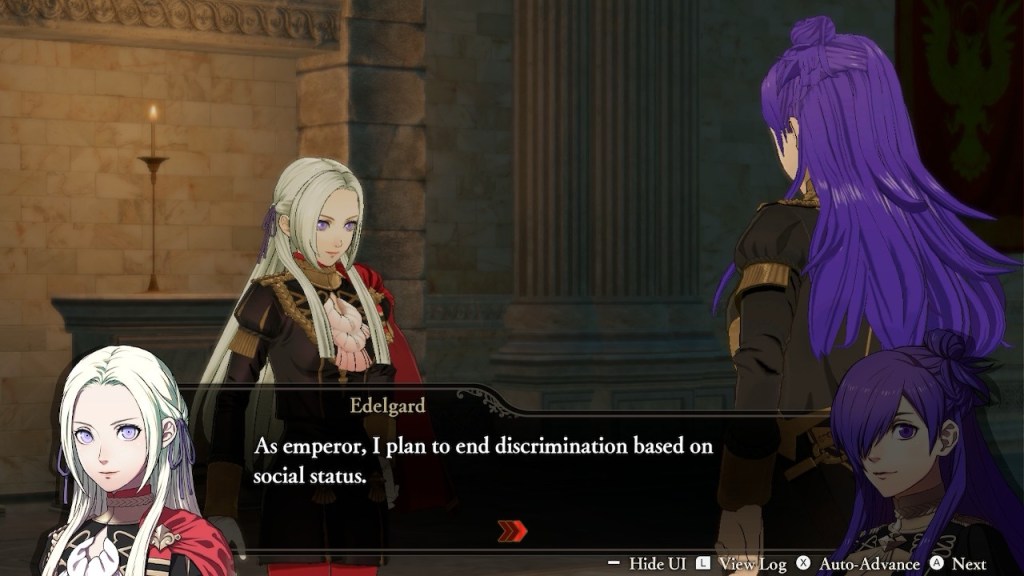
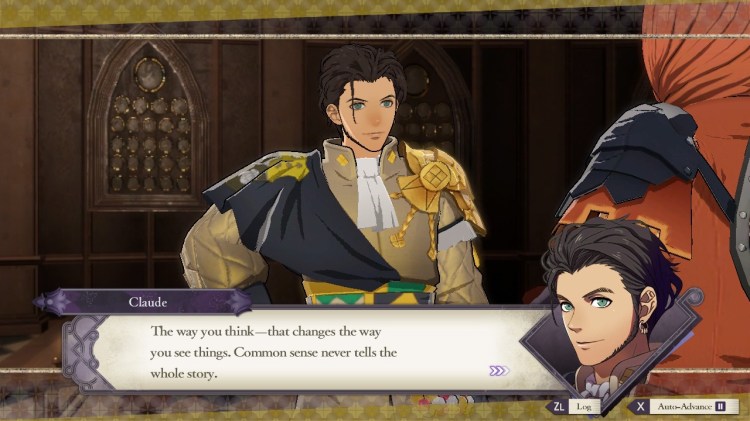
As the screenshot from Fire Emblem: Three Houses above shows: small misunderstandings take hold and are hard to undo.
There is a classic story in India, common to various religious traditions including Buddhism. In the story, a monk is wandering out late night through a grassy field to use the restroom, and steps on a snake. He panics, faints and then falls over unconscious. The next morning he wakes up, and realizes that he stepped on an old piece of rope, not a snake. He was certain at night, based on limited information, that he had stepped on a snake, but his perception was flawed and he drew an incorrect decision.1
Even if consider ourselves wise, and “know better” than others, we have to stay vigilant at all times. Little mistakes in understanding can lead to painful consequences.
I recently got mad at someone during an online game when I thought they were showing off. I was sure they were flaunting their victory in my face, and was pretty cranky all day until I reviewed the game and realized that I had misunderstood their last play. Once I realized that, I knew right away I was in the wrong, but I couldn’t undo the grumbling, anger, and ruined day. That quick half-second misunderstanding cost me a day. Fights with spouses or partners often start like this. Wars between two countries or two ethnic groups start like this.
Ignorance also comes in the form of overconfidence in one’s understanding of the world. A sense of self-satisfaction.
The first step in avoiding a trap, is knowing of its existence.
–Dune (1984)
There is no quick and easy solution in Buddhism for this. Knowing what ignorance is, and how insidious it is, and how easily we as functional adults can otherwise get duped by it is a step. Vigilance into one’s own thoughts, words, and actions is essential.
Namu Amida Butsu
1 Similarly, the Buddha described grasping Buddhist doctrines properly as similar to grasping a viper. If done improperly, it can cause much harm.
I’ve been thinking about this conversation, shown above, from the game Fire Emblem: Three Houses. The game was made in 2019, just before the Pandemic, and other nonsense that went on in 2020 onward. How prophetic that statement was. Then again, I suppose this is something every generation has to live through in some ways. Sooner or later, things change, we lose something in the process and never get it back.
Wise words indeed…
It reminds me of a quote from the Analects of Confucius:
[9:17] The Master [Confucius], standing by a river, said, “It goes on like this, never ceasing day or night!”
Recently, I dragged my first Adventurers League character, Qisandoral Arreistanus, out of a long, long retirement for another adventure in our play-by-post group. Qisandoral is a high elf wizard of the Abjuration school. You can think of him as Mr Spock in a fantasy setting.
“We reach”… with Otiluke’s Freezing Sphere!
Due to pandemic and other issues, I hadn’t played this character in literally years, but due to AL rules, he had jumped from level 9 to level 12 through accumulated downtime. Otherwise he sat idle. With the new 2024 ruleset, and the requirement in Adventurers League to rebuild a character that conforms with this ruleset, here is the latest, update character sheet (link):
The tier-3 adventure module, from the Season 8 Waterdeep setting, took place in the underbelly of the city, where we fought a vampire cult worshipping Shar. With only three players, and no melee fighters, this was hugely risky. My memory of how to play Qisandoral was rusty, I had forgotten his abilities, and my spellbook choices were confusing and weird.1 During the big boss fight, I performed pretty terribly at first, and nearly wiped out my own party due to a poorly timed Otiluke’s Freezing Sphere. Further, our DM skillfully played the boss, a vampire mage, as it fought tooth and nail using every nasty trick in the book to survive. It took a huge effort to finally slay the abomination. At one point, I had to use Wall of Force to pin the vampire long enough for us to recover a couple rounds.2
The good news is that during play, I eventually dusted off the mental cobwebs and started playing my wizard more effectively. This post is to share some hard-learned lessons about playing an Abjuration Wizard in 5th edition Dungeons and Dragons. I think Abjuration wizards are really neat, and fit Qisandoral’s character concept (a dour, elf wizard who is very bland and likes routine) nicely, but they’re also a little different from other wizards as I learned the hard way.
Edit: with the 2024 Player’s Handbook, the rules for the Wizard class have changed considerably. You now choose your wizard subclass at level 3, but the abilities largely remain the same, and the advice remains unchanged. The level 10 ability in the 2024 ruleset has been greatly enhanced, and will certainly increase the power of this subclass at higher levels.
The Basics of Abjuration
First and foremost, Abjuration is about defense, cancellation and denial. Of course, an Abjuration wizard must also have some offense, but they will never excel at offense. Instead, an Abjuration wizard shines when they frustrate and shutdown the enemy.
Your 2nd level wizard ability, Arcane Ward, is your bread and butter. Simply by casting Mage Armor at the start of your day (which wizard’s do anyway), you gain a extra pool of hit points that will automatically absorb (afaik, you don’t get to choose, it just happens) a certain amount of damage before passing through. At low levels this pool is quickly used up, but at higher levels the pool of hit points gets pretty large.
Further, the pool recharges X hit points where X is 2 times the spell level. If I cast Shield, a 1st-level spell, my ward tops up by 2 hit points. If I cast Counterspell, a 3rd-level spell, it tops up the Arcane Ward by 6 hit points.
Later, when your character reaches 6th level, you can then project this ward as a reaction to absorb someone else’s damage. You have to be able to see that person, and they have to be within 30 feet, but otherwise it’s a handy way to keep teammates alive in a pinch (and I projected it a lot in the boss fight above).
Finally, the other big deal with Abjuration wizards is that for certain spells like Dispel Magic and Counterspell, you can boost your chance of success using your proficiency bonus. This does not work with Banishment sadly (I learned this the hard way).
Lastly, starting at 14th level, Abjuration wizards are highly resistant against spell attacks, which from a defensive standpoint is pretty neat and probably live-saving (sadly Qisandoral was 13th level during the aforementioned adventure).
What To Do And Not Do
An abjuration wizard needs to rely on their Arcane Ward a lot, so you should activate each day using Mage Armor or something suitable. Also, have a few cheap spells of the Abjuration school prepared to help recharge it as needed. The challenge is that many of those cheap spells are pretty niche:
Shield is always a good idea to have, but can only be used as a reaction (i.e. you’re being attacked). Further, shield gets less and less useful at higher levels as your AC struggles to keep up with enemy attack levels. You should always have it prepared just in case, but bear its limitations in mind.
Protection from Evil and Good can provide some help in some situations, but you can only cast it on one party member, even if you cast at higher level, and it requires concentration (yuck).
Counterspell only works when someone is casting a spell, and you can’t always stand around waiting for someone to do that.
Alarm is only useful outside of combat. Sneaky wizards know to cast this as a ritual over and over again (time permitting) to charge up the Arcane Ward.
Banishment is a high-level spell, and may fizzle if the saving throw succeeds. If it succeeds, you’re a target for opponents trying to break your concentration.
Globe of Invulnerability is very powerful, but it has a fixed location, so it will not move with the player.
Each of these is pretty niche spells, so if you want to maximize usage of the Arcane Ward, you prepare as many of these as you can to react to various situations.
On the flip side, the more of these you prepare, the fewer offensive spells and other utility spells you can prepare. In earlier adventurers, this was the problem I had with Qisandoral: in many fights, the best he could do was shoot Ray of Frost (a cantrip) half the time.
Thus if you want to have an Abjuration wizard with some offensive capability, you will have to choose your spells carefully, and strike a balance between the needs of your school, and the needs on the battlefield.
It’s best to pick spells that are generally useful in all situations. Magic Missile isn’t glamorous, but few monsters can resist force damage, and it just about always hits its target (unless they have a Shield spell). Even cantrips can be useful since they do scale up damage over time. Qisandoral has both Ray of Frost for distance, and Shocking Grasp for close range.3 Having a variety of offensive cantrips may help free up the need to use precious spell slots for other things, even if you are not a powerhouse.
Also, having a classic like Fireball or Freezing Sphere is good to have in your back-pocket as a kind of panic button.
On the utility side, spells like Misty Step are a great way to get in and out of the battlefield, and well as some common detection spells like See Invisibility or Detect Magic.
Combat
Since you’re default strategy is to leverage Arcane Ward to frustrate attacks, or use your spells to stop magic effects, you may be in combat doing mostly passive or reactionary moves while spending your turn making low-level attacks that don’t require commitment or concentration. The default strategy is one of observation, and being able to respond to threats as they come up, but still reasonably do your part to take out threats offensively.
If you do manage to Banish a creature that you intended too, then don’t hesitate to protect yourself using your own abilities otherwise intelligent monsters may decide to target you next to break concentration.
Finally, remember that if you use Globe of Invulnerability, make sure to put it in a strategic spot where you and party members can take cover for the rest of the battle. In other words, make it count.
Final Thoughts
If your goal is to make a wizard that decimates the battlefield with world-bending magic, an Abjuration wizard probably isn’t a suitable choice unless you want to charge your Arcane Ward once per day and maybe keep an abjuration spell or two handy.
If your goal is to disrupt the battlefield and frustrate your enemies, an Abjuration wizard excels at this, but it does require responding to various niche situations as they come up, and your damage output will be somewhat below average. Just remember you’re focusing on defense first, offense second.
Conversely, since so many Abjuration spells are situational don’t be surprised if you are in a situation where none of them are useful. Have a few generalist spells prepared for this situation.
Finally, as with every wizard, you can never quite prepare enough spells. It’s always a juggling act to balance various competing needs, and accept that you will sooner or later have failed to prepare the right spell for a particular situation. The vast breadth of spells a wizard has comes with the cost of lots of care and feeding.
I hope this was helpful. Good luck!
1 Thanks to simpler AL rules now, I probably should have just rebuilt him again from the ground up before the adventure, but I was in a hurry and busy.
2 I also had Hold Monster prepared, but failed to notice the stipulation that it does not work on undead monsters. 🤦🏼♂️ Word of advice for new players: read your spells carefully beforehand.
3Shocking Grasp is also handy when your opponent has legendary actions, since a hit prevents them from taking reactions for a turn. This was something I could’ve done in our fight, but I failed to grasp this until too late. To be fair, our opponent was invisible most of the time anyway.
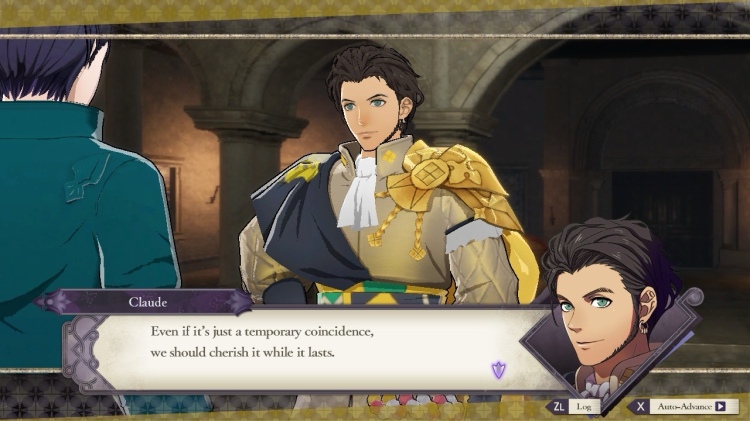
Not to long ago, I tried to describe the First Noble Truth of Buddhism as pain, but I was thinking about it a bit more, and I think it’s a bit more nuanced than that. Buddhism describes the nature of existence as samsara, which in the past I’ve described as a kind of cosmic rat race, or described elsewhere as “aimless wandering”. And yet, while playing Fire Emblem: Three Houses, this dialogue by Claude (arguably the “bro” we all need in life1) got me thinking:
“Even if it’s just a temporary coincidence, we should cherish it while it lasts.”
We never really get to cherish the good moments in life as long as we’d like, and there’s always just a bit too few of them anyway. Many Buddhist cultures romanticize this through things like cherry blossoms, poetry, and such, but it’s a sentiment that all people everywhere across history have felt. Even futuristic cyberpunk.
Further, we are thrust into life with being given any clear guide. Sure, we might find religion (or religion is thrust upon us in our youth), but this is not always guaranteed to be satisfying, and for us spiritually-inquisitive types, it’s not hard to scratch the surface and find issues here too. On the other hand, I think it’s wrong that there are no answers either. The world does function according to some kind of principle, just as it follows the laws of physics, even if we don’t fully understand it, and it behooves us to figure out what the principle is.
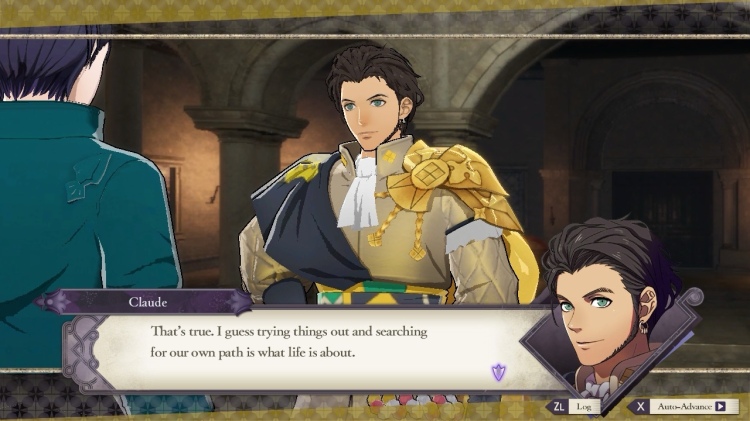
I think Claude is onto something here when he says that life is probably about living and experiencing and learning from it.
“That’s true. I guess trying things out and searching for our own path is what life is about.”
Or this quote from the classic science-fiction novel Dune Messiah:
“If you need something to worship, then worship life – all life, every last crawling bit of it! We’re all in this beauty together!”
Frank Herbert
The tragedy though comes from the fact that we’re not given so little time to do it well, and life often gets in our way. If we don’t find the answer we’re looking for in 40 years or even 400 years, then was any of it worth it? It’s hard to say. Further, in whatever life to come, we have to pay for our choices we made here, regardless of what happens next.
So, Claude is right: we really do need to cherish these moments. There are simply too few.
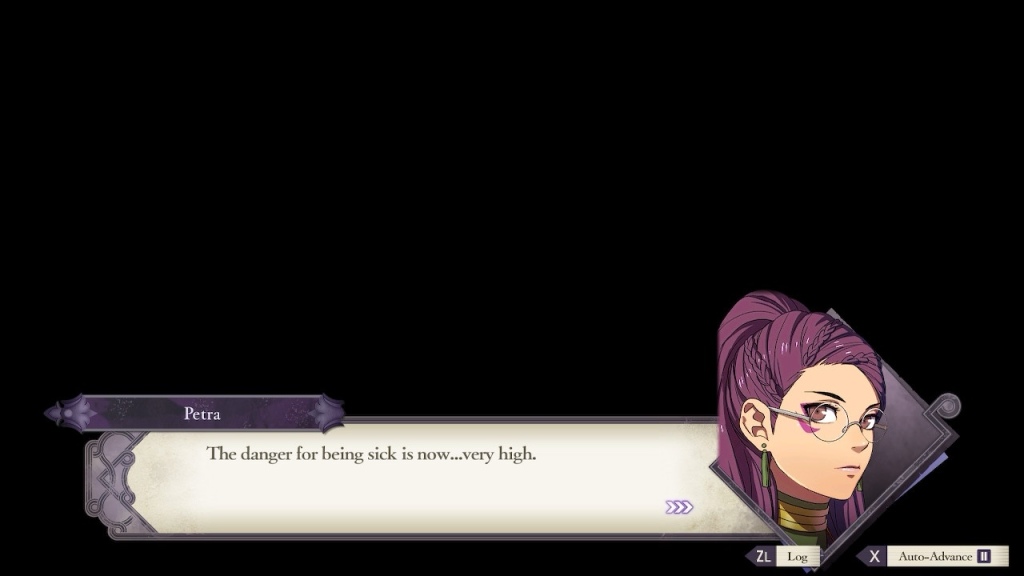
P.P.S. Not related to anything Buddhist, but Petra trying on glasses for the first time was a great gag. Sometimes you just have to enjoy the “small happinesses” in life.
“The danger for being sick is now … very high.”
P.P.P.S. The title of this post was inspired by the soundtrack song of the same name:
1 Big kudos to Joe Zieja for his amazing voice acting, by the way.
I finished my second play-through of Fire Emblem: Three Houses this weekend, the Verdant Wind route. My first play-through was through the Crimson Flower route (e.g. the Black Eagles) and it was a beautiful story, but seeing Edelgard from another perspective, and especially her demise, really hit me hard.
Seeing the many sides of Lady Edelgard truly made me appreciate her the way I might appreciate a figure from a Greek tragedy.
Warning: further spoilers ahead.
Of the three lords in Fire Emblem: Three Houses, Edelgard was the most ambitious, but also incredibly charming. Even her most trusted retainer, Hubert, had a love/hate relationship with her: deeply devoted but also afraid of her power, and her willingness to make morally questionable choices. Most routes through the game don’t really delve into why she is like this until you get to the Crimson Flower route.
There, over time, you learn of her manipulation by powerful relatives (and their dark allies), or her suffering by their experiments,1 and also the loss of her siblings. In the end, she decides to take control of her fate, and the fate of all of Fódlan, in her hands.
The game designers wisely avoided making her a Mary Sue type character. Instead, she makes some very tough and cruel decisions when necessary.
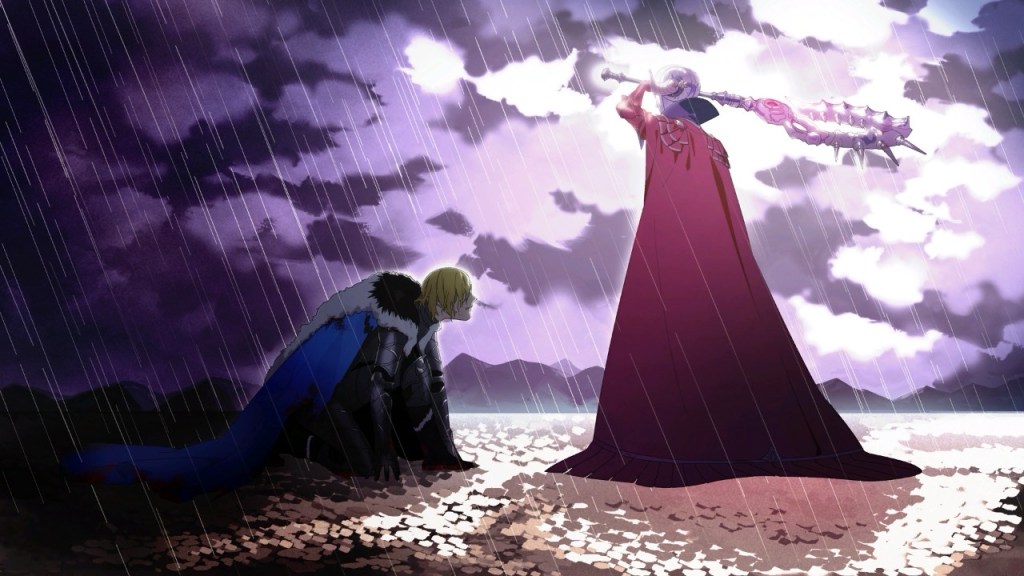
Further, there’s no denying that through her leadership, she unleashes terrible destruction and death to achieve her aims. She knows that her path will be a dark and bloody one, and decides to walk it anyway, believing that the ends justify the means.
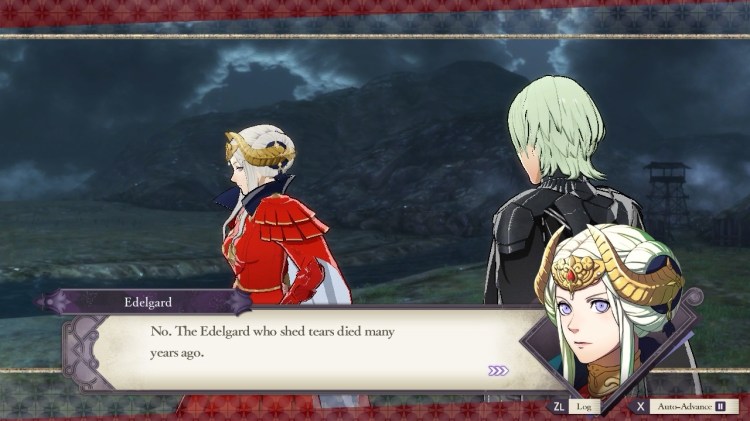
“No. The Edelgard who shed tears died years ago.”
And yet, despite her tough exterior, she also never completely loses her humanity.
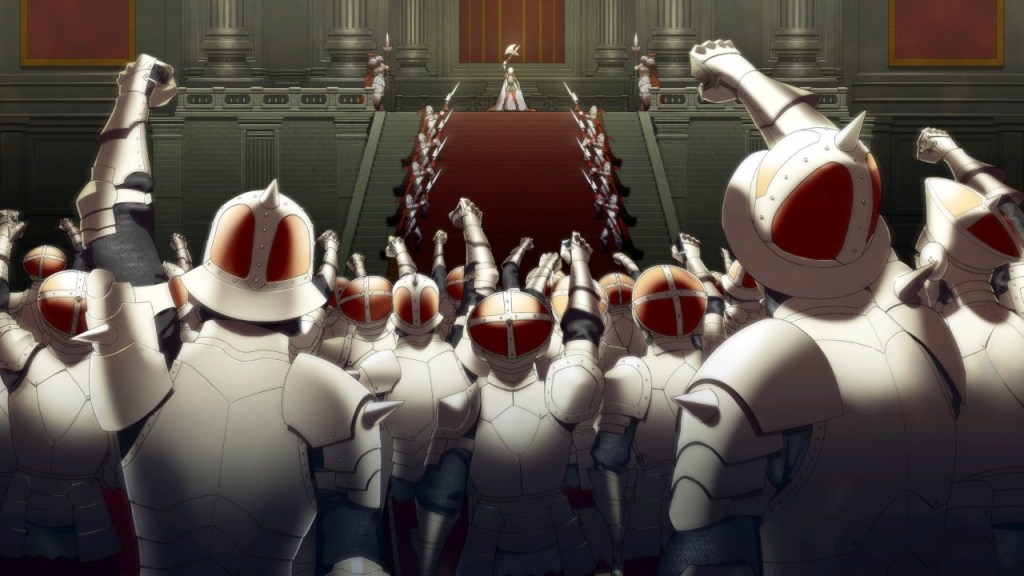
She is devoted to her fellow students, and to Byleth, and devoted to a future where the old aristocracy and the Church are overthrown and everyone can be equal. In spite of her cold exterior, when Byleth falls in the Crimson Flower route, she sheds many tears.
She even grieves for Dmitri, even if she tries to hide it.
Edelgard was the ardent revolutionary of the game,2 and whether you liked her or not, she drove the story, and she commanded genuine admiration and respect from her peers, and from players like myself. It is sad that in most game routes she suffers a tragic ending one way or another, when all she wanted to do was prevent others from suffering the same fate that she did. Her choice in methods of course is where people might disagree (and do), but in the end she was still a human being, not a two-dimensional villain, and her humanity, flaws and all, is what makes her such a compelling character.
If that doesn’t feel like a Greek tragedy, I don’t know what is.
P.S. Amazing voice acting by Tara Platt, by the way. She really brought Edelgard to life.
P.P.S. I still have two more routes to go.
1 In the Verdant Wind route, Lysithea implies that Edelgard suffered much as she did through those experiments. That explains their similar hair color, and it makes me wonder if Edelgard similarly suffers from a shorter lifespan, though this is never explored.
2 Arguably, Claude is also a revolutionary, but he also had the luxury of being able to wash his hands of the messier aspects whenever he wanted to. That said, Claude is the “bro” that everyone needs in their life, and I really liked his story route ending too, especially since in my play-through he ended up marrying Leonie which was a pleasant surprise.
After finishing the game Fire Emblem: Three Houses, I am playing through again, but this time through the Golden Deer house,1 and I stumbled upon this amazing quote by one of the characters, Claude:
Claude is a particularly insightful character in the game (and probably one of the coolest), but this statement really sounds Buddhist to me, especially if you are familiar with Yogacara Buddhism, or the concept of mind as mirror.
It also reminds me of that quote I posted previously from Chrono Trigger:
Speaking of Fire Emblem: Three Houses, I have really enjoyed how diverse and well-written the characters are. With each path, the characters start out pretty different, but in time they learn to understand one another as your teamwork builds up, and in spite of their different viewpoints, they learn to work more closely together, sometimes even romantically. They don’t necessarily agree with one another, but they learn to co-exist at the very least. That’s not an easy thing to do, but I believe it’s the emotionally mature thing to do.
In any case, I think what matters is learning to appreciate how one-sided your own viewpoint is, even when it feels like “common sense”.2
The choices you make, the lifestyle you choose then to create a feedback loop that reinforces your own view of the world, and this in turn skews your thinking more and more to one viewpoint. It’s an easy thing to say, but hard to notice in oneself. You don’t have to throw it all out, but never be afraid to question your own assumptions.
Since this is also the start of the Juya season in the Jodo Shu tradition, best wishes to you all!
Namu Amida Butsu
1 previously Black Eagle house. Edelgard is controversial, but that lady was amazing. I got a little choked up at the end.
2 even the Buddha called this out in the famous Kalama Sutta.
Amidst all the posts about Japanese history and Buddhism, I had been playingZelda: Tears of the Kingdom in my spare time, but to be honest I found the game long and tedious compared to its predecessor. Once I defeated Ganon (in mid-suavamente, no less), I was exhausted and put the game down and haven’t picked it up since.
Looking for other games to play, I realized that I had purchased Fire Emblem: Three Houses a while back and hadn’t played it. Thanks to Super Smash Brothers Ultimate, I was introduced to the Fire Emblem series (big in Japan, not as well known here), and figured I should try at least one game.
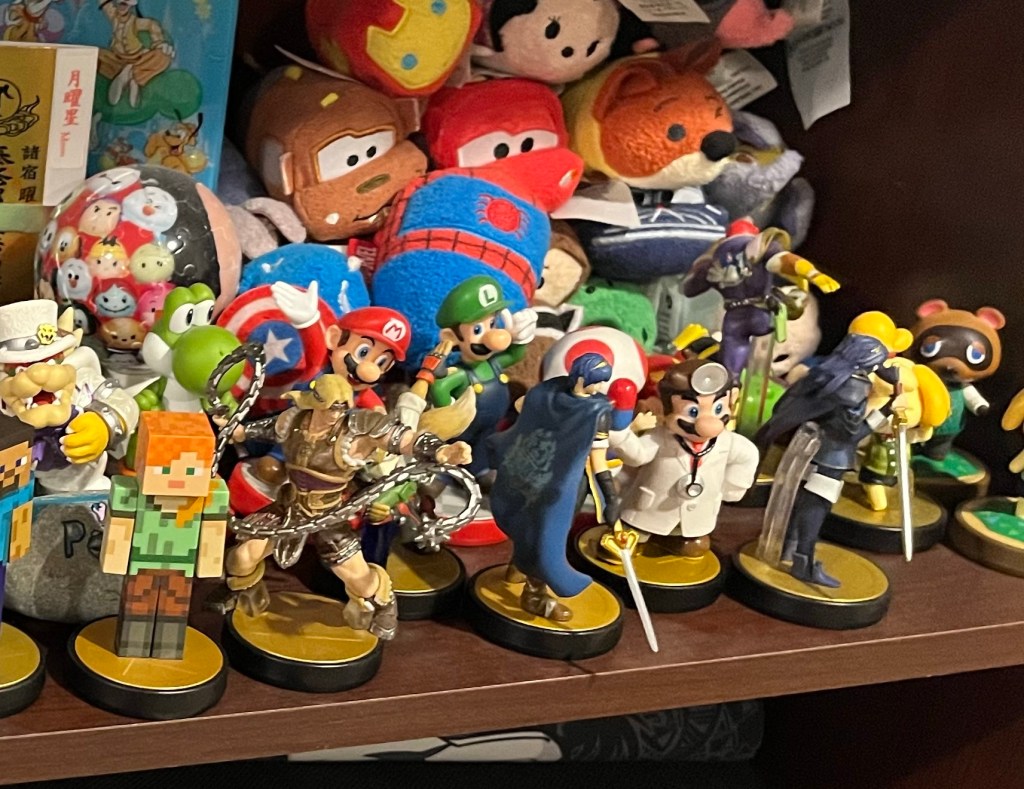
My Amiibo collection includes both Marth and Lucina from Fire Emblem, since I “main” both characters in Super Smash, plus Captain Falcon. FALCON PUUUNCH!!
I have been totally hooked on it since.
The Fire Emblem series has apparently been around a long time, famous for its turn-based strategy, and permanent death for any teammate that falls in battle. However, another side to the series is its character depth.
In Fire Emblem: Three Houses, you become a teacher of one of three classes, or “houses”. The students mainly hail from nobility from a given region of the continent, but also some commoners too. The house you choose greatly impacts the story, and if you play through again with a different house, or even different choices at key points, the story alters drastically. Further, the way the students interact with one another also grows and develops over time. You learn their backstories (often quite surprising), or their relationship with another student may change over time. You can, with a bit of effort, recruit students from other houses to join yours, further expanding the range of interactions.
It feels an awful lot like anime version of Hogwarts Castle (a la Harry Potter) at first glance, and normally anime does not interest me. However, the sheer breadth of characteres, interactions, and ways to built your team is fascinating, and the character depth is really well-written.
Even now, I can close my eyes, recall each of my students and something about them. Since I picked the Black Eagle House, I can tell you all about Linhardt, Caspar and Ferdinand, not to mention the ladies like Bernadetta, Dorothea, and Petra. Even the villainous characters are surprisingly three-dimensional, not cartoony evil.
Further, per Fire Emblem tradition, you have the option to romance characters and such, and even marry them at a later stage in the game. Many of the characters are bisexual, so regardless of what gender you pick for the hero, Byleth, romance is still an option. Some characters are openly bi which caught me by surprise, but a refreshing one.
Early in the game, I was trying to romance both Shamir (I am a sucker for tough women), and having intimate tea time with Lady Rhea at the same time. I figured that Lady Rhea was a villain early on (at least in some story lines), but it was fun to try. It’s a guilty pleasure but a fun one.
All in all, life in Garreg Mach monastery is really fun, even more so than the combat, as you can explore and interact as much as you like.
Then comes the emotional gut punch.
The story, at least through the Black Eagle House, contains some pretty shocking twists that caught me by surprise. It’s like being on a roller coaster that slowly creeps up and then suddenly the bottom drops out and it’s free fall from there. Brilliant story-telling.
There have been some very heart-warming moments thus far, and some moments or choices I made which made me feel pretty awful. I feel like there’s a hidden subtext about kids having to grow up too fast, which as a parent breaks my heart. I had to grow up too fast in my youth, and it’s hard watching kids in the game be forced to do the same, but that’s the reality of the situation as well.
I haven’t finished the first play-through yet, but I am roughly halfway and absolutely loving it, while also planning ahead toward my next play through, either through the Blue Lions or the Golden Stag house (that Claude is such a charmer).
It’s funny reviewing a game from 2019, but as someone who’s entirely new to the Fire Emblem I have been genuinely impressed with the game and the series overall. Quite honestly, I wish I had known about this sooner, but I am glad I took a chance on an unfamiliar franchise. If you own a Switch, definitely pick up the game if you can, and let me know which House you picked. 😁
P.S. Fun fact: the Japanese name for the game is ファイアーエムブレム 風花雪月 (faia enburemu fūkasetsugetsu) whereby by 風花雪月 stands for the four story lines:
風 (fū, “wind”) – as in Verdant Wind.
花 (ka, “flower”) as in Crimson Flower.
雪 (setsu, “snow”) as in Silver Snow.
月 (getsu, “moon”) as in Azure Moon.
Brilliant.
P.P.S. RIP Billy Kametz, voice of Ferdinand von Aegir:
On the list of unexpected surprises during our recent trip to Kyoto/Nara was another place we visited: Fushimi Inari Grand Shrine (English / Japanese homepages) also called Inari Taisha (稲荷大神) in Japanese. The Fushimi Inari Grand Shrine, located in south-east Kyoto, is the head shrine devoted to a very popular Shinto kami named Inari Ōkami (稲荷大神). However, he also known more colloquially as O-Inari-san (お稲荷さん).
Shinto religion reveres and recognizes, many, many kami, and oftentimes these kami are often tied to a certain place, or even to just a single shrine. Many are quite obscure, too. For example, while Kasuga Grand Shrine is considered one of the most sacred, its deities are not well-known in popular culture. However, a few kami enjoy an almost universal popularity within Japan. This includes O-Inari-san and Tenjin, among others. You’ll find branch shrines throughout Japan, all descended from the main one, and in the case of O-Inari-san, the head shrine is at Fushimi.
Even to visitors to Japan, O-Inari-san is often recognizable because his shrines are often decorated bright red, and white foxes. Why foxes? Foxes were thought to be messengers of O-Inari-san, hence they adorn his shrines. Technically, O-Inari-san is not a god of foxes, however. They just happen to be his messengers. Instead, what makes O-Inari-san so popular is that he was a kami associated with commerce, travel, and the harvest of the year rice crop. For the latter, foxes, were often dispatched by O-Inari-san to report on the status of the harvest across Japan. Thus, foxes often have a “fey” image within Japanese folklore.
Even in modern businesses and shopping malls, if you look carefully, you’ll often find a small shrine to O-Inari-san tucked away somewhere.
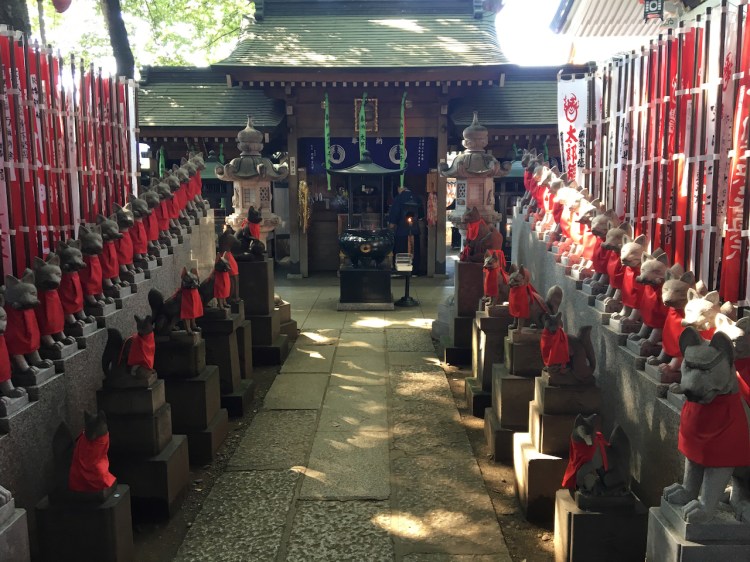
Further, when Buddhism and Shinto blended in the middle ages, it was assumed that O-Inari-san was a divine protector of Buddhism, and sometimes conflated with certain obscure Buddhist figure named Dakini. In downtown Tokyo is a Shrine I’ve visited before called Toyokawa Inari devoted to O-Inari-san, and was a hybrid Zen temple and Shinto shrine:
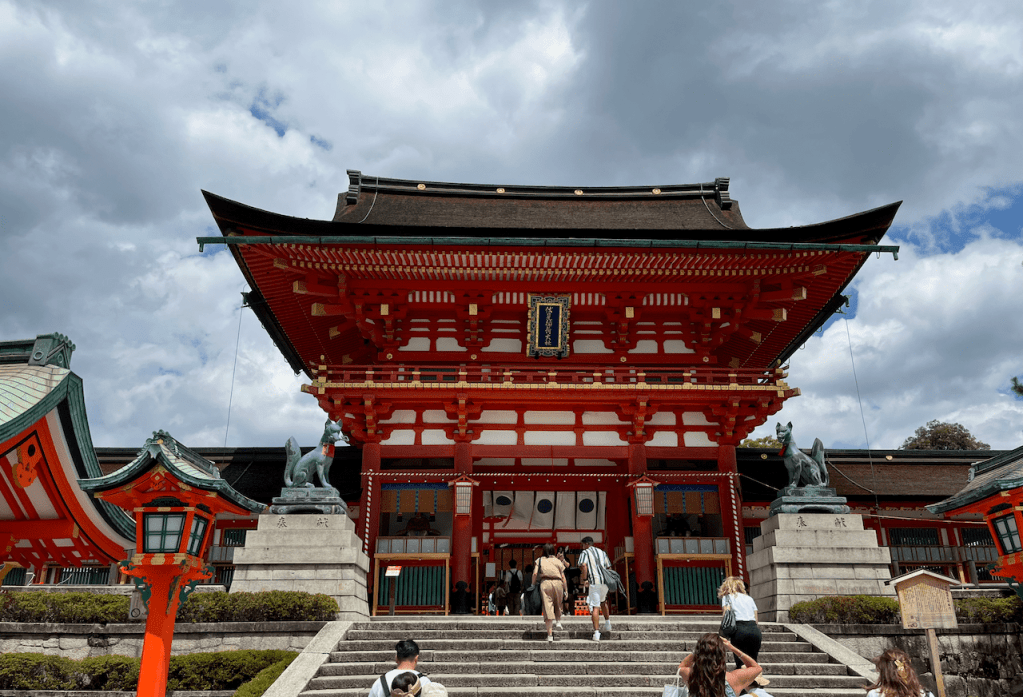
Anyhow, that’s the lengthy explanation of O-Inari-san; let’s look at the shrine. Chances are, you’ve probably seen photos of it, because the tunnel of red torii gates is so iconic, but there’s a lot more to the temple too.
From the Fushimi-Inari train station in Kyoto, you can find the shrine very easily (it’s a huge tourist draw):
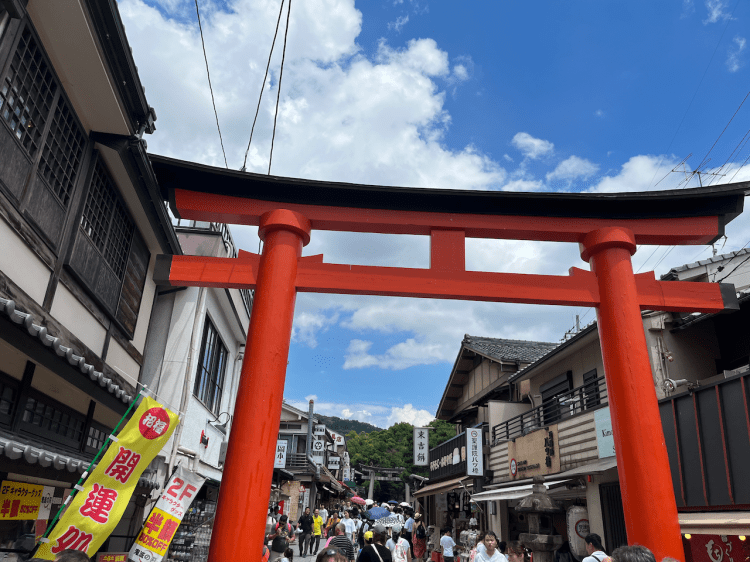
… until get to the front entrance:
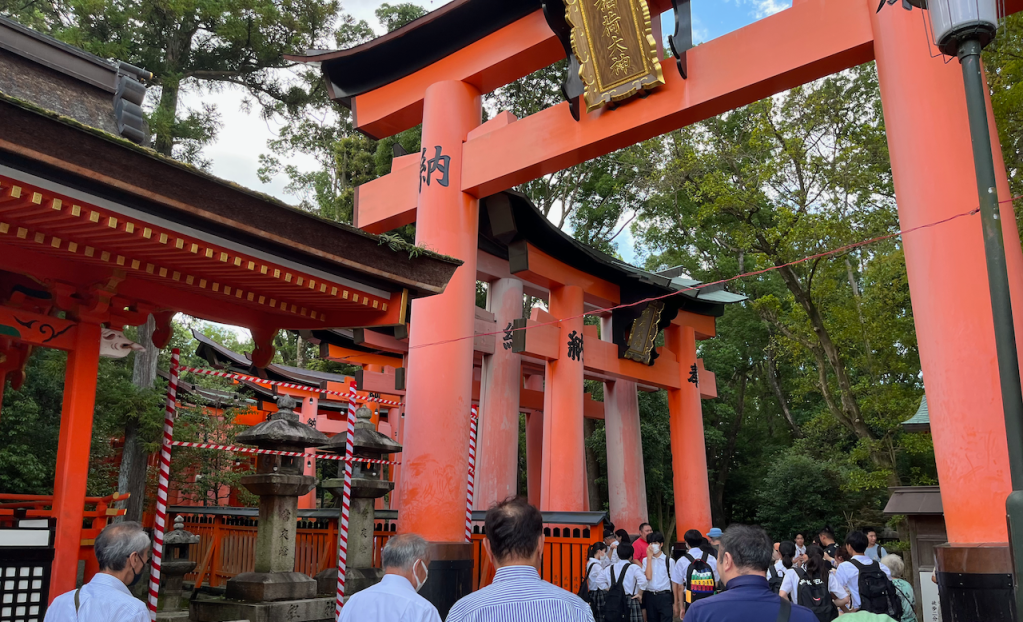
From here, the shrine splits into two places. Ahead, is the main, inner sanctum, however, the path also splits left and follows up the mountain:
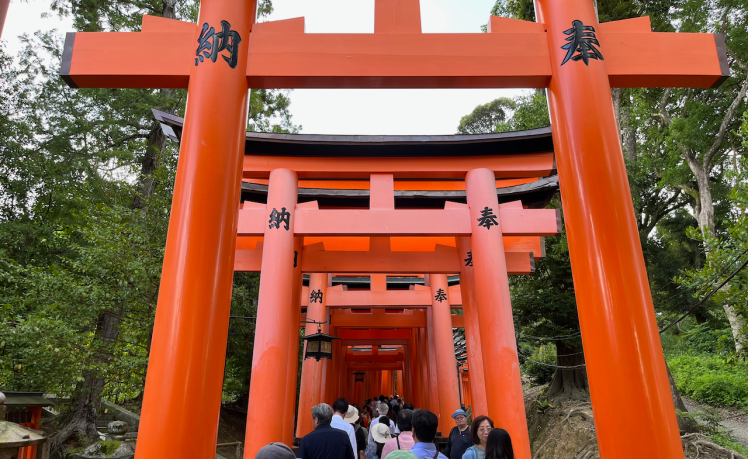
As you go up these stairs, the iconic tunnels begin to the right:
Each of these red torii gates is a donation by someone either praying for something, or an offering torii in gratitude for past blessings. This is a very common practice in Japanese Shinto (and Japanese religion in general): a cycle of supplication, and offerings of gratitude. This cycle is thought to deepen the connection (縁, en) between the particular kami and the supplicant over time.
Anyhow, the torii are pretty neat:
The tunnel branches off into a few side paths, but generally it loops up the mountain and back down again. There are other shrines at certain places up the mountain, and we visited a few, too many to post here (to be honest, I also got a bit lost without a map).
In any case, as you come down the mountain, there is a nice viewing spot here, to the right:
The veranda inside has a nice view, which I am told is especially lovely in Autumn:
Finally, just before returning to the front gate, there is a nice little bridge with a small stream running under it:
I took a very brief video of the stream as well (apologies for the background noise):
Fushimi Inari Grand Shrine was quite a bit of fun, and a great place to spend half a day. It’s comparatively easy to get to in Kyoto, and there’s more than enough there to keep one busy. Further, my son, who loves foxes,1 really enjoyed himself. He even got a few fox (kitsune) toys. The photo at the top of this blog is his favorite, overlooking the famous Kamo River running through Kyoto.
P.S. the name o-inari-san is also used to describe those little fried tofu pockets with rice in them.
1 In our current Pathfinder 2nd ed campaign, my son is playing a Kitsune character.
In the 19th-century book Kwaidan, a collection of strange and scary Japanese stories, one of the most famous stories is called Yuki-Onna (雪女, lit. “Snow Woman”). Unlike other stories that Lafcadio Hearn collected, he claimed that this one was told to him directly by a local who somehow passed on the tale. I’ve posted it here verbatim from Project Gutenberg.1
Unlike other stories in Kwaidan, Yuki-Onna is less of a scary story than it is a weird story, but also if you play D&D/Pathfinder, I think the idea of a beautiful snow spirit wandering the woods and killing people by stealing their warmth, would make an interesting, albeit short, campaign setting too.2
Of the stories in Kwaidan, it is one of the most popular, and frequently shows up in Japanese media. One of my favorite comedy shows did a 3-minute summary of it in Japanese (sorry, no English, but the animation is great), joking how the identity of “O-Yuki” was painfully obvious:
As this is Obon Season in Japan, it’s a great time to enjoy another scary story or two…
In a village of Musashi Province (1), there lived two woodcutters: Mosaku and Minokichi. At the time of which I am speaking, Mosaku was an old man; and Minokichi, his apprentice, was a lad of eighteen years. Every day they went together to a forest situated about five miles from their village. On the way to that forest there is a wide river to cross; and there is a ferry-boat. Several times a bridge was built where the ferry is; but the bridge was each time carried away by a flood. No common bridge can resist the current there when the river rises.

Mosaku and Minokichi were on their way home, one very cold evening, when a great snowstorm overtook them. They reached the ferry; and they found that the boatman had gone away, leaving his boat on the other side of the river. It was no day for swimming; and the woodcutters took shelter in the ferryman’s hut,—thinking themselves lucky to find any shelter at all. There was no brazier in the hut, nor any place in which to make a fire: it was only a two-mat[1] hut, with a single door, but no window. Mosaku and Minokichi fastened the door, and lay down to rest, with their straw rain-coats over them. At first they did not feel very cold; and they thought that the storm would soon be over.

The old man almost immediately fell asleep; but the boy, Minokichi, lay awake a long time, listening to the awful wind, and the continual slashing of the snow against the door. The river was roaring; and the hut swayed and creaked like a junk at sea. It was a terrible storm; and the air was every moment becoming colder; and Minokichi shivered under his rain-coat. But at last, in spite of the cold, he too fell asleep.

He was awakened by a showering of snow in his face. The door of the hut had been forced open; and, by the snow-light (yuki-akari), he saw a woman in the room,—a woman all in white. She was bending above Mosaku, and blowing her breath upon him;—and her breath was like a bright white smoke. Almost in the same moment she turned to Minokichi, and stooped over him. He tried to cry out, but found that he could not utter any sound. The white woman bent down over him, lower and lower, until her face almost touched him; and he saw that she was very beautiful,—though her eyes made him afraid. For a little time she continued to look at him;—then she smiled, and she whispered:—“I intended to treat you like the other man. But I cannot help feeling some pity for you, because you are so young... You are a pretty boy, Minokichi; and I will not hurt you now. But, if you ever tell anybody even your own mother—about what you have seen this night, I shall know it; and then I will kill you... Remember what I say!”

With these words, she turned from him, and passed through the doorway. Then he found himself able to move; and he sprang up, and looked out. But the woman was nowhere to be seen; and the snow was driving furiously into the hut. Minokichi closed the door, and secured it by fixing several billets of wood against it. He wondered if the wind had blown it open;—he thought that he might have been only dreaming, and might have mistaken the gleam of the snow-light in the doorway for the figure of a white woman: but he could not be sure. He called to Mosaku, and was frightened because the old man did not answer. He put out his hand in the dark, and touched Mosaku’s face, and found that it was ice! Mosaku was stark and dead...

By dawn the storm was over; and when the ferryman returned to his station, a little after sunrise, he found Minokichi lying senseless beside the frozen body of Mosaku. Minokichi was promptly cared for, and soon came to himself; but he remained a long time ill from the effects of the cold of that terrible night. He had been greatly frightened also by the old man’s death; but he said nothing about the vision of the woman in white. As soon as he got well again, he returned to his calling,—going alone every morning to the forest, and coming back at nightfall with his bundles of wood, which his mother helped him to sell.

One evening, in the winter of the following year, as he was on his way home, he overtook a girl who happened to be traveling by the same road. She was a tall, slim girl, very good-looking; and she answered Minokichi’s greeting in a voice as pleasant to the ear as the voice of a song-bird. Then he walked beside her; and they began to talk. The girl said that her name was O-Yuki;[2] that she had lately lost both of her parents; and that she was going to Yedo (2), where she happened to have some poor relations, who might help her to find a situation as a servant. Minokichi soon felt charmed by this strange girl; and the more that he looked at her, the handsomer she appeared to be. He asked her whether she was yet betrothed; and she answered, laughingly, that she was free. Then, in her turn, she asked Minokichi whether he was married, or pledged to marry; and he told her that, although he had only a widowed mother to support, the question of an “honorable daughter-in-law” had not yet been considered, as he was very young... After these confidences, they walked on for a long while without speaking; but, as the proverb declares, Ki ga aréba, mé mo kuchi hodo ni mono wo iu: “When the wish is there, the eyes can say as much as the mouth.” By the time they reached the village, they had become very much pleased with each other; and then Minokichi asked O-Yuki to rest awhile at his house. After some shy hesitation, she went there with him; and his mother made her welcome, and prepared a warm meal for her. O-Yuki behaved so nicely that Minokichi’s mother took a sudden fancy to her, and persuaded her to delay her journey to Yedo. And the natural end of the matter was that Yuki never went to Yedo at all. She remained in the house, as an “honorable daughter-in law.”

O-Yuki proved a very good daughter-in-law. When Minokichi’s mother came to die,—some five years later,—her last words were words of affection and praise for the wife of her son. And O-Yuki bore Minokichi ten children, boys and girls, handsome children all of them, and very fair of skin.

The country-folk thought O-Yuki a wonderful person, by nature different from themselves. Most of the peasant-women age early; but O-Yuki, even after having become the mother of ten children, looked as young and fresh as on the day when she had first come to the village.

One night, after the children had gone to sleep, O-Yuki was sewing by the light of a paper lamp; and Minokichi, watching her, said:—

“To see you sewing there, with the light on your face, makes me think of a strange thing that happened when I was a lad of eighteen. I then saw somebody as beautiful and white as you are now—indeed, she was very like you.”...

Without lifting her eyes from her work, O-Yuki responded:—

“Tell me about her... Where did you see her?”

Then Minokichi told her about the terrible night in the ferryman’s hut,—and about the White Woman that had stooped above him, smiling and whispering,—and about the silent death of old Mosaku. And he said:—

“Asleep or awake, that was the only time that I saw a being as beautiful as you. Of course, she was not a human being; and I was afraid of her,—very much afraid,—but she was so white!... Indeed, I have never been sure whether it was a dream that I saw, or the Woman of the Snow.”...

O-Yuki flung down her sewing, and arose, and bowed above Minokichi where he sat, and shrieked into his face:—

“It was I—I—I! Yuki it was! And I told you then that I would kill you if you ever said one word about it!... But for those children asleep there, I would kill you this moment! And now you had better take very, very good care of them; for if ever they have reason to complain of you, I will treat you as you deserve!”...

Even as she screamed, her voice became thin, like a crying of wind;—then she melted into a bright white mist that spired to the roof-beams, and shuddered away through the smoke-hole.... Never again was she seen.
Enjoy!
1Note: This eBook is for the use of anyone anywhere at no cost and with almost no restrictions whatsoever. You may copy it, give it away or re-use it under the terms of the Project Gutenberg License included with this eBook or online at http://www.gutenberg.net
2 At least, it would make a good one-shot adventure?
Greetings role-players! A while back, I wrote a piece about making a sohei warrior, a Japanese soldier-monk, in Dungeons and Dragons 5th edition. Since I have transition away from D&D, I have been tinkering with a similar build concept in Pathfinder 2e, and wanted to share. This is just a suggestion, but it’s based on historical precedence as much as possible, while still retaining elements of high fantasy and heroism (important since sohei were often zealots and scallywags). Your mileage may vary, but I’ve enjoyed my character so far.
A statue of Benkei, the archetypal sohei warrior, in Tanabe city in Wakayama, Prefecture. shikabane taro, CC BY 3.0, via Wikimedia Commons
To recap my D&D post, sohei warriors were very similar to samurai despite name “monk” (which is an overloaded term anyway), but they were bodyguards and field-armies for powerful medieval Buddhist temples. In time, they attained a legendary status especially around a semi-legendary figure named Benkei. So many of modern tropes in Japan about sohei warriors are inspired by Benkei.
As soldiers, they frequently are depicted using naginata weapons (similar to a glaive) and katana, as well as wearing typical armor for the time underneath their white cowls. As devotees to a temple, they were not clerics and generally not ordained as priests, but did protect priests and temples, and further political/ecclesiastical issues as needed.
In a fantasy role-playing context, this feels like something akin to a Champion in Pathfinder 2nd-edition. For my character, I chose the Cause of the Paladin (lawful-good)1 since he would not only get Retributive Strike feat (very handy with a naginata), but also from a character-standpoint it made sense to be a protector figure, and also since Buddhism in real-life is a lawfully-inclined religion anyway. I play my character, Shinji, as a straight-laced, through trigger-happy and somewhat clueless character. He is blinded by his devotion at times, but means well.
Shinji as shown on the Nexus site. I couldn’t find the export link, and since the service is still in Beta, many things might change.
For the Retributive Strike feat, if you combine that with 2nd-level feat Ranged Reprisal, the 10-foot range of the naginata now becomes 15 feet.
As for equipment, shields in the Western sense were never really used in Japanese combat, so I didn’t equip Shinji with one, even if he has the option. Instead, I focused on offense by equipping with both a naginata and a katana. If you don’t have the necessary source books, the stats are freely available on Archives of Nethys links above. By second level, I equipped Shinji with scale mail armor.
In the current story, my kids and are playing a small 3-person party exploring the city of Absalom, and Shinji had been dispatched here from Minkai to protect a local priest at the branch temple in Absalom. However, upon arriving, the priest is nowhere to be seen, and the temple is barred shut. So, part of his side story is to unravel what happened, while finding something else useful to do in the meantime (i.e. helping my kids’ characters).
All the guidance above are build suggestions, but if you read the history of the sohei, it is probably (in my opinion), the closest fit I can come up with while still keep it fun for a high-fantasy setting. Your mileage may vary, but I hope you have fun and good luck building a sohei warrior of your own!
1 I know that in the latest Pathfinder updates the alignment system is being deprecated, but for simplicity’s sake, I am mentioning it here.






















 Gleanings in Buddha-Fields

You must be logged in to post a comment.