Other Worlds

Jake: Go then, there are other worlds than these.


Stephen King, The Gunslinger (The Dark Tower, #1)

Recently, my family and I attended a wedding in my hometown for a relative of mine, who is marrying for the third time. The wedding took place at a famous golf course, which is situated on the top of a hill with a commanding view of the area.
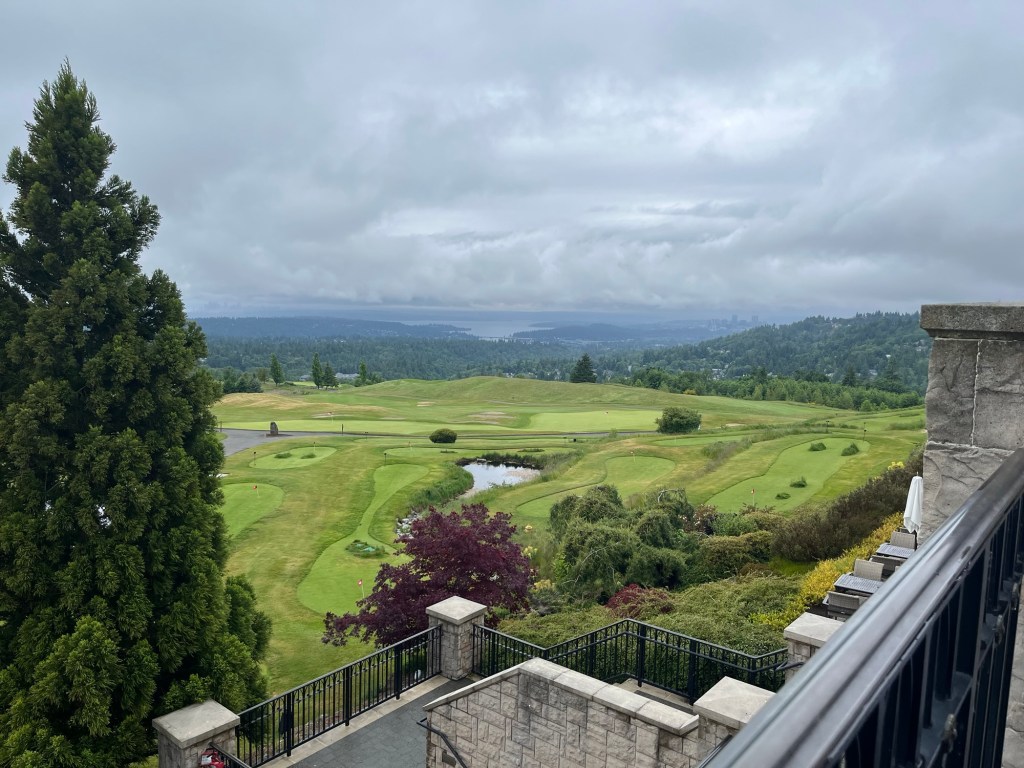
It was a surreal experience for me. My sisters and I grew up with our single mom in slummy apartments just ten minutes away, and we never went to that golf course in our youth. Now, we were there many years later, surrounded by wealthy men in tailored jackets, holding brandy glasses, bragging loudly about business, surrounded by women with fake boobs, and cocktail dresses. As a Marxist-Buddhist with an Asian wife, we felt out of place.

But it was fascinating too. Here’s a group of people who live a completely different lifestyle than me. It wasn’t a question of class differences either. It was just a choice of lifestyles and values. When my relative comes to our house in a couple weeks for my daughter’s graduation party, they will no doubt find my lifestyle strange too.

I keep thinking about this quote from Stephen King’s book The Gunslinger, which I posted above. People might physically exist in the same proximity, but they might as well be living in different worlds.

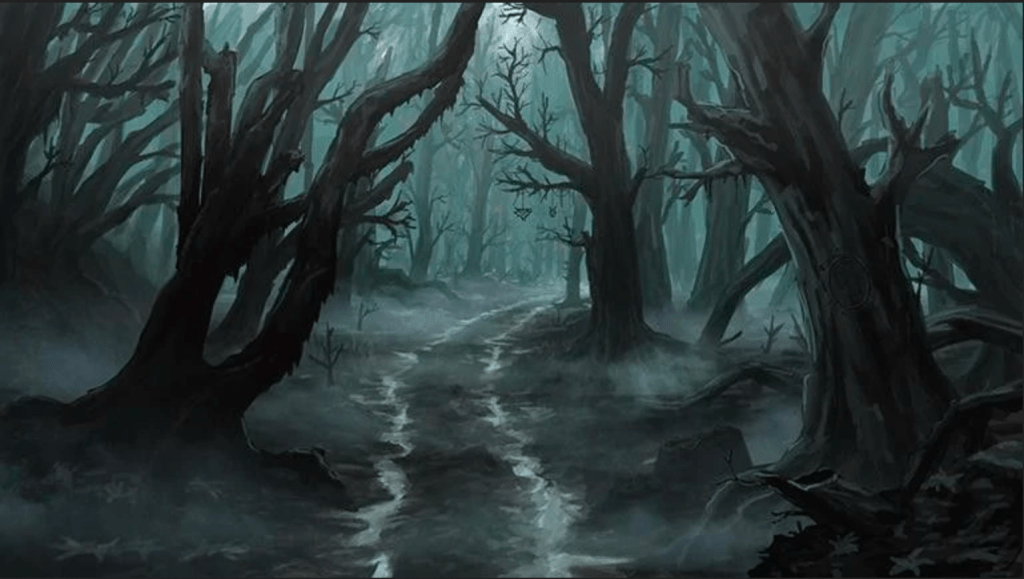
If you have ever played the game Dungeons and Dragons, you are probably familiar with planes of existence called the Feywild and the Shadowfell. The setting of Dungeons and Dragons usually takes place on a plane called the Prime Material Plane: the normal world of stuff, people, etc. But in the D&D setting there are other worlds that closely mirror it, yet are subtly different.

The Feywild (which I wrote about ages ago) represents a version of the Prime Material Plane that is overflowing with life, change, chaos, hence it has many “fey” creatures (fairies, goblins, elves, etc). By contrast, the Shadowfell (another old post) is a colder, more static and gloomy version of the Prime Material Plane. In Dungeons and Dragons, objects and places in one of these planes will appear in some form in the other: a small castle on the Prime Material Plane might be a grand fairy palace in the Feywild, or an abandoned, gloomy fortress in the Shadowfell, and so on. If you’ve watched the Netflix series Stranger Things, it’s the same concept.

So, as I stood there watching the golf course employees serving drinks to wealthy men, it was like they were in different worlds. Some people there are unhappy and stuck in a rut, and might see things through the lens of the Shadowfell, while others are flitting from one party to another, like the fey of the Feywild. And then everyone in between, too.

This isn’t limited to Dungeons and Dragons either: if you look at Buddhism, and its many realms of rebirth (heaven, humans, warrior titans, animals, hell, hungry ghosts, etc), you can think of it the same way: we might occupy the same space, but we might as well be living in different worlds.

Perhaps this is why chapter sixteen of the Lotus Sutra strongly implies that the Pure Land of the Buddha is here, not elsewhere.

Regardless of what world one dwells in though, it’s important to remind myself that all beings deserve happiness and wellbeing.

Captain Pike has an illusion, and you have reality. May you find your way as pleasant. 

Star Trek, “The Menagerie, part II” (s1ep12), Stardate 3013.1

Long days and pleasant nights to you all.

Namu Shakamuni Butsu

The Hero Of Our Own Story

A rich man thinks all other people are rich, and an intelligent man thinks all other people are similarly gifted. Both are always terribly shocked when they discover the truth of the world.

“I, Strahd” by P.N.Elrod

Another book I have been reading lately for Halloween is the novel I, Strahd, which is a fictional autobiography of the villain of the “Barovia” fantasy-gothic horror setting: Strahd von Zarovich. As an autobiography, Strahd talks about his origins and justifies why he’s such a monster, literally and figuratively. It was one of the most popular novels of the Ravenloft series that was published in the 1990’s to promote this venerable Dungeons and Dragons setting, and is a kind of “bible” for fans of the setting due to broad number of characters, helpful backstories, and compelling story.1

But I digress.

People naturally assume their values and beliefs are pristine because that’s all they ever know, and that others will naturally agree to them. They are then shocked to discover that other functional adults subscribe to very different beliefs. Their own world is briefly shattered or they feel threatened, and conclude that such adults are just stupid, insane or evil. What follows usually isn’t good.

Even when people claim they are open to discussion or free-thinkers, I am reminded of Dave Barry’s famous quote:

People who want to share their religious views with you almost never want you to share yours with them.

Of course this applies to me as well. But on the other hand, I have to remind myself that I am not the center of the Universe. Whether I am actually right or not is irrelevant; I have to accept that not everyone comes to the same conclusions that I do, and I have no right to judge them for their views:

Gandalf: “Do not be too eager to deal out death in judgment. Even the very wise can not see all ends. My heart tells me that Gollum has some part to play yet, for good or ill before this is over.”

“Fellowship of the Ring”, by J.R.R. Tolkien

Hence the Dhammapada has the famous line:

Hatred is never appeased by hatred in this world. By non-hatred alone is hatred appeased. This is a law eternal.

Translation by Ven. Acharya Buddharakkhita

It doesn’t mean you have to be best friends with other people, but you have to accept the sheer variety of people, ideas and beliefs no matter how stupid they seem.

Spock: Madness has no purpose.  Or reason.  But it may have a goal.

Star Trek, “The Alternative Factor”, stardate 3088.7

You don’t have to give them oxygen either. Some ideas are better left dead. It’s about tolerance of people, not tolerance of bad ideas. Ideas are, like all phenomena, contingent and impermanent (Buddhism par excellence).

As soon as you begin to harbor ill-will toward others who are different, you will quickly spiral into a dark path of your own doing.

Namu Amida Butsu

P.S. I have a huge backlog of drafted posts lately, so you may see a few more this week. I hope you enjoy.

1 It is a terrific read, but I admit I still like Vampire in the Mists featuring his rival, the elf-vampire Jander Sunstar, even more. Strahd is definitely *not* the hero in that tale. Heart of Midnight was also an excellent read and a close third for me. To be honest, all the novels I’ve read int he series so far, even the less compelling ones, are still good reads.

In Praise of the Castlevania Series

Every Halloween, including this recent one, I like to stop whatever else I am doing (including Fire Emblem), and play through the old, classic Castlevania the game series: namely Castlevania 1, 2 and 3 for the NES and Super Castlevania for the Super Nintendo. There’s something really fun about journeying to Dracula’s castle, fighting hordes of evil, and enjoying the medieval-gothic ambience. For various reasons, I never really got around to playing the newer Castlevania games because I was in college, and had other priorities, so I missed classics like Symphony of Night until it came out much later for mobile devices.

In any case, the first few are really near and dear to my heart. So, this post is a tribute to those early games.

Castlevania

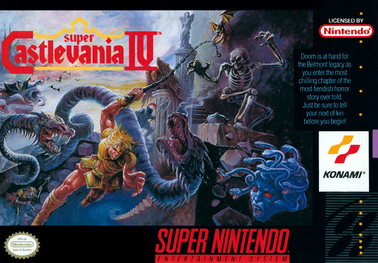
Of all the games listed below, I think this is my favorite box art.

The original Castlevania game, like many early NES games, was short, simple, and brutal. The game did not teach you very much, but instead threw you right into the game, and the difficulty level rapidly progresses beyond level 1 and 2. By the time you get to the Grim Reaper, the levels are quite difficult. The final level is a genuine gauntlet.

I never beat this game as a kid, and I only beat as an adult through a combination of save states and dedication. It’s a classic of its era, and fun to playthrough. Even Terminal Montage did a nice tribute to it:

Castlevania II: Simon’s Quest

For some reason, early NES sequels often followed a pattern of providing overland adventures to expand the world of the first game. The Legend of Zelda had Zelda II: Link’s Quest, Castlevania had Castlevania II: Simon’s Quest and so on. Castlevania II was the least popular of the NES games, but it is in a weird way my personal favorite.

You had to be there, though.

I was a bit too young to play the original Castlevania when it first came out, but I knew about it, and so when Nintendo Power magazine put out the issue (with the controversial cover) with exclusive coverage of Castlevania II, I was hooked. The full color map was so fun to look at:

Source: Nintendo Power Magazine

I still play this game regularly. I enjoy the slower place than other Castlevania games, and that it requires less feats of acrobatics (less falling off of stairs, like Castlevania III). I like to both 100% the game, and beat it within the 8 hours. However sometimes, I just enjoy taking my time and exploring every corner of Transylvania.

Of course, one other thing should be mentioned: the soundtrack. 8-bit games weren’t known for powerful music technology, but every once in a while, someone would compose something inspired. The Bloody Tears song, found on the overload during daytime, would go on to be a classic of Castlevania franchise, and rightly so.

One other interesting bit of trivia. The Dungeons and Dragons module, Ravenloft (I6), came out in 1983:

The box art for Castlevania II came out in 1987. Notice any similarities?

Castlevania III: Dracula’s Curse

Castlevania III: Dracula’s Curse is arguably the hardest of the early Castlevania games. It used the novel idea of featuring a different, earlier Belmont, than Simon, so it has a grittier, more medieval feel. Coupled with the spirit helpers, and multiple routes to choose from, this games was exciting and fun to replay.

This is also the first game where Adrian Tepeš, also known as “Alucard”, is introduced, though mechanically he is a fairly weak helper.

In fact, fans of the Netflix Castlevania series (such as myself), will see many references to Castlevania III, including the same cast of characters. I was a bit surprised that Grant Danasty wasn’t included in the series, other than a brief mention:

“that one guy with the horse-drawn sailboat on wheels that called himself the Pirate of the Roads…”

Trevor Belmon, Castlevania Netflix Series, S3E01

As for the game, I truly do enjoy it, though the punishing difficulty and frequency of “stupid fall deaths” does get a bit frustrating at times. I often like to take the difficult routes just because it’s fun to go all the way up through the basement of Dracula’s castle, more so than the ghost ship. The soundtrack was excellent and many classics from this game appear in later franchises too. Culturally speaking, Castlevania III is the most influential of the early games, and with good reason.

Super Castlevania IV

At last we come to the final game I played: Super Castlevania IV. This was the first game to be made for 16-bit Super Nintendo, versus older 8-bit Nintendo Entertain System. The improvement in graphics, sound and music reflect the improved hardware.

This game also finally allowed your character to whip in multiple directions, not just forward. I wish this feature had existed in earlier games, especially Castlevania II, since whipping the little slimes that were too short to hit was quite frustrating, as well as enemies on a lower platform.

The controls of this game are just so seamlessly smooth and the game levels are a good challenge without being excessive. The graphics of course were meant to show off new features of the 16-bit Super Nintendo, including rotating backgrounds, and other weirdness in Dracula’s castle. In fact, much of Dracula’s castle is just weird, but in a fun, gothic way. Fighting ballroom ghosts in one level, or gold skeletons in the treasure vault are all novel ideas, and lend to the old decadence of the villain.

Finally the music. The jazzier style music actually somehow enhances the mood of the game, rather than detracting from it. Composers definitely had some fun in this one, and I like to go back and listen to it occasionally on Youtube. Enhanced versions of classic Castlevania songs all sound great in this game.

One oddity is that this game is treated as non-canon in the Castlevania universe, since it is seen as a remake of the original Castlevania game.

Conclusion

I do regret not playing the later Castlevania games when they came out, especially Symphony of Night, so I missed out on a lot of the later lore until the Netflix series. However by this point, as an old school gamer, I had four classics under my belt, and was happy with what I had.

Torii Gates in Japan

While making some maps on Inkarnate for a new Japanese-themed Ravenloft-domain I published on DMS Guild, I was reminded how these kind of Japanese gates often show up in unusual places in Western media, including fantasy media:

Torii gate for Tsurugaoka Hachimangu shrine in Kamakura, Japan. Taken in 2022.

But these gates aren’t just for decoration, they’re an important part of Japanese Shinto religion, called a torii (鳥居). They’re a feature only found at Shinto shrines, not Buddhist temples. Similar structures exist in other Asian cultures, but the torii in particular serves a religious function.

Shinto is a religion devoted to the kami, the native divinities of Japan, and in Shinto tradition ritual purity is important. The kami will not descend to ritually unclean places, nor hear the prayers of unclean people, so sacred places must be purified. A sacred space in this context can be as small as a tiny home shrine, a kamidana, or as large as the sanctum of a large shrine such as Meiji Shrine in Tokyo.

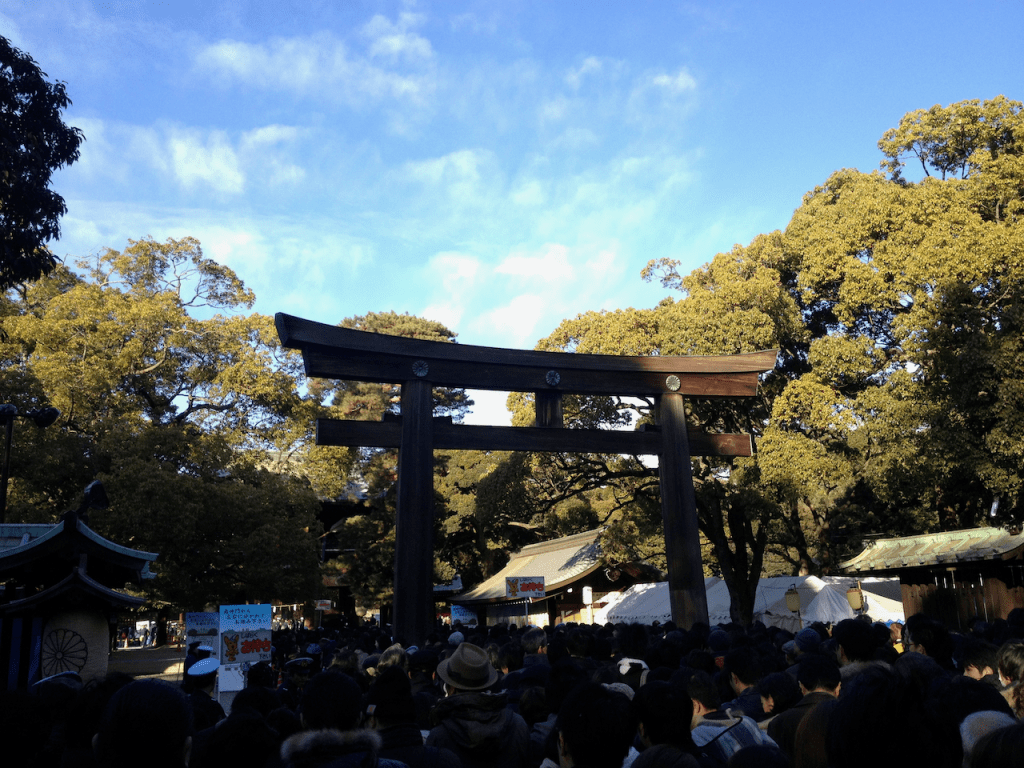
Torii gate for Meiji Shrine in Tokyo, taken in 2012 during Japanese New Year. The lines were amazingly long.

What matters is that there’s a sense of “boundary” between the mundane, outer world and the sacred, inner realm.

The torii thus acts as a gate between these two worlds. By passing through the gate you enter the sacred grounds of the shrine, or leave it. It’s also why taking away things from a shrine like pebbles or flowers is frowned upon.

Torii can be very small, or using the example of Meiji shrine, extremely large. There are many styles too. Some are bright red, others a more natural color. Sometimes a shrine will have a series of torii gates.

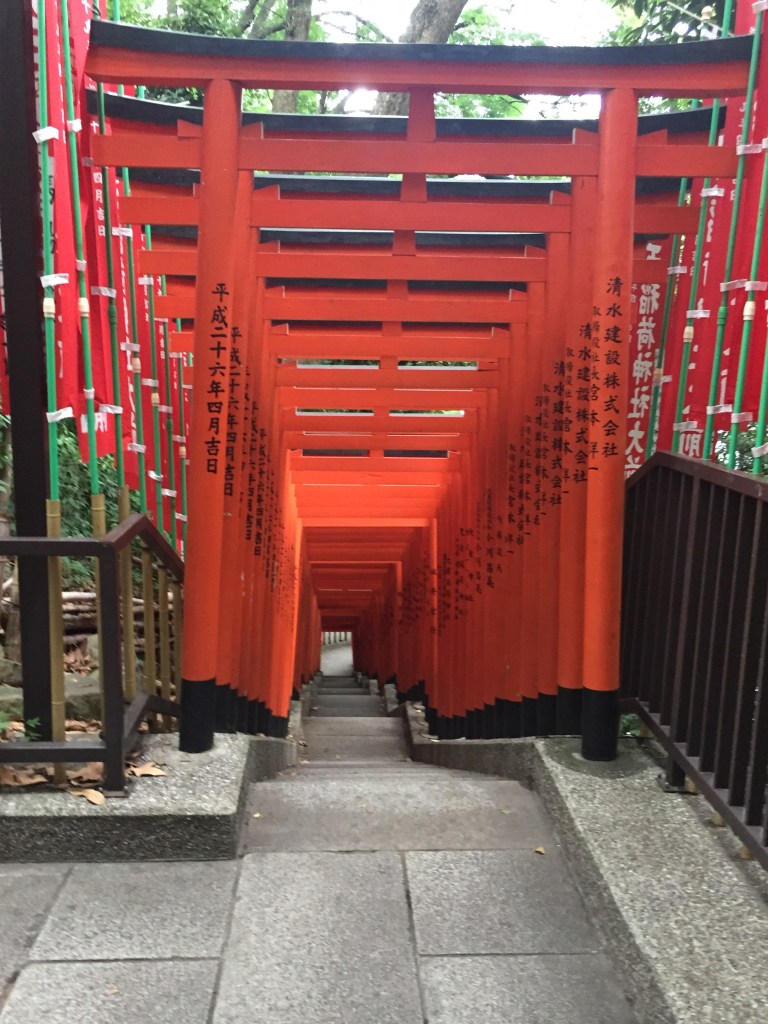
Torii gates at Hie Shrine in Tokyo, taken in 2017.

In the photo above, these gates were sponsored through donations by local businesses. As with many other aspects of Shinto, there’s a lot of local community involvement as well as give and take.

Anyhow, that’s a brief look at torii gates.

Learning Pathfinder 2e as a D&D Player

In the past couple of months, starting with the Beginner Box, I have been learning how to play Pathfinder, second edition, which came out in 2019. It is a successor to the original Pathfinder edition, which in turn was based on Dungeons and Dragons 3.5 through the Open Gaming License (the same one under attack recently by Wizards of the Coast).

Speaking from personal experience, Pathfinder has suffered from a bit of an image problem…

But I picked up the Core Rulebook lately, which has been a fun read. The artwork is top-notch, and the guide does a pretty careful job walking you through the rules. However, the sheer size of the rulebook makes it hard to mentally absorb all at once, so I found this excellent series of videos by Jason Buhlman, lead game designer, that walk through all the essential aspects of playing Pathfinder.

First lesson, character creation
Second lesson: understanding magic
Lesson three: designing encounters
Lesson four: combat

I enjoyed this series, and it really helped the rules Pathfinder 2e “gel” in my mind. It also made it easier to go back and make sense of the text in Core Rulebook without having to reread multiple times.

So, I went ahead and made a first-time character to get used to the new ruleset: Tharivol a Wood Elf Druid. Pathfinder does not yet have an equivalent online character sheet storage system like D&D Beyond, but it has been fun to make on paper.

Transitioning from D&D

But, what’s it like going from Dungeons and Dragons 5th edition, which I have played since 2017, to Pathfinder 2nd edition?

Mechanically speaking, many of the rules, especially combat rules, make a lot more sense in Pathfinder than they did in 5e. The feel is more or less the same, but when you get into the grey areas, the Pathfinder approach often makes more sense, and there’s usually a contingency for everything a player wants to do. Some rules look more familiar to old time players like me (for example the spell “slots”) who played older editions, others look like fresh design improvements over older games. It’s an interesting mix of complexity with novelty.

Weapons also make more sense. For example, I complained previously about the lack of Asian-style mundane items, weapons and magic items in 5th edition and I was surprised to find, for example katana weapon stats in Pathfinder right in the Core Rulebook. This means, my old elf-samurai character, if adapted for Pathfinder, would probably look a bit more realistic (as much as fantasy elves in a Japanese-style setting would 😅…) than before.

Speaking of character creation the Pathfinder system relies less on character “tracks” to follow as one levels up, and more on a kind of buffet where one picks feats over time. Sometimes, the feat choices and skill increases are limited in scope, but you still usually have room to choose. This makes it hard to create the same character twice, and means each one will have a bit more individuality.

In the Advanced Player’s Guide and Lost Omens: Ancestry Guide there are quiet a few more character races and classes to choose from beyond the Core Rulebook. I was surprised to see a more diverse set of options. My son who is half-Japanese, was excited to be able to play a Japanese-style kitsune (fey fox) character, for example.

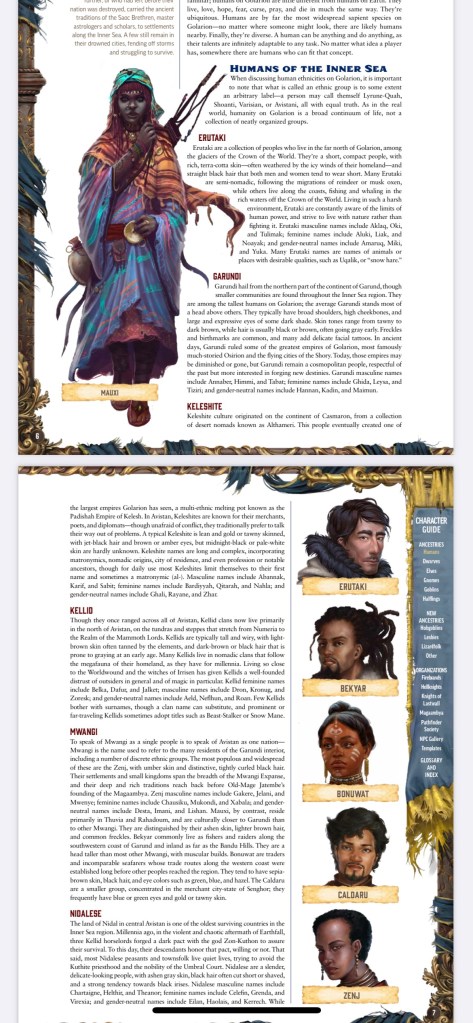
Even the human characters, unlike 5th edition Dungeons and Dragons, get a lot of attention and care and are a lot more compelling to play. The artwork alone depicting humans in Pathfinder is amazingly diverse and fascinating. Take a look at a couple pages from the Lost Omens: Character Guide

Holy cow, the amazing detail and artwork really brings the various cultures of Pathfinder to life, and makes it much easier to find cultures you can identify with. Paizo really needs to pat itself on the back for this effort. Speaking of artwork, the Lost Omens Travel Guide is simply amazing. The Guide is written as a travel guide for players who might venture in the default setting of Absalom and surrounding areas, but provides amazing detail about everything from fashion, to card games, and even recipes that you can try out in real life.

Speaking of which, the fact that Pathfinder is not limited to hardcover books (which are fairly expensive) and openly available online through PDFs, or just through official reference sites makes a lot of this easy to fit your budget level. You can start as you are and learn pretty quickly and cheaply, but if you’re like me and like physical books, you can easily order those either through your local game store or directly through paizo.com.

For all these wonderful aspects of Pathfinder, there is one area I have personally been frustrated and that’s the world building and lore.

A lot of the familiar old settings that I knew from Dungeons and Dragons, such as Eberron and Barovia, both of which predate 5th edition, simply don’t exist in Pathfinder. There are probably good reasons for this due to licensing issues, intellectual property, and so on, but the loss is definitely felt. Fan created conversions for such settings do exist, but they ran the gamut in terms of support and quality. It would have been nice if Pathfinder had found a way to provide more official versions that were maybe similar to the D&D settings, but obviously not carbon copies. Such things may exist, but it’s a bit hard to sift through all the different adventure packs and settings that are printed already.

Some of my Ravenloft novels, along with Sazh from Final Fantasy XIII.

It isn’t all that hard for an enterprising DM to also just convert 5th edition settings into Pathfinder ones, but I do miss being able to just have the reference books handy, for lore if nothing else. Pathfinder focuses on the Lost Omens setting as its introductory setting, and if you played 5th edition, this will feel in some ways like the classic Forgotten Realms Sword Coast. Beyond that though, things get a bit muddier in terms of lore that’s familiar to old D&D players.

Conclusion

In short, compared to Dungeons and Dragons, I have found that Pathfinder has more to learn up front due to slightly more complicated rulesets, and the vast array of books that Paizo has printed for 2nd edition already in the last 3-4 years. But Paizo recognizes this and provides a number of choices and options to help ease the transition. It took me about 2-3 weeks reading Core Rulebook and watching the videos in my spare time, but once I got past that initial hurdle, the rest of Pathfinder 2nd edition just made sense.

I’ve played a bit with my kids, but I would like to find other groups to play in the near future, but as with any TTRPG, finding players is…. challenging.

In any case, Pathfinder is dynamic, exciting and has a lot of offer. They are hungry for customers and are making great efforts to help educate people, and stay responsive to their needs. Where 5th edition has lost its luster for me, Pathfinder is a lot more exciting and compelling.

Of course I still enjoy 5th edition, and it has a lot of memories for me and the kids, but it also feels increasingly like it’s run it’s course, the corporate greed has homogenized the game to the point of being moribund.

A Buddhist Monk in Count Strahd’s Court

On the road to the Mists of Barovia

Having watched Netflix’s Castlevania series for probably the third time through, and as a way of “eating my own dog food” by applying my Dungeons and Dragons Hamato Islands setting to other environments, I started a recent thought-experiment: suppose I made a Japanese-style character, and suppose that character got transported to the classic gothic horror setting of Barovia from the Demiplanes of Dread. How would that look like?

Gothic horror, particularly the classic literature, arose from a specific time and place, so it’s inevitably tied to certain religious trends, cultural assumptions, monsters, etc. Dropping a samurai from, say, the 16th century Warring States period, or a Buddhist monk from the late 12th century Heian period into a such a setting would risk being nothing more than a “fish out of water story”. Fans might scoff and say “that would never happen”.

However, if you think about it, the demiplane Barovia, by its nature, keeps pulling people through The Mists to be trapped and fed off of by the vampire Dark Lord, Strahd von Zarovich. Strahd depends on a steady supply of incoming people because as a dark lord who’s been in power for many centuries, the native Barovians are broken spirits anyway and the land is practically devoid of life. As long as he brings more people through the mists, he could care less where they’re from; he just needs fresh blood, both literally and figuratively.

Strahd is a dark and brooding kind of guy

So, imagine some itinerant monk (cleric, Way of the Sage, in my setting) or a sohei warrior (probably a paladin, Oath of Vengeance) is traveling at night deep in the woods of some remote mountain path. Heavy mists close around him, and before he or she knows it, the forests look different. The fauna is ominous and unfamiliar and everything feels somehow threatening. Next he or she stumbles onto the next village only to find that it looks totally unfamiliar. The homes are sagging, timbers are rotten, the colors are faded and bleached, and the architecture is unfamiliar. The strange people gawking at him or her with haunted eyes look different. Worse, they probably wouldn’t speak the same language.1

Quite the culture shock, no?

But it goes further. The local deities would be unfamiliar for example. Such a character would probably not know the Morninglord (Lathander in Barovia), and might rely on their own deities instead even though they mysteriously can’t communicate with them. Since the Morninglord is the only non-evil deity in Barovia, would my cleric/sohei character try to find common ground, or would they hide their religion to avoid antagonizing the locals?

Folk customs, like garlic for vampires and holy water, would also differ. A character from another realm, such as medieval Japan, would use salt, sand blessed with a mantra, or chanting holy sutras to repel evil spirits. Would these religious practices work in Barovia?

If the character managed to survive long enough, I imagine that they would gradually encounter others who stand out. Such people might also hail from disparate lands: maybe from the tropical lands of Chult, the Al-Qadim setting (based on fantasy Arabic culture), or from the wider Asian-inspired lands of Kara-tur. Maybe even a Warforged from Eberron?

In spite of the diverse backgrounds, they’re all united by their common problem: they’ve been brought to the Demiplanes of Dread against their will, and they have to take Strahd2 down. Thus, I imagine the final showdown against Strahd would be a party composing of classic gothic figures like a priest of Lathander, a Simon Belmont like character, maybe a wizard or two, but also diverse characters from other lands. A kind of global super team.

Anyhow, this scenario probably isn’t interesting to other players, but it was just a fun thought-experiment about the challenges of dropping D&D characters from one culture into another culture, especially in a hostile environment.

P.S. Title inspired by Mark Twain’s Connecticut Yankee in King Arthur’s Court. I hope Mr Twain is not rolling over in his grave. 😅

1 The idea of one “Common” language in D&D that all humanoids know might work for a single contintent, but once we start spanning different continents in the Forgotten Realms, the idea seems less and less plausible. For that reason, I made up “Kara-Tur Common” and “Faerun Common” to account for linguistic differences between continental settings, while still having a reasonably common lingua franca among locals.

2 Or, a different Dark Lord, of course. With the new D&D book Van Richten’s Guide to Ravenloft, the other demiplanes are getting much needed attention and detail.

Meet the Real Life Vistani

With the recent conversation about the new adventure book for Dungeons and Dragons, Van Richten’s Guide to Ravenloft, I wanted to cover an interesting subject: the Vistani.

The Vistani, based on the “Gypsies” from Bram Stoker’s Dracula novel who were steadfast in their loyalty to Dracula, are a key human ethnic group in the Ravenloft setting of Dungeons and Dragons. Unlike the crushed spirits that comprise most Barovian residents, the wandering Vistani are lively and possess both a need and a means of traveling across the planes.

In previous versions of the Ravenloft setting, Vistani were mostly loyal to the vampire lord Strahd, but the community was somewhat split. Some were actively loyal as spies and assassins while others simply acknowledged his overwhelming authority.

In any case, the real life analogy of the Vistani to the real-life Roma has always posed a bit of a thorny issue. The term “gypsy” is (for good reason) outdated as well as the old tropes of crystal balls, wandering caravans, and so on.

The BBC posted a good article and documentary recently about the Roma in Eastern Europe who still face overwhelming discrimination. Stop and watch if you can. It’s well worth the look.

It’s important to remember that Roma people are a medieval offshoot of an ethnic community from India, and that centuries of ostracism have pushed them to the fringes of society generation after generation and set them up for failure generation after generation as a result.1 The notion “traveling” in caravans, for example, is often due to Roma being unwanted in most places they visited.

For this reason, I have tried to be mindful of presenting the Roma / Vistani in a more positive light when I run Ravenloft based games with my daughter and her friends. I looked up real Roma names for the characters, how Roma clan dynamics work, and changed their image from shifty vampire-loyalists to a conflicted ethnic group trying to find their way in a hostile world. Certain mechanics, such as Madam Eva’s fortune telling are integral to the setting and hard to change, but I try to make a nuanced picture of a people who are (unfairly) distrusted and have more to offer than just some tropes.

In any case, investing time as a D&D player to learning more about the real life Roma people is a good way to raise awareness of their situation and to pass these on to players through an interactive story (not lecturing) and have a positive experience at the same time. Roma are people too, not just plot devices.

1 … sound familiar? Or, here, here and here?

Using Tarokka Decks in Dungeons and Dragons

Photo by Alina Vilchenko on Pexels.com

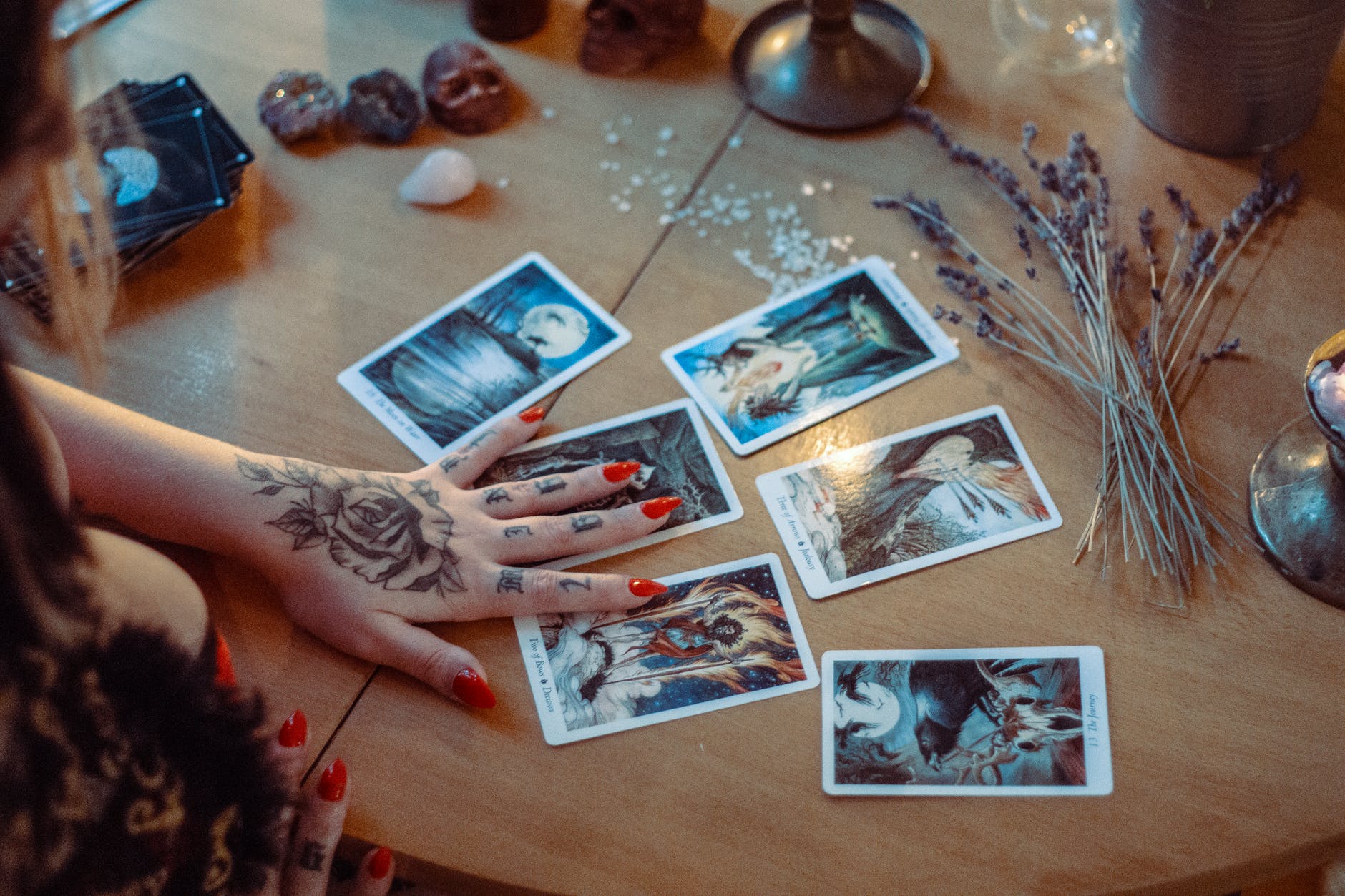
Recently, my daughter’s D&D campaign had concluded a year-long story, and after taking a few weeks off to do other things, we started it back up recently with a new story.  This time I was struggling to decide what kind of story I wanted to do for her, so I decided to let the Fates decide using a Tarokka Deck from the Curse of Strahd adventure.¹

The Tarokka Deck is an in-game prop that looks similar to a Tarot deck, but is more thematic to the adventure.  It can also be used to play a card game (rules included in the package).  The Curse of Strahd adventure guide provides some rules about how to use a Tarokka Deck as a way of telling fortunes for the players, but really this is just a way to randomize certain points of the campaign so it’s a different adventure each time.

I wanted to do something similar for my daughter’s campaign so I created an adventure hook where she encountered some itinerant Vistani² at a nearby encampment, and she had her fortune told by the elder Vistani matriarch as a kind of friendly, good-will gesture.

I adapted the ritual outlined in Curse of Strahd and laid out the cards like so:

  1. left card (from the main deck) – the character’s past
  2. top card (from the main deck) – the character’s current situation
  3. right card (from the main deck) – something in the near future
  4. bottom card (from the separate high-card deck) – something the character wants
  5. middle card (from the separate, high-card deck) – the outcome

My daughter did all that and came up with a “fortune” that … with some creative interpretation on my part, managed to build a cohesive history of the character, and a basic outline of her next adventure.  It worked well because it was a fun, mildly spooky moment, and unbeknownst to her, it let me generate a skeleton framework for her next campaign and allow me to fill in the rest later.

Even if you don’t own the Tarokka Deck, Curse of Strahd and other resources show how to make your own “deck” using a normal pack of playing cards and mapping the suit and number to the same cards in Tarokka.  From there, you just need to drum up an elaborate ritual to “tell the party’s fortune” and let them basically pick their new adventure.  😀

¹ I own both but haven’t actually been able to use either one for their intended purpose yet.  The Curse of Strahd is much too dark of an adventure for my daughter’s campaign, so I am saving it for other adult campaigns in the future.

² Vistani in Dungeons and Dragons are a bit of a awkward subject due to their stereotyping of real life Romani people, but at the same time they fulfill an interesting niche in Dungeons and Dragons lore.  I tried to paint a more positive image of the Vistani from what I knew of Romani culture (emphasize Indian heritage, deemphasize negative stereotypes) while maintaining an aura of mystery thanks to the Vistani’s planar-travelling ability.  I hope it worked.