
If you were wondering where I’ve been lately, my free time has been used up on a small side project that became an interesting challenge.
A couple years ago, I wrote this blog post about the Thirteen Buddhas and Bodhisattvas, including the mantras recited for funerary practices for the deceased in Japan. At the time, I posted the Japanese version of the mantras, which is based on Sanskrit, but not quite pronounced the same way. It’s like the way English speakers frequently mispronounce Latin because it’s been filtered through centuries of sound changes, history, etc.
But I digress.
I always regretted I wrote that page without including the Siddham-script version of the mantras though. But back then, I didn’t know enough Siddham to do that, and there’s not enough information online to find examples. A few years ago I picked up a book in Japanese about the Siddham script.
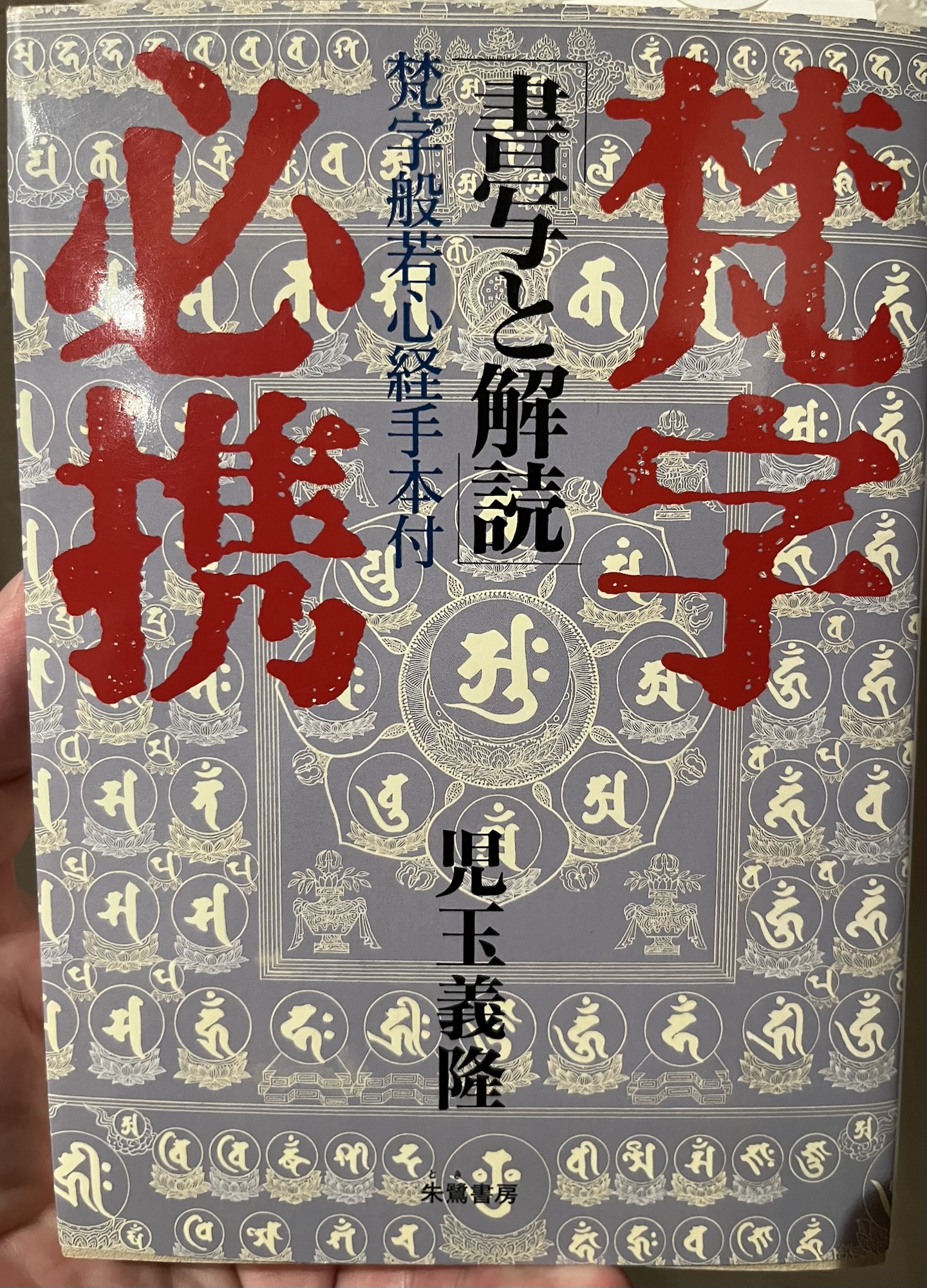
The Siddham script of Sanskrit is frequently used in Japanese-Buddhism, especially the esoteric traditions (Shingon and Tendai), even though it has long since been replaced in mother India. Thus, it is like a snapshot in time in the Buddhist tradition: a fascinating example of the fusion of Indian culture with Japanese Buddhism filtered through the Silk Road and Chinese history.
Here is a page from my pilgrimage book I think from Sanjusangendo in 2023:
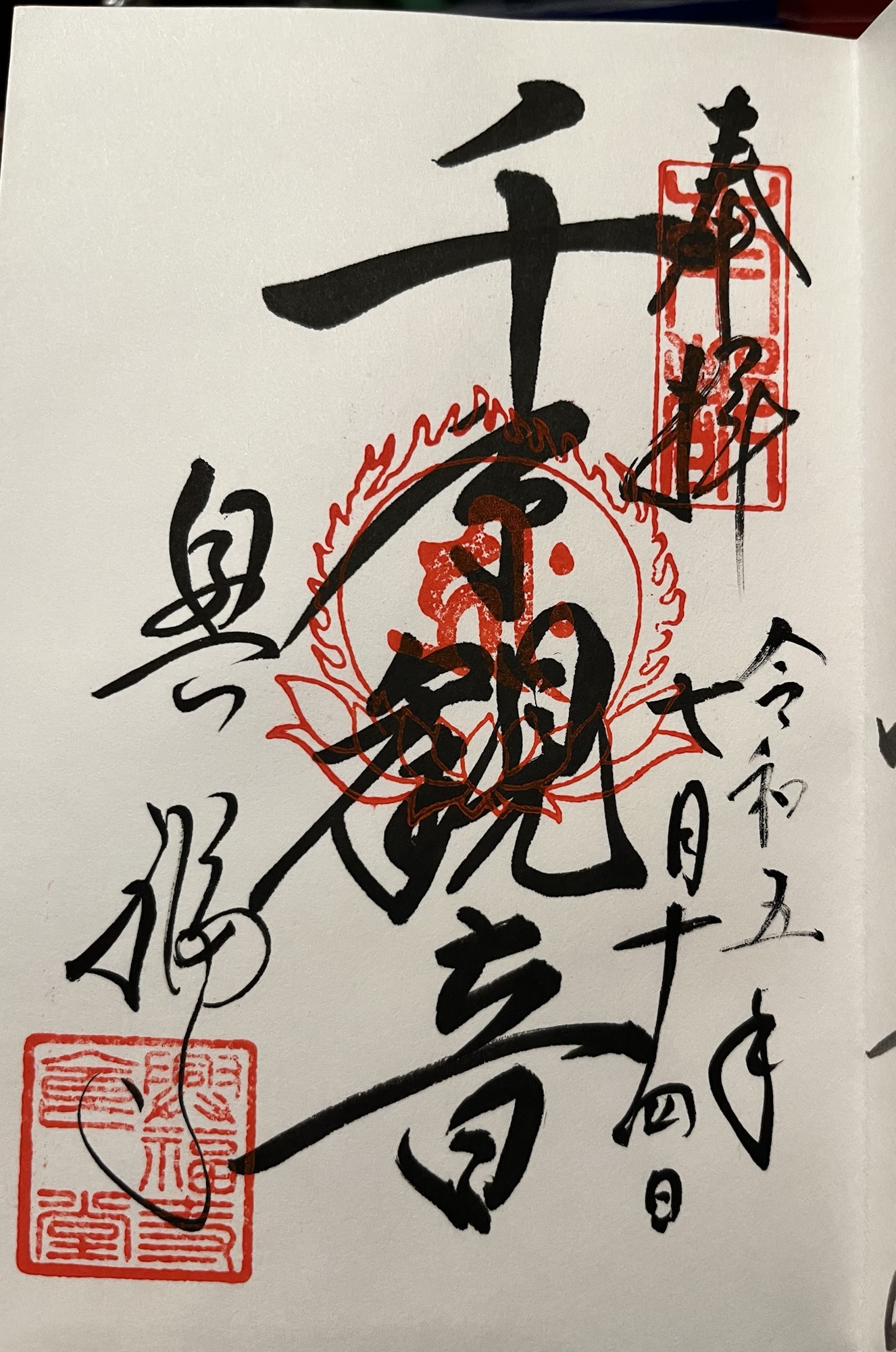
In the center, in red is the syllable hrīḥ: 𑖮𑖿𑖨𑖱𑖾
This single letter 𑖮𑖿𑖨𑖱𑖾 actually comprises of five parts:1
- The Siddham-Sanskrit letter “ha” as its base.
- A “virama” to change “ha” to just “h” (drop the implicit “a” sound).
- The Siddham letter “ra”.
- Change the vowel from default “a” to “ī” (long “I” sound), and finally
- A breathy ending sound called an “anusvara”. In Siddham this is the double-dots on the right hand side. Sanskrit nouns often have this sound.
The book focuses on Siddham calligraphy for the esoteric-Buddhist traditions, and teaches you how to write it with brush and ink (i.e. Japanese calligraphy). Writing with pen and brush is one thing, but typing Siddham on a blog (like I was trying to do in the article above) online is actually quite difficult. Why? There is no native keyboard for Siddham. So, instead, you have to use Unicode blocks. For the example letter above, you need five separate Unicode blocks to make this work:
- The base letter “ha” :
𑖣 - A “virama” to change “ha” to just “h” :
𑖿 - The Siddham letter “ra” :
𑖨 - Add the vowel “ī” (long “I” sound) :
𑖱 - A breathy ending sound called an “anusvara” :
𑖾
So, if you edit the HTML code directly, put these five code blocks in this order, you will get 𑖮𑖿𑖨𑖱𑖾.
Now, try to do that for a lengthy mantra such as this one for the Medicine Buddha: 𑖄𑖼 𑖮𑖲𑖨𑖲𑖮𑖲𑖨𑖲𑖓 𑖜𑖿𑖚𑖯𑖩𑖰 𑖦𑖯𑖝𑖒𑖿𑖐𑖰 𑖭𑖿𑖪𑖯𑖮𑖯𑗃 or Oṃ huru huru caṇḍāli mātaṅgi svāhā. It took about 30 minutes to type all this out, based on the description in the book, and me carefully deconstructing each letter to figure what the Unicode code blocks were needed.
But, at last, I updated the Thirteen Buddhas blog post and added the missing Siddham-script mantras.
It was a pain in the neck, but I am happy to finally understand the process, and I learned a lot about Siddham script in the process.
So, that’s what I spent my free time this week doing.
P.S. I also updated the Mantra of Light post similarly.
P.P.S. Title is a joke based on the 1980’s movie Adventures in Babysitting.
“I am old, Gandalf. I don’t look it, but I am beginning to feel it in my heart of hearts….
J.R.R. Tolkien, Fellowship of the Rings
1 This is true with many other Indian-language scripts even to present day: they are “abugida” scripts where the vowel is implied, but then modified for certain vowels.
Discover more from Gleanings in Buddha-Fields
Subscribe to get the latest posts sent to your email.
 Gleanings in Buddha-Fields