
During a recent trip to Japan, we visited the city of Kyoto. Since antiquity, it was a trendy of the nobility to build villas in the hilly suburbs of Kyoto (presumably cooler there in the summer), which in turn became Buddhist temples generations later. Some of these temples grew to be very powerful during Muromachi Period of Japanese history, namely the Zen temples of the Five Mountains System.
We were lucky enough to visit two of the five temples of the Five Mountains System: Tenryuji and Kenninji. Tenryuji is located in the western area of Kyoto, in Arashiyama district. By contrast, Kenninji is in east Kyoto at Higashiyama. Both of these were apex temples in the Five Mountains System, centers of Rinzai-sect Zen, and greatly benefited from patronage by the Ashikaga shogun rulers, before they lost prestige again and essentially became museum pieces.
Both temples are quite large, and very tourist-friendly, but they each have their own character, so I am making a separate post for each temple.1
Tenryuji Temple
Tenryuji Temple, official website here, is a temple that has seen a lot historically. It was number two or three in the Five Mountains hierarchy, and was thus a very prestigious temple. It contains many terrific works of art, and a gorgeous pond created by Muso Soseki back in the day. Because it is right next to the famous bamboo forests of Arashiyama in western Kyoto, we were able to view both on the same hike, as well as the iconic Togetsu-kyo Bridge:


I should add that the temperature was 37C (98F) in Kyoto and extremely humid that day. The walk through bamboo forests was incredibly enchanting, but also grueling due to heat.
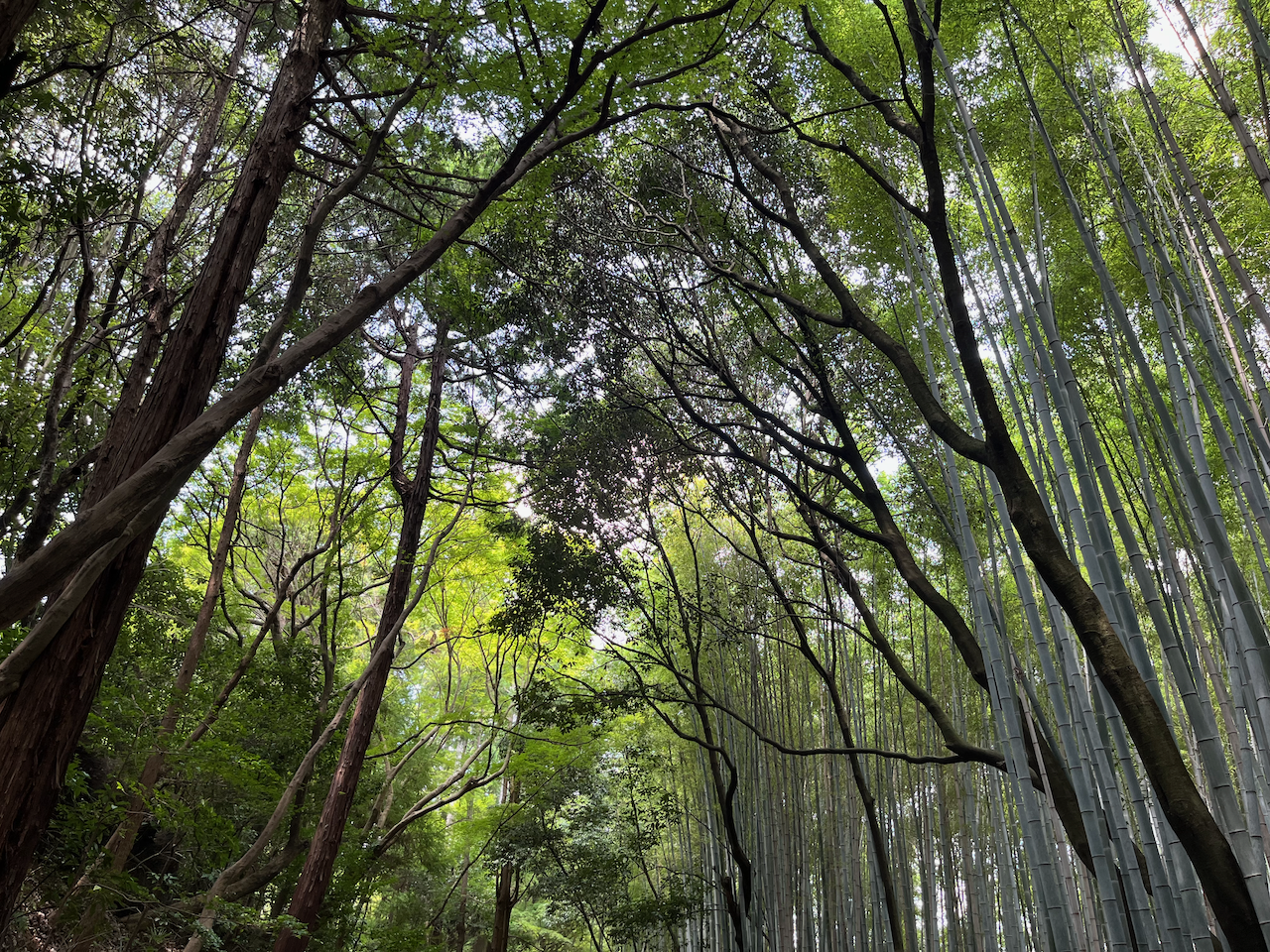


It’s not clear from the photos, but because of the shade and the high humidity, there was a constant mist between the trees, and an oppressive air. It was really cool, and would make a great setting for any Asian-style D&D campaign (not unlike the ones that I made previously … 😏).
Once you emerge from the bamboo forest, you enter the back-entrance of Tenryuji Temple. The front entrance that’s very close to the Saga-Arashiyama train station as well, so you can also visit from that direction too. The signs are very obvious.


The main buildings were clustered together in the middle of the property, with a really nice garden walk surrounding it, including many lovely or rare plants. If I were a botanist, I’d probably have a field-day here. The signs are all multi-lingual too, which is really handy.
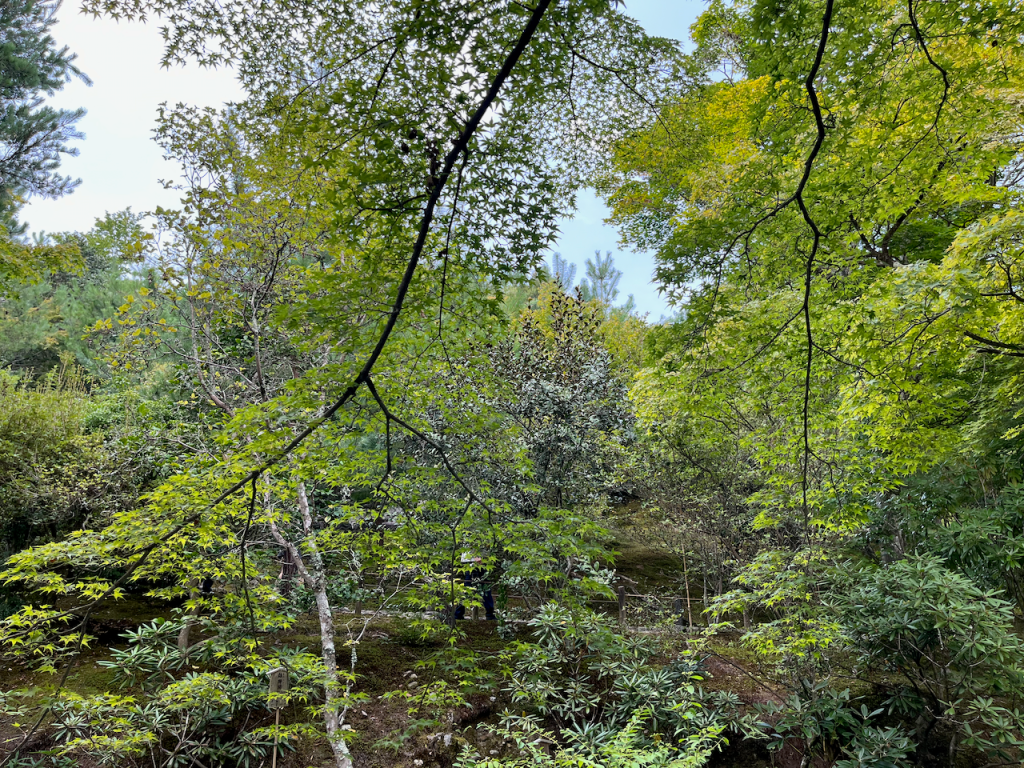

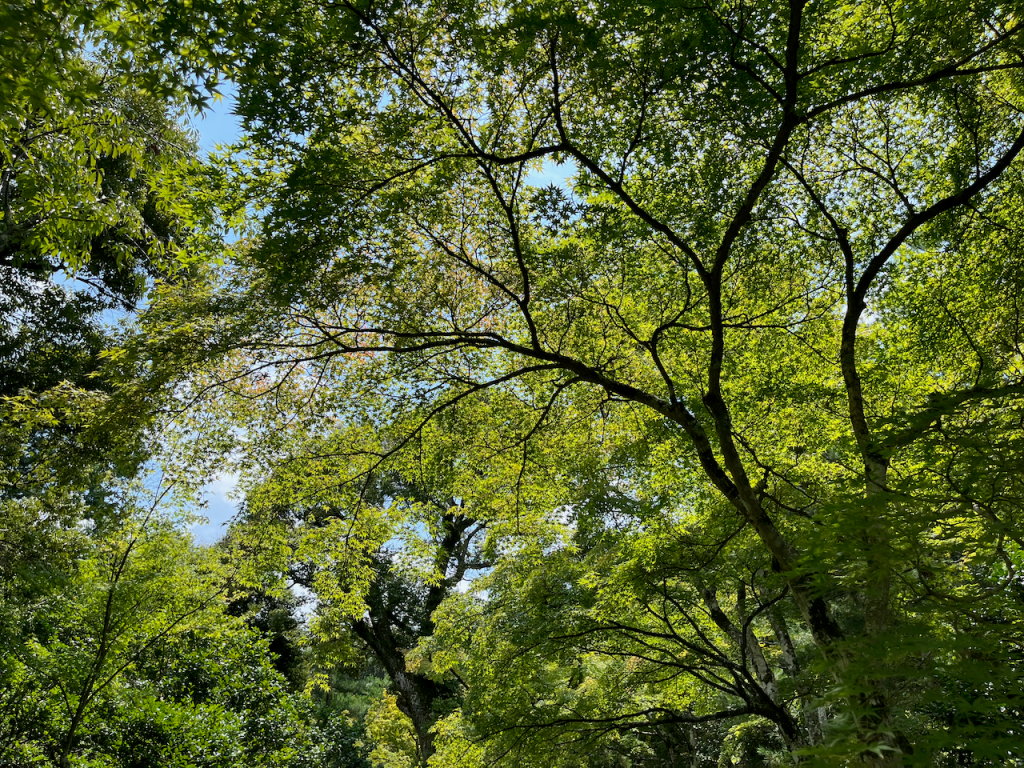
If you continue around the walk, you will come to the Sogenchi (曹源池) Pond, which according to the sign is modeled on Chinese architecture at the time (and a common feature of Japanese aesthetics during the Muromachi Period):
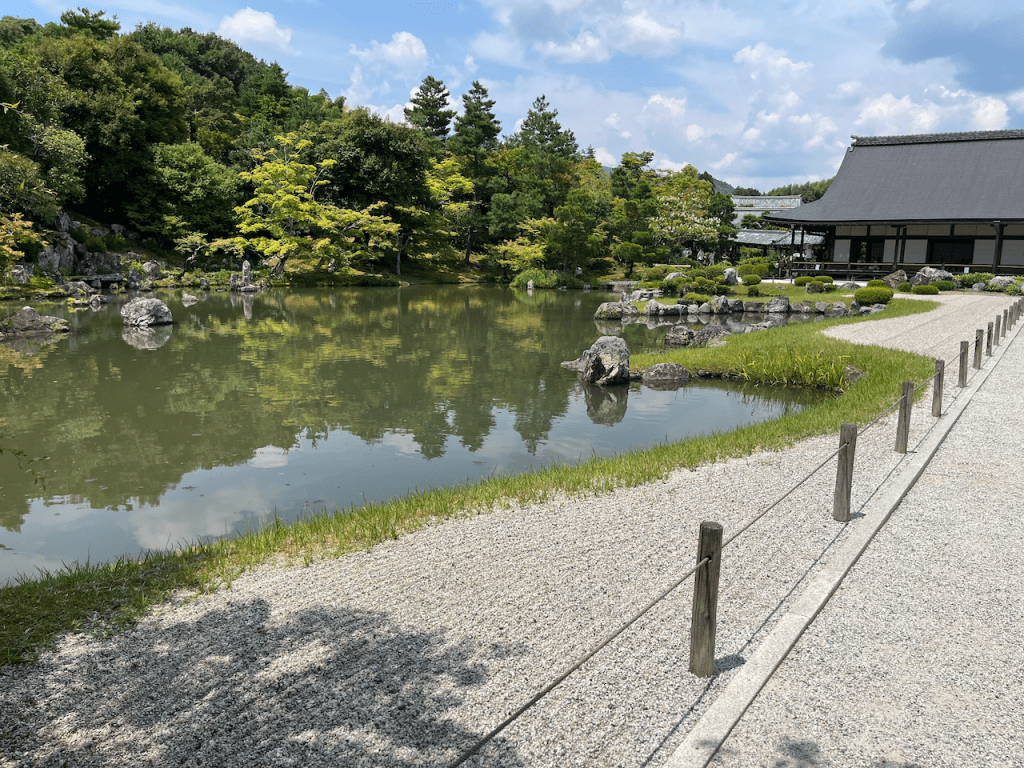
Similarly, you find a lovely sand garden (karesansui in Japanese, 枯山水 ) nearby too:

I wanted to take more photos of the interior of Tenryuji, but there were just too many tired, overheated tourists, and Instagram influencers. I chuckled as I saw a couple young ladies who were way over-dressed in fine, Chinese-style silk dresses and taking turns posing and photographing each other. The heat and humidity were so intense, I can’t imagine why they would do this to themselves. But I digress.
Finally, as exited Tenryuji toward the train station side we saw a very nice lotus pond:
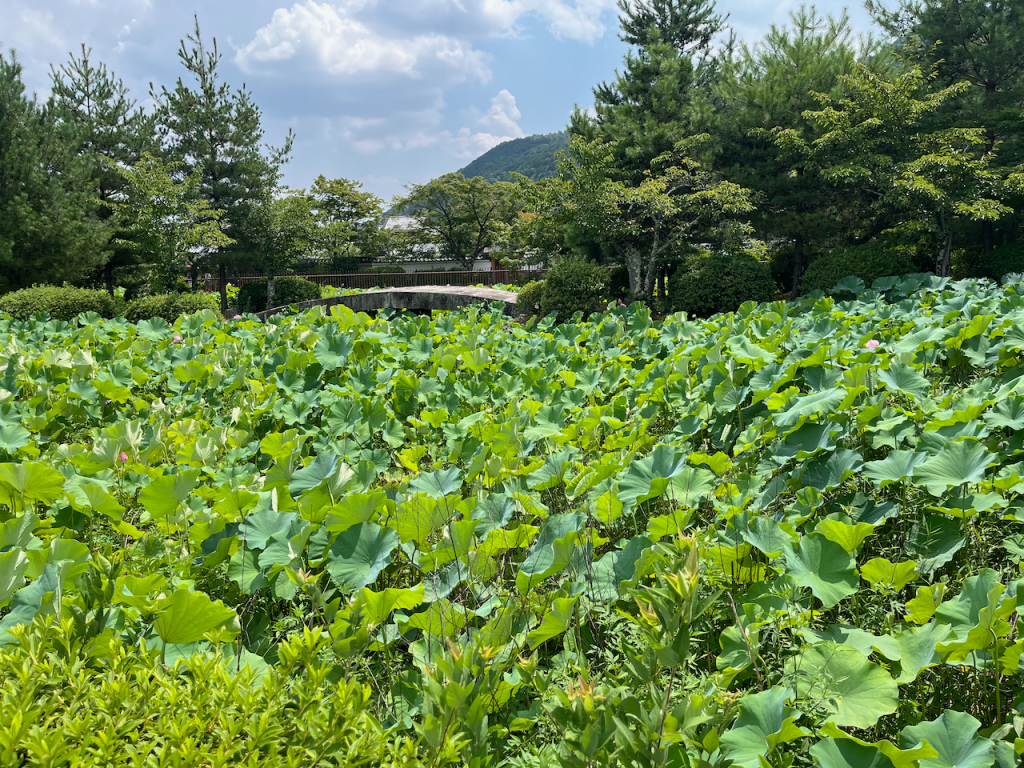
Tenryuji Temple is, for historical reasons, a shadow of its former self, but even what remains is very scenic and embodies much of the beauty and prestige of Arashiyama. I didn’t enjoy it on the same level as another Zen temple, Ryoanji, but it is lovely. For poetry fans, the Arashiyama district is also the site where the Hyakunin Isshu anthology was compiled, which I covered on my other blog.
That said, Arashiyama is quite touristy and crowded. It’s pretty foreign friendly, and if you’re just passing through Kyoto for the first time, it’s a great place to stop. But, for me, if you have the time and want to really get to know Kyoto life and culture, there are other places I prefer.
Next time, we’ll talk about Kenninji, which was smaller than Tenryuji, but had some pretty mind-blowing artwork.
P.S. 欢迎中国游客,感谢您的阅读。
1 I tried to put both in a single post, but it quickly got too large. I am a victim of my own hubris…
Discover more from Gleanings in Buddha-Fields
Subscribe to get the latest posts sent to your email.
 Gleanings in Buddha-Fields
What beautiful pictures! The narrow path between the trees and the sand garden both made me feel a bit of awe.
LikeLike
It really was a scenic place, and very refined. I would’ve enjoyed more if not for the intense heat and crowed.
LikeLike
Nice pics, reminds me of the day I took my own family there some years back. Luckily it was less hot on that day.
There is another quite nice temple named Seiryoji which you can reach walking the street in front of Tenryuji to its Northern end, only some minutes from the train tracks.
LikeLiked by 1 person
Seiryoji definitely rings a bell, though I definitely passed it by unwittingly. We enjoyed Arashiyama and will likely go again some day, and I’ll have to remember this one.
LikeLike
I also only passed.
It’s at the end of the street but looked – I think – rather unassuming.
When you next go to Kyoto, you might like to give Ohara a try, although it’s a tad more difficult to get there.
LikeLiked by 1 person
The temple and its grounds look really peaceful.
I was so hoping to see pictures of the interior, and especially of the shrines – then read there were so many tourists.
How was the ‘atmosphere’ inside the temple?
LikeLiked by 1 person
Yeah sorry, the inner sanctum was kind of blocked off, and hard to find. I was also sweating buckets (my shirt was totally drenched) and tired, so I might have just missed it.
As for the atmosphere, it felt like a museum more so than a vibrant temple. I’ve seen other temples in Japan that seem a lot more lively, some famous, some local.
LikeLiked by 1 person