
This troubled planet is a place of the most violent contrasts. Those who receive the rewards are totally separated from those who shoulder the burdens. It is not a wise leadership….
Star Trek: The Original Series, “The Cloud Minders” (s3ep21)
The classic Star Trek episode, “The Cloud Minders”, is a fun episode late in the third season that explores a society that is separated into two social classes: the intellectual class living in the clouds and a working-class that lives below in the mines.

Years later, in the Japanese game Chrono Trigger, a similar theme was explored with a society that lived around 12,000 BC that had an elite intellectual class living in the clouds, and a worker class that lived in the icy wastes below.
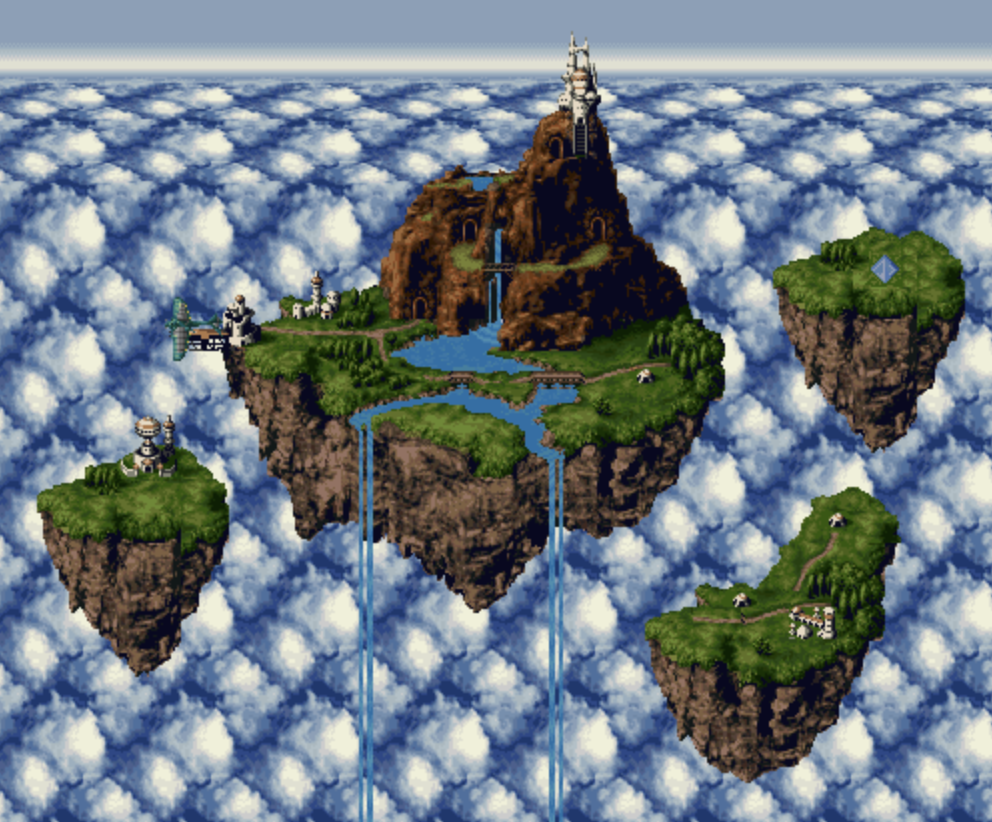
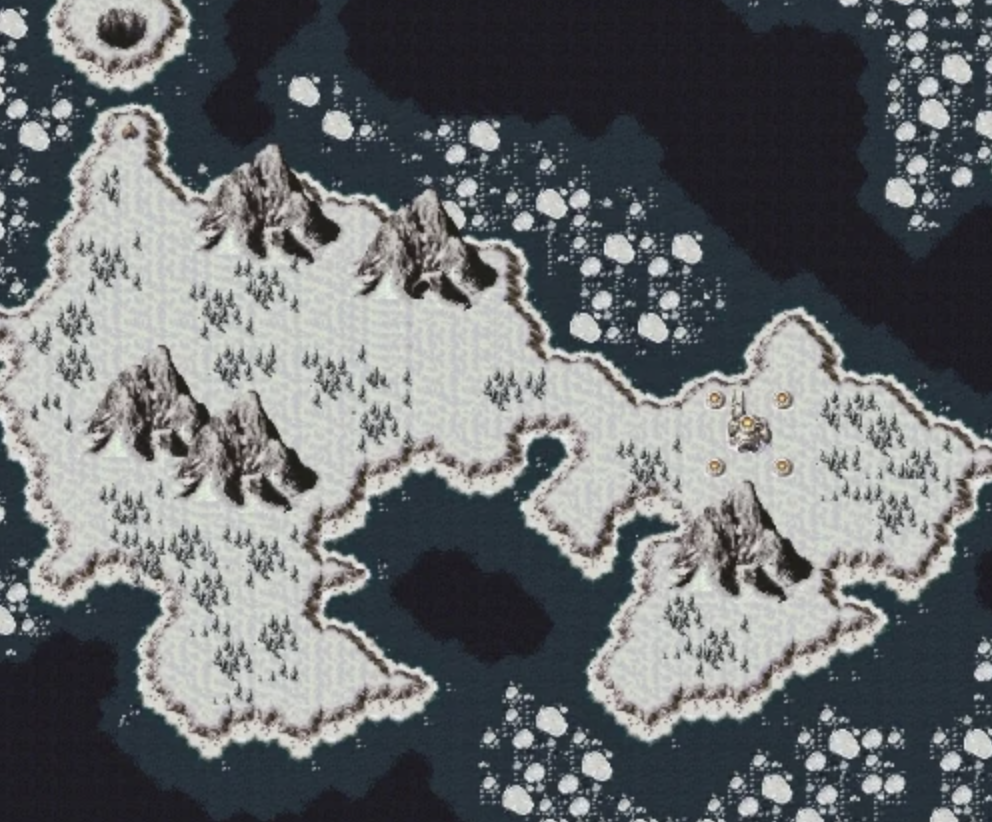
It’s fascinating, if not somewhat disturbing to see real-life examples of this too. As much as I admire the Heian Period of Japanese culture, it’s not hard to see parallels: an elite literati that sits around and writes poetry all day, and a much larger illiterate peasant class that toils in the fields for their benefit. The inequality is disturbing.
Indeed, this pattern repeats over and over again in human history, regardless of time or place. There is even a political theory toward this end call the Iron Law of Oligarchy. Are we not also living under some form of oligarchy even today?
Further, the more that people “in the clouds” become cut off, the harder it is to develop empathy for those who toil, and easier to just blame them for their own predicament. This is the very antipathy of metta in Buddhism, the goodwill towards all beings, big or small, smart or foolish.
In some ways, the early Mahayana-Buddhist texts such as the Lotus Sutra or Three Pure Land Sutras1 were pretty revolutionary texts. The famous 12th chapter of the Lotus Sutra, and its story of the Dragon Princess deserves a look. In this story, the daughter of the Dragon King under the sea is introduced as a being of great wisdom despite only being 8 years old. The Buddha’s disciple Shariputra, representing the conservative faction of the Buddhist community scoffs at this:
At that time Shariputra said to the dragon girl, “You suppose that in this short time you have been able to attain the unsurpassed way. But this is difficult to believe. Why? Because a woman’s body is soiled and defiled, not a vessel for the Law [the Buddha-Dharma]. How could you attain the unsurpassed bodhi [awakening]? The road to Buddhahood is long and far-reaching. Only after one has spent immeasurable kalpas [eons] pursuing austerities, accumulating deeds, practicing all kinds of paramitas [self-perfections], can one finally achieve success. Moreover, a woman is subject to the five obstacles….”
Translation by Burton Watson: https://nichiren.info/buddhism/lotussutra/text/chap12.html
The Dragon King’s daughter rebuffs Shariputra’s criticism and wows them all:
At that time the members of the assembly all saw the dragon girl in the space of an instant change into a man and carry out all the practices of a bodhisattva, immediately proceeding to the Spotless World of the south, taking a seat on a jeweled lotus, and attaining impartial and correct enlightenment. With the thirty-two features and the eighty characteristics [signs of a Buddha], he expounded the wonderful Law for all living beings everywhere in the ten directions.
Translation by Burton Watson: https://nichiren.info/buddhism/lotussutra/text/chap12.html
The intended message here may seem a little strange to modern audiences. This was written for a patriarchal society in antiquity, but it’s clear the Lotus Sutra taught all beings, regardless of gender, age, or even human vs. non-human status, are equally capable of Buddhahood (full enlightenment) if given the chance. When they are not, society is stifled and suffers.
In the same way, when society maintains inequality for the sake of a few, or for the sake of tradition, it degrades society by robbing it of vitality and well-being for all.
Namo Amida Buddha
1 More on the Pure Land Buddhist path and its egalitarian approach.
Discover more from Gleanings in Buddha-Fields
Subscribe to get the latest posts sent to your email.
 Gleanings in Buddha-Fields