
Alternate title: What Would Tuvok Do?
Self doubt is something we may all face from time to time. For me, it hits hard when I have made a mistake, and it’s hard to shut off the negative thought process once it starts up.
The origins of this self-doubt are not that important, though. I have my theories, but it doesn’t really matter. What matters is what self-doubt does: it creates false assumptions, and cripples decision-making. One might say, it’s all in the mind.
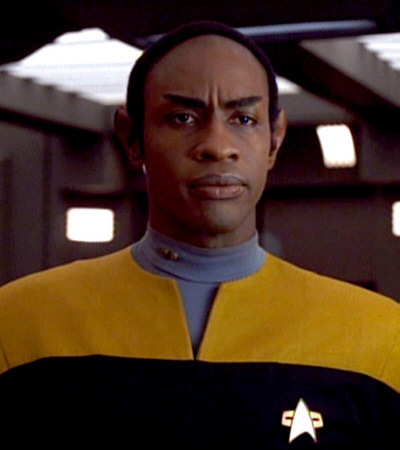
During a recent rewatch of the Star Trek: Voyager,1 I really enjoyed Tim Russ’s character Tuvok, the Vulcan security officer. Tim Russ is a great actor, and I appreciate his portrayal of Tuvok, and especially Tuvok’s level-headed approach to situations. In the same way, Spock as played by Leonard Nimoy did the same thing in the original Star Trek series.
When Tuvok is faced with a difficult situation, and the rest of the crew (esp. Neelix) panics, he tends to remain calm, and analytical. He assesses the situation rationally.
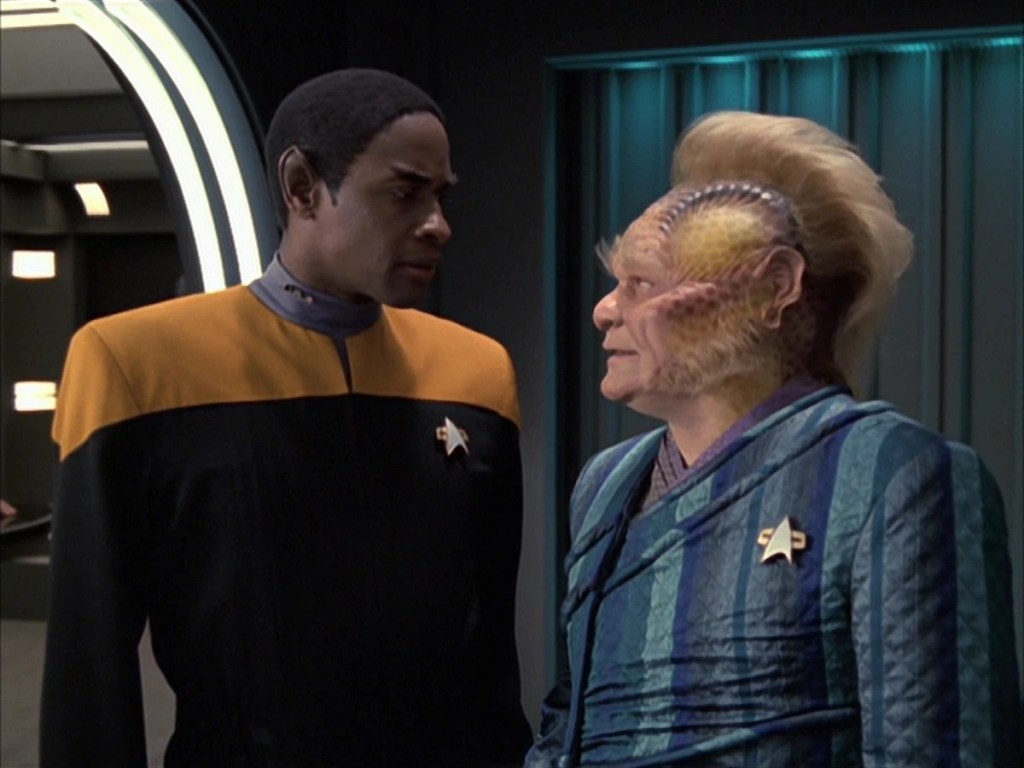
I think that’s the secret to overcoming self-doubt. Self-doubt, believe it or not, is rooted in a kind of conceit, or self-centeredness, even when it’s a negative form of conceit. Trying to counteract with self-love or self-affirmation just replaces one form of conceit with another. It’s not necessarily wrong, but kind of defeats the point.
In the same way, when I feel myself slipping into another death-spiral of self-doubt, lately I try to take a deep breath and do what Tuvok (or Spock) would do: calmly assess the situation and be rational. I am not the center of the Universe. The whole world is not judging me. If I’ve made a mistake, I need to analyze it, and correct it. If I am not at my best, I need to step back and reassess.
We can see a similar sentiment in an early sutra in Buddhism.
The Buddha “What do you think, Rāhula? What is a mirror for?”
Rāhula: “For reflection, sir.”
“In the same way, Rāhula, bodily actions, verbal actions, & mental actions are to be done with repeated reflection.
The Ambalaṭṭhikā Rāhulovāda Sutta (MN 61), translation by Thanissaro Bhikkhu
The trick is to be aware first and foremost that I am slipping into self-doubt again. This kind of mindfulness is the underpinning of Buddhism, and we can all learn to be a little self-aware. It never hurts to stop and “check in on yourself” from time to time, even during good moments. Further, the Buddhist practice of repentance is a time-honored for reflecting on your own actions in a scientific, analytical way, rather than flogging yourself.
So, in other words: CTFD.
Namu Shakamuni Butsu
P.S. More on the mind as a mirror.
P.P.S. As much as I love Leonard Nimoy as Spock, I am glad to see the Vulcan cast expanding over time: Tim Russ as Tuvok, Ethan Peck as Spock in Strange New World, Jolene Blalock as T’pol and so on.
1 Voyager was on when I was a college student so I watched from time to time, but I never loved the show the way I did Next Generation. Plus, the show has a number of inside references that are important, but if you only watched occasionally, you missed them. Rewatching again was great, though season 2 in particular was weak. Season 3 onward was amazing.
Discover more from Gleanings in Buddha-Fields
Subscribe to get the latest posts sent to your email.
 Gleanings in Buddha-Fields