The Joys of Asceticism

Taraka, King of Demons: “So why do you consider my presence a pollution, a disease? Is it because there is that within you which is like unto myself? …If so, I mock you in your weakness, Binder.”

Sam: “It is because I am a man who occasionally aspires to things beyond the belly and the phallus.”

“Lord of Light”, by Roger Zelazny

For the Jūya-e season, I have been undertaking a little ascetic Buddhist practice nightly for the past few days. I didn’t want to go into this willy-nilly, so I spent an evening mapping out what it would look like, what was reasonable and what was overkill (or lax), wrote it down in a little journal, and then committed to it for next ten nights.

The details of that 10 day practice are not important, but it is a kind of Buddhist “home retreat” for myself, and it has been challenging, but also very pleasant.

Photo by Wouter de Jong on Pexels.com

Asceticism, whether it be full-time as a practicing monk or nun, or as a lay person “in retreat”, is less about punishing yourself and more about taking your life back and aspiring for something more noble. It’s a chance to reset your life and your priorities and such as well as strengthen the mind. Further, it doesn’t have to be some expensive retreat at a resort with some Tibetan Lama that you paid thousands of dollars for. I often think about this quote by a 12th century monk, and chief disciple of Honen, named Benchō (弁長, 1162 – 1238) also known Shōkō (聖光).

人ごとに閑居の所をば、高野・粉河と申あへども、我身にはあか月のねざめのとこにしかずとぞおもふ
People maintain that the best place for a life of retirement is the Kokawa Temple or Mount Koya. But as for me, there is nothing to compare with the bed from which I rise every morning.

Japanese source

Kokawadera (粉河寺, a famous Tendai Buddhist temple) and Koyasan (高野山, a famous Shingon Buddhist temple) were both major monastic centers, and still are, but what Benchō is saying that where you practice Buddhism here is now is the best place. No need for fancy retreats, just carve out a space and a routine where you are now.

As someone who has tried and failed from time to time at various “Buddhist endeavors” I’ve also learned a few tips along the way:

  1. If you want to engage in a Buddhist practice or retreat, write it out first.
  2. Make this practice/retreat something that’s sustainable and reasonable, but also “stretches” you a little bit. You can always revise it later if it’s too easy.
  3. If you commit to something, commit (refer back to #1 above). There’s no worse feeling than giving up halfway, even if you really want to. Also, remember that the mind is naturally fickle so sooner or later, you’ll get bored or want to quit.1 This is normal, but it doesn’t have to define you either.
  4. Later, when you are finished, think about what worked and what didn’t. It’ll save you headaches later.

Good luck and happy …. monking?

1 In Japanese, they call this mikka bōzu or “3-day monk”. Let’s face it, it’s hard keeping anything up any endeavor for 3 days. 😅

Magic and Science: Same Difference?

sunset dusk twilight sky
Photo by Free Nature Stock on Pexels.com

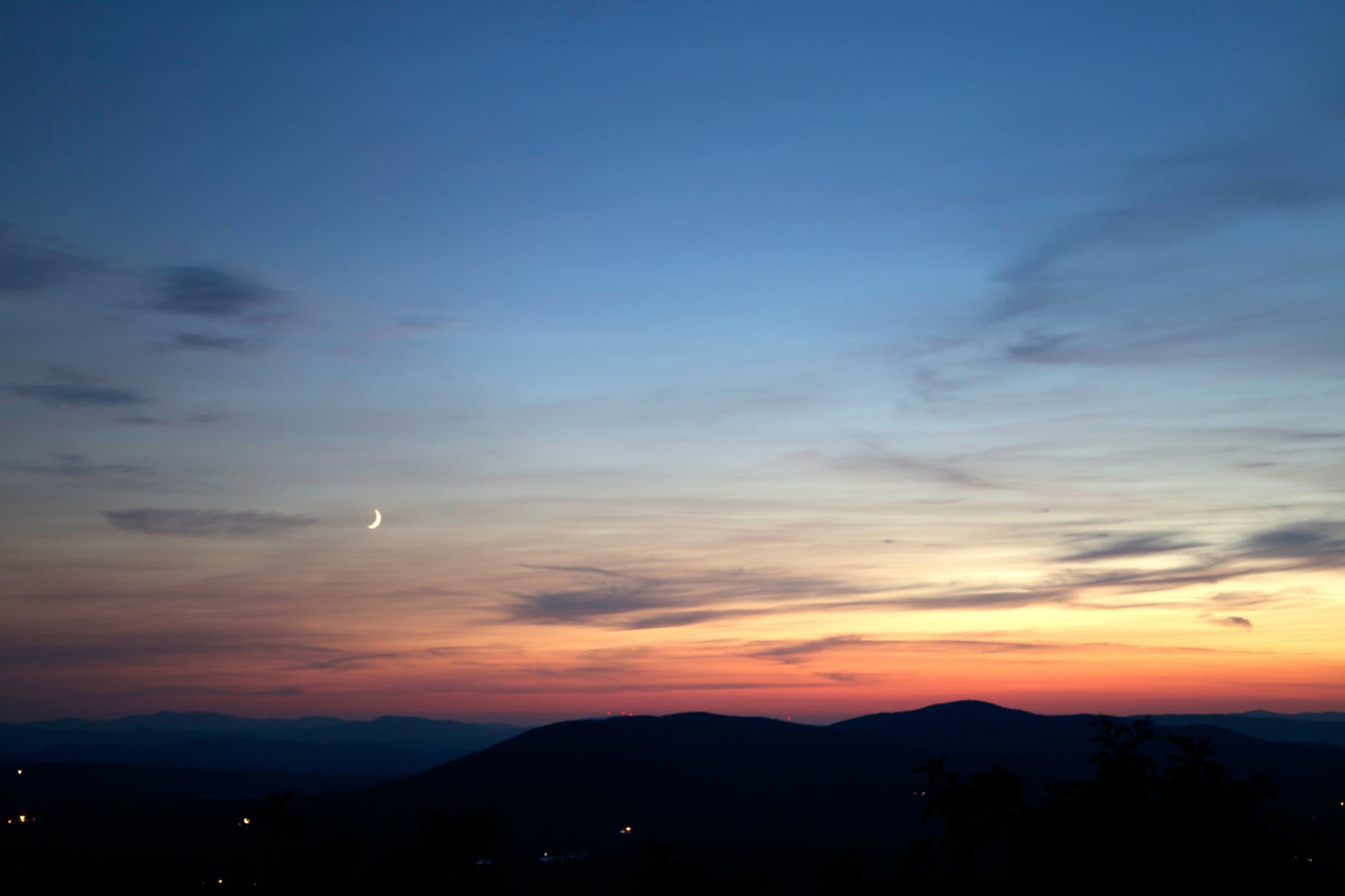
Recently, the family attended a little setsubun ceremony at a local Buddhist temple of the Japanese Shingon sect. Shingon Buddhism is one of several “esoteric” (mikkyō 密教) sects in Buddhism including Japanese Tendai and Tibetan Buddhism, and rely more on practices through a complex array of rituals, chants and gestures called “mudra”. This particular ceremony called hoshimatsuri (星祭り, “Star Festival”) in Japanese is a continuation of the New Year traditions and provides extra blessings through the year by beseeching various deities associated with the stars.

Astrology is something I have little interest or belief in, and it kind of feels almost absurd that a seemingly “rational” person like me would take part in a ceremony beseeching deities of the stars so that I might have some extra good luck for the year.  And yet, there I was.  Side by side were my science-based world-view alongside an irrational need to control destiny somehow in the face of uncertainty.

It reminded me of something from an obscure 1971 novel by Roger Zelazny called Jack of Shadows. In the novel, the rotation of the Earth has been artificially stopped, and the world is divided into a “dayside” complete with science, futuristic technology, and modern civilization, while the “darkside”¹ is a world of magic, feudalism, and monsters.  Jack of Shadows is the titular thief of the novel, who dwells in twilight (between day and night), with his only friend being a demon cursed to watch for a sunrise that will never come while being half-frozen into a mountainside.

In one scene, Jack and this demon, Morningstar, are talking:

Jack: “I have heard daysiders say that the core of the world is a molten demon, that the temperature increase as one descends toward it, that if the crust of the world be pierced then fires leap forth and melted minerals build volcanoes.  Yet I know that volcanoes are the doings of fire elementals who, if disturbed, melt the ground about them and hurl it upward.  They exist in small pockets.  One may descend far past them without the temperature increasing.  Traveling far enough, one comes to the center of the world, which is not molten—which contains the Machine, with great sprints as in a clock, and gears and pulleys and counterbalances.  I know this to be true, for I have journeyed that way and been near to the Machine.  Still, the daysiders have ways of demonstrating that their view is the correct one.  I was almost convinced by the way one man explained it to me, though I knew better.  How can this be?”

Morningstar replies:

“You were both correct….It is the same thing that you both describe, although neither of you sees it as it really is.  Each of you colors reality in keeping with your means of controlling it.”

Jack then says:

“The stars I know to be these houses of spirits and deities—some friendly, some unfriendly and many not caring. All are near at hand and can be reached.  They will respond when properly invoked.  Yet the daysiders say that they are vast distances away and that there is no intelligence.  Again…?”

Morningstar: “It is again but two ways of regarding reality, both of them correct.”

Jack presses him further:

“If there can be two ways, may there not be a third?  Or a fourth? Or as many as there are people, for that matter?”

“Yes,” said Morningstar.

“Then which is correct?”

“They all are.”

“But to see it as it is, beneath it all!  Is this possible?”

Morningstar did not reply.

“You,” said Jack, “Have you looked upon reality?”

“I see clouds and failing stones.  I feel the wind.”

“But by them, somehow, you know other things.”

“I do not know everything.”

“But have you looked upon reality?”

“I—Once … I await the sunrise.  That is all.”

I highly recommend the novel if you can find it.  It’s a great story, but also has some deeper messages in there too.  One of Zelazny’s finest, in my opinion.

P.S.  The subject of magic vs. science also comes up in the first novel of the Madwand series titled Changeling, though not is as great a depth, and alluded to a number of times in the Amber series where some “Shadow” Earths (such as ours) are ruled more by technology than magic.

¹ If you’re wondering how the dark size of the Earth doesn’t freeze over, yes that is covered in the book.

Plane-Trotting in Dungeons and Dragons

flight landscape nature sky
Photo by Pixabay on Pexels.com

My kids have been playing campaign at home that has mostly taken them on a handful of interesting adventures across the Sword Coast of Faerun, but eventually the story kind of hit a plateau: how many more times would my kids want to pass through Baldur’s Gate?¹  With that, I decided it was time to mix things up a bit, and I contrived a little adventure where the kids would visit various Outer Planes instead.

As per the 5th-edition Dungeon Masters Guide, not to mention past editions, the world of Dungeons and Dragons is surrounded by 9-17 other dimensions or planes that each represent a moral alignment.²  The Nine Hells, being a primary example, are purely lawful-evil in that they’re tyrannical and extremely regimented, while the plane of Arborea is supposed to represent a wilderness paradise that is purely chaotic-good and happens to be the home of many Elf deities.

Further, there are plans that are wedged in between particular alignments, in that they’re halfway between, say, lawful-good and lawful-neutral.  These are the fun planes in my opinion since they better represent the moral ambiguities of life and what an idealized version might look like.  Some interesting examples include:

  • Arcadia – between lawful-good and lawful-neutral, this plane represents a kind of highly regimented paradise, where everything is in its perfect spot.
  • Pandemonium – between chaotic-neutral and chaotic-evil, Pandemonium represents madness, hence it is beset by constant howling winds that drive even the heartiest warrior crazy.
  • Tartarus (or Carceri) – between neutral-evil and chaotic-evil, this plane is a pure prison plane. Once you get in, it’s practically impossible to get out.

One optional, but important feature outlined in the Dungeon Masters Guide is the effect such planes have on visitors. Many planes include an optional rule where the planes exert a powerful, often mental influence, on players who fail a daily wisdom saving-throw.   For example, in Hades, one is afflicted with despair, while Pandemonium inflicts insanity, and Bytopia inspires charity and goodwill.  A secondary rule is that players who’s alignment is somehow in opposition to the plane experience further distress and fatigue.

For my kids adventure, they had to destroy an evil artifact called the Eye of Judgement (loosely based of the same artifact in Roger Zelazny’s Amber series) by taking it to Elysium, the neutral-good plane where the overwhelming sense of charity and good-will would simply fry the artifact.

That was all well and good, but the kids had forgotten to include a way to get back, and so they were trapped on a plane where everything is pleasant and peaceful. As adventurers, they quickly became bored of the place and sought a way out. Plus the pleasant effects of Elysium were definitely influencing some party members, so they opted to leave through another portal if they could find one.  Elysium had no dangerous encounters, so they easily went from town to town until they came to one large enough that they found three gateways: two with unknown destinations and one with a known, but unwanted destination.  When my kids opted to take one of the unknown portals, I secretly rolled to see which plane they would end up, and the result was Ysgard.

Heimdall an der Himmelsbrücke

Ysgard is a chaotic-good/chaotic-neutral plane that exemplifies personal glory and effort, loosely based on the same realm in Norse mythology.  My kids were excited because they knew they might meet characters like Loki and Thor, whom they knew from the Marvel comic universe.  Leaning into this, I have been leading the kids along toward the Bifrost with an extra party-member who not surprisingly is Loki (the Marvel movie version) in disguise.

In any case, the Dungeon Masters Guide, in its explanation of the planes, is somewhat vague on the contents of each plane, especially compared to past editions like 3.5.  I think this is somewhat intentional as it gives the DM room to expand and fill in the details as they see fit.  My vision of Elysium won’t necessarily match what another DM will imagine, but that’s fine.  The DMG even alludes to this in the following excerpt:

As with the Elemental Planes, one can imagine the perceptible part of the Outer Planes as a border region, while extensive spiritual regions lie beyond ordinary sensory experience. Even in perceptible regions, appearances can be deceptive. Initially, many of the Outer Planes appear hospitable and familiar….but the landscape can change at a whim of the powerful forces that dwell on these planes. (pg. 58)

So, the idea is that what the players see on the plane isn’t the true form of of the plane as seen by its own deities.  This means that each adventuring group will experience something slightly different anyway due to their predisposition, background, etc.

This means that the planes can be an almost infinite field of opportunities for adventure, especially for a party that’s looking to shake things up a bit. 😉

¹ While the Descent into Avernus campaign guide is still a week or so away, my children’s party has been to the city of Baldur’s Gate a number of times since they needed a city campaign other than Waterdeep which they fled at one point.  Before DiA, there aren’t much 5e resources to speak of, so I’ve been cobbling in details from older versions of D&D plus a bit of improv on my part.

² Why such odd numbers?  Don’t forget the purely neutral plane of the Concordant Opposition.  😉