SPOCK: [being a Vulcan] means to adopt a philosophy, a way of life, which is logical and beneficial.
Star Trek, “Journey to Babel” (s2ep10), Stardate 3842.3
Recently, while I was doing some soul-searching, I found this very helpful article online by Dr. Jacqueline Stone. The article is an overview of how different Japanese-Buddhist monks of the Kamakura Period (12th-14th century), the same monks who founded important Buddhist sects we see today, addressed the concept of Dharma Decline. The site requires registration, but it’s free and easy. The article is worth a read if you are curious about the topic.
In any case, I found this great quote in Dr Stone’s article:
“The Zen sect regards the precepts as being of first priority,” he [Eisai] wrote. And, “By means of the precepts, meditation and wisdom are brought forth.”
Eisai (栄西, 1141 – 1215) also known as Myōan Eisai (明菴栄西) is the original founder of the Rinzai Zen-sect in Japan (more on its convoluted history here), and isn’t someone I really talk about much, but he was one of the founders of this “new” Kamakura-era Buddhism.
Anyhow, this quote really struck me.
In my limited experience, I rarely heard the importance of precepts from Western Zen sources, or that they are the basis for other Zen practice. That’s not to say it’s not there, but it often seemed to get lost in the message of Zen mysticism.
Bluntly speaking, precepts aren’t sexy like mindfulness, koan riddles, or meditation.
And yet, Eisai is taking a more traditional, conservative standpoint and reiterating that one should not put the cart before the horse. This is not limited to Eisai, by the way: the 19th century Soto-Zen text for lay-followers, the Shushogi, stressed the importance of the precepts, reflection on one’s actions, and practicing kindness, patience and generosity whenever possible.
But if you’re familiar with Zen, this might seem odd. Isn’t Zen all about meditation, being in the moment and so on?
Consider the Marvel movie Ant-Man (2015). In the movie the villain, a bald tech-CEO who bears more than a passing resemblance to a certain CEO and founder,1 brags to a coworker about some deep thoughts he had during “morning meditation”. This is not far from the mark: many ambitious people use meditation and mindfulness as a way to get what they want, not what it’s intended for. If a person can’t regulate their day to day conduct towards others, meditation will not avail them.
Put another way: a rotten person might meditate, but a person who follows the precepts is probably not a rotten person.2
Further, this focus on the precepts fosters mindfulness because one is monitoring their own actions, etc. It has concrete impact on one’s sense of self-worth, one’s relationships with others, and leads to greater peace of mind, even when not meditating. So, there’s a clear benefit, both short-term and also long-term to taking up the precepts first, and then letting other disciplines and practices extend from it.
Finally, upholding the precepts is something any Buddhist can do, regardless of background or circumstances. It is very accessible, beneficial (just like Spock says), and opens many doors to Buddhist practice.
Namu Shakamuni Butsu
P.S. I’ll cover this issue of precepts in more detail later, but TL;DR both Rinzai and Soto Zen both encourage people to take up the Ten Bodhisattva Precepts specifically.
Another dharani I was reading about lately is the Great Compassion Dharani, also known as the Nīlakaṇṭha Dhāraṇī, or in Japanese Buddhism the daihishin darani (大悲心陀羅尼), also known more simply as the daihishu (大悲咒), among other names.
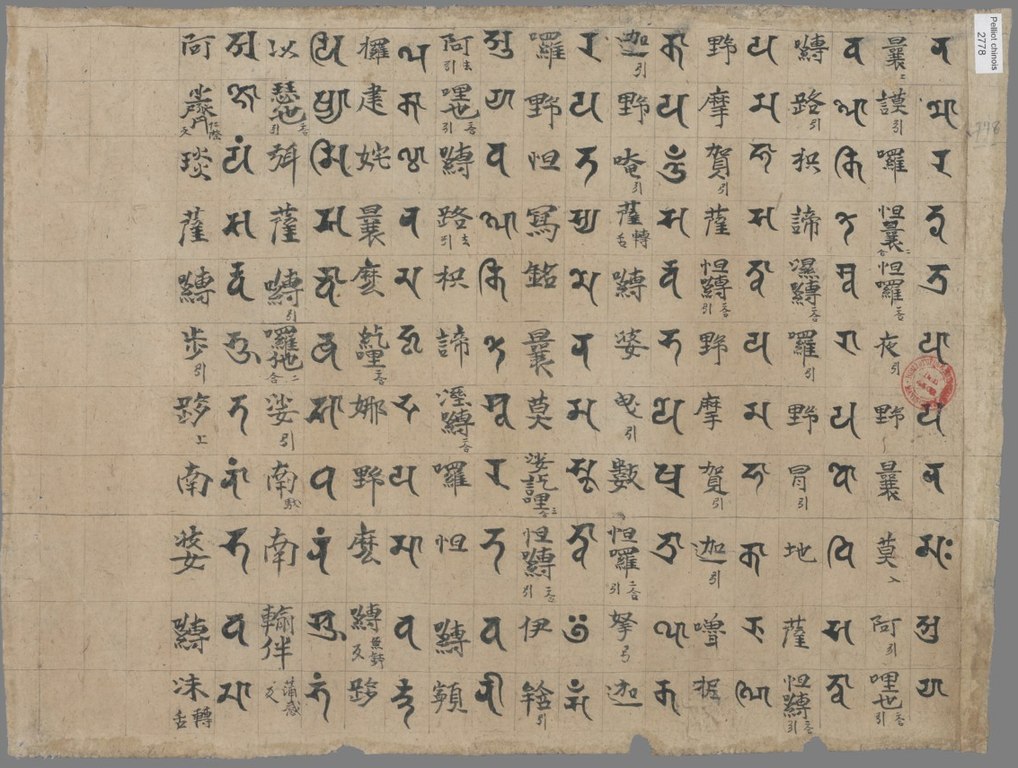
According to Wikipedia, this is one of widely recited dharani across the Buddhist tradition, and has undergone various changes over time, with a couple extant (though corrupted) versions. The featured photo above is an example found in the Dunhuang caves of China, showing the original text in Siddham script, with Chinese transliteration:
Fragment of the Nilaṇṭhanāmahṛdaya dhāraṇī both written in Siddhaṃ script and transliterated in Chinese characters. Bibliothèque nationale de France, Public domain, via Wikimedia Commons
You can see another example here, using both Siddham script, and the ancient Sogdian script:
Whereas the Dharani for the Prevention of Disaster (discussed in a previous post) is focused on practical matters, the Great Compassion Dharani is meant to be chanted in order to awaken goodwill towards others, using Kannon Bodhisattva as the archetype. It is taken from a longer Buddhist text, the Sutra on the Thousand-armed, Thousand-eyed Bodhisattva Avalokitesvara’s Sutra of Dharanis on the Vast, Perfect, and Unobstructed Mind of Great Compassion (千手千眼観世音菩薩広大円満無礙大悲心陀羅尼経).
This dharani is most closely associated the Zen traditions, but because it is pretty long, it’s probably not always practical for lay followers to recite in daily services. I have not seen it listed in service books for lay followers in either Soto Zen or Rinzai Zen. In any case, I am posting it here as a reference.
You can see an example of the Great Compassion Dharani being chanted in a formal Soto Zen service here:
There is a nice Chinese-language version here (starts at 1:07):
I have posted the dharani here in multiple languages, so that people can choose which version they prefer to recite. The main source was Wikipedia, but for the Chinese Pinyin, I had to check multiple websites as the pinyin varied slightly in some places, while for the Japanese version, I checked line by line in the video above.
Side note, there is a different version in the Japanese Shingon-Buddhist tradition, but I am too lazy to post here, since the dharani is so long. You can find it here on the Japanese Wikipedia article under “真言宗の読み方”.
June 2025: Major rewrite of this page to make the text side-by-side, but also fixed several typos.
1 Sources used to validate the pinyin: here and here, plus Wikipedia article. Each one slightly disagreed with one another, and my Chinese language skills are very limited, so I had to make a best guess in a few cases where things seemingly contradicted. It’s also possible that certain Chinese characters just have multiple pronunciations.
2 For some reason, the Soto Zen version doesn’t have the words 那摩婆薩哆 (nama vastya / ná mó pó sà duō).
3 Similarly, the Soto Zen version doesn’t have the final “om” (唵, ān) in it.
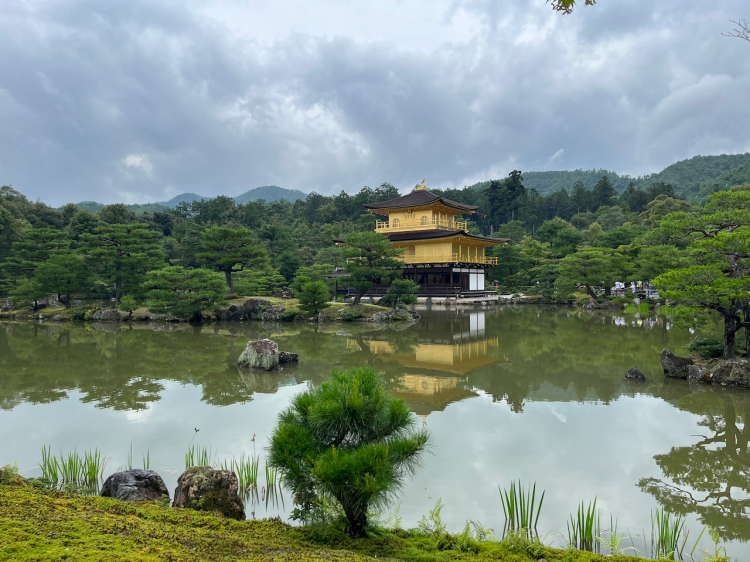
There is a persistent image in the West of samurai being adherents of Zen, that the “way of the warrior” (bushido)1 and Zen are somehow one and the same. One can imagine a samurai who has practiced swordsmanship to a finely honed skill, meditating under a waterfall, and writing Zen-like deathbed poetry before preparing to throw away their life in battle. In my first visit to Ryoanji temple (featured photo shown above), 28-year old me had a similar image in mind persisting all the way back when I was a naïve 16-year old white kid just reading about Zen for the first time. Looking back after almost 20 years of Buddhist-study and practice, I facepalm at myself a little, but it’s a very persistent image in media. (side note: Last Samurai is not my favorite movie)
So, did samurai really embrace Zen, and was Zen essentially a “samurai religion”? Turns out, it’s complicated, and most of the imagery was romanticized.
Even at the height of its influence in the last fourteenth century, Zen–including the more widely diffused Sōtō Zen–probably had still not replaced devotion to Kannon, Jizō [Bodhisattva], the Lotus Sutra [e.g. Nichiren Buddhism], or the Pure Land of Amida in the hearts of most ordinary, and many high-ranking, Japanese samurai.
page 80
Further:
Zen in the Kamakura and Muromachi periods can be called “the religion of the samurai” only in the sense that most patrons of Zen were samurai, not in the sense that it was practiced assiduously or exclusive by all, or even perhaps the majority, of those who would be described as warriors.
page 80
So where did the image come from? Let’s take a brief look at the history of Zen, especially Rinzai Zen, in Japan.
The Two Lineages of Zen in Japan
Japan has historically two sects of Buddhism, both descended from Chinese lineages: Soto and Rinzai Zen. The differences between the two are too big to cover here, and there’s plenty of information on the web that explore the two. Suffice to say, the two lineages came to Japan in the 12th century, but took pretty different trajectories.
Soto Zen, founded by Dogen after journeying to China, did not sit well with existing powerful Buddhist sects in Japan, because of Dogen’s unwavering commitment to his ideal of ideal Zen practice, and was pushed out to the countryside. For centuries it was obscure, and enjoyed little patronage beyond certain local samurai families, primarily for the sake of prestige. Its popularity grew later through the efforts of a monk named Keizan, who developed increasing patronage from (mostly) provincial samurai rulers, and cultivated more community support. Professor Bodiford’s book, Sōtō Zen in Medieval Japan, is an excellent overview of its history. In any case, all Soto Zen traditions in Japan (and beyond) trace back to Dogen.
Rinzai Zen, founded by Eisai, has a much more complicated history. Eisai was willing to compromise more when he returned from China with the Buddhist establishment, so early Rinzai Zen was more like a hybrid Zen-Tendai Buddhist institution with a lot of esoteric practices. It enjoyed further popularity under Enni Ben’en (圓爾辯圓, 1202 – 1280) in the capitol of Kyoto, but remained a relatively small sect, often conflated with existing Buddhist institutions at the time.
Zen really didn’t take off until the second-half of the Kamakura Period under the Hojo Clan regency. After the death of Sanetomo, the 3rd shogun, the subsequent shoguns, distant offshoots of the family, were installed but increasingly powerless against their own regents, the Hojo Clan. Under talented Hojo leaders such as Hojo Tokiyori and Tokimune, power was consolidated, and they became the effective rulers of Japan.
But there was a persistent issue: the Hojo Clan, while militarily powerful and based in Kamakura was seen as inferior to the old aristocracy (e.g. the Fujiwara) in Kyoto who had centuries of refinement to rely upon compared to the upstarts. The old Buddhist establishment was still closely allied to the aristocracy, and thus hostile to the Hojo Clan.
Enter the Mongols
When the Mongols finally destroyed the Song Dynasty in China, establishing the new “Yuan” Dynasty, the upheaval affected many monastic institutions. Some monks, including ardent Song-loyalists, decided to leave China and make the journey to Japan either to get away from Mongol authority, or possibly in some cases, to work as spies for the Mongols who later tried to invade Japan.
Starting with a monk named Lanxi Daolong (蘭溪道隆, 1213-1278), who came to Japan in 1246 for reasons not entirely clear, followed by Wuan Puning (兀庵普寧, 1197 – 1276) in 1260, a steady stream of Rinzai-lineage monks came to Japan. For the Hojo leadership, this new source of Chinese education, culture and religious teachings practically fell into their lap, and they quickly adopted these new monks, establishing a series of monasteries in the new capital of Kamakura starting with Kenchōji (website here) in 1253, and expanding to other temples such as Engaku-ji in 1282. These new temples in Kamakura Zen temples were different than the ones that Eisai and Enni Ben’en’s temples had established in Kyoto, designed to match Song Dynasty practices, with Chinese monks frequently serving as abbots.
Thus, Rinzai Zen in Japan was essentially established as two separate lineages2 albeit with a common ancestry: the first lineage established by Eisai and popularized in Kyoto by Enni Ben’en that incorporated more native Japanese-Buddhist practices, and the second lineage which came later driven by Chinese Zen monks during the end of the Song Dynasty who established a more “pure” form of Zen based on the Chinese model. It should be noted that the Chinese monks mentioned above did journey to Kyoto as well to update existing monasteries of the older lineage to modern (e.g. Song Dynasty) standards as well, but the temple of Kenchōji was the premiere Zen temple for centuries in Japan. Further, by the 14th century, and especially later, much of Rinzai Zen was more homogenized than the early communities.
The arrival of the Chinese-Buddhist teachers to Japan in the 13th century is important to note, though, because this is the point in time where the samurai class really start to interact with Zen communities.
The Hojo Clan had finally found a way to one-up their rivals in Kyoto by raising their own cultural credentials with the new immigrants from China, but also some Hojo family members really did embrace Rinzai Zen teachings. Hojo Tokiyori (北条 時頼, 1227 – 1263) and his son, Tokimune (北条 時宗, 1251 – 1284) both became avid students under Chinese teachers, patronized the new monastic communities in Kamakura, and encouraged its practice among their samurai vassals. Other regents of the Hojo Clan never took much interest. But now, Zen finally had the patronage it needed to expand and grow in Japan, yet as Collcut’s book shows, it was still largely adopted for cultural prestige, and also oftentimes due to obligation towards Hojo Clan. Many of these vassal clans later rose to be major powers centuries later (cf. Hosokawa, Takeda, Uesugi, Tokugawa, etc) with their own patronage to Zen temples in their provinces.
Later, as the Hojo Clan finally declined in power, and gradually replaced by the Ashikaga Clan (e.g the Muromachi Period), the pattern continued. Both the emperors of the time such as Go-Daigo and Hanazono, and the Ashikaga Shoguns patronized Rinzai Zen temples, but often times for political expediency. The “Five Mountains” monastic system developed at this time, borrowed from Chinese cultural, is a big topic, and worthy of its own post.
The high-point of “Zen-Samurai” culture as we know it can probably be traced to the 8th shogun of the Ashikaga Clan, Yoshimasa (足利 義政, 1436 – 1490) who while being a dismal military commander, was a brilliantinnovator of Zen aesthetics. Yoshimasa had a taste of artistic genius, and patronized Zen-influenced architecture, painting, poetry, and gardening, and so on, but also directly added his own spin. The “zen aesthetic” we all recognize is largely due to Yoshimasa who synthesized earlier Song-Dynasty culture through establishment of institutions by the Hojo Clan.
However, on a personal level, Yoshimasa recited the nembutsu and seldom meditated.
Conclusion
All this is not meant to detract from Zen teachings, or the contributions of Zen monks to Japanese culture, or to imply that there were no Zen-devotees among the samurai class, but as I alluded to in the beginning, the romanticized Zen-Samurai image mostly exists on paper or in the writings of its sincere devotees. It was the ideal at the time among enthusiasts, and this ideal has persisted into Western culture, including teachers and self-help gurus.
How samurai in Japan, or Japanese in general, interacted with Buddhism (including Zen) was complicated and very individual, and not always related to piety. When you look at other pre-modern cultures, you see similar patterns. The emperors of the Eastern Romans had a complex relationship with the Church, and usually were not interested in the deeper teachings, or various doctrinal conflicts of the Byzantine Orthodox church except when it interfered with political goals (cf. iconoclasm, schisms, etc), or were varying degrees of sincerity. Further, how they practiced religion would have been noticeably different than your typical Eastern Roman in the provinces or the streets of Byzantium.
Now, imagine the same in any other culture: Western medieval communities, people in the Islamic caliphate, Chinese Buddhists, etc.
In short, how people interact with religion, and how its romanticized, are two different things. The dynamic interaction of people, culture and religion is fascinating, but not very marketable. The romanticized form of religion is marketable, but is like a bag of potato chips: tastes good, but rarely provides anything meaningful.
1 Please, please, please: if you ever go visit Japan, do not wear a “bushido” shirt. It really pegs you as a tourist.
2 The third “Obaku” sect of Zen in Japan is in fact yet another Rinzai Zen lineage that came from China, this time from the Ming Dynasty. By this point, Pure Land Buddhism and Zen in China had largely reconciled, and Obaku Zen includes more elements of Pure Land than is found in other Rinzai lineages, while still retaining its core Zen element.
The dharani below is the Dharani for the Prevention of Calamity, or shōsaishu (消災呪), called more formally the shōsaimyōkichijō darani (消災妙吉祥陀羅尼). It is used in both Rinzai and Soto Zen traditions as a general-protection “spell”.1 I assume the intention is to protect the Zen disciple so that they can reduce obstructions on their path, similar to prayers to the Medicine Buddha in other traditions.
Before we share the dharani, let’s talk about mantras vs. dharani in Buddhism. Both belong to the esoteric traditions of “Vajrayana Buddhism”, (e.g. Tibetan Buddhism, and Shingon/Tendai Buddhism in Japan). My experience is limited, but I believe that mantras usually have layers of deeper and deeper meaning that a disciple explores in the esoteric path, while dharani do not. Instead, dharani are more like tools, simple “spells”1 or chants to provide a specific benefit. Mantras might provide also a benefit, but that’s not their sole purpose in the esoteric tradition.
Also, non-esoteric traditions in Buddhism will sometimes cherry-pick ones that they feel are useful, some more than others.2 Sometimes mantras and dharani are used for very specific liturgical purposes, others are chanted as part of normal service.
In any case, the Dharani for the Prevention of Calamity is regularly chanted three times in Rinzai Zen liturgies. I am less clear how it’s used in Soto Zen.
An example of the recitation is below from the Soto Zen tradition:
The dharani has a couple versions, one used in the Soto Zen sect, and another used by Rinzai. I’ve included both versions below.
NO MO SAN MAN DA MO TO NAN O HA RA CHI KO TO SHA SO NO NAN TO JI TO EN GYA GYA GYA KI GYA KI UN NUN SHI FU RA SHI FU RA HARA SHI FU RA HARA SHI FU RA CHI SHU SA CHI SHU SA CHI SHU RI CHI SHU RI SO WA JA SO WA JA SEN CHI GYA SHI RI EI SO MO KO
NA MU SAN MAN DA MO TO NAN O HA RA CHI KO TO SHA SO NO NAN TO JI TO EN GYA GYA GYA KI GYA KI UN NUN SHI FU RA SHI FU RA HA RA SHI FU RA HA RA SHI FU RA CHI SHU SA CHI SHU SA SHU SHI RI SHU SHI RI SO WA JA SO WA JA SE CHI GYA SHI RI EI SO MO KO
1 I am not sure what else to call it. Dharani use Sanskrit words that are chanted to provide a concrete benefit. If there was a meaning originally, it’s obscure now. I wish I could use a more suitable word for this, but there’s nothing in English I can use that doesn’t sound like a Harry Potter episode.
2 the Pure Land tradition usually doesn’t use mantras or dharani. One could argue the nembutsu is something similar, but that’s a story for another post.
A photo of my sutra book from Sōjijj temple, featuring the first fasicle of the Shushogi
Lately, I have been inspired to study certain aspects of the Soto school of Zen. In particular, I was reading in Japanese a nice explanation of the Shushōgi(修証義, “Meaning of Practice and Verification”).
The Shushōgi is a primer on Zen compiled for lay followers in 1890 by Ouchi Seiran (大内 青巒, 1845-1918) as part of a committee to bring Soto Zen teachings to a wider audience as a response to Christian proselytizing at the time. The Shushōgi is a popular text for Soto Zen followers in Japan, and appears prominently in Japanese sutra chanting books, yet it has never really caught on in the Western Zen community.1 Interestingly, the Shushogi has undergone a bit of a revival in Japanese-Zen circles in recent generations.
The Shushōgi is a relatively short text that attempts to distill the teachings of Soto Zen’s founder Dōgen (1200 – 1253), using excerpts from his voluminous Shobogenzo, into a smaller format that is accessible for lay followers.
This is significant if you have ever tried to read Dogen’s writings, which are profound, but also in true Zen fashion, really cryptic.
Full translations of the Shushogi can be found here, here and here. A Japanese-romaji version for chanting can be found here.
The text has five sections, with links to subsequent commentary I wrote:
General introduction to Buddhism (i.e. why practice?) – chapter one
Western Zen audience may be shocked to see that very little of the Shushōgi mentions meditation at all. One Zen priest even humorously points out in a great article that the Shushōgi was the result of some pretty creative editing, to say nothing about its content. How can this be treated as an authentic Zen text?
Having looked at it from a couple angles, not to mention my non-Zen background in Buddhism, I think the Shushōgi is actually an underrated text.
First, one of the things often overlooked in Western Buddhism is the Mahayana-Buddhist foundation that most schools are built upon. Here, I am not just talking about Zen, but most of the Buddhism people encounter here: Pure Land, Zen, Tibetan, Nichiren, etc. Each of these has a common foundation in Mahayana Buddhism, and Mahayana Buddhism does bring with it certain teachings that quietly permeate various schools: reflect and repentance, aspiration for Enlightenment, the desire to rescue all beings, etc. In cultures where Buddhism has existed for a long, long time, these are kind of a given, so the Shushōgi would fit in perfectly fine among Buddhist followers there. Western Buddhism, being relatively new and still developing, still suffers from a relatively incomplete picture of the whole Mahayana tradition and often thus does not see the forest for the trees.2 Schools like Zen, Pure Land and Nichiren all have their respective traditions, founders and practices, but do so within the background of the larger, common tradition.
Second, I think the writers of the Shushōgi were trying to cast as wide a net as possible, so they downplayed aspects of Zen that are intimidating to some (myself included), while promoting basic Buddhist practices that are accessible to all. If people do awaken the aspiration for Enlightenment, even briefly, or try to uphold the Ten Good Deeds (which is a very fundamental teaching in early Buddhism, btw), this puts them on a much more solid footing along the Buddhist path than they were before, and will probably lead them onward to more and more advanced teachings and practices, including zazen meditation (implied in the 5th section), anyway. It demands little, but inspires people to start somewhere in their Buddhist path. Basically it says “get off the dang couch!”
For people who are already “into Zen”, all this may seem unnecessary because the motivation and intention are already there, but for the rest of us, it is kind of a breath of fresh air compared to oppressive atmosphere Zen centers can sometimes have.3
Speaking as someone who is a working parent and lousy meditation-practitioner, the Shushogi is a gentle and welcoming approach to Zen that is at one familiar, and at the same time inspiring. If you’ve been turned off by Zen or meditation in the past, take a step back and read the Shushogi. It’s an odd-duck in the tradition of Zen, yet at the same time, I can see why Zen followers in Japan have so often embraced it.
1 Indeed, in the official English-language Japanese Soto Zen home page for liturgy, it appears near the bottom under “Other Texts”. Yet, in the Japanese-language official liturgy books, it’s given a more prominent place.
2 This also tends to lead to what one researcher described as “Protestant Buddhism”.
3 To say nothing of the one-upmanship that sometimes goes on. Don’t get me wrong, I’ve had some positive experiences at Zen centers in the West, but I often see the same over-eager characters over and over trying to somehow prove themselves. It tends to make Zen communities uptight, and intimidating, compared to other Buddhist communities I’ve been a part of, especially Asian-American Buddhist communities where the atmosphere is usually pretty laid back.





 Gleanings in Buddha-Fields

You must be logged in to post a comment.