

I’ve been talking a lot about heavy, often historical subjects lately, but today I just wanted to share something more local. Every year, my family and I go to see the cherry blossoms at the local University of Washington. This is part of a popular Japanese tradition called ohanami (お花見) or “flower viewing”. Ever since our children were little babies, my wife and I never fail to go to the University of Washington every year, and take lots of family photos and such. A lot of other people come too, and it is a fun community event. The UW has even created a dedicated website just for the occasion, plus social media accounts, and you can even watch a live-cam version of it:
A lot has changed in the last 15 years!
Depending on weather, timing of the bloom, etc, some times we arrive at full bloom (mankai, 満開, in Japanese) and at other times we come too late or a bit too early. This year we came on Tuesday and the timing and weather turned out perfect.
The UW actually has a few clusters of cherry trees, and different varieties, which you can see on the official map, so we tried to visit as many as I could. Also, on my other blog, I wrote a brief guide to Japanese cherry blossoms as well, so feel free to take a look.
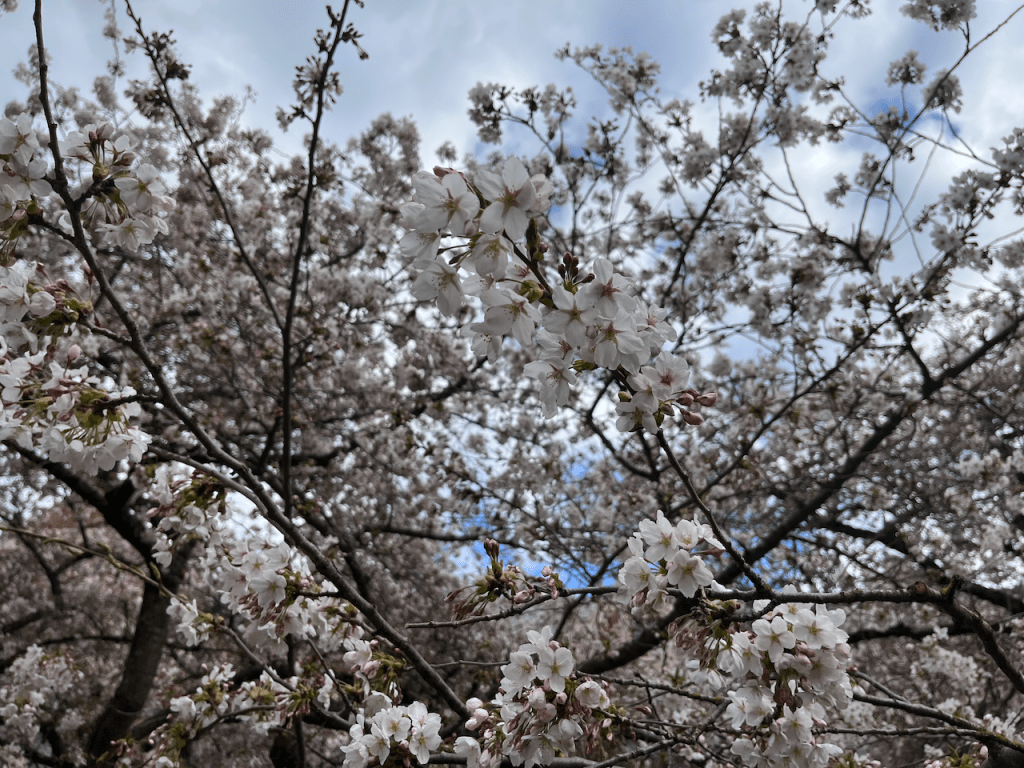
The main attraction of course is the Quad, and the Yoshino cherry trees there:

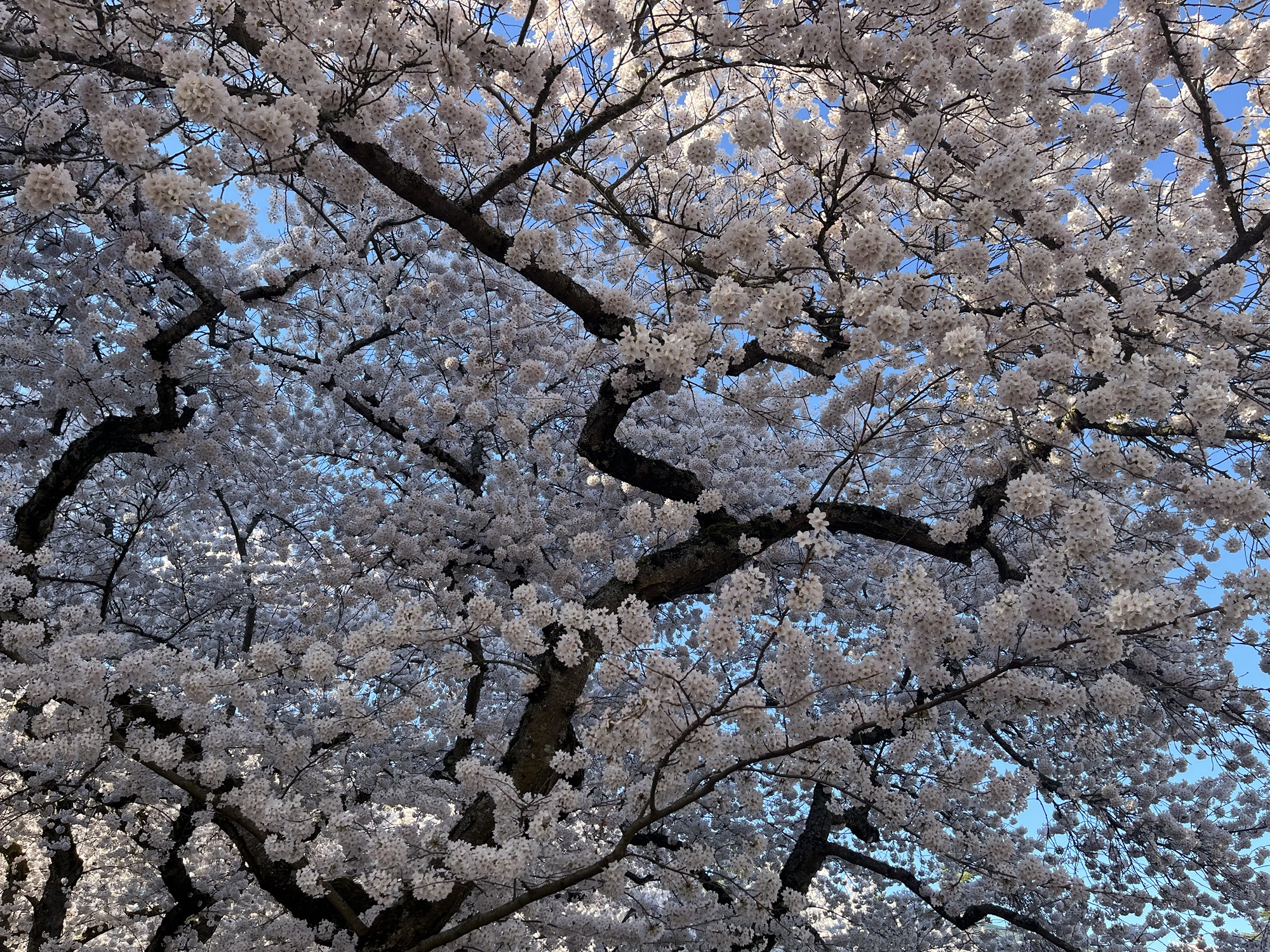
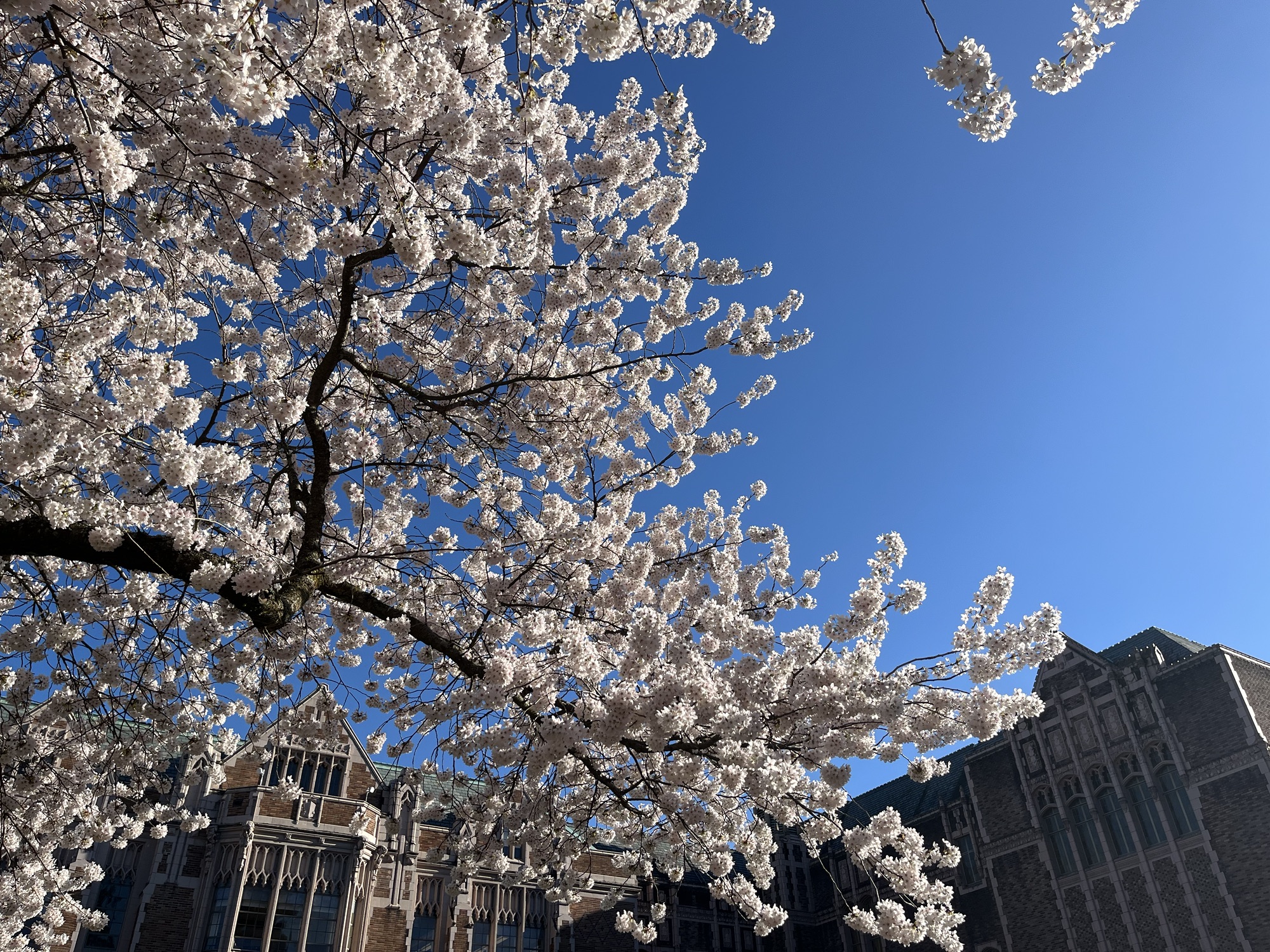

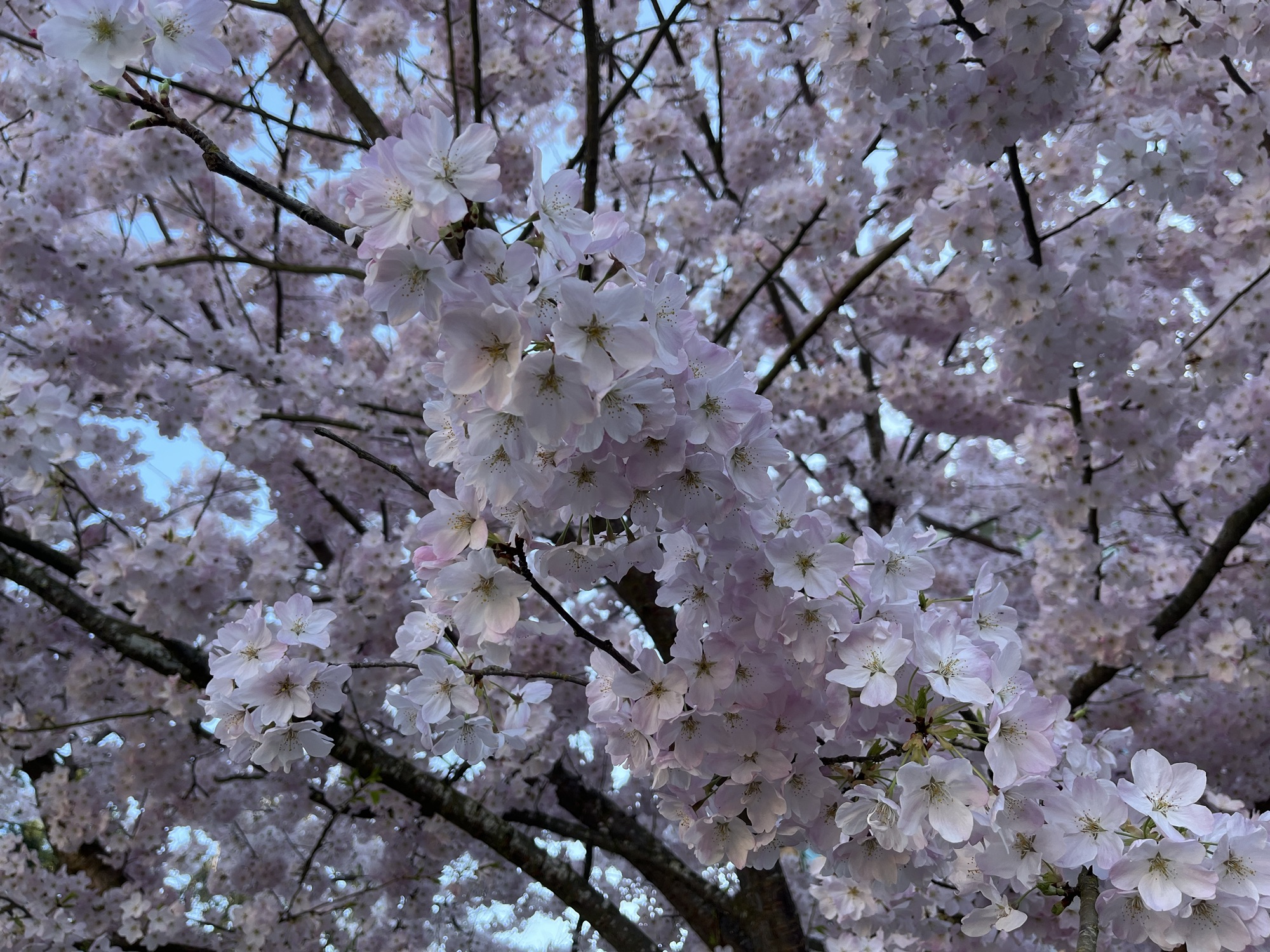
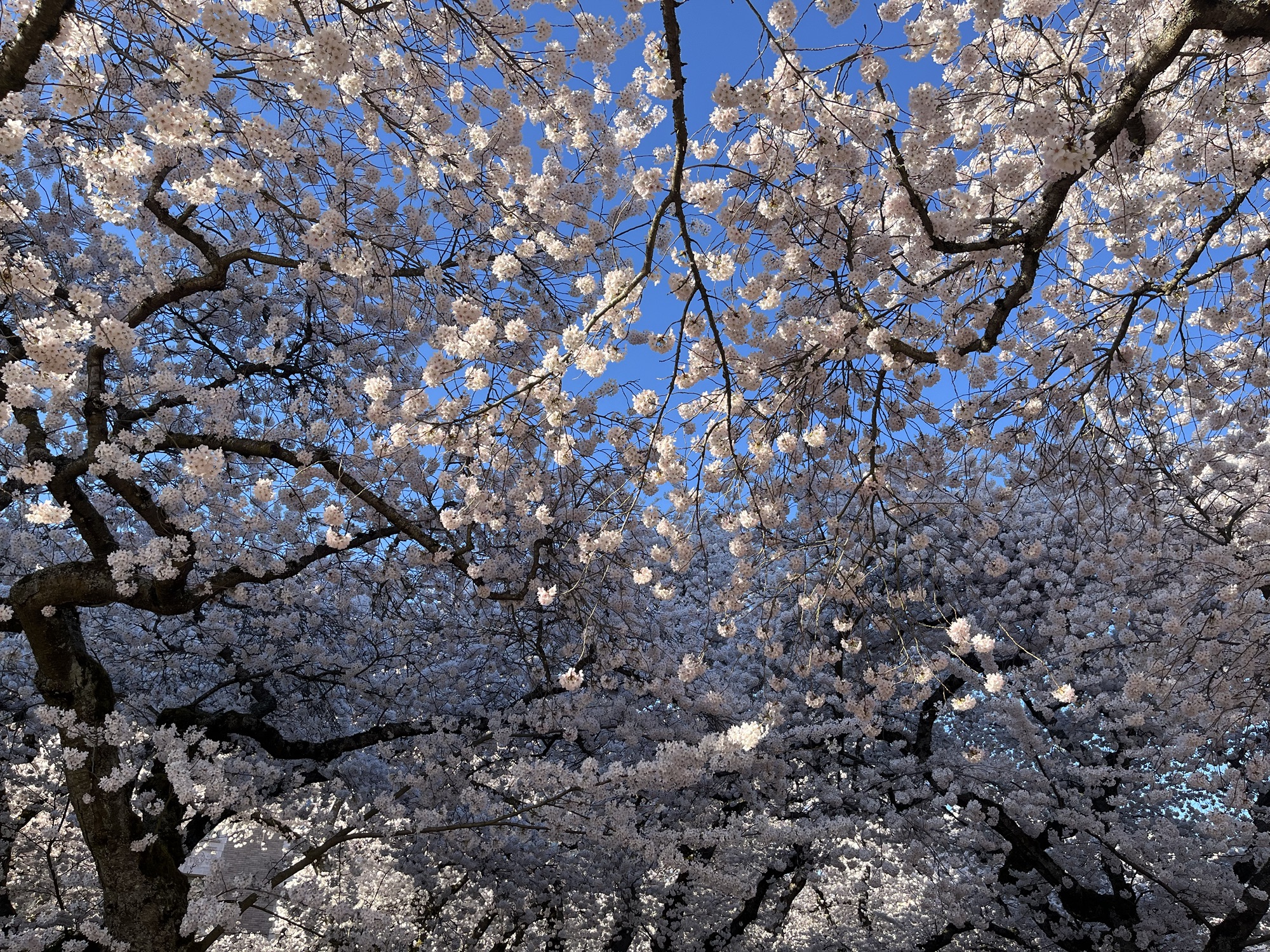
The “Yoshino” cherry tree is the most common and iconic cherry tree variety. In Japanese it is called the somei yoshino.
Next we moved south to see some of the varieties around Drumheller fountain. Not all varieties were in bloom yet, but we did see one called Kanzan,1 which I had never seen before. The blossoms were noticeably pinker, and had two layers of blossoms, not one.


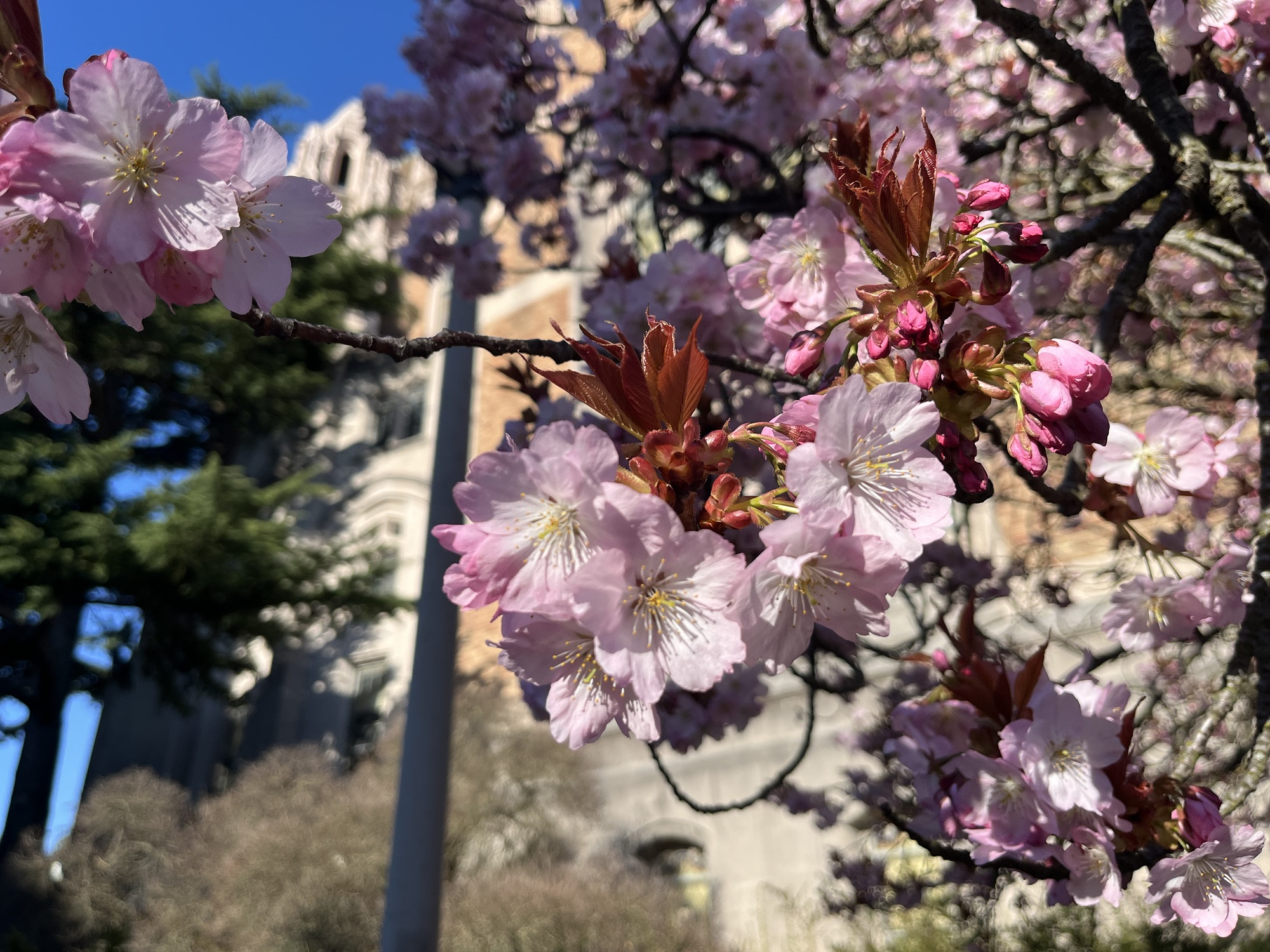
I really liked this variety myself.
Later, we ran into some good friends who were also viewing the cherry blossoms. Since I hadn’t really been out much this past month, due to surgery recovery, it’s really nice to see some friends and socialize for a while. We later went and got some gyros at a place I used to frequent back in college.
One the way, we saw one other variety I had not seen before: a Mt Fuji Cherry tree:


I had not heard of this variety either, but it is apparently a variety of the Prunus Serrulata tree,2 and is known for it’s all white blossoms. This is probably why it got it’s name “Mount Fuji” since it matches the color of snow. In Japanese it is called the “Shirotae” variety, where shirotae is a well-known pillow word in Japanese poetry meaning something that is gleaming white.
Anyhow, the weather worked out really well, and seeing old friends after a rough month really made the trip extra special. I had brought along one of my favorite books about the Hyakunin Isshu with me, and when a couple blossoms fell to the ground, I used it to press them within the pages. After a week, the pressed blossoms turned out pretty nice.
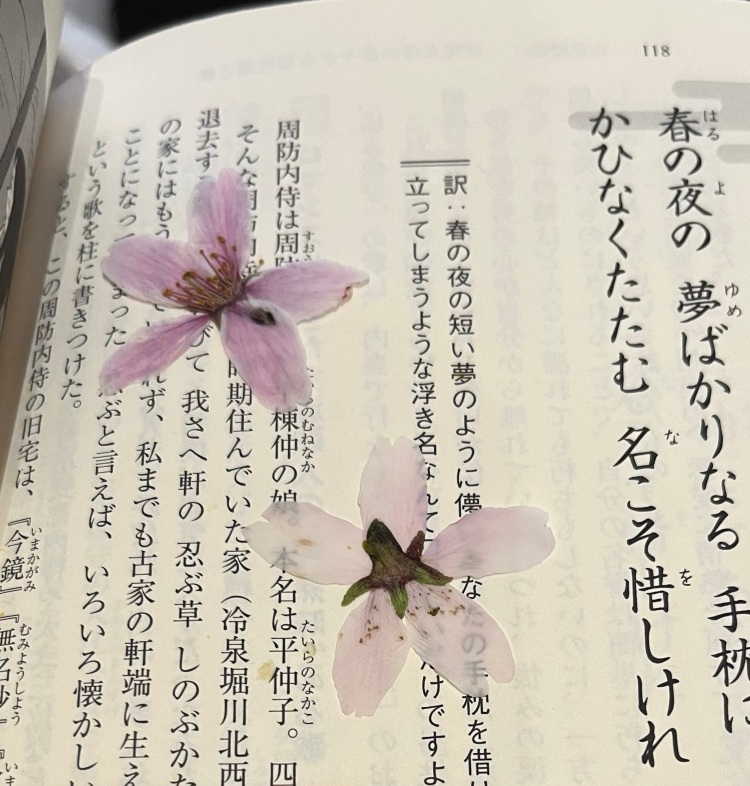
All in all, it was a memorable day, and really uplifting after a difficult month.
P.S. I know I’ve said it before, but a happy Spring Ohigan to all.
1 The UW website lists them as “Kwanzan”, but that is an older, archaic style of romanization of Japanese language. In Japanese it is definitely spelled “kanzan”. In the same way, the Bodhisattva Kannon was often spelled as “Kwannon” in older English literature.
2 The UW has another variety of Prunus Serrulata called the Shirofugen (a.k.a. Fugenzo in Japanese), but they were not in bloom when we came there.




 Gleanings in Buddha-Fields
You must be logged in to post a comment.