In Professor Donald Keene’s biography about the life of Shogun Ashikaga Yoshimasa (足利 義政, 1436 – 1490), includes a poem composed by Yoshimasa, now retired and living in his villa, the Silver Pavilion, ruminating on his former life as the supreme military commander of Japan:
Ashikaga no Yoshimasa, arguably one of the most influential people in Japanese art and aesthetics, yet ironically one of the worst military leaders in Japanese history, was never a serious student of Buddhism (though he was nominally ordained as a Rinzai Zen monk) but it’s interesting to hear him regret his life of luxury and power. To me, it is a contrast with Miyazawa Kenji’s famous poem Unbeaten By Rain (雨にも負けず).
A life of honesty poverty is probably better than wealthy lifestyle full of discord.
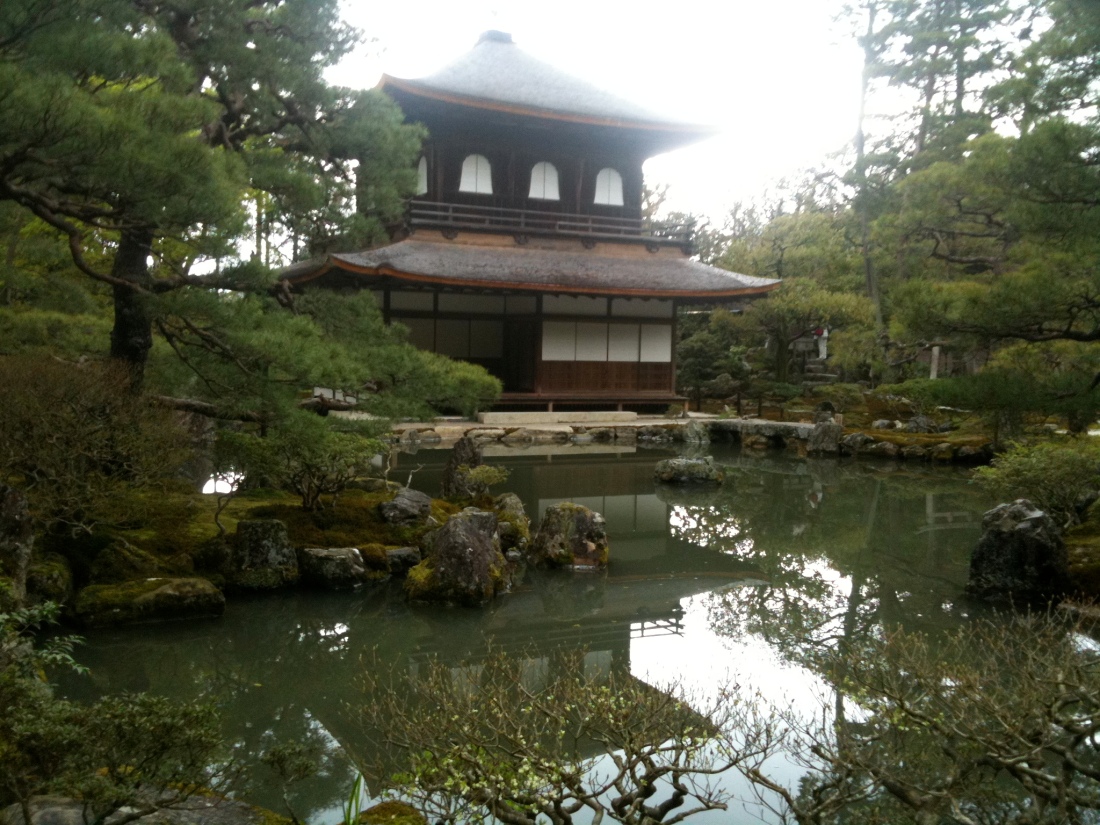
P.S. Photo taken of the Silver Pavilion, by me, in 2010.
— NASA's Perseverance Mars Rover (@NASAPersevere) May 3, 2022
Zen gardens, or karesansui (枯山水) meaning “dry mountain and water” or “dry landscape”, have been a part of Japanese aesthetics since at least the 10th century, when it was borrowed from Song-Dynasty Chinese garden trends. Contrary to popular belief they are not always associated with Zen-Buddhist temples either. However, karesansui really took off during the famous Higashiyama Period centered around the failed military shogun, but artistic genius, Ashikaga Yoshimasa. Because Rinzai-sect Zen temples were very prominent in the capitol at the time (e.g. the so-called “Five Mountains system“), the influence of Ashikaga Yoshimasa, his employment of extremely talented artists, and his patronage of these temples produced a unique aesthetic that is still very popular in the world.
The classic example is Ryoanji Temple, but also Ashikaga Yoshimasa’s own retreat, the Silver Pavilion (later converted into another Rinzai Zen temple, Ginkaku-ji):
Taken in 2010
What makes karesansui sand gardens so fascinating I suppose is the way that it captures a macrocosm landscape into a smaller, more epitomized version. I’ve always been fascinating by the Chinese ink landscape paintings and in the same vein, sand gardens capture that same quiet, timeless aesthetic. I haven’t personally seen one since my kids were very little, but they really do make a lasting impression.
One of the achievements of the short-lived Ashikaga Shogunate of Japan (14th to 16th century) were a pair of villas, later converted to Rinzai Zen Buddhist temple, called Kinkaku-ji (金閣寺) and Ginkaku-ji (銀閣寺). These are known as the Gold and Silver Pavilions in English respectively.
Despite the similar names and origins, both pavilions are interesting because they are surprisingly different from one another. Both were created by shoguns for their personal use, but they definitely reflect different tastes. The Gold Pavilion was built by the first shogun of the Ashikaga Shogunate, Ashikaga Yoshimitsu, in 1397, while the Silver Pavilion was completed in 1490 by the eighth shogun, Ashikaga Yoshimasa.
I visited the Gold Pavilion way back in 2005, the same trip where I saw the temples of Kiyomizu-dera and Ryoan-ji (this was a kind of honeymoon for us since we got married the previous year). The day we came to Kyoto there was a rare snow flurry, making the Gold Pavilion was extra beautiful that day:
The path around the Golden Pavilion allows you to peruse the grounds and see the pavilion from all sides:
Something I failed to notice at the time, but noticed while digging up these photos, is this altar site with calligraphy that says namu amida butsu (南無阿弥陀仏) which is better known in Japanese Buddhism as the nembutsu. According to the homepage, this hut was known as the sekkatei (夕佳亭) and was built centuries later for the benefit of Emperor Go-Mizu-No-O as a scenic tea room. Due to it’s scenic view at sunset, perhaps it was associated with Amida Buddha, who is said to preside over the Pure Land to the West, hence the calligraphy. But that is just my conjecture.
Now, turning to the Silver Pavilion, we visited there in April 2010, five years after seeing the Golden Pavilion:
The style of the Silver Pavilion is noticeably different than the Golden Pavilion, more closely associated with what we would think of as “Zen” style art and architecture.
In particular, the Silver Pavilion epitomizes the famous Higashiyama culture that flourished under Shogun Yoshimasa, and became the inspiration of Japanese culture even up to the modern era. Compare this with the more “Chinese style” adopted for the Golden Pavilion, reflecting Ashikaga Yoshimitsu who was a confirmed Sinophile.
Anyhow, someday I would like to visit both temples on the same trip, and preferably with a more experienced eye. 😆



 Gleanings in Buddha-Fields
You must be logged in to post a comment.