
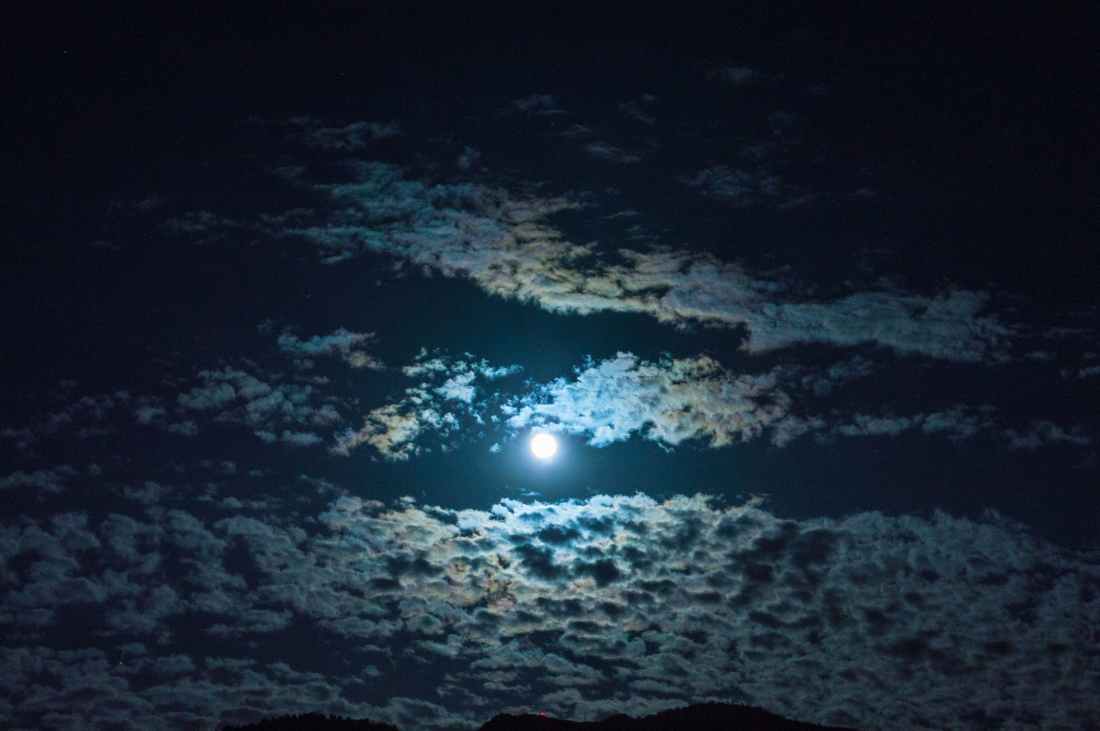
In the old Chinese lunar calendar, on the 15th day of the 8th lunar month (i.e. full moon on the 8th month), many cultures across East Asia celebrate something called the Mid-Autumn Festival. This has various names depending on the country and language:
- Zhōng-qiū-jié (中秋節) in Mandarin Chinese,
- Tiong-chhiu-cheh in Hokkien, by the way
- Tết Trung Thu in Vietnam, and
- Chuseok (추석) in Korea
In Japan, this festival is called formally the Jūgoya (十五夜, “15th night”) festival, but in popular culture is known as Otsukimi (お月見, “moon viewing”). This year, due to the lunar calendar, Otsukimi falls somewhat late on October 6th. This festival is about viewing the moon with friends and family, while enjoying some dango (rice dumplings) using displays like so:

According to this excellent book on Japanese culture, people also decorate such displays with pampas grass (susuki, ススキ), edamamé beans and taro potatoes. Unlike cherry-blossom viewing, people do not usually get drunk.
Chinese moon cakes, called geppei (月餅) in Japanese, are sometimes eaten as well, though it’s more of an exotic treat. Here, moon cakes are easy to obtain, and quite delicious. Highly recommend. We also get the Korean version of dango (tteok, 떡) too.
In any case, Otsukimi is about relaxing, enjoying the autumn vibes with the ones you love. As my family and I live in the Pacific Northwest, weather here isn’t reliable, and so we often get stuck with cloudy weather. But the image of Otsukimi is still popular. You can even find an emoji for it: 🎑.
Also, fun fact: there are traditionally two days of moon-viewing in Japan. The main one is Jūgoya (十五夜, “15th night”), but traditionally there is also a Jūsanya (十三夜, “13th night”) viewing on the 13th night of the ninth (not eighth) lunar month. This year, 13th night falls on November 2nd. On the 13th night of the lunar month, people enjoy chestnuts instead. Traditionally, people felt you should view the moon on both nights, otherwise, according to my book, you only did katamitsuki (片見月, “one-sided viewing”), which wasn’t ideal.
By the way, there is one other tradition around this time that’s specifically Buddhist: Juya-é (十夜会, “ten nights ceremony”), which is ten nights of observance of Pure Land Buddhist practice, starting from October 5th to 14th in the Western calendar. I usually try to recite the nembutsu a full 1080 times using my old Jodo Shu rosary for ten nights. Easier said than done as a parent, but it’s nice to have a challenge from time to time. Traditionally, people try to attend temple services if possible, or just focus on good behavior.
Anyhow, wishing you all a fun Otsukimi, Mid-Autumn Festival, or Juya-e, etc., or all of the above!






 Gleanings in Buddha-Fields


.jpg)


You must be logged in to post a comment.