Toyokawa Inari Shrine: Syncretic Religion

A little while back, during my post on Fushimi Inari Shrine in Kyoto, Japan, I alluded to how the native Shinto religion often blended with Buddhism up until the early modern period (e.g. the Meiji Period) when they were more forcefully separated.

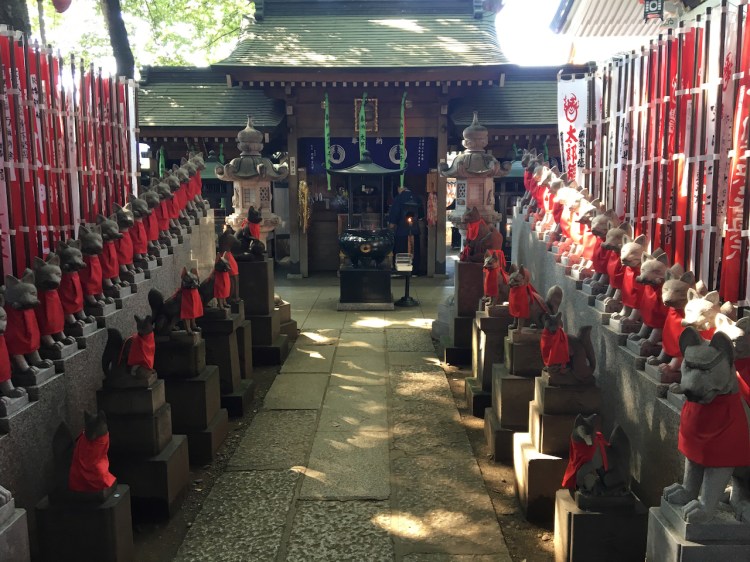
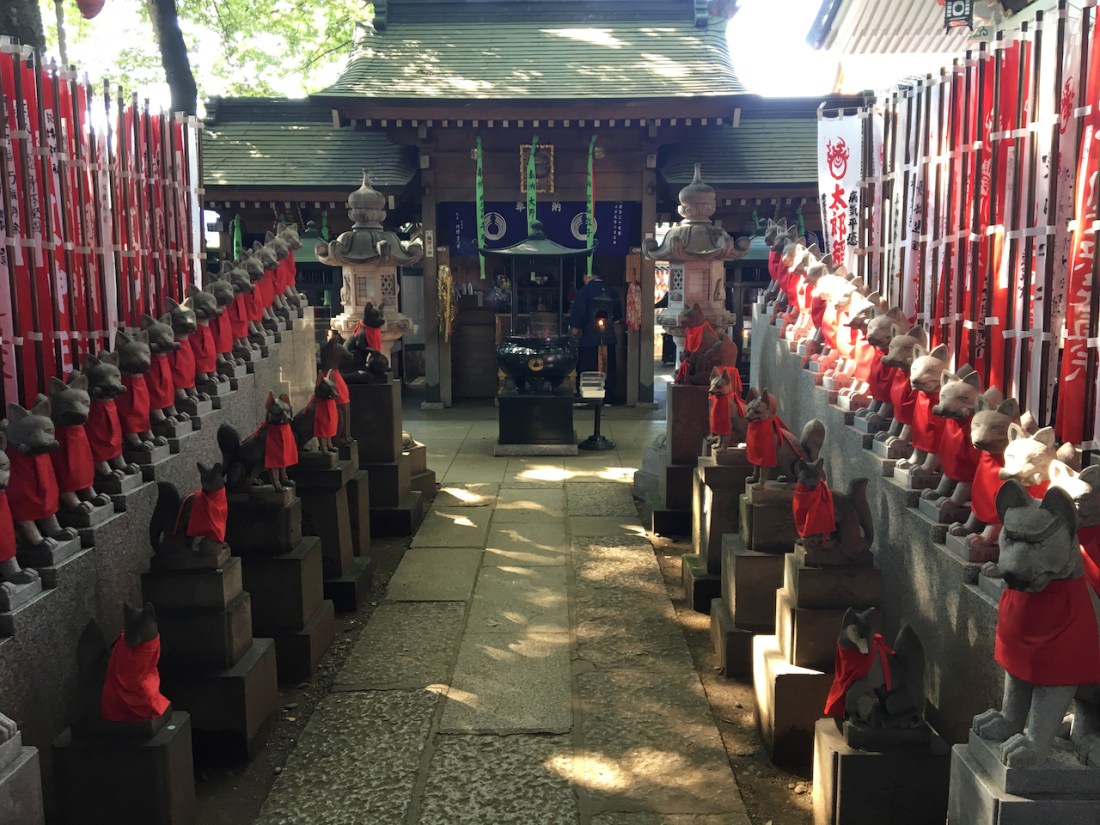
You can still see vestiges of this blending in some temples and shrines, but one great example is the Toyokawa Inari shrine right in the heart of Tokyo’s Minato Ward:

This Shinto shrine / Soto-Zen Buddhist temple venerates Dakini-ten (荼枳尼天), which is the Buddhist form of the Shinto kami Inari Ōkami.

Dakini-ten is based on the concept of Ḍākinī in esoteric (a.k.a. Vajrayana) Buddhism, but in Japan it blended with veneration of Shinto kami and thus took on a life of its own.

Inari Ōkami in his/her Buddhist form as Dakini-ten shining light upon a samurai warrior. Late medieval painting by Utagawa Kuniyoshi, source: Wikimedia

Anyhow, let’s talk about the temple itself. I visited the temple in 2018 and had little context back then, so I didn’t take as many good photos as I would have liked, but I will try to explain as best as I can.

Once you go past the main gate…
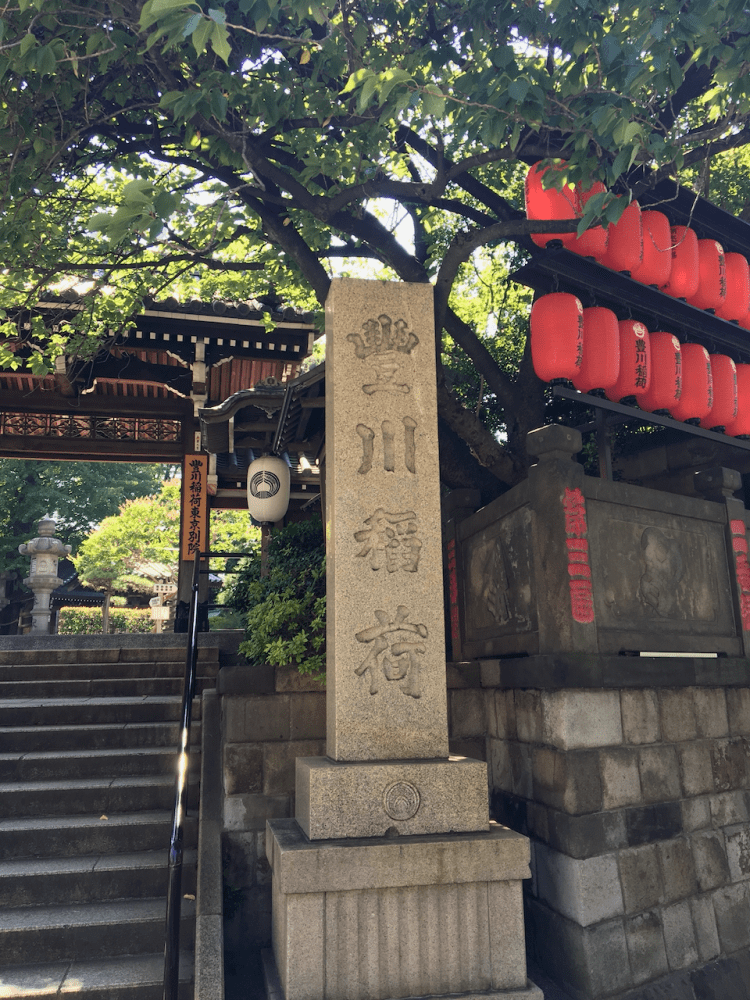
You come upon the main shrine to Inari Ōkami (colloquially known as “O-Inari-san”):

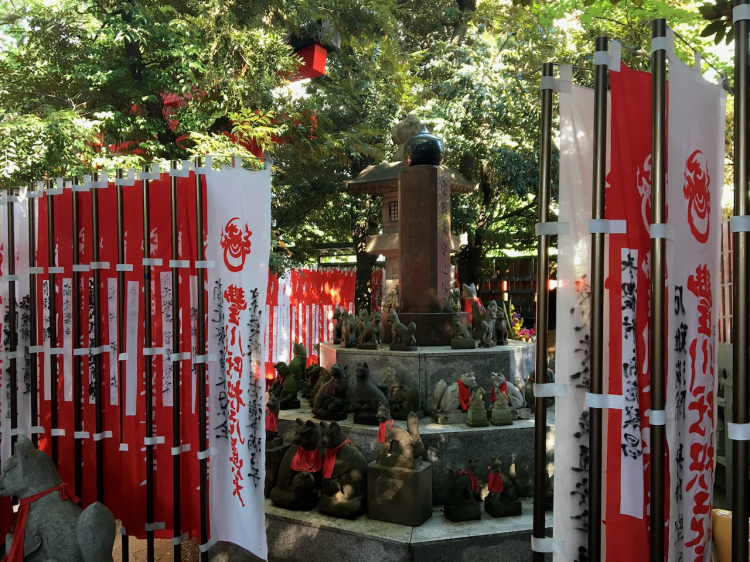
Another, small sub-shrine here:

You can see fox statues all over the complex, due to their close association with Inari Ōkami.
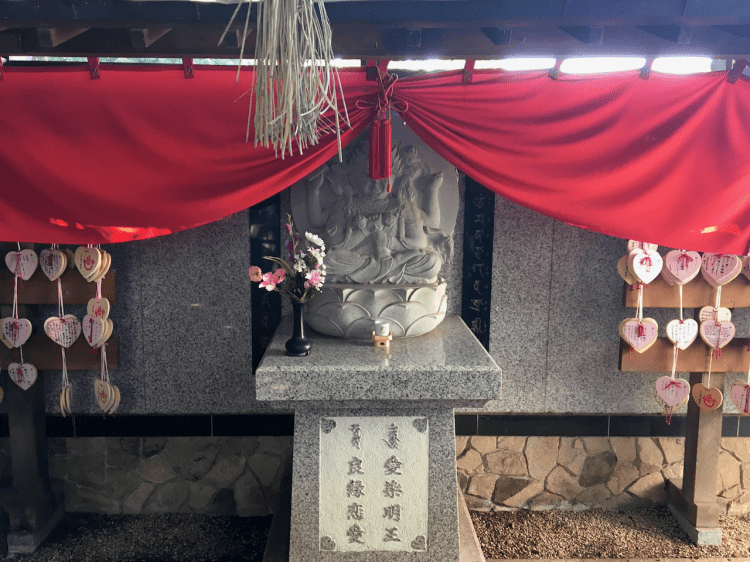
However, other deities, both Buddhist and Shinto are enshrined here too. For example, below is an esoteric-Buddhist (Vajrayana) deity named Aizen Myō-ō (愛染明王):
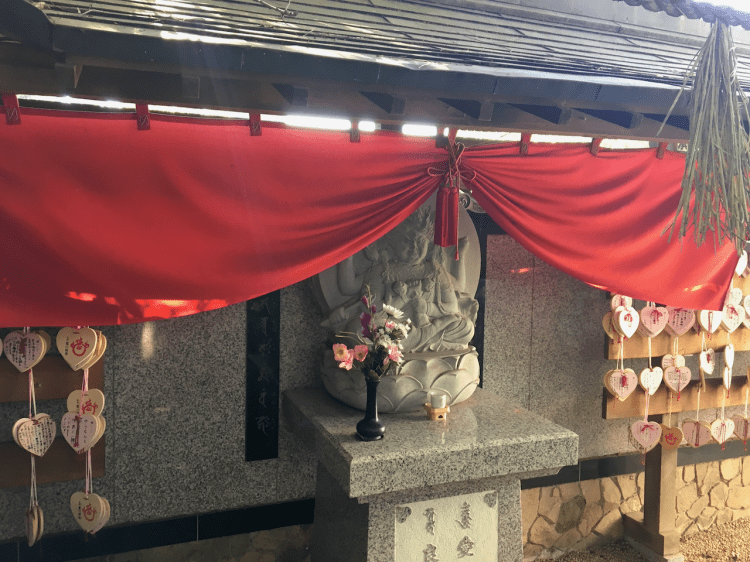
Also, Benzaiten, one of the Seven Luck Gods:

And Kannon Bodhisattva:

The fact that both Shinto deities like Benzaiten and Inari Ōkami reside in the same shrine as overtly Buddhist deities such as Kannon and Aizen Myō-ō is somewhat unusual, but really isn’t. This was normative for Japanese religion until the modern century. Japan has had two religions for a very long time, and they’ve co-existed for so long, that they often blended together.

If you look at American religion, pagan religion and Christianity co-existed for so long (even when paganism was officially repressed) that the two blended together. Things we take for granted such as Christmas trees, mistletoe, Easter eggs, and such are all examples where they have blended together to religion as we know it today. This might offend religious purists (to be fair everything annoys religious purists), but this is how societies absorb and adapt religions over generations. Japanese culture simply had different religions to work with.

Anyhow, fascinating stuff.

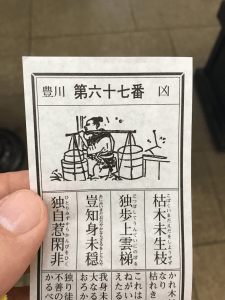
P.S. My omikuji fortune that visit was bad luck (kyō, 凶). I don’t remember having a particular bad year, especially compared to 2020 later, but it was surprising to get an overtly bad fortune for a change.
Fushimi Inari Shrine and O-Inari-San

On the list of unexpected surprises during our recent trip to Kyoto/Nara was another place we visited: Fushimi Inari Grand Shrine (English / Japanese homepages) also called Inari Taisha (稲荷大神) in Japanese. The Fushimi Inari Grand Shrine, located in south-east Kyoto, is the head shrine devoted to a very popular Shinto kami named Inari Ōkami (稲荷大神). However, he also known more colloquially as O-Inari-san (お稲荷さん).

Shinto religion reveres and recognizes, many, many kami, and oftentimes these kami are often tied to a certain place, or even to just a single shrine. Many are quite obscure, too. For example, while Kasuga Grand Shrine is considered one of the most sacred, its deities are not well-known in popular culture. However, a few kami enjoy an almost universal popularity within Japan. This includes O-Inari-san and Tenjin, among others. You’ll find branch shrines throughout Japan, all descended from the main one, and in the case of O-Inari-san, the head shrine is at Fushimi.

Even to visitors to Japan, O-Inari-san is often recognizable because his shrines are often decorated bright red, and white foxes. Why foxes? Foxes were thought to be messengers of O-Inari-san, hence they adorn his shrines. Technically, O-Inari-san is not a god of foxes, however. They just happen to be his messengers. Instead, what makes O-Inari-san so popular is that he was a kami associated with commerce, travel, and the harvest of the year rice crop. For the latter, foxes, were often dispatched by O-Inari-san to report on the status of the harvest across Japan. Thus, foxes often have a “fey” image within Japanese folklore.

Even in modern businesses and shopping malls, if you look carefully, you’ll often find a small shrine to O-Inari-san tucked away somewhere.

Further, when Buddhism and Shinto blended in the middle ages, it was assumed that O-Inari-san was a divine protector of Buddhism, and sometimes conflated with certain obscure Buddhist figure named Dakini. In downtown Tokyo is a Shrine I’ve visited before called Toyokawa Inari devoted to O-Inari-san, and was a hybrid Zen temple and Shinto shrine:

Anyhow, that’s the lengthy explanation of O-Inari-san; let’s look at the shrine. Chances are, you’ve probably seen photos of it, because the tunnel of red torii gates is so iconic, but there’s a lot more to the temple too.

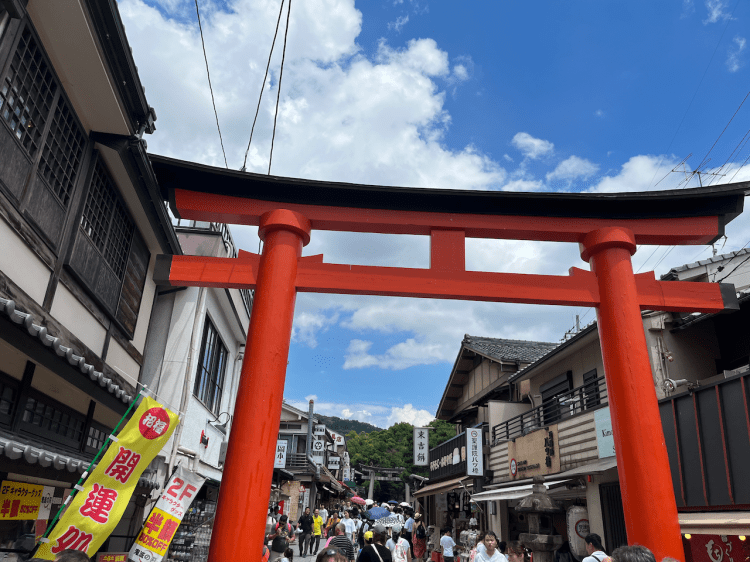
From the Fushimi-Inari train station in Kyoto, you can find the shrine very easily (it’s a huge tourist draw):

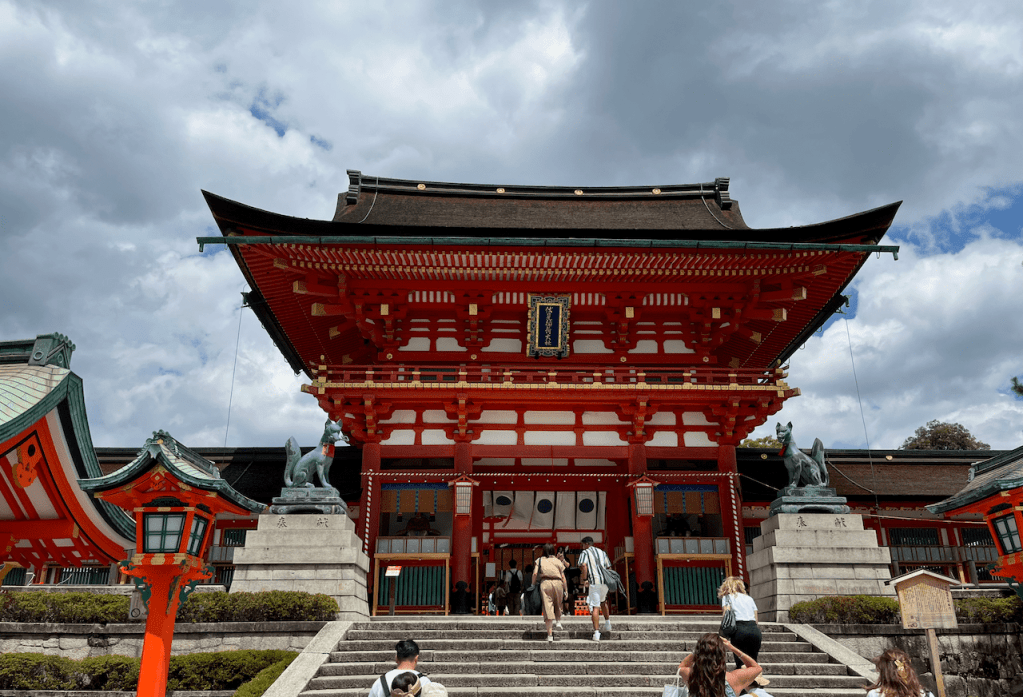
… until get to the front entrance:

From here, the shrine splits into two places. Ahead, is the main, inner sanctum, however, the path also splits left and follows up the mountain:

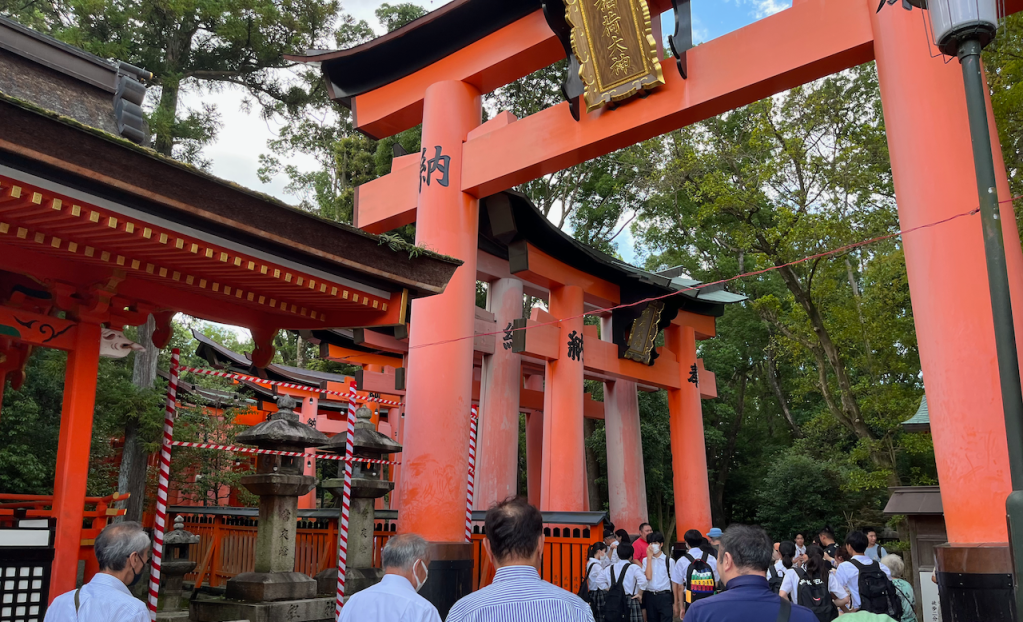
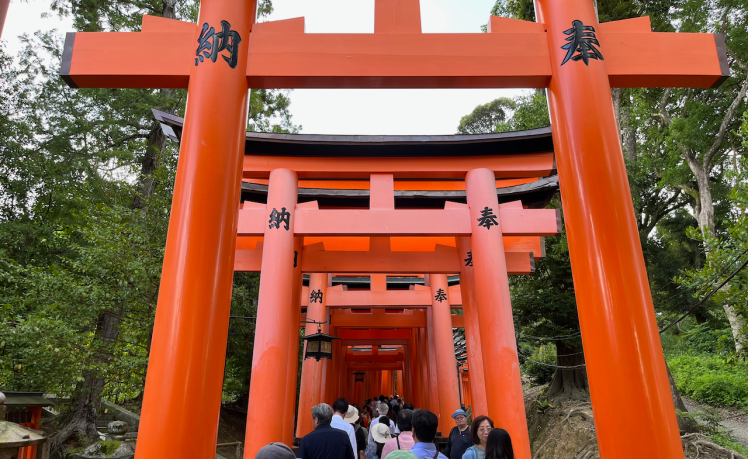
As you go up these stairs, the iconic tunnels begin to the right:

Each of these red torii gates is a donation by someone either praying for something, or an offering torii in gratitude for past blessings. This is a very common practice in Japanese Shinto (and Japanese religion in general): a cycle of supplication, and offerings of gratitude. This cycle is thought to deepen the connection (縁, en) between the particular kami and the supplicant over time.

Anyhow, the torii are pretty neat:

The tunnel branches off into a few side paths, but generally it loops up the mountain and back down again. There are other shrines at certain places up the mountain, and we visited a few, too many to post here (to be honest, I also got a bit lost without a map).

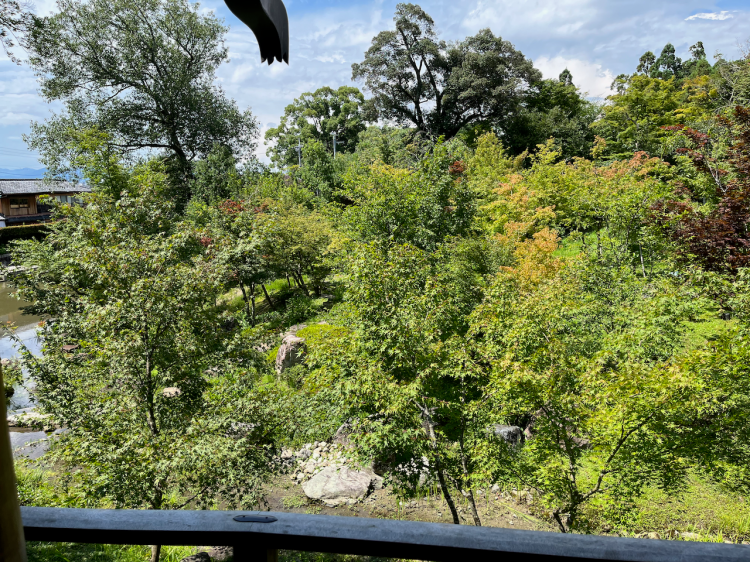
In any case, as you come down the mountain, there is a nice viewing spot here, to the right:

The veranda inside has a nice view, which I am told is especially lovely in Autumn:

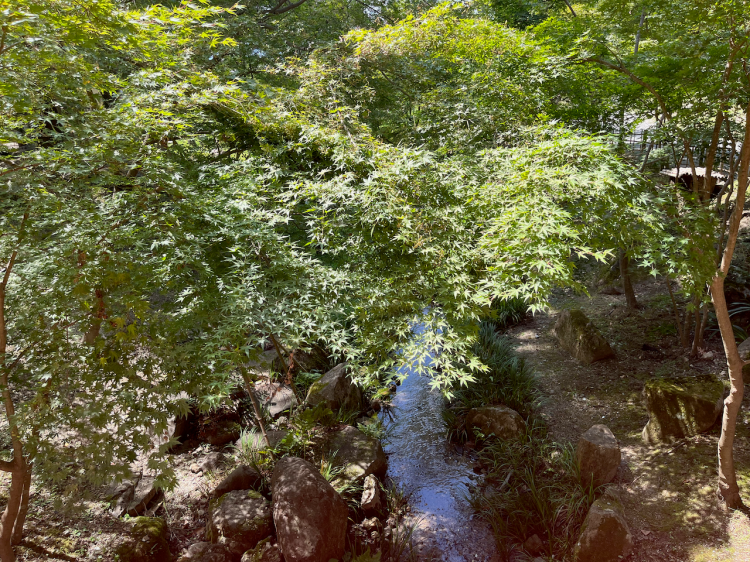
Finally, just before returning to the front gate, there is a nice little bridge with a small stream running under it:

I took a very brief video of the stream as well (apologies for the background noise):

Fushimi Inari Grand Shrine was quite a bit of fun, and a great place to spend half a day. It’s comparatively easy to get to in Kyoto, and there’s more than enough there to keep one busy. Further, my son, who loves foxes,1 really enjoyed himself. He even got a few fox (kitsune) toys. The photo at the top of this blog is his favorite, overlooking the famous Kamo River running through Kyoto.

P.S. the name o-inari-san is also used to describe those little fried tofu pockets with rice in them.

1 In our current Pathfinder 2nd ed campaign, my son is playing a Kitsune character.