Isis and the Buddha: an Egyptian discovery

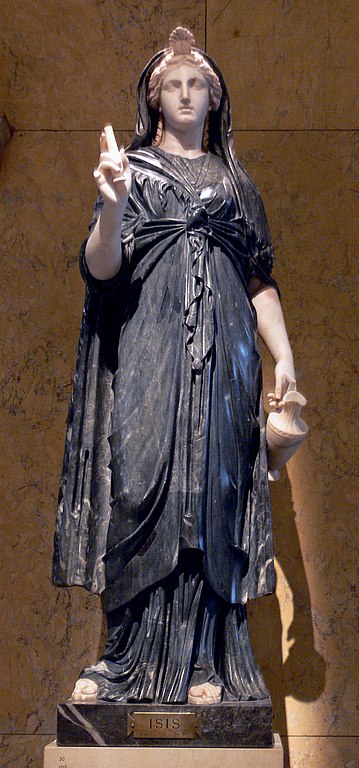
Recently, archaeologists have uncovered a statue of the Buddha, not in India or Asia, but in ancient Egypt! The statue, according to the Egyptian government, was uncovered as part of a temple dedicated to Isis, and crafted by a local Indian Buddhist community during the early Roman Imperial age, the Principate.

The cult of Isis was a fascinating example of religion in the Hellenistic Period, and inherited later when the Romans took over the eastern Mediterranean. During the Hellenistic Period, a period of constant political rivalries, and large movements of Greek people, and expansion of Greek culture through colonies, the old Olympian religion had increasingly proved unable to help people through difficult times. The old Olympian religion was focused on public cults in a kind of “contractual” religion where people of a city-state publicly worship a particular god, and get something out of it. For more personal needs, there just wasn’t much substance.

Thus, mystery religions such as the Cult of Demeter and others arose. These provided more personal relationships with the gods, and clearer undersetanding of the afterlife, and how one might secure a better fate than just being an empty shade wandering in Hades (cf. Homer’s Odyssey).

When the Macedonian Ptolemy family took over Egypt, they had to reform Greco-Egyptian society into something they could rule legitimately, so certain gods were reinvented or elevated. Egyptians had done this too, but the Ptolemies tapped into this and elevated two gods in particular:

  • Serapis – a kind of hybrid god based loosely on Osiris, but also Zeus.
  • Isis – Osiris’s consort.

Isis’s role in particular grew far beyond the original Egyptian religion and her cults spread across the Roman world. Her status also grew in that she wasn’t just a mother goddess, but the mother goddess: embodying wisdom, magic, maternal love and so on. Other goddess figures from disparate cults were sometimes viewed as just more manifestations of Isis. There are even

A statue of Isis, from the 2nd century CE. Photo: Andreas Praefcke, Public domain, via Wikimedia Commons

Isis’s religion wasn’t organized according to the kind of doctrine or dogma we associate with modern religions, it was still very much a form of personal, devotional worship,1 rather than an “one-size fits all” religion to explain everything. Roman society at large was still a marketplace of religions, but the religions had changed from mostly public ritual (e.g. the Olympian gods) to more internal, personal religion.

So, how does the Buddha fit into all this? That part is still being researched, but given Isis’s status as a goddess of wisdom, putting a statue of the Buddha, a figure also associated with wisdom, in her temple was probably a useful cultural prop. Indian merchants, had a trade colony in Egypt at the time, and the Buddhist religion in India reached a high-water mark at the time, so at least some of the Indian people living in Egypt would know of it, or might even be devotees.

Does that mean that there were Buddhist communities in Roman Egypt? Evidence is very scant. Even if there were, their presence was likely limited to the Indian expat community.

Still, the cultural cross-over is pretty fascinating.

P.S. This is the last post before the family and I head to Japan. When next we meet, I’ll post updates from

1 Similarly, worship of Mithra, a Zoroastrian deity imported into Roman culture, enjoyed widespread devotion among soldiers and other figures. People worshipped the god or goddess they tended to feel most affinity with.

Revisiting the Eastern Romans: the Byzantines

For some time, I have been following podcast called the History of Byzantium Podcast, which covers the lengthy history of the Eastern Romans from 5th century all the way to the fall in 1453, a thousand years later.

“Wait!” you might be wondering, “didn’t the Roman Empire fall in the 4th century to barbarian invasions?!”

Yes, and no.

The reforms of Emperor Diocletian after the Crisis of the Third Century had essentially split the Roman empire into two, smaller more manageable empires:

The small Greek town of Byzantion (Byzanitium in Latin) became increasingly important after Emperor Constantine made it his new capitol, renaming it after himself (Constatinople).

In any case, when the Roman Empire fell, it was only the Western half, which was the less prosperous, less populous half anyway. The eastern half was able to bribe or drive out the hordes, and kept going.

In fact, it kept going until 1453. Over the course of 1,000 years, it gradually changed, losing its Latin influences and becoming increasingly Greek in nature, but until the 4th Crusade, there never was a break in the Roman Empire of the East. Professor Anthony Kaldelis pointed out that Greek people continued to identify themselves as “Roman” even into 20th century during Ottoman times, and even the Ottomans referred to Greece as the Sultanate of Rûm (Rome). Historians use the term “Byzantine” to describe the Eastern Roman Empire, but Romans in the East never used this term. They called themselves “Romania” or “Rome”.

Was it even Roman anymore? Western purists would assume “no” because Rome the city wasn’t part of the empire, but even before the 4th century, Rome had ceased to be the the center of the Empire as the Western half administered things from Ravenna or other cities. Further, Latin was never technically the official language of the Roman Empire (as in, “by law”). Greek and Latin co-existed, and Greek speakers always outnumbered the Latin-speaking ones because of the influence of the earlier Hellenistic period (for example in Roman Egypt).

Alexios I, Komnenos, one of the last great Emperors of the Eastern Roman Empire. Public domain, via Wikimedia Commons

Further, the Republican aspects of the Empire kept going in Eastern half many centuries later. This concept of res publica wasn’t the same as modern English “republic” (never was), as in a specific system of government, but instead was used to describe “Rome” the polity. When the first emperor, Augustus, took over as the princeps (“first among equals”), the term res publica was still widely used to describe Rome, and kept going through the Byzantine era using the Greek equivalent politeia (πολιτεία). The Emperors during the Byzantine era were still installed and overthrown in the same way the earlier Emperors had been.

As Anthony Kaldellis demonstrates, Emperors were always subject to popular will, just as the old Republican consuls had been, and nothing really changed in the Byzantine era. Thus, the res publica of Rome was a continuous spectrum from the earliest days of the republic to the 15th century.

All this is to say that, when we speak of the “Fall of the Roman Empire”, in reality, only some of the Empire fell in the 5th century. The rest, amazingly, kept going. Constantinople was for centuries one of the largest cities in the world, and the Theodosian Walls were never thrown down until the invention of modern cannon warfare.

Like any empire, the Eastern Romans had periods of growth and decline, and as the neighbors gradually caught up in terms of technology and military skill, Constantinople’s power steadily waned. In the days of Julius Caesar, Rome was so far ahead of the Gauls and other neighbors, it was easy to steamroll them, but by the time of Alexios Komnenos, the Eastern Empire faced many complex and powerful enemies, and there’s just only so much a society can do in that scenario. As the host of the podcast explains, the chessboard was very crowded.

So, if you’d like to know more about the Eastern Romans, not Byzantines, please check out the podcast above.

Amitabha Buddha and Gandhara

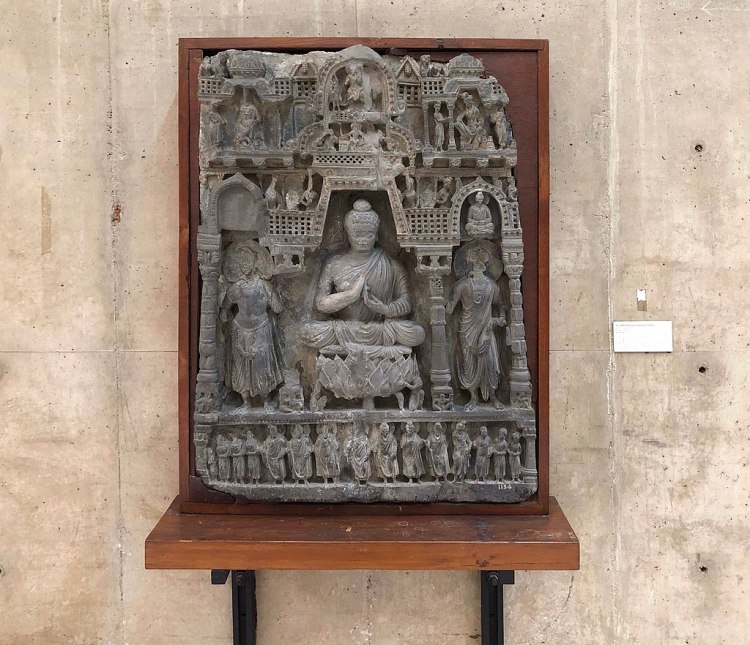
Recently, while bumbling around Wikipedia (as one does), I came upon this random but very fascinating example of Buddhist art from the Gandhara region. This is a depiction of Amitabha Buddha preaching upon a lotus throne in the Pure Land (Sukhāvatī in Sanskrit).

A 2nd-century Gandharan sculpture depicting Amitabha Buddha preaching from the Pure Land, UnpetitproleX, CC BY-SA 4.0, via Wikimedia Commons

This picture dates from the Kushan Empire, which inherited the earlier Greco-Bactrian and Indo-Greek kingdoms, who in turn arose from the empire of Alexander the Great. I’ve talked about the interaction between India and Greeks before, but the cultural interactions were even deeper than I originally hinted at. The Hellenistic Age Podcast recently posted a fascinating interview with Dr. Osmund Bopearachchi (website) that explored this cultural interaction even further. Highly recommend if you can.

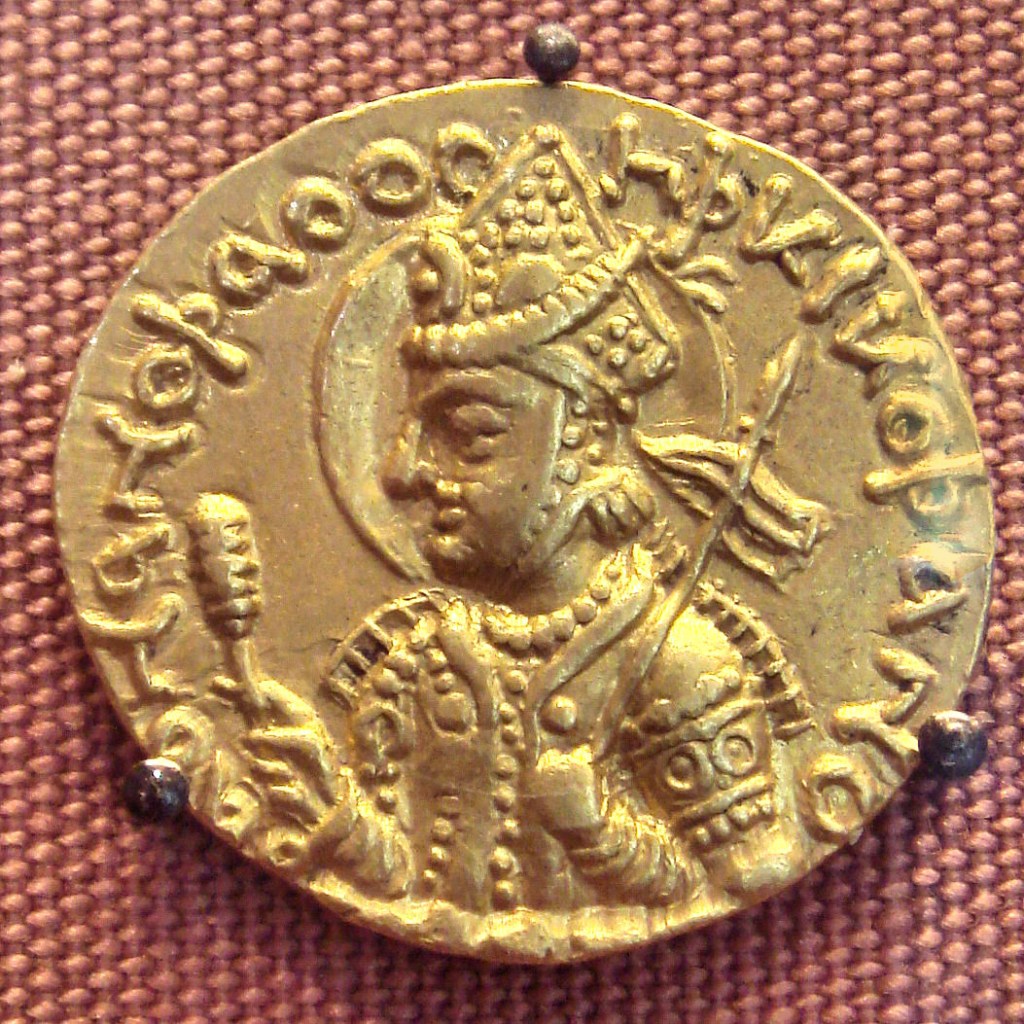
But this picture of Amitabha Buddha got me thinking about a more specific question: where does Amitabha Buddha come from? Amitabha is not mentioned in the earliest Buddhist texts at all, and the earliest statuary appears in the Kushan Empire under the reign of King Huvishka, while other artwork dates back to the Gandhara period of northwest India.

King Huvishka depicting in coinage from the era. Notice the halo behind his head. Public domain, via Wikimedia Commons

A number of interesting theories have arisen over time, some of which have been encapsulated in an essay from 1988 by Soho Machida titled Life and Light, the Infinite: A Historical and Philological Analysis of the Amida Cult. Machida points out some interesting facts:

  • No statuary of Amitabha Buddha have ever been found in India’s interior, only in northwest India.
  • Chinese monks who later visited India never mentioned Amitabha Buddha.
  • Luminosity as an Buddhist symbol is never described in early Buddhist texts, but does appear in later Mahayana ones.
  • Similarly, Buddhist statues that feature a luminous “halo”, known in Sanskrit as śiraś-cakra (Chinese: 光背), do not appear until the 1st century CE.
Late 4th-century Sasanian Persian relief of Mithra, by dynamosquito from France, CC BY-SA 2.0, via Wikimedia Commons

The people of Gandhara interacted not just with India, but also with the Scythians (who conquered the Indo-Greeks) as well as the Parthians. The Parthian Empire in particular did have a Buddhist presence, albeit small, and yet the state religion was Zoroastrianism, which frequently uses light as religious symbolism, especially in the royal symbolism of khvarenah. For example, the god Mithra, who also had a cult-following in the Roman Empire, symbolized light, justice, and the sun.

It’s conceivable that the neighboring people of Gandhara in creating new Buddhist art borrowed elements and styles from their neighbors and contemporaries:

  • from the Greek descendants of Bactria and Indo-Greek kingdoms, they learned to depicted the Buddha in an anthropromorphic way (i.e. similar to Greek statues) as Dr. Osmund Bopearachchi attests to
  • from the Parthians, they may have learned to depict wisdom, truth and compassion through the imagery of light, using the religious imagery of Zoroastrianism.
  • from India, they would have imported Buddhist teachings and concepts in an abstract sense, in addition to the literary tradition of the sutras.

If that is the case, then Amitabha Buddha represents a fusion of Indian-Buddhist thought, especially Mahayana Buddhism, with Parthian religious symbolism and Greek artistic methods.

The preamble of the Sutra of Immeasurable Life, one of the three core Pure Land sutras, depicts the gradual progression of a being to becoming a fully enlightened Buddha:

After attaining the Buddha-garland samādhi, he [the prospective bodhisattva] proclaims and expounds all the sutras. While dwelling deep in meditation, he visualizes all the innumerable Buddhas and in an instant visits every one of them. By elucidating and teaching the ultimate truth to sentient beings, he delivers them from the state of extreme pains, from the conditions in which suffering is so great as to prevent people from finding time for Buddhist practices, and also from the conditions in which suffering is not so great as to prevent them from doing so. Having attained the Tathāgata’s thorough knowledge and eloquence, he has fluent command of languages, with which he enlightens all beings. He is above all worldly affairs and his mind, always serene, dwells on the path of emancipation; this gives him complete control over all dharmas.

Translation by Rev. Hisao Inagaki

The Sutra, as one of the founding texts of Pure Land Buddhism epitomizes the path to Buddhahood, using the story of the historical Shakyamuni Buddha as the template, and through this sutra, Amitabha is clearly meant to be the epitome of Buddhas. What better way to epitomize a Buddha than to use infinite light as symbolism?

Fascinating stuff.

Update: posted some additional content I forgot add with the initial draft. Enjoy!

Early Ukraine History: Of Scythians, Thracians and Greeks

Hello Readers,

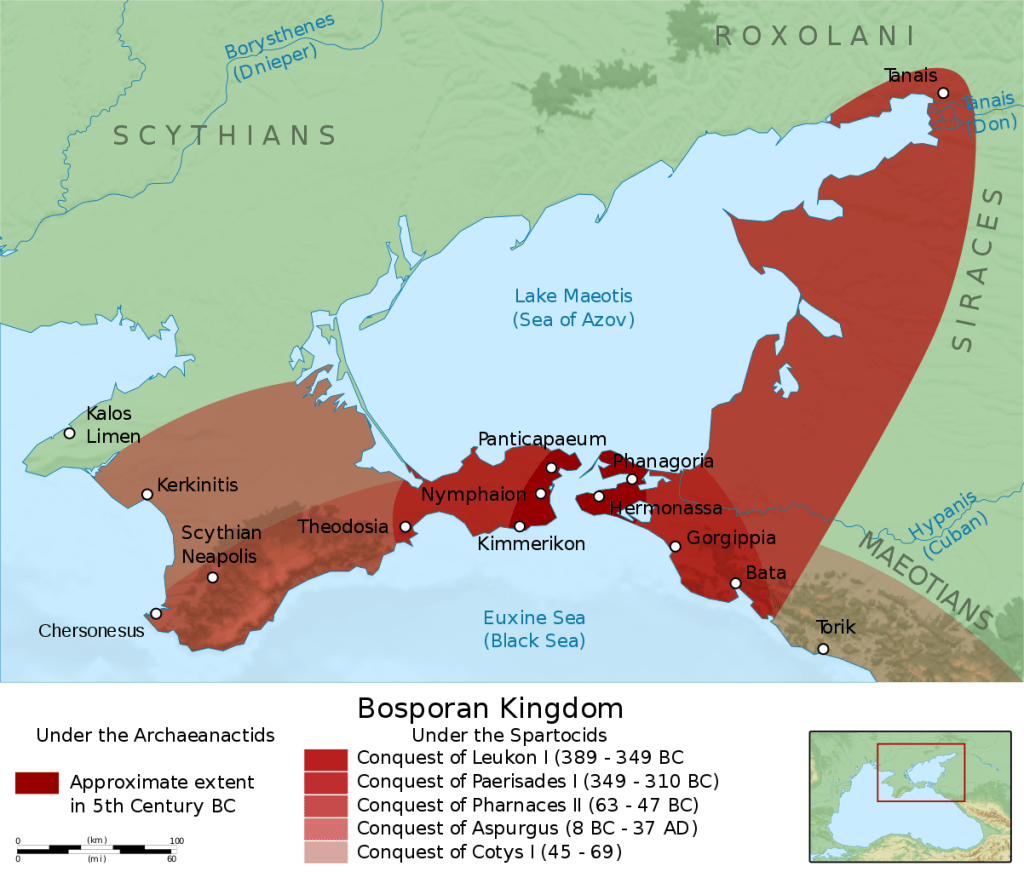
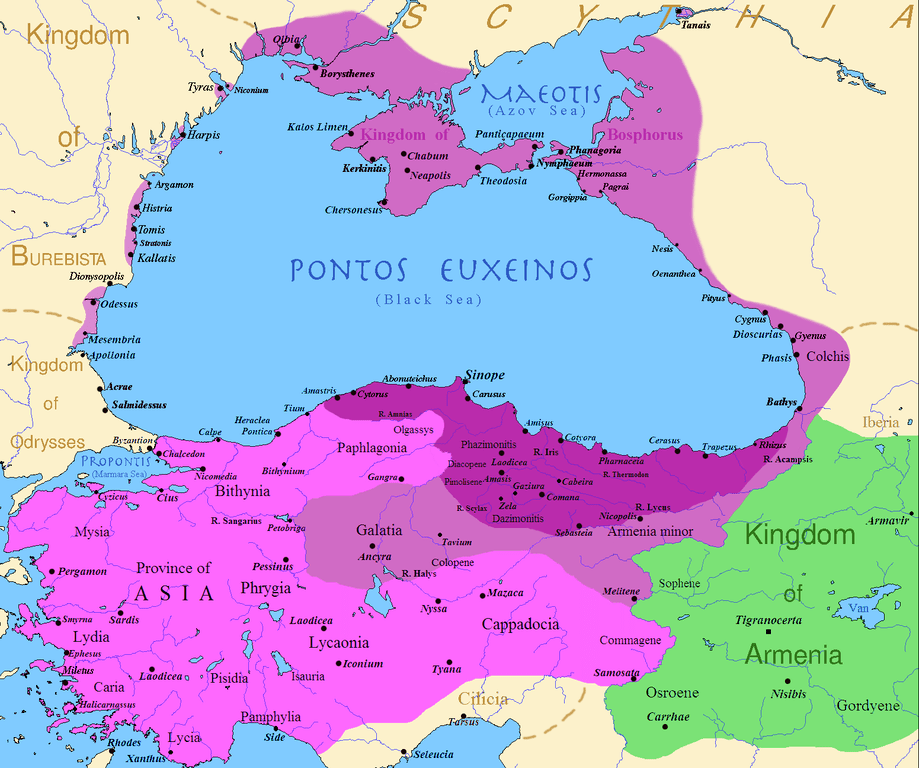
My continued read about the Scythians, especially the Scythians in the west, has lead to a fascinating period of time in early history, overlapping with the Hellenistic Period called the Kingdom of the Bosporus. The Kingdom of the Bosporus, later part of the Kingdom of the Pontus, survived in one form or another from the 5th century BC to the late Roman Imperial period in the year 370 AD (roughly 800 years). As you can see from the map, it started very small, just a collection of Greek colonies bound by mutual defense, and grew in size into a much larger kingdom that included the Crimean peninsula and parts of modern-day Ukraine.

The Bosporan Kingdom at various points in history, File:Bosporan Kingdom growth map-pt.svg: Sémhur (talk · contribs)derivative work: Morningstar1814 (talk · contribs), CC BY-SA 4.0, via Wikimedia Commons

Later growing into a much later kingdom that went to war with Rome:

Javierfv1212, Public domain, via Wikimedia Commons

What makes the Kingdom of the Bosporus / Pontus fascinating is the convergence of Greek, Thracian, Scythian and other cultures, and the exchanges between them. Let’s take a brief look at each…

The Greek Colonies

The humble beginnings of the Kingdom of the Bosporus began as a hodge-podge of Greek colonies in the Black Sea. The ancient Greeks were prolific colonizers in the Mediterranean because the lands of Greece have low agricultural output, and as populations grew, they needed places to grow and stretch. Famous colonies include Syracuse on the island of Sicily (home of Archimedes!), southern Italy a.k.a. Magna Graecia, Cyrene in modern-day Libya, as well as countless colonies in Spain, southern France, Asia Minor and so on.

Colonies in the Black Sea, including the modern Ukrainian city of Odessa,1 mostly originated from the Greek city-state of Miletos which had been aggressively colonizing all around the Black Sea. Even now, old Greeks relics can be found. The Greeks were colonizing hostile territory, so they tended to build fortresses on off-shore islands, or just inland from a river. From the inland communities, the Greeks would get raw materials, grain and other foodstuffs to ship back to the Greek metropolises back home. In turn, they would bring wine (much prized by the Scythians), crafted luxury goods and spread Greek culture.

From the perspective of the Greek world, the Black Sea and colonies around the Crimean peninsula were the very edge of civilization. This was the frontier, where only the bravest, or the punished would go.

The Native Thracians

The Thracians are an influential people who lived north and east of Greece proper, but are not well-attested in history. Thracian culture shows considerable Greek influence, but they spoke a different language (now lost), and had a more loose, more tribal political structure than the classic Greek polis.

But the Thracians weren’t slouches either. They frequently combated with the northern Greeks, especially Phillip II of Macedon and his son, Alexander the Great, and the Odryzian Kingdom was a serious attempt by the Thracians to unify and challenge their Greek neighbors.

The Kingdom of the Bosporus, the subject of this post, was perhaps their most important contribution, though, because the founder of that kingdom was a man named Spartacus. No, not this Spartacus:

The name “Spartacus” is a distinctly Thracian name, and the founder of the ruling dynasty of the Bosporan Kingdom was a Thracian man named Spartokos I, first as the strongman or “tyrant” of the Greek colony of Panticapaeum (modern Kerch), and then gradually uniting the nearby colonies in a system of mutual protection.

The Steppe Warriors

Starting with the Cimmerians, steppe nomads would often encroach into the steppe lands of modern Ukraine and Hungary, the westernmost extent (as well as the most hospitable) of the Eurasian steppes. Having driven out the Cimmerians, they settled and lead a confederation of tribes that dominated the lands for centuries, until they were eventually defeated by the Sarmatians.

The nomadic Scythians were at first largely hostile to the settled Greco-Thracian cities along the coast, and there is evidence of war and violence at some places, hence the colonies banded together for mutual defence. Gradually, though, the different cultures learned to get along and began mutually beneficial trade. The Scythians liked Greek commodities and helped ship raw resources from other cultures further north down to the Greek settlements.

The kurgan tombs of Scythian warriors also began to show more Greek architectural influence, such as the great kurgan at Kul-oba, and a tomb at Bliznitsa near the colony of Phanagoria that depicted the goddess Demeter, hinting at the Eleusinian Mysteries.

Further, a number of famous Greeks have (often dubious) claim to Scythian ancestry such as the Athenian orator, Demosthenes, so intermarriage did occur between the colonists and steppe nomads. Herodotus’s historical accounts of his travels in these lands also provide invaluable information about the people of the Bosporan Kingdom, the Scythians beyond it, and more.

The Wider World

How the Bosporan Kingdom fit into the wider Hellenistic and Roman world is interesting too. Because of its location, it was luckily not involved much in the power struggles between Alexander the Great’s successors, nor did it tangle with the Roman Republic until much later during the Mithridatic Wars. All three of them.

Further, the mixed ethnic composition of the Bosporan Kingdom meant that it was an unusually cosmopolitan place, and held a certain mystique among the more urban residents of the Greeks and later Roman empire. When Ovid was banished there, though, he often whined about how hard and rustic the life was, but he would, wouldn’t he?

Anyhow, even when we watch the news about events in Ukraine, especially southern Ukraine, it’s helpful to remember that these lands have a long and fascinating, multicultural history, and we haven’t even gotten to Kievan Rus’ yet.

1 Which, as of writing, remains free thankfully. Слава Україні! 🇺🇦

The Elephant In The Room

Recently, I had to attend a mandatory HR meeting at work to discuss our return to the office,1 and not surprisingly, it was awkward and grueling.2

A depiction of the Buddha taming a belligerent elephant,

One interesting thing that came from this meeting is an analogy of handling change using an analogy of an elephant and a rider. The rider represents the logical, rational part of the mind, and the elephant represents feelings and emotions. When they are in accord, things move along well enough, but if the elephant doesn’t want to go, it’s really hard to it go.3

We often take that elephant for granted when things are moving along nicely, but when the elephant is being stubborn or rampaging, the rider is tempted to lash out, give up, or punish it further. This may end up being counter-productive though.

There in lies the challenge.

The image I posted above depicts a famous episode from the Buddha’s life where his cousin Devadatta, out of spite, sent a rampaging elephant out to trample the Buddha but the Buddha was ultimately able to calm the elephant through compassion and keeping a clear head.

In the Buddhist sutras (scriptures), the Buddha often used the analogy of a charioteer driving his horses. In the Dhammapada, the Buddha says:

222. He who checks rising anger as a charioteer checks a rolling chariot, him I call a true charioteer. Others only hold the reins.

Translation by Acharya Buddharakkhita

at the same time, the Buddha also uses the analogy of a vīṇā (lute) and how to keep the strings not too taut, nor too slack:

“And what do you think? When the strings of your vīṇā were neither too taut nor too loose, but tuned [literally: established] to be right on pitch, was your vīṇā in tune & playable?”

“Yes, lord.”

“In the same way, Soṇa, over-aroused persistence leads to restlessness, overly slack persistence leads to laziness. Thus you should determine the right pitch for your persistence, attune [‘penetrate,’ ‘ferret out’] the pitch of the (five) faculties (to that), and there pick up your theme.”

Translation by Thannisaro Bhikkhu, the Soṇa Sutta  (AN 6:55)

Just as managing horses in a chariot, or tuning one’s lute, managing the “elephant” of emotions is learning how and when to hold the reins, and when to loosen them. If the elephant is rampant, then one has to soothe it using calm goodwill, rather than fighting it, or punishing it.

Elephants are great creatures, and the elephant of one’s own emotions similarly needs to be treated with goodwill, even if you need to get it to move somewhere. 🐘❤️

P.S. On a side note, I highly recommend this podcast episode from the Hellenistic Age Podcast about elephants in warfare at the time. It has lots of interesting zoological details about elephants as well.

1 I am part of a department that wont’ be coming back until probably next year, so I am pretty lucky in that regard. I know a number of folks who refuse to work in an office and have looked for jobs elsewhere rather than come back. It’s a good company, but I think they’re in for a surprise when they realize how few want to actually return to the office.

2 Friendly reminder that HR departments answer, ultimately, to the company and not to employees even when they have the best of intentions.

Ukrainian Language: a Link To The Past

Lately, I started taking up the Ukrainian language, which is something very outside my comfort zone. In my younger years, I’ve studied Mandarin Chinese, Vietnamese for 2 years in college, and of course Japanese, so Asian languages tend to be familiar even if I am not fluent. I have also dabbled in Latin, Sanskrit and Ancient Greek over the years, but I am not particularly good at either one.1 Even so, I have zero experience with Slavic languages, so it’s been a totally new experience for me, and yet, to my surprise an oddly familiar one.

Having spent weeks on DuoLingo practicing basic, basic Ukrainian I started to notice some patterns.

For example, the phrase моя мати (moya matih) and мій кіт (miy kit). The first means “my mother” and the second means “my cat”. After a bit of sleuthing, I figured out that “my” will conjugate depending on the gramamtical gender of the noun. In this case мати is a feminine gender word, and кіт is masculine. There are “neuter” gender nouns as well.

Side note: the Ukrainian word for “samurai” is самураї (samurayi)

Grammatical gender? Ancient Greek,2 Latin, and Sanskrit all had masculine, feminine and neuter genders for nouns. Modern Western languages tended to drop the neuter gender (e.g. modern Spanish or French), but it’s fascinating to see that Ukrainian, and Russian evidentially, retain all three. You can also see grammatical gender with words like студент (“student”, male student) vs. студентка (“student”, feminine student).

But even more fascinating is that Ukrainian nouns have seven grammatical declensions:

  • nominative (“the student”)
  • genitive (“of the student”)
  • dative (“to or for the student”?)
  • accusative (“verb the student”)
  • instrumental (“with or by means of the student”)
  • locative (“on the student”?)
  • vocative (“hey, student!”)

Seven declensions? The only language I know that had that many was ancient Sanskrit (eight total, including ablative)! Latin had five, and Ancient Greek only had four. Adjectives also behave like Latin, Greek and Sanskrit in that they agree with the noun in case, number and gender.

I haven’t really gotten into verbs much yet, but I do notice that they inflect too, depending on who speaks it (I eat vs. you eat), so I wouldn’t be surprised if it fits a similar pattern to other European languages.

All this is to say is that Ukrainian language, and much of the eastern European Slavic language family represents a linguistic “cousin”, with fascinating relics from much earlier Indo-European languages, and yet full of innovations and adaptations as well.

1 I confess I dabble in language study a lot, but not very good at follow-through. Japanese is the only language I’ve really committed too long enough to develop any skill, but since I married into the culture, it’s been a worthwhile experience. I suppose that’s what really keeps one going: personal value in learning a language more so than just idle intellectual curiosity. On the other hand, even learning another language a little bit is a worthwhile experience. I dabbled in Korean at one point due to the KPop craze at the time, and it’s nice to still be able to real Hangeul, and to encounter the only other language I know that has any grammatical similarity to Japanese (through convergence, not genetic origin). Similarly, my time spent learning Vietnamese, which I don’t get to use much anymore, was a fascinating time when I got to study abroad in Hanoi, Vietnam. Plus it was fascinating to see how Chinese influenced Vietnamese in the same way that Chinese influenced Korean and Japanese even though they were all unrelated languages! In that sense, any foreign language study is a worthwhile investment.

2 The term “Ancient Greek” is kind of vague and nebulous. There’s Homeric Greek (e.g. the Greek of the Iliad), Classical Greek (e.g. Attic dialect), Koine Greek (e.g. the Hellenistic Period and the New Testament), Byzantine-era Greek and so on. There’s even Archaic Greek, which is poorly attested due to lack of sources. So, when people talk about “ancient Greek” it’s important to be clear which one. Greek as a language is a fascinating continuum from the archaic period all the way to modern times. One of my co-workers is Greek American and she loves to swap tips with me as she is also learning both ancient and modern Greek.

War, Buddhism and Language

We are now almost two weeks into the invasion of Ukraine and now the long, ugly grind of war has reared its ugly head. The invasion has consumed many of us. The initial fervor has given away to the reality that even if Ukraine totally routs the Russian military, Ukraine will still have been destroyed, and many lives with it, including many Russian families whose sons and husbands will not be coming home. All becomes of the ambitions and arrogance of one man.

For my part, I’ve been dealing with the war (as a passive observer watching this horror unfold) in a few ways.

First, I decided to take up learning the Ukrainian language. While the Mrs and I did contribute to humanitarian organizations to help the people of Ukraine, I really wanted to use the chance to learn more about Ukraine and not just as “part of the Russian cultural sphere”.

Slow and steady …

Having grown up in the Cold War, I still know almost nothing about that part of the world, so for me it is a way to better appreciate the culture. Ukraine is a country and culture in its own right, going all the way back to the Hellenistic period and the Kingdom of the Bosporus, through Mongol invasions, the period of Kievan Rus, and through modern times.

I dabbled in both Ukranian and Russian on Duolingo, but soon committed to Ukranian. Having started both at the same time, it’s pretty interesting how they’re similar and yet different. Clearly they are two linguistic “cousins” rather one being a dialect of the other.

Second, the Mrs and I also wanted to show our support at our local Ukrainian-owned European-goods store. Among other things we tried a delicious beets and herring salad plus some nice pastries.

The war has also, needless to say, brought out less-than-Buddhist sentiments in me toward the Russian military and its leadership. It’s easy to get caught up in the war rhetoric, and even harder to mentally drag oneself out of it.

This has forced me to conclude an uncomfortable truth: being pious is easy when times are good, but a heck of a lot harder when times are harsh. The latter really brings out the worst in people, including myself. I suppose this is part of being human.

But it also reminds me that in really hard times, this is the best time to practice the Buddhist path, starting with self-reflection. It’s one thing to have ill-will towards others, it is another to pause and realize it. And so, as the Japanese proverb goes: nana korobi, ya oki (七転び八起き, “seven times falling down, eight times getting up”).

Namu Amida Butsu
Namu Kanzeon Bosatsu

P.S. As I wrote this, I remembered an old poem from the Hyakunin Isshu anthology, poem 95:

JapaneseRomanizationEnglish
おほけなくŌkenakuInadequate, but
うき世の民にUkiyo no tami nithey must shelter the folk
おほふかなŌu kanaof this wretched world—
わがたつそまにWaga tatsu soma nimy ink-black sleeves [of a monk],
having begun to live
墨染の袖Sumizome no sode“in this timber forest that I enter”.
Translation by Joshua Mostow

Many people in this world are suffering, and even small efforts can light one corner of the world.

Tyche: Goddess of Fortune

Recently, I finished a fascinating book about the Parthian Empire called The Parthians: The Forgotten Empire, which covered almost every aspect of the Empire and its eclectic culture including religion. The Parthians, originally a nomadic people, inherited a logistical mess from the Hellenistic Seleucid Empire, but somehow made it all work for 400 years until the Sasanian Empire of the Persians defeated them. The Parthians, and their practical, flexible approach allowed them to rule over a very diverse land of many cultures, languages and so on. But that’s a story for another day.

One example cited in the book was the adoption of a goddess from Greek mythology named Tyche. In ancient Greek, her name was Τύχη, which sounds like Tö-hay with a throaty “h” (i.e. like Arabic language). For most of us growing up in Western culture, it’s unlikely you’ve ever heard of Tyche, but her influence eventually eclipsed even the Olympian gods for a long period of human history.

Istanbul Archaeological Museum – Goddess Tyche holding in her arms Plutus (god of wealth) as a child. Hellenistic art, Roman period, 2nd century AD. Picture by : Giovanni Dall’Orto, courtesy of Wikipedia

In the Classical period, including the Archaic period (i.e. the Iliad), Tyche was a minor figure, who would present herself when someone received a boon from the gods. So, at this time, Tyche personified good fortune, especially granted from the gods.

But with the chaos following Alexander the Great’s conquests, and the tremendous upheaval as Alexander’s generals turned on one another during the famous Wars of the Diadochoi,1 people increasingly believed that their lives were at the will of fate and that the gods were either aloof, or didn’t really help. Tyche at this time came to represent the whims of fortune, both good and bad. Tyche could change her mind at any moment, and a person’s fortune could take a turn for the worse, or for the better. Tyche wasn’t really worshiped in the sense of state religion at the time, but was venerated and respected, with the hope that Tyche will rain good fortune down upon a person, a city or a state. Tyche was conflated with the Roman equivalent, Fortuna, as well.

Tyche’s shadow was everywhere in the Hellenistic Period and the Roman Empire (and subsequent European medieval culture), but surprisingly Tyche also shows up in the neighboring Parthian Empire. The Parthians were first and foremost Zoroastrians, and Zoroastrianism flourished during the Parthians, but they were also very tolerant of other local religions, including the Greek colonists who had previously lived in the Alexandrian Seleucid Empire. The Parthians depended on the Greeks in the early years, and adopted Greek language in their coinage, and Greek gods were featured. This flexibility toward the Greeks, the Babylonians and other peoples allowed them the flourish and grow the empire bit by bit, even when the Romans or nomadic tribes tried to defeat them.

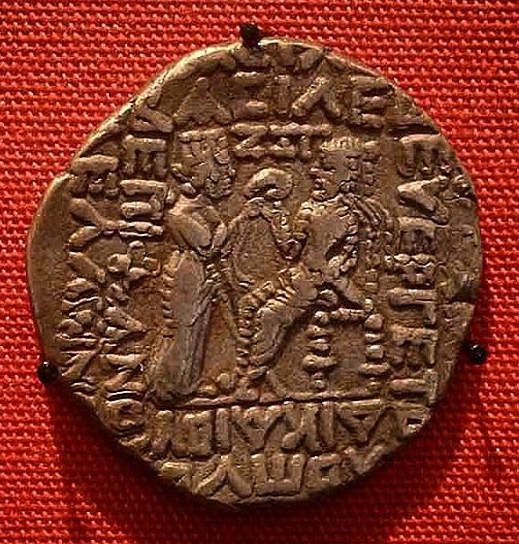
However, by the second half of the Parthian Empire, the Parthian rulers were probably more confident in their own culture and began using their own language (which by now had a writing system based on Aramaic), and Greek gods faded from coinage,2 except one: Tyche.

Silver Tetradrachm of Vologases I Enthroned king Vologases I facing left, receiving diadem from Tyche, standing with sceptre. AD 55-56. Photo by akhenatenator, CC0, via Wikimedia Commons

Because the Parthians were primarily Zoroastrian, Tyche took on a more Zoroastrian tone in the form of Khvarenah, the divine power bestowed upon righteous kings. Further, as with the other Greek gods, the Parthians conflated them with Persian/Zoroastrian deities such as Anahita or Ashi.

Given Tyche’s outsized influence both in Classical, medieval European and Persian culture, it’s a small wonder that she far outlasted the original Olympian gods, and became deeply woven into many cultures across the world. Then again, across time, people have often felt the sting of fortune or misfortune, so it’s a small wonder that people would anthropomorphize this as a deity. Unlike the seven luck gods, Tyche didn’t just grant luck, she embodied it. Even now when we talk about “Lady Luck” the shadow of Tyche still looms over us.

1 The Hellenstic Age Podcast is a great overview of the Wars of the Diadochoi and the subsequent kingdoms that arose. The Wars of the Diadochoi make Game of Thrones look wimpy by comparison. It’s an underrated, but compelling period in Western and Near-Eastern world history.

2 According to the book, the Parthians still used Greek letters on their coinage sometimes, but it these were corrupted inscriptions, copies that no one really understood anymore.

Polytheism in Dungeons and Dragons

Religion has always been a fascinating subject to me, and when I play Dungeons and Dragons (or build adventures for my kids), I spend a lot of time thinking about it.

By default, religion in Dungeons and Dragons is polytheistic, and mostly just a vehicle for clerical players. As a teenager, I remember way back in 2nd Edition Advanced Dungeons and Dragons reading the Deities and Demigods in my local gaming store, and thinking how cool it was that so many different deities from world cultures were represented, including Lao Tzu and such. The idea, I believe, was to allow characters plenty of options to choose which deity to follow, but this also tends to increase breadth while reducing depth.

For most players, this probably isn’t a big deal, but as someone who’s always been interested in religion, I often think about how to improve the depth and flavor of D&D religions so that players can delve more if they want to. Much of what you see in D&D represents a somewhat shallow understanding of ancient, polytheistic religions as seen through the lens of Western-Christian culture.

Coincidentally, I recently picked up another course from the Great Courses on pagan religion in ancient Rome and Greece (mostly Rome)1 for my birthday. The course is pretty dense, and Professor Muller really gets into some deep details about Greco-Roman pagan religion, which taught me a lot, and also deflated some false assumptions I had about such religions. Needless to say, religion, culture and politics are very complex subjects, but some fascinating things that I’ve learned so far:

First, contrary to modern understandings of the ancient Greek gods, ancient Greek deities were not represented consistently across the ancient world. For example, Apollo had many epithets, not just in the Iliad, but across each of the different city-states and cult centers. Each epithet represented a specific Apollo for that place and time, and something he did there. The same could be said of Artemis, Athena, etc. For the Roman god Jupiter, he had a ton of epithets, including (source Wikipedia):

  • Jupiter Fulgur (“Lightning Jupiter”), Fulgurator or Fulgens
  • Jupiter Lucetius (“of the light”), an epithet almost certainly related to the light or flame of lightning bolts and not to daylight.
  • Jupiter Optimus Maximus (“the best and greatest”). This was the Jupiter venerated in Rome’s most sacred temple.
  • Jupiter Pluvius, “sender of rain”.

…and by location:

  • Jupiter Laterius or Latiaris, the god of Latium, a region of central Italy.
  • Jupiter Parthinus or Partinus, under this name was worshiped on the borders of northeast Dalmatia and Upper Moesia, perhaps associated with the local tribe known as the Partheni.
  • Jupiter Poeninus, under this name worshiped in the Alps, around the Great St Bernard Pass, where he had a sanctuary.
  • Jupiter Solutorius, a local version of Jupiter worshiped in Spain; he was conflated with the local Iberian god Eacus.
  • Jupiter Taranis, Jupiter equated with the Celtic god Taranis.

While there was one commonly-understood and venerated deity, each cult center worshiped that deity somewhat differently, with different rites, epithets, etc. As there was no central religious authority for a given deity, the variation was startling, yet no cause for concern. This may also help to explain why Greeks and Romans were not adverse to linking their deities to similar deities from other cultures (Egyptian, Roman, Anatolian, etc). In the context of D&D, this would mean that a popular deity like Lathander, for example, might have many cult centers across Faerun, but each place would worship him in a very region-specific way, might call him different epithets, and hold different festivals, etc. Obviously, from a game-design standpoint, this would be hard to encapsulate in a reference guide, but DMs might be able to lean into this in their world-building.

Second, both the Romans and the Greeks (among others) had the notion of “state religion” and “family religion”. The particular city-state worked hard to maintain a healthy relationship with its deities and there was a lot of focus on both cultivating this relationship for success of the state, but also averting disaster if the gods were thought to be displeased (plagues, earthquakes, defeat in war, etc). Anything that could be perceived as a threat to this relationship, such as “renegade cults” (Bacchanalia, Christianity, etc) were also seen as a threat to the state. Obviously, when building settings in Dungeons and Dragons, a similar tension might apply.

Similarly, each family traditionally maintained their own family deities, rituals, etc. The head of the household (usually the father or oldest son) was the “chief priest” of the household religion, and each household might have slightly different rituals, deities, etc, from each other household. For the household deities, one might often see the same gods as the public, state religion, but their role/epithets were for mundane issues: Zeus of the storage grain, Zeus guarding the doorway, etc. It seems odd that the king of the gods also served as a “mini household deity” for all kinds of mundane needs. Again, depending on the role, time and place a deity may take on many aspects, both big and small. The state only cared about the macro-religion vs. the micro-religion. In the case of D&D, characters could similarly adopt a background or “flavor” in character’s daily religious rituals, family obligations, etc.

Thirdly, another thing I learned about ancient pagan religions was the myriad of ways that people employed divination. For example, augury, interpreting the flight patterns of birds, was a particularly popular form of divination among both Romans and Greeks. This would seem silly to modern audiences, but it was taken very seriously back then, and one could not start a senate meeting, or march the army without having consulted such things first. Oracles, such as the Pythia, among other places were also highly revered, but not always feasible to ask on short-notice.

Finally, the relationship to the gods was much more transactional than what modern audiences would be used to. This means that notions like theology, or deeper moral meanings weren’t clearly defined as they would be in modern religions. It’s not that people didn’t have any concept of morality, but the gods were part of this, not necessarily the source. So, for example, Isis was an extremely popular goddess across the Mediterranean during the Hellenistic period, but Isis’s cult didn’t necessary have a strong theological component, and as she was adapted by different cultures, the teachings varied somewhat to fit the parent culture where a particular cult center existed.

But what this means is that people would revere and petition a particular deity to address their needs: illness, success, warding off misfortune, etc. And, if the deity hears their petition, and provides the aid request, the person making a petition vows to repay the deity with a special offering of gratitude, or some other vow. This means that the typical relationship with a deity was, in order:

  • petitioning the deity
  • a vow if the deity meets their end of things, and
  • offerings and veneration if they do

This “transactional” approach might seem strange to us, but also presumably had the affect of building a deeper relationship with such-and-such deity as the cycle repeats over and over.

Also, though we might not want to admit it, modern people still do this. We might pray to God if we want our football team to win, for comfort if we’re in a jam, etc. It’s just that for ancient pagan religions,2 this was a perfectly normal thing to do, and not subject to embarrassment or shame as might be the case now.

Thus, when determining how to flesh out your typical polytheistic religions in a Dungeons and Dragons setting it helps to use ancient pagan religions as a source of inspiration and consider how relationships with a deity were more transactional in nature, varied considerably by locale, the importance of divination, and how it was often tightly-knit with state power (to say nothing about family religion).

None of this is required for the typical D&D player or DM. However, for any DM who likes to integrate more authentic polytheistic religions, or for player characters who (like myself) like to flesh out their character’s religions more, check out the awesome Great Courses class above, and spend some time learning about Roman and Greek religion from historians. There’s a lot of genuine interesting stuff, and much of it not obvious to modern audiences today.

1 The Great Courses often has flash sales and other deals, so if you can’t afford it now, keep an eye on it. 😉

2 Even some modern religions still tend to be transactional in nature, such as Japanese Shinto.

Kandahar and the Greco-Buddhists

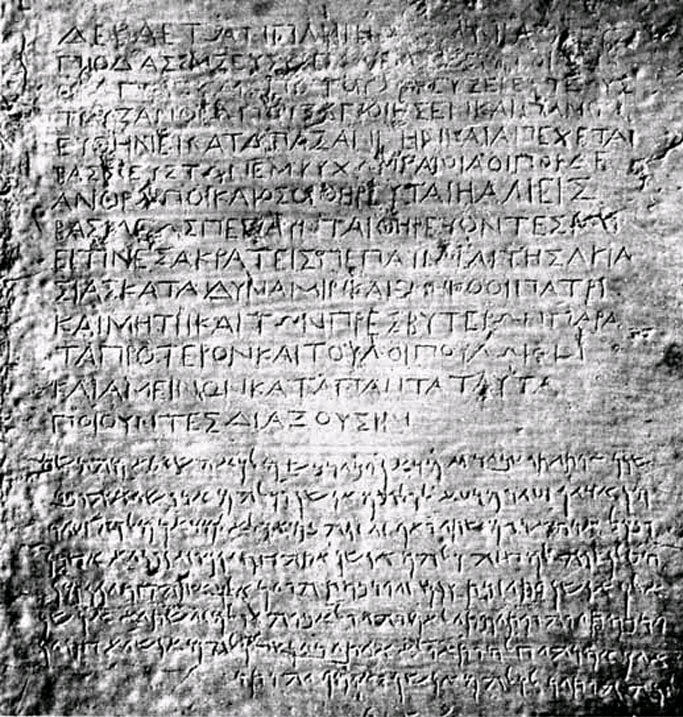
Long long ago, before Afghanistan was a battleground for Soviet and then American forces, the famed Buddhist Emperor, Ashoka, instituted a series of pious inscriptions across his vast empire. One of these inscriptions exists in the city of Kandahar, the same city known these days as the birthplace of the Taliban.

source: Kandahar Bilingual Rock Inscription on Wikipedia

Afghanistan has been a point of fascination for me since 2001, when all eyes turned to it after September 11th. I knew nothing about the country, and then found a fascinating book (which I’ve long since lost) about its history and realized there was a lot more there than most Westerners were aware of. Afghanistan has a rich history of cultural interchange that stretches very far back in human history as the above inscription hints at.

The Macedonian-Greeks under Alexander the Great were among a long line of conquerors who came to northwest India, but after Alexander abruptly died at the age of 33, his bodyguards and generals strove to carry on his legacy, first as satraps, nominally loyal to the throne in Macedon, and later outright kings of their own better known as the Diadochoi, next as the Seleucid Empire, and finally as a local, independent kingdom called Bactria.

Beginning with Seleukos I Nikator who took over Mesopotamia and the Persian lands, founding the Seleucid Empire, the Greeks had a lively cultural interchange with the new Mauryan Dynasty, first as adversaries, then as allies. and later forged a lasting treaty with the Mauryan emperors. The Seleucids benefited from this exchange in the form of war elephants, and an influx of Buddhist missionaries propagated by Emperor Ashoka, Chandragupta’s grandson. You can see in the inscription above, the inscription has Greek at the top and Aramaic, the other major language in the region (also the same language that Jesus spoke natively).

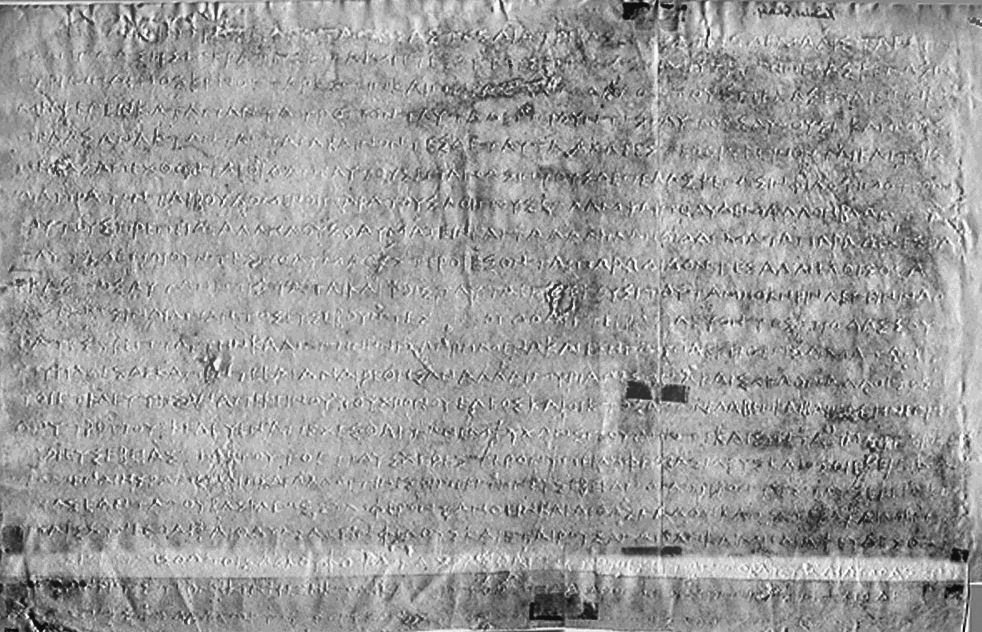
A second inscription, written in particularly sophisticated Greek, and possibly containing the Edicts of Emperor Ashoka has also been found in Kandahar, though it’s whereabouts are unknown now:

Source: Kandahar Greek Edicts of Ashoka on Wikipedia

But the Indian-Buddhist-Greek interaction wasn’t limited to inscriptions. For example, there exists a Buddhist text called the Questions of King Milinda (example text hosted here) represents a detailed dialogue between King Menander I of Bactria and a Buddhist monk named Nagasena that was recorded around the first century CE. It includes some excellent dialogue on various Buddhist topics. A great example is King Menander asking Nagasena about the Buddhist notion of rebirth, and its rejection of reincarnation (transmigration):

The king asked: “Venerable Nagasena, is it so that one does not transmigrate and one is reborn?”

“Yes, your majesty, one does not transmigrate and one is reborn.”

“How, venerable Nagasena, is it that one does not transmigrate and one is reborn? Give me an analogy.”

“Just as, your majesty, if someone kindled one lamp from another, is it indeed so, your majesty, that the lamp would transmigrate from the other lamp?”

“Certainly not, venerable sir.”

“Indeed just so, your majesty, one does not transmigrate and one is reborn.”

“Give me another analogy.”

“Do you remember, your majesty, when you were a boy learning some verse from a teacher?”

“Yes, venerable sir.”

“Your majesty, did this verse transmigrate from the teacher?”

“Certainly not, venerable sir.”

“Indeed just so, your majesty, one does not transmigrate and one is reborn.”

“You are clever, venerable Nagasena.”

Miln III.5.5: Transmigration and Rebirth {Miln 71}, translation by John Kelly
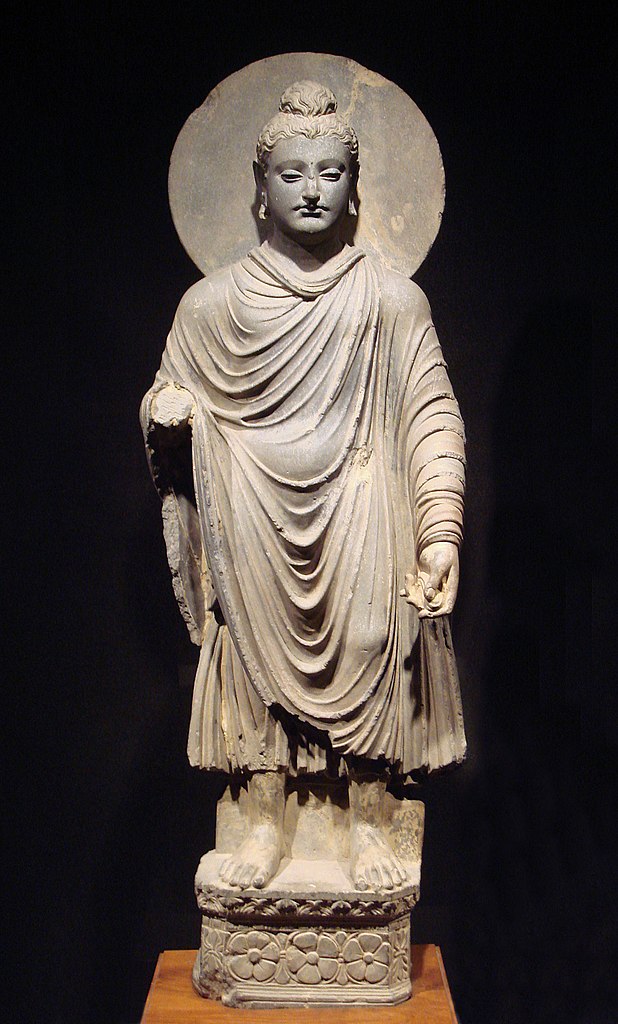
Tokyo National Museum, Public domain, via Wikimedia Commons

Next, we should talk about Greco-Buddhist artwork. Long after, Bactria as a Greco-political entity gave way to the Kushan Empire, Greek culture was still cultivated and applied to the Buddhist culture at the time. This confluence of Greek artwork, Indian Buddhist teachings and Kushan patronage led to a flowering of Buddhist art in the region of Gandhara that we still benefit from today.

The statue of Shakyamuni Buddha to the right shows strong similarities to Greek artwork revering various heroes, gods and goddesses, but the subject matter is obviously Indian-Buddhist. Note that prior to this, Buddhist artwork tended to avoid depicting images of people, instead using symbols such as the Buddha’s footprints, the eight-spoked wheel, etc. So, depicting Buddhist figures as lifelike statues was a new innovation, and was gradually proliferated to East Asia where such images continued, but using a more “asian” style. Those “garden buddhas” you see at your local store are descendants of this artistic style. 😉

Finally, let me touch upon one last topic: Greek philosophy. The Hellenistic Period of Greek history was a flowering many different schools of philosophy, but one of them, Pyrrhonism. I highly recommend the podcast episode by the Hellenistic Age Podcast on the Skeptic philosophies at the time, including Pyrrhonism. One interesting theory is that Pyrrho had spent some time in India, and that Pyrrhonist philosophy has notable similarities to the Madhyamika school of Indian-buddhist philosophy. The relationship between the two is unclear, and it’s not even clear if the story of Pyrrho traveling to India with Alexander the Great is even true. It is a frequent trope in biographies at the time for great minds to “travel to India”, though that could mean anywhere east of the Greco-Roman world, so the evidence for Pyrrho’s travels to India are sketchy, but intriguing.

However, if there is indeed a link, Pyrrhonism would probably represent the closest analogy in Western culture to Buddhism.

Anyhow, all this is to say that places like Afghanistan, Pakistan and such have a long and rich history, far more than can easily be understood at a glance. Its interactions from both West and East, the confluence of cultures, and so on mean that there is a lot of fascinating stuff under the surface. I personally regret that I will probably not be able to travel to Afghanistan in my lifetime, but I hope that in more peaceful times further research can be done once more and shed light into this often misunderstood history.

Also, it’s important to recognize that while Greco-Buddhist culture existed for a short time and had only limited influence on subsequent Buddhism, it still made its mark, and was a shining example of cultural exchange and flourishing.

P.S. More examples of Greek literature found in Kandahar.