The End of an Era

One historical period that has continuously fascinated me for a long time is the end of the Heian Period in Japan, culminating in the climactic war between the Heike (Taira) Clan and the Genji (Minamoto) Clan, followed by the rise of military government for the next 800+ years.

“How did you go bankrupt?” Bill asked.

“Two ways,” Mike said. “Gradually and then suddenly.”

The Sun Also Rises by Ernest Hemingway

Why does this matter?

As the quote above suggests, the fall of the Heian Period and of the Imperial aristocracy, built around a Chinese-inspired Confucian bureaucracy, came slow, then suddenly when the lower samurai class rose and and asserted power. Let’s compare the before and after:

The Latter Days of the Heian Period

Fujiwara no Kinto, as depicted in One Hundred Aspects of the Moon, courtesy of Wikipedia.

The Heian Period (平安時代, 794 – 1185) of Japanese was a long, 400-year period, that began when the Imperial capitol moved to the new city of Heian-kyō (modern day Kyoto) away from Heijō-kyō (modern day Nara). The Imperial government had been plagued with infighting and manipulation by powerful temples in Heiji-kyo, so the Emperor decided to make a clean start and migrate the capitol.

But the earlier Nara Period and the Heian Period represent a single continuum of life in Japan where the Emperor ruled in a Chinese-Confucian style bureaucracy with Japanese characteristics. The Imperial bureaucracy was run by a large number of literate officials either through Entrance Exams that tested your knowledge of the Confucian Classics, and aspects of Chinese history, or through connections if you were nobility.

Speaking of nobility, everyone in the Court, from the lowliest bureaucrat, to the Emperor had an official rank. This was part of the old Ritsuryō system. The Emperor was automatically 1st rank upper (正一位, shō ichi-i), while just below him someone might be 1st rank lower (従一位, ju ichi-i), then 2nd rank upper (正二位, shō ni-i), and so on until you get to the lowly paper-pushing bureaucrat at 少初位下 (shō so-i no ge) rank. Each year, the Emperor would approve promotions or demotions of rank, which would be annouced, so for doing some good work, you might be promoted one year, and your stipend increased, as well as other perks. However, there was a catch. If you were born to a venerable noble family such as the Fujiwara, Ōe or Tachibana, you were automatically 5th rank or higher. If you were not, it was almost impossible to attain anything above 7th rank. Sugawara no Michizane was a rare exception, but he paid for it when court treachery got him exiled.

Thus, the aristocracy held a grip on the Imperial court, but it didn’t stop there. The aristocracy held increasingly large tracts of land called shōen (荘園) that were tax-exempt due to a loop-hole in the system. The wealth of the aristocratic families grew larger and larger while the state became increasingly bankrupt.

Further, as the Heian Period went on, the aristocracy figured out how to manipulate power even further by arranging marriages with the reigning Emperor, and if they had a son, pressure the reigning Emperor to abdicate, so the ambitious family could control the Imperial heir as a regent. Case in point, during the 990’s two different branches of the Fujiwara clan were struggling for control, on led by Fujiwara no Michitaka and the other by Fujiwara no Michinaga. Both them had daughters wed to reigning emperor Ichijō, who had multiple sons. Initially, next reigning emperor was his son Emperor Sanjō who had not been born from a Fujiwara mother, but he was soon pressured to abdicate by Fujiwara no Michinaga, thus allowing Michinaga’s grandson and Ichijo’s other son to become emperor Go-Ichijō (i.e. “Ichijō the latter”) to reign.

Things got even nuttier when certain emperors, forced to abdicate and take tonsure as Buddhist monks, figured out how to retain power behind the scenes at odds with the nobility. The most well known example was Emperor Go-shirakawa who only reigned officially as emperor for three years, but retained power as the “cloistered emperor” for another 37 years.

None of this takes into the account the growing power and political manipulation of Buddhist temples, and their armies of soldiers, an open violation of the Buddhist principle to abstain from politics and violence.

Thus with such a toxic mix of competing power centers, a crippled central government, to say nothing of the earthquakes, plagues and political neglect of the provinces.

… and then it finally started to fall apart.

The Fall

The battle of Dan-no-ura, courtesy of Wikipedia

The fall of the Heian Period and its aristocratic society started with a power struggle between the upstart Taira and Minamoto clans. Like many other samurai families, they began as little more than escorts and bodyguards to the nobility, but in time they rose to positions of power and influence, filling in the gaps of government when emperors pushed the Fujiwara back.

This culminated with the dreaded Taira no Kiyomori seizing power in all but name. This grandson, the child Emperor Antoku, technically reigned, but behind the scenes Emperor Go-Shirakawa mentioned above still held to some power, but was effectively a hostage himself. The Minamoto clan were scattered and its clan head was executed for formenting a rebellion.

Kiyomori’s grip on power didn’t last long, and wasn’t long before the his enemies in the provinces began to rally around Minamoto no Yoritomo who led a successful counterattack that resulted in a war across most of Japan, with the Taira (e.g. the “Heike clan”) mostly dominating the west and the Minamoto (e.g. the “Genji”) ruling in the eastern provinces. The current TV drama in Japan, the Thirteen Lords of Kamakura, reenacts this struggle, and the aftermath.

The Taira, including the child emperor Antoku, were wiped out at the battle of Dan-no-ura, but the battles didn’t end there. The genie was out of the bottle, and there was no going back. Minamoto no Yoritomo then seized power by compelling to emperor to recognize him as Shōgun, the generallisimo of all Japan, and he went after rivals within the Minamoto clan including the famous warrior and half-brother, Minamoto no Yoshitsune. He based his regime in the eastern city of Kamakura, not Kyoto, thus drawing power away from the old Imperial court. Emperor Go-shirakawa’s son, Emperor Go-toba, attempted one last military effort to restore the power of the Imperial court in the Jōkyū War, but the samurai class centered around Yoritomo’s widow, the powerful Hojo Masako, and Go-toba’s efforts were doomed. He was exiled until his death.

Ironically, Minamoto no Yoritomo would end his life as little more than a figurehead himself as the Hojo family he married into (ironically a branch of the Taira he defeated) manipulated marriages and increasingly held power.

In the end, the new “Kamakura Period” of history was the first of several military regimes in Japan until 1868 (arguably 1945) where the Imperial court still held nominal power, but true power rested with the military class. The old Confucian-style bureaucracy still existed, people including power warlords still held rank in the Court, but it was a shadow of its former power, and was mainly used to legitimatize the ruling shogun and little else.

On the Ground
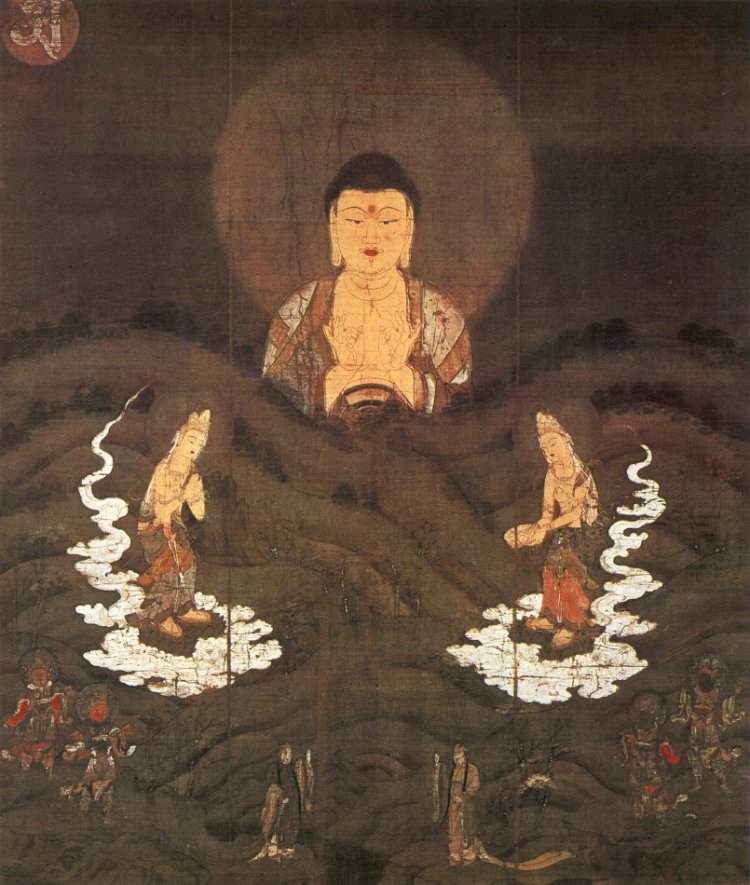
Amitabha Buddha rising over the mountain to welcome the believer to the Pure Land

Reading this history is one thing, but to people on the ground, as one crisis after another affected Japan during the end of the Heian Period both political and physical, it certainly felt like the End Times.

Millenarian Buddhist movements among the provinces sprang up in great number, as people were convinced that the era of Dharma Decline, the era mentioned in Buddhist scriptures when the Buddha-Dharma had utterly faded from the world, had come and that they were all doomed. This is why the Pure Land Buddhist movement started by Honen became so widespread and popular. By this point, people were so convinced that it was all over, they focused on escaping the endless cycle of birth and death to be reborn in the Pure Land of Amitabha Buddha instead. Pure Land Buddhism had been popular before this, but it took on a new sense of urgency under the collapse of the old society. Thus Honen’s disciples, such as Shinran, carried this message further out into the provinces and Pure Land Buddhist movements sprang up everywhere.

Nichiren Buddhism, which came slightly, was a similar millenarian movement, but instead Nichiren blamed society’s ills ironically on the Pure Land movement itself for leading society away from the True Dharma (e.g. the Lotus Sutra). Like many others in society, including Honen a couple generations earlier, Nichiren was appalled by the death, warfare and disasters affecting Japan and felt there had to be a reason for it all.

This may seem odd to us in the 21st century, but for people who grew up that the world around them was governed by the Buddha-Dharma (or lack of it), this is the only conclusion that would make sense. We in our time believe the world is governed by science, so when something happens, we tend to look for a scientific-analytical explanation. When the Byzantines in the 8th century saw their world collapse due to the Plague of Justinian followed by invasions from the new Muslim Arabs, they saw felt that their world that had been governed by God as approaching the End Times too, culminating with the siege of Constantinople itself. Thus, Iconoclasm sprang up soon after.

In each case, people are faced with a cataclysm and are using reason to try to come to grips with what’s going on, and how to fix it. We can look back and laugh and people for their “backward views”, but what will people say about us 1,000 years in the future, I wonder?

The Aftermath

In any case, once the war between the Taira and the Minamoto ended and the capital was moved to Kamakura, life in Japan was simply never the same. Generations had lived with the trauma of last years of the Heian Period, the warfare and so on, and much of the literature of the time including the Hojoki and the Essays in Idleness carry a sense of “paradise lost”. It was over. Everyone knew it, and there would be no going back.

And yet, for all the sadness and sense of loss, Japan did carry on through many subsequent generations to be the country it is today. The court life of the Heian Period is still remembered in things such as the Hyakunin Isshu poetry anthology, doll displays on Girls’ Day, woodblock art, and so on. And of course, historical dramas.

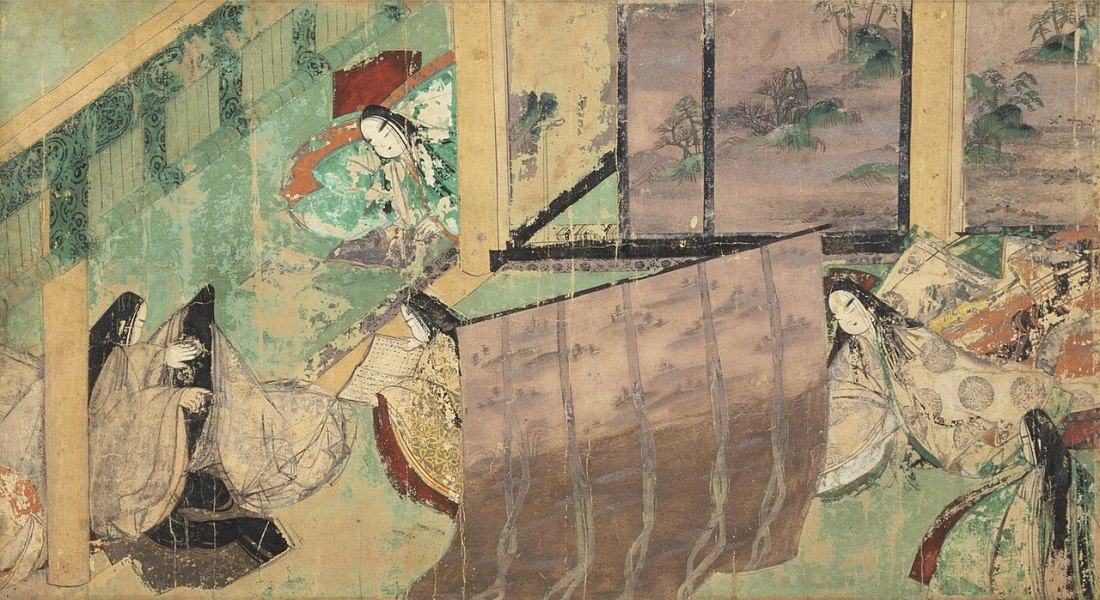
P.S. A scene from the Illustrated scroll of Tale of Genji (11th cent.), depicting the Azuma-ya (“East Wing”). Imperial court in Kyoto, Public domain, via Wikimedia Commons
Chanting the Shiseige / Juseige

Just as the Heart Sutra is chanted by a very wide swath of the Buddhist community in the world, within the Pure Land Buddhist community1 there is another liturgy that’s similar in length and popular in Japanese Buddhism called the juseigé (重誓偈), shiseigé (四誓偈) or rarely the sanseigé (三誓偈). These names mean something along the lines of the “hymn of the grave [as in important] vows [of Amitabha Buddha]”, “hymn of the four [or three] vows [of Amitabha Buddha]” and so on.

This liturgy is actually a small excerpt of an influential Buddhist sutra called the Immeasurable Life Sutra, also known as the Larger Sukhavativyuha Sutra, the largest of the three Pure Land Sutras. These sutras are so called because of their central importance to the tradition. However, two out of three of these sutras are simply too long for lay people recite in whole (unlike the Heart Sutra above), so people often just recite key verses instead.

In any case, the Immeasurable Life Sutra goes in great detail about the origins of Amitabha Buddha (also called Amida Buddha in Japanese), his 48 vows to aid all beings, aspects of the Pure Land that Amitabha created and why one would want to go there. It also, provides a nice overview of Buddhist teachings overall, so in my opinion, it’s a handy, self-contained Buddhist text.

The Forty Eight Vows are central to Amitabha Buddha’s “origin story” (a la the Marvel Cinematic Universe), and are beyond the scope of this blog post.

However, in the sutra, what follows right after the forty eight vows is a short series of verses by aspiring buddha-to-be, proclaiming his lofty and grand vows, summarizing his intent to liberate all beings and provide a refuge for them. These verses were later turned to a liturgy chanted by various Pure Land groups in Japan as a devotional to Amitabha.

While being a member of the Buddhist Churches of America,2 the American branch of the Jodo Shinshu tradition, I can’t tell you how many times I chanted this liturgy during Sunday services. I can practically do it from memory. Here’s a nice Youtube example provided by Tsukiji Honganji,3 one of my favorite Shinshu temples in Japan, located in the heart of Tokyo:

For people who aren’t part of a Buddhist community, I have created a PDF file to help you chant the verses of the Juseige / Shiseige. Please use it, and refer to Youtube videos and other sources for how to chant. I was surprised to learn that someone actually made a Sanskrit version too, since the Immeasurable Life Sutra was originally translated from Sanskrit to Chinese.

I have also provided it below for reference:

Original ChineseRomanizationTranslation by
Hisao Inagaki
我建超世願
必至無上道
斯願不満足
誓不成正覚
Ga gon cho se gan
Hish-shi mu jo do
Shi gan fu man zoku
Sei fu jo sho gaku
I have made vows, unrivaled in all the world;
I shall certainly reach the unsurpassed Way.
If these vows should not be fulfilled,
May I not attain perfect enlightenment.
我於無量劫
不為大施主
普済諸貧苦
誓不成正覚
Ga o mu ryo ko
Fu I dai se shu
Fu sai sho bin gu
Sei fu jo sho gaku
If I should not become a great benefactor
In lives to come for immeasurable
kalpas [eons]
To save the poor and afflicted everywhere,
May I not attain perfect enlightenment.
我至成仏道
名声超十方
究竟靡所聞
誓不成正覚
Ga shi jo butsu do
Myo sho cho jip-po
Ku kyo mi sho mon
Sei fu jo sho gaku
When I attain Buddha,
My Name will be heard throughout the ten directions;
Should there be any place where it is not heard,
May I not attain perfect enlightenment.
離欲深正念
浄慧修梵行
志求無上道
為諸天人師
Ri yoku jin sho nen
Jo e shu bon gyo
Shi gu mu jo do
I sho ten nin shin
Free of greed and with profound mindfulness
And pure wisdom; I will perform the sacred practices;
I will seek to attain the unsurpassed Way,
And become the teacher of
devas [gods] and humans
神力演大光
普照無際土
消除三垢冥
広済衆厄難
Jin riki en dai ko
Fu sho mu sai do
Sho jo san ku myo
Ko sai shu yaku nan
With my divine power I will display great light,
Illuminating the worlds without limit,
And dispel the darkness of the three defilements [greed, anger, delusion];
Thus I will deliver all beings from misery.
開彼智慧眼
滅此昏盲闇
閉塞諸悪道
通達善趣門
Kai hi chi e gen
Mes-shi kon mo an
Hei soku sho aku do
Tsu datsu zen shu mon
Having obtained the eye of wisdom,
I will remove the darkness of ignorance;
I will block all evil paths
And open the gate to the good realms [of rebirth]
功祚成満足
威耀朗十方
日月戢重暉
天光隠不現
Ko so jo man zoku
I yo ro jip-po
Nichi gatsu shu ju ki
Ten ko on pu gen
When merits and virtues are perfected,
My majestic light will radiate in the ten directions,
Outshining the sun and moon
And surpassing the brilliance of the heavens.
為衆開法蔵
広施功徳宝
常於大衆中
説法師子吼
I shu kai ho zo
Ko se ku doku ho
Jo o dai shu ju
Sep-po shi shi ku
I will open the Dharma storehouse for the multitudes
And endow them all with the treasures of merit.
Being always among the multitudes,
I will proclaim the Dharma with the lion’s roar.
供養一切仏
具足衆徳本
願慧悉成満
得為三界雄
Ku yo is-sai butsu
Go soku shu toku hon
Gan e shitsu jo man
Toku I san gai o
I will make offerings to all the Buddhas,
Thereby acquiring roots of virtue.
When my vows are fulfilled and wisdom perfected,
I shall be the sovereign of the three worlds [i.e. of
samsara].
如仏無碍智
通達靡不照
願我功慧力
等此最勝尊
Nyo butsu mu ge chi
Tsu datsu mi fu sho
Gan ga ku e riki
To shi sai sho son
Like your unhindered wisdom, O Buddha,
Mine shall reach everywhere, illuminating all;
May my supreme wisdom
Be like yours, Most Honored One.
斯願若剋果
大千応感動
虚空諸天人
当雨珍妙華
Shi gan nyak-kok-ka
Dai sen o kan do
Ko ku sho ten nin
To u chin myo ke
If these vows are to be fulfilled,
Let this universe of a thousand million worlds quake in response
And let all the
devas in heaven
Rain down rare and marvelous flowers.
Note: many communities recite the final line (highlighted above in bold) at a slower speed for emphasis.

For me, I tend to rotate between chanting the juseige / shiseige and the Heart Sutra. One day, I’ll chant the Heart Sutra in my daily service, the next day the Juseige, back and forth. I like covering both bases.

Finally, the BCA Bookstore (a great site) sells a kind of “starter kit” for new Buddhists that is only $5. It includes an image of Amitabha Buddha and a laminated card for chanting the Juseige. I have purchased this in the past and definitely recommend.

The Buddhist tradition of chanting verses during home services, or in community services, is not limited to whole sutras. It’s quite common in many communities to chant important excerpts, whether these come from the Pali Canon, the Mahayana Canon or whatever. Recitation is a great practice to help internalize teachings, and generates good merit for oneself and others.

Good luck and happy chanting!

Namu Amida Butsu
Namu Kanzeon Bosatsu

1 At least, in the Japanese Pure Land Buddhist community. I poked around Google and wasn’t able to find comparable liturgy in Chinese Buddhism. They do discuss it quite a bit in Buddhist websites, but it’s not clear to me if it’s chanted or not. It’s possible people just chant other comparable liturgy instead.

2 While I am not an active member anymore, my kids grew up there and I have many fond memories of the Japanese-American community, and the many friends I still keep in touch with. 10/10 definitely would recommend to anyone. My disagreements with Jodo Shinshu theologically do not impact my positive experiences with the community.

3 Official homepage in Japanese and English.

Freedom To Not Be A Dickhead

While reading Tanahashi’s book on the Heart Sutra, mentioned here, I found a great passage I wanted to share:

The word “freedom” often suggests that we can do anything we want, including being unethical and destructive. But there is also another kind of freedom, one that may prove to be more truly free. If we fully follow rules and ethics, we no longer need to think or worry about them. Thus, we are completely free from rules and ethics.

Banging on a piano keyboard without practicing is one kind of freedom that doesn’t get us anywhere. By diligently practicing the piano, however, we come to play beautifully and improvise freely. That is the kind of freedom the Heart Sutra calls for.

Pages 14 and 15

Being a dickhead is easy. We all do it to some degree or another. Most of us manage to suppress this tendency enough to function in society, but some people can’t even manage this. Further, as we get older our minds break down, and those restraints break down too. Thus, many elderly become mean, paranoid or say off-color things.

Taken at a storefront in Dublin, Ireland in 2025

The root of this dickheaded-ness is of course central to the Buddhist teachings. Previously, I talked about Japanese Buddhism and the concept of bonnō, but to summarize this dickheaded-ness extends from ignorance of how things are, anger when things don’t turn out our way, and greed by putting our needs first and foremost. Worse, like bucket with a small hole in it, if you try to satisfy and appease these urges, it only lasts for so long before you feel empty again.

This is where the training side of Buddhism comes into play. It’s tempting to want the more exotic mantras, thought-provoking teachings, or the faux-Zen quips that blow your mind. But if you really want to make some progress, you should consider getting your house in order by studying and applying basic Buddhist teachings include personal conduct, such as upholding the Five Precepts. As these basic teachings and practices sink in, and internalize, it opens up many other things. Time and patience are good foundations in religious practice.

P.S. Really had trouble coming up with theme picture for this post because there are plenty of example dickheads in the world, but also didn’t want to make an example of anyone, or any country’s flag.

Chanting the Heart Sutra

This is a photo from a sutra book I frequently use for daily services. I bought this book years ago from the temple of Sensoji (a.k.a. Asakusa Temple) in Tokyo, Japan, a place that I have visited many times over the years.

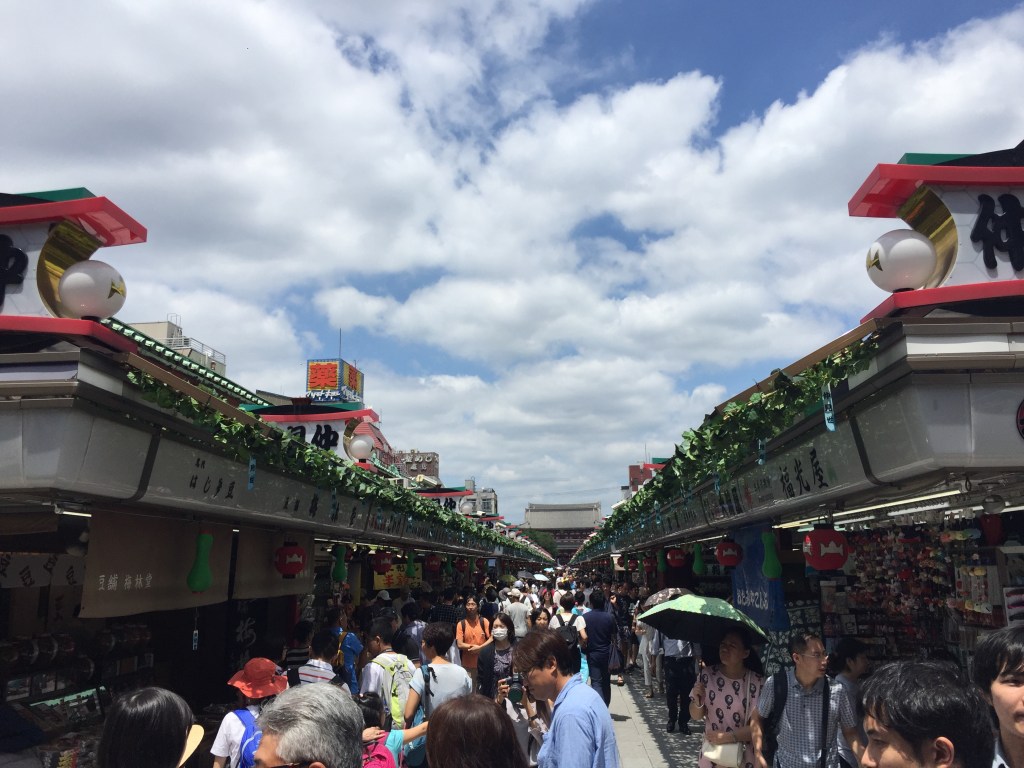
A photo I took in 2016 of the famous market of nakamise-dōri. The actual temple is way in the back.
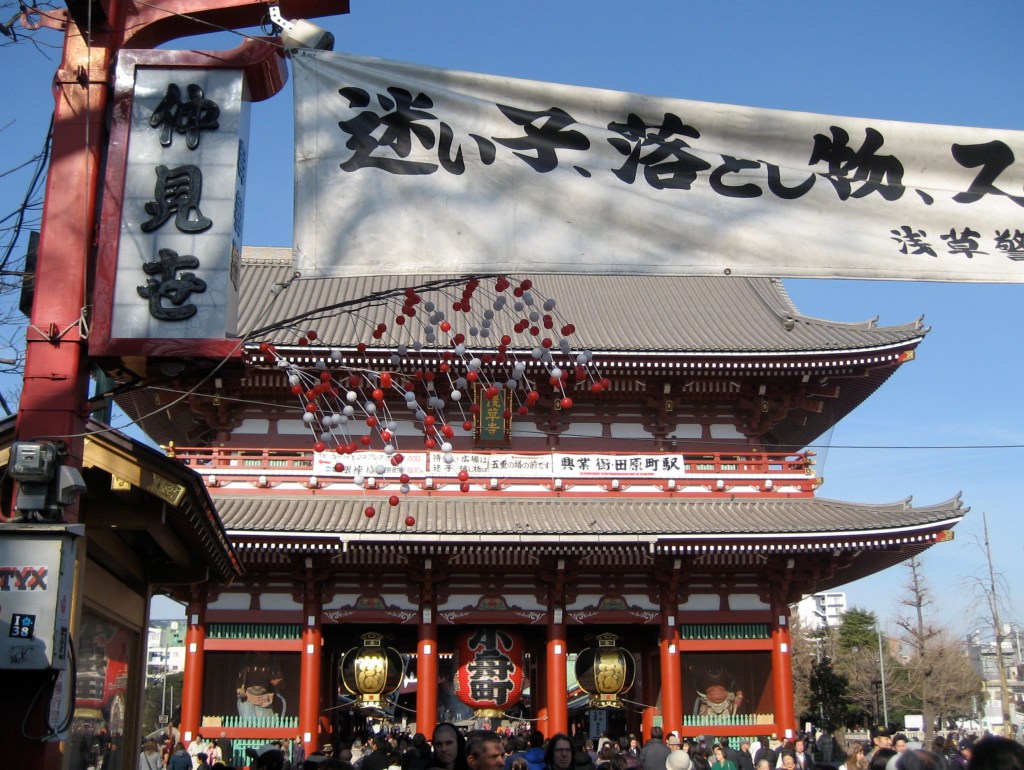
The temple just after New Year’s, taken in 2009.
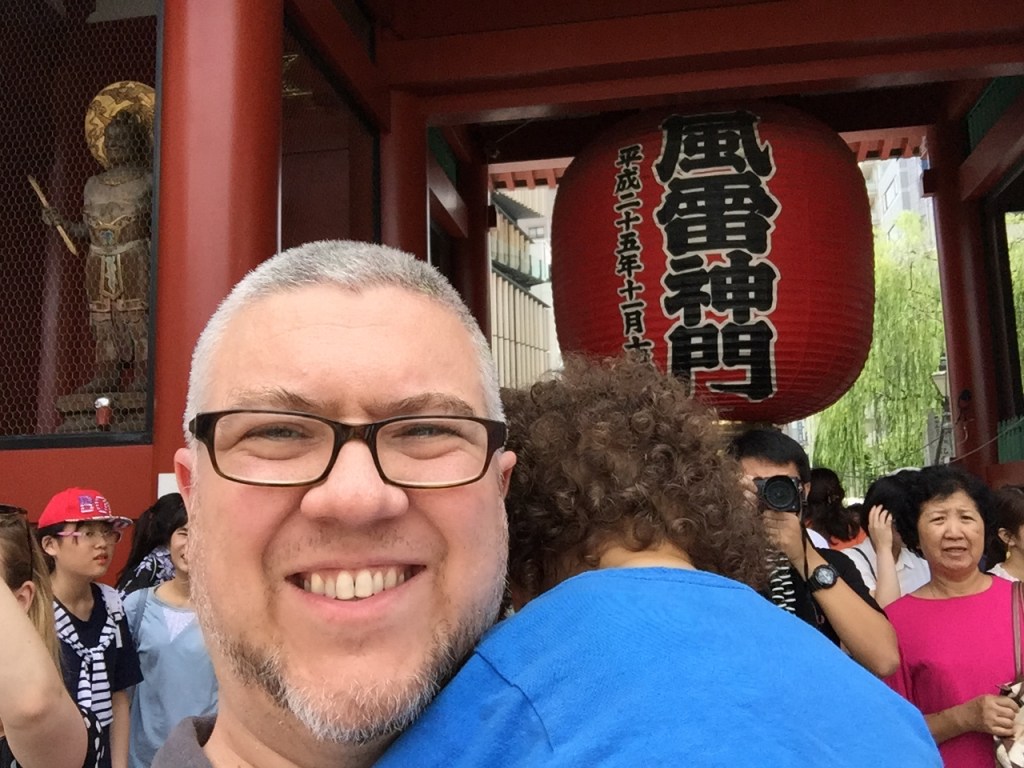
Me carrying one tired little boy at the iconic kaminari-mon gate in 2016. Note the giant red lantern in the back.

It is still one of my favorite temples, even if a bit touristy, and of the Buddhist sutra books I own this is still one of my favorite to use.1 This sutra book uses the traditional Classical Chinese with Japanese pronunciation guides (furigana), which is pretty typical of Japanese-Buddhist sutra books. As you can see, it’s not a long sutra to recite. It is probably the shortest sutra in the entire Buddhist canon.

Chanting the Heart Sutra is something many Buddhists in the Mahayana tradition (everything you see from Tibet to Japan, and overseas) do both in group services and in home services. People chant it in many languages and styles. Its simplicity, and general message about the nature of reality means that it tends to cut across sectarian lines and is popular in many sects and communities. Its cryptic and profound nature also means that for a one-page sutra it is the subject of intense study and research.

The sutra, for reference, is shown below. I used the standard Japanese liturgical form, recited in Zen temples, Tendai temples, Shingon temples, and so on, with only very minor differences per tradition. However, there are many ways and languages to recite the Heart Sutra.

Original ChineseRomanizationTranslation by
Lapis Lazuli Texts
摩訶般若波羅蜜多心経Ma ka han-nya ha ra mi ta shin gyoThe Heart of the Perfection of Wisdom Sutra
観自在菩薩行深般若波羅蜜多時。kan ji zai bo satsu gyo jin han nya ha ra mi ta ji When Avalokiteśvara Bodhisattva was practicing the profound Prajñāpāramitā,
照見五蘊皆空。sho ken go un kai ku he illuminated the Five Skandhas and saw that they were all empty,
度一切苦厄。do is-sai ku yakuand crossed over all suffering and affliction.
舎利子。色不異空。sha ri shi shiki fu i ku Śāriputra, form is not different from emptiness, and
空不異色。ku fu i shiki emptiness is not different from form.
色即是空。shiki zoku ze ku Form itself is emptiness, and
空即是色。ku zoku ze shiki emptiness itself is form.
受想行識亦復如是。ju so gyo shiki yaku bu nyo zeSensation, conception, synthesis, and discrimination are also such as this.
舎利子。是諸法空相。sha ri shi ze sho ho ku so Śāriputra, all dharmas are empty:
不生不滅。fu sho fu metsu they are neither created nor destroyed,
不垢不浄。fu ku fu jo neither defiled nor pure,
不増不減。fu zo fu genand they neither increase nor diminish.
是故空中。ze ko ku chu This is because in emptiness
無色無受想行識。mu shiki mu ju so gyo shiki there is no form, sensation, conception, synthesis, or discrimination.
無眼耳鼻舌身意。mu gen-ni bi zes-shin iThere are no eyes, ears, nose, tongue, body, or thoughts.
無色声香味触法。mu shiki sho ko mi soku ho There are no forms, sounds, scents, tastes, sensations, or dharmas.
無眼界。mu gen kai There is no field of vision and
乃至無意識界。nai shi mu i shiki kai there is no realm of thoughts.
無無明。mu mu myo There is no ignorance
亦無無明尽。yaku mu mu myo jinnor elimination of ignorance,
乃至無老死。nai shi mu ro shi even up to and including no old age and death,
亦無老死尽。yaku mu ro shi jin nor elimination of old age and death.
無苦集滅道。mu ku shu metsu do There is no suffering, its accumulation, its elimination, or a path.
無智亦無得。mu chi yaku mu tokuThere is no understanding and no attaining.
以無所得故。i mu sho tok-ko Because there is no attainment,
菩提薩埵。依般若波羅蜜多故。bo dai sat-ta e han nya ha ra mi ta ko bodhisattvas rely on Prajñāpāramitā,
心無罜礙。shin mu kei geand their minds have no obstructions.
無罜礙故。mu kei ge ko Since there are no obstructions,
無有恐怖。mu u ku fu they have no fears.
遠離一切顛倒夢想。on ri is-sai ten do mu so Because they are detached from backwards dream-thinking,
究竟涅槃。ku gyo ne hantheir final result is Nirvāṇa.
三世諸仏。san ze sho butsu Because all buddhas of the past, present, and future
依般若波羅蜜多故。e han nya ha ra mi ta ko rely on Prajñāpāramitā,
得阿耨多羅三藐三菩提。toku a noku ta ra sam myaku san bo daithey attain Anuttarā Samyaksaṃbodhi.
故知。般若波羅蜜多。ko chi han nya ha ra mi ta Therefore, know that Prajñāpāramitā
是大神呪。是大明呪。ze dai jin shu ze dai myo shu is a great spiritual mantra, a great brilliant mantra,
是無上呪。是無等等呪。ze mu jo shu ze mu to do shu an unsurpassed mantra, and an unequalled mantra.
能除一切苦。真実不虚故。説般若波羅蜜多呪。no jo is-sai ku shin jitsu fu ko ko setsu han nya ha ra mi ta shuThe Prajñāpāramitā Mantra is spoken because it can truly remove all afflictions.
即説呪曰。soku setsu shu watsu: The mantra is spoken thusly:
羯諦羯諦波羅羯諦波羅僧羯諦菩提薩婆訶。gya tei gya tei ha ra gya tei hara so gya tei bo ji so wa ka gate gate pāragate pārasaṃgate bodhi svāhā3
般若心経han nya shin gyoThe Heart Sutra

You can see a really nice example of this chanted here, courtesy of Koyasan Temple in Japan:

I have been reading Tanahashi’s book about the Heart Sutra and learning a lot about its various interpretations, how it’s conveyed in various languages, and various theories about its origin. I was fascinated to learn that there is a Mongolian version sometimes transcribed in Cyrillic. None of this is strictly necessary for the purposes of Buddhist practice, but it is fascinating. The example I showed above uses what’s called “Sino-Japanese”: Japanese pronunciation of the original Chinese characters it was composed with.2

As for chanting the sutra, I’ve been doing it for years, so I can more or less recite the Sino-Japanese version from memory, and am pretty comfortable doing it that way. I study the meaning of the sutra in English of course. I also have a PDF file for chanting in Sino-Japanese available for those interested.

I have also attended Zen centers on rare occasions (I tend to lean toward Pure Land Buddhism, to be honest) and seen the Heart Sutra recited using English. Learning the English meaning is very useful, but English chanting sounds a bit awkward to me. So, I prefer chanting in the original, and study the meaning separately.

But regardless of what language you use, the Heart Sutra, like all Buddhist sutras, has a funny tendency to gradually “sink in” over time. The meaning may not make much sense at first, but over the course of months and years, it takes on new meaning as you go through life, and see the sutra in a new light. I believe that’s the real value of Buddhist chanting: to internalize key Buddhist teachings in a way that you can carry with you throughout life.

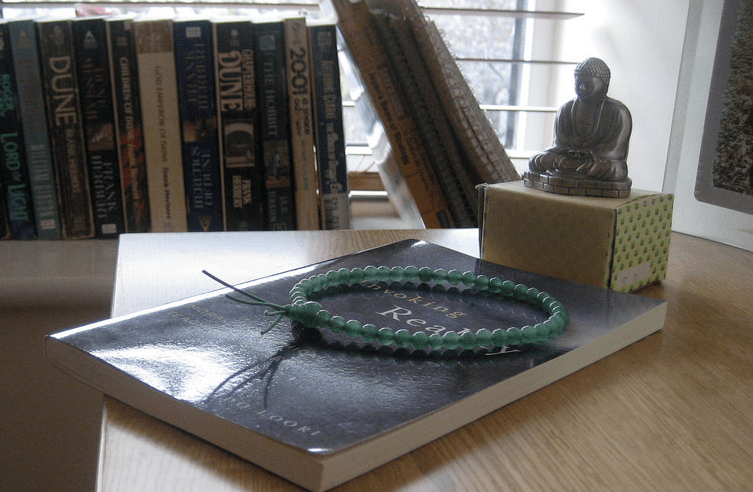
As for me, these days, I tend to recite a Tendai-style home service,4 and as part of that I rotate between chanting this and a certain, small excerpt of the Immeasurable Life Sutra called the shiseige (四誓偈) or juseige (重誓偈) in Japanese Buddhism. When I finish one, I put it under the other sutra book, so I don’t forget which sutra to recite next time as I might go a week or two before reciting again. As a short, traditional liturgy, I am pretty content.

As with any Buddhist practice done over a long period of time, I believe that it gradually polishes the mind, and dispels one self-centered viewpoint. It’s super simple to do, but its benefits last a lifetime. To paraphrase Nichiren, when dying cloth in indigo, the more you do it, the deeper the color becomes.

Namu Amida Butsu
Namu Kanzeon Bosatsu

Edit: I discovered in May 2025 some egregious mistakes in the formatting of the sutra above. This was not a problem with the translation, but with mistakes in how I copy-pasted into the blog post. I have since corrected these mistakes. Apologies to anyone who used the flawed copy of the sutra.

P.S. It’s tempting for some to look for an original “Sanskrit” version of the sutra, but alas, the best we know today is that the sutra was compiled originally in China, using excerpts from the much, much larger Prajña-paramita sutras. The story of how exactly that came to be is a much-discussed subject in Tanahashi’s book.

P.P.S. Fun fact: the version of the Heart Sutra used in Japan differs very slightly from the popular version attributed to Xuanzang. The Japanese version, popularized by the Shingon esoteric tradition, is called the rufubon (流布本) version. It has two extra Chinese characters (262 total) from Xuanzang’s 260, and uses slightly different characters for pronouncing the mantra at the end: 揭諦 instead of original 揭帝 for Sanskrit gaté.

1 Because it is devoted to Kannon Bodhisattva, this sutra book also includes (left in photo) a certain Japanese-Buddhist verse called the Jikku Kannon-gyō (十句観音経, “ten verse Kannon sutra”) popularized in the middle ages. I made a post here about it.

A nice explanation of the meaning and history of the ten-verse sutra can be found here.

2 It’s sometimes assumed that the sutra’s earliest composition was in a language like Sanskrit or something else from India, but research has long since proven that the Heart Sutra was a Chinese innovation, a summary of the much longer Perfection Wisdom Sutras, distilled into a very compact, chantable essence. The monk Xuan-zang later brought it back to India, where it later came to Tibet. Pretty clever actually.

3 I decided to leave the Sanskrit mantra untranslated, per esoteric-Buddhist tradition.

4 I like the Tendai approach to Buddhism because it encompasses all the things that are important to me, but avoiding a narrow, dogmatic approach that I found in the past and ultimately rejected.

The Power of Prayer

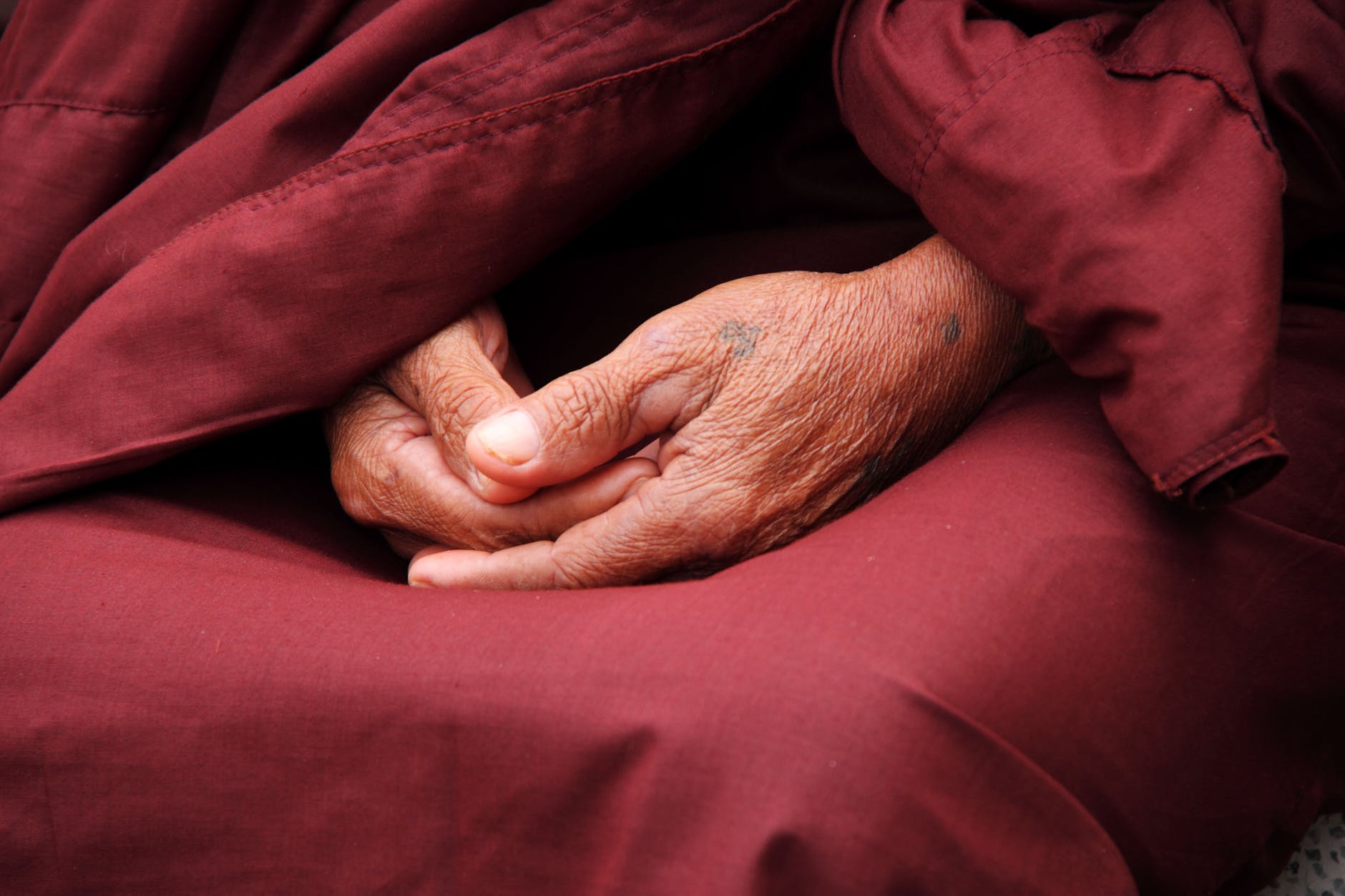
Photo by Pixabay on Pexels.com

With so many faiths having special holidays around this time of year, I thought this video by the BBC was really nice (sorry I can’t embed it, but please click on the link): https://www.bbc.co.uk/ideas/videos/prayer-is-the-greatest-freedom-of-all/p07b8dq5

Father Giles is a Benedictine monk for nearly 50 years and he reflects on how his life of devotion and religion has really helped him find a kind of freedom even as he learns to let go of so much, even his own life. A Buddhist watching this video would almost certain find much affinity here. The Buddhist monk, more specifically monks and nuns, devotes themselves to the Dharma full time and in so doing learn to shed conceit and what the Buddha called “I-making“.

At the same time, it may seem odd to appreciate something like this in someone else’s religion, but in reality it isn’t.

Buddhism is founded on the Dharma, that is to say, founded on the principles reality and how things work. One doesn’t believe in the Dharma, they discover it, apply it, etc. Similarly, the gravity doesn’t care whether you believe it or not, it’s just there, and only by understanding it can you make sense of the world. What makes a Buddha a Buddha (lit. “an awakened one”) is being who perceives the Dharma fully, such that they thoroughly grasp it and have the capacity to teach others (lit. “turning the wheel of the Dharma” in Buddhist parlance). While Buddhas are said to appear very rarely because the Dharma is so subtle and hard to grasp in full, nevertheless, Buddhism doesn’t hinge on faith in a Buddha, it hinges on understanding the Dharma that’s already there.

Thus, a Buddhist has no issue with seeing others applying the Dharma in their own lives, whether they do it as a Buddhist or as someone of another faith. If it accords with the Dharma, it doesn’t really matter.

Similarly, this practical approach is nicely encapsulated in this old TED Talk by a Japanese-Buddhist priest (subtitles are available through Youtube):

This priest talks about the practical aspect of Japanese religion, and how its various religions, Shinto, Buddhism, Christianity and so on co-exist because people focus on mutual respect, and the practical aspects of religion, rather than dogma. He compares Indian curry which is very hot, but suitable for hot, dry climates, with Japanese curry which is mild and sweet, but more suitable to sticky, humid summers in Japan. Both curries are good, but suited to their surroundings and to suit people’s needs.

In the same way, with so many people of diverse backgrounds, not every religious solution will fit every person, but if people find something that makes them a better person and provides some practical benefits, then it’s a good place to start. But it’s also important not to follow a belief because it’s “fun” or makes you feel good, but rather it is an important decision to undertake and one that will challenge you and help you grow:

And that’s where religion becomes useful. 😄

Namu Amida Butsu

What The Heck is Mahayana Buddhism?

My daughter, now in high school,1 asked me last week about Buddhism since she is learning about world religions in her history class, and we got to have a great conversation about it. I haven’t actively raised her Buddhist, but she has been exposed to it through my wife and I (a story in of itself), and now she is old enough to start to appreciate some things and ask questions.

While talking with her, I realized that the “textbook” understanding of Buddhism as we know it, and how I originally learned it as a curious teenager myself, is often based on a Western-“orientalist” view that often borrowed from the Theravada Buddhist tradition. This isn’t necessarily wrong, and it still helps bridge the gap for people new to Buddhism, but there are considerable gaps about Mahayana Buddhism, the other tradition.

For example, the Four Noble Truths technically exist in both traditions, but are not prominent in the Mahayana tradition, whereas the Three (sometimes Four) Dharma Seals are. Bodhisattvas exist in both traditions (sorry purists), but the scope greatly increased in Mahayana Buddhism. The number of buddhas revered in Mahayana Buddhism is certainly larger than Theravada.

On the other hand, both traditions have the same basic set of monastic principles, even if they might quibble about particular rules. Both revere Shakyamuni Buddha as a revered teacher, who lived countless lives before culminating his last life as the historical founder of Buddhism. Both acknowledge, but don’t revere, the devas: deities of the ancient “Vedic religion”, precursor to Hinduism.2

Truth is, you’ve almost certainly seen Mahayana Buddhism or maybe even raised in it, but may not be aware. This is, in my opinion, due to its sheer complexity. Due to its development, and interaction with so many diverse cultures, it exploded into many different schools and sects, so that there isn’t a “Mahayana school” of Buddhism anymore. It kind of atomized into things like Zen, Pure Land tradition, Tiantai, esoteric Buddhism, Nichiren Buddhism, etc.

But all of these sects still have the same foundation in Mahayana Buddhism, and that’s what we’re looking at today.

A Brief History

First, let’s dispel one misconceptions: neither Mahayana nor Theravada Buddhism are considered “original” Buddhism: the kind of “pristine Buddhism” that people imagine today was practiced when Shakyamuni Buddha was still alive. Both arose from earlier schools of Buddhism in India, both arose from different geographic areas of India3 from one another and probably never really interacted with one another very much. They both inherited the same common pool of sutras: Buddhist texts orally taught from teacher to student since the time of the Buddha. Finally, they both inherited the same basic monastic code. Where Theravada developed primarily southern India and spread to places like Myanmar, Sri Lanka, etc., Mahayana spread to the northwest along the Silk Road to China and beyond, in part due to the Bactrian Greeks, Parthians, and among many other people.

In the case of Mahayana Buddhism, it also absorbed local deities as it spread, “Buddhified” them, and made them part of the tradition. These include deities that are well-known as Avalokitesvara (a.k.a. Guan-yin, Kannon) and Amitabha (a.k.a. Amida) Buddha.

You see, in addition to the original corpus of sutras that the early Mahayana Buddhists in north-west India inherited, they started writing new texts. Some texts took pot-shots at the older schools they felt were stodgy, or moribund, others tried to reboot the Buddhist teachings in a newer, more hip (relative to 1st century BC) format. Thus, many Mahayana sutras often have verse sections, probably adapted from older texts, but with lots of narrative texts wrapped around them as well for improved readability. Some of these new Mahayana sutras covered specific topics, others were meant to be pretty comprehensive. It was these early Mahayana Buddhists that also started carving new Buddhist images, partly due to influence from the Greeks living in Bactria as well.

Fragments of a Buddhist text made of birch-bark, from the Gandhara region (modern Afghanistan/ Pakistan), British Library, CC0, via Wikimedia Commons

All of this might sound like “cultural accretions” to purists, but as we’ll soon see, the Mahayana approach, particularly in the influential Lotus Sutra, emphasized the expediency of all teachings and all practices. This meant that revering one buddha is just as good as another. If it works, and keeps you on the path, that’s what mattered.

By the time that Mahayana Buddhism reached China, this vast amount of sutra literature from India, both the original sutras, and generations of newer Mahayana-only sutras, plus various deities had grown exponentially. Chinese Buddhists imported these as best as they could, with help from translators from Silk Road cultures, and from India. Further, some Chinese monks such as Xuan-zang even went back to India to bring back even more material. But the information was immense, and the task of translating not just the words, but concepts accurately was monumental.

Enter Zhi-Yi, the founder of Tiantai Buddhism, who was the first to try and systematize all these teachings into a cohesive structure. This school, based on Mount Tiantai, was very successful in this regard, and is still the basis for much of the Buddhism you see today in places like China, Vietnam, Korea and Japan.

From there, many other schools arose, either in opposition to Tiantai (such as Zen or Hua-yan), or branched off from it to focus on specific teachings or practices (e.g. Pure Land, Nichiren). All of these schools, regardless of whether they opposed Tiantai or derived from it, all drew from the same pool of Mahayana teachings such as those espoused in the aforementioned Lotus Sutra. This dynamic growth of Buddhist schools, all based in Mahayana teachings, is what we see today in east Asian Buddhism.

Mahayana and the Lotus Sutra

What makes Mahayana what it is is probably none other than a Buddhist text called the Lotus Sutra. You cannot have Mahayana without the Lotus Sutra. I won’t cover everything the Lotus Sutra teaches (more on that here), but among its influential ideas:

  • In spite of the various competing schools and sects, all of them ultimately converged into “One-Vehicle” Buddhism.
  • Women were just as capable of becoming fully-awakened buddhas as men.
  • No one has to settle for less, all beings have the capacity to become fully-awakened buddhas. This is also where terms like “buddha-nature” come into play.
  • All Buddhist practices, big and small, help one on the path. Similarly, all Buddhist deities help guide beings according to their background, capacity and inclination.
  • Buddhism isn’t tied to the past, the historical Buddha is always here with us so long as we see the Dharma (the teachings). This has some precedence in earlier Buddhist texts as well.

Thus, what the Lotus Sutra really did was provide an expanded, all-inclusive vision of Buddhism based on a solid foundation of goodwill toward all beings, and a faith in all sentient beings to eventually awaken. It even coined the term Mahayana, or “great vehicle”, to describe this in the second chapter.

So, What Is Mahayana Then?

With all this background information in mind, let’s get to brass tacks and talk about what makes a Buddhist sect Mahayana or not.

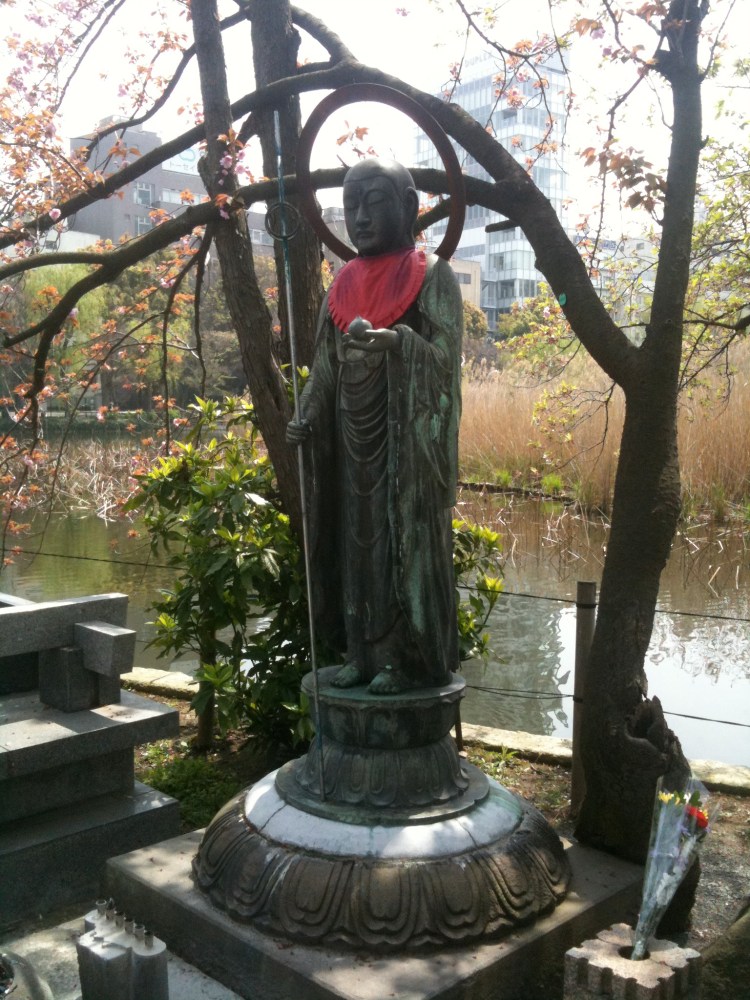
The Bodhisattva Jizō (Kshitigarbha in Sanskrit), taken near Ueno Park in Tokyo, Japan

There is a somewhat obscure text in China from the 6th century, known in English as the Awakening of Faith in the Mahayana attributed to Indian-Buddhist monk Ashvaghosa that was meant to kind of encapsulate Mahayana Buddhism. For example, the following verse:

After reflecting in this way [the suffering of all beings], he should pluck up his courage and make a great vow to this effect: may my mind be free from discriminations so that I may practice all of the various meritorious acts everywhere in the ten directions; may I, to the end of the future, by applying limitless expedient means, help all suffering sentient beings so that they may obtain the bliss of nirvana, the ultimate goal.

Page 101, section 4 of The Awakening of Faith, translated by Yoshito S Hakeda

Every school that we call Mahayana Buddhism, Zen, Pure Land, Tiantai, Nichiren and so on has this basic principle in mind: one vows to develop one’s mind according to the Dharma, the teachings of the Buddha, not just to help liberate oneself, but also to help awaken and liberate others. We are all in this together, afterall. These different schools may quibble about how best to go about it, but they all agree with the basic principle. You also see these in Mahayana liturgy such as the Four Bodhisattva Vows.

Another is the importance of the mind, again encapsulated in the Awakening of Faith in the Mahayana:

The principle [of Mahayana] is “the Mind of the sentient being.” This Mind includes in itself all states of being of the phenomenal world and the transcendental world. (pg. 28, section 2)

The triple world [past, present, and future], therefore, is unreal and is of mind only. Apart from it there are no objects of the five senses and of the mind. (pg. 48, section 3)

The Awakening of Faith, translated by Yoshito S Hakeda

This, like the previous quote, is nothing new to Buddhism, but Mahayana shifts the emphasis even more so, or expanded and deepened earlier teachings to a wider audience. One might call it Buddhism++ if you are a computer nerd. 😋

Conclusion

Mahayana Buddhism is a broad tradition that arose in northwest India that, from my perspective, tried to reboot earlier Indian Buddhism by synthesizing older teachings in new texts, absorbing and Buddhifying various deities, and broadening the vision of Buddhism to be as inclusive as possible and challenging some of the cultural assumptions at the time with respect to gender, livelihood, etc.

P.S. Featured image is from the ending credits of Final Fantasy I, Pixel Remaster. If you played the original like I did, I highly recommend. This is the best remake of the game I’ve played thus far.

1 When I first started blogging ages ago, several blogs ago, she was little a tiny baby. I even called her “baby”, then later “princess”. Amazing how much time has passed. 😭

2 Another correction I had to make with my daughter’s homework material: Buddhism did not come from Hinduism, but they both drew from the same cultural and religious well.

3 Imagine a country the size of Europe, but with maybe 3 times the linguistic and ethnic diversity of Europe, and an older history. That’s India.

Actions, Not Words

As I continue watching the Japanese historical drama The Thirteen Lords of Kamakura, I am struck by how much a scoundrel the lead character, Minamoto no Yoritomo (based on the real historical figure), is. By episode twelve, he’s tossed out his first wife, sleeping around behind the back of his pregnant second wife’s, and has had the father of his first wife assassinated for questionable loyalty.

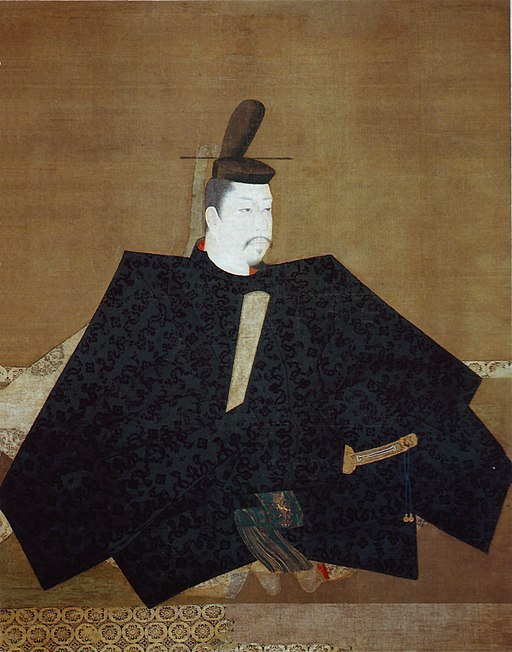
A contemporary portrait of Minamoto no Yoritomo, by Fujiwara no Takanobu, Public domain, via Wikimedia Commons

One might chalk this up to the usual power plays of medieval warfare, but what’s fascinating is that the show often juxtaposes these actions by showing Yoritomo praying fervently before a statue of Kannon bodhisattva.

By the way, I have no idea if the real Yoritomo behaved like this, but it makes for good drama.

Coincidentally, I found random verse in the Flower Garland Sutra, specifically the famous last chapter,1 that seemed appropriate:

The peaceful nature of the buddhas cannot be known
By the covetous or the malevolent,
Or by those shrouded in the darkness of delusion,
Of those whose minds are defiled by hypocrisy and conceit.

This sphere of buddhas cannot be known
By those ruled by envy and jealousy,
Or those whose minds are polluted by guile and deceit,
Of those enshrouded by barriers of action based on afflictions,

Translation by Thomas Cleary

I mentioned something similar in a recent post but this idea of the Buddhas and the truth they preach, the Dharma, being right under your nose if you know how to look, and if your conduct is without blemish, is a recurring theme. It’s not limited to Mahayana Buddhism either.

In the earliest Buddhist texts, the Sāmaññaphala Sutta (DN 2), there is a famous meeting where the local king, Ajatashatru of Magadha, meets the Buddha. He had been a power-hungry young man who had deposed his father to take the throne, and waged war against his neighbor Kosala. Ajatashatru was still nominally a disciple of the Buddha but had been a pretty aggressive and disreputable ruler in his time.

In this meeting, the king pays homage by visiting the Buddha with his entourage, but cannot discern who among the monks is the real Buddha. Further, when asks spiritual questions of the Buddha, he cannot really grasp what the Buddha his telling him. His mental and spiritual faculties are so stunted by the lifestyle he lives, and the choices he makes, that according to the Buddha he will not be able to make much spiritual progress in this life. The sutra assures us though that any spiritual effort he has made in this life will bear fruit someday, but likely not for a while.

All this is to say that while meditation retreats and elaborate rituals are well and good, your day to day conduct, especially how you treat others, is the true foundation on which your spiritual progress will depend on.

1 The Flower Garland Sutra is a huge, HUGE Buddhist text, but the last chapter, the 39th, is thought to be a separate text that was at some point bolted onto the end. This, the Gandhavyuha Sutra, tells the story of a young seeker of wisdom named Sudhana who visits various deities seeking the truth. The English translation is almost 400 pages by itself, but it’s very underrated in Western Buddhist circles.

Keeping An Even Head When The World Is On Fire

It’s hard to avoid lingering sense of dread, sadness, or fear of the future these days. Of all the problems in the world, climate change is the one that truly worries me the most. I really can’t help but wonder what kind of world I’ll be leaving my kids and (possible) grandkids someday. 😔

We live in a dangerous world, one that basically owes us nothing. Our lives are contingent on those things around us that help support and sustain us, even if they aren’t necessarily good things. Similarly, by our actions and our choices we sustain and help others too. It’s a contingent existence, but we sustain one another in the process.

All of this can be swept aside, though, in a moment of warfare, disease or natural disasters. The human race has done much to overcome the challenges that earlier generations faced, but we are still one species on this planet, and if things turn against us (or we shoot ourselves in the foot), well, that’s it folks. But that’s not necessarily the end, either. If life can survive something like the Permian-Triassic event, it can survive just about anything.

I guess what I am trying to say is that shit happens, but also life goes on.

As a thinking human being on this world, a homo sapiens, there’s very little that you have personal, direct control over. Many other things can be influenced by you, while still others are simply outside your control. And yet, in spite of this, those things which you can control or influence are important and worthy of attention.

In the 16th chapter of the Lotus Sutra the Buddha says in verse:

My pure land is not destroyed,
yet the multitude see it as consumed in fire,
with anxiety, fear and other sufferings
filling it everywhere.
These living beings with their various offenses,
through causes arising from their evil actions,
spend asamkhya kalpas [vast eons]
without hearing the name of the Three Treasures [the Buddha, the Dharma, and the Sangha].
But those who practice meritorious ways,
who are gentle, peaceful, honest and upright,
all of them will see me
here in person, preaching the Law [the Dharma].

— Translation by Burton Watson

Here, the Buddha of the Lotus Sutra is preaching that regardless of the state of the world, the Dharma is still the Dharma, and so the Buddha is always here. It may be obscured, or forgotten by some, but it never truly goes away. Even when the world is in a state of calamity, things like wisdom, goodwill towards others, a cool head, and an upright life still matter.

As I said earlier, while our existence is contingent on external causes and conditions, it is also true that through our own actions and conduct we sustain others. This latter point is important. Every little thing we do to light one corner of the world, from recycling that plastic container, to helping refugees or the homeless in your community, matters to others, including people we may never meet. The Four Bodhisattva Vows are a lofty reminder not to give up.

Even as I worry for the future of my kids, who knows what my great, great, great grandchildren will look like, or what circumstances they will live in. Hopefully some of the joy and love I have tried to share with my kids will find its way to my descendants into the far future as well.

Lastly, be kind to yourself. If need be, turn the world off and take time for a retreat even if it is just a few hours or half a day. Recharge, and stop to look at the world around you and what you can do to make it a better place, a little bit at a time. ☺️

Namu Amida Butsu

Introducing the Taima Mandala

Recently I was chatting with some folks in my PBP group about mandalas, starting with the famous sand mandalas that the Tibetan community drew for President Obama, then mandala in Japanese Buddhism. This conversation woke up some old memories of mine, including an obscure mandala that I wanted to share: the Taima Mandala.

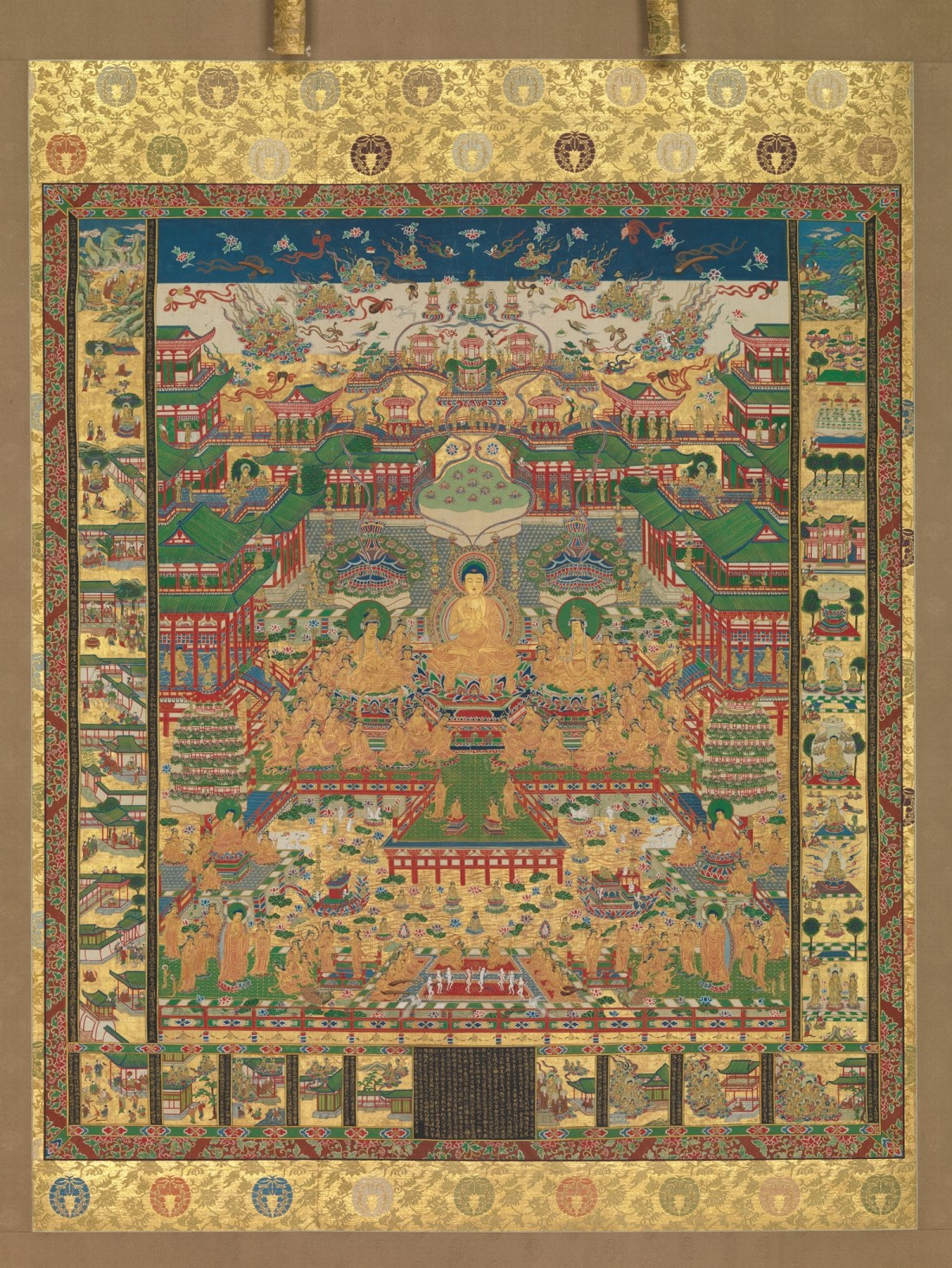
The Taima Mandala (taima mandara, 当麻曼荼羅) is a tapestry that was created in the year 763 and currently stored in the temple of Taima-dera in the city of Nara, Japan although many reproductions exist. You can see the original here. In spite of the name “mandala” it is not technically a mandala, nor is related to the esoteric traditions of Buddhism. Instead, it is part of genre of Buddhist art called hensōzu (変相図) in Japanese, graphic illustrations of the Pure Land of the Buddha or of the Buddhist hell realms.1

The Taima Mandala is a visual depiction of the Pure Land of Amitabha Buddha, the Buddha of Infinite Light. It is in the Pure Land (jōdo 浄土 in Japanese) that the Buddha provides refuge for all beings, and there that they can dwell in an environment that is very conducive to the Buddhist path and ultimately Buddhahood of their own. Part of the appeal of the Pure Land as a Buddhist practice or “dharma gate” is its accessibility. The Buddha, in order to create this refuge for all beings, vowed to make it so accessible that one need only recite his name as little as 10 times, or more if you wish.

Think of it as the ultimate Buddhist retreat, but far more affordable. 😉

If you click on the picture above you can see many details. In the center sits the Buddha Amitabha himself attended by his two attendant bodhisattvas Kannon (right) and Seishi (left).3 They are surrounded by many disciples of all kinds, who eager listen to the Dharma4 and toward the lower central area, you can see new beings being reborn in the Pure Land from the buds of lotus blossoms. Around the edges are smaller pictures, depicting various scenes of the Pure Land, adapted from existing Buddhist sutras, and the bottom depicts the nine grades of followers who are reborn in the Pure Land. The primary source for all this is the Contemplation of Amitabha Sutra, if I recall correctly.

The creation of the Taima Mandala is attributed to a Buddhist nun named Chūjō-himé (中将姫), daughter of one Fujiwara no Toyonari. She was deeply devoted to the Bodhisattva Kannon (Guan-yin). According to the origin story, she finished transcribing a copy of a Buddhist sutra called the shōsanjōdokyō (称讃浄土経, “Sutra on Praises of the Pure Land”?),2 and that same evening, from the western direction of the setting sun, she beheld a vision of the Pure Land in its splendid detail. She was so amazed that she took tonsure as a nun at Taima-dera Temple, and with Kannon’s guidance was able to craft the mandala based on what she saw.

As an example of hensōzu art, the Taima Mandala is simply amazing. It is one of those “often imitated, but never surpassed” works of art. While it is not a mandala in the strict sense, it has been called one for many generations because it does provide a very visual representation of the Pure Land that can’t be fully expressed in written form, hence it has a religious impact all its own.

Very little information about the Taima Mandala or this artistic genre exists in English unfortunately, and I have only scratched the surface, but I hope this helps inspire readers and other Buddhists in some way.

Namu Amida Butsu

P.S. Featured photo is a reprint of the Taima Mandala with the Jodo Shinshu-sect crest at the top and bottom, Metropolitan Museum of Art, CC0, via Wikimedia Commons

1 Ages ago, I attended a museum exhibition in Kamakura which displayed many such medieval hensōzu artwork from local temples, and it was simply amazing. It had a big impression on me, and how I understand Pure Land Buddhism.

2 There is very little information about this sutra in English or Japanese, but it appears to be an alternate translation of the more famous Amida Sutra, brought by the famous Chinese monk, Xuanzang, from India during his journeys. It is also called the shōsan jōdo butsu shōju-kyō (称讃浄土仏摂受経). There’s no translation at all in English, so the above title is my best guess.

3 Buddhas were often depicted in “trinities” with two attendant Bodhisattvas. Shakyamuni, the historical founder of Buddhism, was often depicted with Monju (Manjushri) and Fugen (Samantabhadra) for example.

4 The Buddhist law of existence, or “how things work”. Buddhism at its heart is not a dogma but a way of expressing how reality works, not how we want it to work, with the aim to awaken and enlighten others.

The Four Bodhisattva Vows

Recently, I posted an example of Buddhist liturgy as found in the Japanese Tendai tradition, but I wanted to call out one aspect of that liturgy called the Four Bodhisattva Vows or shiguseigan (四弘誓願) among other names. According to my book on Genshin, the Four Bodhisattva Vows were formulated by the original founder of Tiantai (Tendai) Buddhism in China: Zhiyi. Zhiyi formulated these vows based on an earlier gatha verse from the fifth chapter of the Lotus Sutra:

Those who have not yet crossed over I will cause to cross over,

those not yet freed I will free,

those not yet at rest I will put to rest,

those not yet in nirvana I will cause to attain nirvana.

Translation by Burton Watson

The vows have since promulgated to other Buddhist cultures and sects. The liturgy text will vary slightly from Buddhist tradition to tradition, but like the dedication of merit, is remarkably consistent overall.

In the aforementioned Tendai tradition, one version of the vows is as follows:

Sino-Japanese1PronunciationTranslation by me
(other, better translations exist 😉)
衆生無辺誓願度Shu jo mu hen sei gan doSentient beings are innumerable, and yet I vow to save them all.
煩悩無尽誓願断Bon no mu hen sei gan danMy mental defilements (lit. bonnō) are innumerable, I vow to extinguish them all.
法門無量誓願学2Ho mon mu ryo sei gan gakuThe gates of the dharma are without measure, I vow to master them all.
仏道無上誓願成Mu jo bo dai sei gan shoThe path to Buddhahood is peerless, I vow to fulfill it.
1 Chinese liturgy with Japanese phonetic pronunciation
2 I’ve also seen the last character as 知 (chi), but more or less means the same thing

These vows cover something that we saw in previous articles about the Mahayana-Buddhist notion of the Bodhisattva: that we’re all in this together, and so the Buddhist path is not truly fulfilled until one completes their vows to aid all beings no matter how long it takes. The Mahayana path of the Bodhisattva is lofty, heroic even, but as the last verse says, nothing less is enough.

On the other hand, the path of the bodhisattva begins with a single good act, or a good thought towards others. It’s about piling up grains of sand or pebbles time and time again. With enough time and dedication, one can move mountains. Don’t be afraid to think big, even if you come up short in this life. Even if you acted like a dickhead today, that doesn’t mean tomorrow you will be one. Every day is a rehearsal. The very notion of “buddha nature” means that each one of you has the capability for great things, even if you don’t think you can. That’s why in the 20th chapter of the Lotus Sutra, the Bodhisattva Never Disparaging bows to each person, even when they’re a total jerk: given the right conditions, any sentient being can become a bodhisattva or a fully-awakened buddha. Given enough time all of them will.

My best wishes to you all, dear readers. May all you be well, free from harm, and find what you are looking for.

P.S. Featured image from the story of Chujo-hime in the Taima Mandala Engi (当麻曼荼羅縁起)