I found this nice excerpt from the 25th chapter of the Lotus Sutra, better known as the “Kannon Sutra” for some, and just wanted to share:
All darkness is dispelled by the light of his wisdom As spotless and as pure as the light of the sun. The light destroys the dangers of wind and fire, And illumines the whole world brightly.
His precepts out of his loving-kindess brace us up as thunderbolts. His wishes out of his compassion are as wonderful as large clouds. He pours the rain of the Dharma as sweet as nectar, And extinguishes the fire of illusions.
Chapter Twenty-five of the Lotus Sutra, the “Kannon Sutra”, by Rev. Senchu Murano. You can find an alternate translation by Dr Burton Watson.
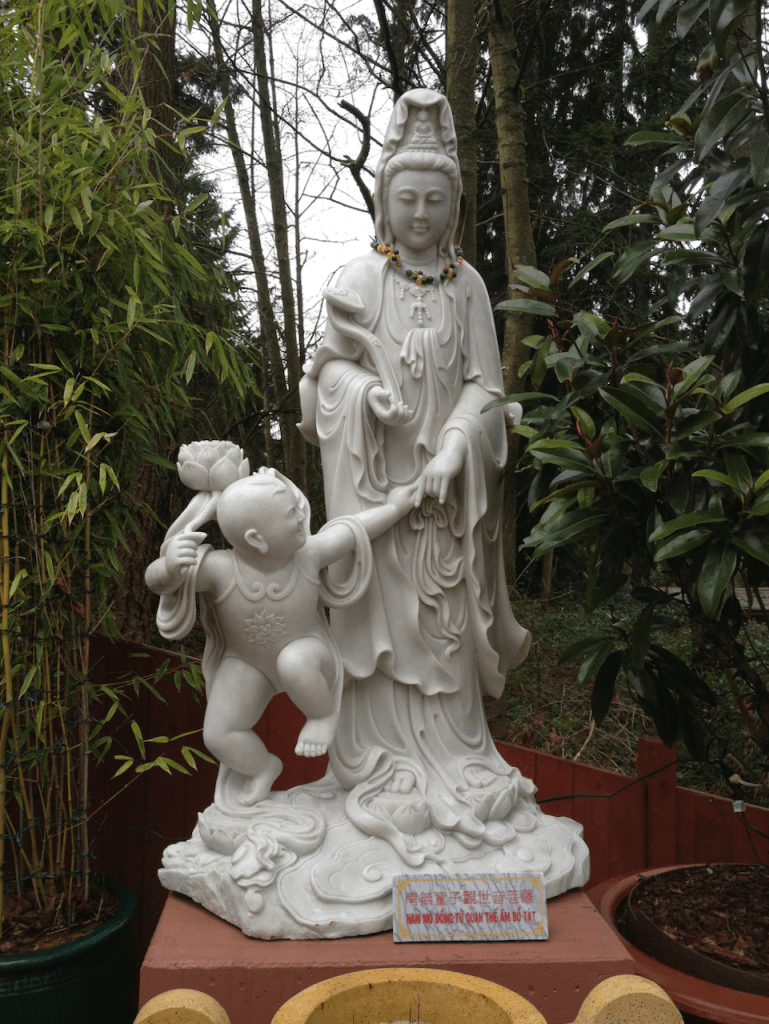
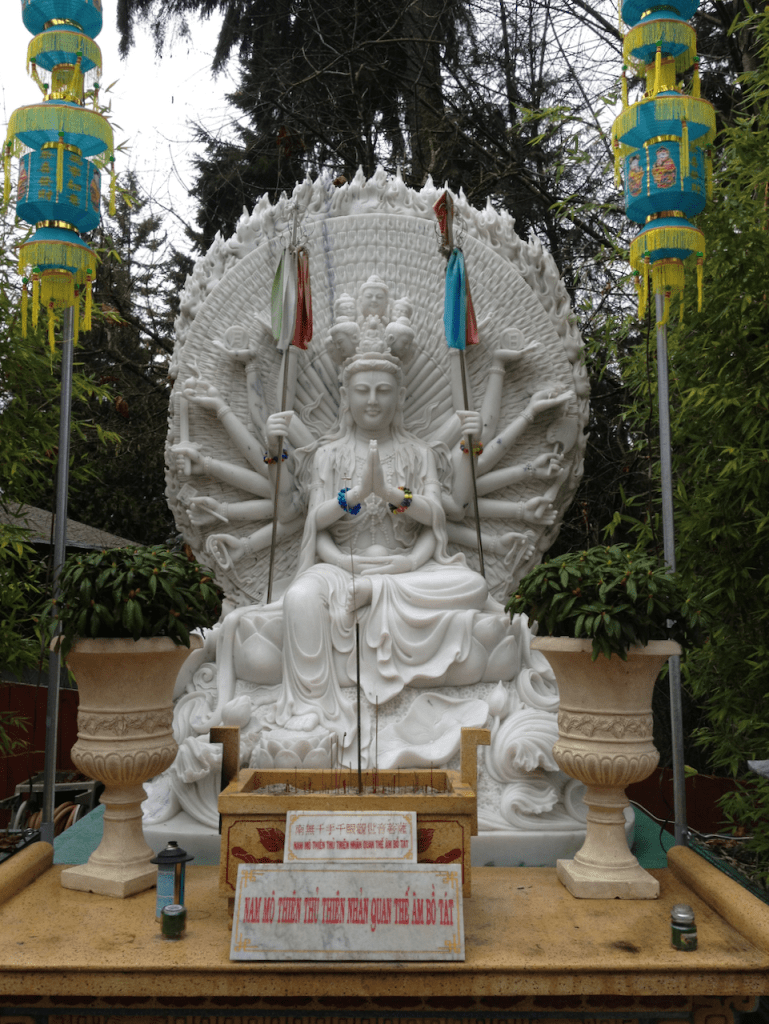
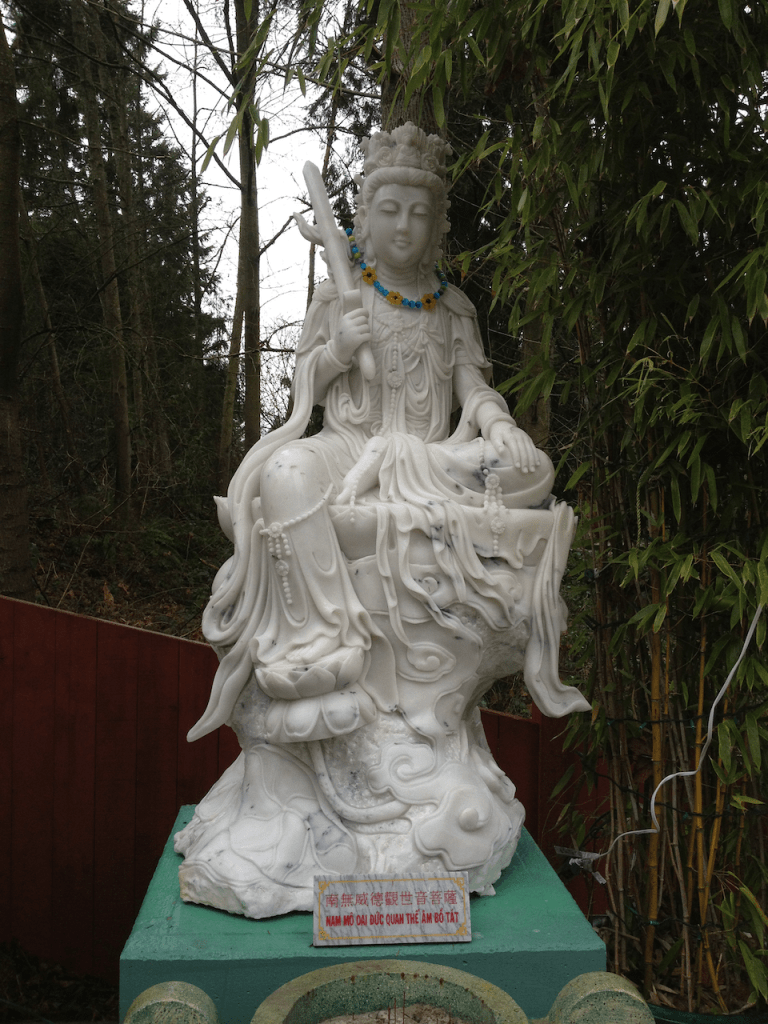
By the way, fun language-nerd fact: I noticed that my two books on the Lotus Sutra (Watson and Murano translations) both translate this passage using “he/him/his” pronoun, but both in the Lotus Sutra, and in popular culture, Avalokitesvara1 is frequently described as both male or female: a princely figure (male), a loving mother figure (female), etc. Here are just some examples from a Vietnamese-Buddhist temple in Lynnwood, WA:
In East-Asian Buddhism, the sutra is preserved in Classical Chinese, so I looked at the translated section above and it shows neither pronoun. Instead, the Chinese Character 観 is used which is the first character of Avalokitesvara’s name: 観世音.
This is hard to do in English: a pronoun is usually required, but in many languages, it’s not. In this case, the original text just abbreviated “Avalokitesvara” into a single character into the passage above.
Clever.
Namu Kanzeon Bosatsu
1 a.k.a. Guan-yin, Kannon, Gwan-seum, Chenrezig, etc. To confuse matters, how the Sanskrit name is spelled in English varies. The most phonetic spelling is Avalokiteshvara, but it’s often spelled the more Sanskrit-ey way Avalokiteśvara, expect that ś is hard to print sometimes. Thus, confusingly it becomes Avalokitesvara (no “sh” sound). Transliterating one language to another, especially languages so different like Sanskrit and Chinese is really tough…… but it’s also fun to see how different generations approached it.
The nianfo (念佛) is widely recited across many cultures and languages by people who follow the Pure Land Buddhist tradition. In Japanese it is called the nembutsu (念仏), and that is the name I most often use on this blog. In Korean it is the yeombul (염불), and in Vietnamese it is the niệm phật. Just as the name differs by language, the phrase itself has changed pronunciation as it is adopted in other cultures and languages, just like the sutras did.
Let’s look at examples.
The original form of the nianfo (as far as I can tell) comes from Sanskrit language in India. In Sanskrit, “nianfo” was buddhānusmṛti (buddhānussati in Pāli language). The venerable site Visible Mantra states that it was recited like so:1
namo’mitābhāyabuddhāya
In the Siddham script, still used in some esoteric practices, this is written as:
𑖡𑖦𑖺𑖦𑖰𑖝𑖯𑖥𑖯𑖧𑖤𑖲𑖟𑖿𑖠𑖯𑖧
From here, Buddhism was gradually imported into China from India (a fascinating story in and of itself), and because Chinese language and Sanskrit are so different, this was no easy task. Nevertheless, the buddhānusmṛti was translated as nianfo (念佛) and written as:
南無阿彌陀佛
This was how the Chinese at the time approximated the sound of the Sanskrit phrase. In modern, Simplified Chinese characters this looks like:
南无阿弥陀佛
But how does one read these characteres? That’s a fun question to answer.
You see, Chinese has many dialects because of geography, regional differences, and migration of people. Thus, even though Chinese characters are written the same (with only modest regional differences), the way they are read and pronounced varies. Thanks to Wiktionary, I found a helpful list to illustrate:
Of these dialects, I am only familiar with Mandarin and (to a much lesser extent) Hokkien, so I can only trust the others based on Wikipedia.
Anyhow, China was a powerful, dynamic culture at the time, and it had a profound influence on its smaller neighbors such as the Korean peninsula, Japan, and northern Vietnam (a.k.a. Dai Viet). Just as the neighbors of the Romans (including the Byzantines) absorbed Roman culture, the neighbors of China did the same even though the languages were very different.
What about Tibetan Buddhism? I am really unfamiliar with that tradition, so I might be wrong here, but my understanding is that Tibetan veneration of Amida Buddha stems from a different tradition, so instead of the nianfo, they recite appropriate mantras instead. Beyond that, I don’t know.
Anyhow, this is a brief look at how a simple Sanskrit phrase has evolved into so many traditions and ways to express veneration to the Buddha of Infinite Light. Thanks for reading!
𑖡𑖦𑖺𑖦𑖰𑖝𑖯𑖥𑖯𑖧𑖤𑖲𑖟𑖿𑖠𑖯𑖧 南無阿彌陀佛 Namu Amida Butsu
P.S. Another post despite my intended rest. The time off really has helped, so it’s been well worth it, but now I am eager to write again. 😌
1 As I’ve written before, writing Sanskrit in the more modern Devanagari script is kind of pointless since Sanskrit was never written in that until late in history, long after Buddhism in India was gone. Sanskrit does not have a native script either, so the Roman Alphabet is as god as any.
2 Brushing off my college Vietnamese, this is pronounced as “Nam-moe Ah-zee-dah-fut”.
Lately, my exploration of the Hokkien language of Chinese, in particular as it is spoken in Taiwan, continues. The amount of educational resources for Taiwanese Hokkien is far less than Mandarin since it is more of a “street language” than an official language, but I have been able to find some excellentmaterial thanks to my Taiwanese-speaking friend.
One of the first challenges of learning Taiwanese Hokkien is how to read it. Taiwanese Chinese uses traditional Chinese characters compared to mainland China which uses a simplified character set.1 So the word for “doctor” in mainland, simplified Chinese is 医生, while in Taiwan it’s 醫生.
But even the Romanized form of Taiwanese, meaning Taiwanese expressed using the Roman alphabet, is complicated and has some history.
The original Romanization system and still popular today is Pe̍h-ōe-jī (白話字, “pay-way-jee”) which is also “church Romanization” because it was developed by Christian missionaries in the 19th century. Having studied Vietnamese in college for two years, another writing system that was originally developed by Western missionaries, Peh-oe-ji and Vietnamese script look pretty similar to me. You can see how the missionaries were thinking at the time, and how their own language influenced their Romanization efforts.
Anyhow, Peh-oe-ji is still widely used, and many text books still use it. However, it also shows its age, and can be hard for modern 21st century English speakers to learn. Plus, has some obvious cultural baggage, so the government of Taiwan has tried to develop a different Romanization system.
The first effort, Taiwanese Language Phonetic Alphabet (TLPA) tried to modernize the system and replace some of the complicated diacritics and spellings to something easier. This made TLPA far easier to type, but it never quite caught on. People were so used to Peh-oe-ji that they stuck with it.
A second effort, called Tâi-lô (臺羅, “dye-luh”) represents a compromise between the two: streamlined like TLPA, but retains some older spellings like Peh-oe-ji.
For example, let’s look at the character 平 meaning “flat”. In Peh-oe-ji, it’s written as pên while in Tai-lo it’s pênn. The first one, with the tiny “n” superscript, means that it’s a nasal vowel sound. So, it sounds like English word “buh”, but more nasally. In the Tai-lo system, it’s expressed with a double-n.
Another example is 錢 meaning “money”. In Peh-oe-ji, it’s written as chîn while in Tai-lo it’s written as tsînn. The second one feels more “what you see is what you get” to me, even if the nasal ending takes some getting used to.
Plus, there are eight different tones used in Taiwanese Hokkien compared to four in Mandarin (or five in Vietnamese). Thus, you can get different words from just saying “i” differently:
醫 i
與 í
衣 ì
台 î
易 ī
To help illustrate this more, let’s compare the first 10 numbers in Taiwanese and how they’re romanized in one system or another. If you want to hear how they are pronounced, check out this podcast episode. I also included Mandarin Chinese and Japanese for fun comparison.
Number
Chinese
Peh-oe-ji
Tai-lo
Mandarin
Japanese
1
一
chi̍t
tsi̍t
yī
ichi
2
二
nn̄g
nn̄g
èr
ni
3
三
san
sann
sān
san
4
四
sì
sì
sì
shi
5
五
gō’
gōo
wǔ
go
6
六
la̍k
la̍k
liù
roku
7
七
cchit
tshit
qī
shichi
8
八
peh
peh
bā
hachi
9
九
káu
káu
jiǔ
kyu
10
十
cha̍p
tsa̍p
shí
ju
Interestingly, the podcast I listen to uses Tai-lo, but the textbook I bought uses Peh-oe-ji, so there really is no clear-cut consensus for Romanizing Taiwanese.
What’s really interesting is how native Taiwan people manage all this. Taiwanese people natively use Chinese characters of course, but they juggle the Mandarin reads of those characters with other dialects (Hokkien, Hakka, etc). To help with this, Taiwan developed its own syllabary system called Bopomofo to help young students learn how to pronounce Chinese characters. Additionally, Romanized words are often used alongside this in a system called Hàn-lô (漢羅, lit. “Chinese-Roman”). My textbook explains that it’s not unusual to see a sentence like so:
聽–leh! 我 kā 你 ê 錢 khǹg tī hia.
Listen! I put the money over there.
Page 29, “Taiwense Grammar” by Phillip T. Lin
According to the book this is often used in situations where certain Chinese characters are used by Taiwanese (not Mandarin) and might be a hassle to look up or type.
Anyhow that’s a brief look at Taiwanese and how people have tried to express Taiwanese language using the Roman Alphabet. Thanks for reading!
P.S. featured photo for this post is the skyline of Taipei, capital of Taiwan. Photo by 毛貓大少爺, CC BY-SA 2.0, via Wikimedia Commons.
P.P.S. Today will also be a double-post. Hope you enjoy!
1 Modern Japanese kanji is somewhere in the middle: some characters are simplified, some not. I am unclear why it developed this way.
This is not something I usually post about, but after my recent post about Ando Momofuku, I learned some fascinating things about Chinese language and wanted to share with a wider audience. In high school, I took two years of Chinese language and was an enthusiastic student. We learned the Mandarin dialect, though our teacher was from Taiwan, and we never really explored other dialetcs.
However, over the years, I’ve met various overseas Chinese who don’t speak Mandarin-dialect Chinese as a first language, and instead know Cantonese, Toisan, Taiwanese and so on. The history of Chinese languages and its various dialects is complicated. Fascinating, but far too much to cover here and I am not expert. In fact, it’s fair to say that all these dialects aren’t really dialects, but more like a language family, in the same was as Latin to French, Italian and Spanish, or Sanskrit to Hindi, Bengali, and Marathi, etc.
But I did want to cover a particular dialect that’s actually pretty widespread and influential, but not well-known: Hokkien (福建話, hoh-kee-en), sometimes also called Minnan or Bân-lâm (閩南) among other names. In Mandarin, this dialect is called Fújiànhuà (“Fujian speech”). So, we might think of Hokkien as Fujian-dialect Chinese, although as this video explains, that’s not 100% accurate:
It helps to think of Hokkien as one form of “Southern Chinese” vs. Mandarin “Northern Chinese”. This is a very rough comparison, but helps illustrate the history behind the two dialects. Hokkien is one of many, many dialects in southern China, where mountainous geography kept many communities isolated from one another over time. Meanwhile, Mandarin has its origins in northern plains of China, which also happens to be where most Imperial capitals resided in Chinese history, hence it had more influence and prestige.
Another thing to note is that the vast majority of the Chinese characters used are the same regardless of dialect, but they are read and pronounced differently depending on the dialect:
But out of all the fascinating dialects in Southern China, why am I writing about Hokkien? Two reasons.
The first reason is that the influence of Hokkien is surprisingly wide. It’s a very common dialect spoken across Southeast Asia. One of my long-time friends is Indonesian Chinese, and he told me that many people use it in Indonesia, and explained how Hokkien terms often get mixed in Indonesian conversational speech (which is natively Malay, not Chinese). This video below is a fascinating explanation of how Hokkien spread, and has continued to thrive across Southeast Asia.
Hokkien is also an important language in Taiwan. Mandarin became one of the national languages after the Nationalists fled there after 1950, but Hokkien (via Taiwanese) is very widespread too. I have a childhood friend who’s a second-generation Taiwanese-American, and he grew up learning both Mandarin (for practical reasons, every Chinese person knows at least some Mandarin), but also Taiwanese language. When his father passed away last year, I attended the funeral,1 and it was the first time I ever heard Hokkien spoken since most of the attendees were fellow Taiwanese people, and the eulogy was spoken in Taiwanese. Taiwanese is a form of Hokkien, probably the most widely spoken.
So, it’s used far more often than one might expect. But if you didn’t know how to distinguish Hokkien from Mandarain from Cantonese, you might easily miss it.
The second reason I am talking about this might surprise you.
Hokkien has a big influence on Japanese language, because that’s where all the on-yomi (“Chinese readings”) of Kanji come from, not Mandarin.
It’s easier to see when you actually compare words in Japanese, Hokkien, and Mandarin.
A common word in Japanese is 感謝 (かんしゃ, kansha) meaning “gratitude” or to be thankful. In Mandarin this is pronounced as gǎn xiè. That sounds fairly close. But in Hokkien it’s gam sia, (“gum shyah”) which sounds even closer.
Another example is the character 我 (“wa” or “ga”) in Japanese and is used for things like “self”, “mine”, “our”, etc. In Mandarin this is pronounced as wǒ, but in Hokkien it’s wa or gwá. Again, this sounds closer to Japanese than Mandarin does.
If you are curious to learn some basic Hokkien words, this is a nice video below, though it does not include Chinese characters (Romanization only):
This video is a fun, light-hearted comparison between Hokkien and other dialects by someone trying to learn Hokkien but who grew up learning Cantonese instead.
Side note, I asked my Taiwanese friend about how well he could understand other southern dialects. To him, Teochew was fairly easy to follow, but Cantonese was 50-50 for him: sometimes he could pick up what was being said, other times he could not.
Anyhow, that’s a very brief look at Hokkien by someone who’s obviously not Chinese, but fascinating by its influence across Asia. I hope to write more about Hokkien as I learn more, but I am quickly discovering how limited resources are. The only dictionary I could find was from 1922 and used for missionary work. Clearly, more research needs to be done, but I am happy to see younger generation Chinese making all these helpful Youtube videos to share information rather than Westerners doing it.
P.S. Featured photo is the city of Quanzhou (“chwan-joe”, 泉州), birthplace of Hokkien.
1 His parents had always been kind to me in school, and patient when I practiced my Chinese language skills with them.
This is just another small, bonus post. A little while back, I was looking into the Obaku school of Zen, but even in Japanese information is pretty hard to find. However, I was able to find this sound clip from the NHK. This is a sound clip of a morning service at Manpuku-ji Temple, the head temple of the sect.
What distinguishes Obaku Zen (ōbaku-shū, 黄檗宗) from other Zen sects, and Japanese Buddhism in general is how late it was imported into Japan from China. Most sects imported during the Tang or Song dynasties, namely 8th or 11th centuries. But Obaku Zen came to Japan during the Ming Dynasty (14th century). It shares the same common lineage as Japanese Rinzai Zen, so they’re sibling sects. Yet, across centuries some things had diverged, and Obaku imports a lot more Ming-era Buddhist aspects, such as a fusion of Pure Land and Zen teachings (which came later in Chinese-Buddhist history), and changes to liturgy and pronunciation.1
So, if you ever see Obaku Zen liturgy (I’ve only seen a few screenshots), it sounds somewhat different even when it’s the same liturgy, because pronunciation changed over time in China.
Anyhow, just a minor nerd moment. Please enjoy!
1 Languages change and shift, including Chinese. Chinese-Buddhist liturgy imported to Japan from the Tang Dynasty would sound different than the same imported into Japan during the Ming. If that seems far-fetched, look at English language.
For months, I’ve had on my to-do list to go and fix up the Wikipedia article about the nembutsu (or nian-fo in Chinese). I had started contributing to that article way back in 2006 shortly after I first got interested in Pure Land Buddhism, and occasionally update or add details. The article was flagged for some quality control issues recently, and I decided to help clean it up.
Some of my early contributions in Wikipedia way back in the day… can’t believe it’s been 18 years.
As I began to write some updates to the article, though, and trying to distill what the nembutsu is within the Pure Land tradition, I realized that this is a really tough question. There’s centuries of interpretations, layers of culture, and divergent viewpoints. I tried to summarize this in an older article, but after reading over that article, I realized that I didn’t quite hit the mark there either.
So, let’s try this again.
Pure Land Buddhism is a large, broad, organic tradition within Mahayana Buddhism (an even bigger tradition). It is not centrally-organized, but follows many trends and traditions across many places and time periods. However, these traditions all have a couple things in common:
Reverence toward the Buddha of Infinite Light (a.k.a. Amitabha Buddha, Amida, Emituofo, etc.). The nature of who or what Amitabha Buddha is is open to interpretation though.
Aspiration to be reborn (as in one’s next life) in the Pure Land of Amitabha Buddha. There have been many ways to interpret what exactly this means, but I am sticking to the most simple, literal interpretation for now.
In any case, these two things are what make the “Cult of Amitabha” what it is. By “cult” I mean the more traditional, academic definition, not the modern, negative definition. Amitabha is to Mahayana Buddhism, what the Virgin Mary is to Catholicism.
Every Pure Land tradition across Buddhist history is mostly focused on #2: how to get to the Pure Land. The early Pure Land Sutras spend much time describing how great Amitabha Buddha is, and how getting to the Pure Land is so beneficial towards one’s practice, but differ somewhat on how get reborn there.
One early sutra, the Pratyutpanna Sutra is one of the first to mention Amitabha and the Pure Land at all, but it very strongly emphasizes a meditative approach, in order to achieve a kind of samadhi. According to Charles B Jones, being reborn in the Pure Land wasn’t even mentioned in this sutra, nor Amitabha’s origin story. It was a purely meditate text. Nonetheless, this sutra was highly favored by the early Chinese Pure Land Buddhists, namely the White Lotus Society started in the 5th century by Lushan Huiyuan.
The main textual source for being reborn in the Pure Land is from the Immeasurable Life Sutra, also called the Larger [Sukhavati Vyuha] Sutra. This is where we see the famous 48 vows of the Buddha, including the most important, the 18th vow (highlights added):
設我得佛。十方衆生至心信樂。欲生我國乃至十念。若不生者不取正覺。唯除五逆誹謗正法
(18) If, when I attain Buddhahood, sentient beings in the lands of the ten quarters who sincerely and joyfully entrust themselves to me, desire to be born in my land, and call my Name, even ten times, should not be born there, may I not attain perfect Enlightenment. Excluded, however, are those who commit the five gravest offences and abuse the right Dharma.
translation by Rev. Hisao Inagaki
This is where things get interesting, in my opinion.
The Chinese character 念 (niàn) was used to translate the Buddhist-Sanskrit term Buddhānusmṛti or “recollection of the Buddha”. But, according to Jones, the Chinese character 念 had multiple nuances in Chinese:
And in fact each one of these interpretations can be applied to the nembutsu (Chinese niànfó) because it means niàn (念) of the Buddha (fó, 佛).
But which is it: concentration, a moment of recollection, or verbal recitation?
Most of the early Chinese Buddhist teachers like Tanluan, Daochuo and Shandao all promoted a mix: usually visualization was the superior method, but verbal recitation was a fallback for people who couldn’t dedicate themselves to visualization-meditation and ritual. The earliest Buddhist teachers mostly emphasized the visualization-meditation approach, but by Shandao’s time (7th century) the verbal recitation was deemed the most effective method.
Later, in Japan, the monk Genshin (not to be confused with the game…) summarizes these various methods in his 10th century work, the Ojoyoshu. It was a high quality work and even praised by Chinese monks when it was sent over as part of Japan’s diplomatic missions. But Genshin came to the same basic conclusion: the nembutsu can be any one of the three.
Finally we get to Buddhist teachers like Honen (12th century), who taught that the verbal recitation was the only viable choice. Honen praised past methods, but his target audience was a mostly illiterate population, as well as monks whose monastic institutions had largely declined into corruption and empty ritual. So, for such people, better to rely on Amitabha Buddha’s compassion and recite the verbal nembutsu wholeheartedly.
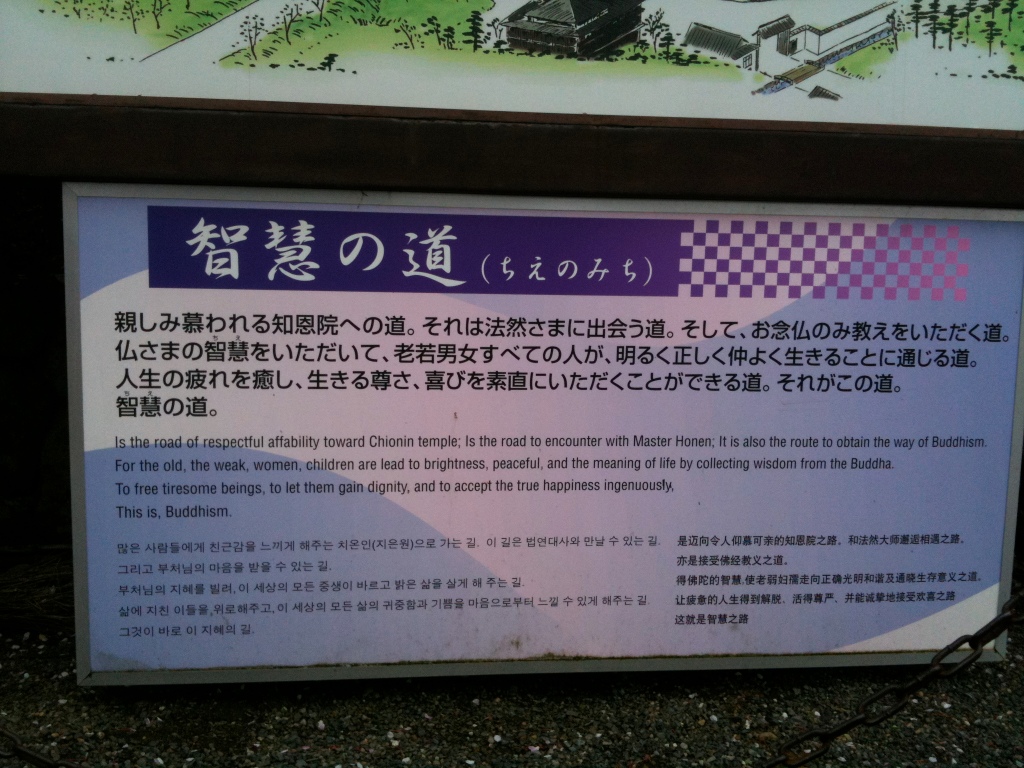
Multi-lingual sign at the temple of Chion-in in Kyoto, Japan where Honen’s mausoleum rests.
This approach isn’t that different from the Chinese approach which varied by teacher or patriarch but through Shandao’s influence had a parallel development. Some teachers emphasized the efficacy of simply reciting the nembutsu (much like Honen), others added the importance of concentration while reciting the nembutsu.
However, turning back to the Larger Sutra, let’s go back to the 48 vows. The 19th and 20th vows state:
(19) If, when I attain Buddhahood, sentient beings in the lands of the ten quarters, who awaken aspiration for Enlightenment, do various meritorious deeds and sincerely desire to be born in my land, should not, at their death, see me appear before them surrounded by a multitude of sages, may I not attain perfect Enlightenment.
(20) If, when I attain Buddhahood, sentient beings in the lands of the ten quarters who, having heard my Name, concentrate their thoughts on my land, plant roots of virtue, and sincerely transfer their merits towards my land with a desire to be born there, should not eventually fulfill their aspiration, may I not attain perfect Enlightenment.
So, taken together, the 18-20th vows cover the various interpretations of 念 we discussed above. All of them are included in Amitabha’s vows to bring across anyone who desires to be reborn there. The common theme is sincerity (至心 zhì xīn). If you look at the original Chinese text, all three include “sincerity”.
Further, when asked about how many times one should recite the nembutsu, Honen replied:1
“….believe that you can attain ojo [往生, rebirth in the Pure Land] by one repetition [of the nembutsu], and yet go on practicing it your whole life long.”
So, let’s get down to business: what is the nembutsu / niànfó ?
Based on the evidence above, I believe that the nembutsu is any of these Buddhist practices described above, taken under a sincere aspiration to be reborn in the Pure Land. It’s about bending one’s efforts and aspirations toward the Pure Land.
If you are calculating how to be reborn, or if your heart’s not 100% into it, then it may be a waste of effort.
Instead, if you feel unsure, study the Buddhist doctrines, get to know the Pure Land sutras, read about past teachers and if you feel fired up about, recite the nembutsu, or do whatever moves you. You will just know when. The more you put into it, the more you get out of it too.
Amitabha’s light shines upon all beings, like moonlight, and if you feel inspired by it, just know that you’re already halfway to the Pure Land.
Namu Amida Butsu
1 The site is long gone, sadly, but the Wayback Machine has an archive of the site. The updated Japanese-only site is here.
Way back in high school, like most American kids, I had to study things like Spanish, French, etc. I took German for two years in high school, but I didn’t find it very interesting, and I didn’t like my teacher very much. So, I never put in much effort. Later, one of my friends told me that we offered Mandarin Chinese at my high school, and I was just beginning my “teenage weeb phase”, so I was definitely curious.1
Our teacher, Mrs. Wu, was a very nice elderly teacher, even though she was in over her head dealing with a bunch of teenagers. Still, exploring something exotic like Chinese language really interested 16-year old me, and I was a pretty motivated student. I tried to learn both Traditional Chinese characters (used in Taiwan) and Simplified characters (Chinese mainland). My best friend at the time was Taiwanese-American, and I used to practice with his immigrant parents.
Anyhow, long story short, once I got into college, I focused on other priorities, and gradually, I forgot my Chinese studies.
Lately, I have been dabbling in Duolingo and learning Chinese again. I forget why, but I guess it’s partly fueled by nostalgia, but also because I already know how to read many Chinese characters through my studies of Japanese.
It’s been fascinating to see how Japanese kanji (Japanese-imported Chinese characters), and modern Chinese characters overlap and yet differ. The important thing to bear in mind is that Japan (like other neighboring countries), imported Chinese characters at an earlier stage in history, and over centuries the usage, pronuncaition and such have all diverged.
Take this easy sentence in Chinese:
All of these Chinese characters are used in Japanese, and without any prompts, I can read this and get the gist of what its saying, but there’s some notable divergences.
These Chinese sentence above is:
日本菜和中国菜 rì běn caì hé zhōng guó caì
A Japanese equivalent might be:
日本料理と中国料理 nihon ryōri to chūgoku ryōri
A few interesting things to note.
The character 菜 is used in modern Chinese to mean food in general, but in Japanese it means vegetables. So the usage has diverged. I noticed that Chinese
The country names, 中国 and 日本 are used by both languages, but the pronunciation has also diverged considerably. 中国 is pronounced zhōng guó in Chinese, and chūgoku in Japanese. You can kind of hear the similarities, but also the pronunciation has diverged for centuries.
The character 和 (hé) is used in Chinese to mean “and”, but in Japanese a system of particles is used instead. Interestingly, 和 is used in Japanese, for example the old name of Japan was Yamato (大和) or modern words like heiwa (平和, “peace”). The pronunciation is wa, so it has diverged as well.
On thing I haven’t really delved into is the native Japanese readings for Chinese characters. Chinese characters are a foreign, imported writing system to Japan, so native words sound completely different even when written with Chinese characters. The word for 中国 (chūgoku) derives from Chinese, but 中 by itself is pronounced as naka (“middle”) which is a native Japanese word (not imported).
Anyhow, this is just a quick overview of how two entirely different languages both adopted the same writing system, but have diverged over time. If you add in languages like Vietnamese and Korean that also adopted Chinese characters, the picture is even more fascinating.
P.S. Through Duolingo, I learned that the Chinese word for hamburger is hàn-bǎo-bāo.
Chinese has to import foreign words using Chinese characters that at least kind of sound like the original. Japanese uses a second syllabary system, katakana, to approximate the same thing, although in the past Chinese characters were used as well. Hence, America is usually written as amerika アメリカ, but in more formal settings it is called beikoku 米国 (compare the pronunciation with Chinese měi guó).
1 The fact that my high school even offered Chinese language at that time (1990’s America) is pretty unusual, but I am grateful for the option. Also, thank you Mrs Wu if you ever happen to read this.
Another dharani I was reading about lately is the Great Compassion Dharani, also known as the Nīlakaṇṭha Dhāraṇī, or in Japanese Buddhism the daihishin darani (大悲心陀羅尼), also known more simply as the daihishu (大悲咒), among other names.
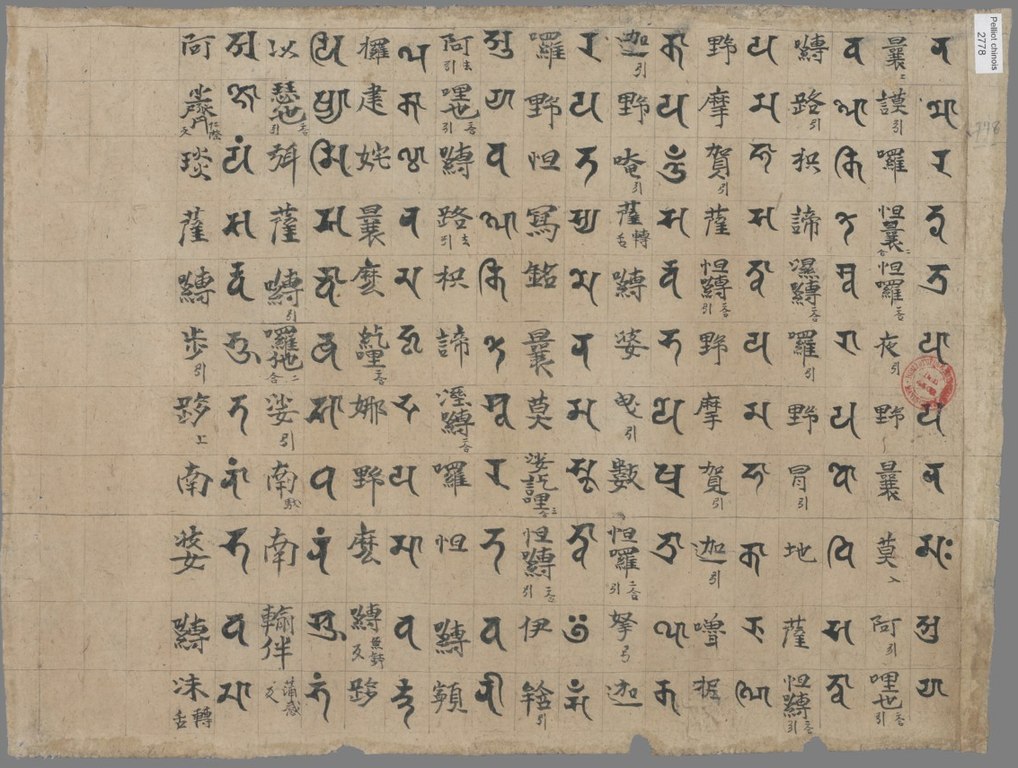
According to Wikipedia, this is one of widely recited dharani across the Buddhist tradition, and has undergone various changes over time, with a couple extant (though corrupted) versions. The featured photo above is an example found in the Dunhuang caves of China, showing the original text in Siddham script, with Chinese transliteration:
Fragment of the Nilaṇṭhanāmahṛdaya dhāraṇī both written in Siddhaṃ script and transliterated in Chinese characters. Bibliothèque nationale de France, Public domain, via Wikimedia Commons
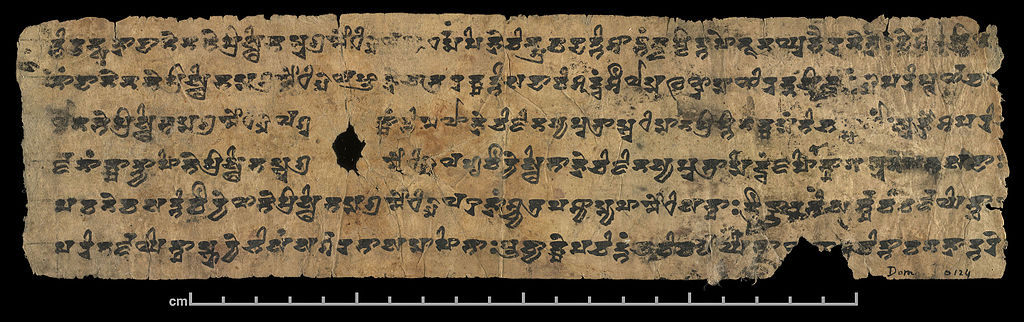
You can see another example here, using both Siddham script, and the ancient Sogdian script:
Whereas the Dharani for the Prevention of Disaster (discussed in a previous post) is focused on practical matters, the Great Compassion Dharani is meant to be chanted in order to awaken goodwill towards others, using Kannon Bodhisattva as the archetype. It is taken from a longer Buddhist text, the Sutra on the Thousand-armed, Thousand-eyed Bodhisattva Avalokitesvara’s Sutra of Dharanis on the Vast, Perfect, and Unobstructed Mind of Great Compassion (千手千眼観世音菩薩広大円満無礙大悲心陀羅尼経).
This dharani is most closely associated the Zen traditions, but because it is pretty long, it’s probably not always practical for lay followers to recite in daily services. I have not seen it listed in service books for lay followers in either Soto Zen or Rinzai Zen. In any case, I am posting it here as a reference.
You can see an example of the Great Compassion Dharani being chanted in a formal Soto Zen service here:
There is a nice Chinese-language version here (starts at 1:07):
I have posted the dharani here in multiple languages, so that people can choose which version they prefer to recite. The main source was Wikipedia, but for the Chinese Pinyin, I had to check multiple websites as the pinyin varied slightly in some places, while for the Japanese version, I checked line by line in the video above.
Side note, there is a different version in the Japanese Shingon-Buddhist tradition, but I am too lazy to post here, since the dharani is so long. You can find it here on the Japanese Wikipedia article under “真言宗の読み方”.
June 2025: Major rewrite of this page to make the text side-by-side, but also fixed several typos.
1 Sources used to validate the pinyin: here and here, plus Wikipedia article. Each one slightly disagreed with one another, and my Chinese language skills are very limited, so I had to make a best guess in a few cases where things seemingly contradicted. It’s also possible that certain Chinese characters just have multiple pronunciations.
2 For some reason, the Soto Zen version doesn’t have the words 那摩婆薩哆 (nama vastya / ná mó pó sà duō).
3 Similarly, the Soto Zen version doesn’t have the final “om” (唵, ān) in it.
Recently, I was reading a couple old-school fantasy novels set in the Forgotten Realms setting of Dungeons and Dragons: Horselords and Dragonwall. These novels, part of the Empires trilogy, revolve around a fantasy re-telling of the Mongol invasion of Song-Dynasty China.
Dragonwall, in particular, centered on the fictional land of Shou Lung, an analog to Imperial China, and introduced a lot of aspects of Chinese culture, such as Chinese military weapons and armor. The challenge was that these were not always explained and so, I found myself wondering what this sword was, or that piece of armor.
For example, a type of Chinese sword called a chien was frequently mentioned but I had trouble visualizing what it was, so I tried to use Wikipedia. There, the sword is listed as jian, not chien.
Which spelling is correct? In a way, both. In a way, neither.
Welcome to the challenges of expressing Chinese language using the Roman alphabet!
In native Chinese, the jian/chien is written as 劍 or 剑 in Simplified Chinese. . A native speaker probably can read this and know exactly what it means, how it is pronounced, etc. If you are a native English speaker, though, and don’t know Chinese, how do you write 劍/剑 in a way that other native English speakers can understand?
This is a surprisingly tricky issue, and not just limited to Chinese-English. Transliterating words in one language to another is always tricky.
Anyhow, there have been a few attempts to solve this issue of transliterating Chinese to English over the years, and Wikipedia has a very extensive article on the subject, but today we’ll focus on the two most common: Wade-Giles and Pinyin.
Wade-Giles Romanization
Wade-Giles is the older of the two systems, and was the most popular system until the late 20th century, and as a system it is vaguely based on the system used for writing Ancient Greek using the Latin alphabet. Since Ancient Greek had the notion of “rough breathing” as opposed to “smooth breathing” (there was no distinct letter “H” in Greek), apostrophes were used to help distinguish them.
In the same way, letters in Chinese such as “ch” and “j” were distinguished using an apostrophe. Thus “ch’ien” and “chien” would be different. The first uses the English “ch” sound (as in “chop”), while the second uses a “j” sound (as in “jot”). Another example is “t’” versus “t”, as in t’ong versus tong. The first is a hard “t” sound, the second is more like “d”.
If this seems confusing, believe me, it is. Another confusion happens with vowels. The letter “u” is pronounced more like “oh”, whereas “ü” is more like “oo”. Thus, using an example from Wikipedia, the word “k’ung” is pronounced as “kohng”, and “yü” as “yoo”.
Wade-Giles had been the de-facto system for so long, that a lot of English literature that uses Chinese names and words (including my D&D novels above) continues to use it even though it’s frankly pretty antiquated. Wade-Giles is easier to learn upfront because it looks more like natural English, but it uses a confusing system to represent Chinese sounds, and therefore it’s easier misread. Just remember sounds with apostrophes versus sounds without is confusing enough.
Hanyu Pinyin
The other system that’s increasingly in use, and frankly better in my opinion, is the Hanyu Pinyin (or “pinyin”) system. This system requires more work upfront, but provides a more consistent experience because what you see is what you get.
For example, each consonant sound is expressed only one, distinct way. In the “ch’” versus “ch”, pinyin expresses these as “ch” and “j” which is definitely more intuitive. Similarly, “t” versus “d” is pretty straightforward.
Vowels are where pinyin becomes tricky because Latin has only 5 letters to express vowel sounds, and Chinese (just like English) has a lot more than 5 vowel sounds. Unlike ancient Latin which differentiated “I” (as in “fish”) versus “Ī” (as in “ring”), English lost the diacritics and so the sounds just double-up on the same letters.
To work around this, Pinyin uses consonant-vowel combinations to make this work. “Chi” expresses the sound “chih” which rhymes with “fish”. By contrast, “Qi” expresses the sound “chee” as in “cheese”. In the same way “zhi” sounds like “jury” without the y, and “ji” sounds like “jee” as in “jeans”.
The vowel “e” is tricky too since it sounds like “uh” as in “done”. So the surname Cheng does not rhyme with “send”, it rhymes with “sung”.
So, whereas Wade-Giles relies on consonants and apostrophes to express sounds, Pinyin relies on consonant-vowel combinations.
Conclusion
Both systems, like every other attempt at romanization, are imperfect efforts. This is not a fault of the creators of these systems though: transliterating languages is always tricky.
However, of the two systems, I find Pinyin more intuitive overall once you get past the initial hurdles. You don’t have to worry about apostrophes, and most consonants are just more intuitive to read.
Unfortunately, due to cultural inertia, you’ll still find Chinese words expressed through the Wade-Giles system in all sorts of unexpected places.
P.S. if you think Chinese romanization is confusing, wait until you see Korean romanization.
P.P.S. If you’re wondering how good the books are, that’s a subject for an upcoming post. 😏
Recently, I made a lengthy rant on Twitter about my frustrations with learning Sanskrit in order to read Buddhist texts. The issue is a surprisingly complicated one, and something I wanted to explore here a bit more.
When you look at religions of the world, Buddhism is somewhat unusual in that it is not rooted in a single, sacred text. No Bible, No Quran, etc. Buddhism has many sacred texts, or sutras, all purportedly the words of the Buddha. These teachings where then passed down by his disciples, yet nothing was actually written down until centuries later. This is not as bad as it sounds. By the Buddha’s time, India already had developed a sophisticated tradition around memorizing sacred texts and teaching them disciples. Non-Buddhist examples include the Vedas (the forerunners to the Hindu religion). People believed at the time that writing sacred teachings down would put them on the same level as mundane receipts and political documents, and was thus considered profane.
Attitudes changed by 1st century CE, but by now those sermons of the Buddha that had been carefully passed down were scattered in various collections, and different Buddhist schools had slightly different collections from one another. Worse, the languages used to transmit the teachings had diverged.
Which Language?
The Buddha, in his time, warned against using the priestly Sanskrit language to transmit his teachings, preferring instead local dialects, but even at that time, India had many, many dialects. Pāli was a very popular one, and remains so for some Buddhist traditions, but as Buddhism grew, keeping track of Buddhist sermons via local dialects probably became less and less practical.
Thus, in the end, Buddhist texts began to be recorded in Sanskrit. Every educated person in India probably knew at least some Sanskrit, just like educated medieval Europeans knew at least some Latin or Greek.
This conversion to Sanskrit wasn’t an overnight swap, however. Research into “Buddhist Hybrid Sanskrit” shows that the transformation was a gradual one: Buddhists would first write things down in a way that looked “Sanskrit-ey” (but not actual Sanskrit), then later generations would write something down that actually used Sanskrit, but still peppered with local colloquialisms. Eventually, even later texts were composed in “true Sanskrit”, at least something that Pāṇini would hopefully approve of.
So, what we see is a kind of gradual spectrum from early texts being composed in local dialects (primarily Pāli) and then gradually transforming into Sanskrit.
The difference, by the way, between Pāli and Sanskrit isn’t as dramatic as it sounds by the way. Pāli, like many Prakrits, was a local languages that derived from Sanskrit, and still had much in common with it. Just like Italian, Spanish, French, etc., all derived from Latin in some way.
To illustrate this, let’s look at a basic word like “king”. In Sanskrit, it is rājaḥ, and conjugates like so (not a complete chart):
Case
Singular
Dual
Plural (more than 2)
Nominative
rājaḥ (rājo)
rājau
rājāḥ
Accusative
rājam
rājau
rājān
Instrumental (e.g. “with” or “by means of”)
rājena
rājābhyām
rājaiḥ
Dative (e.g. “to” or “for”)
rājāya
rājābhyām
rājebhyaḥ
Note: due to Sandhi rules, rājaḥ frequently becomes rājo to smooth things out. Sanskrit also has Genitive, Ablative, Locative and Vocative cases too., but I’ve omitted them for brevity.
…and so on. Pali is a bit more streamlined by comparison being a more colloquial language by nature, so one word for king is rāja (i.e. without the visarga ḥ sound at the end):
Case
Singular
Plural
Nominative
rāja (rājo)
rājā
Accusative
rājaṃ
rāje
Instrumental (e.g. “with” or “by means of”)
rājena
rājebhi or rājehi
Dative (e.g. “to” or “for”)
rājāya or rājassa1
rājānaṃ
This form appears to be more commonly used according to this Pali textbook written by Ven. Nerada Thera
At first glance, Pali kind of reads like the kinder, gentler version of Sanskrit. The dual form is almost entirely non-existent,2 and the sounds are softer, and lacking the ḥ (visarga) at the end. However, you can see they share similar grammatical structures, pronunciation, etc.
So, the first challenge with Buddhist text is this gradual transition from local dialects to literary Sanskrit, spanning hundreds of years. If you picked a particular Buddhist sutra, it might be somewhere in the middle of this transition: is it Pali? is it Sanskrit? Sanskrit with Pali terms, or Pali with a Sanskrit “polish” to it?
How Is It Written?
The second issue is the written script.
Some languages are closely tied with their script: Greek language is written in the Greek alphabet (obviously), while Korean is written in Hangeul. Other writing systems are not: the Roman alphabet is used in many languages: English, French, Vietnamese, etc. In medieval times, Chinese characters were used by a wide variety of disparate languages: Chinese, Japanese, Vietnamese, Khitan, etc.
So, languages are not always tied to a particular writing system. Also. some writing systems are not tied to a particular language.
Sanskrit (and Pali) have been written down using a wide variety of scripts across the ages. Early writings were done using Brahmi script, and Brahmi itself evolved into newer and better writings systems over time leading to the most common example today: Devanagari.3 Many, many modern languages in India and beyond are written in some script derived from Brahmi.
This includes Buddhist texts, too!
Inscriptions by Emperor Ashoka might be written in old Brahmi script:
…while texts written in palm leaf might also be written in Sanskrit, but using a derivative script:
The Lotus Sutra written in Sanskrit in an early form of South Turkestan Brahmi script, courtesy of Wikipedia.
You can see that while both are Buddhist (or Buddhist-historical) subjects, they are not necessarily written in the same script. Further examples include later Siddham script, often used in mantras and other esoteric practices by some schools:
The Heart Sutra as written in Siddham script, courtesy of Wikipedia
Then there’s other one-off, but important scripts like Karoshthi and so on.
This is not that unusual by the way when dealing with widely-used languages from antiquity, by the way. Although Greek was always written in the Greek alphabet, the style of writing could be vastly different depending on regional variations, such as those found on Egyptian papyrus vs. modern textbooks. Latin wasn’t always written in big block letters; it had its own cursive form that was more frequently used, and is pretty obtuse to modern Westerners without some training first.
Does Any Of This Matter?
For the average day-to-day practice of Buddhism? Nope.
Buddhism has always been at heart a religion of practice, not dogma. The Buddhist tripod of wisdom, conduct and practice (i.e. chanting, meditation, etc) has two “legs” which involve day to day action. Wisdom is important too but differs from dogma in that it’s not something you believe, but something you learn.
So, you could follow the Buddhist path perfectly fine if you focus on these things, and never bother with ancient languages, relying on acceptable translations instead. Studying the sutras is a helpful practice in Buddhism, but there are already plenty of good translations.
However, if you get into a more professional position either as a teacher, scholar, monk, nun, or priest, etc., knowing some command of Pali, Sanskrit, Classical Chinese, or Tibetan is really helpful. It won’t necessarily make you a better Buddhist, but may help you be a better teacher to others.
Back in 2019, I tried my hand at learning Sanskrit, with the intention of reading Buddhist texts natively, partly for fun, partly for curiosity, partly because I was frustrated by shoddy, overly sectarian translations. What I found is that modern Sanskrit courses and texts overwhelmingly focus on Hindu content, and insist on teaching Devanagari script, which makes sense, but neither of which is appropriate for the study of Buddhism.
Thus, my efforts to learn Sanskrit have languished for a long time.
These days, I would like to try again, but I believe that to effectively learn Sanskrit for the purposes of studying Buddhist texts, the following caveats might be helpful:
Learning Devanagari is not required. Buddhist texts are written in a wide variety of scripts but usually not Devanagari. There are some excellent resources for Buddhists texts preserved in Sanskrit, but using the Roman alphabet. This may sound weird, but as we discussed above, Sanskrit has never been tied to one writing system. One script is as good as another. Seriously.
Much of Buddhism’s corpus of sutras and sacred texts aren’t even “pure” Sanskrit anyway. Just as one might learn ancient Greek starting with Homeric Greek before moving onto Koine, the study of Buddhist texts may benefit by starting with Pāli and then migrating to Sanskrit as needed. Even learning a bit of Pāli might be a nice way to get back in touch with early Buddhism and as close to the Buddha’s words as we might ever get.
Alternatively, rather than trying to use a “one size fits all solution”, find a Buddhist text you are interested in, and determine how it was written, what language, etc, and start from there. Again, there are parallels to ancient Greek. The New Testament isn’t written the same way as Euripides, nor Hesiod. You have to accept that Buddhist texts are similarly written at different times by different people.
One thing I haven’t really talked about so far is Classical Chinese. Much of the Buddhist canon, now lost in India, is preserved in Chinese and epitomized in the Taisho Tripitaka formalized in Japan in the 1920’s. If you want to study ancient Buddhist texts, studying them in Classical Chinese might just be as useful, if not more useful, in some cases. The Heart Sutra, for example, was first written in Chinese and then back-ported into Sanskrit later when Xuan-zang journeyed to India.
Anyhow, this is one amateur’s look at the situation, something I’ve learned the hard way. Your mileage may vary, but if you wish to study ancient Buddhist texts, I hope this helps.
2 According to this textbook, only two words in Pāli have a dual form: dve or duve (two), and ubho (both).
3 Southern Indian languages also use scripts adapted from Brahmi, but through different evolutionary course, hence they look quite different than northern Indian languages.









 Gleanings in Buddha-Fields


You must be logged in to post a comment.